


Job 4:21
Bible text: King James Version (1769 Blayney text) · Public domain
Bible text: King James Version with Strong's numbers · Public domain
Bible text: Berean Standard Bible · Public domain
Bible text: American Standard Version (1901) · Public domain
Bible text: World English Bible, Messianic edition · Public domain
Bible text: Geneva Bible (1599) · Public domain
Bible text: Young's Literal Translation · Public domain
- הֲלֹאha·lo'¿ notH3808Interrog ¦ NegParticle Negativeהֲ¿לֹאnot
- נִסַּעni·Sa'has it been pulled upH5265V-Niphal-Perf-3msVerb Niphal Perfect 3rd Singular Masculine
- יִתְרָםyit·Ramtheir tent cordH3499N-msc ¦ 3mpNoun Singular Masculine Constructיִתְרָtent cordםtheir
- בָּםBamin themPrep-b ¦ 3mpSuffix Personal 3rd Plural Masculineבָּinםthem
- יָמוּתוּya·Mu·tuwill they die?H4191V-Qal-Imperf-3mpVerb Qal Imperfect 3rd Plural Masculine
- וְלֹאve·Lo'and notH3808Conj-w ¦ NegParticle Negativeוְandלֹאnot
- בְחָכְמָהve·cha·khe·Mahwith wisdomH2451Prep-b ¦ N-fsNoun Singular Feminine Absoluteבְwithחָכְמָהwisdom
English is a literal word-by-word gloss of the Hebrew, not the KJV's wording. Why?
This is the original text the KJV's translators worked from — each Hebrew word with its own literal English meaning in this verse, prepared by scholars at Tyndale House, Cambridge. The KJV translates whole sentences, not word by word, so its wording differs: one Hebrew word can become several English words, and the KJV may choose “the LORD” where the gloss reads “Yahweh”. Both are faithful — they answer different questions. For the KJV's own rendering, switch to the KJV text.
Details
See on the biblical-era map
Study this verse
Public-domain commentary
Matthew Henry
From his Commentary on the Whole Bible. Henry comments on passages, not single verses — this entry covers Job 4:12–21. His four-level outline is real structure in the source text, so it is rendered as structure.
Eliphaz, having undertaken to convince Job of the sin and folly of his discontent and impatience, here vouches a vision he had been favoured with, which he relates to Job for his conviction. What comes immediately from God all men will pay a particular deference to, and Job, no doubt, as much as any. Some think Eliphaz had this vision now lately, since he came to Job, putting words into his mouth wherewith to reason with him; and it would have been well if he had kept to the purport of this vision, which would serve for a ground on which to reprove Job for his murmuring, but not to condemn him as a hypocrite. Others think he had it formerly; for God did, in this way, often communicate his mind to the children of men in those first ages of the world, Job 33:15. Probably God had sent Eliphaz this messenger and message some time or other, when he was himself in an unquiet discontented frame, to calm and pacify him. Note, As we should comfort others with that wherewith we have been comforted (Co2 1:4), so we should endeavour to convince others with that which has been powerful to convince us. The people of God had not then any written word to quote, and therefore God sometimes notified to them even common truths by the extraordinary ways of revelation. We that have Bibles have there (thanks be to God) a more sure word to depend upon than even visions and voices, Pe2 1:19. Observe,
I.The manner in which this message was sent to Eliphaz, and the circumstances of the conveyance of it to him.
1.It was brought to him secretly, or by stealth. Some of the sweetest communion gracious souls have with God is in secret, where no eye sees but that of him who is all eye. God has ways of bringing conviction, counsel, and comfort, to his people, unobserved by the world, by private whispers, as powerfully and effectually as by the public ministry. His secret is with them, Psa 25:14. As the evil spirit often steals good words out of the heart (Mat 13:19), so the good Spirit sometimes steals good words into the heart, or ever we are aware.
2.He received a little thereof, Job 4:12. And it is but a little of divine knowledge that the best receive in this world. We know little in comparison with what is to be known, and with what we shall know when we come to heaven. How little a portion is heard of God! Job 26:14. We know but in part, Co1 13:12. See his humility and modesty. He pretends not to have understood it fully, but something of it he perceived.
3.It was brought to him in the visions of the night (Job 4:13), when he had retired from the world and the hurry of it, and all about him was composed and quiet. Note, The more we are withdrawn from the world and the things of it the fitter we are for communion with God. When we are communing with our own hearts, and are still (Psa 4:4), then is a proper time for the Holy Spirit to commune with us. When others were asleep Eliphaz was ready to receive this visit from Heaven, and probably, like David, was meditating upon God in the night-watches; in the midst of those good thoughts this thing was brought to him. We should hear more from God if we thought more of him; yet some are surprised with convictions in the night, Job 33:14, Job 33:15.
4.It was prefaced with terrors: Fear came upon him, and trembling, Job 4:14. It should seem, before he either heard or saw any thing, he was seized with this trembling, which shook his bones, and perhaps the bed under him. A holy awe and reverence of God and his majesty being struck upon his spirit, he was thereby prepared for a divine visit. Whom God intends to honour he first humbles and lays low, and will have us all to serve him with holy fear, and to rejoice with trembling.
II.The messenger by whom it was sent - a spirit, one of the good angels, who are employed not only as the ministers of God's providence, but sometimes as the ministers of his word. Concerning this apparition which Eliphaz saw we are here told (Job 4:15, Job 4:16),
1.That it was real, and not a dream, not a fancy. An image was before his eyes; he plainly saw it; at first it passed and repassed before his face, moved up and down, but at length it stood still to speak to him. If some have been so knavish as to impose false visions on others, and some so foolish as to be themselves imposed upon, it does not therefore follow but that there may have been apparitions of spirits, both good and bad.
2.That it was indistinct, and somewhat confused. He could not discern the form thereof, so as to frame any exact idea of it in his own mind, much less to give a description of it. His conscience was to be awakened and informed, not his curiosity gratified. We know little of spirits; we are not capable of knowing much of them, nor is it fit that we should: all in good time; we must shortly remove to the world of spirits, and shall then be better acquainted with them.
3.That it puts him into a great consternation, so that his hair stood on end. Ever since man sinned it has been terrible to him to receive an express from heaven, as conscious to himself that he can expect no good tidings thence; apparitions therefore, even of good spirits, have always made deep impressions of fear, even upon good men. How well it is for us that God sends us his messages, not by spirits, but by men like ourselves, whose terror shall not make us afraid! See Dan 7:28; Dan 10:8, Dan 10:9.
III.The message itself.
Before it was delivered there was silence, profound silence, Job 4:16. When we are to speak either from God or to him it becomes us to address ourselves to it with a solemn pause, and so to set bounds about the mount on which God is to come down, and not be hasty to utter any thing. It was in a still small voice that the message was delivered, and this was it (Job 4:17): "Shall mortal man be more just than God, the immortal God? Shall a man be thought to be, or pretend to be, more pure than his Maker? Away with such a thought!" 1. Some think that Eliphaz aims hereby to prove that Job's great afflictions were a certain evidence of his being a wicked man. A mortal man would be thought unjust and very impure if he should thus correct and punish a servant or subject, unless he had been guilty of some very great crime: "If therefore there were not some great crimes for which God thus punishes thee, man would be more just than God, which is not to be imagined." 2. I rather think it is only a reproof of Job's murmuring and discontent: "Shall a man pretend to be more just and pure than God? more truly to understand, and more strictly to observe, the rules and laws of equity than God? Shall Enosh, mortal and miserable man, be so insolent; nay, shall Geber, the strongest and most eminent man, man at his best estate, pretend to compare with God, or stand in competition with him?" Note, It is most impious and absurd to think either others or ourselves more just and pure than God. Those that quarrel and find fault with the directions of the divine law, the dispensations of the divine grace, or the disposals of the divine providence, make themselves more just and pure than God; and those who thus reprove God, let them answer it. What! sinful man! (for he would not have been mortal if he had not been sinful) short-sighted man! Shall he pretend to be more just, more pure, than God, who, being his Maker, is his Lord and owner? Shall the clay contend with the potter? What justice and purity there is in man, God is the author of it, and therefore is himself more just and pure. See Psa 94:9, Psa 94:10.
IV.The comment which Eliphaz makes upon this, for so it seems to be; yet some take all the following verses to be spoken in vision. It comes all to one.
1.He shows how little the angels themselves are in comparison with God, Job 4:18. Angels are God's servants, waiting servants, working servants; they are his ministers (Psa 104:4); bright and blessed beings they are, but God neither needs them nor is benefited by them and is himself infinitely above them, and therefore, (1.) He puts no trust in them, did not repose a confidence in them, as we do in those we cannot live without. There is no service in which he employs them but, if he pleased, he could have it done as well without them. he never made them his confidants, or of his cabinet-council, Mat 24:36. He does not leave his business wholly to them, but his own eyes run to and fro through the earth, Ch2 16:9. See this phrase, Job 39:11. Some give this sense of it: "So mutable is even the angelical nature that God would not trust angels with their own integrity; if he had, they would all have done as some did, left their first estate; but he saw it necessary to give them supernatural grace to confirm them." (2.) He charges them with folly, vanity, weakness, infirmity, and imperfection, in comparison with himself. If the world were left to the government of the angels, and they were trusted with the sole management of affairs, they would take false steps, and everything would not be done for the best, as now it is. Angels are intelligences, but finite ones. Though not chargeable with iniquity, yet with imprudence. This last clause is variously rendered by the critics. I think it would bear this reading, repeating the negation, which is very common: He will put no trust in his saints; nor will he glory in his angels (in angelis suis non ponet gloriationem) or make his boast of them, as if their praises, or services, added any thing to him: it is his glory that he is infinitely happy without them.
2.Thence he infers how much less man is, how much less to be trusted in or gloried in. If there is such a distance between God and angels, what is there between God and man! See how man is represented here in his meanness.
(1.)Look upon man in his life, and he is very mean, Job 4:19. Take man in his best estate, and he is a very despicable creature in comparison with the holy angels, though honourable if compared with the brutes. It is true, angels are spirits, and the souls of men are spirits; but,
[1.]Angels are pure spirits; the souls of men dwell in houses of clay: such the bodies of men are. Angels are free; human souls are housed, and the body is a cloud, a clog, to it; it is its cage; it is its prison. It is a house of clay, mean and mouldering; an earthen vessel, soon broken, as it was first formed, according to the good pleasure of the potter. It is a cottage, not a house of cedar or a house of ivory, but of clay, which would soon be in ruins if not kept in constant repair.
[2.]Angels are fixed, but the very foundation of that house of clay in which man dwells is in the dust. A house of clay, if built upon a rock, might stand long; but, if founded in the dust, the uncertainty of the foundation will hasten its fall, and it will sink with its own weight. As man was made out of the earth, so he is maintained and supported by that which cometh out of the earth. Take away that, and his body returns to its earth. We stand but upon the dust; some have a higher heap of dust to stand upon than others, but still it is the earth that stays us up and will shortly swallow us up.
[3.]Angels are immortal, but man is soon crushed; the earthly house of his tabernacle is dissolved; he dies and wastes away, is crushed like a moth between one's fingers, as easily, as quickly; one may almost as soon kill a man as kill a moth. A little thing will destroy his life. He is crushed before the face of the moth, so the word is. If some lingering distemper, which consumes like a moth, be commissioned to destroy him, he can no more resist it than he can resist an acute distemper, which comes roaring upon him like a lion. See Hos 5:12-14. Is such a creature as this to be trusted in, or can any service be expected from him by that God who puts no trust in angels themselves?
(2.)Look upon him in his death, and he appears yet more despicable, and unfit to be trusted. Men are mortal and dying, Job 4:20, Job 4:21.
[1.]In death they are destroyed, and perish for ever, as to this world; it is the final period of their lives, and all the employments and enjoyments here; their place will know them no more.
[2.]They are dying daily, and continually wasting: Destroyed from morning to evening. Death is still working in us, like a mole digging our grave at each remove, and we so continually lie exposed that we are killed all the day long.
[3.]Their life is short, and in a little time they are cut off. It lasts perhaps but from morning to evening. It is but a day (so some understand it); their birth and death are but the sun-rise and sun-set of the same day.
[4.]In death all their excellency passes away; beauty, strength, learning, not only cannot secure them from death, but must die with them, nor shall their pomp, their wealth, or power, descend after them.
[5.]Their wisdom cannot save them from death: They die without wisdom, die for want of wisdom, by their own foolish management of themselves, digging their graves with their own teeth.
[6.]It is so common a thing that nobody heeds it, nor takes any notice of it: They perish without any regarding it, or laying it to heart. The deaths of others are much the subject of common talk, but little the subject of serious thought. Some think the eternal damnation of sinners is here spoken of, as well as their temporal death: They are destroyed, or broken to pieces, by death, from morning to evening; and, if they repent not, they perish for ever (so some read it), Job 4:20. They perish for ever because they regard not God and their duty; they consider not their latter end, Lam 1:9. They have no excellency but that which death takes away, and they die, they die the second death, for want of wisdom to lay hold on eternal life. Shall such a mean, weak, foolish, sinful, dying creature as this pretend to be more just than God and more pure than his Maker? No, instead of quarrelling with his afflictions, let him wonder that he is out of hell.
Historical interpretation
Two Centuries of Reception
2 surviving comments on this verse. Each one is dated, so this reads as a timeline rather than a list.
Select a marker to jump to its quote. Markers stagger vertically where authors wrote within a few decades of each other.
Eliphaz, still clinging to the same principle … that Job’s critical circumstances were due to Job’s own sins, adds these words, “Since they could not help themselves through virtue by repenting of their evils, these afflictions befell them.” And Eliphaz suggests that he fully comprehends this situation. They perished since they could not drive away the most fearful accidents because of their weakness, demonstrating human power’s worthlessness.
73. Whom else do we understand by ‘the left,’ but all the despised of this world? whom whilst the present life chooses not for any use of honour, it ‘leaves’ as being the least and most worthless. But the Lord is said to ‘take away those that are left’ of the world, in that He condescends to make choice of the despised of this life, as Paul bears witness, saying, Not many wise men after the flesh, not many mighty, not many noble are called: but God hath chosen the foolish things of the world to confound the wise; and God hath, chosen the weak things of the world to confound the things that are mighty. [1 Cor. 1, 26. 27.] Which is well represented in the Book of Kings by the Egyptian servant fainting in the way, whom the Amalekite abandons taken sick upon the journey, but David finds, refreshes with food, and makes the guide of his route; he pursues the Amalekite, finds him feasting, and utterly destroys him [1 Sam. 30, 13]. For what does it mean that the Egyptian servant of the Amalekite turns faint upon the journey, but that the lover of this present world, covered with the blackness of his sins, is often abandoned in weakness and contempt by the same world, so that he is no longer able to run therewith, but being broken down by adversity, grows helpless. But David finds him, in that our Redeemer, Who is in a true sense ‘strong of hand,’ sometimes turns to the love of Himself those, whom He finds despised as to the glory of the world, in that He refreshes them with the knowledge of the Word. He chose him the guide of his way, in that He makes him even the preacher of Himself. And he, that had no power to follow the Amalekite, becomes the guide of David, in that he, whom the world forsook as worthless, not only when converted entertains the Lord in his affections [suas mentes, al. su mente], but by preaching Him brings Him home even to the hearts of others also. And with this same guide David discovers and annihilates the Amalekite as he feasted, in that Christ breaks up the joy of the world by those very men as preachers, whom that world scorned to have for its companions. Therefore because it very often happens that those, whom the world abandons, are chosen of the Lord, it is rightly said in this place, Those, that may have been left, shall be taken from amongst them. It proceeds;
They shall die, even without wisdom.
74. How is it that he set forth above the death of the wicked, saying, Because none understandeth they shall perish for ever; and concerning the Elect of God thereupon subjoined, And they that have been left shall be taken away from among them; yet forthwith adds that which cannot accord with those Elect ones, saying, They shall die even without wisdom? For if they be taken away from among the wicked by the hand of God, how are they said ‘to die without wisdom?’ Why, doubtless it is the fashion of Holy Writ, in relating any thing, after inserting a sentence that concerns another case, to return straightway to its former subject. Thus after he had said, And because there is none that understandeth, they shall perish for ever; he immediately brought in the lot of the Elect, saying, But they that have been left shall be taken away from among them. And again directing the eye of his meaning to that destruction of the wicked, which he had foretold, he suddenly subjoined, they shall die, even without wisdom. As if he said, Those of whom I said that ‘not understanding, they should perish for ever,’ will assuredly ‘die without wisdom.’ But we shall the better show that this is at times the way with Holy Writ, if we produce therefrom a similar instance to this. For when Paul the Apostle was counselling his beloved disciple for the settling the offices of the Church, that he might not by chance without due order promote any to Holy Orders, he said, Lay hands suddenly on no man, neither be partaker of other men's sins. Keep thyself pure. [1 Tim. 5, 22] And forthwith directing his words to his bodily infirmities, he says, Drink no longer water, but use a little wine for thy stomach's sake, and thine often infirmities. [ver. 23] And he immediately subjoins; Some men's sins are open beforehand, going before to judgment, and some men they follow after. [ver. 24] What connection then has that, which he added concerning the sins of different men being hidden and manifest, with this, that he forbad him in his weak health to drink water? but that after the insertion of a clause concerning his weakness of health he came back again at the end to that, which he had said above, Lay hands suddenly on no man, neither be partaker of other men's sins. For in order to show with what anxious heed these same sins are to be inquired into, after introducing a charge to prudence directed against the annoyance of bad health, he straightway put in, that in some men they lay exposed to view, in some hidden from sight, saying, Some men's sins are open beforehand going before to judgment, and some men they follow after. As then in this sentence Paul does not chime in with these same words, to which, speaking of the weakness of Timothy's health, he subjoined it, but he has returned to that which he made mention of before after an interruption; so when in this place Eliphaz said concerning the Elect, They that have been left shall be taken from among them, by subjoining thereupon, they die even without wisdom; he forthwith recurs to that, which he delivered concerning the wicked, saying, And because none understandeth, they shall perish for ever.
75. Now it is for this reason that the wicked look down upon the Elect, because they are going toward a life that is invisible through a death that is visible; of whom it is well said in this place, They die even without wisdom. As though it were said in plain words, “They equally indeed eschew death and wisdom; and wisdom they wholly get quit of, but they do not escape the snares of death. And whereas doomed, as they are, to die one day, they might in dying have received life, while they dread the death, which will most surely come, they part both with life and wisdom together.” But, on the other hand, the righteous die in wisdom, for that death, which they cannot wholly avoid, when it threatens them for the sake of the truth, they refuse to put off to a later day, and whilst they undergo the same with resignation, they turn the punishment of their race into an instrument of virtue; that life may be received back from the same quarter, whence, for the deserts of the first sin, it is forced to its end. But because Eliphaz delivered these things with a true meaning against the wicked; in accounting blessed Job to be worthy of blame, he puffed himself up in pride of wisdom. And hence, after declarations so good and righteous, he subjoins words of mocking, and says,
Chap. V. 1. Call now, if there be any that will answer thee.
76. For Almighty God often passes by the prayer of that man in his trouble, who slights His precepts in the season of rest. Hence it is written, He that turneth away his ear from hearing the law, even his prayer shall be abomination. Now for us ‘to call,’ is to beseech God with humble prayer; but for God to ‘answer,’ is to vouchsafe an accomplishment to our prayers; and so he says, Call now, if any will answer thee. As though he said in plain words, ‘However thou mayest cry out in thy distress, thou hast not God answering thee, in that the voice in tribulation findeth not Him, Whom the mind in tranquillity disregarded. Where he adds in yet further derision,
And turn thee to some one of the Saints?
77. As though he said in scorn, ‘The Saints too thou canst never obtain for abettors in thy distress, whom thou wouldest not have for companions in thy mirth.
Continue studying Job 4:21 across the web’s major study libraries — every link below opens this exact verse, chapter, or book on the destination site.
Read & Compare
 BibleGatewayThis verse in more than 200 translations and 70 languages.
 Bible.comThe YouVersion reader — hundreds of translations, reading plans, and highlights.
 ESV.orgCrossway's official English Standard Version reader.
 NET BibleThe NET translation with 60,000+ translators' notes on every rendering decision.
 STEP BibleTyndale House's free study tool — original text, vocabulary, and scholarly resources.
 BibliaLogos Bible Software's free web reader.
 USCCBThe New American Bible (Revised Edition) with the U.S. bishops' study notes.
Commentaries
 BibleHub CommentariesDozens of classic commentaries on this verse, gathered on one page.
 StudyLightMore than 100 commentary sets — the largest collection on the web.
 BibleRefPlain-English commentary on what this verse means, verse by verse.
 Enduring WordDavid Guzik's free commentary on this chapter, widely used by Bible teachers.
 Bible Study ToolsVerse commentary alongside Greek and Hebrew study aids.
Original Language & Research
- BibleHub InterlinearThe verse word by word — original language, transliteration, and English.
- BibleHub LexiconEvery word's original-language definition and Strong's entry.
 Blue Letter BibleDeep-study tools — Strong's numbers, concordance, and word studies.
 SefariaThe Hebrew text with Rashi and centuries of Jewish commentary.
Sermons, Hymns & Audio


TrulyRandomVerse is not affiliated with these sites and doesn’t control their content. They’re linked because they’re genuinely useful.
Summary
Job 4:21 serves as the stark conclusion to Eliphaz's initial discourse, encapsulating his argument that human life is inherently fragile and transient. He asserts that any perceived "excellency" or strength possessed by humanity is fleeting and destined to vanish. Furthermore, he posits that those who die "without wisdom"—implying a lack of understanding of God's ways and a life lived apart from divine insight—perish completely, their earthly achievements and vitality dissolving into oblivion. This statement functions as a veiled accusation against Job, subtly suggesting his suffering is a consequence of his own hidden sin or failure to grasp divine truth, aligning with Eliphaz's rigid theology of retributive justice.
Context
ShowHideLiterary Context
Job 4:21 provides the climactic summation of Eliphaz the Temanite's first speech (Job 4:1-5:27), which initiates the cycle of "comfort" offered by Job's friends. Eliphaz begins with a cautious yet pointed approach, then recounts a terrifying, quasi-divine vision (Job 4:12-16) that forms the bedrock of his theological premise: no mortal can be righteous before God, and humanity is inherently flawed and ephemeral (Job 4:17-19). He emphasizes that humans are "crushed before the moth" (Job 4:19), perishing without notice or understanding (Job 4:20). Verse 21, therefore, serves as the final, definitive pronouncement of this pessimistic view of human existence, highlighting the ultimate futility of human strength or achievement when disconnected from what Eliphaz perceives as true divine wisdom. This sets the stage for his subsequent counsel and implicit accusations against Job.
Historical & Cultural Context
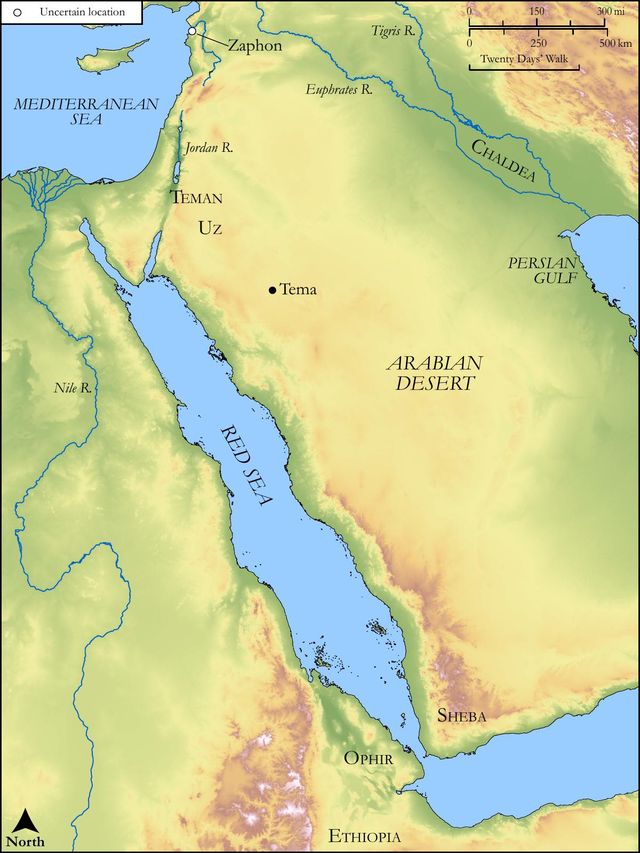
The Book of Job is set in the land of Uz, a location generally understood to be outside of Israel, possibly in Edom or northern Arabia. The dialogue reflects the prevailing wisdom of the men of the east, particularly the concept of retributive justice. This widely held belief posited a direct correlation between righteousness and prosperity, and conversely, between wickedness and suffering. Eliphaz, as one of Job's "friends," embodies this conventional wisdom, arguing that God is just and always punishes sin, thus Job's immense suffering must be a direct consequence of some hidden transgression. The "excellency" mentioned in the verse would have encompassed a person's material wealth, social standing, physical strength, and reputation—all highly valued attributes in that day. The idea of dying "without wisdom" would have been particularly damning, as wisdom was considered paramount for a good and prosperous life, often equated with the "fear of the Lord" as seen in Proverbs 9:10.
Key Themes
ShowHideJob 4:21 contributes significantly to several overarching themes within the book. Firstly, it highlights the transience and fragility of human life, a recurring motif throughout Job, contrasting human weakness with divine omnipotence. Eliphaz uses this concept to humble Job, suggesting his former "excellency" was ephemeral and easily stripped away. Secondly, the verse underscores the peril of a life devoid of true wisdom, which for Eliphaz, is an understanding of God's righteous judgment and the proper human response to it. He implies that Job, despite his former piety, has somehow lacked this crucial insight, leading to his current state. This theme sets up a major tension in the book, as Job grapples with a God who seems to defy conventional wisdom, ultimately leading to a deeper, more profound understanding of divine sovereignty beyond human comprehension, as articulated later in Job 38. Finally, the verse subtly introduces the theme of divine justice as understood by the friends—a rigid, predictable system of reward and punishment—which the unfolding narrative of Job will profoundly challenge and ultimately transcend.
Exposition and Analysis
ShowHideKey Word Analysis
ShowHideThe KJV translates the Hebrew יֶתֶר (yether) as "excellency," deriving from H3499. This term properly means "an overhanging," and by implication, "an excess," "superiority," or "remainder." In this context, it refers to the very essence of a person's strength, vitality, achievements, or whatever constitutes their earthly significance and advantage. Eliphaz suggests that this inherent quality or acquired status is not enduring but "goes away," implying a complete loss or vanishing.
The verb נָסַע (nâçaʻ), from H5265, literally means "to pull up," especially tent-pins, and thus "to start on a journey" or "to remove." When applied to "excellency," it vividly portrays its departure, its complete removal from the individual. It implies a swift and irreversible vanishing, emphasizing the ephemeral nature of human glory and power.
The Hebrew חָכְמָה (chokmâh), from H2451, denotes wisdom, not merely intellectual knowledge, but practical skill, moral insight, and spiritual understanding. In the biblical sense, true wisdom is often rooted in the "fear of the Lord" and an understanding of God's ways and purposes. When Eliphaz states "without wisdom" (בְּלֹא חָכְמָה - belo chokmâh), he implies a life lived without proper moral discernment, spiritual insight, or perhaps even a failure to understand the divine principles of justice that he believes govern the world. For Eliphaz, this lack of wisdom leads to a meaningless end, regardless of one's earthly achievements.
Verse Breakdown
ShowHide"Doth not their excellency [which is] in them go away?"
This is a powerful rhetorical question, characteristic of Eliphaz's persuasive style, designed to elicit an undeniable affirmative answer. It asserts that whatever makes a person outstanding, powerful, or significant—their strength, vitality, possessions, or perceived superiority—is not permanent. The phrase "in them" emphasizes that this "excellency" is intrinsic to their being or their life's accumulation, yet it is destined to vanish. It speaks to the impermanence of all human glory and achievement, a universal truth Eliphaz uses to underscore human frailty.
"they die, even without wisdom."
This clause presents the grim consequence of the transient nature of human "excellency." The "they" refers to those whose "excellency" departs, implying a general truth about humanity. The critical phrase "even without wisdom" suggests that their death is not merely a cessation of life, but a meaningless or futile end because they lacked true understanding or insight into God's ways. For Eliphaz, this implies that such individuals, despite any earthly success, fail to grasp the ultimate truths that would give their lives lasting significance, leading to a demise that is both physical and spiritually empty in his theological framework.
Literary Devices
ShowHideEliphaz's statement in Job 4:21 employs several key literary devices to convey his message of human transience and the importance of wisdom. The most prominent is the Rhetorical Question ("Doth not their excellency... go away?"), which is posed not to solicit an answer but to make a forceful, self-evident assertion about the fleeting nature of human life and achievements. This question masterfully sets up the subsequent declarative statement, creating a sense of undeniable, universal truth. There is also a strong element of Contrast established between the "excellency" (representing human strength, achievement, and vitality) and its ultimate vanishing, juxtaposed with the idea of dying "without wisdom." This contrast highlights the perceived futility of earthly pursuits when eternal wisdom is absent. Furthermore, the verse subtly employs Irony, as Eliphaz, in his attempt to impart wisdom to Job, is himself operating from a flawed and incomplete understanding of God's ways, ironically demonstrating a lack of true wisdom in his rigid application of conventional theology. The entire speech, including this verse, functions as a form of Didacticism, where Eliphaz attempts to instruct Job on what he believes are fundamental truths about divine justice and human mortality.
Theological and Thematic Connections
ShowHideJob 4:21, though spoken from a flawed theological premise by Eliphaz, contains a profound truth about the human condition: the ultimate transience of earthly glory and the enduring value of true wisdom. It challenges the common human tendency to invest ultimate meaning in material possessions, social status, or personal achievements, reminding us that these are fleeting. The verse underscores a core biblical theme that true life and lasting significance are not found in what we accumulate or accomplish on earth, but in a relationship with God and the wisdom that flows from Him. While Eliphaz misapplies this truth to accuse Job, the principle resonates with the broader biblical narrative that emphasizes the brevity of life and the importance of seeking eternal realities over temporal ones.
Reflection and Application
ShowHideJob 4:21, despite its context within Eliphaz's misguided counsel, serves as a powerful mirror for self-examination. It compels us to confront the uncomfortable truth of our own mortality and the impermanence of everything we strive for in this life. What do we define as our "excellency"—our career, our wealth, our reputation, our physical abilities, our social influence? This verse starkly reminds us that all these things can and will "go away." The critical question then becomes: what remains when they do? Investing in "wisdom"—which the Bible consistently defines as the fear of the Lord and living according to His truth—is presented as the only path to a life that transcends the grave. It calls us to live with an eternal perspective, prioritizing spiritual growth, character, and a deep knowledge of God over fleeting worldly achievements, ensuring that our lives are built on an enduring foundation that will not vanish with our breath.
Questions for Reflection
ShowHideFAQ
ShowHideDoes Job 4:21 mean that all who suffer are without wisdom or are being punished for sin?
ShowHideNo, not necessarily. While Eliphaz, in Job 4:21, suggests that suffering (and ultimately, a meaningless death) is the result of a lack of wisdom or hidden sin, this is precisely the flawed theology that the Book of Job as a whole challenges and refutes. The narrative demonstrates that Job, a righteous man, suffered immensely not because of sin or a lack of wisdom, but for reasons beyond human comprehension, part of a test of faith that began before the LORD in heaven. The friends' arguments, including Eliphaz's, represent a common but incomplete understanding of divine justice prevalent in their time. The book ultimately reveals that God's ways are far more complex and mysterious than human wisdom can grasp, and suffering is not always a direct consequence of personal transgression. Therefore, while the verse contains a universal truth about the transience of human life and the importance of wisdom, its application by Eliphaz to Job's situation is incorrect and does not reflect a comprehensive biblical theology of suffering, as later revealed in Job 40-42.
Christ-Centered Fulfillment
ShowHideJob 4:21, spoken by Eliphaz, points to the profound human dilemma of transience and the futility of a life lived apart from true wisdom, yet it finds its ultimate resolution and fulfillment in Jesus Christ. Eliphaz's "excellency" that "goes away" speaks to the perishable nature of all human glory and strength, a reality powerfully confronted by Christ's incarnation. He, who was "in the form of God," did not cling to His divine "excellency" but emptied Himself, taking the form of a servant and being born in the likeness of men (as described in Philippians 2:6-7). His life, unlike the fleeting "excellency" Eliphaz describes, was not lived "without wisdom" but was the very embodiment of divine wisdom, indeed, "Christ the power of God and the wisdom of God" (as revealed in 1 Corinthians 1:24). While human wisdom often leads to a meaningless death, Christ's death was the ultimate act of wisdom and love, conquering sin and death. He is the Lamb of God who takes away the sin of the world (as proclaimed in John 1:29), providing the true and lasting "excellency" of eternal life to all who believe. In Him, our lives are not defined by fleeting earthly achievements but by an enduring spiritual reality that transcends death, for He is "the resurrection and the life," and whoever believes in Him, though he die, yet shall he live (as declared in John 11:25).