


Luke 16:23
Bible text: King James Version (1769 Blayney text) · Public domain
Bible text: Berean Standard Bible · Public domain
Bible text: American Standard Version (1901) · Public domain
Bible text: World English Bible, Messianic edition · Public domain
Bible text: Geneva Bible (1599) · Public domain
Bible text: Young's Literal Translation · Public domain
- καὶkaiAndG2532CONJConjunction
- ἐνeninG1722PREPPreposition
- τῷtō<the>G3588T-DSMDefinite article Dative Singular Masculine
- ᾅδῃhadēHadesG86N-DSMNoun Dative Singular Masculine
- ἐπάραςeparashaving lifted upG1869V-AAP-NSMVerb Aorist Active Participle Nominative Singular Masculine
- τοὺςtoustheG3588T-APMDefinite article Accusative Plural Masculine
- ὀφθαλμοὺςophthalmouseyesG3788N-APMNoun Accusative Plural Masculine
- αὐτοῦautouof himG846P-GSMPersonal pronoun Genitive Singular Masculine
- ὑπάρχωνhuparchōnbeingG5225V-PAP-NSMVerb Present Active Participle Nominative Singular Masculine
- ἐνeninG1722PREPPreposition
- βασάνοιςbasanoistormentG931N-DPFNoun Dative Plural Feminine
- ὁρᾷhorahe seesG3708V-PAI-3SVerb Present Active Indicative 3rd Singular
- τὸνton<the>G3588T-ASMDefinite article Accusative Singular Masculine
- ἈβραὰμAbraamAbrahamG11N-ASM-PNoun Accusative Singular Masculine Individual
- ἀπὸapofromG575PREPPreposition
- μακρόθενmakrothenafarG3113ADVAdverb
- καὶkaiandG2532CONJConjunction
- ΛάζαρονLazaronLazarusG2976N-ASM-PNoun Accusative Singular Masculine Individual
- ἐνeninG1722PREPPreposition
- τοῖςtoistheG3588T-DPMDefinite article Dative Plural Masculine
- κόλποιςkolpoisbosomG2859N-DPMNoun Dative Plural Masculine
- αὐτοῦautouof himG846P-GSMPersonal pronoun Genitive Singular Masculine
English is a literal word-by-word gloss of the Greek, not the KJV's wording. Why?
This is the original text the KJV's translators worked from — each Greek word with its own literal English meaning in this verse, prepared by scholars at Tyndale House, Cambridge. The KJV translates whole sentences, not word by word, so its wording differs: one Greek word can become several English words, and the KJV may choose “charity” where the gloss reads “love”. Both are faithful — they answer different questions. For the KJV's own rendering, switch to the KJV text.
Details
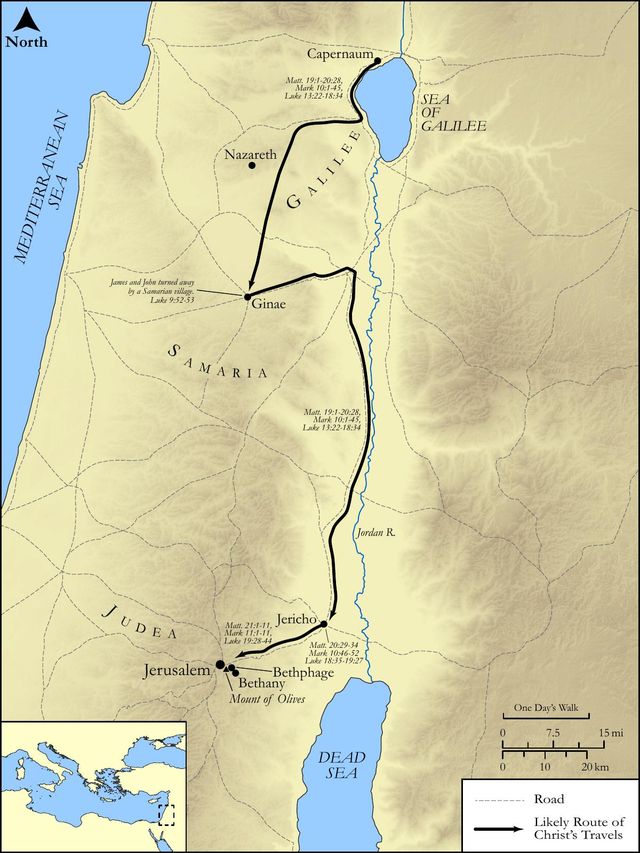
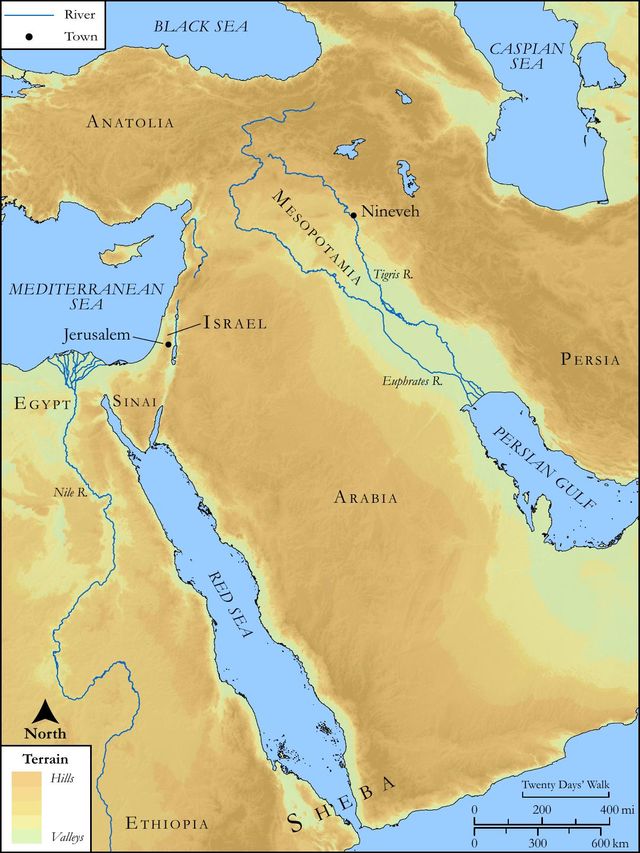
See on the biblical-era maps

Study this verse
Public-domain commentary
Matthew Henry
From his Commentary on the Whole Bible. Henry comments on passages, not single verses — this entry covers Luke 16:19–31. His four-level outline is real structure in the source text, so it is rendered as structure.
As the parable of the prodigal son set before us the grace of the gospel, which is encouraging to us all, so this sets before us the wrath to come, and is designed for our awakening; and very fast asleep those are in sin that will not be awakened by it. The Pharisees made a jest of Christ's sermon against worldliness; now this parable was intended to make those mockers serious. The tendency of the gospel of Christ is both to reconcile us to poverty and affliction and to arm us against temptations to worldliness and sensuality. Now this parable, by drawing the curtain, and letting us see what will be the end of both in the other world, goes very far in prosecuting those two great intentions. This parable is not like Christ's other parables, in which spiritual things are represented by similitudes borrowed from worldly things, as those of the sower and the seed (except that of the sheep and goats), the prodigal son, and indeed all the rest but this. But here the spiritual things themselves are represented in a narrative or description of the different state of good and bad in this world and the other. Yet we need not call it a history of a particular occurrence, but it is matter of fact that is true every day, that poor godly people, whom men neglect and trample upon, die away out of their miseries, and go to heavenly bliss and joy, which is made the more pleasant to them by their preceding sorrows; and that rich epicures, who live in luxury, and are unmerciful to the poor, die, and go into a state of insupportable torment, which is the more grievous and terrible to them because of the sensual lives they lived: and that there is no gaining any relief from their torments. Is this a parable? What similitude is there in this? The discourse indeed between Abraham and the rich man is only an illustration of the description, to make it the more affecting, like that between God and Satan in the story of Job. Our Saviour came to bring us acquainted with another world, and to show us the reference which this world has to that; and here is does it. In this description (for so I shall choose to call it) we may observe,
I.The different condition of a wicked rich man, and a godly poor man, in this world.
We know that as some of late, so the Jews of old, were ready to make prosperity one of the marks of a true church, of a good man and a favourite of heaven, so that they could hardly have any favourable thoughts of a poor man. This mistake Christ, upon all occasions, set himself to correct, and here very fully, where we have,
1.A wicked man, and one that will be for ever miserable, in the height of prosperity (v. 19): There was a certain rich man. From the Latin we commonly call him Dives—a rich man; but, as Bishop Tillotson observes, he has no name given him, as the poor man has, because it had been invidious to have named any particular rich man in such a description as this, and apt to provoke and gain ill-will. But others observe that Christ would not do the rich man so much honour as to name him, though when perhaps he called his lands by his own name he thought it should long survive that of the beggar at his gate, which yet is here preserved, when that of the rich man is buried in oblivion. Now we are told concerning this rich man,
(1.)That he was clothed in purple and fine linen, and that was his adorning. He had fine linen for pleasure, and clean, no doubt, every day; night-linen, and day-linen. He had purple for state, for that was the wear of princes, which has made some conjecture that Christ had an eye to Herod in it. He never appeared abroad but in great magnificence.
(2.)He fared deliciously and sumptuously every day. His table was furnished with all the varieties and dainties that nature and art could supply; his side-table richly adorned with plate; his servants, who waited at table, in rich liveries; and the guests at his table, no doubt, such as he thought graced it. Well, and what harm was there in all this? It is no sin to be rich, no sin to wear purple and fine linen, nor to keep a plentiful table, if a man's estate will afford it. Not are we told that he got his estate by fraud, oppression, or extortion, no, nor that he was drunk, or made others drunk; but,
[1.]Christ would hereby show that a man may have a great deal of the wealth, and pomp, and pleasure of this world, and yet lie and perish for ever under God's wrath and curse. We cannot infer from men's living great either that God loves them in giving them so much, or that they love God for giving them so much; happiness consists not in these things.
[2.]That plenty and pleasure are a very dangerous and to many a fatal temptation to luxury, and sensuality, and forgetfulness of God and another world. This man might have been happy if he had not had great possessions and enjoyments.
[3.]That the indulgence of the body, and the ease and pleasure of that, are the ruin of many a soul, and the interests of it. It is true, eating good meat and wearing good clothes are lawful; but it is true that they often become the food and fuel of pride and luxury, and so turn into sin to us.
[4.]That feasting ourselves and our friends, and, at the same time, forgetting the distresses of the poor and afflicted, are very provoking to God and damning to the soul. The sin of this rich man was not so much his dress or his diet, but his providing only for himself.
2.Here is a godly man, and one that will be for ever happy, in the depth of adversity and distress (v. 20): There was a certain beggar, named Lazarus. A beggar of that name, eminently devout, and in great distress, was probably well known among good people at that time: a beggar, suppose such a one as Eleazar, or Lazarus. Some think Eleazar a proper name for any poor man, for it signifies the help of God, which they must fly to that are destitute of other helps. This poor man was reduced to the last extremity, as miserable, as to outward things, as you can lightly suppose a man to be in this world.
(1.)His body was full of sores, like Job. To be sick and weak in body is a great affliction; but sores are more painful to the patient, and more loathsome to those about him.
(2.)He was forced to beg his bread, and to take up with such scraps as he could get at rich people's doors. He was so sore and lame that he could not go himself, but was carried by some compassionate hand or other, and laid at the rich man's gate. Note, Those that are not able to help the poor with their purses should help them with their pains; those that cannot lend them a penny should lend them a hand; those that have not themselves wherewithal to give to them should either bring them, or go for them, to those that have. Lazarus, in his distress, had nothing of his own to subsist on, no relation to go to, nor did the parish take care of him. It is an instance of the degeneracy of the Jewish church at this time that such a godly man as Lazarus was should be suffered to perish for want of necessary food. Now observe,
[1.]His expectations from the rich man's table: He desired to be fed with the crumbs, v. 21. He did not look for a mess from off his table, though he ought to have had one, one of the best; but would be thankful for the crumbs from under the table, the broken meat which was the rich man's leavings; nay, the leavings of his dogs. The poor use entreaties, and must be content with such as they can get. Now this is taken notice of to show, First, What was the distress, and what the disposition, of the poor man. He was poor, but he was poor in spirit, contentedly poor. He did not lie at the rich man's gate complaining, and bawling, and making a noise, but silently and modestly desiring to be fed with the crumbs. This miserable man was a good man, and in favour with God. Note, It is often the lot of some of the dearest of God's saints and servants to be greatly afflicted in this world, while wicked people prosper, and have abundance; see Ps. lxxiii. 7, 10, 14. Here is a child of wrath and an heir of hell sitting in the house, faring sumptuously; and a child of love and an heir of heaven lying at the gate, perishing for hunger. And is men's spiritual state to be judged of then by their outward condition? Secondly, What was the temper of the rich man towards him. We are not told that he abused him, or forbade him his gate, or did him any harm, but it is intimated that he slighted him; he had no concern for him, took no care about him. Here was a real object of charity, and a very moving one, which spoke for itself; it was presented to him at his own gate. The poor man had a good character and good conduct, and every thing that could recommend him. A little thing would be a great kindness to him, and yet he took no cognizance of his case, did not order him to be taken in and lodged in the barn, or some of the out-buildings, but let him lie there. Note, It is not enough not to oppress and trample upon the poor; we shall be found unfaithful stewards of our Lord's goods, in the great day, if we do not succour and relieve them. The reason given for the most fearful doom is, I was hungry, and you gave me no meat. I wonder how those rich people who have read the gospel of Christ, and way that they believe it, can be so unconcerned as they often are in the necessities and miseries of the poor and afflicted.
[2.]The usage he had from the dogs; The dogs came and licked his sores. The rich man kept a kennel of hounds, it may be, or other dogs, for his diversion, and to please his fancy, and these were fed to the full, when poor Lazarus could not get enough to keep him alive. Note, Those will have a great deal to answer for hereafter that feed their dogs, but neglect the poor. And it is a great aggravation of the uncharitableness of many rich people that they bestow that upon their fancies and follies which would supply the necessity, and rejoice the heart, of many a good Christian in distress. Those offend God, nay, and they put a contempt upon human nature, that pamper their dogs and horses, and let the families of their poor neighbours starve. Now those dogs came and licked the sores of poor Lazarus, which may be taken, First, As an aggravation of his misery. His sores were bloody, which tempted the dogs to come, and lick them, as they did the blood of Naboth and Ahab, 1 Kings xxi. 19. And we read of the tongue of the dogs dipped in the blood of enemies, Ps. lxviii. 23. They attacked him while he was yet alive, as if he had been already dead, and he had not strength himself to keep them off, nor would any of the servants be so civil as to check them. The dogs were like their master, and thought they fared sumptuously when they regaled themselves with human gore. Or, it may be taken, Secondly, as some relief to him in his misery; alla kai, the master was hard-hearted towards him, but the dogs came and licked his sores, which mollified and eased them. It is not said, They sucked them, but licked them, which was good for them. The dogs were more kind to him than their master was.
II.Here is the different condition of this godly poor man, and this wicked rich man, at and after death.
Hitherto the wicked man seems to have the advantage, but Exitus acta probat—Let us wait awhile, to see the end hereof.
1.They both died (v. 22): The beggar died; the rich man also died. Death is the common lot of rich and poor, godly and ungodly; there they meet together. One dieth in his full strength, and another in the bitterness of his soul; but they shall lie down alike in the dust, Job xxi. 26. Death favours not either the rich man for his riches or the poor man for his poverty. Saints die, that they may bring their sorrows to an end, and may enter upon their joys. Sinners die, that they may go to give up their account. It concerns both rich and poor to prepare for death, for it waits for them both. Mors sceptra ligonibus æquat—Death blends the sceptre with the spade.
2.The beggar died first. God often takes godly people out of the world, when he leaves the wicked to flourish still. It was an advantage to the beggar that such a speedy end was put to his miseries; and, since he could find no other shelter or resting-place, he was hid in the grave, where the weary are at rest.
3.The rich man died and was buried. Nothing is said of the interment of the poor man. They dug a hole any where, and tumbled his body in, without any solemnity; he was buried with the burial of an ass: nay, it is well if they that let the dogs lick his sores did not let them gnaw his bones. But the rich man had a pompous funeral, lay in state, had a train of mourners to attend him to his grave, and a stately monument set up over it; probably he had a funeral oration in praise of him, and his generous way of living, and the good table he kept, which those would commend that had been feasted at it. It is said of the wicked man that he is brought to the grave with no small ado, and laid in the tomb, and the clods of the valley, were it possible, are made sweet to him, Job xxi. 32, 33. How foreign is the ceremony of a funeral to the happiness of the man!
4.The beggar died and was carried by angels into Abraham's bosom. How much did the honour done to his soul, by this convoy of it to its rest, exceed the honour done to the rich man, by the carrying of his body with so much magnificence to its grave! Observe,
(1.)His soul existed in a state of separation from the body. It did not die, or fall asleep, with the body; his candle was not put out with him; but lives, and acted, and knew what it did, and what was done to it.
(2.)His soul removed to another world, to the world of spirits; it returned to God who gave it, to its native country; this is implied in its being carried. The spirit of a man goes upward.
(3.)Angels took care of it; it was carried by angels. They are ministering spirits to the heirs of salvation, not only while they live, but when they die, and have a charge concerning them, to bear them up in their hands, not only in their journeys to and fro on earth, but in their great journey to their long home in heaven, to be both their guide and their guard through regions unknown and unsafe. The soul of man, if not chained to this earth and clogged by it as unsanctified souls are, has in itself an elastic virtue, by which it springs upward as soon as it gets clear of the body; but Christ will not trust those that are his to that, and therefore will send special messengers to fetch them to himself. One angel one would think sufficient, but here are more, as many were sent for Elijah. Amasis king of Egypt had his chariot drawn by kings; but what was that honour to this? Saints ascend in the virtue of Christ's ascension; but this convoy of angels is added for state and decorum. Saints shall be brought home, not only safely, but honourably. What were the bearers at the rich man's funeral, though, probably, those of the first rank, compared with Lazarus's bearers? The angels were not shy of touching him, for his sores were on his body, not on his soul; that was presented to God without spot, or wrinkle, or any such thing. "Now, blessed angels," said a good man just expiring, "now come and do your office." (4.) It was carried into Abraham's bosom. The Jews expressed the happiness of the righteous at death three ways:—they to go to the garden of Eden: they go to be under the throne of glory; and they go to the bosom of Abraham, and it is this which our Saviour here makes use of. Abraham was the father of the faithful; and whither should the souls of the faithful be gathered but to him, who, as a tender father, lays them in his bosom, especially at their first coming, to bid them welcome, and to refresh them when newly come from the sorrows and fatigues of this world? He was carried to his bosom, that is, to feast with him, for at feasts the guests are said to lean on one another's breasts; and the saints in heaven sit down with Abraham, and Isaac, and Jacob. Abraham was a great and rich man, yet in heaven he does not disdain to lay poor Lazarus in his bosom. Rich saints and poor meet in heaven. This poor Lazarus, who might not be admitted within the rich man's gate, is conducted into the dining-room, into the bed-chamber, of the heavenly palace; and he is laid in the bosom of Abraham, whom the rich glutton scorned to set with the dogs of his flock.
5.The next news you hear of the rich man, after the account of his death and burial, is, that in hell he lifted up his eyes, being in torment, v. 23.
(1.)His state is very miserable. He is in hell, in hades, in the state of separate souls, and there he is in the utmost misery and anguish possible. As the souls of the faithful, immediately after they are delivered from the burden of the flesh, are in joy and felicity, so wicked and unsanctified souls, immediately after they are fetched from the pleasures of the flesh by death, are in misery and torment endless, useless, and remediless, and which will be much increased and completed at the resurrection. This rich man had entirely devoted himself to the pleasures of the world of sense, was wholly taken up with them, and took up with them for his portion, and therefore was wholly unfit for the pleasures of the world of spirits; to such a carnal mind as his they would indeed be no pleasure, nor could he have any relish of them, and therefore he is of course excluded from them. Yet this is not all; he was hard-hearted to God's poor, and therefore he is not only cut off from mercy, but he has judgment without mercy, and falls under a punishment of sense as well as a punishment of loss.
(2.)The misery of his state is aggravated by his knowledge of the happiness of Lazarus: He lifts up his eyes, and sees Abraham afar off, and Lazarus in his bosom. It is the soul that is in torment, and they are the eyes of the mind that are lifted up. He now began to consider what was become of Lazarus. He does not find him where he himself is, nay, he plainly sees him, and with as much assurance as if he had seen him with his bodily eyes, afar off in the bosom of Abraham. This same aggravation of the miseries of the damned we had before (ch. xiii. 28): Ye shall see Abraham, and Isaac, and Jacob, and all the prophets, in the kingdom of God, and yourselves thrust out.
[1.]He saw Abraham afar off. To see Abraham we should think a pleasing sight; but to see him afar off was a tormenting sight. Near himself he saw devils and damned companions, frightful sights, and painful ones; afar off he saw Abraham. Note, Every sight in hell is aggravating.
[2.]He saw Lazarus in him bosom. That same Lazarus whom he had looked upon with so much scorn and contempt, as not worthy his notice, he now sees preferred, and to be envied. The sight of him brought to his mind his own cruel and barbarous conduct towards him; and the sight of him in that happiness made his own misery the more grievous.
III.Here is an account of what passed between the rich man and Abraham in the separate state—a state of separation one from another, and of both from this world. Though it is probable that there will not be, nor are, any such dialogues or discourses between glorified saints and damned sinners, yet it is very proper, and what is usually done in descriptions, especially such as are designed to be pathetic and moving, by such dialogues to represent what will be the mind and sentiments both of the one and of the other. And since we find damned sinners tormented in the presence of the Lamb (Rev. xiv. 10), and the faithful servants of God looking upon them that have transgressed the covenant, there where their worm dies not, and their fire is not quenched (Isa. lxvi. 23, 24), such a discourse as this is not incongruous to be supposed. Now in this discourse we have,
1.The request which the rich man made to Abraham for some mitigation of his present misery, v. 24. Seeing Abraham afar off, he cried to him, cried aloud, as one in earnest, and as one in pain and misery, mixing shrieks with his petitions, to enforce them by moving compassion. He that used to command aloud now begs aloud, louder than ever Lazarus did at his gate. The songs of his riot and revels are all turned into lamentations. Observe here,
(1.)The title he gives to Abraham: Father Abraham. Note, There are many in hell that can call Abraham father, that were Abraham's seed after the flesh, nay, and many that were, in name and profession, the children of the covenant made with Abraham. Perhaps this rich man, in his carnal mirth, had ridiculed Abraham and the story of Abraham, as the scoffers of the latter days do; but now he gives him a title of respect, Father Abraham. Note, The day is coming when wicked men will be glad to scrape acquaintance with the righteous, and to claim kindred to them, though now they slight them. Abraham in this description represents Christ, for to him all judgment is committed, and it is his mind that Abraham here speaks. Those that now slight Christ will shortly make their court to him, Lord, Lord.
(2.)The representation he makes to him of his present deplorable condition: I am tormented in this flame. It is the torment of his soul that he complains of, and therefore such a fire as will operate upon souls; and such a fire the wrath of God is, fastening upon a guilty conscience; such a fire horror of mind is, and the reproaches of a self-accusing self-condemning heart. Nothing is more painful and terrible to the body than to be tormented with fire; by this therefore the miseries and agonies of damned souls are represented.
(3.)His request to Abraham, in consideration of this misery: Have mercy on me. Note, The day is coming when those that make light of divine mercy will beg hard for it. O for mercy, mercy, when the day of mercy is over, and offers of mercy are no more made. He that had no mercy on Lazarus, yet expects Lazarus should have mercy on him; "for," thinks he, "Lazarus is better natured than ever I was." The particular favour he begs is, Send Lazarus, that he may dip the tip of his finger in water, and cool my tongue.
[1.]Here he complains of the torment of his tongue particularly, as if he were more tormented there than in any other part, the punishment answering the sin. The tongue is one of the organs of speech, and by the torment of that he is put in mind of all the wicked words that he had spoken against God and man, his cursing, and swearing, and blasphemy, all his hard speeches, and filthy speeches; by his words he is condemned, and therefore in his tongue he is tormented. The tongue is also one of the organs of tasting, and therefore the torments of that will remind him of his inordinate relish of the delights of sense, which he had rolled under his tongue.
[2.]He desires a drop of water to cool his tongue. He does not say, "Father Abraham, order me a release from this misery, help me out of this pit," for he utterly despaired of this; but he asks as small a thing as could be asked, a drop of water to cool his tongue for one moment.
[3.]He sometimes suspected that he had herein an ill design upon Lazarus, and hoped, if he could get him within his reach, he should keep him from returning to the bosom of Abraham. The heart that is filled with rage against God is filled with rage against the people of God. But we will think more charitably even of a damned sinner, and suppose he intended here to show respect to Lazarus, as one to whom he would now gladly be beholden. He names him, because he knows him, and thinks Lazarus will not be unwilling to do him this good office for old acquaintance' sake. Grotius here quotes Plato describing the torments of wicked souls, and among other things he says, They are continually raving on those whom they have murdered, or been any way injurious to, calling upon them to forgive them the wrongs they did them. Note, There is a day coming when those that now hate and despise the people of God would gladly receive kindness from them.
2.The reply which Abraham gave to this request. In general, he did not grant it. He would not allow him one drop of water, to cool his tongue. Note, The damned in hell shall not have any the least abatement or mitigation of their torment. If we now improve the day of our opportunities, we may have a full and lasting satisfaction in the streams of mercy; but, if we now slight the offer, it will be in vain in hell to expect the least drop of mercy. See how justly this rich man is paid in his own coin. He that denied a crumb is denied a drop. Now it is said to us, Ask, and it shall be given you; but, if we let slip this accepted time, we may ask, and it shall not be given us. But this is not all; had Abraham only said, "You shall have nothing to abate your torment," it had been sad; but he says a great deal which would add to his torment, and make the flame the hotter, for every thing in hell will be tormenting.
(1.)He calls him son, a kind and civil title, but here it serves only to aggravate the denial of his request, which shut up the bowels of the compassion of a father from him. He had been a son, but a rebellious one, and now an abandoned disinherited one. See the folly of those who rely on that plea, We have Abraham to our father, when we find one in hell, and likely to be there for ever, whom Abraham calls son.
(2.)He puts him in mind of what had been both his own condition and the condition of Lazarus, in their life-time: Son, remember; this is a cutting word. The memories of damned souls will be their tormentors, and conscience will then be awakened and stirred up to do its office, which here they would not suffer it to do. Nothing will bring more oil to the flames of hell than Son, remember. Now sinners are called upon to remember, but they do not, they will not, they find ways to avoid it. "Son, remember thy Creator, thy Redeemer, remember thy latter end;" but they can turn a deaf ear to these mementos, and forget that for which they have their memories; justly therefore will their everlasting misery arise from a Son, remember, to which they will not be able to turn a deaf ear. What a dreadful peal will this ring in our ears, "Son, remember the many warnings that were given thee not to come to this place of torment, which thou wouldest not regard; remember the fair offers made thee of eternal life and glory, which thou wouldest not accept!" But that which he is here put in mind of is, [1.] That thou in thy life-time receivedst thy good things. He does not tell him that he had abused them, but that he had received them: "Remember what a bountiful benefactor God has been to thee, how ready he was to do thee good; thou canst not therefore say he owes thee any thing, no, not a drop of water. What he gave thee thou receivedst, and that was all; thou never gavest him a receipt for them, in a thankful acknowledgment of them, much less didst thou ever make any grateful return for them or improvement of them; thou hast been the grave of God's blessings, in which they were buried, not the field of them, in which they were sown. Thou receivedst thy good things; thou receivedst them, and usedst them, as if they had been thine own, and thou hadst not been at all accountable for them. Or, rather, they were the things which thou didst choose for thy good things, which were in thine eye the best things, which thou didst content thyself with, and portion thyself in. Thou hadst meat, and drink, and clothes of the richest and finest, and these were the things thou didst place thy happiness in; they were thy reward, thy consolation, the penny thou didst agree for, and thou hast had it. Thou wast for the good things of thy life-time, and hadst no thought of better things in another life, and therefore hast no reason to expect them. The day of thy good things is past and gone, and now is the day of thy evil things, of recompence for all thy evil deeds. Thou hast already had the last drop of the vials of mercy that thou couldest expect to fall to thy share; and there remains nothing but vials of wrath without mixture." [2.] "Remember too what evil things Lazarus received. Thou enviest him his happiness here; but think what a large share of miseries he had in his life-time. Thou hast as much good as could be thought to fall to the lot of so bad a man, and he as much evil as could be thought to fall to the lot of so good a man. He received his evil things; he bore them patiently, received them from the hand of God, as Job did (ch. ii. 10, Shall we receive good at the hand of the Lord, and shall we not receive evil also?)—he received them as physic appointed for the cure of his spiritual distempers, and the cure was effected." As wicked people have good things in this life only, and at death they are for ever separated from all good, so godly people have evil things only in this life, and at death they are for ever put out of the reach of them. Now Abraham, by putting him in mind of both these together, awakens his conscience to remind him how he had behaved towards Lazarus, when he was reveling in his good things and Lazarus groaning under his evil things; he cannot forget that then he would not help Lazarus, and how then could he expect that Lazarus should now help him? Had Lazarus in his life-time afterwards grown rich, and he poor, Lazarus would have thought it his duty to relieve him, and not to have upbraided him with his former unkindness; but, in the future state of recompence and retribution, those that are now dealt with, both by God and man, better than they deserve, must expect to be rewarded every man according to his works.
(3.)He puts him in mind of Lazarus's present bliss, and his own misery: But now the tables are turned, and so they must abide for ever; now he is comforted, and thou art tormented. He did not need to be told that he was tormented; he felt it to his cost. He knew likewise that one who lay in the bosom of Abraham could not but be comforted there; yet Abraham puts him in mind of it, that he might, by comparing one thing with another, observe the righteousness of God, in recompensing tribulation to them who trouble his people, and to those who are troubled rest, 2 Thess. i. 6, 7. Observe,
[1.]Heaven is comfort, and hell is torment: heaven is joy, hell is weeping, and wailing, and pain in perfection.
[2.]The soul, as soon as it leaves the body, goes either to heaven or hell, to comfort or torment, immediately, and does not sleep, or go into purgatory.
[3.]Heaven will be heaven indeed to those that go thither through many and great calamities in this world; of those that had grace, but had little of the comfort of it here (perhaps their souls refused to be comforted), yet, when they are fallen asleep in Christ, you may truly say, "Now they are comforted: now all their tears are wiped away, and all their fears are vanished." In heaven there is everlasting consolation. And, on the other hand, hell will be hell indeed to those that go thither from the midst of the enjoyment of all the delights and pleasures of sense. To them the torture is the greater, as temporal calamities are described to be to the tender and delicate woman, that would not set so much as the sole of her foot to the ground, for tenderness and delicacy. Deut. xxviii. 56.
(4.)He assures him that it was to no purpose to think of having any relief by the ministry of Lazarus; for (v. 26), Besides all this, worse yet, between us and you there is a great gulf fixed, an impassable one, a great chasm, that so there can be no communication between glorified saints and damned sinners. [1.] The kindest saint in heaven cannot make a visit to the congregation of the dead and damned, to comfort or relieve any there who once were their friends. "They that would pass hence to you cannot; they cannot leave beholding the face of their Father, nor the work about his throne, to fetch water for you; that is no part of their business." [2.] The most daring sinner in hell cannot force his way out of that prison, cannot get over that great gulf. They cannot pass to us that would come thence. It is not to be expected, for the door of mercy is shut, the bridge is drawn; there is no coming out upon parole or bail, no, not for one hour. In this world, blessed be God, there is no gulf fixed between a state of nature and grace, but we may pass from the one to thee other, from sin to God; but if we die in our sins, if we throw ourselves into the pit of destruction, there is no coming out. It is a pit in which there is no water, and out of which there is no redemption. The decree and counsel of God have fixed this gulf, which all the world cannot unfix. This abandons this miserable creature to despair; it is now too late for any change of his condition, or any the least relief: it might have been prevented in time, but it cannot now be remedied to eternity. The state of damned sinners is fixed by an irreversible and unalterable sentence. A stone is rolled to the door of the pit, which cannot be rolled back.
3.The further request he had to make to his father Abraham, not for himself, his mouth is stopped, and he has not a word to say in answer to Abraham's denial of a drop of water. Damned sinners are made to know that the sentence they are under is just, and they cannot alleviate their own misery by making any objection against it. And, since he cannot obtain a drop of water to cool his tongue, we may suppose he gnawed his tongue for pain, as those are said to do on whom one of the vials of God's wrath is poured out, Rev. xvi. 10. The shrieks and outcries which we may suppose to be now uttered by him were hideous; but, having an opportunity of speaking to Abraham, he will improve it for his relations whom he has left behind, since he cannot improve it for his own advantage. Now as to this,
(1.)He begs that Lazarus might be sent to his father's house, upon an errand thither: I pray thee therefore, father, v. 27. Again he calls upon Abraham, and in this request he is importunate: "I pray thee. O deny me not this." When he was on earth he might have prayed and been heard, but now he prays in vain. "Therefore, because thou hast denied me the former request, surely thou wilt be so compassionate as not to deny this:" or, "Therefore, because there is a great gulf fixed, seeing there is no getting out hence when they are once here, O send to prevent their coming hither:" or, "Though there is a great gulf fixed between you and me, yet, since there is no such gulf fixed between you and them, send them hither. Send him back to my father's house; he knows well enough where it is, has been there many a time, having been denied the crumbs that fell from the table. He knows I have five brethren there; if he appear to them, they will know him, and will regard what he saith, for they knew him to be an honest man. Let him testify to them; let him tell them what condition I am in, and that I brought myself to it by my luxury and sensuality, and my unmercifulness to the poor. Let him warn them not to tread in my steps, nor to go on in the way wherein I led them, and left them, lest they also come into this place of torment," v. 28. Some observe that he speaks only of five brethren, whence they infer that he had no children, else he would have mentioned them, and then it was an aggravation of his uncharitableness that he had no children to provide for. Now he would have them stopped in their sinful course. He does not say, "Give me leave to go to them, that I may testify to them;" for he knew that there was a gulf fixed, and despaired of a permission so favourable to himself: his going would frighten them out of their wits; but, "Send Lazarus, whose address will be less terrible, and yet his testimony sufficient to frighten them out of their sins." Now he desired the preventing of their ruin, partly in tenderness to them, for whom he could not but retain a natural affection; he knew their temper, their temptations, their ignorance, their infidelity, their inconsideration, and wished to prevent the destruction they were running into: but it was partly in tenderness to himself, for their coming to him, to that place of torment, would but aggravate the misery to him, who had helped to show them the way thither, as the sight of Lazarus helped to aggravate his misery. When partners in sin come to be sharers in woe, as tares bound in bundles for the fire, they will be a terror to one another.
(2.)Abraham denies him this favour too. There is no request granted in hell. Those who make the rich man's praying to Abraham a justification of their praying to saints departed, as they have far to seek for proofs, when the practice of a damned sinner must be valued for an example, so they have little encouragement to follow the example, when all his prayers were made in vain. Abraham leaves them to the testimony of Moses and the prophets, the ordinary means of conviction and conversion; they have the written word, which they may read and hear read. "Let them attend to that sure word of prophecy, for God will not go out of the common method of his grace for them." Here is their privilege: They have Moses and the prophets; and their duty: "Let them hear them, and mix faith with them, and that will be sufficient to keep them from this place of torment." By this it appears that there is sufficient evidence in the Old Testament, in Moses and the prophets, to convince those that will hear them impartially that there is another life after this, and a state of rewards and punishments for good and bad men; for that was the thing which the rich man would have his brethren assured of, and for that they are turned over to Moses and the prophets.
(3.)He urges his request yet further (v. 30): "Nay, father Abraham, give me leave to press this. It is true, they have Moses and the prophets, and, if they would but give a due regard to them, it would be sufficient; but they do not, they will not; yet it may be hoped, if one went to them from the dead, they would repent, that would be a more sensible conviction to them. They are used to Moses and the prophets, and therefore regard them the less; but this would be a new thing, and more startling; surely this would bring them to repent, and to change their wicked habit and course of life." Note, Foolish men are apt to think any method of conviction better than that which God has chosen and appointed.
Historical interpretation
Nine Centuries of Reception
23 surviving comments on this verse. Each one is dated, so this reads as a timeline rather than a list.
Select a marker to jump to its quote. Markers stagger vertically where authors wrote within a few decades of each other.
(In Esai. 5.) Hell is a certain common place in the interior of the earth, shaded on all sides and dark, in which there is a kind of opening stretching downward, through which lies the descent of the souls who are condemned to perdition.
Thus it happens that the rich man in hell has a tongue and poor (Lazarus) a finger and Abraham a bosom. By these features also the souls of the martyrs under the altar are distinguished and known.
In hell the soul of a certain man is in torment, punished in flames, suffering excruciating thirst, and imploring from the finger of a happier soul, for his tongue, the solace of a drop of water. [Luke 16:23-24] Do you suppose that this end of the blessed poor man and the miserable rich man is only imaginary? Then why the name of Lazarus in this narrative, if the circumstance is not in (the category of) a real occurrence? But even if it is to be regarded as imaginary, it will still be a testimony to truth and reality.
is said to separate those regions, and to hinder a passage from one to the other. Besides, the rich man could not have "lifted up his eyes," and from a distance too, except to a superior height, and from the said distance all up through the vast immensity of height and depth.
This place, despised and spurned
By the denizens of paradise,
Those who burn in Gehenna
hungrily desire;
Their torment doubles
At the sight of its fountains,
They quiver violently
As they stand on the opposite side;
The rich man, too, begs for succor
But there is no one to wet his tongue,
For fire is within them,
While the water is opposite them.
The Lord compared the priests of the people with him who was clothed in purple. Nothing is more honored than purple clothing. He compared the disciples of the cross with Lazarus. There were none more lowly than Lazarus was. He revealed the name of his beloved ones through Lazarus, his beloved one. He also wished to reveal the name of his enemies through the words, “If they do not listen to Moses and the prophets.” It is not the case that all those living are alive, or that all those buried are dead.See, the more the rich man lived sumptuously, the more Lazarus was humbled! The more Lazarus was made low, the greater was his crown. Why should he have seen Abraham above all the just, and Lazarus in his bosom? He saw him because Abraham loved the poor and so that we might learn that we cannot hope for pardon at the end, unless the fruits of pardon can be seen in us. If Abraham, who was friendly to strangers and had mercy on Sodom, was not able to have mercy on the one who did not show pity to Lazarus, how can we hope that there will be pardon for us? That man called him “my father,” and Abraham called him “my son,” but he was not able to help him. “Remember, my son, that you received good things during your life and Lazarus evil things.”
But he receives a meet reward, fire and the torments of hell; the parched tongue; for the tuneful lyre, wailing; for drink, the intense longing for a drop; for curious or wanton spectacles, profound darkness; for busy flattery, the undying worm. Hence it follows, That he may cool my tongue, for I am tormented in the flame.
(Orat. 5. de Beat.) As the most excellent of mirrors represents an image of the face, just such as the face itself which is opposite to it, a joyful image of that which is joyful, a sorrowful of that which is sorrowful; so also is the just judgment of God adapted to our dispositions. Wherefore the rich man because he pitied not the poor as he lay at his gate, when he needs mercy for himself, is not heard, for it follows, And Abraham said unto him, Son, &c.
I said, “What are the fire, the gulf, or the other things which are mentioned, if they are not what they are said to be?”“It seems to me,” she [Macrina] said, “that the Gospel wishes, through each of these details, to indicate some opinions concerning what we are seeking in connection with the soul. The patriarch says to the rich man, ‘You had your share of goods during your life in the flesh.’ He also says concerning the beggar, ‘This man fulfilled his duty by his experience of hardship during his life.’ By the gulf separating the one from the other, Scripture seems to me to set forth an important belief.… This, in my opinion, is the gulf, which is not an earthly abyss, that the judgment between the two opposite choices of life creates. Once one has chosen the pleasure of this life and has not remedied this bad choice by a change of heart, he produces for himself a place empty of good hereafter. He digs this unavoidable necessity for himself like some deep and trackless pit.
“It seems to me that Scripture uses the ‘bosom of Abraham,’ in which the patient sufferer finds rest, as a symbol of the good state of the soul. This patriarch was the first person recorded to have chosen the hope of things to come in preference to the enjoyment of the moment. Deprived of everything he had in the beginning of his life, living among strangers, he searched for a future prosperity through present affliction. We use the word bosom when referring figuratively to a part of the outline of the sea. It seems to me that Scripture uses the word bosom as a symbol of the immeasurable goals toward which those who sail virtuously through life will come to when having departed from life. They anchor their souls in this good bosom as in a quiet harbor.”
(Hom. 6. in 2 ad Cor.) He died then indeed in body, but his soul was dead before. For he did none of the works of the soul. All that warmth which issues from the love of our neighbour had fled, and he was more dead than his body. (Conc. 2. de Lazaro.). But no one is spoken of as having ministered to the rich man's burial as to that of Lazarus. Because when he lived pleasantly in the broad road, he had many busy flatterers; when he came to his end, all forsook him. For it simply follows, and was buried in hell. But his soul also when living was buried, enshrined in its body as it were in a tomb.
(Conc. 2. de Lazaro.) As it made the poor man's affliction heavier while he lived to lie before the rich man's gate, and to behold the prosperity of others, so when the rich man was dead it added to his desolation, that he lay in hell and saw the happiness of Lazarus, feeling not only by the nature of His own torments, but also by the comparison of Lazarus's honour, his own punishment the more intolerable. Hence it follows, But lifting up his eyes, He lifted up his eyes that he might look on him, not despise him; for Lazarus was above, he below. Many angels earned Lazarus; he was seized by endless torments. Therefore it is not said, being in torment, but torments. For he was wholly in torments, his eyes alone were free, so that he might behold the joy of another. His eyes are allowed to be free that he may be the more tortured, not having that which another has. The riches of others are the torments of those who are in poverty.
(ad Hom. 2. in ep. Phil. Chrys. Conc. de Laz.) There were many poor righteous men, but he who lay at his door met his sight to add to his woe. For it follows, And Lazarus in his bosom. It may here be observed, that all who are offended by us are exposed to our view. But the rich man sees Lazarus not with any other righteous man, but in Abraham's bosom. For Abraham was full of love, but the man is convicted of cruelty. Abraham sitting before his door followed after those that passed by, and brought them into his house, the other turned away even them that abode within his gate.
(ubi sup.) But not because he was rich was he tormented, but because he was not merciful.
His tongue too had spoken many proud things. Where the sin is, there is the punishment; and because the tongue offended much, it is the more tormented.
Or, in that he wishes his tongue to be cooled, when he was altogether burning in the flame, that is signified which is written, Death and life are in the hands of the tongue, (Prov. 18:21.) and with the mouth confession is made to salvation; (Rom. 10:10.) which from pride he did not do, but the tip of the finger means the very least work in which a man is assisted by the Holy Spirit.
(Conc. 2, 3. de Lazaro.) Behold the kindness of the Patriarch; he calls him son, (which may express his tenderness,) yet gives no aid to him who had deprived himself of cure. Therefore he says, Remember, that is, consider the past, forget not that thou delightedst in thy riches, and thou receivedst good things in thy life, that is, such as thou thoughtest to be good. Thou couldest not both have triumphed on earth, and triumph here. Riches can not be true both on earth and below. It follows, And Lazarus likewise evil things; not that Lazarus thought them evil, but he spoke this according to the opinion of the rich man, who thought poverty, and hunger, and severe sickness, evils. When the heaviness of sickness harasses us, let us think of Lazarus, and joyfully accept evil things in this life.
(Conc. 3. de Lazaro.) He says, Thou receivedst good things in thy life, (as if thy due;) as though he said, If thou hast done any good thing for which a reward might be due, thou hast received all things in that world, living luxuriously, abounding in riches, enjoying the pleasure of prosperous undertakings; but he if he committed any evil has received all, afflicted with poverty, hunger, and the depths of wretchedness. And each of you came hither naked; Lazarus indeed of sin, wherefore he receives his consolation; thou of righteousness, wherefore thou endurest thy inconsolable punishment; and hence it follows, But now he is comforted, and thou art tormented.
(Conc. 3. de Lazaro.) But you will say, Is there no one who shall enjoy pardon, both here and there? This is indeed a hard thing, and among those which are impossible. For should poverty press not, ambition urges; if sickness provoke not, anger inflames; if temptations assail not, corrupt thoughts often overwhelm. It is no slight toil to bridle anger, to cheek unlawful desires, to subdue the swellings of vain-glory, to quell pride or haughtiness, to lead a severe life. He that doeth not these things, can not be saved.
(in Conc. de Laz.) But after the mercy of God, we must seek in our own endeavours for hope of salvation, not in numbering fathers, or relations, or friends. For brother does not deliver brother; and therefore it is added, And beside all this between us and yon there is a great gulf fixed.
The gulf is said to be fixed, because it cannot be loosened, moved, or shaken.
As if he says, We can see, we cannot pass; and we see what we have escaped, you what you have lost; our joys enhance your torments, your torments our joys.
But until the perishable body
You will raise up, O God, and refashion,
What mansion of rest is made ready
For the soul that is pure and unsullied?
It shall rest in the patriarch’s bosom
As did Lazarus, hedged round with flowers,
Whom Dives beheld from a distance
While he burned in the fires everlasting.
I think that we have proved that Christ did not object to the riches of the rich man but to his impiety, infidelity, pride and cruelty.…The rich must not start saying that I have agreed to be their advocate. They felt afraid, after all, when reminded of the gospel. When they heard about the rich man hurled into the pains of hell, they felt afraid. I have reassured them. They do not need to fear riches but vices. They should not fear wealth but greed. They should not be afraid of goods but of greed. Let them possess wealth like Abraham, and let them possess it with faith. Let them have it, possess it and not be possessed by it.
(de Orig. Anim. 4. 16) Now as to your thinking Abraham's bosom to be any thing bodily, I am afraid lest you should be thought to treat so weighty a matter rather lightly than seriously. For you could never be guilty of such folly, as to suppose the corporeal bosom of one man able to hold so many souls, nay, to use your own words, so many bodies as the Angels carry thither as they did Lazarus. But perhaps you imagine that one soul to have alone deserved to come to that bosom. If you would not fall into a childish mistake, you must understand Abraham's bosom to be a retired and hidden resting-place where Abraham is; and therefore called Abraham's, not that it is his alone, but because he is the father of many nations, and placed first, that others might imitate his preeminence of faith.
The burial in hell is the lowest depth of torment which after this life devours the proud and unmerciful.
(de Orig. Anim. 4. 16.) Thou sayest that the members of the soul are here described, and by the eye thou wouldest have the whole head understood, because he was said to lift up his eyes; by the tongue, the jaws; by the finger, the hand. But what is the reason that those names of members when spoken of God do not to thy mind imply a body, but when of the soul they do? It is that when spoken of the creature they are to be taken literally, but when of the Creator metaphorically and figuratively. Wilt thou then give us bodily wings, seeing that not the Creator, but man, that is, the creature, says, If I take not the wings in the morning? (Ps. 139:9.) Besides, if the rich man had a bodily tongue, because he said, to cool my tongue, in us also who live in the flesh, the tongue itself has bodily hands, for it is written, Death and life are in the hands of the tongue. (Prov. 18:21.)
(Quæst. Ev. Lib. ii. qu. 38.) All this then is said to Him because he chose the happiness of the world, and loved no other life but that in which he proudly boasted; but he says, Lazarus received evil things, because he knew that the perishableness of this life, its labours, sorrows, and sickness, are the penalty of sin, for we all die in Adam who by transgression was made liable to death.
(Qu. Ev. lib. ii. qu. 88.) For it is shown by the unchangeableness of the Divine sentence, that no aid of mercy can be rendered to men by the righteous, even though they should wish to give it; by which he reminds us, that in this life men should relieve those they can, since hereafter even if they be well received, they would not be able to give help to those they love. For that which was written, that they may receive you into everlasting habitations, was not said of the proud and unmerciful, but of those who have made to themselves friends by their works of mercy, whom the righteous receive, not as if by their own power benefitting them, but by Divine permission.
Why then, rich man, do you desire too late in hell what you never hoped for while you were enjoying your luxuries? Are you not the one who ignored the person lying at your gate? Are you not the one who in your disdain for the poor man made fun of Moses and the prophets? You refused to hold faith with a neighbor in his poverty; now you do not enjoy his good times. …We should not hold faith with a poor neighbor in such a way that we hope riches are coming to him in due course, and so we keep faith with him in order to hold them with him. That is not the way at all. What is the way is in line with our Lord's instruction, "Make friends for yourselves with the mammon of iniquity, so that they too may receive you in the eternal dwellings." There are poor people here who have no dwellings where they themselves can receive you. Make friends of them with the mammon of iniquity, the profits that iniquity calls profits. Since there are profits that justice calls profits, they are in God's treasury.…
"Whoever receives a prophet in the name of a prophet will receive a prophet's reward. Whoever gives one of my little ones a cup of cold water simply in the name of a disciple, truly, I say to you, he will not lose his reward." He holds faith with a neighbor in his poverty, and therefore he will enjoy his good things.
“Send Lazarus.” As I see the matter, the rich man’s actions spring not from new pain but from ancient envy. This hell does not kindle his jealousy as much as Lazarus’s possession of heaven. People find it a serious evil and unbearable fire to see in happiness those whom they once held in contempt. The rich man’s ill will does not leave him, although he already endures its punishment. He does not ask to be led to Lazarus but wants Lazarus to be led to him. O rich man, loving Abraham cannot send to the bed of your tortures Lazarus whom you did not condescend to admit to your table. Your respective fortunes have now been reversed. You look at the glory of him whose misery you once spurned. He who wondered at you in your glory sees your tortures.
(ubi sup.) We have heard how both fared on earth, let us see what their condition is among the dead. That which was temporal has passed away; that which follows is eternal. Both died; the one angels receive, the other torments; for it is said, And it came to pass, that the beggar died, and was carried by the angels, &c. Those great sufferings are suddenly exchanged for bliss. He is carried after all his labours, because he had fainted, or at least that he might not tire by walking; and he was earned by angels. One angel was not sufficient to carry the poor man, but many come, that they may make a joyful band, each angel rejoicing to touch so great a burden. Gladly do they thus encumber themselves, that so they may bring men to the kingdom of heaven. But he was carried into Abraham's bosom, that he might be embraced and cherished by him; Abraham's bosom is Paradise. And the ministering angels carried the poor man, and placed him in Abraham's bosom, because though he lay despised, he yet despaired not nor blasphemed, saying, This rich man living in wickedness is happy and suffers no tribulation, but I cannot get even food to supply my wants.
(Chrys. Op. imp, Hom. 53. Matt. 8:22, 25.) Or as the prisons of kings are placed at a distance without, so also hell is somewhere far off without the world, and hence it is called the outer darkness.
(Hom. de Div.) Great punishments give forth a great cry. Father Abraham. As if he said, I call thee father by nature, as the son who wasted his living, although by my own fault I have lost thee as a father. Have mercy on me. In vain thou workest repentance, when there is no place for repentance; thy torments drive thee to act the penitent, not the desires of thy soul. He who is in the kingdom of heaven, I know not whether he can have compassion on him who is in hell. The Creator pitieth His creature. There came one Physician who was to heal all; others could not heal. Send Lazarus. Thou errest, wretched man. Abraham cannot send, but he can receive. To dip the tip of his finger in water. Thou wouldest not deign to look upon Lazarus, and now thou desirest his finger. What thou seekest now, thou oughtest to have done to him when alive. Thou art in want of water, who before despisedst delicate food. Mark the conscience of the sinner; he durst not ask for the whole of the finger. We are instructed also how good a thing it is not to trust in riches. (Chrys. Conc. 2. de Laz). See the rich man in need of the poor who was before starving. Things are changed, and it is now made known to all who was rich and who was poor. For as in the theatres, when it grows towards evening, and the spectators depart, then going out, and laying aside their dresses, they who seemed kings and generals are seen as they really are, the sons of gardeners and fig-sellers. So also when death is come, and the spectacle is over, and all the masks of poverty and riches are put off, by their works alone are men judged, which are truly rich, which poor, which are worthy of honour, which of dishonour.
(ubi sup.) By one thing Almighty God displayed two judgments. He permitted Lazarus to lie before the rich man's gate, both that the wicked rich man might increase the vengeance of his condemnation, and the poor man by his trials enhance his reward; the one saw daily him on whom he should show mercy, the other that for which he might be approved.
(in Hom. 40.) When the two men were below on earth, that is, the poor and the rich, there was one above who saw into their hearts, and by trials exercised the poor man to glory, by endurance awaited the rich man to punishment. Hence it follows, The rich man also died.
(lib. 4. Mor. c. 29.) Now if Abraham sate below, the rich man placed in torments would not see him. For they who have followed the path to the heavenly country, when they leave the flesh, are kept back by the gates of hell; not that punishment smites them as sinners, but that resting in some more remote places, (for the intercession of the Mediator was not yet come,) the guilt of their first fault prevents them from entering the kingdom.
(Hom. 40. in Ev.) And this rich man forsooth, now fixed in his doom, seeks as his patron him to whom in this life he would not show mercy.
(ut sup.) For that rich man who would not give to the poor man even the scraps of his table, being in hell came to beg for even the least thing. For he sought for a drop of water, who refused to give a crumb of bread.
We may gather from this, with what torments he will be punished who robs another, if he is smitten with the condemnation to hell, who does not distribute what is his own.
But what means it, that when in torments he desires his tongue to be cooled, except that at his feasts having sinned in talking, now by the justice of retribution, his tongue was in fierce flame; for talkativeness is generally rife at the banquet.
(in Hom. 40.) Whatsoever then ye have well in this world, when ye recollect to have done any thing good, be very fearful about it, lest the prosperity granted you be your recompense for the same good. And when ye behold poor men doing any thing blameably, fear not, seeing that perhaps those whom the remains of the slightest iniquity defiles, the fire of honesty cleanses.
(ubi sup.) It may also be answered, that evil men receive in this life good things, because they place their whole joy in transitory happiness, but the righteous may indeed have good things here, yet not receive them for reward, because while they seek better things, that is, eternal, in their judgment whatever good things are present seem by no means good.
(ubi sup.) For as the wicked desire to pass over to the elect, that is, to depart from the pangs of their sufferings, so to the afflicted and tormented would the just pass in their mind by compassion, and wish to set them free. But the souls of the just, although in the goodness of their nature they feel compassion, after being united to the righteousness of their Author, are constrained by such great uprightness as not to be moved with compassion towards the reprobate. Neither then do the unrighteous pass over to the lot of the blessed, because they are bound in everlasting condemnation, nor can the righteous pass to the reprobate, because being now made upright by the righteousness of judgment, they in no way pity them from any compassion.
From the words of Scripture, we gather that the soul suffers from the burning heat not only through its sense of sight but also by actually experiencing the pain. We know from Christ’s words that the rich man was burned in hell. His prayer to Abraham declares that his soul was held in fire. He says, “Send Lazarus to dip the tip of his finger in water, and cool my tongue. I am tormented in this flame.” Since Christ describes the condemned sinner Dives surrounded by the flames of hell, no one with understanding would deny that fire holds fast the souls of the wicked.
For behold it is added: "Who lifting up his eyes, when he was in torments, saw Abraham afar off, and Lazarus in his bosom." O how great is the subtlety of God's judgments! O how strictly is the recompense of good and evil deeds carried out! Certainly it was said above that in this life Lazarus sought the crumbs falling from the rich man's table, and no one gave to him; now concerning the torment of the rich man it is said that he desires water to be dropped from the tip of Lazarus's finger into his mouth. From this therefore, from this, brethren, gather how great is the strictness of God's severity. For this rich man who was unwilling to give even the least things from his table to the wounded poor man, placed in hell, came to seeking even the least things. For he who denied crumbs of bread asked for a drop of water.
But lifting up his eyes while he was in torment, he saw Abraham from afar and Lazarus in his bosom, and he cried out, saying, "Father Abraham, have mercy on me and send Lazarus that he may dip the tip of his finger in water and cool my tongue, for I am tormented in this flame." Oh, how subtle are the judgments of God, oh, how strictly is the retribution of good and evil deeds carried out! Certainly, it was said earlier that in this life Lazarus was looking for the crumbs falling from the rich man's table, and no one gave them to him; now it is said of the rich man that from his punishment, he desires water to be dripped from Lazarus's fingertip into his mouth. He who was unwilling to give even the smallest from his table has reached the point of seeking the smallest in hell. But it is very noteworthy what it is that the rich man, placed in the fire, requests his tongue to be cooled. For it is the custom of holy speech sometimes to say one thing but imply another from that very saying. Moreover, previously the Lord did not describe this arrogant rich man as indulging in loquacity, but as feasting superfluously. He did not narrate this about him due to loquacity but for having sinned with pride, tenacity, and gluttony. But because loquacity usually abounds at feasts, he who is here said to have feasted badly is reported to suffer more grievously in his tongue in hell. But with great fear, it must be considered what follows.
But some say that hell is the passing from the visible to the invisible, and the unfashioning of the soul. For as long as the soul of the sinner is in the body, it is visible by means of its own operations. But when it flies out of the body, it becomes shapeless.
He does not however direct his words to Lazarus, but to Abraham, because he was perhaps ashamed, and thought Lazarus would remember his injuries; but he judged of him from himself. Hence it follows, And he cried and said.
The great gulf signifies the distance of the righteous from sinners. For as their affections were different, so also their abiding places do not slightly differ.
You may from this derive an argument against the followers of Origen, who say, that since an end is to be placed to punishments, there will be a time when sinners shall be gathered to the righteous and to God.
When the Lord cast Adam out of paradise He settled him in a place just opposite, so that the continuous sight of paradise before his eyes would keep fresh in his mind the calamity that had befallen him and would arouse in him a sharper sense of his fall from good things. In like manner the Lord condemned the rich man to a place just opposite Lazarus, so that the sight of him in such a blessed state might awaken in the rich man the realization of the good things he lost because of his cruelty. Why was it that he saw Lazarus in the bosom of Abraham, and not of any other of the righteous? Because Abraham showed hospitality to strangers. The rich man sees Lazarus with Abraham as a reproof of his own in hospitality. Abraham used to draw into his own house even those who were just passing by, while the rich man overlooked a man who was lying every day within his very courtyard. And why does the rich man address his words to Abraham, and not to Lazarus? Perhaps he was ashamed. It may be that he judged Lazarus to be no different than himself and therefore assumed that Lazarus would bear a grudge for past wrongs. "If I, while enjoying such great prosperity, overlooked him while he was suffering such great afflictions, and did not even give him the crumbs from my table, how much more will he who was thus despised now remember those past wrongs and refuse to grant me any favor?" This is why he addresses his words to Abraham, thinking that the patriarch would be unaware of what had happened. How then does Abraham respond? Does he say, "0 cruel and heartless man! Are you not ashamed? Only now do you remember compassion?" Not this, but rather, Son. Behold a compassionate and holy soul! A certain wise man has said, "Trouble not a soul that has been brought low." This is why Abraham says, Son. By this he also intimates that it is within his power only to speak to him gently, but more than this he is not permitted to do. "That which I have to give, I give you—a voice of compassion. But to go from here to there I cannot, for all things have been shut. And you have received your good things, and in like manner Lazarus evil things." Why does he use the [Greek] word apelabes, thou receivedst, and not the [simpler Greek] word elabes? We say [in Greek] that a recipient receives [apolambanei] those things which are his due. What then do we learn? That even if a man is utterly defiled and has reached the last degree of wickedness, perhaps he has done at least one or two good things. So that even such a man may have some good things, as when he obtains prosperity in this life as his reward, and thus it may be said that he has received these things as his due. Likewise Lazarus received evil things as his due. For perhaps he also did one or two evil things, and he received as his merited reward for these evil things the suffering which he endured in this life. Therefore now he is comforted, while you are in torment. The chasm indicates the separation and the difference that exists between the righteous and the sinners. Just as their choices were far different in this life, so too their dwelling places in the next life are separated by a great distance, each one receiving as his due the reward appropriate to his choices in this life.
Mark here a conclusion to be drawn against the Origenists who say that there will be a time when there is an end to hell, that the sinners will be united with the righteous and with God, and thus that God will become all in all. Let us hear what Abraham says, that they who would pass from hence to you, or from thence to us, cannot. Therefore it is impossible for anyone to go from the place apportioned to the righteous to the place of the sinners, and likewise, Abraham teaches us, it is impossible to go from the place of punishment to the place of the righteous. And Abraham, I presume, is more trustworthy than Origen. (1) What is hades? Some say that it is a place of darkness beneath the earth; others have said that hades is the departure of the soul from that which is seen to that which is unseen and invisible. While the soul is in the body, it is manifest through its own energies [which animate the body], but when the soul has departed from the body it becomes invisible. (2) This is hades, they say. The bosom of Abraham is the enclosure within which are stored up the good things that await the righteous, who after the storm have found the heavenly haven. We use the same word to name those bodies of water on the sea which are shaped like harbors and havens. (3) Mark this as well—on the day of judgment the man who did wrong will see the one he wronged in the glory that is his, and the man who was wronged will likewise see the one who wronged him in that condemnation which befalls him, just as here in this parable the rich man sees Lazarus, and Lazarus, the rich man.
In the time before the Messiah came, the expectation of the godly was to die and go to Sheol. Jonah (most likely) actually died and cried out to God from the depths of Sheol (Jon. 2:1). The psalmist expected that Sheol would swallow him up (Ps. 18:5; 86:13; 116:3).
In the parable of Lazarus and the rich man, they both died and went down to Hades. In that parable, Hades was divided in two by a vast chasm. The side where Lazarus was had the name of Abraham’s bosom (Luke 16:23), while the rich man was in torment in Hades. Nevertheless, it was possible for communication to occur across the chasm.
In our text [Matt. 12:40], Jesus said that He was going to be three days and nights in the heart of the earth. But He also told the thief on the cross that He would be with him in Paradise that same day (Luke 23:43). So then, Abraham’s bosom was also known as Paradise. To the Greeks, this went by the name of Elysium. This is where Jesus went, and preached across the chasm.
The Greek word for the lowest pit of Hades, the worst part, was Tartarus. This word is used once in the New Testament (without any redefinition, mind). Peter tells us this: “For if God spared not the angels that sinned, but cast them down to hell [Tartarus], and delivered them into chains of darkness, to be reserved unto judgment” (2 Peter 2:4).
While in Hades, the Lord preached. But the preaching was not “second chance” preaching. Rather the word used is one used for heralding or announcing, not the word for preaching the gospel. “By which also he went and preached unto the spirits in prison; Which sometime were disobedient, when once the longsuffering of God waited in the days of Noah, while the ark was a preparing, wherein few, that is, eight souls were saved by water” (1 Pet. 3:19–20). The Lord was announcing their final defeat to the “sons of God” and Nephilim both. And this, incidentally, tells us how momentous the rebellion at the time of the Flood actually was. Thousands of years after their definitive defeat, Jesus went to them to announce their final defeat.
The Bible teaches us that Jesus is the king of all things. The devil is not the ruler of Gehenna—Jesus is. The lake of fire was prepared for the devil and his angels (Matt. 25:41). It is a place of torment for the devil. Furthermore, Jesus holds the keys to Hades as well. “I am he that liveth, and was dead; and, behold, I am alive for evermore, Amen; and have the keys of hell [Hades] and of death.” (Rev. 1:18). Jesus, not the devil, is the King of Hell. Jesus, not the devil, is the Lord of Hades.
When the Lord rose from the dead, He led captivity captive (Eph. 4:8)—all the saints in the Old Testament who had died and gone to Abraham’s bosom were transferred when Paradise was moved (Matt. 27:52). And by the time of Paul, Paradise was up (2 Cor. 12:4). So if you had lived in the Old Testament, you would have died and gone down to Sheol/Hades. But the part of Hades that contained the saints of God has been emptied out, and now when God’s people die, what happens? To be absent from the body is to be present with the Lord (2 Cor. 5:6, 8). We still go to Paradise, but Paradise itself has been moved into the heavens.
Continue studying Luke 16:23 across the web’s major study libraries — every link below opens this exact verse, chapter, or book on the destination site.
Read & Compare
 BibleGatewayThis verse in more than 200 translations and 70 languages.
 Bible.comThe YouVersion reader — hundreds of translations, reading plans, and highlights.
 ESV.orgCrossway's official English Standard Version reader.
 NET BibleThe NET translation with 60,000+ translators' notes on every rendering decision.
 STEP BibleTyndale House's free study tool — original text, vocabulary, and scholarly resources.
 BibliaLogos Bible Software's free web reader.
 USCCBThe New American Bible (Revised Edition) with the U.S. bishops' study notes.
Commentaries
 BibleHub CommentariesDozens of classic commentaries on this verse, gathered on one page.
 StudyLightMore than 100 commentary sets — the largest collection on the web.
 BibleRefPlain-English commentary on what this verse means, verse by verse.
 Enduring WordDavid Guzik's free commentary on this chapter, widely used by Bible teachers.
 Bible Study ToolsVerse commentary alongside Greek and Hebrew study aids.
Original Language & Research
- BibleHub InterlinearThe verse word by word — original language, transliteration, and English.
- BibleHub LexiconEvery word's original-language definition and Strong's entry.
 Blue Letter BibleDeep-study tools — Strong's numbers, concordance, and word studies.
 CNTR CollationThe earliest Greek manuscripts of this verse, collated letter by letter.
Sermons, Hymns & Audio


TrulyRandomVerse is not affiliated with these sites and doesn’t control their content. They’re linked because they’re genuinely useful.
Summary
Luke 16:23, a pivotal verse within the Parable of the Rich Man and Lazarus, vividly portrays the immediate post-mortem state of the unrighteous rich man. Following his death, he finds himself in a place of torment, where he gains a horrifying awareness of his separation from the righteous, personified by Abraham and the formerly impoverished Lazarus, who now rests in a place of comfort. This verse underscores the stark and irreversible consequences of earthly choices and priorities in the afterlife.
Context
ShowHideLiterary Context
This verse is embedded within Jesus' unique and highly illustrative Parable of the Rich Man and Lazarus, found in Luke 16:19-31. The parable immediately follows Jesus' teaching on the proper use of wealth and His pointed rebuke of the Pharisees, who "were lovers of money" (Luke 16:14). The narrative contrasts the earthly lives of two men: a rich man who lived in luxury and ignored the suffering at his gate, and a poor beggar named Lazarus, full of sores, who longed for crumbs. Verse 23 marks the dramatic shift in their fortunes after death, introducing the rich man's conscious suffering and his awareness of Lazarus's blessed state, setting the stage for their subsequent dialogue across an impassable chasm.
Historical & Cultural Context
The parable reflects common Jewish thought regarding the afterlife, particularly the concept of Sheol (Hades in Greek), a realm of the dead often divided into sections for the righteous and the unrighteous. "Abraham's bosom" was a well-understood Jewish idiom for paradise or a place of honor and comfort for the righteous dead, signifying fellowship with Abraham, the patriarch. The rich man's lavish lifestyle, including fine linen and feasting, would have been recognizable symbols of extreme wealth and self-indulgence in first-century Judea, contrasting sharply with the destitution of Lazarus, who lay at his gate, a common sight in ancient cities. Jesus' use of such vivid imagery would have resonated deeply with His audience, highlighting the societal inequities and the prevailing religious attitudes of the time.
Key Themes
ShowHideLuke 16:23 significantly contributes to several overarching themes within Luke's Gospel and the broader biblical narrative. It powerfully illustrates the Reality of the Afterlife, presenting a conscious existence immediately following death where individuals experience consequences based on their earthly lives, a concept further elaborated in passages like Hebrews 9:27. The verse also highlights Spiritual Separation, as the rich man's ability to "see Abraham afar off, and Lazarus in his bosom" underscores an irreversible divide between the righteous and the unrighteous in the post-mortem state, a theme echoed in the final judgment described in Matthew 25:31-46. Furthermore, it emphasizes Divine Reversal, where the positions of the rich and poor are dramatically inverted in the afterlife, serving as a powerful warning against materialism and indifference to the suffering of others, aligning with Jesus' teachings on true wealth found in Luke 12:15-21.
Exposition and Analysis
ShowHideKey Word Analysis
ShowHideThis term properly means "unseen" and refers to "Hades" or the place (state) of departed souls. In the New Testament, Hades is the realm of the dead, a temporary holding place for souls awaiting final judgment, distinct from Gehenna (the place of eternal punishment). In the context of Luke 16:23, the rich man's experience in Hades is clearly depicted as one of conscious suffering and torment, indicating a specific compartment or state within this realm for the unrighteous.
Derived from G931, this word originally referred to a "touch-stone" used to test metals, and by analogy, came to mean "torture" or intense suffering. Its use here emphasizes the agonizing and distressing reality of the rich man's condition in Hades, highlighting the severity of his immediate post-mortem experience. It denotes not merely discomfort but acute, physical and mental agony.
This word literally means "the bosom" or the fold of a garment over the chest, often used to signify a place of intimate closeness, honor, and comfort. "Abraham's bosom" is a well-known Jewish idiom for paradise or a place of honor and rest for the righteous dead. Its inclusion here starkly contrasts the rich man's torment with Lazarus's profound peace and fellowship with the patriarch Abraham, symbolizing divine favor and ultimate rest.
Verse Breakdown
ShowHide"And in hell he lift up his eyes, being in torments"
This clause immediately establishes the rich man's post-mortem reality. Upon death, he is not annihilated or unconscious, but finds himself in "hell" (Hades), a place of conscious existence. The act of "lifting up his eyes" suggests an awakening or a realization of his dire circumstances. Crucially, this state is characterized by "torments," indicating intense, active suffering, which is a direct consequence of his earthly life.
"and seeth Abraham afar off"
This phrase reveals a key aspect of the rich man's suffering: awareness and separation. He is able to "see" (G3708, horáō, to discern clearly) Abraham, the revered patriarch, but only "afar off" (G3113, makróthen, from a distance). This visual distance underscores a profound and unbridgeable spiritual chasm, emphasizing his exclusion from the company of the righteous and the comfort they experience.
"and Lazarus in his bosom"
The rich man's vision also includes Lazarus, the beggar he had ignored in life, now in a position of honor and intimacy. "Abraham's bosom" signifies a place of ultimate comfort, rest, and fellowship. This sight compounds the rich man's torment, as he witnesses the complete reversal of fortunes and the blessed state of the very person he had disdained, highlighting the divine justice at play.
Literary Devices
ShowHideThe verse employs several powerful literary devices. Juxtaposition is central, starkly contrasting the rich man's "torments" in Hades with Lazarus's peaceful repose in "Abraham's bosom." This immediate and vivid contrast amplifies the dramatic reversal of their earthly fortunes. Symbolism is also prominent; "Abraham's bosom" symbolizes divine favor, comfort, and the fellowship of the righteous, while "hell" (Hades) here symbolizes a place of conscious suffering and separation for the unrighteous. The act of "lifting up his eyes" functions as a metonymy for awakening to a new, horrifying reality, implying a sudden and painful realization of his eternal state. The entire scene is a form of dramatic irony, as the rich man, who once enjoyed all earthly comforts, is now in agony, while the suffering beggar finds ultimate peace.
Theological and Thematic Connections
ShowHideLuke 16:23 provides a profound glimpse into the biblical understanding of the afterlife, emphasizing conscious existence and immediate consequences upon death. It challenges the notion of soul sleep or annihilation, presenting a vivid picture of individuals experiencing their post-mortem destinies. The rich man's torment and Lazarus's comfort highlight the moral accountability for earthly choices, particularly regarding wealth and compassion. This verse underscores the justice of God, where those who prioritize self-indulgence and neglect the needy will face a dire eternal reality, while the humble and suffering faithful find ultimate rest and honor. It serves as a stark warning against spiritual indifference and a call to embrace God's kingdom values before it is eternally too late.
Reflection and Application
ShowHideThis verse serves as a sobering mirror, compelling us to deeply reflect on our own lives and eternal destinies. It shatters any illusion that death is an end to consciousness or accountability, presenting a clear and immediate transition to a fixed state of either torment or comfort. The rich man's regret, though too late, should ignite in us a profound urgency to align our priorities with God's kingdom now. It calls us to examine our relationship with material possessions, our compassion for the lowly, and our responsiveness to God's Word. Are we living for fleeting earthly comforts, or are we investing in eternal treasures by loving God and our neighbor? The parable's message is not merely about wealth, but about the heart's posture towards God and humanity, warning that indifference in this life leads to irreversible separation in the next.
Questions for Reflection
ShowHideFAQ
ShowHideDoes "hell" in Luke 16:23 refer to the final, eternal hell (Gehenna)?
ShowHideThe Greek word translated as "hell" in Luke 16:23 is Hades (G86), which refers to the realm of the dead, a temporary holding place for souls between death and the final judgment. While it is a place of conscious torment for the unrighteous, it is distinct from Gehenna, which is the Greek term typically used to describe the final, eternal place of punishment (e.g., Matthew 10:28). The rich man's experience in Hades foreshadows the ultimate judgment, but it is not yet the final state. The parable emphasizes the immediate consequences of his life and the fixed nature of his post-mortem condition.
Is the Parable of the Rich Man and Lazarus a literal account or a parabolic story?
ShowHideWhile parables often use illustrative, non-literal elements to convey spiritual truths, Jesus' Parable of the Rich Man and Lazarus is unique among His parables in that it names a character (Lazarus) and describes a specific post-mortem scenario with vivid detail. Many scholars believe that while it functions as a parable to teach about the afterlife, the use of a proper name and the detailed description suggest it draws upon or reflects actual realities concerning the state of the dead. Regardless of its precise literary genre, its theological implications regarding conscious existence after death, divine justice, and the irreversible consequences of earthly choices are clear and binding. The core truths it conveys about the afterlife are consistent with other biblical teachings, such as those found in Philippians 1:23 and 2 Corinthians 5:8.
Christ-Centered Fulfillment
ShowHideLuke 16:23, though part of a parable, powerfully foreshadows the ultimate and eternal separation that will occur at Christ's final judgment, where humanity is divided into those who are "sheep" and those who are "goats" (Matthew 25:31-46). The rich man's torment in Hades, and his inability to cross the "great gulf fixed" (Luke 16:26), underscores the absolute necessity of responding to God's call for repentance and faith in this life. It is through Christ alone that the chasm between a holy God and sinful humanity is bridged. The comfort experienced by Lazarus in "Abraham's bosom" points forward to the rest and fellowship believers find in Christ's presence, a reality secured by His atoning sacrifice. Jesus Himself conquered death and Hades, holding "the keys of Hades and of Death" (Revelation 1:18). The rich man's fate serves as a stark warning against rejecting the "Moses and the Prophets" (Luke 16:29), which ultimately point to Christ as the only way to salvation and escape from eternal separation. The true "bosom" of comfort and eternal life is found in union with the resurrected Christ, who offers spiritual wealth far surpassing any earthly riches (Philippians 3:7-9).