


Job 28:19
Bible text: King James Version (1769 Blayney text) · Public domain
Bible text: Berean Standard Bible · Public domain
Bible text: American Standard Version (1901) · Public domain
Bible text: World English Bible, Messianic edition · Public domain
Bible text: Geneva Bible (1599) · Public domain
Bible text: Young's Literal Translation · Public domain
- לֹאlo'notH3808NegParticle Negative
- יַעַרְכֶנָּהYa·'ar·khe·nahit will be comparable to itH6186V-Qal-Imperf-3ms ¦ 3fsVerb Qal Imperfect 3rd Singular Masculineיַעַרְכֶit will be comparable toנָּהit
- פִּטְדַתpit·dat<the> topaz ofH6357N-fscNoun Singular Feminine Construct
- כּוּשׁKushCushH3568N-properNoun Proper Location
- בְּכֶתֶםbe·Khe·temin goldH3800Prep-b ¦ N-msNoun Singular Masculine Absoluteבְּinכֶתֶםgold
- טָהוֹרta·HorpureH2889Adj-msAdjective Singular Masculine Absolute
- לֹאlo'notH3808NegParticle Negative
- תְסֻלֶּהte·su·Lehit will be paidH5541V-Pual-Imperf-3fsVerb Pual Imperfect 3rd Singular Feminine
English is a literal word-by-word gloss of the Hebrew, not the KJV's wording. Why?
This is the original text the KJV's translators worked from — each Hebrew word with its own literal English meaning in this verse, prepared by scholars at Tyndale House, Cambridge. The KJV translates whole sentences, not word by word, so its wording differs: one Hebrew word can become several English words, and the KJV may choose “the LORD” where the gloss reads “Yahweh”. Both are faithful — they answer different questions. For the KJV's own rendering, switch to the KJV text.
Details
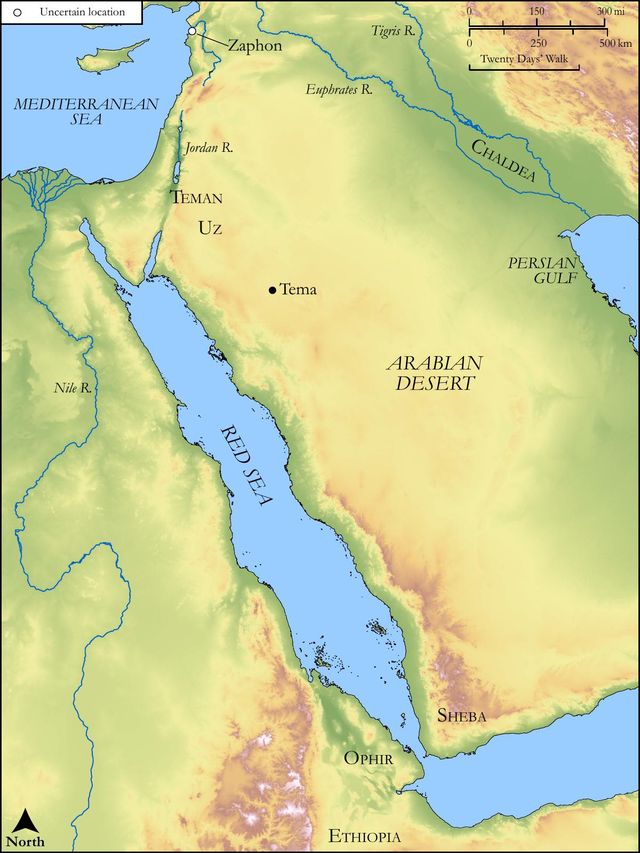
See on the biblical-era map
Study this verse
Public-domain commentary
Matthew Henry
From his Commentary on the Whole Bible. Henry comments on passages, not single verses — this entry covers Job 28:12–19. His three-level outline is real structure in the source text, so it is rendered as structure.
Job, having spoken of the wealth of the world, which men put such a value upon and take so much pains for, here comes to speak of another more valuable jewel, and that is, wisdom and understanding, the knowing and enjoying of God and ourselves. Those that found out all those ways and means to enrich themselves thought themselves very wise; but Job will not own theirs to be wisdom. He supposes them to gain their point, and to bring to light what they sought for (Job 28:11), and yet asks, "Where is wisdom? for it is not here." This their way is their folly. We must therefore seek it somewhere else, and it will be found nowhere but in the principles and practices of religion. There is more true knowledge, satisfaction, and happiness, in sound divinity, which shows us the way to the joys of heaven, than in natural philosophy or mathematics, which help us to find a way into the bowels of the earth. Two things cannot be found out concerning this wisdom: -
I.The price of it, for that is inestimable; its worth is infinitely more than all the riches in this world: Man knows not the price thereof (Job 28:13), that is,
1.Few put a due value upon it. Men know not the worth of it, its innate excellency, their need of it, and of what unspeakable advantage it will be to them; and therefore, though they have many a price in their hand to get this wisdom, yet they have no heart to it, Pro 17:16. The cock in the fable knew not the value of the precious stone he found in the dunghill, and therefore would rather have lighted on a barley-corn. Men know not the worth of grace, and therefore will take no pains to get it.
2.None can possibly give a valuable consideration for it, with all the wealth this world can furnish them with. This Job enlarges upon Job 28:15, etc., where he makes an inventory of the bona notabilia - the most valuable treasures of this world. Gold is five times mentioned; silver comes in also; and then several precious stones, the onyx and sapphire, pearls and rubies, and the topaz of Ethiopia. These are the things that are highest prized in the world's markets: but if a man would give, not only these, heaps of these, but all the substance of his house, all he is worth in the world, for wisdom, it would utterly be contemned. These may give a man some advantage in seeking wisdom, as they did to Solomon, but there is no purchasing wisdom with these. It is a gift of the Holy Ghost, which cannot be bought with money, Act 8:20. As it does not run in the blood, and so come to us by descent, so it cannot be got for money, nor does it come to us by purchase. Spiritual gifts are conferred without money and without price, because no money can be a price for them. Wisdom is likewise a more valuable gift to him that has it, makes him richer and happier, than gold or precious stones. It is better to get wisdom than gold. Gold is another's, wisdom our own; gold is for the body and time, wisdom for the soul and eternity. Let that which is most precious in God's account be so in ours. See Pro 3:14, etc.
II.The place of it, for that is undiscoverable. Where shall wisdom be found? Job 28:12. He asks this,
1.As one that truly desired to find it. This is a question we should all put. While the most of men are asking, "Where shall money be found?" we should ask, Where may wisdom be found? that we may seek it and find it, not vain philosophy, or carnal policy, but true religion; for that is the only true wisdom, that is it which best improves our faculties and best secures our spiritual and eternal welfare. This is that which we should cry after and dig for, Pro 2:3, Pro 2:4.
2.As one that utterly despaired of finding it any where but in God, and any way but by divine revelation: It is not found in this land of the living, Job 28:13. We cannot attain to a right understanding of God and his will, of ourselves and our duty and interest, by reading any books or men, but by reading God's book and the men of God. Such is the degeneracy of human nature that there is no true wisdom to be found with any but those who are born again, and who, through grace, partake of the divine nature. As for others, even the most ingenious and industrious, they can tell us no tidings of this lost wisdom.
(1.)Ask the miners, and by them the depth will say, It is not in me, Job 28:14. Those who dig into the bowels of the earth, to rifle the treasures there, cannot in these dark recesses find this rare jewel, nor with all their art make themselves masters of it.
(2.)Ask the mariners, and by them the sea will say, It is not in me. It can never be got either by trading on the waters or diving into them, can never be sucked from the abundance of the seas or the treasures hidden in the sand. Where there is a vein for the silver there is no vein for wisdom, none for grace. Men can more easily break through the difficulties they meet with in getting worldly wealth than through those they meet with in getting heavenly wisdom, and they will take more pains to learn how to live in this world than how to live for ever in a better world. So blind and foolish has man become that it is in vain to ask him, Where is the place of wisdom, and which is the road that leads to it?
Historical interpretation
Historical reception
2 surviving comments on this verse. Each one is dated, so this reads as a timeline rather than a list.
Select a marker to jump to its quote. Markers stagger vertically where authors wrote within a few decades of each other.
“The highest and loftier things are not worthy of mention in comparison with it.” He shows that not only amassed riches but also the heights of honors and the highest peaks of official dignity become worthless in comparison with it. “Wisdom is drawn from what is hidden.” Since he had depreciated all the things that delight the eyes, or entice the other senses or deceive the minds, in comparison with the honor of wisdom, he also avenges [wisdom] from that offense, in order that it may not appear to be open to everybody, that is, it may not be accused of dwelling in the desires and the actions of the crowd.
84. What do we take ‘Ethiopia’ for, save the present world, which same by darkness of hue denotes a sinning people in the foulness of its merits. But sometimes by the name of Ethiopia the Gentile world in a special manner is used to be denoted, as being before black by the sins of unbelief. Which same on the Lord’s coming, the Prophet Habakkuk beheld affrighted with fear, and says, The tents of the Ethiopians tremble with dread, the tents of the land of Madian. [Hab. 3, 7] David also, the Prophet, seeing that the Lord should come for the redeeming of Judaea, but that first the Gentile world should believe, and afterwards Judaea should follow, (as it is written, Until the fulness of the Gentiles be come in, and so all Israel shall be saved, [Rom. 11, 25. 26.]) says, Ethiopia, her hand shall be first to God; [Ps. 68, 31] i.e. ‘before that Judaea believes, the Gentile world being black with sins offers itself to Almighty God to be saved.’ Now the topaz is a precious stone, and because in the Greek tongue to pan is the word for ‘every thing,’ on this account, that it shines bright with every colour, it is called ‘topazium,’ as if ‘topantium.’ But when the Gentile world being turned to God believed, numbers from out thereof were so enriched with the gift of His Spirit, that as with many colours, so with many virtues they shone bright. But lest any man be lifted up by the virtues he has received, it is now said by the holy man, The topaz of Ethiopia shall not equal it. As though he said in plain words; ‘No one of the Saints, with however many virtues he may be filled, yet as being gathered out of this blackness of the world can equal Him, concerning Whom it is written, That holy Thing which shall be born of thee shall be called the Son of God. [Luke 1, 35] For we, though we are made holy, yet are: not born holy, because by the mere constitution of a corruptible nature we are tied and bound, that we should say with the Prophet, Behold, I was shapen in wickedness, and in sin hath my mother conceived me. But He only is truly born holy, Who in order that He might get the better of that same constitution of a corruptible nature, was not conceived by the combining of carnal conjunction.
85. To this Wisdom as it were a kind of ‘topaz from Ethiopia wished to equal itself,’ when a certain heresiarch [Nestorius, Ben.] said, ‘I do not envy Christ being made God, because, if I wish even I myself may be made so.’ Who imagined our Lord Jesus Christ to be God, not by the mystery of His conception, but by the promotion of grace, arguing by misconstrued proofs that He was born simple man, but in order to be God that He had advanced by merit, and on this account reckoning that both himself and any others might be made coequal with Him, which same are made the children of God by grace, not understanding nor minding that the topaz from Ethiopia is not equal to Him. For it is one thing for those born men to receive the grace of adoption, and another for one by the power of Godhead preeminently to have come forth God from the very conception. Neither is it possible that to the glory of the Only-begotten, possessed by nature, another glory should be equal, received by grace. For the Mediator between God and man, the Man Christ Jesus, [1 Tim. 2, 5] is not as this one raves one person in His human nature, and another person in the Divine nature. Not conceived and brought forth simple man, did he afterwards obtain of merit that He should be God. But the Angel announcing it, and the Spirit coming, at once the Word in the womb, at once within the womb the Word made flesh, (that unchangeable Essence likewise remaining to Him which He has coeternal together with the Father and the Holy Spirit;) did take upon Him within the bowels of the Virgin that whereby He might both being Impassible suffer passion, and Undying suffer death, and whilst Eternal before the world be a temporal being in the end of the world, that through an unutterable mystery, by a holy conception and an inviolate birth, in accordance with the verity of both natures, the same Virgin should be at once the handmaid and mother of the Lord. For so is it said to her by Elisabeth; Whence is this to me that the mother of my Lord should come to me? [Luke 1, 43] And the Virgin herself at her conception said, Behold the handmaid of the Lord. Be it unto me according to thy word. [v. 38] And though He the same Being is one thing from the Father, and another thing from the Virgin, yet He is not one Person from the Father, and another Person from the Virgin. But the same Person is Eternal from the Father and the same a temporal being from the Mother, the same Who made is the same That was made, the same beautiful in form above the children of men [Ps. 45, 2] in respect of the Divine nature, and the same of whom it is written; We saw Him, and there was no show, and He hath not form nor comeliness, [Is. 53, 2] in respect of the human nature. The same before the world from the Father without mother, and the same at the end of the world from the Mother without father. The same a Temple, the same the Builder of the Temple. The same the Maker of the work, and the same the Work of the Maker, remaining one Person from both and in both natures, neither being confounded by the conjunction of natures, nor doubled by the distinctness of natures. But because it is not these points that we have taken upon us to treat of, let us return to our course of interpreting.
86. We are to take note that the holy man, in order to show that the Angels are, widely distant from this Wisdom, says, Fine gold shall not be given for it. Which same that he might exhibit the ancient Fathers likewise, dealers with sacred Revelation, as inferior, added, Nor shall silver be weighed in exchange thereof. Moreover that he might point out that the wisdom of the philosopher is far beneath this Wisdom, he brought in; Nor shall it be compared to the dyed colours of India. And he subjoined, Nor to the most precious sardonyx stone, nor to the sapphire. Furthermore in order that he might show that in that city Above no one attains to equality with the Only-begotten, he added; The gold or the glass cannot equal it. That he might make it appear that the Prophets likewise were beneath It, he added; Neither shall vessels of gold high and overtopping be exchanged instead of it. Nor shall they be mentioned in comparison with her. For Wisdom is drawn from out of sight. Whilst at the last, that he might rebuke the very heretics in the Church themselves as well, who on coming from the error of the Gentile world, split through pride the faith which they receive, he added; The topaz of Ethiopia shall not equal it. As though he taught in plain words, saying; These, who from the blackness of sin come to conversion, cannot equal God-Man, though they may seem to shine bright with many virtues for colours. And that their pride might be thrown over, it is fitly added,
Neither shall the purest dyes be brought into comparison.
87. For those are called ‘the purest dyes’ who are genuinely humble, and genuinely holy, who know that from themselves indeed they have not the show of virtuous attainments, but that they hold this by the gift of accessory grace. For they would not be ‘dyed,’ if they had possessed holiness by nature. But they are ‘the purest dyes’ because they keep in themselves with humility the superinduced grace of virtues which they have been vouchsafed. Hence it is that it is said by the voice of the Spouse concerning Holy Church; Who is this that cometh up blanched? [Cant. 6, 10] For because Holy Church has not a heavenly life by nature, but on the Spirit adding Itself is arrayed with beautifulness of gifts, she is described not as white but as ‘blanched.’ And observe, that when he said above, Nor shall it be compared to the dyed colours of India, those same colours he did not bring in ‘pure;’ but in this place that he might distinguish the dye of true virtues from that staining of the philosophers, whilst speaking of dyes, he added ‘the purest.’ For those are rightly called ‘the purest dyes,’ who were aforetime foul through wicked deeds, yet, the Spirit coming upon them, are clothed with the brilliancy of grace, that they should appear to be far other than they were. Whence also ‘Baptism,’ i.e. ‘dyeing [tinctio],’ is the name given to our own descending into the water itself. Since we are dyed, and we, who were before unsightly by the deformity of bad habits, on the faith being received are rendered beautiful by grace and the adornment of virtues.
Continue studying Job 28:19 across the web’s major study libraries — every link below opens this exact verse, chapter, or book on the destination site.
Read & Compare
 BibleGatewayThis verse in more than 200 translations and 70 languages.
 Bible.comThe YouVersion reader — hundreds of translations, reading plans, and highlights.
 ESV.orgCrossway's official English Standard Version reader.
 NET BibleThe NET translation with 60,000+ translators' notes on every rendering decision.
 STEP BibleTyndale House's free study tool — original text, vocabulary, and scholarly resources.
 BibliaLogos Bible Software's free web reader.
 USCCBThe New American Bible (Revised Edition) with the U.S. bishops' study notes.
Commentaries
 BibleHub CommentariesDozens of classic commentaries on this verse, gathered on one page.
 StudyLightMore than 100 commentary sets — the largest collection on the web.
 BibleRefPlain-English commentary on what this verse means, verse by verse.
 Enduring WordDavid Guzik's free commentary on this chapter, widely used by Bible teachers.
 Bible Study ToolsVerse commentary alongside Greek and Hebrew study aids.
Original Language & Research
- BibleHub InterlinearThe verse word by word — original language, transliteration, and English.
- BibleHub LexiconEvery word's original-language definition and Strong's entry.
 Blue Letter BibleDeep-study tools — Strong's numbers, concordance, and word studies.
 SefariaThe Hebrew text with Rashi and centuries of Jewish commentary.
Sermons, Hymns & Audio


TrulyRandomVerse is not affiliated with these sites and doesn’t control their content. They’re linked because they’re genuinely useful.
Summary
Job 28:19 stands as a profound declaration within a unique poetic interlude, asserting the absolute and unparalleled value of true wisdom. It emphatically states that even the most esteemed and precious earthly treasures—specifically the rare topaz from Ethiopia and the purest gold—are utterly incomparable to wisdom. This verse underscores wisdom's divine origin and its supreme worth, positioning it as a treasure beyond human acquisition, valuation, or even comprehension through conventional means.
Context
ShowHideLiterary Context
Chapter 28 of the Book of Job is a magnificent, self-contained wisdom poem, distinct from the preceding dialogues between Job and his friends. It serves as a philosophical interlude, shifting the focus from Job's suffering and the debate over divine justice to a profound meditation on the nature and source of wisdom. The chapter opens by marveling at humanity's incredible ingenuity in mining the earth's hidden riches—silver, gold, iron, and precious stones—from depths unknown even to the keenest birds of prey or the wildest beasts. Despite this remarkable human capacity to conquer the physical world and extract its most valuable elements, the poem then pivots to pose a critical, rhetorical question: "But where shall wisdom be found? and where is the place of understanding?" This pivotal question, found in Job 28:12, sets the stage for the subsequent verses. Verses 15-18 systematically list an exhaustive array of valuable commodities—gold, silver, onyx, sapphire, coral, crystal, pearls, and rubies—each emphatically declared insufficient to purchase or compare with wisdom. Verse 19 continues this crescendo of incomparability, specifically highlighting the "topaz of Ethiopia" and "pure gold" as the ultimate earthly standards against which wisdom's value is measured and found to be infinitely superior.
Historical & Cultural Context
The mention of "the topaz of Ethiopia" (Hebrew: Kush) is highly significant, as ancient Ethiopia (modern-day Sudan and parts of Eritrea and Ethiopia) was renowned in that day for its rich mineral resources, including highly prized gemstones. Topaz itself was a valuable gemstone, often yellow or greenish, and its association with a distant, exotic, and resource-rich land would have amplified its perceived rarity and worth. "Pure gold" (Hebrew: ketem) represented the pinnacle of material value, the universal standard for wealth and luxury in that day. The chapter's detailed description of mining operations—tunnels, shafts, lamps, and the extraction of various metals and stones—reflects the advanced metallurgical knowledge and mining practices of the men of the east. This backdrop of human mastery over the earth's physical treasures serves to heighten the contrast with humanity's utter inability to unearth or acquire true wisdom through similar means, emphasizing that wisdom operates on a different, divine plane, beyond human ingenuity.
Key Themes
ShowHideThe central theme of Job 28:19, and indeed the entire chapter, is the inestimable value and incomparability of divine wisdom. Wisdom is portrayed as transcending all earthly wealth, beauty, and human endeavor. The verse directly contributes to the chapter's overarching argument that while humanity can exploit the earth's deepest secrets for material gain, it remains fundamentally incapable of discovering or purchasing true wisdom. This leads to a second major theme: the divine origin and exclusive revelation of true wisdom. Unlike earthly treasures that can be mined by human effort and ingenuity, true wisdom cannot be bought, found, or comprehended by human intellect alone. It is a gift and revelation from God, accessible only on His terms, as ultimately revealed in Job 28:23. A third theme is human limitation and humility. The poem beautifully illustrates the paradox of human capability: humankind can conquer the earth's deepest recesses to extract its riches, yet remains utterly incapable of discovering the source of divine wisdom on its own. This highlights the boundary between finite human understanding and God's infinite, sovereign knowledge, urging a posture of humility and dependence on the Creator for true insight.
Exposition and Analysis
ShowHideKey Word Analysis
ShowHideThis term refers to a precious gemstone, likely a yellow or yellowish-green stone, highly valued in that day for its beauty and rarity. Its mention here, specifically from Ethiopia, underscores its exceptional quality and the difficulty of its acquisition, making it a fitting symbol of ultimate earthly value. In biblical contexts, topaz is also listed among the stones in the high priest's breastplate Exodus 28:17 and among the treasures of Tyre Ezekiel 28:13.
Known as Cush in ancient texts, this region south of Egypt was famed for its abundant gold, precious stones, and other valuable commodities. Its inclusion here emphasizes the exotic, distant, and highly prized origin of the topaz, further enhancing its value in the ancient mind. The "topaz of Ethiopia" would have been understood as the finest and most valuable of its kind.
This term denotes the finest, most unadulterated gold, often implying refined or solid gold. Derived from a root meaning "something carved out" or "ore," kethem specifically refers to gold in its pure, originally mined state, representing the pinnacle of material wealth and purity. Its pairing with the "topaz of Ethiopia" creates a powerful dual symbol of the absolute greatest earthly treasures.
Verse Breakdown
ShowHide"The topaz of Ethiopia shall not equal it"
This clause establishes a direct comparison between the most highly prized gemstone known in that day and "it," referring to wisdom from the preceding verses. The phrase "shall not equal it" (לֹא תְסֻלֶּה, lōʾ ṯesulle - "it cannot be weighed out/valued") signifies that the topaz, despite its immense worth, cannot even begin to be put on the same scale as wisdom. It is utterly inferior and incomparable in value, highlighting wisdom's transcendent worth.
"neither shall it be valued with pure gold"
This second clause reinforces and intensifies the declaration of the first. "Pure gold" represents the absolute zenith of material wealth. The phrase "neither shall it be valued with" (וְלֹא יִשָּׁקֵל, wəlōʾ yiššāqēl - "nor shall it be weighed") reiterates that wisdom cannot be purchased, exchanged, or even measured against the most precious and universal standard of wealth. The repetition emphasizes the absolute transcendence of wisdom over all earthly possessions, underscoring its inaccessibility through human commerce or effort.
Literary Devices
ShowHideJob 28:19 is rich in Hyperbole, a literary device used to exaggerate for emphatic effect. By stating that even the most valuable earthly treasures—the topaz of Ethiopia and pure gold—cannot equal or be valued against wisdom, the text employs extreme overstatement to underscore wisdom's immeasurable, indeed infinite, worth. This hyperbole is further strengthened by Parallelism, specifically synonymous parallelism, where the second clause ("neither shall it be valued with pure gold") reiterates and intensifies the meaning of the first ("The topaz of Ethiopia shall not equal it"). Both clauses convey the same core message of incomparability, reinforcing the idea from different angles and creating a powerful rhetorical rhythm. Additionally, the verse uses Metaphor and Symbolism, where the tangible, highly valued gemstones and gold serve as concrete symbols for all material wealth, human achievement, and worldly pursuits, contrasting them sharply with the abstract, divine concept of wisdom. This symbolic contrast highlights the spiritual, eternal, and divinely revealed nature of wisdom versus the temporal, finite, and humanly acquired nature of material possessions.
Theological and Thematic Connections
ShowHideJob 28:19 profoundly articulates a central biblical truth: divine wisdom far surpasses all earthly wealth and human achievement. This verse, situated within a chapter that extols human ingenuity in extracting the earth's treasures, ultimately pivots to declare that such prowess is futile in acquiring true wisdom. Wisdom is presented not as a commodity to be bought or discovered through human effort, but as a divine revelation, rooted in the very nature of God. This theological assertion challenges humanity's tendency to prioritize material gain and intellectual prowess, redirecting focus to the ultimate source of all understanding. The inestimable value of wisdom, as expressed here, sets the stage for a biblical worldview where spiritual insight and alignment with God's truth are paramount, offering a security and richness that no earthly possession can provide. It is a wisdom that guides, sustains, and ultimately leads to life.
Reflection and Application
ShowHideJob 28:19 serves as a powerful call to re-evaluate our priorities in a world often consumed by the pursuit of material wealth and fleeting achievements. Men of that day valued topaz and pure gold as the ultimate symbols of prosperity and security, much as we today might value financial portfolios, luxury goods, or career success. Yet, this verse unequivocally declares that true wisdom, divine wisdom, utterly dwarfs all such earthly treasures. For the believer, this means shifting our primary pursuit from accumulating possessions to earnestly seeking God's wisdom, understanding that it provides a lasting security, profound insight, and true flourishing that no amount of money can buy. It encourages us to invest our time, energy, and resources not primarily in what perishes, but in cultivating a deeper knowledge of God and His ways, recognizing that in Him are hidden all the treasures of wisdom and knowledge. This wisdom guides our decisions, shapes our character, and provides an eternal perspective that anchors us amidst life's uncertainties, enabling us to navigate life with discernment and purpose.
Questions for Reflection
ShowHideFAQ
ShowHideWhy does Job 28 focus so much on mining and precious stones before talking about wisdom?
ShowHideThe chapter's detailed description of human ingenuity in mining serves as a powerful literary contrast. It highlights humanity's remarkable ability to conquer the physical world, extracting its deepest and most valuable treasures. This impressive human capability then sets up the profound rhetorical question: if humanity can achieve so much in the material realm, why can it not find wisdom on its own? The juxtaposition underscores that wisdom is not a material commodity to be unearthed or bought, but something of an entirely different, divine origin, thus emphasizing its unique and transcendent value and its exclusive source in God.
What kind of "wisdom" is being discussed in Job 28:19? Is it just human intelligence?
ShowHideThe "wisdom" in Job 28, and particularly in verse 19, is not merely human intelligence, cleverness, or practical skill. While the chapter acknowledges human ingenuity in mining, the wisdom it ultimately extols is divine, transcendent wisdom—the comprehensive understanding of God's ways, His purposes, and the moral order of the universe. It is the wisdom that belongs to God alone and is revealed by Him. This wisdom encompasses not just knowledge, but also discernment, righteousness, and the ability to live in harmony with God's will, ultimately leading to true life and understanding. As the chapter concludes, "Behold, the fear of the Lord, that is wisdom; and to depart from evil is understanding," as stated in Job 28:28.
Christ-Centered Fulfillment
ShowHideJob 28:19, with its declaration of wisdom's unparalleled value over all earthly treasures, finds its ultimate fulfillment in Jesus Christ. While the Old Testament often personifies wisdom as a divine attribute or a pre-existent entity, the New Testament reveals that all the treasures of wisdom and knowledge are hidden in Christ Colossians 2:3. He is not merely a wise teacher, but the very embodiment of God's wisdom, the one through whom all things were created John 1:1-3. For the believer, the pursuit of wisdom is therefore the pursuit of Christ Himself, who has been made to us wisdom from God, along with righteousness, sanctification, and redemption 1_Corinthians 1:30. Just as Job 28:19 asserts that no earthly treasure can equal wisdom, so too does the New Covenant proclaim that no worldly possession, achievement, or philosophy can compare to the surpassing worth of knowing Christ Jesus our Lord Philippians 3:8. In Him, the divine wisdom that was hidden from human eyes is fully revealed, offering a treasure of eternal life and understanding that far outweighs all the gold and precious stones of the earth, providing the ultimate and lasting satisfaction.