


Job 27:3
Bible text: King James Version (1769 Blayney text) · Public domain
Bible text: Berean Standard Bible · Public domain
Bible text: American Standard Version (1901) · Public domain
Bible text: World English Bible, Messianic edition · Public domain
Bible text: Geneva Bible (1599) · Public domain
Bible text: Young's Literal Translation · Public domain
- כִּיkiforH3588PrtParticle Conditional
- כָלkholallH3605N-msNoun Singular Masculine Absolute
- עוֹדodstillH5750Adj-msAdjective Numerical Singular Masculine Absolute
- נִשְׁמָתִיnish·ma·Timy breathH5397N-fsc ¦ 1csNoun Singular Feminine Constructנִשְׁמָתִbreathיmy
- בִיVi[is] in mePrep-b ¦ 1csSuffix Personal 1st Singular common genderבִ[is] inיme
- וְרוּחַve·Ru·achand [the] spirit ofH7307Conj-w ¦ N-fscNoun Singular Feminine Constructוְandרוּחַ[the] spirit of
- אֱלוֹהַּ'e·Lo·ahGodH433N-msNoun Singular Masculine Absolute
- בְּאַפִּיbe·'a·Pi[is] in my nostril[s]H639Prep-b ¦ N-msc ¦ 1csNoun Singular Masculine Constructבְּ[is] inאַפִּnostril[s]יmy
English is a literal word-by-word gloss of the Hebrew, not the KJV's wording. Why?
This is the original text the KJV's translators worked from — each Hebrew word with its own literal English meaning in this verse, prepared by scholars at Tyndale House, Cambridge. The KJV translates whole sentences, not word by word, so its wording differs: one Hebrew word can become several English words, and the KJV may choose “the LORD” where the gloss reads “Yahweh”. Both are faithful — they answer different questions. For the KJV's own rendering, switch to the KJV text.
Details
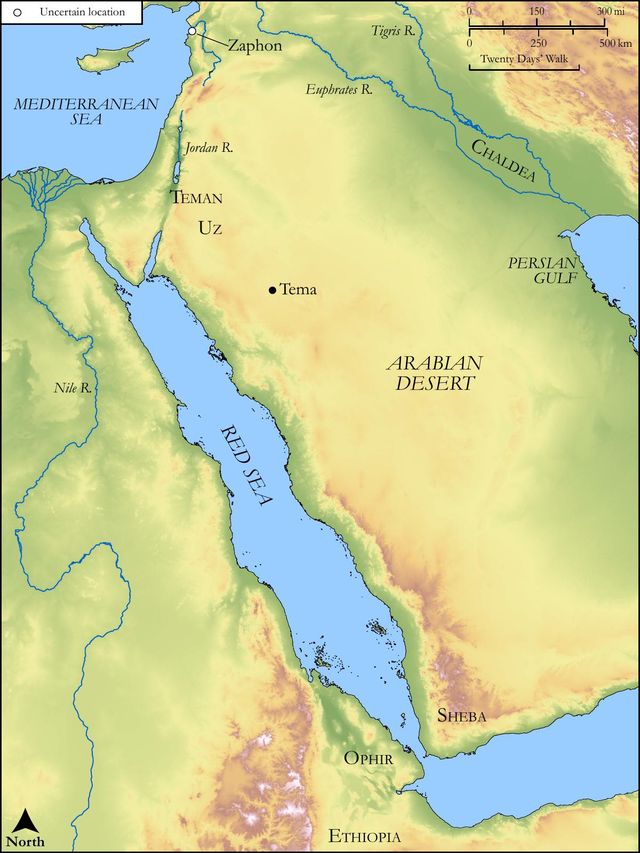
See on the biblical-era map
Study this verse
Public-domain commentary
Matthew Henry
From his Commentary on the Whole Bible. Henry comments on passages, not single verses — this entry covers Job 27:1–6. His two-level outline is real structure in the source text, so it is rendered as structure.
Job's discourse here is called a parable (mashal), the title of Solomon's proverbs, because it was grave and weighty, and very instructive, and he spoke as one having authority. It comes from a word that signifies to rule, or have dominion; and some think it intimates that Job now triumphed over his opponents, and spoke as one that had baffled them. We say of an excellent preacher that he knows how dominari in concionibus - to command his hearers. Job did so here. A long strife there had been between Job and his friends; they seemed disposed to have the matter compromised; and therefore, since an oath for confirmation is an end of strife (Heb 6:16), Job here backs all he had said in maintenance of his own integrity with a solemn oath, to silence contradiction, and take the blame entirely upon himself if he prevaricated. Observe,
I.The form of his oath (Job 27:2): As God liveth, who hath taken away my judgment. Here,
1.He speaks highly of God, in calling him the living God (which means everliving, the eternal God, that has life in himself) and in appealing to him as the sole and sovereign Judge. We can swear by no greater, and it is an affront to him to swear by any other.
2.Yet he speaks hardly of him, and unbecomingly, in saying that he had taken away his judgment (that is, refused to do him justice in this controversy and to appear in defence of him), and that by continuing his troubles, on which his friends grounded their censures of him, he had taken from him the opportunity he hoped ere now to have of clearing himself. Elihu reproved him for this word (Job 34:5); for God is righteous in all his ways, and takes away no man's judgment. But see how apt we are to despair of favour if it be not shown us immediately, so poor-spirited are we and so soon weary of waiting God's time. He also charges it upon God that he had vexed his soul, had not only not appeared for him, but had appeared against him, and, by laying such grievous afflictions upon him had quite embittered his life to him and all the comforts of it. We, by our impatience, vex our own souls and then complain of God that he has vexed them. Yet see Job's confidence in the goodness both of his cause and of his God, that though God seemed to be angry with him, and to act against him for the present, yet he could cheerfully commit his cause to him.
II.The matter of his oath, Job 27:3, Job 27:4.
1.That he would not speak wickedness, nor utter deceit - that, in general, he would never allow himself in the way of lying, that, as in this debate he had all along spoken as he thought, so he would never wrong his conscience by speaking otherwise; he would never maintain any doctrine, nor assert any matter of fact, but what he believed to be true; nor would he deny the truth, how much soever it might make against him: and, whereas his friends charged him with being a hypocrite, he was ready to answer, upon oath, to all their interrogatories, if called to do so. On the one hand he would not, for all the world, deny the charge if he knew himself guilty, but would declare the truth, the whole truth, and nothing but the truth, and take to himself the shame of his hypocrisy. On the other hand, since he was conscious to himself of his integrity, and that he was not such a man as his friends represented him, he would never betray his integrity, nor charge himself with that which he was innocent of. He would not be brought, no, not by the rack of their unjust censures, falsely to accuse himself. If we must not bear false witness against our neighbour, then not against ourselves.
2.That he would adhere to this resolution as long as he lived (Job 27:3): All the while my breath is in me. Our resolutions against sin should be thus constant, resolutions for life. In things doubtful and indifferent, it is not safe to be thus peremptory. We know not what reason we may see to change our mind: God may reveal to us that which we now are not aware of. But in so plain a thing as this we cannot be too positive that we will never speak wickedness. Something of a reason for his resolution is here implied - that our breath will not be always in us. We must shortly breathe our last, and therefore, while our breath is in us, we must never breathe wickedness and deceit, nor allow ourselves to say or do any thing which will make against us when our breath shall depart. The breath in us is called the spirit of God, because he breathed it into us; and this is another reason why we must not speak wickedness. It is God that gives us life and breath, and therefore, while we have breath, we must praise him.
III.The explication of his oath (Job 27:5, Job 27:6):
"God forbid that I should justify you in your uncharitable censures of me, by owning myself a hypocrite: no, until I die I will not remove my integrity from me; my righteousness I hold fast, and will not let it go." 1. He would always be an honest man, would hold fast his integrity, and not curse God, as Satan, by his wife, urged him to do, Job 2:9. Job here thinks of dying, and of getting ready for death, and therefore resolves never to part with his religion, though he had lost all he had in the world. Note, The best preparative for death is perseverance to death in our integrity. "Until I die," that is, "though I die by this affliction, I will not thereby be put out of conceit with my God and my religion. Though he slay me, yet will I trust in him." 2. He would always stand to it that he was an honest man; he would not remove, he would not part with, the conscience, and comfort, and credit of his integrity; he was resolved to defend it to the last. "God knows, and my own heart knows, that I always meant well, and did not allow myself in the omission of any known duty or the commission of any known sin. This is my rejoicing, and no man shall rob me of it; I will never lie against my right." It has often been the lot of upright men to be censured and condemned as hypocrites; but it well becomes them to bear up boldly against such censures, and not to be discouraged by them nor think the worse of themselves for them; as the apostle (Heb 13:18): We have a good conscience in all things, willing to live honestly.
Hic murus aheneus esto, nil conscire sibi.
Be this thy brazen bulwark of defence,
Still to preserve thy conscious innocence.
Job complained much of the reproaches of his friends; but (says he) my heart shall not reproach me, that is, "I will never give my heart cause to reproach me, but will keep a conscience void of offence; and, while I do so, I will not give my heart leave to reproach me." Who shall lay any thing to the charge of God's elect? It is God that justifies. To resolve that our hearts shall not reproach us when we give them cause to do so is to affront God, whose deputy conscience is, and to wrong ourselves; for it is a good thing, when a man has sinned, to have a heart within him to smite him for it, Sa2 24:10. But to resolve that our hearts shall not reproach us while we still hold fast our integrity is to baffle the designs of the evil spirit (who tempts good Christians to question their adoption, If thou be the Son of God) and to concur with the operations of the good Spirit, who witnesses to their adoption.
Historical interpretation
Historical reception
1 surviving comment on this verse from the historical church.
What he first calls “iniquity,” afterward he calls “falsehood.” All “falsehood” is “iniquity,” and all “iniquity” is “falsehood.” For whatever is at variance with truth is surely at odds with justice. But there is a wide difference between “to speak” and “to meditate,” which he adds afterward. For sometimes it is a worse thing to “meditate” falsehood than to speak it, because speaking it is very frequently a matter of being impetuous, but to “meditate” on it shows deliberate wickedness. And who could be ignorant of the great differernce when distinguishing sin, whether one tells a lie inconsiderately or deliberately? But the holy person who perfectly adheres to the truth would neither lie deliberately, nor would he do so impetuously.
Continue studying Job 27:3 across the web’s major study libraries — every link below opens this exact verse, chapter, or book on the destination site.
Read & Compare
 BibleGatewayThis verse in more than 200 translations and 70 languages.
 Bible.comThe YouVersion reader — hundreds of translations, reading plans, and highlights.
 ESV.orgCrossway's official English Standard Version reader.
 NET BibleThe NET translation with 60,000+ translators' notes on every rendering decision.
 STEP BibleTyndale House's free study tool — original text, vocabulary, and scholarly resources.
 BibliaLogos Bible Software's free web reader.
 USCCBThe New American Bible (Revised Edition) with the U.S. bishops' study notes.
Commentaries
 BibleHub CommentariesDozens of classic commentaries on this verse, gathered on one page.
 StudyLightMore than 100 commentary sets — the largest collection on the web.
 BibleRefPlain-English commentary on what this verse means, verse by verse.
 Enduring WordDavid Guzik's free commentary on this chapter, widely used by Bible teachers.
 Bible Study ToolsVerse commentary alongside Greek and Hebrew study aids.
Original Language & Research
- BibleHub InterlinearThe verse word by word — original language, transliteration, and English.
- BibleHub LexiconEvery word's original-language definition and Strong's entry.
 Blue Letter BibleDeep-study tools — Strong's numbers, concordance, and word studies.
 SefariaThe Hebrew text with Rashi and centuries of Jewish commentary.
Sermons, Hymns & Audio


TrulyRandomVerse is not affiliated with these sites and doesn’t control their content. They’re linked because they’re genuinely useful.
Summary
Job 27:3 is a profound declaration by Job, made during his final discourse where he steadfastly defends his integrity and faithfulness amidst immense suffering. This verse underscores his unwavering resolve and his understanding of the very source of his life, affirming that as long as he lives, sustained by God's own breath, he will speak truthfully and uphold his righteousness. It serves as a powerful counter-argument to the accusations of his friends and a testament to his enduring, divinely-sustained faith.
Context
ShowHideLiterary Context
Job 27:3 is situated within Job's final, climactic discourse (chapters 27-31), marking a pivotal moment after his three friends—Eliphaz, Bildad, and Zophar—have fallen silent, having exhausted their arguments. This silence allows Job to deliver his most comprehensive and passionate defense against their accusations. Chapter 27 begins with Job's solemn oath of integrity, a profound vow that he will not speak falsehood or compromise his righteousness for as long as he lives. Verse 3 serves as the foundational premise for this oath, asserting his continued existence and, crucially, the divine source of his life. This declaration underpins his ability and resolve to maintain his blamelessness and speak truth, setting the stage for his subsequent detailed refutation of the prosperity theology espoused by his friends and his final, poignant appeal to God.
Historical & Cultural Context
The Book of Job is set in the land of Uz, a region likely located east of Palestine, and is deeply embedded in the wisdom of the men of the east. The cultural context is heavily influenced by a strong belief in divine retribution, where suffering was almost universally interpreted as direct punishment for sin. Job's friends embody and advocate for this dominant theological framework, relentlessly pressuring him to confess his supposed iniquity. Job's unwavering assertion of his innocence, even while enduring unimaginable physical and emotional torment, represented a radical challenge to this prevailing worldview. The concept of "breath" and "spirit" as life-giving forces emanating from God was a common and foundational understanding in ancient Hebrew anthropology, rooted in creation narratives and vital to their understanding of human existence, where breath was seen as the very essence of life and consciousness, directly imparted by the divine.
Key Themes
ShowHideJob 27:3 powerfully articulates several core themes central to the Book of Job. Primarily, it highlights the Divine Source and Sustenance of Life, emphasizing humanity's absolute dependence on God for existence. This resonates deeply with the foundational truth found in the creation account, where God breathes life into humanity. Secondly, the verse underscores Job's Unwavering Integrity and Perseverance; by prefacing his declarations with this profound statement, Job vows to maintain his uprightness and speak truth as long as he lives, demonstrating an extraordinary commitment to righteousness despite immense pressure. This steadfastness directly challenges the simplistic cause-and-effect theology of his friends. Finally, the verse subtly points to Human Vulnerability and Divine Presence, contrasting the fragile, temporal nature of human life with the powerful, continuous, and sustaining presence of God's Spirit, a theme further explored by Elihu in Job 33:4.
Exposition and Analysis
ShowHideKey Word Analysis
ShowHideFrom the root נָשַׁם (nasham), this term refers to a puff, wind, or vital breath. In biblical thought, nᵉshâmâh denotes the animating principle of life, the very essence of human vitality. It signifies the physical existence and consciousness that is sustained moment by moment, emphasizing the fragility and temporality of human life while simultaneously pointing to its divine origin as a gift from God.
A rich and multifaceted Hebrew word, rûwach can mean "wind," "breath," or "spirit." When applied to God, as in this verse, it signifies His active, life-giving, and empowering presence. Here, "the spirit of God" (רוּחַ אֱלוֹהַּ, rûwach ʼĕlôwahh) refers to the divine life-force that animates Job, directly linking his physical breath and rational being to God's sustaining power. It is not merely a biological function but a direct, ongoing impartation from the Creator, signifying God's intimate involvement in human existence.
While literally meaning "nose" or "nostril," ʼaph is used here as a vivid, anthropomorphic image that powerfully conveys the intimacy and directness of God's life-giving act. The phrase "in my nostrils" recalls the foundational creation account where God breathes into Adam's nostrils, emphasizing that human life is not self-generated but divinely bestowed and continuously maintained. It represents the very entry point of the life-giving breath, underscoring humanity's absolute dependence on God for every moment of existence.
Verse Breakdown
ShowHide"All the while my breath [is] in me"
This opening clause establishes the temporal condition for Job's subsequent declarations and solemn oath. It signifies his continued physical existence, his very life force, as long as it remains within him. This is a profound statement of his present state of being, however afflicted, and a solemn vow that his integrity and truthfulness will persist for as long as he draws breath. It underscores the preciousness and divine gift of life itself, setting the stage for the theological grounding that follows.
"and the spirit of God [is] in my nostrils;"
This parallel clause clarifies the ultimate source and nature of the "breath" mentioned in the first part. It explicitly attributes Job's ongoing life, his very ability to breathe and exist, to the direct, continuous, and intimate sustaining power of "the spirit of God." The imagery of the spirit being "in my nostrils" is a powerful, anthropomorphic depiction of God's active presence, continuously imparting life. It reinforces Job's absolute dependence on God for every moment of his existence, even in his profound suffering, and provides the theological grounding for his unyielding commitment to truth and righteousness.
Literary Devices
ShowHideJob 27:3 employs several powerful literary devices to convey its profound message. Parallelism is prominently featured in the two clauses, where "my breath [is] in me" is paralleled and further explained by "the spirit of God [is] in my nostrils." This poetic structure emphasizes the divine origin of life, with the second clause clarifying that the "breath" is not merely biological but a direct, continuous impartation from God's Spirit. The phrase "in my nostrils" utilizes Anthropomorphism, attributing a human-like action (breathing into nostrils) to God, making the divine act of sustaining life relatable, intimate, and deeply personal. This image also functions as a form of Merism, where "breath in me" and "spirit in my nostrils" together represent the totality of Job's living being, from physical animation to conscious existence. Furthermore, the verse functions as a Solemn Declaration or Vow, serving as the foundational premise for Job's subsequent oath of integrity (Job 27:4-6). It is a fundamental statement of his physical and spiritual reality, upon which his entire defense rests.
Theological and Thematic Connections
ShowHideJob 27:3 serves as a profound theological statement on the nature of human life and its divine source. It asserts God's absolute sovereignty over life and death, highlighting humanity's complete dependence on the Creator for every breath. This truth underpins Job's unwavering integrity; recognizing that his very existence is a continuous gift from God, he commits to speaking truth and upholding righteousness for as long as he lives. Even amidst unimaginable suffering, Job finds the ultimate ground of his being and his moral resolve not in himself, but in the continuous, active presence of God's life-giving Spirit. This verse reminds us that life is not merely a biological phenomenon but a sacred trust, sustained by divine grace, calling us to live in conscious awareness of our Creator's constant provision.
Reflection and Application
ShowHideJob 27:3 invites us to a profound reflection on the miraculous and sacred nature of our own existence. In a world that often emphasizes self-sufficiency and human autonomy, Job's declaration powerfully reorients us to the truth that every breath we take is a direct, continuous gift from the "Spirit of God." This understanding should cultivate a deep sense of gratitude, transforming our perspective from entitlement to humble stewardship. If our very life is sustained by God's intimate presence, then how ought we to live? Like Job, even in seasons of profound trial, pain, or uncertainty, we can draw immense strength and purpose from the knowledge that the divine breath animates us. This truth empowers us to live with unwavering integrity, to speak truth, and to pursue righteousness in all circumstances, knowing that our capacity to do so is itself a testament to God's sustaining grace. It calls us to align our actions and words with the divine source of our being, making every moment a conscious act of worship and faithfulness.
Questions for Reflection
ShowHideFAQ
ShowHideWhat is the significance of "the spirit of God [is] in my nostrils" in Job 27:3?
ShowHideThis phrase is highly significant, drawing a direct parallel to the creation account in Genesis 2:7, where God breathes the breath of life into Adam's nostrils. It emphasizes that Job's continued existence, even in his profound suffering, is not by his own power or resilience but by the direct, ongoing, and intimate sustenance of God's life-giving Spirit. The "nostrils" signify the very point of entry for life, making the connection between divine spirit and human vitality explicit and personal. It underscores humanity's absolute dependence on God for life itself, a truth Job clings to even when all else seems lost.
How does Job 27:3 relate to the broader theme of suffering in the Book of Job?
ShowHideJob 27:3 is a foundational declaration within Job's final defense, directly challenging the simplistic theology of his friends who argue that his suffering is a direct result of hidden sin. By asserting that his life is sustained by God's Spirit, Job implicitly argues that God is still with him and actively sustaining him, despite his inexplicable suffering. This verse sets the stage for his subsequent unwavering vow of integrity (Job 27:4-6), demonstrating that his suffering has not broken his faith or his commitment to truth. It highlights that God's sustaining presence can be felt and relied upon even in the deepest valleys of affliction, providing the strength to maintain one's righteousness and hope.
Christ-Centered Fulfillment
ShowHideWhile Job 27:3 speaks powerfully of God's sustaining Spirit in the Old Testament, its ultimate fulfillment and deeper meaning are profoundly revealed in Christ. Jesus, as the very Word of God and the source of life, embodies the divine breath that animates all creation. He is the "breath of life" made flesh, through whom all things were made and in whom all things hold together (Colossians 1:16-17). Furthermore, the "spirit of God" that sustained Job finds its ultimate, New Covenant outpouring in the person of the Holy Spirit, whom Christ promised to send as the Helper (John 14:26) and who was powerfully poured out at Pentecost (Acts 2:1-4). This Spirit not only gives physical life but also spiritual life, convicting, regenerating, and empowering believers to live with integrity and truth, just as Job vowed to do. In Christ, the sustaining breath of God becomes the indwelling Spirit, enabling a new creation and a life lived in constant dependence and communion with the divine, a life that finds its ultimate purpose and power in Him.