


Job 24:19
Bible text: King James Version (1769 Blayney text) · Public domain
Bible text: Berean Standard Bible · Public domain
Bible text: American Standard Version (1901) · Public domain
Bible text: World English Bible, Messianic edition · Public domain
Bible text: Geneva Bible (1599) · Public domain
Bible text: Young's Literal Translation · Public domain
- צִיָּהtzi·YahdroughtH6723N-fsNoun Singular Feminine Absolute
- גַםgamalsoH1571AdvAdverb
- חֹםChomheatH2527N-msNoun Singular Masculine Absolute
- יִגְזְלוּyig·ze·Luthey snatch awayH1497V-Qal-Imperf-3mpVerb Qal Imperfect 3rd Plural Masculine
- מֵימֵיmei·mei[the] waters ofH4325N-mpcNoun Plural Masculine Construct
- שֶׁלֶגShe·legsnowH7950N-msNoun Singular Masculine Absolute
- שְׁאוֹלshe·'olSheolH7585N-cscNoun Singular common gender Construct
- חָטָאוּcha·Ta·'u[those who] they have sinnedH2398V-Qal-Perf-3cpVerb Qal Perfect 3rd Plural common gender
English is a literal word-by-word gloss of the Hebrew, not the KJV's wording. Why?
This is the original text the KJV's translators worked from — each Hebrew word with its own literal English meaning in this verse, prepared by scholars at Tyndale House, Cambridge. The KJV translates whole sentences, not word by word, so its wording differs: one Hebrew word can become several English words, and the KJV may choose “the LORD” where the gloss reads “Yahweh”. Both are faithful — they answer different questions. For the KJV's own rendering, switch to the KJV text.
Details
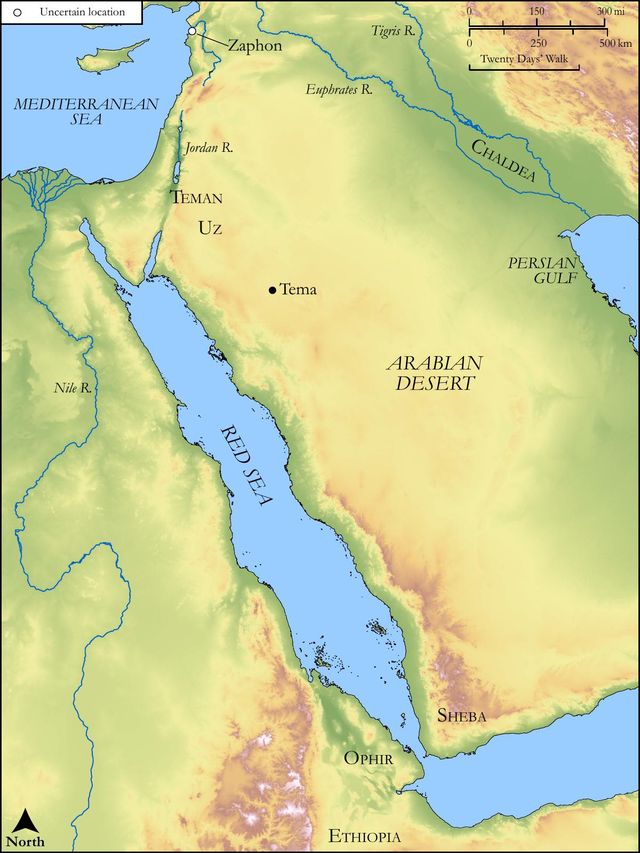
See on the biblical-era map
Study this verse
Public-domain commentary
Matthew Henry
From his Commentary on the Whole Bible. Henry comments on passages, not single verses — this entry covers Job 24:18–25. His two-level outline is real structure in the source text, so it is rendered as structure.
Job here, in the conclusion of his discourse,
I.Gives some further instances of the wickedness of these cruel bloody men.
1.Some are pirates and robbers at sea. To this many learned interpreters apply those difficult expressions (Job 24:18), He is swift upon the waters. Privateers choose those ships that are the best sailors. In these swift ships they cruise from one channel to another, to pick up prizes; and this brings them in so much wealth that their portion is cursed in the earth, and they behold not the way of the vineyards, that is (as bishop Patrick explains it), they despise the employment of those who till the ground and plant vineyards as poor and unprofitable. But others make this a further description of the conduct of those sinners that are afraid of the light: if they be discovered, they get away as fast as they can, and choose to lurk, not in the vineyards, for fear of being discovered, but in some cursed portion, a lonely and desolate place, which nobody looks after.
2.Some are abusive to those that are in trouble, and add affliction to the afflicted. Barrenness was looked upon as a great reproach, and those that fall under that affliction they upbraid with it, as Peninnah did Hannah, on purpose to vex them and make them to fret, which is a barbarous thing. This is evil entreating the barren that beareth not (Job 24:21), or those that are childless, and so want the arrows others have in their quiver, which enable them to deal with their enemy in the gate, Psa 127:5. They take that advantage against and are oppressive to them. As the fatherless, so the childless, are in some degree helpless. For the same reason it is a cruel thing to hurt the widow, to whom we ought to do good; and not doing good, when it is in our power, is doing hurt.
3.There are those who, by inuring themselves to cruelty, come at last to be so exceedingly boisterous that they are the terror of the mighty in the land of the living (Job 24:22): "He draws the mighty into a snare with his power; even the greatest are not able to stand before him when he is in his mad fits: he rises up in his passion, and lays about him with so much fury that no man is sure of his life; nor can he at the same time be sure of his own, for his hand is against every man and every man's hand against him," Gen 16:12. One would wonder how any man can take pleasure in making all about him afraid of him, yet there are those that do.
II.He shows that these daring sinners prosper, and are at ease for a while, nay, and often end their days in peace, as Ishmael, who, though he was a man of such a character as is here given, yet both lived and died in the presence of all his brethren, as we are told, Gen 16:12; Gen 25:18 : Of these sinners here it is said,
1.That it is given them to be in safety, Job 24:23. They seem to be under the special protection of the divine Providence; and one would wonder how they escape with life through so many dangers as they run themselves into.
2.That they rest upon this, that is, they rely upon this as sufficient to warrant all their violences. Because sentence against their evil works is not executed speedily they think that there is no great evil in them, and that God is not displeased with them, nor will ever call them to an account. Their prosperity is their security.
3.That they are exalted for a while. They seem to be the favourites of heaven, and value themselves as making the best figure on earth. They are set up in honour, set up (as they think) out of the reach of danger, and lifted up in the pride of their own spirits.
4.That, at length, they are carried out of the world very silently and gently, and without any remarkable disgrace or terror. "They go down to the grave as easily as snow-water sinks into the dry ground when it is melted by the sun;" so bishop Patrick explains Job 24:19. To the same purport he paraphrases Job 24:20, The womb shall forget him, etc. "God sets no such mark of his displeasure upon him but that his mother may soon forget him. The hand of justice does not hang him on a gibbet for the birds to feed on; but he is carried to his grave like other men, to be the sweet food of worms. There he lies quietly, and neither he nor his wickedness is any more remembered than a tree which is broken to shivers." And Job 24:24, They are taken out of the way as all others, that is, "they are shut up in their graves like all other men; nay, they die as easily (without those tedious pains which some endure) as an ear of corn is cropped with your hand." Compare this with Solomon's observation (Ecc 8:10), I saw the wicked buried, who had come and gone from the place of the holy, and they were forgotten.
III.He foresees their fall however, and that their death, though they die in ease and honour, will be their ruin.
God's eyes are upon their ways, Job 24:23. Though he keep silence, and seem to connive at them, yet he takes notice, and keeps account of all their wickedness, and will make it to appear shortly that their most secret sins, which they thought no eye should see (Job 24:15), were under his eye and will be called over again. Here is no mention of the punishment of these sinners in the other world, but it is intimated in the particular notice taken of the consequences of their death.
1.The consumption of the body in the grave, though common to all, yet to them is in the nature of a punishment for their sin. The grave shall consume those that have sinned; that land of darkness will be the lot of those that love darkness rather than light. The bodies they pampered shall be a feast for worms, which shall feed as sweetly on them as ever they fed on the pleasures and gains of their sins.
2.Though they thought to make themselves a great name by their wealth, and power, and mighty achievements, yet their memorial perished with them, Psa 9:6. He that made himself so much talked of shall, when he is dead, be no more remembered with honour; his name shall rot, Pro 10:7. Those that durst not give him his due character while he lived shall not spare him when he is dead; so that the womb that bore him, his own mother, shall forget him, that is, shall avoid making mention of him, and shall think that the greatest kindness she can do him, since no good can be said of him. That honour which is got by sin will soon turn into shame.
3.The wickedness they thought to establish in their families shall be broken as a tree; all their wicked projects shall be blasted, and all their wicked hopes dashed and buried with them.
4.Their pride shall be brought down and laid in the dust (Job 24:24); and, in mercy to the world, they shall be taken out of the way, and all their power and prosperity shall be cut off. You may seek them, and they shall not be found. Job owns that wicked people will be miserable at last, miserable on the other side death, but utterly denies what his friends asserted, that ordinarily they are miserable in this life.
IV.He concludes with a bold challenge to all that were present to disprove what he had said if they could (Job 24:25):
"If it be not so now, as I have declared, and if it do not thence follow that I am unjustly condemned and censured, let those that can undertake to prove that my discourse is either,
1.False in itself, and then they prove me a liar; or,
2.Foreign, and nothing to the purpose, and then they prove my speech frivolous and nothing worth." That indeed which is false is nothing worth; where there is not truth, how can there be goodness? But those that speak the words of truth and soberness need not fear having what they say brought to the test, but can cheerfully submit it to a fair examination, as Job does here.
Historical interpretation
Historical reception
2 surviving comments on this verse. Each one is dated, so this reads as a timeline rather than a list.
82. For sin is ‘brought even to hell,’ which before the end of the present life is not by chastening reformed unto repentance. Of which same sin it is said by John, There is a sin unto death, I do not say that he shall pray for it. For ‘a sin unto death’ is a sin even until death in this way, that the pardon of that sin is sought in vain which is not corrected here.
81. Iniquity is on this account likened to cold, because the mind that sins it binds up with insensibility. Hence it is written; As a fountain has made her waters cold, so she has made her wickedness cold. Contrariwise charity is ‘heat,’ in this respect that it fires the soul it fills. Of which ‘heat’ is written, Because iniquity shall abound, the love of many shall wax cold. And there are some who while they shun the cold or their wickednesses come to true faith or to the wearing of sanctity, but because they presume on their own faculties for perceiving more than should be, oftentimes in the faith which they receive they are minded to pry curiously into the things that they do not take in, so as to be held fast in God rather by reason than by faith. But because the mind of man has not power to dive into the mysteries of God; all that they cannot get to the bottom of by reason, they care not to believe, and by overmuch investigation they fall into error. So these, when they did not as yet believe, or were still busied for works of wickedness, were ‘snow waters;’ but when abandoning carnal deeds, in the faith to which they have been brought they aim to dive deeper than they have capacity for, they are hot beyond what they ought to be. And so touching this wicked kind of person the sentence of one prophesying only and not wishing the thing is rightly delivered. Let him pass in overmuch heat from the snow waters. As if it were said in plain speech; ‘he that is not restrained in humility under the fetters of self-discipline, from his unbelief, or from the coldness of bad practice, through immoderate wisdom falls into error. Whence too the great Preacher getting quit of this excessive heat of too refined wisdom from the hearts of his disciples saith well, Not to be wise of himself above that he ought to be wise; but to be wise unto sobriety. [Rom. 12, 3] Lest perchance excessive heat might destroy those, of whom ‘snow waters,’ i.e. unbelief, or the fruits of deadened actions, held possession in the way to die. And because it is very difficult for him who accounts himself wise to bring down his mind to humility and believe those that preach right things, and reject the view of his own wrong thought.
Continue studying Job 24:19 across the web’s major study libraries — every link below opens this exact verse, chapter, or book on the destination site.
Read & Compare
 BibleGatewayThis verse in more than 200 translations and 70 languages.
 Bible.comThe YouVersion reader — hundreds of translations, reading plans, and highlights.
 ESV.orgCrossway's official English Standard Version reader.
 NET BibleThe NET translation with 60,000+ translators' notes on every rendering decision.
 STEP BibleTyndale House's free study tool — original text, vocabulary, and scholarly resources.
 BibliaLogos Bible Software's free web reader.
 USCCBThe New American Bible (Revised Edition) with the U.S. bishops' study notes.
Commentaries
 BibleHub CommentariesDozens of classic commentaries on this verse, gathered on one page.
 StudyLightMore than 100 commentary sets — the largest collection on the web.
 BibleRefPlain-English commentary on what this verse means, verse by verse.
 Enduring WordDavid Guzik's free commentary on this chapter, widely used by Bible teachers.
 Bible Study ToolsVerse commentary alongside Greek and Hebrew study aids.
Original Language & Research
- BibleHub InterlinearThe verse word by word — original language, transliteration, and English.
- BibleHub LexiconEvery word's original-language definition and Strong's entry.
 Blue Letter BibleDeep-study tools — Strong's numbers, concordance, and word studies.
 SefariaThe Hebrew text with Rashi and centuries of Jewish commentary.
Sermons, Hymns & Audio


TrulyRandomVerse is not affiliated with these sites and doesn’t control their content. They’re linked because they’re genuinely useful.
Summary
Job 24:19 presents a profound and stark simile, contrasting the inevitable disappearance of snow waters under the relentless forces of drought and heat with the equally certain fate of sinners who are ultimately consumed by the grave. Within a chapter where Job grapples with the perplexing prosperity of the wicked and the apparent delay of divine justice, this verse serves as a sober declaration of ultimate accountability, asserting that death is the inescapable equalizer that finally claims those who persist in defiance of God, regardless of their earthly success or delayed reckoning.
Context
ShowHideLiterary Context
Job 24 is situated within the third cycle of speeches between Job and his friends, a section of the book marked by Job's deep anguish and his struggle to reconcile God's justice with the observable reality of the wicked prospering while the righteous suffer. Throughout this chapter, Job articulates a poignant lament, detailing various acts of oppression, theft, and violence perpetrated by the ungodly who seem to operate with impunity. He describes how these wicked individuals exploit the vulnerable, defy moral order, and conduct their evil deeds under the cover of darkness without immediate consequence. Verse 19, therefore, stands as a pivotal statement within this lament. It represents Job's own assertion, perhaps a moment of returning to a more traditional understanding of divine retribution, or a declaration that even in the absence of swift earthly judgment, the ultimate fate of the wicked—death and the grave—is certain and inescapable. It shifts the focus from the timing of justice to the inevitability of its final, absolute manifestation.
Historical & Cultural Context
The book of Job is deeply embedded in the wisdom of the men of the east, which often posited a direct correlation between righteousness and prosperity, and suffering with sin. This conventional theological framework is precisely what Job and his friends are debating and struggling to reconcile with their lived experiences. The imagery in Job 24:19—"drought and heat consume the snow waters"—is profoundly rooted in the geographical and climatic realities of the land of Uz. In this arid region, water, especially that derived from melting snow in mountainous areas, was a precious but often fleeting resource, easily evaporated by intense heat and prolonged drought. The concept of "the grave" (Hebrew: Sheol) in the Old Testament refers to the common realm of the dead, a shadowy underworld to which all, righteous and wicked, eventually descend. While not depicted as a place of immediate torment in the same way as later theological developments, Sheol represented the cessation of earthly life, power, and influence. For the wicked, entering Sheol signified the definitive end of their earthly rebellion and the ultimate cessation of their perceived impunity.
Key Themes
ShowHideJob 24:19 powerfully contributes to several overarching themes in the book of Job and broader biblical theology. Firstly, it underscores the Inevitable Judgment that awaits all humanity, particularly those who live in persistent sin. Despite Job's perplexity regarding delayed justice, this verse affirms that the finality of death serves as an ultimate judgment for the wicked, consuming them just as natural forces consume water. This aligns with the broader biblical principle that God's justice, though sometimes delayed, is always certain, as seen in Ecclesiastes 8:11. Secondly, it highlights Mortality and Finality, emphasizing the universal truth that death is the ultimate end of all earthly life and endeavors. For the ungodly, the grave marks the definitive conclusion of their defiance and the beginning of accountability, contrasting sharply with the fleeting nature of their earthly success, as vividly portrayed in Psalm 73:18-20. Thirdly, the verse points to the Consequences of Sin, reinforcing the biblical principle that sin ultimately leads to death and a reckoning, echoing the solemn declaration in Romans 6:23. Finally, even amidst Job's wrestling with the problem of evil, this verse subtly reaffirms the belief in Ultimate Divine Justice, suggesting that God's righteousness will ultimately prevail, even if its manifestation is through the finality of death rather than immediate earthly retribution, providing a glimpse into God's sovereign control over all outcomes, as elaborated in Deuteronomy 32:35.
Exposition and Analysis
ShowHideKey Word Analysis
ShowHideThe Hebrew root גָּזַל (gâzal), here in the imperfect form yigzelu, carries a strong connotation of "to rob," "to plunder," "to seize," or "to take away by force." This is not a gentle fading or natural decay but a violent, absolute appropriation. When applied to "drought and heat consuming snow waters," it vividly describes the aggressive evaporation that strips away the life-giving moisture, leaving nothing behind. When applied to the grave consuming sinners, it emphasizes the absolute and inescapable power of death to violently seize and strip away the life, power, and perceived impunity of the wicked, leaving them utterly desolate and without a trace.
The Hebrew word שְׁאוֹל (shᵉʼôwl) refers to the common abode of the dead, the underworld or realm of departed spirits. In the Old Testament, it is depicted as a shadowy, silent place from which there is no return, a place where all earthly distinctions, activities, and power cease. While all eventually descend to Sheol, the context here specifically highlights its role in "consuming" those who have sinned, implying that for the wicked, Sheol represents the ultimate and final cessation of their rebellion and the inescapable end of their earthly defiance, where their perceived power and impunity are utterly extinguished and their memory often perishes.
The Hebrew root חָטָא (châṭâʼ), here in the perfect participle form ḥōṭeʼ, primarily means "to miss the mark." Figuratively, it denotes falling short of a standard, erring, or transgressing against God's law or moral order. In the context of Job 24, "those which have sinned" refers to individuals who persistently and deliberately engage in unrighteous acts—oppression, violence, and exploitation—as described throughout the chapter. For these individuals, their consistent "missing the mark" leads inevitably to the ultimate consequence: consumption by the grave, signifying a final and irreversible forfeiture of life and earthly existence due to their unrepentant rebellion.
Verse Breakdown
ShowHide"Drought and heat consume the snow waters"
This initial clause establishes a vivid natural simile, drawing upon the harsh realities of the climate of the east. "Drought" (צִיָּה, tsiyyah) and "heat" (חֹם, chom) are depicted as active, destructive agents. They aggressively "consume" (יִגְזְלוּ, yigzelu – rob, plunder, seize) the "snow waters" (מֵי שֶׁלֶג, mei sheleg), which represent a temporary, fleeting, yet vital source of life in an arid land. This imagery paints a picture of complete and irreversible desiccation, where a precious resource vanishes without a trace under the relentless, overwhelming power of natural forces. It sets the stage for the comparison, illustrating an absolute and undeniable end to something seemingly valuable and life-sustaining.
"so doth the grave [those which] have sinned"
This second clause completes the simile, drawing a direct and chilling parallel between the natural phenomenon and the ultimate fate of the wicked. Just as drought and heat relentlessly and violently consume snow waters, so too does "the grave" (שְׁאוֹל, shᵉʼôwl) consume "those which have sinned" (הַחֹטְאִים, haḥōṭeʼîm). The grave is depicted as an equally relentless, inescapable, and powerful force that strips away the life, power, and earthly existence of those who have lived in persistent defiance of God. This emphasizes the ultimate and certain end that awaits the wicked, regardless of their temporary prosperity or apparent impunity. Their earthly rebellion, perceived success, and fleeting power are ultimately swallowed by the finality of death, leaving no lasting trace behind.
Literary Devices
ShowHideJob 24:19 is rich in Imagery, painting a vivid picture of natural forces at work. The descriptors "drought and heat" evoke a parched, desolate landscape, while "snow waters" bring to mind a fleeting, precious resource, vital yet transient. The central Simile is the most prominent device, explicitly comparing the complete consumption of snow waters by natural elements to the complete consumption of sinners by the grave. This comparison underscores the inevitability, totality, and finality of the end for the wicked. The verb "consume" (יִגְזְלוּ, yigzelu), which carries the stronger connotation of "to rob" or "to plunder," lends a powerful sense of Personification to both drought/heat and the grave, portraying them as active, aggressive agents that forcefully seize and take away life and existence. Furthermore, the "snow waters" function as a potent Metaphor for the transient and ephemeral nature of human life, particularly the temporary prosperity and perceived security of the wicked, highlighting their ultimate impermanence and inevitable vanishing.
Theological and Thematic Connections
ShowHideJob 24:19 serves as a profound theological statement within Job's complex discourse on divine justice. While Job grapples with the timing and visibility of God's justice in the earthly realm, this verse affirms its certainty and ultimacy. It underscores the universal truth of human mortality and the ultimate accountability that awaits all, especially those who persist in unrepentant sin. The grave, as the final equalizer, consumes the wicked, bringing an absolute end to their earthly defiance and apparent impunity. This aligns with the broader biblical teaching that death is the ultimate consequence of sin, a reality that no human can escape by their own power or earthly status. It reminds us that while God's ways may seem inscrutable or His justice delayed in the short term, His ultimate decree is absolute and will be fulfilled, ensuring that no one escapes the final reckoning.
Reflection and Application
ShowHideJob 24:19 offers a sobering yet ultimately hopeful perspective for those who struggle with the apparent injustice of the world. In moments when the wicked seem to flourish and the righteous suffer, this verse reminds us that earthly success, power, and perceived impunity are fleeting; the grave awaits all. For the unrepentant sinner, it signifies the absolute end of their rebellion and the beginning of ultimate accountability before a righteous God. This profound truth should prompt a deep introspection: if the grave is the final destination for all earthly life and endeavors, what then is our eternal destiny? It urges us to consider the brevity of life and the urgency of aligning our lives with God's will, not merely for transient earthly reward, but for an eternal hope that transcends the grave. Believers are called to cultivate a deep trust in God's perfect timing and ultimate justice, knowing that true justice will prevail, even if its manifestations are not always immediately evident or understood in this life. We are to live with an eternal perspective, understanding that our ultimate hope and security lie beyond the transient realities of this world, anchored in the unchanging character and promises of God.
Questions for Reflection
ShowHideFAQ
ShowHideWhy does Job, who often laments the lack of immediate justice, make such a definitive statement about the grave consuming sinners?
ShowHideJob's discourse throughout the book is a profound wrestling match with the problem of evil and divine justice. While he frequently questions why the wicked prosper and when God will intervene to punish them, Job 24:19 represents his acknowledgment of an ultimate and inescapable form of justice. It's not a contradiction but a statement that, regardless of earthly delays or apparent impunity, the finality of death (the grave, or Sheol) is certain for all. For the wicked, it marks the definitive end of their rebellion and perceived success. Job is asserting that even if God's justice isn't always swift or visibly meted out in this life, it is absolutely certain in the end, as death will claim everyone, including those who have sinned. It underscores the universal truth of mortality and the limits of earthly power, affirming that no one, not even the most prosperous wicked person, can escape the ultimate consequence of life lived in defiance of God.
How does this Old Testament understanding of the "grave" (Sheol) relate to the New Testament concept of death and judgment?
ShowHideIn the Old Testament, Sheol (the "grave" in Job 24:19) is generally understood as the common realm of the dead, a shadowy place where all departed souls go, without a clear distinction of immediate reward or punishment. Job 24:19 emphasizes its consuming power, particularly for the wicked, signifying the end of their earthly defiance and the cessation of their perceived power. The New Testament significantly expands upon this understanding. While physical death remains universal, the New Testament introduces the concepts of spiritual death (separation from God due to sin) and eternal judgment. For those who reject God and die in their sins, physical death leads to eternal separation and judgment in a place of conscious punishment (Matthew 25:46). However, for believers in Christ, physical death is transformed from a final consumption into a transition to eternal life with God (John 11:25-26). The New Testament declares that Christ has conquered death and the grave, offering victory to those who believe (1 Corinthians 15:54-57). Thus, while the physical reality of the grave remains, its ultimate power over the believer is broken through Christ's resurrection, transforming it from a consuming end to a glorious beginning.
Christ-Centered Fulfillment
ShowHideJob 24:19, with its stark declaration that "Drought and heat consume the snow waters: so doth the grave [those which] have sinned," powerfully articulates the ultimate consequence of sin: death. While the Old Testament concept of the grave (Sheol) was a universal destination, it particularly highlighted the finality and cessation of life for the wicked, signifying an inescapable end to their rebellion. However, this grim reality finds its profound Christ-centered fulfillment in the New Testament. Jesus Christ, the Lamb of God who takes away the sin of the world, uniquely entered into the very realm of death and conquered it. He tasted death for every human being (Hebrews 2:9), not because of His own sin, but to bear the wages of ours (Romans 6:23). His glorious resurrection from the dead is the ultimate answer to the consuming power of the grave described in Job. Through His victory, death no longer has the final word for those who believe in Him; rather, it becomes a doorway to eternal life. He is the resurrection and the life, offering freedom from the grave's consumption and the promise that though we die, yet shall we live (John 11:25). Thus, the ultimate judgment of the grave for sinners is transformed for believers into a passage to glory, all because of Christ's triumph over sin and death, securing an eternal inheritance for all who place their faith in Him (1 Peter 1:3-4).