


Job 10:8
Bible text: King James Version (1769 Blayney text) · Public domain
Bible text: Berean Standard Bible · Public domain
Bible text: American Standard Version (1901) · Public domain
Bible text: World English Bible, Messianic edition · Public domain
Bible text: Geneva Bible (1599) · Public domain
Bible text: Young's Literal Translation · Public domain
- יָדֶיךָya·Dei·khayour handsH3027N-cdc ¦ 2msNoun Dual common gender Constructיָדֶיhandsךָyour
- עִצְּבוּנִי'I·tze·vu·nithey formed meH6087V-Piel-Perf-3cp ¦ 1csVerb Piel Perfect 3rd Plural common genderעִצְּבוּthey formedנִיme
- וַיַּעֲשׂוּנִיvai·ya·'a·Su·niand they made meH6213Conj-w ¦ V-Qal-ConsecImperf-3mp ¦ 1csVerb Qal Consecutive Imperfect 3rd Plural Masculineוַandיַּעֲשׂוּthey madeנִיme
- יַחַדYa·chadtogetherH3162N-msNoun Singular Masculine Absolute
- סָבִיבsa·Vivall aroundH5439N-csNoun Singular common gender Absolute
- וַתְּבַלְּעֵנִיVa·te·va·le·'E·niand you have swallowed meH1104Conj-w ¦ V-Piel-ConsecImperf-2ms ¦ 1csVerb Piel Consecutive Imperfect 2nd Singular Masculineוַandתְּבַלְּעֵyou have swallowedנִיme
English is a literal word-by-word gloss of the Hebrew, not the KJV's wording. Why?
This is the original text the KJV's translators worked from — each Hebrew word with its own literal English meaning in this verse, prepared by scholars at Tyndale House, Cambridge. The KJV translates whole sentences, not word by word, so its wording differs: one Hebrew word can become several English words, and the KJV may choose “the LORD” where the gloss reads “Yahweh”. Both are faithful — they answer different questions. For the KJV's own rendering, switch to the KJV text.
Details
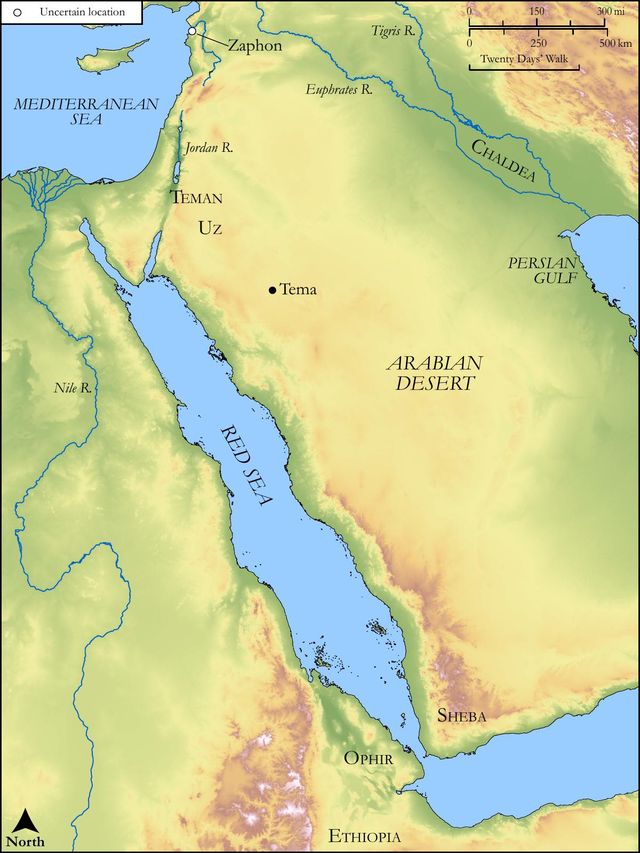
See on the biblical-era map
Study this verse
Public-domain commentary
Matthew Henry
From his Commentary on the Whole Bible. Henry comments on passages, not single verses — this entry covers Job 10:8–13. His three-level outline is real structure in the source text, so it is rendered as structure.
In these verses we may observe,
I.How Job eyes God as his Creator and preserver, and describes his dependence upon him as the author and upholder of his being. This is one of the first things we are all concerned to know and consider.
1.That God made us, he, and not our parents, who were only the instruments of his power and providence in our production. He made us, and not we ourselves. His hands have made and fashioned these bodies of ours and every part of them (Job 10:8), and they are fearfully and wonderfully made. The soul also, which animates the body, is his gift. Job takes notice of both here.
(1.)The body is made as the clay (v. 9), cast into shape, into this shape, as the clay is formed into a vessel, according to the skill and will of the potter. We are earthen vessels, mean in our original, and soon broken in pieces, made as the clay. Let not therefore the thing formed say unto him that formed it, Why hast thou made me thus? We must not be proud of our bodies, because the matter is from the earth, yet not dishonour our bodies, because the mould and shape are from the divine wisdom. The formation of human bodies in the womb is described by an elegant similitude (v. 10, Thou hast poured me out like milk, which is coagulated into cheese), and by an induction of some particulars, v. 11. Though we come into the world naked, yet the body is itself both clothed and armed. The skin and flesh are its clothing; the bones and sinews are its armour, not offensive, but defensive. The vital parts, the heart and lungs, are thus clothed, not to be seen - thus fenced, not to be hurt. The admirable structure of human bodies is an illustrious instance of the wisdom, power, and goodness of the Creator. What a pity is it that these bodies should be instruments of unrighteousness which are capable of being temples of the Holy Ghost!
(2.)The soul is the life, the soul is the man, and this is the gift of God: Thou hast granted me life, breathed into me the breath of life, without which the body would be but a worthless carcase. God is the Father of spirits: he made us living souls, and endued us with the power of reason; he gave us life and favour, and life is a favour - a great favour, more than meat, more than raiment - a distinguishing favour, a favour that puts us into a capacity of receiving other favours. Now Job was in a better mind than he was when he quarrelled with life as a burden, and asked, Why died I not from the womb? Or by life and favour may be meant life and all the comforts of life, referring to his former prosperity. Time was when he walked in the light of the divine favour, and thought, as David, that through that favour his mountain stood strong.
2.That God maintains us. Having lighted the lamp of life, he does not leave it to burn upon its own stock, but continually supplies it with fresh oil: "Thy visitation has preserved my spirit, kept me alive, protected me from the adversaries of life, the death we are in the midst of and the dangers we are continually exposed to, and blessed me with all the necessary supports of life and the daily supplies it needs and craves."
II.How he pleads this with God, and what use he makes of it.
He reminds God of it (Job 10:9): Remember, I beseech thee, that thou hast made me. What then? Why, 1"Thou hast made me, and therefore thou hast a perfect knowledge of me (Psa 139:1-13), and needest not to examine me by scourging, nor to put me upon the rack for the discovery of what is within me." 2. "Thou hast made me, as the clay, by an act of sovereignty; and wilt thou by a like act of sovereignty unmake me again? If so, I must submit." 3. "Wilt thou destroy the work of thy own hands?" It is a plea the saints have often used in prayer, We are the clay and thou our potter, Isa 64:8. Thy hands have made me and fashioned me, Psa 119:73. So here, Thou madest me; and wilt thou destroy me (Job 10:8), wilt thou bring me into dust again? Job 10:9. "Wilt thou not pity me? Wilt thou not spare and help me, and stand by the work of thy own hands? Psa 138:8. Thou madest me, and knowest my strength; wilt thou then suffer me to be pressed above measure? Was I made to be made miserable? Was I preserved only to be reserved for these calamities?" If we plead this with ourselves as an inducement to duty, "God made me and maintains me, and therefore I will serve him and submit to him," we may plead it with God as an argument for mercy: Thou hast made me, new - make me; I am thine, save me. Job knew not how to reconcile God's former favours and his present frowns, but concludes (Job 10:13), "These things hast thou hidden in thy heart. Both are according to the counsel of thy own will, and therefore undoubtedly consistent, however they seem." When God thus strangely changes his way, though we cannot account for it, we are bound to believe there are good reasons for it hidden in his heart, which will be manifested shortly. It is not with us, or in our reach, to assign the cause, but I know that this is with thee. Known unto God are all his works.
Historical interpretation
Historical reception
1 surviving comment on this verse from the historical church.
For he, who declares himself both “made and fashioned altogether round about” by God, leaves to the people of darkness no part either in his spirit or in his flesh. For he described himself as “molded” in virtue of the interior image, but he spoke of being “fashioned altogether round about” insofar as he consists of a covering of flesh. Yet, it is to be observed that he declares himself made by the hands of God. He is setting before the divine mercy the dignity of his creation. For though all things were created by the Word which is coeternal with the Father, yet in the very account of the creation it is shown how greatly humankind is preferred above all animals; how much greater than celestial things that are without sense.
Continue studying Job 10:8 across the web’s major study libraries — every link below opens this exact verse, chapter, or book on the destination site.
Read & Compare
 BibleGatewayThis verse in more than 200 translations and 70 languages.
 Bible.comThe YouVersion reader — hundreds of translations, reading plans, and highlights.
 ESV.orgCrossway's official English Standard Version reader.
 NET BibleThe NET translation with 60,000+ translators' notes on every rendering decision.
 STEP BibleTyndale House's free study tool — original text, vocabulary, and scholarly resources.
 BibliaLogos Bible Software's free web reader.
 USCCBThe New American Bible (Revised Edition) with the U.S. bishops' study notes.
Commentaries
 BibleHub CommentariesDozens of classic commentaries on this verse, gathered on one page.
 StudyLightMore than 100 commentary sets — the largest collection on the web.
 BibleRefPlain-English commentary on what this verse means, verse by verse.
 Enduring WordDavid Guzik's free commentary on this chapter, widely used by Bible teachers.
 Bible Study ToolsVerse commentary alongside Greek and Hebrew study aids.
Original Language & Research
- BibleHub InterlinearThe verse word by word — original language, transliteration, and English.
- BibleHub LexiconEvery word's original-language definition and Strong's entry.
 Blue Letter BibleDeep-study tools — Strong's numbers, concordance, and word studies.
 SefariaThe Hebrew text with Rashi and centuries of Jewish commentary.
Sermons, Hymns & Audio


TrulyRandomVerse is not affiliated with these sites and doesn’t control their content. They’re linked because they’re genuinely useful.
Summary
Job 10:8 powerfully articulates Job's profound anguish and bewilderment, as he confronts the paradox of God as both his meticulous, intimate Creator and the perceived orchestrator of his devastating suffering. This verse is a raw, heart-wrenching lament, expressing Job's deep struggle to reconcile divine power and goodness with his inexplicable destruction, directly questioning the very hands that meticulously formed him.
Context
ShowHideLiterary Context
Job 10:8 is situated within Job's third major speech (chapters 9-10), a deeply personal and increasingly desperate direct address to God. Having endured the unhelpful and often accusatory theological arguments of his friends, Job shifts his focus from debating them to wrestling directly with the Almighty. In the preceding verses of chapter 10, Job pleads for God to cease His apparent persecution, expressing his weariness of life and his fervent desire for an explanation for his suffering. He acknowledges God's omniscience and omnipotence, yet questions why such a powerful and knowing God would meticulously craft him only to then crush him. This verse serves as a poignant climax to his lament, articulating the core tension of his entire ordeal: the benevolent Creator becoming, in Job's perception, the perceived Destroyer. His desperate plea in Job 10:2 to "show me wherefore thou contendest with me" underscores his profound need for understanding in the face of what feels like divine injustice.
Historical & Cultural Context
The Book of Job is a cornerstone of the Old Testament's wisdom literature, a genre that courageously explores life's most profound questions, particularly the problem of suffering and divine justice. Among Job's friends, a prevalent belief system, often termed "retribution theology," posited a direct and simplistic correlation: righteousness led to prosperity, while wickedness inevitably resulted in suffering. Job's experience fundamentally challenges this paradigm, as he is consistently portrayed as blameless and upright, yet endures immense and inexplicable suffering. The concept of God as a meticulous Creator, shaping humanity from dust, was a foundational truth from the beginning, deeply rooted in Israelite theology (e.g., Genesis 2:7). Job's lament draws upon this foundational understanding, intensifying the paradox: if God's hands carefully formed him, how could those same hands now be dismantling him? While bold, Job's direct address to God was not entirely unprecedented in ancient laments, but his sustained and intense questioning pushed the boundaries of conventional piety and understanding.
Key Themes
ShowHideThis verse powerfully encapsulates several central themes woven throughout the Book of Job. Firstly, it highlights the profound tension between Divine Sovereignty and Human Suffering, forcing a direct confrontation between God's absolute power and the agonizing reality of human pain. Job acknowledges God's creative omnipotence, as seen in passages like Psalm 139:13-16, yet struggles deeply with the implications of this sovereignty when it appears to be directed towards his destruction. Secondly, it grapples with the enduring Problem of Theodicy, the theological question of how a good, just, and omnipotent God can permit or even inflict evil and suffering. Job's lament is a direct, unfiltered articulation of this philosophical and existential dilemma. Thirdly, the verse underscores the complex Nature of God as both Creator and, in Job's perception, a Destroyer, revealing the profound tension and confusion in Job's understanding of God's character. Finally, it exemplifies Honest Lament and Questioning in Faith, demonstrating that genuine faith does not preclude expressing profound doubt, pain, and even accusation directly to God, a theme echoed throughout the Psalms of lament.
Exposition and Analysis
ShowHideKey Word Analysis
ShowHideFrom the root H6087, this verb signifies to carve, fabricate, or fashion, often implying deliberate and careful craftsmanship. While it can also mean to grieve or vex in other contexts, here, in parallel with ‘asah, its creative sense is paramount. Job emphasizes the intricate, personal effort God put into his formation, making his current destruction feel all the more contradictory.
From the root H6213, this is a very common Hebrew verb meaning to do, make, or accomplish. When used alongside ‘aṣaḇ, it reinforces the comprehensive and complete nature of God's creative work. The phrase "fashioned me together round about" (וַיַּעֲשׂוּנִי יַחַד סָבִיב, wayya‘aśūnî yaḥaḏ sāḇîḇ) emphasizes the totality and perfection of God's original design, encompassing every part of Job's being.
From the root H1104, this verb means to swallow, consume, or annihilate. It conveys a sense of utter dissolution and complete undoing. The stark contrast between the careful, deliberate creation implied by ‘aṣaḇ and ‘asah, and the violent, total destruction implied by bâlaʻ, forms the core of Job's agonizing paradox. He feels not merely afflicted, but actively consumed by the very power that brought him into being.
Verse Breakdown
ShowHide"Thine hands have made me"
Job acknowledges God's direct, personal, and intentional involvement in his creation. The "hands" of God are an anthropomorphism signifying divine agency and power (H3027, yâd), emphasizing that Job's very existence is a product of God's meticulous design and effort. This sets up the profound irony and contradiction that follows.
"and fashioned me together round about;"
This clause further elaborates on the thoroughness and completeness of God's creative work. "Fashioned me together" (H3162, yachad) implies a careful assembly and integration of all his parts, while "round about" (H5439, çâbîyb) suggests a holistic, all-encompassing formation, leaving no aspect of his being untouched by divine craftsmanship. Job recognizes that he is not a random accident but a divinely engineered masterpiece.
"yet thou dost destroy me."
This is the jarring, painful antithesis that defines Job's lament. The conjunction "yet" introduces the shocking contradiction. The very hands that carefully and holistically created him are now, in his perception, engaged in his undoing, consuming him entirely. This expresses Job's profound sense of betrayal and incomprehension, as he perceives God acting contrary to His own creative and life-giving nature.
Literary Devices
ShowHideJob 10:8 is rich in literary devices that amplify its emotional and theological impact. The most prominent is Paradox, as the verse presents the seemingly irreconcilable actions of God as both the meticulous Creator and the perceived Destroyer of Job's life. This inherent contradiction highlights Job's profound intellectual and spiritual struggle. Juxtaposition is powerfully employed by placing the careful, life-giving acts of creation ("made me and fashioned me together round about") directly against the violent, life-ending act of destruction ("yet thou dost destroy me"). This sharp contrast intensifies the sense of bewilderment, injustice, and the depth of Job's suffering. The verse functions as a profound Lament, a common form in biblical poetry where the speaker expresses deep sorrow, complaint, and questioning directly to God. The raw honesty of Job's cry is a hallmark of this genre, demonstrating the permissible breadth of expression within a relationship with God. Irony pervades the verse, as the very source of Job's being is now perceived as the source of his undoing, creating a tragic reversal of divine purpose in Job's experience. Finally, Anthropomorphism is present in the phrase "Thine hands," attributing human physical attributes (hands) to God to describe His active, personal involvement in creation and, paradoxically, in Job's suffering.
Theological and Thematic Connections
ShowHideJob 10:8 stands as a stark articulation of the problem of suffering, particularly when it befalls the righteous, and the profound tension between God's benevolent creative power and His mysterious, often painful, providential dealings with humanity. It forces us to confront the limits of human understanding in the face of divine sovereignty. While Job's perception is that God is actively destroying him, the deeper theological truth revealed later in the book (and throughout Scripture) is that God's ways are inscrutable and His purposes transcend human comprehension. The verse invites us to consider the nature of God's justice and love, not as simple cause-and-effect, but as part of a grander, often hidden, divine plan that ultimately works for good, even if through suffering. It challenges simplistic theological frameworks and calls for a deeper trust in God's character, even when His actions seem contradictory to our immediate expectations.
Reflection and Application
ShowHideJob 10:8 offers profound validation for anyone grappling with inexplicable suffering or a sense of divine abandonment. It affirms that it is not only permissible but, at times, necessary to bring our rawest, most honest questions and pain directly to God. Job's lament, though bordering on accusation, is ultimately an act of desperate faith—he still addresses God, still expects an answer, still believes God is the one with whom he must contend. This verse teaches us that faith is not the absence of doubt or pain, but the courage to voice those struggles within the context of relationship with God. In our own lives, when circumstances seem to contradict God's character as a loving Creator, we are invited to lay bare our confusion and anguish before Him, trusting that the God who intricately "made us and fashioned us together" is intimately aware of our suffering and capable of sustaining us, even when His purposes remain veiled. Our honesty in lament can be a pathway to deeper, more resilient faith, as we learn to trust in God's ultimate goodness beyond our immediate comprehension.
Questions for Reflection
ShowHideFAQ
ShowHideIs Job accusing God of evil in this verse?
ShowHideWhile Job's language is intensely strong and expresses deep frustration, it's more accurately understood as a lament and a desperate questioning of God's justice and methods, rather than a direct accusation of evil. Job is not saying God is evil, but that God's actions feel destructive and contradictory to His creative nature. He is wrestling with the paradox of an all-powerful, all-knowing God who allows or even orchestrates such suffering for a righteous man. His plea is for understanding and vindication, not a denial of God's existence or ultimate goodness. He still addresses God directly, indicating he believes God holds the answers and the power to change his situation, as seen in his longing for a mediator in Job 9:33.
Does Job's lament here contradict his earlier statements of faith, such as in Job 1:21?
ShowHideJob's lament in Job 10:8 does not necessarily contradict his earlier statement in Job 1:21, "The LORD gave, and the LORD hath taken away; blessed be the name of the LORD." Instead, it illustrates the progression and deepening of his struggle. Job's initial response was one of profound trust and submission in the face of sudden, overwhelming loss. However, as his suffering became prolonged, intense, and inexplicable, his faith was tested to its limits. Job 10:8 reflects the raw, unvarnished reality of sustained agony, where initial resignation gives way to desperate questioning and wrestling with God. It shows that faith is not static but dynamic, capable of holding both deep trust and profound doubt simultaneously, especially when confronted with the mystery of suffering.
Christ-Centered Fulfillment
ShowHideJob 10:8, with its agonizing paradox of a Creator who seemingly destroys, finds its ultimate and most profound fulfillment in the person and work of Jesus Christ. The very "hands" of God that "made" and "fashioned" humanity are revealed in the New Testament to be the hands of the pre-existent Christ, through whom "all things were made" (John 1:3; Colossians 1:16). Yet, this divine Creator willingly submitted to an ultimate form of "destruction" on the cross. The sinless Son of God, who knew no sin, became sin for us (2 Corinthians 5:21), experiencing the ultimate abandonment and suffering, crying out, "My God, my God, why hast thou forsaken me?" (Matthew 27:46). In this divine act, the paradox of Job is resolved: God does not destroy His creation arbitrarily, but rather, in Christ, God Himself enters into and bears the destruction caused by sin, transforming it into the means of new creation. The cross, a place of ultimate destruction, becomes the very instrument of our salvation and resurrection, demonstrating that God's ultimate purpose is not to consume but to redeem and restore, culminating in the glorious promise that He will "wipe away all tears from their eyes; and there shall be no more death, neither sorrow, nor crying, neither shall there be any more pain: for the former things are passed away" (Revelation 21:4).