


Isaiah 29:20
- כִּיkiforH3588PrtParticle Conditional
- אָפֵס'a·Feshe will come to an endH656V-Qal-Perf-3msVerb Qal Perfect 3rd Singular Masculine
- עָרִיץ'a·Ritz[the] ruthless personH6184Adj-msAdjective Singular Masculine Absolute
- וְכָלָהve·Kha·lahand he will come to an endH3615Conj-w ¦ V-Qal-ConsecPerf-3msVerb Qal Consecutive Perfect 3rd Singular Masculineוְandכָלָהhe will come to an end
- לֵץLetz[the] mockerH3887Adj-msAdjective Singular Masculine Absolute
- וְנִכְרְתוּve·nikh·re·Tuand they will be cut offH3772Conj-w ¦ V-Niphal-ConsecPerf-3cpVerb Niphal Consecutive Perfect 3rd Plural common genderוְandנִכְרְתוּthey will be cut off
- כָּלkolallH3605N-mscNoun Singular Masculine Construct
- שֹׁקְדֵיSho·ke·dei[those who] lie in waitH8245V-Qal-Prtcpl-mpVerb Qal Participle Plural Masculine Construct
- אָוֶן'A·ven<of> wickednessH205N-msNoun Singular Masculine Absolute
English is a literal word-by-word gloss of the Hebrew, not the KJV's wording. Why?
This is the original text the KJV's translators worked from — each Hebrew word with its own literal English meaning in this verse, prepared by scholars at Tyndale House, Cambridge. The KJV translates whole sentences, not word by word, so its wording differs: one Hebrew word can become several English words, and the KJV may choose “the LORD” where the gloss reads “Yahweh”. Both are faithful — they answer different questions. For the KJV's own rendering, switch to the KJV text.
Details
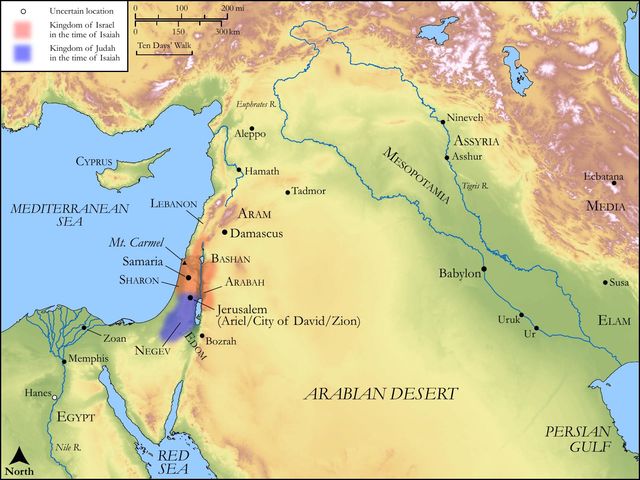
See on the biblical-era map
Study this verse
Public-domain commentary
Matthew Henry
From his Commentary on the Whole Bible. Henry comments on passages, not single verses — this entry covers Isaiah 29:17–24. His three-level outline is real structure in the source text, so it is rendered as structure.
Those that thought to hide their counsels from the Lord were said to turn things upside down (Isa 29:16), and they intended to do it unknown to God; but God here tells them that he will turn things upside down his way; and let us see whose word shall stand, his or theirs. They disbelieve Providence: "Wait awhile," says God, "and you shall be convinced by ocular demonstration that there is a God who governs the world, and that he governs it and orders all the changes that are in it for the good of his church." The wonderful revolution here foretold may refer primarily to the happy settlement of the affairs of Judah and Jerusalem after the defeat of Sennacherib's attempt, and the repose which good people then enjoyed, when they were delivered from the alarms of the sword both of war and persecution. But it may look further, to the rejection of the Jews at the first planting of the gospel (for their hypocrisy and infidelity were here foretold, Isa 29:13) and the admission of the Gentiles into the church.
I.In general, it is a great and surprising change that is here foretold, Isa 29:17.
Lebanon, that was a forest, shall be turned into a fruitful field; and Carmel, that was a fruitful field, shall become a forest. It is a counterchange. Note, Great changes, both for the better and for the worse, are often made in a very little while. It was a sign given them of the defeat of Sennacherib that the ground should be more than ordinarily fruitful (Isa 37:30): You shall eat this year such as grows of itself; food for man shall be (as food for beasts is) the spontaneous product of the soil. Then Lebanon became a fruitful field, so fruitful that that which used to be reckoned a fruitful field in comparison with it was looked upon but as a forest. When a great harvest of souls was gathered in to Christ from among the Gentiles then the wilderness was turned into a fruitful field; and the Jewish church, that had long been a fruitful field, became a desolate and deserted forest, Isa 54:1.
II.In particular,
1.Those that were ignorant shall become intelligent, Isa 29:18. Those that understood not this prophecy (but it was to them as a sealed book, Isa 29:11) shall, when it is accomplished, understand it, and shall acknowledge, not only the hand of God in the event, but the voice of God in the prediction of it: The deaf shall then hear the words of the book. The fulfilling of prophecy is the best exposition of it. The poor Gentiles shall then have divine revelation brought among them; and those that sat in darkness shall see a great light, those that were blind shall see out of obscurity; for the gospel was sent to them to open their eyes, Act 26:18. Observe, In order to the making of men fruitful in good affections and actions, the course God's grace takes with them is to open their understandings and make them hear the words of God's book.
2.Those that were erroneous shall become orthodox (Isa 29:24): Those that erred in spirit, that were under mistakes and misapprehensions concerning the words of the book and the meaning of them, shall come to understanding, to a right understanding of things; the Spirit of truth shall rectify their mistakes and lead them into all truth. This should encourage us to pray for those that have erred and are deceived, that God can, and often does, bring such to understanding. Those that murmured at the truths of God as hard sayings, and loved to pick quarrels with them, shall learn the true meaning of these doctrines, and then they will be better reconciled to them. Those that erred concerning the providence of God as to public affairs, and murmured at the disposals of it, when they shall see the issue of things shall better understand them and be aware of what God was designing in all, Hos 14:9.
3.Those that were melancholy shall become cheerful and pleasant (Isa 29:19): The meek also shall increase their joy in the Lord. Those who are poor in the world and poor in spirit, who, being in affliction, accommodate themselves to their affliction, are purely passive and not passionate, when they see God appearing for them, they shall add, or repeat, joy in the Lord. This intimates that even in their distress they kept up their joy in the Lord, but now they increased it. Note, Those who, when they are in trouble, can truly rejoice in God, shall soon have cause given them greatly to rejoice in him. When joy in the world is decreasing and fading joy in God is increasing and getting round. This shining light shall shine more and more; for that which is aimed at is that this joy may be full. Even the poor among men may rejoice in the Holy One of Israel, and their poverty needs not deprive them of that joy, Hab 3:17, Hab 3:18. And the meek, the humble, the patient, and dispassionate, shall grow in this joy. Note, The grace of meekness will contribute very much to the increase of our holy joy.
4.The enemies, that were formidable, shall become despicable. Sennacherib, that terrible one, and his great army, that put the country into such a consternation, shall be brought to nought (Isa 29:20), shall be quite disabled to do any further mischief. The power of Satan, that terrible one indeed, shall be broken by the prevalency of Christ's gospel; and those that were subject to bondage through fear of him that had the power of death shall be delivered, Heb 2:14, Heb 2:15.
5.The persecutors, that were vexatious, shall be quieted, and so those they were troublesome to shall be quiet from the fear of them. To complete the repose of God's people, not only the terrible one from abroad shall be brought to nought, but the scorners at home too shall be consumed and cut off by Hezekiah's reformation. Those are a happy people, and likely to be so, who, when God gives them victory and success against their terrible enemies abroad, take care to suppress vice, and profaneness, and the spirit of persecution, those more dangerous enemies at home. Or, They shall be consumed and cut off by the judgments of God, shall be singled out to be made examples of. Or, They shall insensibly waste away, being put to confusion by the fulfilling of those predictions which they had made a jest of. Observe what had been the wickedness of these scorners, for which they should be cut off. They had been persecutors of God's people and prophets, probably of the prophet Isaiah particularly, and therefore he complains thus feelingly of them and of their subtle malice. Some as informers and persecutors, others as judges, did all they could to take away his life, or at least his liberty. And this is very applicable to the chief priests and Pharisees, who persecuted Christ and his apostles, and for that sin they and their nation of scorners were cut off and consumed.
(1.)They ridiculed the prophets and the serious professors of religion; they despised them, and did their utmost to bring them into contempt; they were scorners, and sat in the seat of the scornful.
(2.)They lay in wait for an occasion against them. By their spies they watch for iniquity, to see if they can lay hold of any thing that is said or done that may be called an iniquity. Or they themselves watch for an opportunity to do mischief, as Judas did to betray our Lord Jesus.
(3.)They took advantage against them for the least slip of the tongue; and, if a thing were ever so little said amiss, it served them to ground an indictment upon. They made a man, though he were ever so wise and good a man, though he were a man of God, an offender for a word, a word mischosen or misplaced, when they could not but know that it was well meant, Isa 29:21. They cavilled at every word that the prophets spoke to them by way of admonition, though ever so innocently spoken, and without any design to affront them. They put the worst construction upon what was said, and made it criminal by strained innuendoes. Those who consider how apt we all are to speak unadvisedly, and to mistake what we hear, will think it very unjust and unfair to make a man an offender for a word.
(4.)They did all they could to bring those into trouble that dealt faithfully with them and told them of their faults. Those that reprove in the gates, reprovers by office, that were bound by the duty of their place, as prophets, as judges, and magistrates, to show people their transgressions, they hated these, and laid snares for them, as the Pharisees' emissaries, who were sent to watch our Saviour that they might entangle him in his talk (Mat 22:15), that they might have something to lay to his charge which might render him odious to the people or obnoxious to the government. So persecuted they the prophets; and it is next to impossible for the most cautious to place their words so warily as to escape such snares. See how base wicked people are, who bear ill-will to those who, out of good-will to them, seek to save their souls from death; and see what need reprovers have both of courage to do their duty and of prudence to avoid the snare.
(5.)They pervert judgment, and will never let an honest man carry an honest cause: They turn aside the just for a thing of nought; they condemn him, or give the cause against him, upon no evidence, no colour or pretence whatsoever. They run a man down, and misrepresent him, by all the little arts and tricks they can devise, as they did our Saviour. We must not think it strange if we see the best of men thus treated; the disciple is not greater than his Master. But wait awhile, and God will not only bring forth their righteousness, but cut off and consume these scorners.
6.Jacob, who was made to blush by the reproaches, and made to tremble by the threatenings, of his enemies, shall now be relieved both against his shame and against his fear, by the rolling away of those reproaches and the defeating of those threatenings (Isa 29:22): Thus the Lord saith who redeemed Abraham, that is, called him out of Ur of the Chaldees, and so rescued him from the idolatry of his fathers and plucked him as a brand out of the fire. He that redeemed Abraham out of his snares and troubles will redeem all that are by faith his genuine seed out of theirs. He that began his care of his church in the redemption of Abraham, when it and its Redeemer were in his loins, will not now cast off the care of it. Because the enemies of his people are so industrious both to blacken them and to frighten them, therefore he will appear for the house of Jacob, and they shall not be ashamed as they have been, but shall have wherewith to answer those that reproach them, nor shall their faces now wax pale; but they shall gather courage, and look their enemies in the face without change of countenance, as those have reason to do who have the God of Abraham on their side.
7.Jacob, who thought his family would be extinct and the entail of religion quite cut off, shall have the satisfaction of seeing a numerous progeny devoted to God for a generation, Isa 29:23.
(1.)He shall see his children, multitudes of believers and praying people, the spiritual seed of faithful Abraham and wrestling Jacob. Having his quiver full of these arrows, he shall not be ashamed (Isa 29:22) but shall speak with his enemy in the gate, Psa 127:5. Christ shall not be ashamed (Isa 50:7), for he shall see his seed (Isa 53:10); he sees some, and foresees more, in the midst of him, flocking to the church, and residing there.
(2.)His children are the work of God's hands; being formed by him, they are formed for him, his workmanship, created unto good works. It is some comfort to parents to think that their children are God's creatures, the work of the hands of his grace.
(3.)He and his children shall sanctify the name of God as their God, as the Holy One of Jacob, and shall fear and worship the God of Israel. This is opposed to his being ashamed and waxing pale; when he is delivered from his contempts and dangers he shall not magnify himself, but sanctify the Holy One of Jacob. If God make our condition easy, we must endeavour to make his name glorious. Parents and children are ornaments and comforts indeed to each other when they join in sanctifying the name of God. When parents give up their children, and children give up themselves, to God, to be to him for a name and a praise, then the forest will soon become a fruitful field.
Historical interpretation
Historical reception
1 surviving comment on this verse from the historical church.
(Verse 17 and following) Will not Lebanon soon become a fruitful field, and the fruitful field be regarded as a forest? On that day the deaf will hear the words of the scroll, and out of gloom and darkness the eyes of the blind will see. The meek will obtain fresh joy in the Lord, and the neediest people will exult in the Holy One of Israel. For the tyrant shall be no more, and the scoffer shall cease to be; all those alert to do evil shall be cut off. Why do people sin in words and overthrow the one who argues at the gate? And they turned away in vain from the just. Let the Jews and friends of simple history answer, those who seek fruit not on the tree, but only leaves and the shadow of words, which quickly wither and perish. How is it that in the coming of the Lord Savior (because from the time of Isaiah until the incarnation of the flesh, for the comparison of eternity, it is a short and small span of time) the mountain of Lebanon turned towards Phoenicia and moved to Mount Carmel? It is called in Hebrew Chermel, and it is near the border of Palestine and Phoenicia, overlooking Ptolemais: although another mountain in the holy scriptures is called Mount Carmel, where there was Nabal the Carmelite (1 Samuel 25), a foolish and wicked man, who had a wife named Abigail, who married David after her husband died; while her husband was alive, she could not marry David, so as not to be called an adulteress if she were associated with another man; and how is Carmel considered a desirable place and unfruitful trees? But since they are unable to express it, let them listen to Libanus, which means "whiteness", referring to the people of the Gentiles who, having been washed in the Lord and cleansed of their former filth, ascend as a whole world. They rely on the person of the Church as the bride of the Savior, and it is said about them in the Song of Songs: Who is this who comes up, shining white, leaning on her beloved? (Cant. VIII. 5) And let this people be transferred to Carmel, which means the knowledge of circumcision, so that they may recognize the mysteries of spiritual and true circumcision, and be in the place of the former people of the Jews. As for those who refuse to accept Christ, let them be considered as thorns and barren trees, which cannot praise the Lord with fruitful trees. But when Lebanon is changed into Carmel, and Carmel into a forest, then those who were deaf and could not hear the words of the prophetic book (of which we have spoken before, that all Holy Scripture is called one book, as Ecclesiastes says: 'The sayings of the wise are like goads, and like nails fixed deep in, given by one Shepherd') will hear and speak, to whom the Savior will say: Ephphatha (which means, 'Be opened') (Mark 7). And that which we translate, the eyes of the blind shall see darkness and mist, the interpretation of which is easy; Aquila and Theodotion and Symmachus translated: The eyes of the blind shall see darkness and mist: to show the sacraments of Christ to the people of the nations, who were previously blind, according to what is said: Dark water in the clouds of the sky (Ps. 17, 12). And in the same psalm it is written about God: He set darkness as his hiding place (Ibid. 12). And in Proverbs we read: This wise person will be wiser by hearing these things and will have possession of prudent governance and will understand parables and dark sayings spoken by the wise and enigmas (Prov. I, 5, 6). Moreover, Moses, in order to understand and see God (Exod. XX), entered into a cloud and darkness, of which it is said in the Psalm: Darkness is under his feet (Ps. XVII, 10). But when the blind or those who are initiated into mystical matters have first beheld these things or have lifted up their eyes from blindness and darkness to see, so that true light may arise for those sitting in darkness and the shadow of death, then the meek, of whom it is written: Blessed are the meek, for they shall inherit the earth (Matt. V, 4), whether they be the poor, of whom the leader says in the Psalms: This poor man cried out, and the Lord heard him (Ps. XXXIII, 7); and he who judges the poor people and will save the children of the poor (Ps. XIII, 9), of whom it is said to the Jews: You have despised the counsel of the poor, they shall add joy in the Lord, so that he who glories, may glory in the Lord (II Cor. X); and poor men or those in despair and contempt by men, who did not have knowledge of the law before, will exult in the Holy One of Israel, who says: Be holy, for I am holy (Lev. XI, 44). And there is rejoicing for every downfall: for he who prevailed has fallen. The deceiver, or the arrogant and proud one, is brought to an end, who said: With my strength I will do it, and with my wisdom I will remove the boundaries of nations and destroy their strength; who deceived everyone to such an extent that even the holy one said: My loins are filled with deceits (Psalm 38:8). And all those who kept watch over wickedness have been cut off or destroyed, for their wicked vigilance does not cease: they caused the whole human race to sin by blaspheming the Word of God and placing their mouths in heaven. But the demons, themselves wicked, made all men sin in speech, blaspheming with various teachings, and they would overthrow the one reproaching in the gate and in judgment as much as they could, and they made him turn away from righteousness, who was in the gates of the daughter of Zion, exalted from the gates of death; and he rebuked those who hated him in the gates. These things we understand concerning the devil and his angels, the Nazarenes consider them to be spoken against the scribes and Pharisees, because they failed in their second attempt, who before mocked the people with their wicked traditions; and they watched day and night to deceive the simple, who made men sin against the Word of God, to deny Christ the Son of God.
Continue studying Isaiah 29:20 across the web’s major study libraries — every link below opens this exact verse, chapter, or book on the destination site.
Read & Compare
 BibleGatewayThis verse in more than 200 translations and 70 languages.
 Bible.comThe YouVersion reader — hundreds of translations, reading plans, and highlights.
 ESV.orgCrossway's official English Standard Version reader.
 NET BibleThe NET translation with 60,000+ translators' notes on every rendering decision.
 STEP BibleTyndale House's free study tool — original text, vocabulary, and scholarly resources.
 BibliaLogos Bible Software's free web reader.
 USCCBThe New American Bible (Revised Edition) with the U.S. bishops' study notes.
Commentaries
 BibleHub CommentariesDozens of classic commentaries on this verse, gathered on one page.
 StudyLightMore than 100 commentary sets — the largest collection on the web.
 BibleRefPlain-English commentary on what this verse means, verse by verse.
 Enduring WordDavid Guzik's free commentary on this chapter, widely used by Bible teachers.
 Bible Study ToolsVerse commentary alongside Greek and Hebrew study aids.
Original Language & Research
- BibleHub InterlinearThe verse word by word — original language, transliteration, and English.
- BibleHub LexiconEvery word's original-language definition and Strong's entry.
 Blue Letter BibleDeep-study tools — Strong's numbers, concordance, and word studies.
 SefariaThe Hebrew text with Rashi and centuries of Jewish commentary.
Sermons, Hymns & Audio


TrulyRandomVerse is not affiliated with these sites and doesn’t control their content. They’re linked because they’re genuinely useful.
Summary
Isaiah 29:20 delivers a powerful prophetic declaration of God's decisive and comprehensive judgment against all forms of wickedness and opposition to His righteous rule. It unequivocally states the complete nullification of the oppressor, the total consumption of the mocker, and the definitive cutting off of those who diligently plot evil. This verse signals a radical and necessary shift from a state of injustice and spiritual rebellion to a future era of divine justice and restoration, serving as a foundational promise that no human power or malicious intent can ultimately thwart God's sovereign plan for redemption and the establishment of His kingdom.
Context
ShowHideLiterary Context
This verse is strategically placed within a pivotal section of Isaiah (chapters 28-33) that primarily addresses Jerusalem, symbolically called "Ariel" in Isaiah 29:1-2. The preceding verses (Isaiah 29:9-16) detail a severe indictment against Jerusalem for its spiritual stupor, blindness, hypocrisy, and its misplaced reliance on human wisdom and political alliances rather than on the Lord. Their worship is described as mere lip-service, with hearts far removed from God. However, Isaiah 29:17-24 marks a dramatic transition from pronouncements of judgment to glorious promises of restoration and transformation. Verse 20 acts as a critical pivot point within this transition, describing the necessary removal of the wicked as a prerequisite for the coming era of righteousness and peace, where the deaf will hear, the blind will see, and the humble will rejoice in the Lord, as promised in Isaiah 29:18-19. This divine cleansing paves the way for the redemption of Jacob's house and their recognition of the Holy One of Israel, as depicted in Isaiah 29:22-24.
Historical & Cultural Context
Isaiah's prophetic ministry unfolded during a tumultuous 8th century BC, spanning the reigns of Uzziah, Jotham, Ahaz, and Hezekiah in Judah. This period was dominated by the formidable and expanding threat of the Assyrian Empire, which systematically conquered surrounding nations and posed an existential danger to Judah's sovereignty. Culturally, Judah wrestled with pervasive syncretism, adopting foreign religious practices, and widespread injustice, where the powerful routinely oppressed the vulnerable. The "terrible one," "scorner," and "those who watch for iniquity" likely refer to a dual threat: both external oppressors like the Assyrians or other hostile nations, and internal corrupt leaders, false prophets, and wealthy elites within Judah who exploited the poor and mocked genuine piety. The people's persistent reliance on human strategies and alliances (e.g., with Egypt, as condemned in Isaiah 30:1-7) instead of trusting in God was a recurring theme in Isaiah's condemnations, highlighting a deep-seated spiritual malaise.
Key Themes
ShowHideIsaiah 29:20 profoundly contributes to several overarching themes woven throughout the book of Isaiah. Firstly, it emphatically underscores Divine Justice and Judgment, demonstrating God's active sovereignty over human affairs and His unwavering commitment to bringing an end to evil. This aligns seamlessly with Isaiah's consistent portrayal of God as a righteous judge who will not tolerate injustice indefinitely, a truth powerfully echoed in passages like Isaiah 5:16. Secondly, the verse highlights the Overthrow of the Wicked and Oppressors. The specific categories of "terrible one," "scorner," and "those who watch for iniquity" represent the multifaceted manifestations of unrighteousness—tyranny, spiritual arrogance, and malicious intent—all of which are destined for complete annihilation. This theme resonates deeply with the broader biblical principle that the way of the wicked will perish, as stated in Psalm 1:6. Thirdly, implicitly, the verse offers Hope and Vindication for the Oppressed. While directly focused on the destruction of the wicked, the promise of their removal brings immense relief and assurance to those who have suffered under their tyranny and mockery. God's justice is ultimately for the sake of His people, promising a future where righteousness will prevail and the humble will rejoice, as promised in Isaiah 29:19.
Exposition and Analysis
ShowHideKey Word Analysis
ShowHideThis word (H6184) denotes someone who is fearful, powerful, tyrannical, mighty, or an oppressor. It describes a ruthless individual or force that inspires dread and exercises oppressive power. In the context of Isaiah, it often refers to foreign invaders like the Assyrians, but can also encompass any powerful entity that acts unjustly and violently against God's people or His righteous order, causing terror and subjugation.
Rendered "scorner" (H3887), this term signifies someone who mocks, ridicules, or scoffs. It implies a person who is arrogant, dismissive of wisdom, and often contemptuous of divine truth, moral authority, or the warnings of God's prophets. The scorner is not merely ignorant but actively disdains correction and revels in their own perceived superiority, often leading others astray through their cynicism and defiance.
Translated "iniquity" (H205), this word carries a rich semantic range, including nothingness, trouble, vanity, wickedness, and specifically an idol. It refers to evil that is empty, futile, and ultimately leads to ruin. When combined with "watch" (H8245, shâqad), "watch for iniquity" describes those who are diligent, vigilant, or actively planning and seeking opportunities for wickedness, deceit, or injustice, rather than merely falling into sin. Their very purpose is aligned with malevolence.
Verse Breakdown
ShowHide"For the terrible one is brought to nought"
This opening clause declares the complete nullification and disappearance of the oppressive, tyrannical power. The Hebrew verb for "brought to nought" (H656, ʼâphêç) implies a cessation, an end, or being clean gone, emphasizing that the oppressor's might and influence will utterly vanish. This is a definitive promise of divine intervention against those who wield power unjustly, ensuring their eventual and absolute demise.
"and the scorner is consumed"
Here, the one who mocks and ridicules divine truth and righteousness faces a definitive end. The term "consumed" (H3615, kâlâh) indicates a total destruction or termination, suggesting that the scorner's arrogant defiance and contempt will lead to their complete undoing. Their influence, their words, and their very existence will be brought to an absolute close by God's righteous judgment, leaving no trace of their mockery.
"and all that watch for iniquity are cut off"
This final clause targets those who actively plot, plan, and diligently seek out opportunities for evil and injustice. To be "cut off" (H3772, kârath) implies a severing, a destruction, or a complete removal. It signifies that those who are vigilant in their pursuit of wickedness—those who scheme and lie in wait for opportunities to do wrong—will be decisively separated from the land of the living and from any sphere of influence, ensuring that their malicious schemes will cease and their presence will be eradicated.
Literary Devices
ShowHideIsaiah 29:20 employs several powerful literary devices to convey its message of divine judgment with striking clarity and force. The most prominent is Parallelism, specifically Synonymous Parallelism, where each of the three clauses expresses a similar idea of divine judgment and the comprehensive destruction of the wicked, but with distinct subjects and verbs: "terrible one... brought to nought," "scorner... consumed," and "all that watch for iniquity... cut off." This tripartite structure and repetition powerfully reinforce the certainty, comprehensiveness, and finality of God's action. The use of distinct categories of wicked individuals—the oppressor, the mocker, and the schemer of evil—creates a sense of Merism, implying that all forms of unrighteousness, from overt tyranny and physical oppression to subtle malice and spiritual contempt, will be dealt with by God. The strong, active verbs "brought to nought," "consumed," and "cut off" convey the Forcefulness and Irreversibility of God's judgment, leaving no room for doubt about the ultimate, absolute fate of the wicked. There is also an element of Hyperbole in the absolute nature of the destruction, emphasizing that the wicked will be utterly removed, their power and influence completely eradicated from the earth, highlighting the totality of divine victory over evil.
Theological and Thematic Connections
ShowHideIsaiah 29:20 profoundly speaks to the nature of God as a righteous, active, and sovereign judge who intervenes decisively in human history to uphold justice. It reveals that evil, in all its manifestations—whether oppressive power, arrogant scoffing, or malicious plotting—has a finite lifespan and will ultimately be eradicated by divine decree. This truth provides immense comfort and assurance to the oppressed, reminding them that their suffering is seen and will be vindicated, and it serves as a stark warning to the ungodly that their temporary power is no match for the eternal purposes of God. The verse underscores the biblical principle that God's kingdom is one of righteousness and peace, and its full establishment necessitates the removal of all that opposes it, paving the way for a new era of divine order.
Reflection and Application
ShowHideIsaiah 29:20 offers both a profound source of comfort and a sober call to rigorous self-examination for believers today. In a world often characterized by pervasive injustice, entrenched oppression, and widespread cynicism, this verse serves as a powerful reminder that God is neither passive nor indifferent. He intimately sees the "terrible one," clearly hears the "scorner," and fully knows those who "watch for iniquity." His unwavering promise to bring them to nought, consume them, and cut them off provides a powerful assurance that evil, despite its apparent strength, does not and will not have the final word. This truth should cultivate a deep, abiding trust in God's ultimate justice and encourage us to persevere steadfastly in righteousness, even when the wicked seem to prosper or when the path of integrity feels difficult. Simultaneously, the verse functions as a stark and necessary warning: we must diligently examine our own hearts and actions to ensure that we are not, even subtly, embodying the very characteristics it condemns. Are there ways in which we might be oppressive in our words or actions, perhaps in positions of authority or influence? Do we ever mock truth, spiritual things, or those who genuinely seek God? Do we harbor malicious intent or plot harm against others, even in our thoughts? This passage calls us to a radical alignment of our lives with God's holy character, compelling us to live justly, speak truth with grace, and actively seek the good of others, knowing that the path of wickedness leads to certain and devastating destruction, while the path of righteousness leads to eternal life and flourishing in God's glorious presence.
Questions for Reflection
ShowHideFAQ
ShowHideDoes this verse mean that all wicked people will literally be annihilated?
ShowHideWhile the language of "brought to nought," "consumed," and "cut off" is indeed strong and implies complete destruction, it is important to interpret this within the broader biblical context of divine judgment. This can refer to the complete removal of their power, influence, and ability to oppress, as well as their ultimate spiritual and physical demise. In the Old Testament, "cut off" often meant exclusion from the covenant community or premature death, signifying a loss of blessing and a severing of connection with God's people and His purposes. Ultimately, it points to the definitive end of all unrighteousness and those who persist in it, ensuring that God's righteous kingdom will prevail. The New Testament further clarifies this ultimate judgment, speaking of eternal separation from God's presence for the unrighteous, as seen in Revelation 20:14-15, which describes the "second death" for those whose names are not found in the Book of Life.
Christ-Centered Fulfillment
ShowHideIsaiah 29:20 finds its ultimate and most profound fulfillment in the person and redemptive work of Jesus Christ. While the verse speaks of God's judgment against specific forms of wickedness, Christ's first coming inaugurated the decisive defeat of the ultimate "terrible one"—Satan, the oppressor of humanity, and the "scorner" of God's truth. Through His crucifixion and glorious resurrection, Jesus "disarmed the rulers and authorities and put them to open shame, by triumphing over them in him" (Colossians 2:15). He is the one who came specifically to "destroy the works of the devil" (1 John 3:8), effectively bringing to nought the dominion of sin and death. Furthermore, Christ's promised second coming will bring the final, complete consumption and cutting off of all who oppose God, including those who watch for iniquity and persist in their rebellion against His righteous rule. He will return as the righteous judge, executing perfect justice and establishing His eternal kingdom where "the former things have passed away" (Revelation 21:4). Thus, Isaiah 29:20 is a powerful prophetic glimpse into the comprehensive victory of God over all evil, a victory fully realized and guaranteed through the redemptive work and future glorious return of Jesus Christ, the King of righteousness and Lord of all.