


Genesis 41:7
Bible text: King James Version (1769 Blayney text) · Public domain
Bible text: Berean Standard Bible · Public domain
Bible text: American Standard Version (1901) · Public domain
Bible text: World English Bible, Messianic edition · Public domain
Bible text: Geneva Bible (1599) · Public domain
Bible text: Young's Literal Translation · Public domain
- וַתִּבְלַעְנָהva·tiv·La'·nahand they swallowedH1104Conj-w ¦ V-Qal-ConsecImperf-3fpVerb Qal Consecutive Imperfect 3rd Plural Feminineוַandתִּבְלַעְנָהthey swallowed
- הַשִּׁבֳּלִיםha·shi·bo·Limthe ears of grainH7641Art ¦ N-mpNoun Plural Masculine Absoluteהַtheשִּׁבֳּלִיםears of grain
- הַדַּקּוֹתha·da·Kot<the> thinH1851Art ¦ Adj-fpAdjective Plural Feminine Absoluteהַ<the>דַּקּוֹתthin
- אֵת'et<obj.>H853DirObjMParticle Object Indicator
- שֶׁבַעShe·va'sevenH7651Adj-csAdjective Numerical Singular common gender Absolute
- הַשִּׁבֳּלִיםha·shi·bo·Limthe ears of grainH7641Art ¦ N-mpNoun Plural Masculine Absoluteהַtheשִּׁבֳּלִיםears of grain
- הַבְּרִיאוֹתha·be·ri·'ot<the> fatH1277Art ¦ Adj-fpAdjective Plural Feminine Absoluteהַ<the>בְּרִיאוֹתfat
- וְהַמְּלֵאוֹתve·ha·me·le·'otand <the> fullH4392Conj-w ¦ Art ¦ Adj-fpAdjective Plural Feminine Absoluteוְandהַ<the>מְּלֵאוֹתfull
- וַיִּיקַץvai·yi·Katzand he awokeH3364Conj-w ¦ V-Qal-ConsecImperf-3msVerb Qal Consecutive Imperfect 3rd Singular Masculineוַandיִּיקַץhe awoke
- פַּרְעֹהpar·'OhPharaohH6547N-msNoun Title Singular Masculine Absolute
- וְהִנֵּהve·hi·Nehand there!H2009Conj-w ¦ PrtParticle Interjectionוְandהִנֵּהthere!
- חֲלוֹםcha·Loma dreamH2472N-msNoun Singular Masculine Absolute
English is a literal word-by-word gloss of the Hebrew, not the KJV's wording. Why?
This is the original text the KJV's translators worked from — each Hebrew word with its own literal English meaning in this verse, prepared by scholars at Tyndale House, Cambridge. The KJV translates whole sentences, not word by word, so its wording differs: one Hebrew word can become several English words, and the KJV may choose “the LORD” where the gloss reads “Yahweh”. Both are faithful — they answer different questions. For the KJV's own rendering, switch to the KJV text.
Details
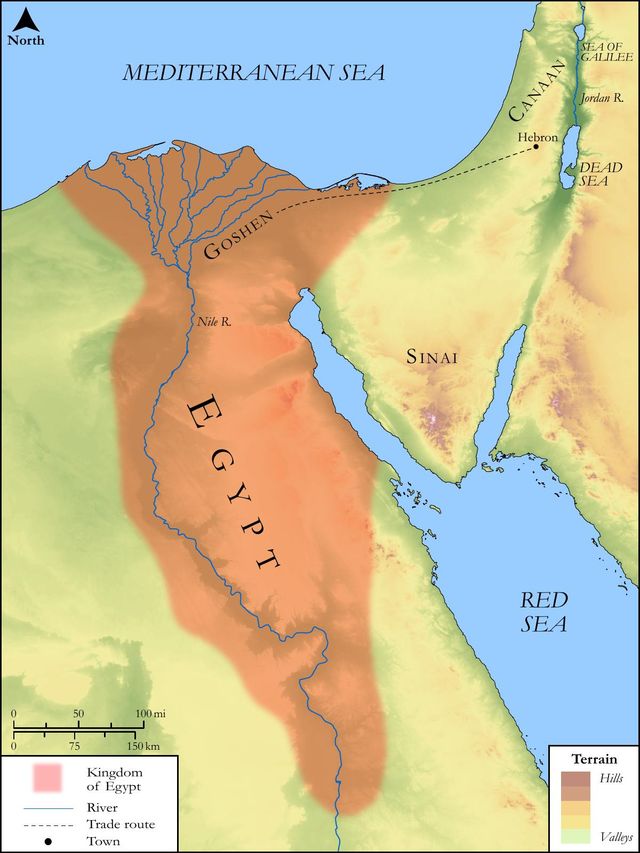
See on the biblical-era maps


Study this verse
Public-domain commentary
Matthew Henry
From his Commentary on the Whole Bible. Henry comments on passages, not single verses — this entry covers Genesis 41:1–8.
Observe, 1. The delay of Joseph's enlargement. It was not till the end of two full years (Gen 41:1); so long he waited after he had entrusted the chief butler with his case and began to have some prospect of relief. Note, We have need of patience, not only bearing, but waiting, patience. Joseph lay in prison until the time that his word came, Psa 105:19. There is a time set for the deliverance of God's people; that time will come, though it seem to tarry; and, when it comes, it will appear to have been the best time, and therefore we ought to wait for it (Hab 2:3), and not think two full years too long to continue waiting. 2. The means of Joseph's enlargement, which were Pharaoh's dreams, here related. If we were to look upon them as ordinary dreams, we might observe from them the follies and absurdities of a roving working fancy, how it represents to itself tame cows as beasts of prey (nay, more ravenous than any, eating up those of their own kind), and ears of corn as devouring one another. Surely in the multitude of dreams, nay, even in one dream, there are divers vanities, Ecc 5:7. Now that God no longer speaks to us in that way, I think it is no matter how little we either heed them or tell them. Foolish dreams related can make no better than foolish talk. But these dreams which Pharaoh dreamed carried their own evidence with them that they were sent of God; and therefore, when he awoke, his spirit was troubled, Gen 41:8. It cannot but put us into a concern to receive any extraordinary message from heaven, because we are conscious to ourselves that we have no reason to expect any good tidings thence. His magicians were puzzled, the rules of their art failed them: these dreams of Pharaoh, it seems, did not fall within the compass of them, so that they could not offer at the interpretation of them. This was to make Joseph's performance by the Spirit of God the more admirable. Human reason, prudence, and foresight, must be nonplussed, that divine revelation may appear the more glorious in the contrivance of our redemption, Co1 2:13, Co1 2:14. Compare with this story, Dan 2:27; Dan 4:7; Dan 5:8. Joseph's own dreams were the occasion of his troubles, and now Pharaoh's dreams were the occasion of his enlargement.
Continue studying Genesis 41:7 across the web’s major study libraries — every link below opens this exact verse, chapter, or book on the destination site.
Read & Compare
 BibleGatewayThis verse in more than 200 translations and 70 languages.
 Bible.comThe YouVersion reader — hundreds of translations, reading plans, and highlights.
 ESV.orgCrossway's official English Standard Version reader.
 NET BibleThe NET translation with 60,000+ translators' notes on every rendering decision.
 STEP BibleTyndale House's free study tool — original text, vocabulary, and scholarly resources.
 BibliaLogos Bible Software's free web reader.
 USCCBThe New American Bible (Revised Edition) with the U.S. bishops' study notes.
Commentaries
 BibleHub CommentariesDozens of classic commentaries on this verse, gathered on one page.
 StudyLightMore than 100 commentary sets — the largest collection on the web.
 BibleRefPlain-English commentary on what this verse means, verse by verse.
 Enduring WordDavid Guzik's free commentary on this chapter, widely used by Bible teachers.
 Bible Study ToolsVerse commentary alongside Greek and Hebrew study aids.
Original Language & Research
- BibleHub InterlinearThe verse word by word — original language, transliteration, and English.
- BibleHub LexiconEvery word's original-language definition and Strong's entry.
 Blue Letter BibleDeep-study tools — Strong's numbers, concordance, and word studies.
 SefariaThe Hebrew text with Rashi and centuries of Jewish commentary.
Sermons, Hymns & Audio


TrulyRandomVerse is not affiliated with these sites and doesn’t control their content. They’re linked because they’re genuinely useful.
Summary
This verse marks the climax of Pharaoh's second unsettling dream, depicting seven withered, unproductive ears of grain consuming seven robust and abundant ears. This vivid and unnatural imagery of prosperity being utterly devoured by scarcity mirrors his earlier dream of lean cows consuming fat ones, leaving Pharaoh profoundly disturbed upon waking. The immediate and visceral impact of these divinely sent visions underscores their urgent significance, setting the stage for a critical interpretation that will shape the future of Egypt.
Context
ShowHideLiterary Context
Genesis 41:7 concludes the vivid account of Pharaoh's two disturbing dreams, immediately following the description of the second dream's imagery in Genesis 41:5-6. This verse mirrors the structure of the first dream (described in Genesis 41:1-4), where seven lean cows devoured seven fat ones. The repetition of the "devouring" motif across two distinct yet parallel visions—one pastoral, one agricultural—serves to confirm the divine origin and the certainty of the impending events, as Joseph later explains in Genesis 41:32. Pharaoh's immediate awakening, described in this verse, underscores the profound and unsettling impact of these dreams, signaling to the reader that a major turning point in the narrative, and indeed for Egypt, is at hand, necessitating divine interpretation.
Historical & Cultural Context
In ancient Egypt, dreams were often considered significant conduits for divine messages, especially for rulers like Pharaoh, who was regarded as a living god. The stability and prosperity of Egypt were intrinsically linked to the annual flooding of the Nile River, which nourished the fertile agricultural lands. Periods of insufficient flooding could lead to devastating famines, a constant threat in the region. The imagery of cows and grain would have been immediately relatable and deeply significant to an Egyptian audience, representing the very essence of their economy and sustenance. The "east wind" mentioned in Genesis 41:6 was known to be a hot, dry wind from the desert that could scorch crops, adding a layer of realism and dread to the dream's prophetic warning of an impending ecological and economic catastrophe.
Key Themes
ShowHideGenesis 41, particularly through Pharaoh's dreams, powerfully introduces several overarching themes crucial to the broader narrative of Genesis. Firstly, it highlights Divine Sovereignty, demonstrating God's ultimate control over natural phenomena and human destiny, even in a pagan land like Egypt. He initiates the crisis and provides the solution. Secondly, the dreams underscore the theme of Divine Revelation and Providence, as God chooses to unveil future events to Pharaoh through symbolic visions, thereby orchestrating the circumstances for Joseph's elevation and the preservation of Jacob's family. This foreshadows God's faithful provision even in times of severe hardship, a recurring motif throughout the book of Genesis, particularly seen in how God provides for Abraham, Isaac, and Jacob.
Exposition and Analysis
ShowHideKey Word Analysis
ShowHideThis primitive root signifies not merely eating, but a comprehensive swallowing, engulfing, or even destroying. Its use here emphasizes the absolute and destructive nature of the coming famine, indicating it would utterly consume and negate the years of plenty, leaving nothing behind. It suggests a complete obliteration rather than a mere reduction.
Derived from a root meaning "crushed," this word describes the ears of grain as small, lean, or withered. It vividly contrasts with the "full" ears, symbolizing the emaciated and unproductive state of the land during the predicted famine, a stark visual representation of scarcity and desolation.
From a root meaning "fatted" or "plump," this term describes the ears as healthy, well-fed, and abundant. It signifies a period of extraordinary agricultural prosperity and fertility, setting up the dramatic contrast with the "thin" ears and highlighting the magnitude of the abundance that would be consumed.
Verse Breakdown
ShowHide"And the seven thin ears devoured the seven rank and full ears"
This clause presents the climactic and disturbing imagery of Pharaoh's second dream. The "seven thin ears," later described as "blasted with the east wind" (Genesis 41:6), represent a devastating and pervasive blight. Their act of "devouring" the "seven rank and full ears"—symbolizing a period of extraordinary agricultural prosperity—depicts a complete reversal of the natural order. This unnatural consumption underscores the severity and comprehensive nature of the coming famine, which would not merely reduce but utterly consume the preceding abundance.
"And Pharaoh awoke, and, behold, [it was] a dream"
This concluding phrase highlights the profound impact of the dream on Pharaoh. The sudden awakening signifies the deep disquiet and urgency these visions instilled in him. The realization that "it was a dream" does not diminish its significance but rather emphasizes its vividness and unsettling nature, compelling Pharaoh to seek an interpretation. This immediate and troubled awakening sets the stage for the narrative's progression, signaling that these were no ordinary nocturnal fantasies but divinely sent messages requiring urgent understanding and action.
Literary Devices
ShowHideThe verse employs several potent Literary Devices to convey its message. Imagery is central, with the stark visual contrast between "thin ears" and "rank and full ears" creating a vivid mental picture of scarcity overwhelming abundance. This imagery is deeply Symbolic, representing the coming years of famine consuming the years of plenty. The Repetition of the "devouring" motif, mirroring the earlier dream of the cows, serves to confirm the certainty and immediacy of the divine warning, emphasizing its undeniable truth. Furthermore, the entire dream acts as a powerful Foreshadowing device, preparing both Pharaoh and the reader for the impending crisis and the subsequent divine intervention through Joseph, which will be critical for the survival of Egypt and, ultimately, the nascent nation of Israel.
Theological and Thematic Connections
ShowHideGenesis 41:7, as the climax of Pharaoh's disturbing dreams, profoundly illustrates God's active involvement in human history, even among nations unaware of Him. It reveals His Sovereignty over nature and nations, demonstrating His ability to foresee and orchestrate events far in advance. The dreams serve as a divine warning, not merely to predict disaster but to enable a response, thereby showcasing God's Providence and His desire to preserve life. This passage underscores the critical importance of Divine Revelation and the need for Wisdom to interpret and act upon it, setting the stage for Joseph's crucial role as God's chosen instrument to administer this revelation for the salvation of many.
Reflection and Application
ShowHideThe unsettling imagery of Genesis 41:7, where scarcity consumes abundance, serves as a timeless spiritual and practical lesson for believers today. It calls us to cultivate a posture of prudent stewardship in all areas of life, recognizing that seasons of plenty are not merely for immediate consumption but are opportunities for wise preparation and generosity. Just as God revealed the coming famine to Pharaoh to enable a strategic response, we are called to discern the 'signs of the times'—whether through the wisdom of Scripture, the guidance of the Holy Spirit, or the counsel of godly individuals—and to act proactively. This verse challenges us to consider how we are using our current blessings, resources, and opportunities to build resilience, cultivate spiritual depth, and prepare for future challenges or opportunities for service, trusting in God's overarching providence even when the future seems uncertain.
Questions for Reflection
ShowHideFAQ
ShowHideWhy did Pharaoh have two dreams with similar themes?
ShowHideThe repetition of the theme—abundance being consumed by scarcity—in two distinct dreams (cows and grain) serves to emphasize the certainty and immediacy of the divine message. As Joseph later explains in Genesis 41:32, the doubling of the dream signifies that "the thing is established by God, and God will shortly bring it to pass." It underscores the undeniable truth and urgency of the impending crisis, leaving no doubt as to its divine origin and imminent fulfillment.
What is the significance of the "devouring" imagery in the dream?
ShowHideThe Hebrew word balaʻ (בלע), translated "devoured," implies a complete and destructive consumption, not merely eating. This vivid imagery signifies that the coming famine would not simply be a period of scarcity but one that would utterly consume and negate the years of plenty, leaving nothing behind. It highlights the severity and comprehensive nature of the crisis God was revealing, emphasizing that the preceding abundance would be completely overwhelmed by the desolation, underscoring the need for drastic measures.
How does Pharaoh's troubled awakening contribute to the narrative?
ShowHidePharaoh's immediate and troubled awakening after the dreams underscores their profound impact and divine origin. It signifies that these were not ordinary dreams but divinely sent messages that deeply disturbed him, compelling him to seek interpretation. This disquiet sets the stage for the search for a dream interpreter, ultimately leading to Joseph's elevation from prison to power (Genesis 41:14), and the subsequent fulfillment of God's redemptive plan for Egypt and, eventually, for Jacob's family.
Christ-Centered Fulfillment
ShowHideGenesis 41:7, with its stark imagery of scarcity consuming abundance, powerfully foreshadows the spiritual reality of humanity's condition and the ultimate provision found in Christ. Joseph, raised from imprisonment to become the deliverer and preserver of life for Egypt and the surrounding nations, serves as a profound type of Christ. Just as Joseph wisely prepared for a period of devastating famine, storing up grain for the salvation of many, Christ is the ultimate provider who, through His sacrificial death and glorious resurrection, has stored up spiritual abundance for all humanity. He is the one who foresees the ultimate spiritual famine—humanity's separation from God due to sin—and offers Himself as the Bread of Life, ensuring that those who come to Him will never hunger or thirst spiritually. The dreams' warning of impending judgment and the need for a divinely appointed deliverer point to Christ as the one who warns of the coming eternal judgment (Matthew 25:31-46) and offers salvation to all who believe, providing eternal life and sustenance that truly satisfies the soul (John 4:14).