


Genesis 41:4
Bible text: King James Version (1769 Blayney text) · Public domain
Bible text: Berean Standard Bible · Public domain
Bible text: American Standard Version (1901) · Public domain
Bible text: World English Bible, Messianic edition · Public domain
Bible text: Geneva Bible (1599) · Public domain
Bible text: Young's Literal Translation · Public domain
- וַתֹּאכַלְנָהva·to·Khal·nahand they ateH398Conj-w ¦ V-Qal-ConsecImperf-3fpVerb Qal Consecutive Imperfect 3rd Plural Feminineוַandתֹּאכַלְנָהthey ate
- הַפָּרוֹתha·pa·Rotthe cowsH6510Art ¦ N-fpNoun Plural Feminine Absoluteהַtheפָּרוֹתcows
- רָעוֹתra·'ot<the> displeasing ofH7451Adj-fpcAdjective Plural Feminine Construct
- הַמַּרְאֶהha·mar·'Eh<the> appearanceH4758Art ¦ N-msNoun Singular Masculine Absoluteהַ<the>מַּרְאֶהappearance
- וְדַקֹּתve·da·Kotand [the] thin ofH1851Conj-w ¦ Adj-fpcAdjective Plural Feminine Constructוְandדַקֹּת[the] thin of
- הַבָּשָׂרha·ba·Sar<the> fleshH1320Art ¦ N-msNoun Singular Masculine Absoluteהַ<the>בָּשָׂרflesh
- אֵת'et<obj.>H853DirObjMParticle Object Indicator
- שֶׁבַעShe·va'sevenH7651Adj-csAdjective Numerical Singular common gender Absolute
- הַפָּרוֹתha·pa·Rotthe cowsH6510Art ¦ N-fpNoun Plural Feminine Absoluteהַtheפָּרוֹתcows
- יְפֹתye·Fot<the> good looking ofH3303Adj-fpcAdjective Plural Feminine Construct
- הַמַּרְאֶהha·mar·'Eh<the> appearanceH4758Art ¦ N-msNoun Singular Masculine Absoluteהַ<the>מַּרְאֶהappearance
- וְהַבְּרִיאֹתve·ha·be·ri·'Otand <the> fatH1277Conj-w ¦ Art ¦ Adj-fpAdjective Plural Feminine Absoluteוְandהַ<the>בְּרִיאֹתfat
- וַיִּיקַץvai·yi·Katzand he awokeH3364Conj-w ¦ V-Qal-ConsecImperf-3msVerb Qal Consecutive Imperfect 3rd Singular Masculineוַandיִּיקַץhe awoke
- פַּרְעֹהpar·'OhPharaohH6547N-msNoun Title Singular Masculine Absolute
English is a literal word-by-word gloss of the Hebrew, not the KJV's wording. Why?
This is the original text the KJV's translators worked from — each Hebrew word with its own literal English meaning in this verse, prepared by scholars at Tyndale House, Cambridge. The KJV translates whole sentences, not word by word, so its wording differs: one Hebrew word can become several English words, and the KJV may choose “the LORD” where the gloss reads “Yahweh”. Both are faithful — they answer different questions. For the KJV's own rendering, switch to the KJV text.
Details
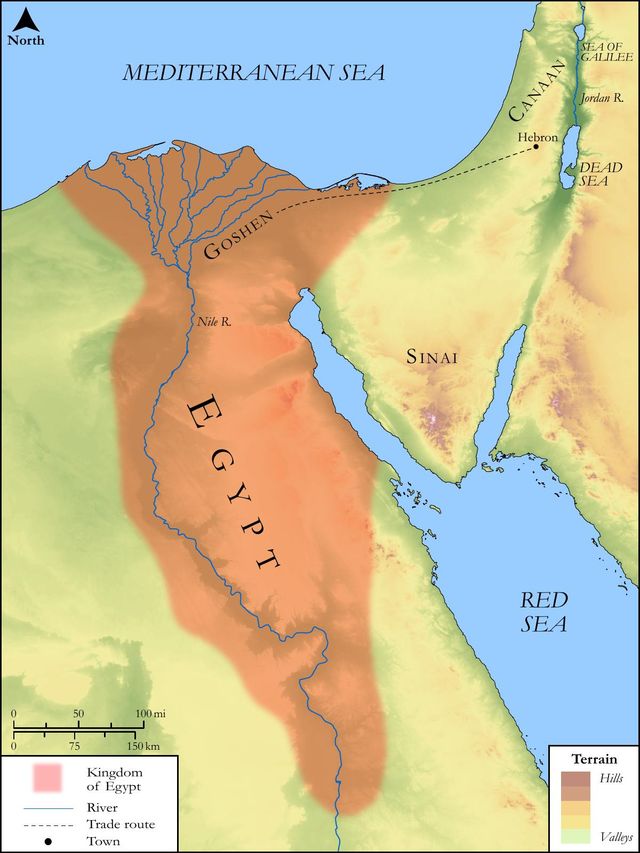
See on the biblical-era maps


Study this verse
Public-domain commentary
Matthew Henry
From his Commentary on the Whole Bible. Henry comments on passages, not single verses — this entry covers Genesis 41:1–8.
Observe, 1. The delay of Joseph's enlargement. It was not till the end of two full years (Gen 41:1); so long he waited after he had entrusted the chief butler with his case and began to have some prospect of relief. Note, We have need of patience, not only bearing, but waiting, patience. Joseph lay in prison until the time that his word came, Psa 105:19. There is a time set for the deliverance of God's people; that time will come, though it seem to tarry; and, when it comes, it will appear to have been the best time, and therefore we ought to wait for it (Hab 2:3), and not think two full years too long to continue waiting. 2. The means of Joseph's enlargement, which were Pharaoh's dreams, here related. If we were to look upon them as ordinary dreams, we might observe from them the follies and absurdities of a roving working fancy, how it represents to itself tame cows as beasts of prey (nay, more ravenous than any, eating up those of their own kind), and ears of corn as devouring one another. Surely in the multitude of dreams, nay, even in one dream, there are divers vanities, Ecc 5:7. Now that God no longer speaks to us in that way, I think it is no matter how little we either heed them or tell them. Foolish dreams related can make no better than foolish talk. But these dreams which Pharaoh dreamed carried their own evidence with them that they were sent of God; and therefore, when he awoke, his spirit was troubled, Gen 41:8. It cannot but put us into a concern to receive any extraordinary message from heaven, because we are conscious to ourselves that we have no reason to expect any good tidings thence. His magicians were puzzled, the rules of their art failed them: these dreams of Pharaoh, it seems, did not fall within the compass of them, so that they could not offer at the interpretation of them. This was to make Joseph's performance by the Spirit of God the more admirable. Human reason, prudence, and foresight, must be nonplussed, that divine revelation may appear the more glorious in the contrivance of our redemption, Co1 2:13, Co1 2:14. Compare with this story, Dan 2:27; Dan 4:7; Dan 5:8. Joseph's own dreams were the occasion of his troubles, and now Pharaoh's dreams were the occasion of his enlargement.
Continue studying Genesis 41:4 across the web’s major study libraries — every link below opens this exact verse, chapter, or book on the destination site.
Read & Compare
 BibleGatewayThis verse in more than 200 translations and 70 languages.
 Bible.comThe YouVersion reader — hundreds of translations, reading plans, and highlights.
 ESV.orgCrossway's official English Standard Version reader.
 NET BibleThe NET translation with 60,000+ translators' notes on every rendering decision.
 STEP BibleTyndale House's free study tool — original text, vocabulary, and scholarly resources.
 BibliaLogos Bible Software's free web reader.
 USCCBThe New American Bible (Revised Edition) with the U.S. bishops' study notes.
Commentaries
 BibleHub CommentariesDozens of classic commentaries on this verse, gathered on one page.
 StudyLightMore than 100 commentary sets — the largest collection on the web.
 BibleRefPlain-English commentary on what this verse means, verse by verse.
 Enduring WordDavid Guzik's free commentary on this chapter, widely used by Bible teachers.
 Bible Study ToolsVerse commentary alongside Greek and Hebrew study aids.
Original Language & Research
- BibleHub InterlinearThe verse word by word — original language, transliteration, and English.
- BibleHub LexiconEvery word's original-language definition and Strong's entry.
 Blue Letter BibleDeep-study tools — Strong's numbers, concordance, and word studies.
 SefariaThe Hebrew text with Rashi and centuries of Jewish commentary.
Sermons, Hymns & Audio


TrulyRandomVerse is not affiliated with these sites and doesn’t control their content. They’re linked because they’re genuinely useful.
Summary
Genesis 41:4 vividly portrays the climactic and unsettling moment in Pharaoh's first dream, where seven emaciated and ill-favored cows consume seven fat and well-favored cows. This disturbing vision, which immediately causes Pharaoh to awaken, serves as a profound divine prophetic warning, dramatically foreshadowing a period of severe famine that would entirely negate preceding abundance, thereby setting the providential stage for Joseph's elevation and the preservation of God's people.
Context
ShowHideLiterary Context
This verse concludes the first of Pharaoh's two significant dreams, immediately following the description of the seven healthy cows grazing by the Nile and the subsequent emergence of seven unhealthy cows in Genesis 41:1-3. The narrative flow emphasizes the visual and emotional impact of the dream on Pharaoh. The abrupt awakening underscores the dream's disturbing nature and its divine origin, setting up the urgent need for interpretation that drives the subsequent plot. This dream, along with the second dream described in Genesis 41:5-7, creates a narrative tension that can only be resolved by a divinely gifted interpreter, ultimately paving the way for Joseph's release from prison and his elevation to power.
Historical & Cultural Context
Ancient Egypt, heavily reliant on the Nile River for its agricultural prosperity, would have understood the symbolism of cows (representing fertility and sustenance) and the stark contrast between fat and lean animals. Famine was a recurring and devastating threat in this region, often caused by the fluctuating levels of the Nile. Dreams were widely regarded in Egypt as a significant means of divine communication, and kings often employed wise men, magicians, and soothsayers to interpret them. Pharaoh, as the divine ruler of Egypt, would have been particularly attuned to such omens, and his inability to find an interpretation among his own court highlights the extraordinary nature of this particular divine message, indicating a power beyond the conventional wisdom of Egypt.
Key Themes
ShowHideGenesis 41:4 contributes significantly to several overarching themes within the book of Genesis. It powerfully illustrates Divine Sovereignty and Providence, demonstrating God's active involvement in human affairs, even those of a pagan king, to accomplish His redemptive purposes. The dream's symbolic nature highlights Divine Communication, showing God's ability to convey profound truths through vivid imagery. Furthermore, it underscores the theme of Foresight and Preparation, as the dream's interpretation by Joseph will lead to a national strategy to mitigate the devastating effects of the impending famine, a theme that resonates throughout Joseph's narrative, particularly in his administrative leadership described in Genesis 41:46-57. The verse also subtly introduces the theme of Scarcity and Abundance, a cyclical reality that God controls and uses for His purposes.
Exposition and Analysis
ShowHideKey Word Analysis
ShowHideThe word raʻ (H7451) means "bad" or "evil," often implying something displeasing, harmful, or of poor quality. When combined with marʼeh (H4758), which refers to "appearance" or "sight," it describes the cows as "bad in appearance" or "displeasing to look upon." This signifies not merely an aesthetic lack but a deeper implication of unhealthiness, barrenness, or even malevolence, setting a stark contrast with the "well favoured" cows. It conveys a sense of something ominous and unproductive.
The term daq (H1851) means "crushed," "small," or "thin," emphasizing emaciation and a lack of substance. Combined with bâsâr (H1320), meaning "flesh" or "body," it paints a picture of extreme skinniness, indicative of starvation or disease. This physical description is crucial for understanding the prophetic meaning of the famine, highlighting the complete depletion of resources and vitality.
The verb ʼâkal (H398) means "to eat," "consume," or "devour." In this context, the phrase "did eat up" implies not just simple consumption but a complete and destructive act of devouring, leaving nothing behind. It emphasizes the absolute and overwhelming nature of the lean cows' action, signifying that the period of scarcity would entirely negate and obliterate the abundance that preceded it, leaving no residual benefit from the years of plenty.
Verse Breakdown
ShowHide"And the ill favoured and leanfleshed kine did eat up"
This clause introduces the shocking and unnatural act at the climax of Pharaoh's dream. The description of the cows as "ill favoured" (ugly, displeasing) and "leanfleshed" (emaciated, starved) immediately establishes their negative and destructive character. The verb "did eat up" (or "devoured") signifies a complete and irreversible consumption, emphasizing the overwhelming power of scarcity over abundance.
"the seven well favoured and fat kine."
This phrase identifies the victims of the consumption – the seven healthy, beautiful, and plump cows that had appeared earlier in the dream. The contrast between the two sets of cows is stark and intentional, highlighting the reversal of fortune and the obliteration of prosperity. This part of the dream is particularly disturbing because it defies the natural order, where healthy animals are not consumed by weaker ones in such a manner.
"So Pharaoh awoke."
This concluding phrase underscores the profound impact of the dream. Pharaoh's immediate awakening signifies the dream's vividness, its unsettling nature, and its divine origin. It was not a casual dream but a divinely sent message designed to disturb him deeply and demand his urgent attention, setting the stage for his subsequent search for an interpreter.
Literary Devices
ShowHideGenesis 41:4 is rich in Symbolism and Imagery. The "kine" (cows) themselves symbolize agricultural prosperity and sustenance, a direct reflection of Egypt's reliance on its livestock and the Nile. The stark contrast between the "well favoured and fat" cows and the "ill favoured and leanfleshed" cows is a powerful visual Antithesis, representing the opposing forces of abundance and scarcity. The act of the lean consuming the fat is a vivid Metaphor for the famine's destructive power, illustrating how a period of extreme want would entirely deplete and negate the preceding years of plenty. This imagery also serves as Foreshadowing, prophetically revealing the nature and severity of the impending seven-year famine. The dramatic abruptness of "So Pharaoh awoke" functions as a Climax, emphasizing the dream's profound impact and the urgency of its message, highlighting its divine, rather than mundane, origin.
Theological and Thematic Connections
ShowHideThe dramatic imagery of Genesis 41:4 powerfully illustrates God's sovereign control over creation and human history, even extending to the dreams of a pagan king. This divine communication underscores the principle that God reveals His plans and warnings, not only for His covenant people but also for the broader world, to accomplish His redemptive purposes. The dream's clear symbolism of abundance being consumed by scarcity serves as a divine warning, highlighting the importance of wise stewardship and preparation in times of plenty for inevitable periods of want. It also emphasizes God's providential care, as this disturbing dream ultimately leads to Joseph's elevation, ensuring the preservation of Jacob's family and the lineage through which the Messiah would come.
Reflection and Application
ShowHideGenesis 41:4 serves as a profound reminder of God's active and intricate involvement in the affairs of humanity. It teaches us that even in seemingly chaotic or disturbing circumstances, God is meticulously orchestrating events to fulfill His divine purposes. This narrative underscores the critical importance of spiritual discernment and attentiveness to divine warnings, recognizing that God communicates His will and impending realities through various means, often in ways that challenge our natural understanding. For us today, this translates into a call for wise stewardship of the resources God entrusts to us during times of abundance—whether financial, relational, or spiritual—to prepare for potential future difficulties. Just as Joseph's interpretation led to a national strategy for survival, we are encouraged to seek God's wisdom and guidance in our personal and communal lives, ensuring we are prepared for both seasons of plenty and seasons of scarcity, trusting in His ultimate provision and sovereignty.
Questions for Reflection
ShowHideFAQ
ShowHideWhy did God communicate through dreams to a pagan king like Pharaoh?
ShowHideGod, in His sovereignty, is not limited to communicating only with His covenant people. He can reveal His plans and purposes to anyone He chooses, including pagan rulers, for His own divine ends. In Pharaoh's case, this communication was essential for orchestrating events that would ultimately lead to Joseph's elevation, the preservation of Jacob's family, and the eventual formation of the nation of Israel. It demonstrates God's universal dominion and His ability to use all circumstances and individuals to achieve His redemptive plan, ensuring that His purposes are fulfilled regardless of human will, as seen in Proverbs 21:1.
What is the symbolic significance of the lean cows eating the fat cows?
ShowHideThe symbolism is profoundly significant, representing the complete and utter consumption of abundance by scarcity. The seven fat cows symbolized seven years of extraordinary plenty, while the seven lean cows symbolized seven years of severe famine. The act of the lean devouring the fat signifies that the famine would be so intense and widespread that it would not merely reduce the accumulated resources but entirely consume them, leaving the land and its inhabitants in a state of destitution, as if the years of plenty had never happened. This vivid imagery underscores the severity of the impending crisis and the need for drastic measures, as Joseph later explains in Genesis 41:29-31.
How does this dream lead to Joseph's rise to power?
ShowHidePharaoh's disturbing dream and his inability to find an interpreter among his own wise men created a profound crisis that only divine wisdom could resolve. This crisis led to the chief cupbearer remembering Joseph, who had previously interpreted his dream in prison (Genesis 40:23). Joseph's God-given ability to interpret Pharaoh's dream accurately, along with his wise counsel for preparing for the coming famine, demonstrated his unique divine favor and administrative competence. This led Pharaoh to recognize Joseph's exceptional wisdom and appoint him as second-in-command over all of Egypt, fulfilling God's providential plan for Joseph and His people, as described in Genesis 41:39-41.
Christ-Centered Fulfillment
ShowHideThe narrative of Genesis 41:4, with its depiction of impending famine and the urgent need for a divinely appointed deliverer, powerfully foreshadows the person and work of Jesus Christ. Joseph, elevated from the depths of a prison to save a nation from physical famine, serves as a profound type of Christ, who was humbled, suffered, and then exalted to save humanity from spiritual famine and eternal death. Just as Joseph provided the "bread of life" (physical sustenance) to Egypt and the surrounding nations, including his own family, Christ is the true "bread of life" (John 6:35) who sustains us spiritually, offering eternal nourishment that never perishes (John 6:27). The dream's warning of a coming crisis and the need for preparation also points to Christ's warnings about future judgment and the necessity of spiritual readiness, urging us to "store up for yourselves treasures in heaven" (Matthew 6:19-21). Ultimately, Christ is the ultimate provider and preserver, who, through His sacrificial death and resurrection, ensures that those who trust in Him will never experience true spiritual famine, offering eternal abundance and life in the face of the world's consuming scarcity and spiritual emptiness (John 10:10).