


Genesis 41:2
- וְהִנֵּהve·hi·Nehand there!H2009Conj-w ¦ PrtParticle Interjectionוְandהִנֵּהthere!
- מִןminfromH4480PrepPreposition
- הַיְאֹרhay·'Orthe RiverH2975Art ¦ N-properNoun Proper LocationהַtheיְאֹרRiver
- עֹלֹת'o·Lot[were] coming upH5927V-Qal-Prtcpl-fpVerb Qal Participle Plural Feminine Absolute
- שֶׁבַעShe·va'sevenH7651Adj-csAdjective Numerical Singular common gender Absolute
- פָּרוֹתpa·RotcowsH6510N-fpNoun Plural Feminine Absolute
- יְפוֹתye·Fotgood looking ofH3303Adj-fpcAdjective Plural Feminine Construct
- מַרְאֶהmar·'EhappearanceH4758N-msNoun Singular Masculine Absolute
- וּבְרִיאֹתu·ve·ri·'Otand fat ofH1277Conj-w ¦ Adj-fpcAdjective Plural Feminine Constructוּandבְרִיאֹתfat of
- בָּשָׂרba·SarfleshH1320N-msNoun Singular Masculine Absolute
- וַתִּרְעֶינָהva·tir·'Ei·nahand they grazedH7462Conj-w ¦ V-Qal-ConsecImperf-3fpVerb Qal Consecutive Imperfect 3rd Plural Feminineוַandתִּרְעֶינָהthey grazed
- בָּאָחוּba·'A·chuamong the reed[s]H260Prep-b ¦ N-msNoun Singular Masculine Absoluteבָּamong theאָחוּreed[s]
English is a literal word-by-word gloss of the Hebrew, not the KJV's wording. Why?
This is the original text the KJV's translators worked from — each Hebrew word with its own literal English meaning in this verse, prepared by scholars at Tyndale House, Cambridge. The KJV translates whole sentences, not word by word, so its wording differs: one Hebrew word can become several English words, and the KJV may choose “the LORD” where the gloss reads “Yahweh”. Both are faithful — they answer different questions. For the KJV's own rendering, switch to the KJV text.
Details
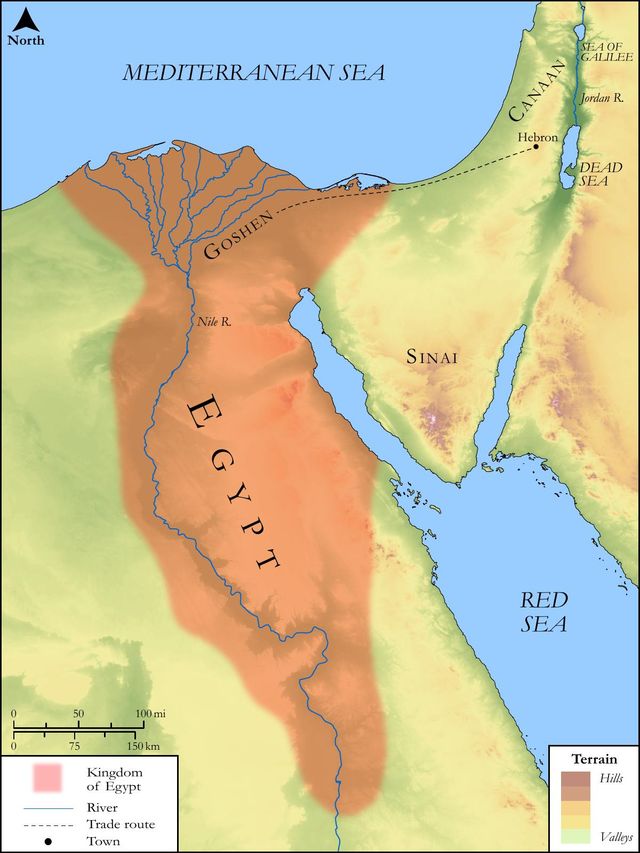
See on the biblical-era map


Study this verse
Public-domain commentary
Matthew Henry
From his Commentary on the Whole Bible. Henry comments on passages, not single verses — this entry covers Genesis 41:1–8.
Observe, 1. The delay of Joseph's enlargement. It was not till the end of two full years (Gen 41:1); so long he waited after he had entrusted the chief butler with his case and began to have some prospect of relief. Note, We have need of patience, not only bearing, but waiting, patience. Joseph lay in prison until the time that his word came, Psa 105:19. There is a time set for the deliverance of God's people; that time will come, though it seem to tarry; and, when it comes, it will appear to have been the best time, and therefore we ought to wait for it (Hab 2:3), and not think two full years too long to continue waiting. 2. The means of Joseph's enlargement, which were Pharaoh's dreams, here related. If we were to look upon them as ordinary dreams, we might observe from them the follies and absurdities of a roving working fancy, how it represents to itself tame cows as beasts of prey (nay, more ravenous than any, eating up those of their own kind), and ears of corn as devouring one another. Surely in the multitude of dreams, nay, even in one dream, there are divers vanities, Ecc 5:7. Now that God no longer speaks to us in that way, I think it is no matter how little we either heed them or tell them. Foolish dreams related can make no better than foolish talk. But these dreams which Pharaoh dreamed carried their own evidence with them that they were sent of God; and therefore, when he awoke, his spirit was troubled, Gen 41:8. It cannot but put us into a concern to receive any extraordinary message from heaven, because we are conscious to ourselves that we have no reason to expect any good tidings thence. His magicians were puzzled, the rules of their art failed them: these dreams of Pharaoh, it seems, did not fall within the compass of them, so that they could not offer at the interpretation of them. This was to make Joseph's performance by the Spirit of God the more admirable. Human reason, prudence, and foresight, must be nonplussed, that divine revelation may appear the more glorious in the contrivance of our redemption, Co1 2:13, Co1 2:14. Compare with this story, Dan 2:27; Dan 4:7; Dan 5:8. Joseph's own dreams were the occasion of his troubles, and now Pharaoh's dreams were the occasion of his enlargement.
Historical interpretation
Historical reception
1 surviving comment on this verse from the historical church.
(Chapter 41, Verse 2) And behold, seven cows were coming up from the river, attractive to look at, well-fed and well-built, and they were grazing in the meadow. In Genesis it is written as Achi (Ἄχα), which is neither a Greek nor Latin word. Even in Hebrew it is corrupted: it is said to be Ahu (אָחוּ), which means 'in the marsh'. But because the Hebrew letters Vau and Yod are similar and only differ in size, the Seventy Interpreters translated Ahu as Achi and, according to their custom of expressing double aspiration, they joined the Hebrew letter Heth with the Greek letter Chi (χ).
Continue studying Genesis 41:2 across the web’s major study libraries — every link below opens this exact verse, chapter, or book on the destination site.
Read & Compare
 BibleGatewayThis verse in more than 200 translations and 70 languages.
 Bible.comThe YouVersion reader — hundreds of translations, reading plans, and highlights.
 ESV.orgCrossway's official English Standard Version reader.
 NET BibleThe NET translation with 60,000+ translators' notes on every rendering decision.
 STEP BibleTyndale House's free study tool — original text, vocabulary, and scholarly resources.
 BibliaLogos Bible Software's free web reader.
 USCCBThe New American Bible (Revised Edition) with the U.S. bishops' study notes.
Commentaries
 BibleHub CommentariesDozens of classic commentaries on this verse, gathered on one page.
 StudyLightMore than 100 commentary sets — the largest collection on the web.
 BibleRefPlain-English commentary on what this verse means, verse by verse.
 Enduring WordDavid Guzik's free commentary on this chapter, widely used by Bible teachers.
 Bible Study ToolsVerse commentary alongside Greek and Hebrew study aids.
Original Language & Research
- BibleHub InterlinearThe verse word by word — original language, transliteration, and English.
- BibleHub LexiconEvery word's original-language definition and Strong's entry.
 Blue Letter BibleDeep-study tools — Strong's numbers, concordance, and word studies.
 SefariaThe Hebrew text with Rashi and centuries of Jewish commentary.
Sermons, Hymns & Audio


TrulyRandomVerse is not affiliated with these sites and doesn’t control their content. They’re linked because they’re genuinely useful.
Summary
The initial, prosperous imagery of Pharaoh's first dream depicts seven healthy, aesthetically pleasing, and robustly fed cows emerging from the life-giving Nile River to graze peacefully in a lush meadow. This vivid scene of natural abundance and vitality sets the foundational imagery for the first part of Pharaoh's prophetic vision, foreshadowing a period of great prosperity for Egypt and initiating God's intricate providential plan to preserve His people through Joseph.
Context
ShowHideLiterary Context
This verse immediately follows Genesis 41:1, which sets the scene with Pharaoh standing by the Nile, troubled by an impending dream. Genesis 41:2 then launches directly into the dream's first sequence, presenting a vision of flourishing abundance. This initial imagery of robust, "well favoured" and "fatfleshed" kine emerging from the river stands in deliberate and stark contrast to the subsequent vision in Genesis 41:3 of "ill favoured and leanfleshed" kine. This sharp juxtaposition is crucial for establishing the dual nature of Pharaoh's dream, which Joseph will later interpret as seven years of plenty followed by seven years of severe famine, thereby underscoring the narrative's central theme of divine foresight and preparation.
Historical & Cultural Context
The setting of Pharaoh's dream by the Nile is deeply significant for ancient Egypt. The Nile River was the absolute lifeblood of the nation, dictating its agricultural cycles, economic stability, and very survival. Its annual inundation deposited fertile silt, enabling bountiful harvests and sustaining livestock. Cattle, or "kine," were a primary measure of wealth and prosperity in this agrarian society, essential for food, labor, and trade. For kine to be "well favoured" and "fatfleshed" emerging from the Nile would have been a quintessential image of health, fertility, and national well-being. Dreams themselves held immense cultural and religious significance in ancient Egypt, often believed to be messages from the gods, making Pharaoh's troubled state and the subsequent search for interpretation culturally resonant and politically imperative.
Key Themes
ShowHideGenesis 41:2 contributes to several overarching themes within the book of Genesis and biblical narrative. Firstly, it highlights Divine Sovereignty and Revelation, as God initiates and orchestrates Pharaoh's dream, demonstrating His control over all earthly rulers and His ability to reveal future events to both believers and unbelievers (Genesis 41:25). Secondly, it introduces the theme of Abundance and Scarcity, setting the stage for Joseph's interpretation of the "seven well favoured kine" as years of plentiful harvest, a common biblical motif used by God to test faith, teach stewardship, or bring about His redemptive purposes (Deuteronomy 28:1-14 contrasts with Deuteronomy 28:15-68). Finally, the verse subtly underscores God's Providential Plan, as this seemingly ordinary dream becomes the catalyst for Joseph's elevation from prison to power, ultimately leading to the preservation of Jacob's family and the lineage through which the Messiah would come (Genesis 50:20).
Exposition and Analysis
ShowHideKey Word Analysis
ShowHideFrom the root meaning "to be beautiful." This word describes the aesthetic quality of the kine, indicating they were pleasing to the eye, comely, and goodly in appearance. In the context of livestock, "well favoured" implies health, vitality, and an ideal physical condition, signifying flourishing prosperity.
Derived from a root suggesting "fatted" or "plump." This term explicitly describes the physical robustness and corpulence of the kine, emphasizing their healthy, well-nourished state. Coupled with "well favoured," it reinforces the imagery of abundant resources and a thriving environment, indicative of a period of plenty.
Of uncertain, possibly Egyptian, origin, referring specifically to marshy grass or bulrushes, particularly those found along the Nile. This detail grounds the dream in the Egyptian landscape, providing a realistic setting for the cattle's grazing. It signifies a place of lush, readily available sustenance, completing the picture of an idyllic and fertile environment.
Verse Breakdown
ShowHide"And, behold, there came up out of the river"
The introductory "And, behold" (וְהִנֵּה, v'hineh) serves as an interjection, drawing immediate attention to the unfolding vision, signaling its significance as a divine revelation. The emergence "out of the river" (יְאֹר, yᵉʼôr), specifically the Nile, is crucial. It establishes the source of Egypt's prosperity and life, indicating that the forthcoming abundance is intrinsically linked to the fertility and bounty provided by the great river. The verb "came up" (עָלָה, ʻâlâh) suggests a natural, yet divinely orchestrated, ascent from the very source of life.
"seven well favoured kine and fatfleshed"
This phrase introduces the central figures of the first part of the dream: seven cows (kine, an archaic plural). The number "seven" (שֶׁבַע, shebaʻ) is biblically significant, often symbolizing completeness, perfection, or a full cycle, here prophetically pointing to seven full years. The descriptions "well favoured" (יָפֶה מַרְאֶה, yâpheh marʼeh – beautiful of appearance) and "fatfleshed" (בָּרִיא בָּשָׂר, bârîyʼ bâsâr – fat of flesh) are highly descriptive. They paint a picture of ideal, robust, and healthy cattle, symbolizing a period of immense agricultural and economic prosperity, where resources are plentiful and the land is fruitful.
"and they fed in a meadow"
This final clause completes the idyllic scene. The kine are not merely present but are actively "feeding" (רָעָה, râʻâh – grazing, pasturing) in a "meadow" (אָחוּ, ʼâchûw – marshy grass, bulrushes). This detail reinforces the theme of abundant provision and peace. It suggests a land so fertile that even its marshy areas provide ample sustenance, solidifying the imagery of a time of profound blessing and natural flourishing.
Literary Devices
ShowHideGenesis 41:2 employs several literary devices to convey its meaning and impact. Imagery is paramount, painting a vivid picture of health and abundance through descriptive terms like "well favoured kine" and "fatfleshed," and the serene act of "fed in a meadow." This visual richness immediately establishes a sense of prosperity. Symbolism is also central, with the "seven kine" representing seven years, and their healthy appearance symbolizing years of plenty. The "river" (Nile) is a powerful symbol of life, fertility, and the source of Egypt's well-being. The verse also sets up a strong Juxtaposition with the subsequent verse, Genesis 41:3, where "ill favoured and leanfleshed" kine appear. This immediate contrast highlights the dual nature of Pharaoh's dream and foreshadows the coming famine, making the initial image of abundance all the more impactful. The phrase "And, behold," functions as an Exclamatory Introduction, drawing the reader's attention and signaling the prophetic significance of the dream.
Theological and Thematic Connections
ShowHideGenesis 41:2, as the opening scene of Pharaoh's dream, profoundly illustrates God's sovereign control over all creation and human affairs, even those of a pagan king. It reveals God's meticulous planning, using a seemingly ordinary dream to initiate a chain of events that would ultimately preserve His chosen people and demonstrate His wisdom through Joseph. The imagery of abundance serves as a divine communication, not just about Egypt's future, but about the cyclical nature of blessing and hardship that God often employs for His redemptive purposes. It underscores that true prosperity, whether physical or spiritual, ultimately flows from God's provision and His design.
Reflection and Application
ShowHideGenesis 41:2 serves as a profound reminder that periods of prosperity and blessing are often divinely appointed seasons, sometimes preceding times of significant challenge or scarcity. Just as God revealed the coming years of plenty before the famine, He often provides insight, resources, or opportunities for preparation in our lives. This verse encourages us to recognize and appreciate times of abundance, viewing them as divine provisions rather than mere happenstance. It calls us to exercise wise stewardship of all our resources—whether financial, relational, spiritual, or temporal—knowing that circumstances can change and that God's purposes often unfold through our preparedness. Furthermore, it speaks to God's meticulous planning and how He uses seemingly ordinary dreams or events to fulfill His extraordinary purposes, often through unexpected individuals like Joseph. This invites us to trust in His overarching plan, even when we cannot see the full picture, and to remain open to how He might use our present blessings to prepare us for future seasons.
Questions for Reflection
ShowHideFAQ
ShowHideWhat do "well favoured kine and fatfleshed" mean in this context?
ShowHide"Well favoured kine" refers to cows (kine is an archaic plural for cattle) that are visually appealing, healthy, and pleasant in appearance. "Fatfleshed" emphasizes their robust, well-nourished condition, indicating a state of abundance and prosperity. Together, these phrases vividly convey the imagery of thriving livestock, symbolizing a period of great agricultural and economic plenty for Egypt, as later interpreted by Joseph in Genesis 41:26.
Why did the kine come "out of the river"?
ShowHideThe "river" in this context is the Nile, the indispensable lifeblood of ancient Egypt. The Nile's annual flooding brought fertile soil and sustained the land, making it the primary source of all agricultural prosperity. The kine emerging from the river symbolizes that the coming abundance would directly stem from the Nile's bounty and the land's fertility, which was entirely dependent on the river's consistent provision. This detail grounds the dream in the specific realities of Egyptian life and economy.
Does this verse suggest anything about preparation for the future?
ShowHideWhile Genesis 41:2 itself only describes the initial vision of abundance, it is the first part of a dream that explicitly warns of coming famine. Therefore, in the broader context of Pharaoh's complete dream and Joseph's subsequent interpretation and counsel (see Genesis 41:33-36), this verse implicitly highlights the critical importance of recognizing and wisely stewarding periods of prosperity as preparation for potential future hardships. It sets the stage for a divine call to foresight, prudent management, and strategic planning.
Christ-Centered Fulfillment
ShowHideThe abundance depicted in Genesis 41:2 and the subsequent provision orchestrated through Joseph profoundly foreshadow the ultimate provision found in Jesus Christ. Joseph, through divine wisdom and foresight, saved Egypt and his own family from physical famine by storing up grain during the years of plenty. This act of physical salvation and sustenance prefigures Christ, who is the true "Bread of Life," the ultimate source of spiritual sustenance and eternal provision for all humanity (John 6:35). Just as Joseph's foresight led to physical salvation for many, Christ's sacrificial act on the cross and His glorious resurrection provide spiritual salvation and eternal life for all who believe, offering an unending abundance that transcends any earthly prosperity or famine (John 10:10). He is the one in whom "all the fullness of God was pleased to dwell" (Colossians 1:19), making Him the inexhaustible wellspring of grace, truth, and life, far surpassing the temporary abundance symbolized by the well-favored kine.