


Genesis 18:21
Bible text: King James Version (1769 Blayney text) · Public domain
Bible text: Berean Standard Bible · Public domain
Bible text: American Standard Version (1901) · Public domain
Bible text: World English Bible, Messianic edition · Public domain
Bible text: Geneva Bible (1599) · Public domain
Bible text: Young's Literal Translation · Public domain
- אֵרֲדָה'e·ra·dahI will go downH3381V-Qal-Imperf-1csVerb Qal Imperfect 1st Singular common gender
- נָּאna'pleaseH4994PrtParticle Interjection
- וְאֶרְאֶהve·'er·'Ehso I may seeH7200Conj-w ¦ V-Qal-ConjImperf-1csVerb Qal Conjunction+Imperfect 1st Singular common genderוְsoאֶרְאֶהI may see
- הַכְּצַעֲקָתָהּha·ke·tza·'a·ka·Tah¿ according to its outcryH6818Interrog ¦ Prep-k ¦ N-fsc ¦ 3fsNoun Singular Feminine Constructהַ¿כְּaccording toצַעֲקָתָoutcryהּits
- הַבָּאָהha·Ba·'ahthat <it> has comeH935Art ¦ V-Qal-Perf-3fsVerb Qal Perfect 3rd Singular Feminineהַthatבָּאָה<it> has come
- אֵלַי'e·Laito meH413Prep ¦ 1csPreposition Definiteאֵלַtoיme
- עָשׂוּ'a·Suhave they doneH6213V-Qal-Perf-3cpVerb Qal Perfect 3rd Plural common gender
- כָּלָהka·LahcompletionH3617N-fsNoun Singular Feminine Absolute
- וְאִםve·'imand ifH518Conj-w ¦ PrtParticle Conditionalוְandאִםif
- לֹאlo'notH3808NegParticle Negative
- אֵדָעָה'e·Da·'ahI will knowH3045V-Qal-Imperf-1csVerb Qal Imperfect 1st Singular common gender
English is a literal word-by-word gloss of the Hebrew, not the KJV's wording. Why?
This is the original text the KJV's translators worked from — each Hebrew word with its own literal English meaning in this verse, prepared by scholars at Tyndale House, Cambridge. The KJV translates whole sentences, not word by word, so its wording differs: one Hebrew word can become several English words, and the KJV may choose “the LORD” where the gloss reads “Yahweh”. Both are faithful — they answer different questions. For the KJV's own rendering, switch to the KJV text.
Details
See on the biblical-era maps


Study this verse
Public-domain commentary
Matthew Henry
From his Commentary on the Whole Bible. Henry comments on passages, not single verses — this entry covers Genesis 18:16–22. His four-level outline is real structure in the source text, so it is rendered as structure.
The messengers from heaven had now despatched one part of their business, which was an errand of grace to Abraham and Sarah, and which they delivered first; but now they have before them work of another nature. Sodom is to be destroyed, and they must do it, Gen 19:13. Note, As with the Lord there is mercy, so he is the God to whom vengeance belongs. Pursuant to their commission, we here find, 1. That they looked towards Sodom (Gen 18:16); they set their faces against it in wrath, as God is said to look unto the host of the Egyptians, Exo 14:24. Note, Though God has long seemed to connive at sinners, from which they have inferred that the Lord does not see, does not regard, yet, when the day of his wrath comes, he will look towards them. 2. That they went towards Sodom (Gen 18:22), and accordingly we find two of them at Sodom, Gen 19:1. Whether the third was the Lord, before whom Abraham yet stood, and to whom he drew near (Gen 18:23), as most think, or whether the third left them before they came to Sodom, and the Lord before whom Abraham stood was the shechinah, or that appearance of the divine glory which Abraham had formerly seen and conversed with, is uncertain. However, we have here,
I.The honour Abraham did to his guests:
He went with them to bring them on the way, as one that was loth to part with such good company, and was desirous to pay his utmost respects to them. This is a piece of civility proper to be shown to our friends; but it must be done as the apostle directs (Jo3 1:6), after a godly sort.
II.The honour they did to him; for those that honour God he will honour.
God communicated to Abraham his purpose to destroy Sodom, and not only so, but entered into a free conference with him about it. Having taken him, more closely than before, into covenant with himself (ch. 17), he here admits him into more intimate communion with himself than ever, as the man of his counsel. Observe here,
1.God's friendly thoughts concerning Abraham, Gen 18:17-19, where we have his resolution to make known to Abraham his purpose concerning Sodom, with the reasons of it. If Abraham had not brought them on their way, perhaps he would not have been thus favoured; but he that loves to walk with wise men shall be wise, Pro 13:20. See how God is pleased to argue with himself: Shall I hide from Abraham (or, as some read it, Am I concealing from Abraham) that thing which I do? "Can I go about such a thing, and not tell Abraham?" Thus does God, in his counsels, express himself, after the manner of men, with deliberation. But why must Abraham be of the cabinet-council? The Jews suggest that because God had granted the land of Canaan to Abraham and his seed therefore he would not destroy those cities which were a part of that land, without his knowledge and consent. But God here gives two other reasons: -
(1.)Abraham must know, for he is a friend and a favourite, and one that God has a particular kindness for and great things in store for. He is to become a great nation; and not only so, but in the Messiah, who is to come from his loins, All nations of the earth shall be blessed. Note, The secret of the Lord is with those that fear him, Psa 25:14; Pro 3:32. Those who by faith live a life of communion with God cannot but know more of his mind than other people, though not with a prophetical, yet with a prudential practical knowledge. They have a better insight than others into what is present (Hos 14:9; Psa 107:43), and a better foresight of what is to come, at least so much as suffices for their guidance and for their comfort.
(2.)Abraham must know, for he will teach his household: I know Abraham very well, that he will command his children and his household after him, Gen 18:19. Consider this,
[1.]As a very bright part of Abraham's character and example. He not only prayed with his family, but he taught them as a man of knowledge, nay, he commanded them as a man in authority, and was prophet and king, as well as priest, in his own house. Observe, First, God having made the covenant with him and his seed, and his household being circumcised pursuant to that, he was very careful to teach and rule them well. Those that expect family blessings must make conscience of family duty. If our children be the Lord's, they must be nursed for him; if they wear his livery, they must be trained up in his work. Secondly, Abraham took care not only of his children, but of his household; his servants were catechized servants. Masters of families should instruct and inspect the manners of all under their roof. The poorest servants have precious souls that must be looked after. Thirdly, Abraham made it his care and business to promote practical religion in his family. He did not fill their heads with matters of nice speculation, or doubtful disputation; but he taught them to keep the way of the Lord, and to do judgment and justice, that is, to be serious and devout in the worship of God and to be honest in their dealings with all men. Fourthly, Abraham, herein, had an eye to posterity, and was in care not only that his household with him, but that his household after him, should keep the way of the Lord, that religion might flourish in his family when he was in his grave. Fifthly, His doing this was the fulfilling of the conditions of the promises which God had made him. Those only can expect the benefit of the promises that make conscience of their duty.
[2.]As the reason why God would make known to him his purpose concerning Sodom, because he was communicative of his knowledge, and improved it for the benefit of those that were under his charge. Note, To him that hath shall be given, Mat 13:12; Mat 25:29. Those that make a good use of their knowledge shall know more.
2.God's friendly talk with Abraham, in which he makes known to him purpose concerning Sodom, and allows him a liberty of application to him about the matter.
(1.)He tells him of the evidence there was against Sodom: The cry of Sodom is great, Gen 18:20. Note, Some sins, and the sins of some sinners, cry aloud to heaven for vengeance. The iniquity of Sodom was crying iniquity, that is, it was so very provoking that it even urged God to punish.
(2.)The enquiry he would make upon this evidence: I will go down now and see, Gen 18:21. Not as if there were any thing concerning which God is in doubt, or in the dark; but he is pleased thus to express himself after the manner of men,
[1.]To show the incontestable equity of all his judicial proceedings. Men are apt to suggest that his way is not equal; but let them know that his judgments are the result of an eternal counsel, and are never rash or sudden resolves. He never punishes upon report, or common fame, or the information of others, but upon his own certain and infallible knowledge.
[2.]To give example to magistrates, and those in authority, with the utmost care and diligence to enquire into the merits of a cause, before they give judgment upon it.
[3.]Perhaps the decree is here spoken of as not yet peremptory, that room and encouragement might be given to Abraham to make intercession for them. Thus God looked if there were any to intercede, Isa 59:16.
Historical interpretation
Five Centuries of Reception
7 surviving comments on this verse. Each one is dated, so this reads as a timeline rather than a list.
Select a marker to jump to its quote. Markers stagger vertically where authors wrote within a few decades of each other.
These are the words of the divine Scripture. Let us see, therefore, now what is fitting to be understood in them. "I have descended," the text says, "to see." When responses are delivered to Abraham, God is not said to descend but to stand before him, as we explained above: "Three men," the text says, "stood before him." But now, because sinners are involved, God is said to descend. Beware lest you think of ascending and descending spatially. For this is frequently found in the sacred literature, as in the prophet Micah: "Behold," Scripture says, "the Lord departed from his holy place and came down and will tread upon the high places of the earth." Therefore God is said to descend when he deigns to have concern for human frailty. This should be discerned especially of our Lord and Savior, who "thought it not robbery to be equal with God but emptied himself, taking the form of a servant." Therefore he descended. For "no other has ascended into heaven, but he that descended from heaven, the Son of man who is in heaven." For the Lord descended not only to care for us but also to bear these things that are ours. "For he took the form of a servant," and although he himself is invisible in nature, inasmuch as he is equal to the Father, nevertheless he took a visible appearance "and was found in appearance as a man." But also when he descends he is below with some, but he ascends with others and is above. For he goes up with the chosen apostles "into a high mountain and there is transfigured before them." Therefore he is above with those whom he teaches about the mysteries of the kingdom of heaven. But he is below with the crowds and Pharisees, whose sins he reproaches, and he is there with them.… He could not, however, be transfigured below, but he ascended above with those who could follow him, and there he is transfigured.
So also now, therefore, it is said of these who live in Sodom, that if indeed, on his examination, "their deeds are completed as the cry" that has ascended to God, they would be considered unworthy. But if there is any conversion among them, if even ten just men might be found among them, so, at last, God would know them. And for this reason the text said, "But if not, that I might know." It did not say that I might know what they are doing but that I might know them and make them worthy of knowledge of me, if I should find some among them just, if I should find some repentant, if some such as I ought to know.
It was not that God, who had just said, “their sins were very grave,” did not know that they had sinned. This was an example to judges not to prejudge a case, even based on very reliable hearsay. For if he who knows all set aside his knowledge lest he exact vengeance without full knowledge before the trial, how much more should they set aside their ignorance and not effect judgment before the case is heard.
Then, to teach the whole human race that even if their sins are exceedingly great and confessed to be such, he does not pronounce sentence before proof is manifest, he says, “I am going down to see if their deeds correspond to the outcry reaching me, so as to know if it is true or not.” What is meant by the deliberation of the expression? “I am going down to see if their deeds correspond to the outcry reaching me, so as to know if it is true or not.” What is meant by the considerateness of the expression? “I am going down to see.” I mean, does the God of all move from place to place? No indeed! It doesn’t mean this; instead, as I have often remarked, he wants to teach us by the concreteness of the expression that there is need to apply precision and that sinners are not condemned on hearsay nor is sentence pronounced without proof.
The cry of Sodom and Gomorrah is multiplied, he said. Well did he say that sins can cry out. Great surely is the cry of sinners as it mounts from earth to heaven. But why does he say that the sins of people cry out? It is because God says his ears are assaulted by the cries of our sins that the punishment of sinners be not delayed. Truly is it a cry, and the cry is great when the love of God is overpowered by the cries of sins to the extent that he is forced to punish the sinners. The Lord shows how unwilling he is to punish even the gravest sinners when he said that the cry of Sodom ascended to him. This means: My mercy urges me to spare them, but the cry of their sins compels me to punish them.
Now let us see what he means by saying, “I descended to see whether they have done all that the outcry which has come to me indicates; if not, I will know.” Because of this, pagans, and especially the exceedingly foul Manichaeans, are wont to assail us by saying, “Behold, the God of the law did not know what was being done in Sodom.” Now we reply with sound understanding and say that God knows the just in one way and sinners in another. What is said concerning the just? “The Lord knows who are his.” What is said about sinners? “Depart from me, all you workers of iniquity; I do not know you.” Moreover, the apostle Paul says, “If anyone is the Lord’s, he knows what I am saying; if anyone ignores this, he shall be ignored.” What does it mean, then, “I do not know you”? “I do not recognize you in my pattern; I do not recognize my image in you. My justice knows something to punish in you, but my mercy does not find anything to crown.” For this reason if one’s actions are unworthy of God, one is said to be unworthy of his knowledge also. “I descended to see”; not in order to know what they are doing but to make them worthy of my knowledge if I find any of them just, repentant, or such as I should know.
"I will go down," he says, "and see whether they have done altogether according to the outcry which has come to me; and if not, I will know." Therefore, when the Lord said that he would go down to see whether the same outcry was true, he did not show his ignorance, who possesses the knowledge of all things, but instructs our rashness, lest we presume to blame the deeds of others before we learn perfectly; which He also teaches us in the construction of the tower, where it is written that the Lord came down to see the city and the tower which the sons of Adam had built; for what would He not see from heaven to earth, of whom it is written that "Hell is naked before Him, and there is no covering for perdition"?
Continue studying Genesis 18:21 across the web’s major study libraries — every link below opens this exact verse, chapter, or book on the destination site.
Read & Compare
 BibleGatewayThis verse in more than 200 translations and 70 languages.
 Bible.comThe YouVersion reader — hundreds of translations, reading plans, and highlights.
 ESV.orgCrossway's official English Standard Version reader.
 NET BibleThe NET translation with 60,000+ translators' notes on every rendering decision.
 STEP BibleTyndale House's free study tool — original text, vocabulary, and scholarly resources.
 BibliaLogos Bible Software's free web reader.
 USCCBThe New American Bible (Revised Edition) with the U.S. bishops' study notes.
Commentaries
 BibleHub CommentariesDozens of classic commentaries on this verse, gathered on one page.
 StudyLightMore than 100 commentary sets — the largest collection on the web.
 BibleRefPlain-English commentary on what this verse means, verse by verse.
 Enduring WordDavid Guzik's free commentary on this chapter, widely used by Bible teachers.
 Bible Study ToolsVerse commentary alongside Greek and Hebrew study aids.
Original Language & Research
- BibleHub InterlinearThe verse word by word — original language, transliteration, and English.
- BibleHub LexiconEvery word's original-language definition and Strong's entry.
 Blue Letter BibleDeep-study tools — Strong's numbers, concordance, and word studies.
 SefariaThe Hebrew text with Rashi and centuries of Jewish commentary.
Sermons, Hymns & Audio


TrulyRandomVerse is not affiliated with these sites and doesn’t control their content. They’re linked because they’re genuinely useful.
Summary
Genesis 18:21 records the Lord's profound declaration to Abraham, stating His intention to personally "go down" and thoroughly "see" whether the wickedness of Sodom and Gomorrah has indeed reached the full extent indicated by the "cry" that has ascended to Him. This statement, while employing anthropomorphic language, powerfully underscores God's perfect justice, His deliberate and meticulous approach to assessing human actions, and His active, personal engagement in the affairs of humanity, ensuring that His judgments are always founded on complete knowledge and righteous verification rather than mere accusation or incomplete information.
Context
ShowHideLiterary Context
This verse is a pivotal moment within the broader narrative of Genesis 18, following the Lord's direct revelation to Abraham concerning the impending judgment on Sodom and Gomorrah. In Genesis 18:20, the Lord explicitly states, "The cry of Sodom and Gomorrah is great, and their sin is very grievous." Verse 21, therefore, serves as the divine response to this "cry," setting the stage for Abraham's remarkable intercession that immediately follows in Genesis 18:22-33. The Lord's announced "descent" and "investigation" highlight His meticulous justice, preparing the reader for the detailed account of Sodom's destruction in Genesis 19, which ultimately confirms the findings of this divine inquiry.
Historical & Cultural Context
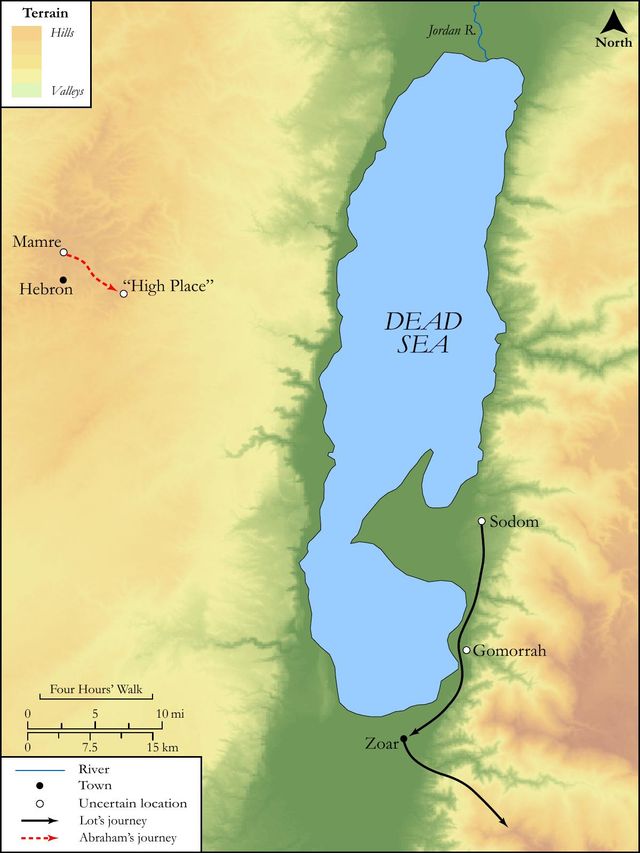
A "cry" or "outcry" (often from the oppressed or victims of injustice) was understood as a legitimate appeal to God for intervention. This concept is deeply embedded in biblical thought, seen elsewhere in the "cry" of Abel's blood from the ground in Genesis 4:10 or the "cry" of the Israelites under Egyptian bondage reaching God's ears in Exodus 3:7. The cities of Sodom and Gomorrah were situated in the fertile plain of the Jordan, likely near the southern end of the Dead Sea. They are consistently portrayed in biblical tradition as epitomes of profound moral depravity and rebellion against God, particularly known for their sexual perversion and lack of hospitality, as elaborated in Ezekiel 16:49-50. God's declaration to "go down" and "see" would have resonated with the ancient understanding of a righteous king or judge personally investigating a serious complaint before rendering a verdict.
Key Themes
ShowHideGenesis 18:21 contributes significantly to several overarching themes in the book of Genesis and biblical theology. Firstly, it underscores the theme of Divine Justice, demonstrating that God's judgments are not arbitrary but are based on thorough investigation and verifiable truth. Secondly, it highlights the Gravity of Sin, portraying sin as a powerful force that can generate an "outcry" so severe it demands divine intervention. Thirdly, the verse exemplifies God's Active Engagement with humanity; despite His transcendence, God is depicted as personally involved in the moral affairs of the world, not merely observing from a distance. Finally, the anthropomorphic language used (God "going down," "seeing," "knowing") reinforces the theme of Divine Revelation and Relatability, making God's character and actions comprehensible to human understanding without diminishing His omnipotence or omniscience.
Exposition and Analysis
ShowHideIn Genesis 18:21, the Lord declares, "I will go down now, and see whether they have done altogether according to the cry of it, which is come unto me; and if not, I will know." This statement reveals God's meticulous and just process before executing judgment.
Key Word Analysis
ShowHideThis primitive root signifies "to descend" or "to go downwards." In this context, it is an anthropomorphism, attributing a physical action to God. It does not imply a literal movement for an omnipresent God, but rather emphasizes His personal, direct, and deliberate engagement in the situation. It conveys the idea of God drawing near, focusing His attention, and intervening directly in human affairs, demonstrating a profound level of concern and active involvement.
This primitive root means "to see," both literally and figuratively. Here, it denotes more than mere observation; it implies a thorough investigation, discernment, and verification. For God, who is omniscient, "to see" is to ascertain with absolute certainty and to comprehend fully. It assures Abraham, and us, that God's judgment is based on irrefutable evidence and perfect understanding, not on incomplete information or hearsay.
Derived from a root meaning "to shriek," this word refers to a vehement outcry or a loud lament. It is often associated with distress, oppression, or grievous wrongdoing that demands divine attention and intervention. In the context of Sodom and Gomorrah, it represents the accumulated weight of their profound moral corruption, injustice, and suffering caused by their sin, which has ascended to God's presence and demands a response.
Verse Breakdown
ShowHide"I will go down now"
This phrase signifies God's personal and immediate intention to intervene. The use of "go down" is an anthropomorphism, illustrating God's deliberate and purposeful action to engage directly with the situation on earth. It conveys a sense of divine resolve and the seriousness with which God approaches the matter of sin and justice.
"and see whether they have done altogether according to the cry of it"
This clause emphasizes the investigative nature of God's action. God is not acting on mere report but is personally verifying the extent and nature of the wickedness. The word "altogether" (Hebrew, kâlâh) suggests a complete fulfillment or consummation of the sin, indicating that the depravity of the cities had reached its full measure, leaving no room for doubt or partial judgment. The "cry of it" refers to the vehement outcry against their profound and grievous sin, which has reached God's ears.
"which is come unto me; and if not, I will know"
This final part of the verse reinforces God's omniscience and perfect justice. The "cry" has already reached Him, signifying His awareness of the situation. The phrase "and if not, I will know" is a powerful affirmation of God's absolute certainty. It means that regardless of what He "sees," He will possess complete and perfect knowledge of the truth. This ensures that any subsequent divine action, particularly judgment, will be perfectly informed, righteous, and warranted.
Literary Devices
ShowHideThe primary literary device at play in Genesis 18:21 is Anthropomorphism. God, who is Spirit and omnipresent, is depicted as "going down," "seeing," and "knowing" in a manner akin to human investigation. This is not to suggest any limitation in God's omniscience or omnipresence, but rather to make His divine attributes and actions comprehensible to human understanding. It emphasizes the Divine Deliberation and thoroughness of His justice, assuring Abraham—and all readers—that God's judgments are never rash or based on incomplete information. The sequential nature of "go down," "see," and "know" also functions as a form of Dramatic Irony or Foreshadowing, building anticipation for the impending judgment in Genesis 19 while simultaneously highlighting the absolute certainty and righteousness of that judgment. The "cry" itself can be seen as a form of Personification, as the collective wickedness and suffering of the cities are given a voice that ascends to God.
Theological and Thematic Connections
ShowHideGenesis 18:21 profoundly illustrates God's character as a righteous and just judge. His declaration to "go down," "see," and "know" before acting highlights that divine judgment is neither arbitrary nor impulsive. Instead, it is a deliberate, thorough, and perfectly informed process, ensuring that every action God takes is founded on complete knowledge and absolute righteousness. This provides immense comfort to those who suffer injustice, knowing that their "cry" reaches a God who truly "sees" and "knows" and will act in perfect justice. Conversely, it serves as a solemn warning to those who persist in sin, reminding them that their actions do not escape God's notice and that a day of reckoning, based on His perfect knowledge, will surely come.
Reflection and Application
ShowHideGenesis 18:21 offers enduring truths that speak directly to the human condition and our understanding of God. It assures us that God is not a distant, disengaged deity, but one who is intimately aware of the world's injustices and the cries of the oppressed. This divine thoroughness should instill both comfort and conviction. For those who feel unheard or wronged, this verse reminds us that our "cry" reaches the ears of a God who will personally "go down" and "know" the truth of our suffering. For those who might be tempted to hide their sins or believe their actions go unnoticed, it serves as a powerful reminder that God's perfect knowledge leaves nothing hidden. This truth compels us to live with integrity, to pursue justice for others, and to repent of our own sins, knowing that God's patience is a prelude to His righteous and perfectly informed judgment. It calls us to align our lives with His just character, trusting in His ultimate sovereignty over all things.
Questions for Reflection
ShowHideFAQ
ShowHideWhy does an omniscient God say, "I will go down now, and see"?
ShowHideThis statement is a profound example of anthropomorphism, a literary device where human characteristics, actions, or emotions are attributed to God to make divine truths more comprehensible to human understanding. It does not imply any limitation in God's omniscience or omnipresence; God already knows everything. Instead, it emphasizes the certainty, deliberateness, and just nature of His impending investigation and judgment. By depicting Himself as "going down" to "see," God assures Abraham—and all humanity—that His actions are based on perfect knowledge, thorough verification, and righteous discernment, rather than on hearsay, incomplete information, or impulsive reaction. It underscores His personal engagement and the irrefutable basis for His subsequent judgment, as seen in Genesis 19.
What does "the cry of it" signify in this context?
ShowHide"The cry of it" refers to the profound and grievous nature of the sin of Sodom and Gomorrah. The Hebrew word tsaʻăqâh (צַעֲקָה) denotes a vehement outcry, often associated with deep distress, oppression, or severe wrongdoing that demands divine attention and intervention. It signifies that the wickedness of these cities was so flagrant, pervasive, and offensive that it ascended to God's presence, compelling Him to act. It represents the accumulated weight of their iniquity and its devastating impact on the earth and its inhabitants, reaching a point where it elicited a divine response, as also seen in the "cry" of the oppressed in Exodus 2:23-24.
Christ-Centered Fulfillment
ShowHideGenesis 18:21, with its depiction of God's perfect justice and thorough investigation of sin, finds its ultimate and most profound fulfillment in the person and work of Jesus Christ. While God declares His intention to "go down" and "see" the full extent of sin's corruption in Sodom, Christ is the very embodiment of God's righteous judgment and His merciful intervention. He is the one who perfectly "knows" the depths of human sin, having taken on human flesh and experienced its temptations, yet without sin (Hebrews 4:15). Furthermore, where Abraham intercedes for the unrighteous in Genesis 18:22-33, Christ is the perfect intercessor, whose sacrifice on the cross fully satisfied the "cry" of justice against humanity's sin, bearing the judgment that was due (2 Corinthians 5:21). Through Him, God's perfect knowledge of sin is met with perfect atonement, offering a path to salvation rather than destruction for all who believe, demonstrating that God's ultimate "going down" was not for judgment, but for redemption through His Son (John 3:16-17).