


Exodus 9:29
Bible text: King James Version (1769 Blayney text) · Public domain
Bible text: King James Version with Strong's numbers · Public domain
Bible text: Berean Standard Bible · Public domain
Bible text: American Standard Version (1901) · Public domain
Bible text: World English Bible, Messianic edition · Public domain
Bible text: Geneva Bible (1599) · Public domain
Bible text: Young's Literal Translation · Public domain
- וַיֹּאמֶרvai·Yo·merand he saidH559Conj-w ¦ V-Qal-ConsecImperf-3msVerb Qal Consecutive Imperfect 3rd Singular Masculineוַandיֹּאמֶרhe said
- אֵלָיו'e·Lavto himH413Prep ¦ 3msPreposition Definiteאֵלָיtoוhim
- מֹשֶׁהmo·ShehMosesH4872N-proper-mNoun Proper Masculine
- כְּצֵאתִיke·tze·Tiwhen I have gone outH3318Prep-k ¦ V-Qal-Inf ¦ 1csVerb Qal Infinitive Constructכְּwhenצֵאתִhave gone outיI
- אֶת'et<obj.>H853DirObjMParticle Object Indicator
- הָעִירha·'Irthe cityH5892Art ¦ N-fsNoun Singular Feminine Absoluteהָtheעִירcity
- אֶפְרֹשׂ'ef·RosI will spread outH6566V-Qal-Imperf-1csVerb Qal Imperfect 1st Singular common gender
- אֶת'et<obj.>H853DirObjMParticle Object Indicator
- כַּפַּיka·Paimy handsH3709N-fdc ¦ 1csNoun Dual Feminine Constructכַּפַּhandsיmy
- אֶל'eltoH413PrepPreposition
- יְהוָהYah·wehYahwehH3068N-properNoun Proper Title
- הַקֹּלוֹתha·ko·Lotthe thunder clapsH6963Art ¦ N-fpNoun Plural Feminine Absoluteהַtheקֹּלוֹתthunder claps
- יֶחְדָּלוּןyech·da·Lunthey will cease !H2308V-Qal-Imperf-3mp ¦ SfxVerb Qal Imperfect 3rd Plural Masculineיֶחְדָּלוּthey will ceaseן!
- וְהַבָּרָדve·ha·ba·Radand the hailH1259Conj-w ¦ Art ¦ N-msNoun Singular Masculine Absoluteוְandהַtheבָּרָדhail
- לֹאlo'notH3808NegParticle Negative
- יִהְיֶהyih·yehit will happenH1961V-Qal-Imperf-3msVerb Qal Imperfect 3rd Singular Masculine
- עוֹדodagainH5750Adj-msAdjective Numerical Singular Masculine Absolute
- לְמַעַןle·Ma·'anso thatH4616PrtParticle Conditional
- תֵּדַעte·Da'you may knowH3045V-Qal-Imperf-2msVerb Qal Imperfect 2nd Singular Masculine
- כִּיkithatH3588PrtParticle Conditional
- לַיהוָהla·Yah·weh[belongs] to YahwehH3068Prep-l ¦ N-properNoun Proper Titleלַ[belongs] toיהוָהYahweh
- הָאָרֶץha·'A·retzthe earthH776Art ¦ N-fsNoun Singular Feminine Absoluteהָtheאָרֶץearth
English is a literal word-by-word gloss of the Hebrew, not the KJV's wording. Why?
This is the original text the KJV's translators worked from — each Hebrew word with its own literal English meaning in this verse, prepared by scholars at Tyndale House, Cambridge. The KJV translates whole sentences, not word by word, so its wording differs: one Hebrew word can become several English words, and the KJV may choose “the LORD” where the gloss reads “Yahweh”. Both are faithful — they answer different questions. For the KJV's own rendering, switch to the KJV text.
Details
See on the biblical-era maps

Study this verse
Public-domain commentary
Matthew Henry
From his Commentary on the Whole Bible. Henry comments on passages, not single verses — this entry covers Exodus 9:22–35. His four-level outline is real structure in the source text, so it is rendered as structure.
The threatened plague of hail is here summoned by the powerful hand and rod of Moses (Exo 9:22, Exo 9:23), and it obeys the summons, or rather the divine command; for fire and hail fulfil God's word, Psa 148:8. And here we are told,
I.What desolations it made upon the earth.
The thunder, and fire from heaven (or lightning), made it both the more dreadful and the more destroying, Exo 9:23, Exo 9:24. Note, God makes the clouds, not only his store-houses whence he drops fatness on his people, but his magazines whence, when he pleases, he can draw out a most formidable train of artillery, with which to destroy his enemies. He himself speaks of the treasures of hail which he hath reserved against the day of battle and war, Job 38:22, Job 38:23. Woeful havoc this hail made in the land of Egypt. It killed both men and cattle, and battered down, not only the herbs, but the trees, Exo 9:25. The corn that was above ground was destroyed, and that only preserved which as yet had not come up, Exo 9:31, Exo 9:32. Note, God has many ways of taking away the corn in the season thereof (Hos 2:9), either by a secret blasting, or a noisy hail. In this plague the hot thunderbolts, as well as the hail, are said to destroy their flocks, Psa 78:47, Psa 78:48; and see Psa 105:32, Psa 105:33. Perhaps David alludes to this when, describing God's glorious appearances for the discomfiture of his enemies, he speaks of the hailstones and coals of fire he threw among them, Psa 18:12, Psa 18:13. And there is a plan reference to it on the pouring out of the seventh vial, Rev 16:21. Notice is here taken (Exo 9:26) of the land of Goshen's being preserved from receiving any damage by this plague. God has the directing of the pregnant clouds, and causes it to rain or hail on one city and not on another, either in mercy or in judgment.
II.What a consternation it put Pharaoh in. See what effect it had upon him,
1.He humbled himself to Moses in the language of a penitent, Exo 9:27, Exo 9:28. No man could have spoken better. He owns himself on the wrong side in his contest with the God of the Hebrews: "I have sinned in standing it out so long." He owns the equity of God's proceedings against him: The Lord is righteous, and must be justified when he speaks, though he speak in thunder and lightning. He condemns himself and his land: "I and my people are wicked, and deserve what is brought upon us." He begs the prayers of Moses: "Entreat the Lord for me, that this direful plague may be removed." And, lastly, he promises to yield up his prisoners: I will let you go. What could one desire more? And yet his heart was hardened all this while. Note, The terror of the rod often extorts penitent acknowledgments from those who have no penitent affections; under the surprise and smart of affliction, they start up, and say that which is pertinent enough, not because they are deeply affected, but because they know that they should be and that it is meet to be said.
2.Moses, hereupon, becomes an intercessor for him with God. Though he had all the reason in the world to think that he would immediately repent of his repentance, and told him so (Exo 9:30), yet he promises to be this friend in the court of heaven. Note, Even those whom we have little hopes of, yet we should continue to pray for, and to admonish, Sa1 12:23. Observe,
(1.)The place Moses chose for his intercession. He went out of the city (Exo 9:33), not only for privacy in his communion with God, but to show that he durst venture abroad into the field, notwithstanding the hail and lightning which kept Pharaoh and his servants within doors, knowing that every hail-stone had its direction from his God, who meant him no hurt. Note, Peace with God makes men thunderproof, for thunder is the voice of their Father.
(2.)The gesture: He spread abroad his hands unto the Lord - an outward expression of earnest desire and humble expectation. Those that come to God for mercy must stand ready to receive it.
(3.)The end Moses aimed at in interceding for him: That thou mayest know, and be convinced, that the earth is the Lord's (Exo 9:29), that is, that God has a sovereign dominion over all the creatures, that they all are ruled by him, and therefore that thou oughtest to be so. See what various methods God uses to bring men to their proper senses. Judgments are sent, judgments removed, and all for the same end, to make men know that he Lord reigns.
(4.)The success of it.
[1.]He prevailed with God, Exo 9:33. But,
[2.]He could not prevail with Pharaoh: He sinned yet more, and hardened his heart, Exo 9:34, Exo 9:35. The prayer of Moses opened and shut heaven, like Elias's (Jam 5:17, Jam 5:18), and such is the power of God's two witnesses (Rev 11:6); yet neither Moses nor Elias, nor those two witnesses, could subdue the hard hearts of men. Pharaoh was frightened into a compliance by the judgment, but, when it was over, his convictions vanished, and his fair promises were forgotten. Note, Little credit is to be given to confessions upon the rack. Note also, Those that are not bettered by judgments and mercies are commonly made worse.
Continue studying Exodus 9:29 across the web’s major study libraries — every link below opens this exact verse, chapter, or book on the destination site.
Read & Compare
 BibleGatewayThis verse in more than 200 translations and 70 languages.
 Bible.comThe YouVersion reader — hundreds of translations, reading plans, and highlights.
 ESV.orgCrossway's official English Standard Version reader.
 NET BibleThe NET translation with 60,000+ translators' notes on every rendering decision.
 STEP BibleTyndale House's free study tool — original text, vocabulary, and scholarly resources.
 BibliaLogos Bible Software's free web reader.
 USCCBThe New American Bible (Revised Edition) with the U.S. bishops' study notes.
Commentaries
 BibleHub CommentariesDozens of classic commentaries on this verse, gathered on one page.
 StudyLightMore than 100 commentary sets — the largest collection on the web.
 BibleRefPlain-English commentary on what this verse means, verse by verse.
 Enduring WordDavid Guzik's free commentary on this chapter, widely used by Bible teachers.
 Bible Study ToolsVerse commentary alongside Greek and Hebrew study aids.
Original Language & Research
- BibleHub InterlinearThe verse word by word — original language, transliteration, and English.
- BibleHub LexiconEvery word's original-language definition and Strong's entry.
 Blue Letter BibleDeep-study tools — Strong's numbers, concordance, and word studies.
 SefariaThe Hebrew text with Rashi and centuries of Jewish commentary.
Sermons, Hymns & Audio


TrulyRandomVerse is not affiliated with these sites and doesn’t control their content. They’re linked because they’re genuinely useful.
Summary
In response to Pharaoh's desperate plea during the devastating hail plague, Moses promises to intercede with the LORD, declaring that as soon as he leaves the city to pray, the thunder and hail will cease. The explicit and overarching purpose of this divine intervention is for Pharaoh, and by extension all of Egypt, to comprehend and acknowledge the absolute sovereignty of the LORD over all creation, demonstrating His unique power far surpassing any Egyptian deity.
Context
ShowHideLiterary Context
This verse is intricately woven into the narrative of the seventh plague, the severe hail mixed with fire, detailed in Exodus 9:13-35. Prior to this, Exodus 9:27-28 records Pharaoh's momentary, fear-driven confession of sin and his urgent request for Moses and Aaron to intercede with the LORD to halt the destructive storm. Moses's reply in Exodus 9:29 not only sets the stage for the immediate cessation of the plague, as seen in Exodus 9:33, but also foreshadows Pharaoh's subsequent return to obstinacy, highlighted in Exodus 9:34-35. This cyclical pattern of divine judgment, Pharaoh's temporary submission, and his ultimate rebellion underscores the escalating tension and God's unwavering purpose to reveal His glory.
Historical & Cultural Context
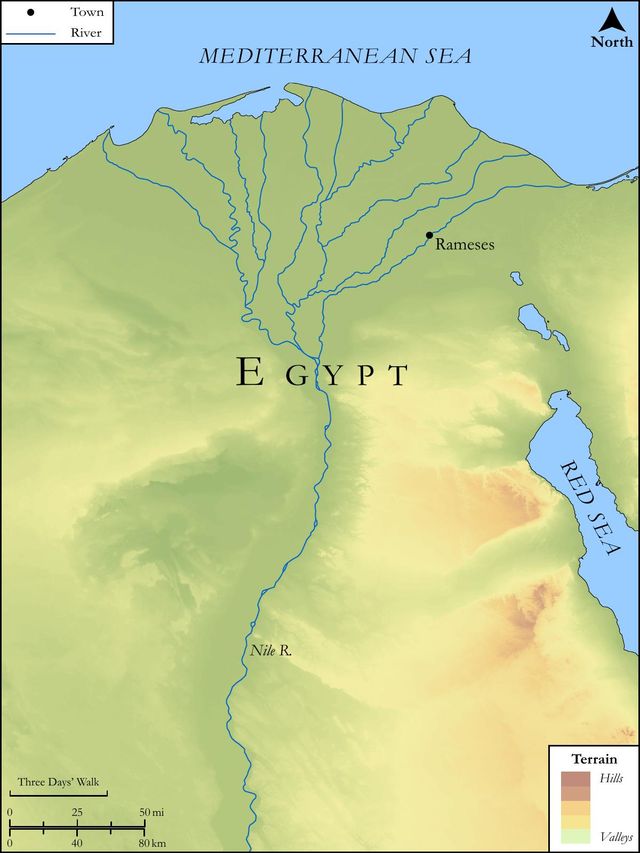
Ancient Egypt was a deeply polytheistic society, where the Pharaoh was revered as a living god, the divine intermediary between the gods and humanity, and the guarantor of Egypt's prosperity and control over its natural resources, particularly the Nile. The plagues were not random acts of destruction but targeted assaults on specific Egyptian deities and the Pharaoh's perceived authority. The hail plague, in particular, challenged the dominion of gods associated with the sky, weather, and agriculture, such as Nut (sky goddess), Shu (god of air), and Seth (god of storms and chaos). Moses's declaration that "the earth is the LORD'S" directly confronts Pharaoh's divine claims and asserts Yahweh's universal dominion, not just over Israel or the desert, but over all creation, including Egypt and its natural forces. This statement served as a profound theological and political challenge to the very foundation of Egyptian religion and power.
Key Themes
ShowHideExodus 9:29 powerfully contributes to several overarching themes in the book of Exodus. Foremost is the theme of Divine Sovereignty, asserting Yahweh's absolute and unrivaled control over all creation, including the elements of nature. This directly counters the polytheism of Egypt and the perceived power of Pharaoh. Another significant theme is Divine Revelation, as the plagues serve not merely as punishment but as a pedagogical tool for God to make Himself known, both to the Egyptians and to Israel, as stated earlier in Exodus 7:5. The verse also highlights the theme of Intercession, showcasing Moses's crucial role as a mediator whose prayers are effective in the face of divine judgment. Finally, the declaration "the earth is the LORD'S" lays a foundational truth for the theme of God's Ownership of Creation, which underpins all subsequent biblical theology regarding humanity's stewardship and God's ultimate authority.
Exposition and Analysis
ShowHideKey Word Analysis
ShowHideThis verb signifies to "break apart," "disperse," or "stretch forth." When combined with "hands" (H3709, kaph), it describes a common posture of prayer and supplication in Scripture, where one stretches out their hands towards heaven, as Solomon did before the altar of the LORD. This action emphasizes Moses's role as an intercessor, not acting by his own inherent power, but humbly petitioning the LORD. The public nature of this gesture underscored that the cessation of the plague was a direct divine response to prayer, not a coincidence or a magical act.
This primitive root is rich in meaning, encompassing not just intellectual apprehension but also experiential knowledge, recognition, and even intimate relationship. In this context, it signifies a profound, undeniable understanding and acknowledgment of God's identity and power. God's purpose in the plagues was not simply to punish Pharaoh but to compel him to "know" Yahweh in a way that would shatter his previous ignorance and defiance, forcing him to recognize God's absolute authority over the earth.
This is the sacred, covenantal name of God, often translated as "Jehovah" or "Yahweh," signifying "the Self-Existent One" or "He Who Is." Its use here is crucial. Moses declares that the earth belongs to Yᵉhôvâh, the personal, covenant-keeping God of Israel, directly contrasting Him with the multitude of Egyptian deities. This declaration asserts Yahweh's unique and universal proprietorship over all creation, transcending national boundaries or specific territories.
Verse Breakdown
ShowHide"And Moses said unto him, As soon as I am gone out of the city, I will spread abroad my hands unto the LORD;"
Moses agrees to intercede on Pharaoh's behalf, but with a significant condition: he must leave the city of Pharaoh. This act of separation is deliberate and symbolic. By praying outside the city, Moses ensures that the miraculous cessation of the plague cannot be attributed to Pharaoh's presence, the influence of Egyptian gods, or any magical rituals within the city. Instead, it is made unequivocally clear that the cessation is solely a direct, divine response from the LORD to Moses's humble and public act of supplication, signified by the "spreading abroad" of his hands.
"and the thunder shall cease, neither shall there be any more hail;"
This clause represents Moses's confident prophecy of the immediate and complete cessation of the devastating plague. It underscores the precise and absolute control God possesses over the natural elements. The plague began at God's command, and it will cease at His command, demonstrating His ability to initiate and halt natural phenomena at will, a power far beyond any human or pagan deity.
"that thou mayest know how that the earth is the LORD'S."
This culminating clause articulates the explicit, overarching purpose of the plague and its miraculous cessation. The plagues were not merely punitive acts; they were revelatory. God's ultimate aim was to educate Pharaoh (and by extension, Egypt and the world) about His unique identity, His unrivaled power, and His absolute sovereignty. Pharaoh's initial defiance stemmed from his ignorance of Yahweh, as seen in his question, "Who is the LORD?" in Exodus 5:2. This plague, like the others, served to dismantle that ignorance by demonstrating God's ultimate ownership and control over all creation.
Literary Devices
ShowHideThe verse employs direct speech from Moses, lending immediate authority and weight to his pronouncement. This direct address to Pharaoh creates a powerful sense of confrontation and divine decree. A clear cause-and-effect relationship is established: Moses's departure and prayer will directly result in the cessation of the storm. This highlights divine responsiveness to intercession and God's precise control over nature. The concluding phrase, "that thou mayest know how that the earth is the LORD'S," functions as a theological thesis statement, revealing the profound, revelatory purpose behind the miraculous events. Furthermore, the act of "spreading abroad my hands" serves as symbolism for humble reliance and earnest supplication, contrasting with Pharaoh's pride and self-reliance.
Theological and Thematic Connections
ShowHideThis verse powerfully articulates several core theological truths that resonate throughout the biblical narrative. It fundamentally asserts God's absolute sovereignty and universal dominion over all creation, including the forces of nature, challenging any notion of competing powers or independent natural laws outside of His control. This truth is foundational to understanding God's character and His relationship with the world. The efficacy of Moses's intercessory prayer highlights God's willingness to respond to the humble petitions of His servants, even on behalf of His enemies, demonstrating His mercy amidst judgment. Moreover, the plagues, including the hail, serve as a potent means of divine revelation through judgment, by which God makes His identity and power known to those who previously defied or ignored Him. Judgment, in this context, is not solely punitive but also pedagogical, intended to bring about knowledge and recognition of God's authority. Finally, the declaration "the earth is the LORD'S" is a foundational biblical truth, asserting God's proprietorship over everything that exists, emphasizing that humanity is merely a steward of what ultimately belongs to Him.
This theme of God's universal dominion connects to the broader biblical narrative of creation, where God is depicted as the sole Creator and Sustainer of the heaven and the earth:
Reflection and Application
ShowHideExodus 9:29 challenges us to live with a profound and unwavering awareness of God's absolute sovereignty. In a world that often seeks to control, explain away, or attribute natural phenomena to impersonal forces, this verse powerfully reminds us that God remains the ultimate authority over all things, from global weather patterns to the intricate details of our personal lives. It calls us to trust implicitly in His control, even amidst chaos, uncertainty, or seemingly insurmountable challenges, recognizing that He works all things according to His wise and perfect purposes. Furthermore, Moses's example underscores the vital role and profound power of intercessory prayer. We are invited to bring our petitions before the LORD, confident that He hears and responds, and that our prayers can indeed influence circumstances and align with His divine will. Finally, acknowledging that "the earth is the LORD'S" should fundamentally shape our stewardship of creation, our pursuit of justice, our generosity with possessions, and our complete submission to His will in every sphere of life, recognizing that everything we have and are ultimately belongs to Him.
Questions for Reflection
ShowHideFAQ
ShowHideWhy did Moses go outside the city to pray?
ShowHideMoses's departure from the city served a crucial, symbolic purpose. It demonstrated that the cessation of the plague was not a coincidence, a natural phenomenon, or a result of Pharaoh's presence or the power of Egyptian gods within the city's confines. By praying outside the city, Moses made it unequivocally clear that the miraculous intervention was a direct, divine response from the LORD, separate from any perceived earthly or pagan influence. This act underscored God's absolute control and His direct response to His servant's intercession, ensuring that the glory for the miracle belonged solely to Yahweh.
Was Pharaoh's repentance genuine in this instance?
ShowHideWhile Pharaoh confessed his sin and asked for Moses's intercession in Exodus 9:27-28, the subsequent verses, particularly Exodus 9:34-35, reveal that his repentance was superficial and temporary. It was driven by immediate fear of the devastating plague rather than a true change of heart or genuine submission to the LORD. As soon as the immediate threat passed and the hail ceased, he hardened his heart once again. This pattern highlights the profound difference between fear-induced compliance and true, transformative repentance that leads to lasting obedience and faith.
Does "the earth is the LORD'S" mean God is responsible for all natural disasters?
ShowHideBiblically, the declaration "the earth is the LORD'S" affirms God's ultimate sovereignty and control over all creation, including natural forces. In the specific context of the plagues, God directly orchestrated the hail as a precise act of judgment and revelation. While the Bible teaches that God is sovereign over all things, including natural phenomena, it does not imply that every natural disaster is a direct, punitive judgment from God in the same way the plagues were. However, it does mean that no natural event occurs outside of His ultimate knowledge and permission. God can and does use such events for His purposes, whether for correction, revelation of His power, or to demonstrate His providential care, even if the immediate cause is complex or secondary.
Christ-Centered Fulfillment
ShowHideThe profound declaration that "the earth is the LORD'S" finds its ultimate fulfillment and most complete amplification in the person and work of Jesus Christ. The New Testament explicitly identifies Jesus as the divine agent through whom all things were created and for whom all things exist (Colossians 1:16). Therefore, the earth, which belongs inherently to the Father, also belongs to the Son. Jesus demonstrated this inherent sovereignty over creation throughout His earthly ministry, mirroring and exceeding the power displayed by God through Moses. Just as God commanded the hail to cease, Jesus commanded the raging winds and turbulent waves to be still with a mere word (Mark 4:39), revealing His divine authority over nature itself. His miraculous ability to multiply a few loaves and fish to feed thousands (Matthew 14:19-21) further underscores His dominion over the created order and its resources. The plagues in Exodus were a powerful demonstration of God's power to deliver His people from bondage and judge His enemies; similarly, Jesus's sacrificial death and glorious resurrection represent the ultimate act of deliverance from the bondage of sin and the judgment of death, establishing His universal kingship. The overarching purpose of the plagues—that Pharaoh might "know how that the earth is the LORD'S"—is fully realized in Christ, who, having been given "all authority in heaven and on earth" (Matthew 28:18), now reigns as the true Lord of all creation, to whom every knee will one day bow and every tongue confess (Philippians 2:10-11).