


1 Corinthians 10:26
Bible text: King James Version (1769 Blayney text) · Public domain
Bible text: Berean Standard Bible · Public domain
Bible text: American Standard Version (1901) · Public domain
Bible text: World English Bible, Messianic edition · Public domain
Bible text: Geneva Bible (1599) · Public domain
Bible text: Young's Literal Translation · Public domain
- τοῦtouTheG3588T-GSMDefinite article Genitive Singular Masculine
- κυρίουkuriouLord’sG2962N-GSM-TNoun Genitive Singular Masculine Title
- γὰρgarforG1063CONJConjunction
- ἡhē[is] theG3588T-NSFDefinite article Nominative Singular Feminine
- γῆgēearthG1093N-NSFNoun Nominative Singular Feminine
- καὶkaiandG2532CONJConjunction
- τὸtotheG3588T-NSNDefinite article Nominative Singular Neuter
- πλήρωμαplērōmafullnessG4138N-NSNNoun Nominative Singular Neuter
- αὐτῆςautēsof itG846P-GSFPersonal pronoun Genitive Singular Feminine
English is a literal word-by-word gloss of the Greek, not the KJV's wording. Why?
This is the original text the KJV's translators worked from — each Greek word with its own literal English meaning in this verse, prepared by scholars at Tyndale House, Cambridge. The KJV translates whole sentences, not word by word, so its wording differs: one Greek word can become several English words, and the KJV may choose “charity” where the gloss reads “love”. Both are faithful — they answer different questions. For the KJV's own rendering, switch to the KJV text.
Details
See on the biblical-era maps

Study this verse
Public-domain commentary
Matthew Henry
From his Commentary on the Whole Bible. Henry comments on passages, not single verses — this entry covers 1 Corinthians 10:23–33.
In this passage the apostle shows in what instances, notwithstanding, Christians might lawfully eat what had been sacrificed to idols. They must not eat it out of religious respect to the idol, nor go into his temple, and hold a feast there, upon what they knew was an idol-sacrifice; nor perhaps out of the temple, if they knew it was a feast held upon a sacrifice, but there were cases wherein they might without sin eat what had been offered. Some such the apostle here enumerates. - But,
I.He gives a caution against abusing our liberty in lawful things.
That may be lawful which is not expedient, which will not edify. A Christian must not barely consider what is lawful, but what is expedient, and for the use of edification. A private Christian should do so even in his private conduct. He must not seek his own only, but his neighbour's wealth. He must be concerned not to hurt his neighbour, nay, he must be concerned to promote his welfare; and must consider how to act so that he may help others, and not hinder them in their holiness, comfort, or salvation. Those who allow themselves in every thing not plainly sinful in itself will often run into what is evil by accident, and do much mischief to others. Every thing lawful in itself to be done is not therefore lawfully done. Circumstances may make that a sin which in itself is none. These must be weighed, and the expediency of an action, and its tendency to edification, must be considered before it be done. Note, The welfare of others, as well as our own convenience, must be consulted in many things we do, if we would do them well.
II.He tells them that what was sold in the shambles they might eat without asking questions.
The priest's share of heathen sacrifices was thus frequently offered for sale, after it had been offered in the temple. Now the apostle tells them they need not be so scrupulous as to ask the butcher in the market whether the meat he sold had been offered to an idol? It was there sold as common food, and as such might be bought and used; for the earth is the Lord's, and the fulness thereof (Co1 10:26), and the fruit and products of the earth were designed by him, the great proprietor, for the use and subsistence of mankind, and more especially of his own children and servants. Every creature of God is good, and nothing to be refused, if it be received with thanksgiving; for it is sanctified by the word of God and prayer, Ti1 4:4, Ti1 4:5. To the pure all things are pure, Tit 1:15. Note, Though it is sinful to use any food in an idolatrous manner, it is no sin, after such abuse, to apply it, in a holy manner, to its common use.
III.He adds that if they were invited by any heathen acquaintances to a feast, they might go, and eat what was set before them, without asking questions (Co1 10:27), nay, though they knew things sacrificed to idols were served up at such entertainments, as well as sold in the shambles. Note, The apostle does not prohibit their going to a feast upon the invitation of those that believed not. There is a civility owing even to infidels and heathens. Christianity does by no means bind us up from the common offices of humanity, nor allow us an uncourteous behaviour to any of our own kind, however they may differ from us in religious sentiments or practices. And when Christians were invited to feast with infidels they were not to ask needless questions about the food set before them, but eat without scruple. Needless enquiries might perplex their minds and consciences, for which reason they were to be avoided. Any thing fit to be eaten, that was set before them at a common entertainment, they might lawfully eat. And why then should they scrupulously enquire whether what was set before them had been sacrificed? It is to be understood of civil feasting, not religious; for the latter among the heathens was feasting upon their sacrifices, which he had condemned before as a participation in their idolatrous worship. At a common feast they might expect common food; and they needed not to move scruples in their own minds whether what was set before them was otherwise or no. Note, Though Christians should be very careful to know and understand their duty, yet they should not, by needless enquiries, perplex themselves.
IV.Yet, even at such an entertainment, he adds, if any should say it was a thing that had been offered to idols, they should refrain:
Eat not, for his sake that showed it, and for conscience' sake. Whether it were the master of the feast or any of the guests, whether it were spoken in the hearing of all or whispered in the ear, they should refrain for his sake who suggested this to them, whether he were an infidel or an infirm Christian; and for conscience' sake, out of regard to conscience, that they might show a regard to it in themselves, and keep up a regard to it in others. This he backs with the same reason as the former: For the earth is the Lord's. There is food enough provided by our common Lord, of which we maya eat without scruple. The same doctrine may be variously improved, as here: "The earth is the Lord's, therefore you may eat any thing without scruple that is set before you as common food; and yet, because the earth is the Lord's, eat nothing that will give offence, lay a stumbling-block before others, and encourage some in idolatry, or tempt others to eat when they are not clear in their own mind that it is lawful, and so sin, and wound their own consciences." Note, Christians should be very cautious of doing what may thus prejudice the consciences of others, and weaken their authority with them, which is by all means to be kept up.
V.He urges them to refrain where they will give offence, while yet he allows it lawful to eat what was et before them as common food, though it had been offered in sacrifice. "Another man's conscience is no measure to our conduct. What he thinks unlawful is not thereby made unlawful to me, but may be a matter of liberty still; and as long as I own God as a giver of my food, and render him thanks for it, it is very unjust to reproach me for using it." This must be understood abstracted from the scandal given by eating in the circumstance mentioned. Though some understand it to mean, "Why should I, by using the liberty I have, give occasion to those who are scandalized to speak evil of me?" According to that advice of the apostle (Rom 14:16), Let not your good be evil spoken of. Note, Christians should take care not to use their liberty to the hurt of others, nor their own reproach.
VI.The apostle takes occasion from this discourse to lay down a rule for Christians' conduct, and apply it to this particular case (Co1 10:31, Co1 10:32), namely, that in eating and drinking, and in all we do, we should aim at the glory of God, at pleasing and honouring him. This is the fundamental principle of practical godliness. The great end of all practical religion must direct us where particular and express rules are wanting. Nothing must be done against the glory of God, and the good of our neighbours, connected with it. Nay, the tendency of our behaviour to the common good, and the credit of our holy religion, should give direction to it. And therefore nothing should be done by us to offend any, whether Jew, or Gentile, or the church, Co1 10:32. The Jews should not be unnecessarily grieved nor prejudiced, who have such an abhorrence of idols that they reckon every thing offered to them thereby defiled, and that it will pollute and render culpable all who partake of it; nor should heathens be countenanced in their idolatry by any behaviour of ours, which they may construe as homage or honour done to their idols; nor young converts from Gentilism take any encouragement from our conduct to retain any veneration for the heathen gods and worship, which they have renounced: nor should we do any thing that may be a means to pervert any members of the church from their Christian profession or practice. Our own humour and appetite must not determine our practice, but the honour of God and the good and edification of the church. We should not so much consult our own pleasure and interest as the advancement of the kingdom of God among men. Note, A Christian should be a man devoted to God, and of a public spirit.
VII.He presses all upon them by his own example:
Even as I please all men (or study to do it) in all things (that I lawfully can), not seeking my own profit, but that of many, that they may be saved, Co1 10:33. Note, A preacher may press his advice home with boldness and authority when he can enforce it with his own example. He is most likely to promote a public spirit in others who can give evidence of it in himself. And it is highly commendable in a minister to neglect his own advantage that he may promote the salvation of his hearers. This shows that he has a spirit suitable to his function. It is a station for public usefulness, and can never be faithfully discharged by a man of a narrow spirit and selfish principles.
Historical interpretation
Two Centuries of Reception
5 surviving comments on this verse. Each one is dated, so this reads as a timeline rather than a list.
Select a marker to jump to its quote. Markers stagger vertically where authors wrote within a few decades of each other.
But he who culls what is useful for the advantage of the catechumens, and especially when they are Greeks (and "the earth is the Lord's, and the fulness thereof"), must not abstain from erudition, like irrational animals; but he must collect as many aids as possible for his hearers. But he must by no means linger over these studies, except solely for the advantage accruing from them; so that, on grasping and obtaining this, he may be able to take his departure home to the true philosophy, which is a strong cable for the soul, providing security from everything.
But "the earth is God's, and the fulness thereof," says the Scripture, teaching that good things come from God to men; it being through divine power and might that the distribution of them comes to the help of man.
And, "Let no one seek his own advantage, but also that of his neighbour," so as to be able at once to do and to teach, building and building up. For that "the earth is the Lord's, and the fulness thereof," is admitted; but the conscience of the weak is supported. "Conscience, I say, not his own, but that of the other; for why is my liberty judged of by another conscience? For if I by grace am partaker, why am I evil spoken of for that for which I give thanks? Whether therefore ye eat, or drink, or whatsoever ye do, do all to the glory of God."
"For to the Lord belongeth the earth and the fulness thereof." Not to the devils. Now if the earth and the fruits and the beasts be all His, nothing is unclean: but it becomes unclean otherwise, from our intention and our disobedience. Wherefore he not only gave permission, but also...
One does not sin who afterward unwittingly eats food which he had previously refused as belonging to idols. Vegetables and any kind of fruit grown in any field are God’s who created them.
Continue studying 1 Corinthians 10:26 across the web’s major study libraries — every link below opens this exact verse, chapter, or book on the destination site.
Read & Compare
 BibleGatewayThis verse in more than 200 translations and 70 languages.
 Bible.comThe YouVersion reader — hundreds of translations, reading plans, and highlights.
 ESV.orgCrossway's official English Standard Version reader.
 NET BibleThe NET translation with 60,000+ translators' notes on every rendering decision.
 STEP BibleTyndale House's free study tool — original text, vocabulary, and scholarly resources.
 BibliaLogos Bible Software's free web reader.
 USCCBThe New American Bible (Revised Edition) with the U.S. bishops' study notes.
Commentaries
 BibleHub CommentariesDozens of classic commentaries on this verse, gathered on one page.
 StudyLightMore than 100 commentary sets — the largest collection on the web.
 BibleRefPlain-English commentary on what this verse means, verse by verse.
 Enduring WordDavid Guzik's free commentary on this chapter, widely used by Bible teachers.
 Bible Study ToolsVerse commentary alongside Greek and Hebrew study aids.
Original Language & Research
- BibleHub InterlinearThe verse word by word — original language, transliteration, and English.
- BibleHub LexiconEvery word's original-language definition and Strong's entry.
 Blue Letter BibleDeep-study tools — Strong's numbers, concordance, and word studies.
 CNTR CollationThe earliest Greek manuscripts of this verse, collated letter by letter.
Sermons, Hymns & Audio


TrulyRandomVerse is not affiliated with these sites and doesn’t control their content. They’re linked because they’re genuinely useful.
Summary
The Apostle Paul, in 1 Corinthians 10:26, provides a foundational theological truth that undergirds his practical instructions regarding Christian liberty, particularly concerning the consumption of meat sacrificed to idols. By quoting Psalm 24:1, Paul asserts God's absolute and universal ownership over all creation, including the earth and everything within it. This declaration serves to liberate believers from superstitious fears about defiled food while simultaneously establishing the context for exercising liberty with love and consideration for others.
Context
ShowHideLiterary Context
1 Corinthians 10:26 is situated within Paul's extended discussion (chapters 1 Corinthians 8 through 1 Corinthians 10) on Christian freedom and responsibility, specifically concerning the eating of meat that may have been offered to idols. Having warned the Corinthians against idolatry by drawing sobering lessons from Israel's wilderness experiences in 1 Corinthians 10:1-13, Paul shifts to providing practical guidelines for daily life. He emphasizes that while "all things are lawful" for the believer, not all things are "profitable" or "edifying" (1 Corinthians 10:23). This verse, a direct quotation from Psalm 24:1, provides the theological bedrock for his subsequent advice on how believers should navigate social interactions involving food without compromising their conscience or causing others to stumble (1 Corinthians 10:27-33).
Historical & Cultural Context
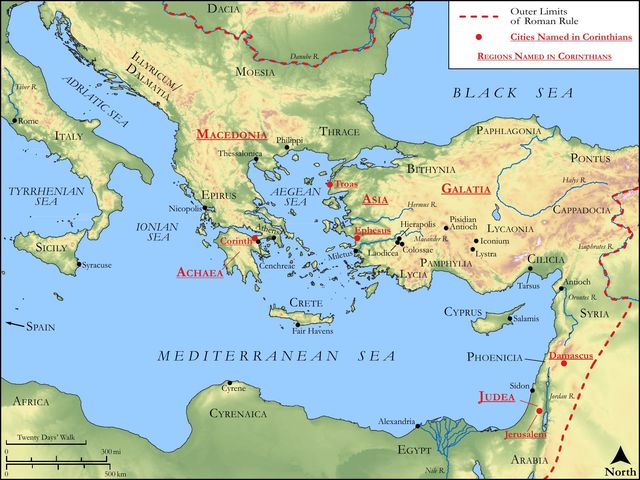
The city of Corinth was a bustling commercial hub, renowned for its diverse population, numerous pagan temples, and vibrant marketplace. It was common practice for meat sold in public markets (the macellum) to have first been offered in pagan temples as part of sacrificial rituals. This presented a significant ethical and theological dilemma for early Christians. Could they, with a clear conscience, purchase and consume such meat? Would doing so imply participation in idolatry or validate pagan deities? Furthermore, social invitations to dine in a pagan temple or a non-believer's home, where such meat might be served, were frequent. Paul's teaching addresses these specific socio-religious challenges, providing principles that transcend the immediate context to guide believers in all matters of conscience, liberty, and love within a pluralistic society.
Key Themes
ShowHideThis verse powerfully articulates the theme of God's Universal Sovereignty and Ownership. By declaring that "the earth is the Lord's, and the fulness thereof," Paul underscores that God, as the Creator, holds absolute dominion over all things. This truth fundamentally negates any claim pagan idols might have over material creation, reinforcing the idea that "an idol is nothing in the world" (1 Corinthians 8:4). It also establishes the basis for Christian Liberty, asserting that believers are free to partake of God's good creation without fear of defilement, as long as it is received with thanksgiving (1 Timothy 4:4-5). However, this liberty is always balanced by the theme of Love and Consideration for Others, especially those with a weaker conscience, ensuring that one's freedom does not become a stumbling block (1 Corinthians 8:9).
Exposition and Analysis
ShowHideKey Word Analysis
ShowHideThis term (G1093) refers to the soil, a region, or the entire terrestrial globe. In this context, it signifies the physical world, the land, and all its natural resources. Paul's use of "earth" here emphasizes the material reality of creation, asserting God's ownership over every tangible aspect of the world, including the very food being discussed.
This word (G2962) denotes one who is supreme in authority, a controller, or master. It is a respectful title for God. Attributing the earth to the "Lord's" unequivocally declares God's absolute proprietorship and sovereign dominion over all creation. It implies that nothing can be truly alienated from His ownership, regardless of human or pagan dedications.
This term (G4138) signifies repletion or completion; it refers to what fills something, its contents, or its abundance. In the phrase "the fulness thereof," it encompasses everything that fills the earth: its inhabitants, its resources, its produce, its wealth, and its entire abundance. This comprehensive scope underscores that God's ownership is not partial but extends to every single thing contained within creation.
Verse Breakdown
ShowHide"For the earth is the Lord's"
This clause establishes the foundational premise for Paul's argument. It asserts God's ultimate ownership and sovereignty over the entire physical world. This is not merely a statement of creation but of ongoing possession and dominion. It implies that because God made the earth, He also owns it, and therefore, no human or pagan ritual can genuinely transfer ownership or defile what inherently belongs to Him.
"and the fulness thereof"
This expands on the preceding clause, clarifying that God's ownership is not limited to the physical planet itself but extends to everything that "fills" or is contained within it. This includes all its resources, its inhabitants, its produce, and its abundance. By asserting God's ownership over "the fulness thereof," Paul directly addresses the issue of food, including meat, affirming that it remains God's provision regardless of any pagan association.
Literary Devices
ShowHideThe most prominent literary device in 1 Corinthians 10:26 is Quotation. Paul directly quotes Psalm 24:1 from the Old Testament, specifically the Septuagint (the Greek translation). This use of authoritative scripture lends immense weight and theological grounding to his argument, demonstrating that his practical advice is rooted in timeless divine truth. Furthermore, the phrase "the earth... and the fulness thereof" employs Merism, a rhetorical device where two contrasting or complementary parts are used to represent a whole. "Earth" represents the physical planet, while "the fulness thereof" represents everything contained within it. Together, they comprehensively signify all of creation, emphasizing God's absolute and all-encompassing ownership. This verse also functions as a Didactic Maxim, serving as a concise, authoritative statement of truth from which practical applications are derived, guiding the Corinthian believers in their ethical decision-making.
Theological and Thematic Connections
ShowHideThis verse serves as a profound theological anchor, asserting the absolute sovereignty and universal ownership of God over all creation. It dismantles any notion that human rituals, pagan dedications, or the claims of false gods could diminish God's ultimate proprietorship over the material world. For the believer, this truth provides a liberating foundation: since everything belongs to God, nothing created by Him is inherently evil or defiled. Our freedom to enjoy God's good gifts, including food, is rooted in His creative and sustaining power. This theological reality empowers believers to live without superstitious fear concerning material things, knowing that their value and purity derive from their Creator, not from human or demonic associations.
Reflection and Application
ShowHideThe truth that "the earth is the Lord's, and the fulness thereof" has profound implications for how we live and interact with the world around us. It calls us to a posture of gratitude and reverence, recognizing that every good gift, every resource, and indeed, every breath we take, ultimately belongs to God. This understanding frees us from the anxiety of scarcity and the grip of materialism, as we realize we are not owners but stewards of God's abundant provision. It challenges us to consider how we use our resources, consume food, and engage with the environment, not as if they are ours to exploit, but as precious trusts from our Creator. Our freedom in Christ, grounded in God's ownership, should lead to responsible choices that honor God and edify others, transforming our daily activities into acts of worship and love.
Questions for Reflection
ShowHideFAQ
ShowHideWhy does Paul quote Psalm 24:1 in this context?
ShowHidePaul quotes Psalm 24:1 to provide a foundational theological principle for his practical instructions regarding the eating of meat sacrificed to idols. By asserting God's absolute ownership over "the earth and the fulness thereof," Paul establishes that no pagan ritual or idol can truly defile what inherently belongs to the Creator. This truth liberates believers from the superstitious fear that meat, even if offered to an idol, is somehow inherently evil or contaminated. It underscores that idols are "nothing" (1 Corinthians 8:4) and therefore have no power to claim or corrupt God's creation. This theological bedrock allows Paul to then pivot to the importance of conscience and love in exercising Christian liberty, as seen in the verses that follow (1 Corinthians 10:27-33).
Christ-Centered Fulfillment
ShowHideWhile 1 Corinthians 10:26 directly quotes Psalm 24:1 to emphasize God the Father's ultimate ownership, this truth finds its ultimate fulfillment and deepest meaning in Jesus Christ. The New Testament reveals that it is through Christ that all things were created, and for Him they exist and are sustained. Colossians 1:16-17 explicitly states, "For by him all things were created, in heaven and on earth, visible and invisible... all things were created through him and for him. And he is before all things, and in him all things hold together." This means that the "earth and the fulness thereof" are not only the Lord's (God's) but specifically Christ's, as He is the agent of creation and the heir of all things (Hebrews 1:2). Therefore, our liberty to enjoy God's creation, including food, is not merely a philosophical truth but a freedom secured and sanctified by Christ's redemptive work. Every good thing we receive is a gift from the Father, mediated through the Son, and enjoyed in the Spirit, leading us to give glory to God in all we do (1 Corinthians 10:31).