


Exodus 39:37
Bible text: King James Version (1769 Blayney text) · Public domain
Bible text: Berean Standard Bible · Public domain
Bible text: American Standard Version (1901) · Public domain
Bible text: World English Bible, Messianic edition · Public domain
Bible text: Geneva Bible (1599) · Public domain
Bible text: Young's Literal Translation · Public domain
- אֶת'et<obj.>H853DirObjMParticle Object Indicator
- הַמְּנֹרָהha·me·no·Rahthe lampstandH4501Art ¦ N-fsNoun Singular Feminine Absoluteהַtheמְּנֹרָהlampstand
- הַטְּהֹרָהha·te·ho·Rah<the> pureH2889Art ¦ Adj-fsAdjective Singular Feminine Absoluteהַ<the>טְּהֹרָהpure
- אֶת'et<obj.>H853DirObjMParticle Object Indicator
- נֵרֹתֶיהָne·ro·Tei·haits lampsH5216N-fpc ¦ 3fsNoun Plural Feminine Constructנֵרֹתֶיlampsהָits
- נֵרֹתne·Rot[the] lamps ofH5216N-fpcNoun Plural Feminine Construct
- הַמַּעֲרָכָהha·ma·'a·ra·Khahthe rowH4634Art ¦ N-fsNoun Singular Feminine Absoluteהַtheמַּעֲרָכָהrow
- וְאֶתve·'Etand <obj.>H853Conj-w ¦ DirObjMParticle Object Indicatorוְandאֶת<obj.>
- כָּלkolallH3605N-mscNoun Singular Masculine Construct
- כֵּלֶיהָke·Lei·haits articlesH3627N-mpc ¦ 3fsNoun Plural Masculine Constructכֵּלֶיarticlesהָits
- וְאֵתve·'Etand <obj.>H853Conj-w ¦ DirObjMParticle Object Indicatorוְandאֵת<obj.>
- שֶׁמֶןShe·men[the] oil ofH8081N-mscNoun Singular Masculine Construct
- הַמָּאוֹרha·ma·'orthe lightH3974Art ¦ N-msNoun Singular Masculine Absoluteהַtheמָּאוֹרlight
English is a literal word-by-word gloss of the Hebrew, not the KJV's wording. Why?
This is the original text the KJV's translators worked from — each Hebrew word with its own literal English meaning in this verse, prepared by scholars at Tyndale House, Cambridge. The KJV translates whole sentences, not word by word, so its wording differs: one Hebrew word can become several English words, and the KJV may choose “the LORD” where the gloss reads “Yahweh”. Both are faithful — they answer different questions. For the KJV's own rendering, switch to the KJV text.
Details
See on the biblical-era maps

Study this verse
Public-domain commentary
Matthew Henry
From his Commentary on the Whole Bible. Henry comments on passages, not single verses — this entry covers Exodus 39:32–43. His two-level outline is real structure in the source text, so it is rendered as structure.
Observe here, I. The builders of the tabernacle made very good despatch. It was not much more than five months from the beginning to the finishing of it. Though there was a great deal of fine work about it, such as is usually the work of time, embroidering and engraving, not only in gold, but in precious stones, yet they went through with it in a little time. Church-work is usually slow work, but they made quick work of this, and yet did it with the greatest exactness imaginable. For, 1. Many hands were employed, all unanimous, and not striving with each other. This expedited the business, and made it easy. 2. The workmen were taught of God, and so were kept from making blunders, which would have retarded them. 3. The people were hearty and zealous in the work, and impatient till it was finished. God had prepared their hearts, and then the thing was done suddenly, Ch2 29:36. Resolution and industry, and a cheerful application of mind, will, by the grace of God, bring a great deal of good work to pass in a little time, in less than one would expect.
II.They punctually observed their orders, and did not in the least vary from them.
They did it according to all that the Lord commanded Moses, Exo 39:32, Exo 39:42. Note, God's work must be done, in every thing, according to his own will. His institutions neither need nor admit men's inventions to make them either more beautiful or more likely to answer the intention of them. Add thou not unto his words. God is pleased with willing worship, but not with will-worship.
III.They brought all their work to Moses, and submitted it to his inspection and censure, Exo 39:33.
He knew what he had ordered them to make; and now the particulars were called over, and all produced, that Moses might see both that they had made all, omitting nothing, and that they had made all according to the instructions given them, and that, if they had made a mistake in any thing, it might be forthwith rectified. Thus they showed respect to Moses, who was set over them in the Lord; not objecting that Moses did not understand such work, and therefore that there was no reason for submitting it to his judgment. No, that God who gave them so much knowledge as to do the work gave them also so much humility as to be willing to have it examined and compared with the model. Moses was in authority, and they would pay a deference to his place. The spirit of the prophets is subject to the prophets. And besides, though they knew how to do the work better than Moses, Moses had a better and more exact idea of the model than they had, and therefore they could not be well pleased with their own work, unless they had his approbation. Thus in all the services of religion we should labour to be accepted of the Lord.
IV.Moses, upon search, found all done according to the rule, Exo 39:43.
Moses, both for their satisfaction and for his own, did look upon all the work, piece by piece, and behold they had done it according to the pattern shown him, for the same Being that showed him the pattern guided their hand in the work. All the copies of God's grace exactly agree with the original of his counsels: what God works in us, and by us, is the fulfilling of the good pleasure of his own goodness; and when the mystery of God shall be finished, and all his performances come to be compared with his purposes, it will appear that behold all is done according to the counsel of his own will, not one iota or tittle of which shall fall to the ground, or be varied from.
V.Moses blessed them.
1.He commended them, and signified his approbation of all they had done. He did not find fault where there was none, as some do, who think they disparage their own judgment if they do not find something amiss in the best and most accomplished performance. In all this work it is probable there might have been found here and there a stitch amiss, and a stroke awry, which would have served for an over-curious and censorious critic to animadvert upon; but Moses was too candid to notice small faults where there were no great ones. Note, All governors must be a praise to those that do well, as well as a terror to evil-doers. Why should any take a pride in being hard to be pleased?
2.He not only praised them, but prayed for them. He blessed them as one having authority, for the less is blessed of the better. We read not of any wages that Moses paid them for their work, but this blessing he gave them. For, though ordinarily the labourer be worthy of his hire, yet in this case, 1. They wrought for themselves. The honour and comfort of God's tabernacle among them would be recompence enough. If thou be wise, thou shalt be wise for thyself. 2. They had their meat from heaven on free-cost, for themselves and their families, and their raiment waxed not old upon them; so that they neither needed wages nor had reason to expect any. Freely you have received, freely give. The obligations we lie under, both in duty and interest, to serve God, should be sufficient to quicken us to our work, though we had not a reward in prospect. But, 3. This blessing, in the name of the Lord, was wages enough for all their work. Those whom God employs he will bless, and those whom he blesses are blessed indeed. The blessing he commands is life for evermore.
Continue studying Exodus 39:37 across the web’s major study libraries — every link below opens this exact verse, chapter, or book on the destination site.
Read & Compare
 BibleGatewayThis verse in more than 200 translations and 70 languages.
 Bible.comThe YouVersion reader — hundreds of translations, reading plans, and highlights.
 ESV.orgCrossway's official English Standard Version reader.
 NET BibleThe NET translation with 60,000+ translators' notes on every rendering decision.
 STEP BibleTyndale House's free study tool — original text, vocabulary, and scholarly resources.
 BibliaLogos Bible Software's free web reader.
 USCCBThe New American Bible (Revised Edition) with the U.S. bishops' study notes.
Commentaries
 BibleHub CommentariesDozens of classic commentaries on this verse, gathered on one page.
 StudyLightMore than 100 commentary sets — the largest collection on the web.
 BibleRefPlain-English commentary on what this verse means, verse by verse.
 Enduring WordDavid Guzik's free commentary on this chapter, widely used by Bible teachers.
 Bible Study ToolsVerse commentary alongside Greek and Hebrew study aids.
Original Language & Research
- BibleHub InterlinearThe verse word by word — original language, transliteration, and English.
- BibleHub LexiconEvery word's original-language definition and Strong's entry.
 Blue Letter BibleDeep-study tools — Strong's numbers, concordance, and word studies.
 SefariaThe Hebrew text with Rashi and centuries of Jewish commentary.
Sermons, Hymns & Audio


TrulyRandomVerse is not affiliated with these sites and doesn’t control their content. They’re linked because they’re genuinely useful.
Summary
Exodus 39:37 meticulously enumerates the completed components of the Tabernacle's essential lighting system, the Menorah. This verse, part of the final inventory presented to Moses for inspection, underscores the divine demand for purity, precise order, and continuous provision for the sanctuary's most vital internal furnishing. It details not only the physical construction of the seven-branched lampstand and its associated vessels but also the crucial fuel, the "oil for light," all crafted and prepared in strict adherence to God's exact specifications to ensure the perpetual illumination of the Holy Place.
Context
ShowHideLiterary Context
Exodus 39:37 is situated within the climactic concluding chapters of the Book of Exodus, which meticulously detail the completion of the Tabernacle and all its sacred furnishings. Chapters 35-39 narrate how the skilled artisans, Bezalel and Oholiab, alongside the willing people of Israel, brought forth the materials and painstakingly constructed every element of the sanctuary, the priestly garments, and the holy vessels, precisely "as the Lord had commanded Moses" (e.g., Exodus 39:43). This specific verse is part of a comprehensive inventory (found in Exodus 39:32-43) of all the finished items that were brought before Moses for his final inspection and divine approval prior to the Tabernacle's erection and consecration. This precise enumeration serves as a powerful testament to the unwavering adherence to God's divine blueprints, emphasizing that every detail, from the grand architectural structure to the smallest lamp vessel, was executed with absolute fidelity. The inclusion of the Menorah's components within this list highlights its indispensable and central role within the Holy Place.
Historical & Cultural Context
The construction of the Tabernacle took place during Israel's formative forty-year sojourn in the desolate Sinai wilderness. This period was crucial for shaping the identity and worship practices of the nascent nation. The Tabernacle served as God's portable dwelling place, a tangible manifestation of His covenantal presence among His people, and the central locus for their worship. In stark contrast to the surrounding pagan nations, whose temples often housed idols dimly lit by natural light or crude, irregularly tended lamps, the Tabernacle's Menorah stood as a unique and profound symbol. Crafted from pure gold and designated as the sole source of light within the Holy Place, it profoundly symbolized God's singular, holy presence, His self-revelation to His people, and His divine guidance amidst the spiritual darkness of the world. The divine requirement for "pure" materials and "lamps to be set in order" reflected God's absolute holiness and His demand for a system of worship characterized by purity, order, and diligent, consecrated service, sharply differentiating it from the chaotic and often morally corrupt practices of their neighbors. The continuous tending of these lamps by the priests, as later prescribed in Leviticus 24:1-4, served as a daily, tangible reminder of Israel's ongoing responsibility to maintain their relationship with a holy God through obedient and meticulous service.
Key Themes
ShowHideExodus 39:37 contributes significantly to several overarching themes within the Book of Exodus and the broader Pentateuch. Foremost among these is the theme of Divine Presence and Revelation. The Menorah, as the sole source of light in the Holy Place, powerfully symbolizes God's illuminating presence among His people, guiding them through spiritual darkness and revealing His truth. This echoes the pillar of fire that guided Israel by night (e.g., Exodus 13:21). Another critical theme is Holiness and Purity. The repeated emphasis on "pure" materials (gold, oil) for the Menorah underscores God's absolute holiness and His demand for ceremonial and moral purity in all that approaches Him and serves Him. This theme is foundational to the entire Tabernacle construction and the subsequent laws given in Leviticus. Finally, the verse highlights the theme of Divine Order and Obedience. The meticulous instructions for the Menorah's construction and its lamps being "set in order" emphasize God's demand for precise obedience and diligent service in worship. The careful inventory in Exodus 39 confirms that every detail was executed "just as the Lord had commanded," reinforcing the importance of following divine mandates without deviation.
Exposition and Analysis
ShowHideKey Word Analysis
ShowHideThis term (H2889) signifies far more than mere physical cleanliness or the unadulterated nature of the gold from which the Menorah was fashioned. Theologically, ṭâhôwr denotes ceremonial, moral, and spiritual purity, signifying sanctity and freedom from any defilement that would render an object or person unfit for God's holy presence and service. For the Menorah to be ṭâhôwr emphasized the absolute holiness of God and the pristine standard required for all that was dedicated to Him.
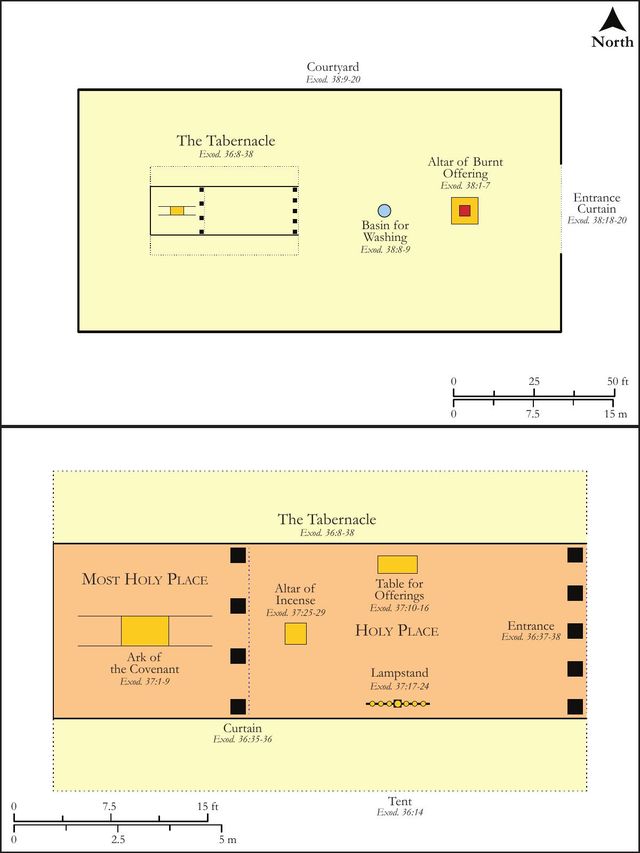
This word (H4501) refers specifically to the Menorah, the iconic seven-branched lampstand. It was not a "candlestick" in the modern sense of holding wax candles, but rather a meticulously crafted lampstand designed to hold individual oil lamps. Its intricate design, fashioned from a single talent of pure gold, underscored its profound significance as the singular source of light within the Holy Place, symbolizing divine illumination, revelation, and the very presence of God.
Derived from the root H4634, this term implies a precise, deliberate, and continuous arrangement or preparation. In the context of the Menorah, it speaks to the ongoing, diligent responsibility of the priests to meticulously tend to the lamps—trimming wicks, replenishing the pure oil, and ensuring the lamps were properly positioned to burn continually and effectively. This was not a one-time installation but a daily, disciplined act of maintenance, reflecting the constant care, intentionality, and order required in serving a holy God.
Verse Breakdown
ShowHide"The pure candlestick"
This phrase identifies the Menorah itself, emphasizing its intrinsic value, divine origin, and ceremonial purity. Crafted from a single talent of pure gold, its purity rendered it fit for the sacred space and its holy purpose as the primary, divinely appointed source of light within the Holy Place.
"[with] the lamps thereof"
This clause specifies the individual lamp-bowls or cups that were integral to each of the seven branches of the Menorah. These lamps were designed to hold the pure oil and the wick, indicating that the entire lighting apparatus, not merely the stand, was meticulously crafted and accounted for in the inventory.
"[even with] the lamps to be set in order"
This crucial phrase highlights the ongoing priestly duty associated with the Menorah. It points to the regular, meticulous arrangement and maintenance of the lamps—which included trimming wicks, cleaning the lamps, and ensuring their proper alignment—to guarantee a continuous, steady, and unblemished flame. This underscores the diligence, precision, and sustained effort required in sacred service to God.
"and all the vessels thereof"
This refers to the ancillary tools and utensils that were essential for the Menorah's operation and maintenance. These would have included items such as snuffers (for trimming wicks), trays (for collecting ash), and oil pitchers (for replenishing the oil). Their inclusion signifies that the entire system for generating and maintaining light was complete and accounted for, emphasizing the comprehensive nature of the Tabernacle's furnishings.
"and the oil for light"
This specifies the essential fuel—pure, beaten olive oil—that was indispensable for the lamps to burn. It highlights the necessity of continuous provision and replenishment, symbolizing the divine supply and enablement required for spiritual illumination, sustained worship, and effective service within God's sanctuary.
Literary Devices
ShowHideThe verse primarily employs Merism by listing specific, integral components ("candlestick," "lamps," "vessels," "oil") to comprehensively represent the entire lighting system of the Tabernacle. This literary technique emphasizes the completeness of the inventory and the meticulous attention given to every single detail of the divine blueprint. Symbolism is profoundly present throughout the description; the "pure candlestick" (Menorah) itself is a powerful symbol of God's illuminating presence, His divine revelation, and the light of life that emanates from Him. The "oil for light" further deepens this symbolism, representing the divine enablement and continuous provision, which is often interpreted as the empowering presence of the Holy Spirit. The repeated emphasis on "pure" (H2889, ṭâhôwr) and the meticulous instruction for the lamps to be "set in order" (H4634, maʻărâkâh) also function as a form of Repetition, reinforcing the overarching themes of divine precision, absolute holiness, and the necessity of order in all aspects of worship and service to God.
Theological and Thematic Connections
ShowHideExodus 39:37, in its detailed description of the Menorah, connects deeply to profound theological themes of divine presence, revelation, and the absolute necessity of purity and diligent service in worship. The Menorah, as the sole source of light within the Holy Place, vividly symbolized God's illuminating presence perpetually dwelling among His people, guiding them through spiritual darkness. Its perpetual light underscored God's constant watchfulness and the continuous nature of His self-revelation to Israel. The stringent requirement for "pure" gold and "pure" oil, coupled with the meticulous instruction for the lamps to be "set in order," speaks volumes about God's absolute holiness and His unwavering demand for worship that is undefiled, orderly, and sustained by diligent, consecrated effort. This meticulous attention to detail within the earthly sanctuary foreshadows the ultimate light and purity found in Christ, the perfect embodiment of God's presence and truth.
Reflection and Application
ShowHideThe meticulous detail given to the Menorah's construction and its ongoing maintenance in Exodus 39:37 serves as a profound and enduring spiritual lesson for believers today. Just as the Tabernacle's Holy Place required the constant, pure light of the Menorah to dispel darkness and facilitate sacred service, our lives are called to reflect the radiant light of Christ in a world enveloped in spiritual shadows. This divine mandate demands intentionality, vigilance, and diligent effort on our part. We are spiritually responsible to ensure that our "lamps"—representing our faith, our witness, our character, and our acts of service—are continually "set in order" through consistent engagement in spiritual disciplines: fervent prayer, diligent study of God's transformative Word, and authentic fellowship with other believers. Furthermore, just as the Menorah was utterly dependent on a continuous supply of "oil for light" to sustain its flame, our spiritual vitality, our capacity to shine for Christ, and our effectiveness in ministry depend entirely on the indwelling and empowering presence of the Holy Spirit. We are called to pursue lives of purity, allowing God to refine and sanctify us, so that our light is not dim, obscured, or defiled, but rather clear, consistent, and radiantly draws others to Jesus, the ultimate source of all light.
Questions for Reflection
ShowHideFAQ
ShowHideWhat was the primary purpose of the Menorah in the Tabernacle?
ShowHideThe Menorah's primary purpose was to provide the sole source of illumination within the Holy Place of the Tabernacle, a sacred space intentionally designed without natural light. Beyond its practical function, it served as a profound and multifaceted symbol of God's illuminating presence perpetually dwelling among His people, His constant watchfulness over them, and His divine revelation of truth. It represented the very light of life that emanates from God Himself, guiding Israel in their spiritual journey and their consecrated worship, as detailed in the instructions for its construction in Exodus 25:31-40.
Why was "pure" gold specified for the Menorah and its vessels?
ShowHideThe divine specification of "pure" gold (and pure oil) for the Menorah was deeply significant and multifaceted. Practically, pure gold is exceptionally durable and resistant to tarnish, ensuring the lampstand's longevity and consistent, unblemished appearance within the sacred space. Theologically, the term "pure" (Hebrew: ṭâhôwr) denoted ceremonial cleanliness and profound sanctity, rendering the Menorah fit for God's holy presence. It unequivocally underscored God's absolute holiness and His unwavering demand for perfection and undefiled worship from His people. The costly nature of pure gold also reflected the immense value, reverence, and glory due to God and His dwelling place, emphasizing that only the very best and most precious materials were acceptable for His service.
What does the "oil for light" symbolize in the context of the Menorah?
ShowHideThe "oil for light," specifically pure, beaten olive oil, is widely and consistently understood to symbolize the Holy Spirit. Just as the physical oil enabled the Menorah to give forth light, the Holy Spirit empowers believers to live a life of spiritual illumination, profound understanding of divine truth, and effective service to God. It signifies divine enablement, continuous provision, and the anointing necessary for spiritual vitality, fruitfulness, and the capacity to shine God's light in the world. This profound symbolism is powerfully echoed in prophetic visions, such as that in Zechariah 4:1-6, where the continuous, miraculous flow of oil to the lampstand is explicitly linked to the Spirit of the Lord, emphasizing that spiritual power comes "not by might nor by power, but by My Spirit."
Christ-Centered Fulfillment
ShowHideExodus 39:37, with its meticulous description of the Menorah—the "pure candlestick" with its lamps and oil for light—finds its profound and ultimate Christ-centered fulfillment in Jesus, who is the very Light of the World. The Tabernacle's "pure candlestick," providing the only illumination in a sacred space veiled from natural light, powerfully foreshadows Christ, who is the perfect, unblemished, and undefiled Lamb of God, the very embodiment of divine purity (e.g., Hebrews 9:14). Just as the Menorah's light was absolutely essential for priestly service and for access to God's presence within the Tabernacle, Jesus declared Himself to be the light that illuminates all humanity, rescuing us from the profound darkness of sin and guiding us directly to the Father (e.g., John 1:4-5 and John 8:12). The "oil for light," symbolizing the Holy Spirit, points directly to Christ's anointing by the Spirit without measure (e.g., John 3:34) and His glorious promise to send the Spirit to empower His followers, enabling them to be lights in the world (e.g., Acts 1:8). Ultimately, the temporary and symbolic light of the Tabernacle's Menorah is superseded by Christ, in whom there is no darkness at all (e.g., 1 John 1:5), and who is the eternal lamp in the New Jerusalem, where there will be no need for sun or moon, "for the glory of God gives it light, and the Lamb is its lamp" (e.g., Revelation 21:23).