


Exodus 39:34
Bible text: King James Version (1769 Blayney text) · Public domain
Bible text: Berean Standard Bible · Public domain
Bible text: American Standard Version (1901) · Public domain
Bible text: World English Bible, Messianic edition · Public domain
Bible text: Geneva Bible (1599) · Public domain
Bible text: Young's Literal Translation · Public domain
- וְאֶתve·'Etand <obj.>H853Conj-w ¦ DirObjMParticle Object Indicatorוְandאֶת<obj.>
- מִכְסֵהmikh·Seh[the] covering ofH4372N-mscNoun Singular Masculine Construct
- עוֹרֹתo·Rot[the] skins ofH5785N-fpcNoun Plural Feminine Construct
- הָאֵילִםha·'ei·Limthe ramsH352Art ¦ N-mpNoun Plural Masculine Absoluteהָtheאֵילִםrams
- הַמְאָדָּמִיםham·'a·da·Mimthat was dyed redH119Art ¦ V-Pual-PassPrtcpl-mpVerb Pual Participle Passive Plural Masculine Absoluteהַthatמְאָדָּמִיםwas dyed red
- וְאֶתve·'Etand <obj.>H853Conj-w ¦ DirObjMParticle Object Indicatorוְandאֶת<obj.>
- מִכְסֵהmikh·Seh[the] covering ofH4372N-mscNoun Singular Masculine Construct
- עֹרֹת'o·Rot[the] skins ofH5785N-fpcNoun Plural Feminine Construct
- הַתְּחָשִׁיםha·te·cha·Shimthe dolphinsH8476Art ¦ N-mpNoun Plural Masculine Absoluteהַtheתְּחָשִׁיםdolphins
- וְאֵתve·'Etand <obj.>H853Conj-w ¦ DirObjMParticle Object Indicatorוְandאֵת<obj.>
- פָּרֹכֶתpa·Ro·khet[the] curtain ofH6532N-fscNoun Singular Feminine Construct
- הַמָּסָךְha·ma·Sakhthe screenH4539Art ¦ N-msNoun Singular Masculine Absoluteהַtheמָּסָךְscreen
English is a literal word-by-word gloss of the Hebrew, not the KJV's wording. Why?
This is the original text the KJV's translators worked from — each Hebrew word with its own literal English meaning in this verse, prepared by scholars at Tyndale House, Cambridge. The KJV translates whole sentences, not word by word, so its wording differs: one Hebrew word can become several English words, and the KJV may choose “the LORD” where the gloss reads “Yahweh”. Both are faithful — they answer different questions. For the KJV's own rendering, switch to the KJV text.
Details
See on the biblical-era maps

Study this verse
Public-domain commentary
Matthew Henry
From his Commentary on the Whole Bible. Henry comments on passages, not single verses — this entry covers Exodus 39:32–43. His two-level outline is real structure in the source text, so it is rendered as structure.
Observe here, I. The builders of the tabernacle made very good despatch. It was not much more than five months from the beginning to the finishing of it. Though there was a great deal of fine work about it, such as is usually the work of time, embroidering and engraving, not only in gold, but in precious stones, yet they went through with it in a little time. Church-work is usually slow work, but they made quick work of this, and yet did it with the greatest exactness imaginable. For, 1. Many hands were employed, all unanimous, and not striving with each other. This expedited the business, and made it easy. 2. The workmen were taught of God, and so were kept from making blunders, which would have retarded them. 3. The people were hearty and zealous in the work, and impatient till it was finished. God had prepared their hearts, and then the thing was done suddenly, Ch2 29:36. Resolution and industry, and a cheerful application of mind, will, by the grace of God, bring a great deal of good work to pass in a little time, in less than one would expect.
II.They punctually observed their orders, and did not in the least vary from them.
They did it according to all that the Lord commanded Moses, Exo 39:32, Exo 39:42. Note, God's work must be done, in every thing, according to his own will. His institutions neither need nor admit men's inventions to make them either more beautiful or more likely to answer the intention of them. Add thou not unto his words. God is pleased with willing worship, but not with will-worship.
III.They brought all their work to Moses, and submitted it to his inspection and censure, Exo 39:33.
He knew what he had ordered them to make; and now the particulars were called over, and all produced, that Moses might see both that they had made all, omitting nothing, and that they had made all according to the instructions given them, and that, if they had made a mistake in any thing, it might be forthwith rectified. Thus they showed respect to Moses, who was set over them in the Lord; not objecting that Moses did not understand such work, and therefore that there was no reason for submitting it to his judgment. No, that God who gave them so much knowledge as to do the work gave them also so much humility as to be willing to have it examined and compared with the model. Moses was in authority, and they would pay a deference to his place. The spirit of the prophets is subject to the prophets. And besides, though they knew how to do the work better than Moses, Moses had a better and more exact idea of the model than they had, and therefore they could not be well pleased with their own work, unless they had his approbation. Thus in all the services of religion we should labour to be accepted of the Lord.
IV.Moses, upon search, found all done according to the rule, Exo 39:43.
Moses, both for their satisfaction and for his own, did look upon all the work, piece by piece, and behold they had done it according to the pattern shown him, for the same Being that showed him the pattern guided their hand in the work. All the copies of God's grace exactly agree with the original of his counsels: what God works in us, and by us, is the fulfilling of the good pleasure of his own goodness; and when the mystery of God shall be finished, and all his performances come to be compared with his purposes, it will appear that behold all is done according to the counsel of his own will, not one iota or tittle of which shall fall to the ground, or be varied from.
V.Moses blessed them.
1.He commended them, and signified his approbation of all they had done. He did not find fault where there was none, as some do, who think they disparage their own judgment if they do not find something amiss in the best and most accomplished performance. In all this work it is probable there might have been found here and there a stitch amiss, and a stroke awry, which would have served for an over-curious and censorious critic to animadvert upon; but Moses was too candid to notice small faults where there were no great ones. Note, All governors must be a praise to those that do well, as well as a terror to evil-doers. Why should any take a pride in being hard to be pleased?
2.He not only praised them, but prayed for them. He blessed them as one having authority, for the less is blessed of the better. We read not of any wages that Moses paid them for their work, but this blessing he gave them. For, though ordinarily the labourer be worthy of his hire, yet in this case, 1. They wrought for themselves. The honour and comfort of God's tabernacle among them would be recompence enough. If thou be wise, thou shalt be wise for thyself. 2. They had their meat from heaven on free-cost, for themselves and their families, and their raiment waxed not old upon them; so that they neither needed wages nor had reason to expect any. Freely you have received, freely give. The obligations we lie under, both in duty and interest, to serve God, should be sufficient to quicken us to our work, though we had not a reward in prospect. But, 3. This blessing, in the name of the Lord, was wages enough for all their work. Those whom God employs he will bless, and those whom he blesses are blessed indeed. The blessing he commands is life for evermore.
Continue studying Exodus 39:34 across the web’s major study libraries — every link below opens this exact verse, chapter, or book on the destination site.
Read & Compare
 BibleGatewayThis verse in more than 200 translations and 70 languages.
 Bible.comThe YouVersion reader — hundreds of translations, reading plans, and highlights.
 ESV.orgCrossway's official English Standard Version reader.
 NET BibleThe NET translation with 60,000+ translators' notes on every rendering decision.
 STEP BibleTyndale House's free study tool — original text, vocabulary, and scholarly resources.
 BibliaLogos Bible Software's free web reader.
 USCCBThe New American Bible (Revised Edition) with the U.S. bishops' study notes.
Commentaries
 BibleHub CommentariesDozens of classic commentaries on this verse, gathered on one page.
 StudyLightMore than 100 commentary sets — the largest collection on the web.
 BibleRefPlain-English commentary on what this verse means, verse by verse.
 Enduring WordDavid Guzik's free commentary on this chapter, widely used by Bible teachers.
 Bible Study ToolsVerse commentary alongside Greek and Hebrew study aids.
Original Language & Research
- BibleHub InterlinearThe verse word by word — original language, transliteration, and English.
- BibleHub LexiconEvery word's original-language definition and Strong's entry.
 Blue Letter BibleDeep-study tools — Strong's numbers, concordance, and word studies.
 SefariaThe Hebrew text with Rashi and centuries of Jewish commentary.
Sermons, Hymns & Audio


TrulyRandomVerse is not affiliated with these sites and doesn’t control their content. They’re linked because they’re genuinely useful.
Summary
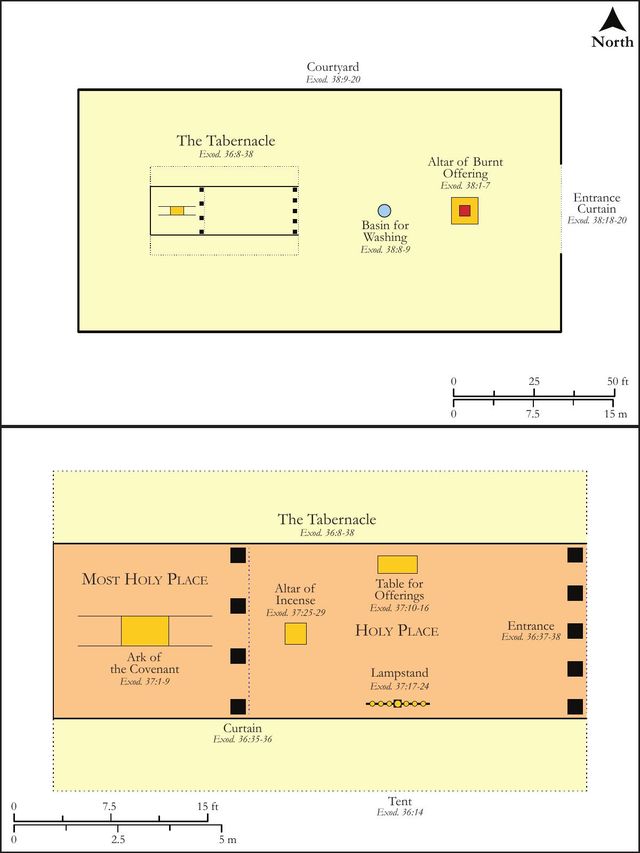
Exodus 39:34 meticulously records the presentation to Moses of the completed outer coverings and internal divisions of the Tabernacle, specifically mentioning the durable "covering of rams' skins dyed red," the resilient "covering of badgers' skins," and the significant "vail of the covering." This verse is part of the climactic account detailing the final stages of the Tabernacle's construction, underscoring the Israelites' faithful and precise execution of God's divine blueprint for His sacred dwelling place in the wilderness. It highlights the sanctity of the structure, the functional necessity of each component, and the profound symbolic weight carried by every material chosen for the Lord's sanctuary.
Context
ShowHideLiterary Context
Exodus 39 stands as a pivotal chapter, marking the culmination of the detailed instructions for the Tabernacle's construction given by God to Moses, which began in Exodus 25. Following the collection of materials and the appointment of skilled artisans like Bezalel and Oholiab in Exodus 35, chapters Exodus 36 through Exodus 39 systematically recount the meticulous execution of every divine command. The repeated phrase, "as the LORD commanded Moses," functions as a literary refrain throughout these chapters, emphasizing the unwavering obedience and faithfulness of the craftsmen and the community. Verse 34 specifically lists key components of the Tabernacle's outer layers and internal screens among the completed items brought before Moses for his final inspection and approval. This placement immediately precedes the grand assembly and dedication of the Tabernacle in Exodus 40, signifying the successful completion of the construction phase and the readiness of God's dwelling place.
Historical & Cultural Context
The construction of the Tabernacle occurred during Israel's forty-year sojourn in the Sinai wilderness, a formative period defined by God's direct presence, miraculous provision, and the establishment of the Mosaic covenant. The Tabernacle was designed to be a portable sanctuary, serving as the central hub for Israelite worship, sacrificial atonement, and divine revelation, demonstrating God's unique desire to "dwell among them" (Exodus 25:8). While the nations round about had temples, Israel's Tabernacle was distinct in its divine origin and its emphasis on a holy God dwelling amidst a sinful people, mediated through precise rituals and structures. The materials, such as rams' skins and durable leather (often translated "badgers' skins"), were practical choices for a nomadic existence, providing necessary protection against the harsh desert climate. The meticulous detail in the Tabernacle's design, from its most sacred inner chamber to its outermost coverings, underscored the absolute holiness of God and the necessity of approaching Him on His terms, setting Israel apart from surrounding pagan practices.
Key Themes
ShowHideThis verse, embedded within the broader narrative of the Tabernacle's construction, contributes to several overarching themes. Firstly, it highlights the theme of Divine Sovereignty and Meticulous Design, demonstrating that every aspect of God's dwelling was precisely ordained by Him, leaving no room for human improvisation. Secondly, it underscores Human Obedience and Faithfulness, as the Israelites, led by Bezalel and Oholiab, diligently executed every command "as the LORD commanded Moses" (Exodus 39:32). Thirdly, the various coverings and veils speak to the theme of Holiness and Separation, emphasizing the sacredness of God's presence and the necessary boundaries that regulated access to Him. Finally, the practical yet symbolic nature of the materials points to the theme of God's Provision and Protection for His people, even in the harsh wilderness, ensuring His dwelling place was both functional and spiritually significant for their journey.
Exposition and Analysis
ShowHideKey Word Analysis
ShowHideThis term (H4372) refers generally to a "covering" or "weatherboarding." In the context of the Tabernacle, it denotes the protective layers that formed the roof and outer walls, shielding the sacred contents from the elements. This word emphasizes the functional aspect of protection and enclosure.
This word (H352) primarily means "strength" and specifically refers to a "ram." Rams were significant animals in Israelite culture, often used for sacrifice. Their skins, when prepared, provided a durable material suitable for the Tabernacle's construction, further imbued with symbolic meaning due to the animal's sacrificial role.
This verb (H119) means "to show blood (in the face), i.e., flush or turn rosy; be (dyed, made) red (ruddy)." The application of this dye to the ram skins imparted a distinct red color, which in biblical symbolism is often associated with blood, life, and atonement, pointing to the sacrificial system central to the Tabernacle's purpose.
This word (H8476) refers to a "clean animal with fur, probably a species of antelope," or a durable leather derived from such an animal. While its exact identification is debated (some suggest dugong or porpoise, others a land animal like a badger or antelope), its key characteristic for the Tabernacle was its durability and water-resistant qualities, making it ideal for the outermost protective layer.
This term (H6532) specifically denotes a "separatrix" or "sacred screen." In the Tabernacle, the pôreketh was the thick, ornate curtain that separated the Holy Place from the Most Holy Place, regulating access to the Ark of the Covenant and God's immediate presence. It signified the sacred boundary between humanity and the divine.
This word (H4539) refers to a "cover, i.e., veil" or "curtain/hanging." In the context of the Tabernacle, it specifically refers to the screen or curtain that served as the entrance to the Tabernacle tent itself, distinguishing it from the inner pôreketh. Both the pôreketh and the mâçâk regulated access and defined sacred space.
Verse Breakdown
ShowHide"And the covering of rams' skins dyed red"
This clause describes the second layer of the Tabernacle's four-layered roof and wall system, situated above the fine linen and goat hair coverings. The use of ram skins, dyed a distinctive red, provided not only a durable and protective material but also carried profound symbolic weight, subtly pointing to the necessity of shed blood and atonement, which would be central to the sacrificial rituals performed within the Tabernacle.
"and the covering of badgers' skins"
This refers to the outermost and most robust layer of the Tabernacle's coverings. Its primary function was highly practical: to provide superior protection against the harsh elements of the wilderness—intense sun, driving rain, and abrasive sand. The material, likely a durable and water-resistant leather, ensured the preservation and integrity of the sacred structure and its precious contents during Israel's nomadic journey.
"and the vail of the covering"
This phrase, as translated in the KJV, refers to two distinct but equally significant internal divisions of the Tabernacle. The "vail" (Hebrew: pôreketh) specifically denotes the thick, ornate curtain that separated the Holy Place from the Most Holy Place, where the Ark of the Covenant resided. This veil served as a sacred barrier, restricting access to God's immediate presence. The "covering" (Hebrew: mâçâk) refers to the screen or curtain that formed the entrance to the Tabernacle tent itself, regulating who could enter the Holy Place. Their inclusion here signifies the completion of both the external protection and the crucial internal sacred boundaries that defined the Tabernacle's holy spaces.
Literary Devices
ShowHideExodus 39:34 effectively employs several literary devices to convey its meaning and emphasize the meticulousness of the Tabernacle's construction. The verse primarily uses Merism by listing two distinct types of outer coverings ("rams' skins dyed red" and "badgers' skins") alongside the "vail of the covering" (which, as analyzed, encompasses both the inner veil and the entrance screen). This technique, where specific parts are enumerated to represent a comprehensive whole, highlights the completeness and thoroughness of the Tabernacle's construction, from its outermost protective layers to its innermost sacred divisions. The repeated grammatical structure, "and the covering of," functions as a subtle form of Anaphora, reinforcing the theme of meticulous assembly and the sequential presentation of each finished component. Furthermore, the detailed description contributes significantly to the overall Symbolism inherent in the Tabernacle's design. Each material, color, and layer was not merely functional but imbued with deeper theological meaning, pointing to God's holiness, the necessity of atonement, and the regulated access to His divine presence. The very act of listing these items, after chapters of divine instruction and diligent craftsmanship, serves as a powerful literary Culmination, marking the successful completion of a monumental phase in Israel's journey towards establishing a dwelling place for God among them.
Theological and Thematic Connections
ShowHideExodus 39:34, by detailing the Tabernacle's coverings and internal divisions, speaks profoundly to enduring theological themes of divine order, holiness, and protection. The meticulous adherence to God's precise blueprint underscores His sovereignty and the paramount importance of obedience in worship. The layers of coverings, from the durable outer layer to the symbolically rich inner ones, illustrate God's provision for His dwelling place and, by extension, for His people. They signify the sacredness of God's presence and the necessary boundaries for humanity to approach Him, reflecting the truth that a holy God cannot dwell carelessly among an unholy people. This Old Testament truth foreshadows the New Testament understanding of God's dwelling among His people, not in a physical structure, but spiritually within the community of believers and individual hearts, yet still requiring holiness, reverence, and a divinely provided means of access.
Reflection and Application
ShowHideThe detailed description of the Tabernacle's coverings in Exodus 39:34, though seemingly focused on physical construction, offers profound and enduring lessons for contemporary believers. It reminds us that God is a God of order, precision, and intentionality, caring deeply about every detail of His dwelling and our worship. Just as the Tabernacle was meticulously constructed to be a holy space, protected and set apart for God's presence, so too are believers called to live lives of intentional holiness, recognizing that our bodies are temples of the Holy Spirit (1 Corinthians 6:19). The layers of protection on the Tabernacle can prompt us to consider how we guard our spiritual lives from the "elements" of the world—temptation, sin, and destructive influences. Our faithfulness in seemingly small matters, like the precise construction details, reflects our reverence for God and our commitment to His will. This verse encourages us to pursue a life that honors God in every aspect, recognizing that our lives, like the Tabernacle, are meant to be a dwelling place for His presence, protected and consecrated for His glory, always mindful of the boundaries and provisions He has established for our spiritual well-being.
Questions for Reflection
ShowHideFAQ
ShowHideWhat was the purpose of the different coverings on the Tabernacle?
ShowHideThe Tabernacle had multiple layers of coverings, each serving distinct purposes. The outermost layer, made of "badgers' skins" (or durable leather), provided robust protection against the harsh desert elements such as sun, rain, and sand, ensuring the physical integrity of the sacred structure. Beneath this was the "covering of rams' skins dyed red," which likely offered additional weather protection while also carrying profound symbolic significance related to sacrifice and atonement. Further inside were coverings of goat hair and fine linen, contributing to the structure's overall form, beauty, and internal sanctity. Together, these layers protected the sacred space and its contents, while also visually and symbolically representing the holiness of God and the necessary mediation for humanity to approach Him.
What is the significance of the "rams' skins dyed red" in the Tabernacle's design?
ShowHideThe "rams' skins dyed red" served as a protective layer for the Tabernacle, but its significance extends beyond mere functionality. The ram was a common animal used for sacrifice in the Old Testament, and the color red is frequently associated with blood, life, and atonement throughout Scripture. Therefore, this specific material and color subtly yet powerfully pointed to the sacrificial system that would operate within the Tabernacle, foreshadowing the shedding of blood necessary for the forgiveness of sins and for humanity to be reconciled with a holy God. It was a constant visual reminder of the cost of sin and God's provision for redemption through sacrifice.
Christ-Centered Fulfillment
ShowHideExodus 39:34, with its detailed description of the Tabernacle's coverings and internal divisions, finds its ultimate and glorious fulfillment in Jesus Christ. The Tabernacle, in its entirety, was a profound shadow of the true dwelling place of God and the means by which humanity could approach Him. The "covering of rams' skins dyed red" powerfully foreshadows the atoning sacrifice of Jesus, the true Lamb of God, who takes away the sin of the world. His shed blood provides the ultimate and perfect covering for our sins, granting us access to God's holy presence. The durable "badgers' skins" that protected the Tabernacle from the harsh elements speak to Christ's perfect righteousness, unwavering strength, and divine protection, which shield believers from the spiritual storms of sin, judgment, and the world's destructive forces. Most profoundly, the "vail of the covering"—referring to both the inner veil separating the Holy of Holies and the entrance screen—symbolized the profound separation between a holy God and sinful humanity. At Christ's crucifixion, the temple veil was torn in two from top to bottom, signifying that through His body, broken on the cross, the way into the Most Holy Place, into intimate communion with God, was now opened for all who believe (Hebrews 10:19-20). Jesus Himself is the new and living way, the perfect Tabernacle (John 1:14), in whom God dwells fully and through whom we are perfectly covered, protected, and granted direct, unhindered access to the Father.