


Exodus 10:1
Bible text: King James Version (1769 Blayney text) · Public domain
Bible text: King James Version with Strong's numbers · Public domain
Bible text: Berean Standard Bible · Public domain
Bible text: American Standard Version (1901) · Public domain
Bible text: World English Bible, Messianic edition · Public domain
Bible text: Geneva Bible (1599) · Public domain
Bible text: Young's Literal Translation · Public domain
- וַיֹּאמֶרvai·Yo·merand he saidH559Conj-w ¦ V-Qal-ConsecImperf-3msVerb Qal Consecutive Imperfect 3rd Singular Masculineוַandיֹּאמֶרhe said
- יְהוָהYah·wehYahwehH3068N-properNoun Proper Title
- אֶל'eltoH413PrepPreposition
- מֹשֶׁהmo·ShehMosesH4872N-proper-mNoun Proper Masculine
- בֹּאbo'goH935V-Qal-Imp-2msVerb Qal Imperative 2nd Singular Masculine
- אֶל'eltoH413PrepPreposition
- פַּרְעֹהpar·'OhPharaohH6547N-msNoun Title Singular Masculine Absolute
- כִּיkiforH3588PrtParticle Conditional
- אֲנִי'a·NiIH589Pro-1csPronoun Personal 1st Singular common gender
- הִכְבַּדְתִּיhikh·Bad·tiI have made heavyH3513V-Hiphil-Perf-1csVerb Hiphil Perfect 1st Singular common gender
- אֶת'et<obj.>H853DirObjMParticle Object Indicator
- לִבּוֹli·Bohis heartH3820N-msc ¦ 3msNoun Singular Masculine Constructלִבּheartוֹhis
- וְאֶתve·'Etand <obj.>H853Conj-w ¦ DirObjMParticle Object Indicatorוְandאֶת<obj.>
- לֵבlev[the] heart ofH3820N-mscNoun Singular Masculine Construct
- עֲבָדָיו'a·va·Davhis servantsH5650N-mpc ¦ 3msNoun Plural Masculine Constructעֲבָדָיservantsוhis
- לְמַעַןle·Ma·'anso asH4616PrtParticle Conditional
- שִׁתִיshi·TiI to performH7896V-Qal-Inf ¦ 1csVerb Qal Infinitive Constructשִׁתִto performיI
- אֹתֹתַי'o·to·Taimy signsH226N-fpc ¦ 1csNoun Plural Feminine Constructאֹתֹתַsignsיmy
- אֵלֶּה'E·lehtheseH428PrtParticle Demonstrative
- בְּקִרְבּוֹbe·kir·bovin his midstH7130Prep-b ¦ N-msc ¦ 3msNoun Singular Masculine Constructבְּinקִרְבּmidstוֹhis
English is a literal word-by-word gloss of the Hebrew, not the KJV's wording. Why?
This is the original text the KJV's translators worked from — each Hebrew word with its own literal English meaning in this verse, prepared by scholars at Tyndale House, Cambridge. The KJV translates whole sentences, not word by word, so its wording differs: one Hebrew word can become several English words, and the KJV may choose “the LORD” where the gloss reads “Yahweh”. Both are faithful — they answer different questions. For the KJV's own rendering, switch to the KJV text.
Details
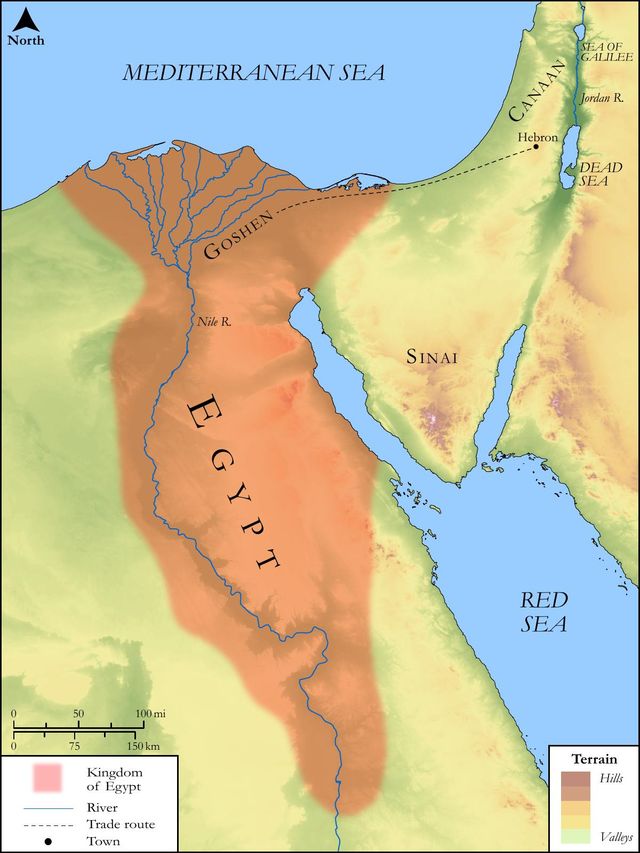
See on the biblical-era maps

Study this verse
Public-domain commentary
Matthew Henry
From his Commentary on the Whole Bible. Henry comments on passages, not single verses — this entry covers Exodus 10:1–11.
Here, I. Moses is instructed. We may well suppose that he, for his part, was much astonished both at Pharaoh's obstinacy and at God's severity, and could not but be compassionately concerned for the desolations of Egypt, and at a loss to conceive what this contest would come to at last. Now here God tells him what he designed, not only Israel's release, but the magnifying of his own name: That thou mayest tell in thy writings, which shall continue to the world's end, what I have wrought in Egypt, Exo 10:1, Exo 10:2. The ten plagues of Egypt must be inflicted, that they may be recorded for the generations to come as undeniable proofs, 1. Of God's overruling power in the kingdom of nature, his dominion over all the creatures, and his authority to use them either as servants to his justice or sufferers by it, according to the counsel of his will. 2. Of God's victorious power over the kingdom of Satan, to restrain the malice and chastise the insolence of his and his church's enemies. These plagues are standing monuments of the greatness of God, the happiness of the church, and the sinfulness of sin, and standing monitors to the children of men in all ages not to provoke the Lord to jealousy nor to strive with their Maker. The benefit of these instructions to the world sufficiently balances the expense.
II.Pharaoh is reproved (Exo 10:3):
Thus saith the Lord God of the poor, despised, persecuted, Hebrews, How long wilt thou refuse to humble thyself before me? Note, It is justly expected from the greatest of men that they humble themselves before the great God, and it is at their peril if they refuse to do it. This has more than once been God's quarrel with princes. Belshazzar did not humble his heart, Dan 5:22. Zedekiah humbled not himself before Jeremiah, Ch2 36:12. Those that will not humble themselves God will humble. Pharaoh had sometimes pretended to humble himself, but no account was made of it, because he was neither sincere nor constant in it.
III.The plague of locusts is threatened, Exo 10:4-6.
The hail had broken down the fruits of the earth, but these locusts should come and devour them: and not only so, but they should fill their houses, whereas the former inroads of these insects had been confined to their lands. This should be much worse than all the calamities of that king which had ever been known. Moses, when he had delivered his message, not expecting any better answer than he had formerly, turned himself and went out from Pharaoh, Exo 10:6. Thus Christ appointed his disciples to depart from those who would not receive them, and to shake off the dust of their feet for a testimony against them; and ruin is not far off from those who are thus justly abandoned by the Lord's messengers, Sa1 15:27, etc.
IV.Pharaoh's attendants, his ministers of state, or privy-counsellors, interpose, to persuade him to come to some terms with Moses, Exo 10:7.
They, as in duty bound, represent to him the deplorable condition of the kingdom (Egypt is destroyed), and advise him by all means to release his prisoners (Let the men go); for Moses, they found, would be a snare to them till it was done, and it were better to consent at first than to be compelled at last. The Israelites had become a burdensome stone to the Egyptians, and now, at length, the princes of Egypt were willing to be rid of them, Zac 12:3. Note, It is a thing to be regretted (and prevented, if possible) that a whole nation should be ruined for the pride and obstinacy of its princes, Salus populi suprema lex - To consult the welfare of the people is the first of laws.
V.A new treaty is, hereupon, set on foot between Pharaoh and Moses, in which Pharaoh consents for the Israelites to go into the wilderness to do sacrifice; but the matter in dispute was who should go, Exo 10:8. 1. Moses insists that they should take their whole families, and all their effects, along with them, Exo 10:9. note, Those that serve God must serve him with all they have. Moses pleads, "We must hold a feast, therefore we must have our families to feast with, and our flocks and herds to feast upon, to the honour of God." 2. Pharaoh will by no means grant this: he will allow the men to go, pretending that this was all they desired, though this matter was never yet mentioned in any of the former treaties; but, for the little ones, he resolves to keep them as hostages, to oblige them to return, Exo 10:10, Exo 10:11. In a great passion he curses them, and threatens that, if they offer to remove their little ones, they will do it at their peril. Note, Satan does all he can to hinder those that serve God themselves from bringing their children in to serve him. He is a sworn enemy to early piety, knowing how destructive it is to the interests of his kingdom; whatever would hinder us from engaging our children to the utmost in God's service, we have reason to suspect the hand of Satan in it. 3. The treaty, hereupon, breaks off abruptly; those that before went out from Pharaoh's presence (Exo 10:6) were now driven out. Those will quickly hear their doom that cannot bear to hear their duty. See Ch2 25:16. Quos Deus destruet eos dementat - Whom God intends to destroy he delivers up to infatuation. Never was man so infatuated to his own ruin as Pharaoh was.
Continue studying Exodus 10:1 across the web’s major study libraries — every link below opens this exact verse, chapter, or book on the destination site.
Read & Compare
 BibleGatewayThis verse in more than 200 translations and 70 languages.
 Bible.comThe YouVersion reader — hundreds of translations, reading plans, and highlights.
 ESV.orgCrossway's official English Standard Version reader.
 NET BibleThe NET translation with 60,000+ translators' notes on every rendering decision.
 STEP BibleTyndale House's free study tool — original text, vocabulary, and scholarly resources.
 BibliaLogos Bible Software's free web reader.
 USCCBThe New American Bible (Revised Edition) with the U.S. bishops' study notes.
Commentaries
 BibleHub CommentariesDozens of classic commentaries on this verse, gathered on one page.
 StudyLightMore than 100 commentary sets — the largest collection on the web.
 BibleRefPlain-English commentary on what this verse means, verse by verse.
 Enduring WordDavid Guzik's free commentary on this chapter, widely used by Bible teachers.
 Bible Study ToolsVerse commentary alongside Greek and Hebrew study aids.
Original Language & Research
- BibleHub InterlinearThe verse word by word — original language, transliteration, and English.
- BibleHub LexiconEvery word's original-language definition and Strong's entry.
 Blue Letter BibleDeep-study tools — Strong's numbers, concordance, and word studies.
 SefariaThe Hebrew text with Rashi and centuries of Jewish commentary.
Sermons, Hymns & Audio


TrulyRandomVerse is not affiliated with these sites and doesn’t control their content. They’re linked because they’re genuinely useful.
Summary
Exodus 10:1 marks a pivotal moment in the plague narrative, as the LORD explicitly declares to Moses His active role in hardening Pharaoh's heart and the hearts of his servants. This divine action is not punitive in isolation but serves a profound revelatory purpose: to maximize the display of God's power and identity through the unfolding "signs" (plagues), ensuring His glory is known to both Egypt and Israel, and remembered for generations. This verse underscores God's ultimate sovereignty over human resistance and His meticulous orchestration of events to achieve His redemptive and revelatory ends.
Context
ShowHideLiterary Context
Exodus 10:1 serves as a crucial divine pronouncement preceding the eighth plague, that of the locusts. By this point, seven devastating plagues have already afflicted Egypt, each progressively intensifying and targeting specific aspects of Egyptian life and their pantheon. These include the plagues of blood, frogs, gnats, flies, livestock disease, boils, and hail. Despite the overwhelming evidence of Yahweh's power, Pharaoh has consistently hardened his own heart, as noted in passages like Exodus 8:15. This verse, however, signifies a significant shift, with God explicitly stating His direct involvement in the hardening process, thereby setting the stage for the climactic final plagues and the ultimate, undeniable deliverance of Israel.
Historical & Cultural Context
In ancient Egypt, the Pharaoh was not merely a king but was revered as a divine being, a living god, and the embodiment of right order in the land (Ma'at). His will was considered supreme and his authority absolute. The plagues, therefore, were far more than natural disasters; they were direct, targeted assaults on the Egyptian pantheon and Pharaoh's perceived divine power. Each plague systematically challenged and humiliated specific Egyptian deities (e.g., the Nile god Hapi, the frog goddess Heqet, the sun god Ra, etc.). Pharaoh's initial stubbornness was rooted in his pride and his self-perception as a god. The concept of "hardening" a heart in Hebrew thought often implied making someone resolute or firm in their existing disposition, rather than coercing them against their will. God's action here intensifies Pharaoh's inherent rebellion and pride, ensuring that the full scope of His power would be displayed, not only to Egypt but also to Israel, solidifying their understanding of Yahweh as their sole deliverer and the one true God, supreme over all other gods and rulers.
Key Themes
ShowHideThis verse contributes significantly to several major theological and narrative themes within the book of Exodus and the broader Pentateuch. Firstly, it powerfully underscores the theme of Divine Sovereignty, demonstrating God's absolute control over human will and historical events, even the resistance of powerful rulers like Pharaoh. Secondly, it highlights the theme of Revelation of God's Glory and Name. The plagues are explicitly referred to as "signs" (Hebrew: ʼôwth), not merely acts of judgment but demonstrations intended to reveal Yahweh's unique identity and power to both Egyptians and Israelites, as stated in Exodus 9:16. Thirdly, it deepens the theme of Judgment and Redemption, showing how God's judgment on Egypt is inextricably linked to His redemptive purpose for Israel, leading to their ultimate liberation and the establishment of His covenant people. The unfolding narrative consistently portrays God's power to deliver His people and execute justice on their oppressors, a theme that resonates throughout the biblical narrative of salvation history.
Exposition and Analysis
ShowHideExodus 10:1 presents a profound statement about divine sovereignty and human will, setting the stage for the final, decisive acts of judgment against Egypt.
Key Word Analysis
ShowHideThis Hebrew root (H3513) primarily means "to be heavy" or "weighty." In the context of the heart, it conveys making it dull, unyielding, or stubborn. While it can also mean to "glorify" or "honor," here it signifies making Pharaoh's heart "heavy" or "dull" to God's commands, thus intensifying his existing resistance and pride. The narrative shows Pharaoh initially hardening his own heart (e.g., Exodus 8:15), but from this point forward, God explicitly takes responsibility for the hardening. This is not about God forcing Pharaoh to sin against his will, but rather God confirming and strengthening Pharaoh's wicked resolve, allowing his natural resistance to become a vehicle for God's greater purposes.
The term (H3820) lêb refers to the innermost being of a person, encompassing not only emotions but also the will, intellect, and moral character. When God hardens Pharaoh's "heart," it refers to his entire inner disposition—his will, resolve, and capacity to respond to divine commands. It implies a deep-seated resistance that God allows to become fully entrenched for His purposes.
This word (H226) denotes a signal, mark, token, or miracle. In Exodus, the plagues are consistently referred to as "signs" because they are not merely destructive events but serve as powerful, undeniable demonstrations of God's presence, power, and identity. They are intended to convey a divine message and validate God's messenger, Moses, revealing Yahweh as the one true God to both Egyptians and Israelites.
Verse Breakdown
ShowHide"And the LORD said unto Moses, Go in unto Pharaoh:"
This opening clause reasserts the divine initiative and Moses's unwavering role as God's appointed messenger. Despite the prior failures and Pharaoh's escalating defiance, God commands Moses to confront the Egyptian ruler once more, signaling the continuation of the divine-human drama.
"for I have hardened his heart, and the heart of his servants,"
This is the central and most theologically significant declaration of the verse. God explicitly states His active, sovereign role in the hardening of Pharaoh's heart, and notably, the hearts of his officials as well. This is not a passive allowance but a direct divine action that confirms and intensifies Pharaoh's existing rebellious disposition. The purpose of this divine hardening is to ensure that Pharaoh will not yield prematurely, thereby allowing the full series of plagues to unfold and maximize the demonstration of God's power.
"that I might shew these my signs before him:"
This concluding clause reveals the ultimate purpose behind the divine hardening: the public and undeniable display of God's "signs" (the plagues). The plagues are presented as revelatory acts, designed to serve as irrefutable evidence of Yahweh's supreme power, His unique identity as the one true God, and His righteous justice. By prolonging Pharaoh's resistance, God ensures that His power and glory are fully revealed to both the Egyptians and the Israelites, ensuring that these mighty acts would be remembered and proclaimed for generations to come.
Literary Devices
ShowHideThe Exodus narrative frequently employs the literary device of Repetition concerning the hardening of Pharaoh's heart, which serves as a theological refrain. This recurring motif emphasizes God's unwavering sovereignty and the unfolding of His predetermined plan. The phrase highlights the intricate tension between human agency (Pharaoh hardening his own heart) and divine decree (God hardening Pharaoh's heart), a central theological theme throughout the book. The plagues themselves are consistently referred to as Signs (ʼôwth), a term that functions as a powerful Symbolism for miraculous acts intended to convey a divine message, validate a divine messenger, and reveal God's identity, thereby underscoring their profound revelatory purpose beyond mere punishment. The narrative also uses Foreshadowing, as the escalating plagues and Pharaoh's increasing stubbornness build toward the climactic final judgments and the ultimate deliverance of Israel.
Theological and Thematic Connections
ShowHideExodus 10:1 is a foundational text for understanding several profound theological truths, particularly concerning the interaction of divine sovereignty and human will. It starkly presents the tension between God's absolute control and human responsibility. While the narrative consistently shows Pharaoh choosing to resist God, God's declaration, "I have hardened his heart," asserts His sovereign ability to work through, and even intensify, human rebellion to accomplish His purposes. This is not about God making a good person evil, but about God confirming and using an already rebellious heart for His glorious ends. The plagues are not arbitrary acts of wrath but purposeful demonstrations of God's power and identity. The hardening of Pharaoh's heart ensures that the full scope of God's judgment and redemptive power is revealed, not only to punish Egypt's oppression but also to establish Yahweh's covenant relationship with Israel and to be remembered for future generations. The ultimate aim of the entire Exodus narrative, including the hardening of Pharaoh's heart, is the revelation of God's glory and His name. Each plague is a direct challenge to the gods of Egypt, proving their impotence against the LORD. By hardening Pharaoh's heart, God ensures the complete unfolding of the plagues, providing maximum opportunity for His glory to be known throughout the earth.
This theme of God using human resistance to display His glory and accomplish His will resonates throughout Scripture:
Reflection and Application
ShowHideExodus 10:1 offers profound insights into God's character and His dealings with humanity, providing both comfort and challenge for contemporary believers. This verse reminds us that God is ultimately in control, even when faced with seemingly insurmountable opposition or the stubborn resistance of human hearts. His purposes will prevail, and His glory will be revealed, often through circumstances that seem chaotic or unjust from a human perspective. We can rest in the knowledge that God is working all things, even the resistance of evil, for His ultimate, redemptive plan. Furthermore, God's judgments are not always solely punitive; they often serve to reveal His power, His character, and His justice. When we encounter difficult situations or witness resistance to God's will in the world, we can look for how God might be using these very circumstances to display His glory and draw people to Himself. The prolonged series of plagues, facilitated by Pharaoh's hardened heart, also demonstrates God's patience and persistent call for repentance, even as He moves toward judgment. It reminds us that God gives ample opportunity for people to respond to His signs and warnings.
Questions for Reflection
ShowHideFAQ
ShowHideDid God force Pharaoh to sin, making him a puppet?
ShowHideNo. The biblical narrative consistently shows Pharaoh initially hardening his own heart (e.g., Exodus 8:15). God's hardening is not about coercing an unwilling heart into sin or forcing a good person to do evil. Rather, it is about intensifying or confirming an already existing rebellious disposition. Pharaoh remained fully responsible for his choices and actions. God worked through Pharaoh's inherent wickedness and pride to accomplish His greater purposes, demonstrating His power and glorifying His name.
Why would God harden someone's heart if He desires all to be saved?
ShowHideThis verse highlights God's multifaceted purposes, which extend beyond individual salvation in every instance. While God certainly desires all to come to repentance (2 Peter 3:9), He also has a sovereign plan to display His glory, justice, and redemptive power to a wider audience. In Pharaoh's case, the hardening served to prolong the demonstration of God's power and supremacy to both Egypt and Israel, ensuring that His mighty acts of deliverance would be undeniably clear and remembered for generations. This act ultimately served a redemptive purpose for Israel and a revelatory purpose for all who witnessed it, providing a powerful testimony of Yahweh's unique identity.
Christ-Centered Fulfillment
ShowHideExodus 10:1, with its emphasis on God's sovereign hardening of hearts for the ultimate display of His glory and power, finds profound fulfillment and illumination in the person and work of Jesus Christ. Just as Pharaoh's hardened heart served to magnify God's power through the plagues, the hardening of hearts among some in Israel and the Gentile world ultimately led to the cross—the supreme "sign" of God's power and wisdom (1 Corinthians 1:23-24). The very rejection and crucifixion of Jesus, though a result of human sin and hardened hearts, was not accidental but part of God's predetermined plan and foreknowledge to bring about salvation for all who believe (Acts 2:23).
Furthermore, the purpose of Pharaoh's hardening—"that I might shew these my signs before him"—is fully realized in Christ. Jesus's miracles, His life, death, and resurrection are the ultimate "signs" that reveal God's identity, power, and redemptive purpose. The cross, in particular, is the supreme demonstration of God's justice against sin and His boundless love, revealing His glory in a way that transcends all previous displays. Through Christ, God's name is proclaimed not just in Egypt, but "in all the earth" (Romans 9:17). Finally, while Pharaoh's hardening led to judgment, Christ's work offers the path to a softened heart. The New Covenant promises a new heart of flesh in place of a heart of stone (Ezekiel 36:26), made possible through the Spirit given by Christ. Thus, the sovereign God who hardened Pharaoh's heart to display His power is the same God who, through Christ, offers to transform the hardest of hearts into ones that believe and obey, bringing about true spiritual freedom.