


Esther 1:9
Bible text: King James Version (1769 Blayney text) · Public domain
Bible text: Berean Standard Bible · Public domain
Bible text: American Standard Version (1901) · Public domain
Bible text: World English Bible, Messianic edition · Public domain
Bible text: Geneva Bible (1599) · Public domain
Bible text: Young's Literal Translation · Public domain
- גַּםgamalsoH1571AdvAdverb
- וַשְׁתִּיvash·TiVashtiH2060N-proper-fNoun Proper Feminine
- הַמַּלְכָּהha·mal·Kahthe queenH4436Art ¦ N-fsNoun Singular Feminine Absoluteהַtheמַּלְכָּהqueen
- עָשְׂתָה'a·se·Tahshe madeH6213V-Qal-Perf-3fsVerb Qal Perfect 3rd Singular Feminine
- מִשְׁתֵּהmish·Teha feast ofH4960N-mscNoun Singular Masculine Construct
- נָשִׁיםna·ShimwomenH802N-mpNoun Plural Masculine Absolute
- בֵּיתbeit[the] house ofH1004N-mscNoun Singular Masculine Construct
- הַמַּלְכוּתha·mal·Khut<the> royaltyH4438Art ¦ N-fsNoun Singular Feminine Absoluteהַ<the>מַּלְכוּתroyalty
- אֲשֶׁר'a·SherwhichH834RelParticle Relative
- לַמֶּלֶךְla·Me·lekh[belonged] to the kingH4428Prep-l ¦ N-msNoun Singular Masculine Absoluteלַ[belonged] to theמֶּלֶךְking
- אֲחַשְׁוֵרוֹשׁ'a·chash·ve·Ro·oshAhasuerusH325N-proper-mNoun Proper Masculine
English is a literal word-by-word gloss of the Hebrew, not the KJV's wording. Why?
This is the original text the KJV's translators worked from — each Hebrew word with its own literal English meaning in this verse, prepared by scholars at Tyndale House, Cambridge. The KJV translates whole sentences, not word by word, so its wording differs: one Hebrew word can become several English words, and the KJV may choose “the LORD” where the gloss reads “Yahweh”. Both are faithful — they answer different questions. For the KJV's own rendering, switch to the KJV text.
Details
See on the biblical-era maps
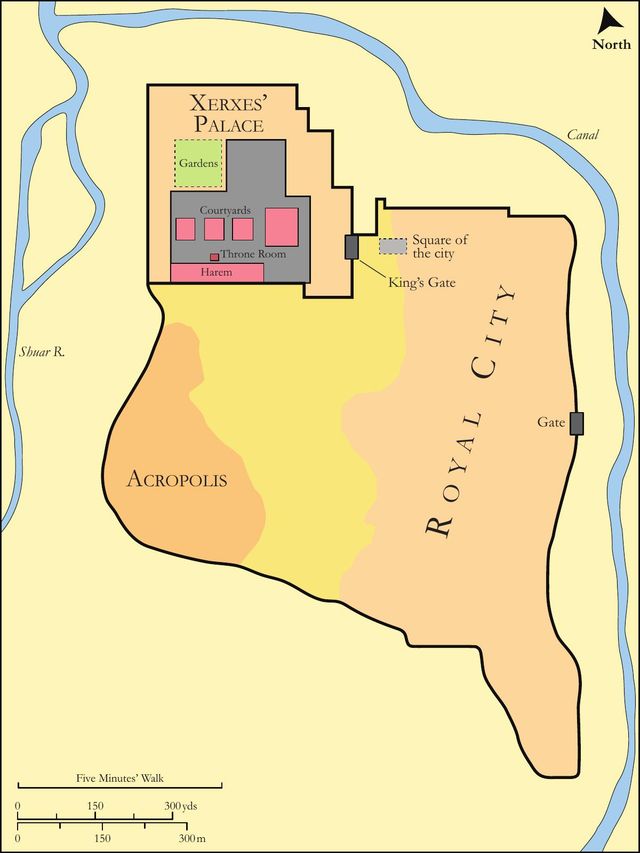
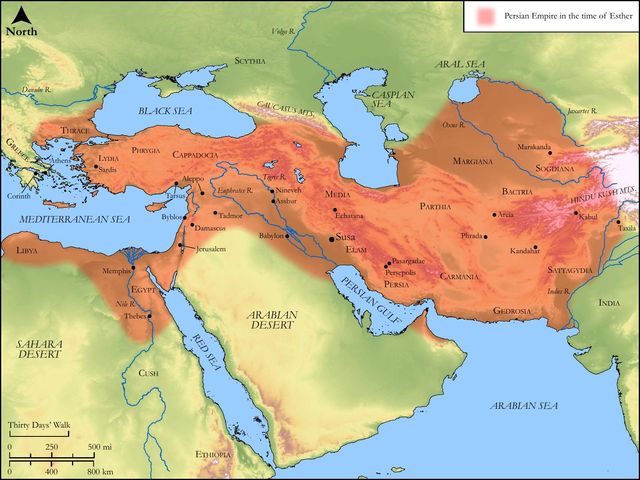
Study this verse
Public-domain commentary
Matthew Henry
From his Commentary on the Whole Bible. Henry comments on passages, not single verses — this entry covers Esther 1:1–9.
Which of the kings of Persia this Ahasuerus was the learned are not agreed. Mordecai is said to have been one of those that were carried captive from Jerusalem (Est 2:5, Est 2:6), whence it should seem that this Ahasuerus was one of the first kings of that empire. Dr. Lightfoot thinks that he was that Artaxerxes who hindered the building of the temple, who is called also Ahasuerus (Ezr 4:6, Ezr 4:7), after his great-grandfather of the Medes, Dan 9:1. We have here an account,
I.Of the vast extent of his dominion.
In the time of Darius and Cyrus there were but 120 princes (Dan 6:1); now there were 127, from India to Ethiopia, Est 1:1. It had become an over-grown kingdom, which in time would sink with its own weight, and, as usual, would lose its provinces as fast as it got them. If such vast power be put into a bad hand, it is able to do so much the more mischief; but, if into a good hand, it is able to do so much the more good. Christ's kingdom is, or shall be, far larger than this, when the kingdoms of the world shall all become his; and it shall be everlasting.
II.Of the great pomp and magnificence of his court.
When he found himself fixed in his throne, the pride of his heart rising with the grandeur of his kingdom, he made a most extravagant feast, wherein he put himself to vast expense and trouble only to show the riches of his glorious kingdom and the honour of his excellent majesty, Est 1:4. This was vain glory, an affection of pomp to no purpose at all; for none questioned the riches of his kingdom, nor offered to vie with him for honour. If he had shown the riches of his kingdom and the honour of his majesty, as some of his successors did, in contributing largely towards the building of the temple and the maintaining of the temple service (Ezr 6:8, Ezr 7:22), it would have turned to a much better account. Two feasts Ahasuerus made: - 1. One for his nobles and princes, which lasted a hundred and eighty days, Est 1:3, Est 1:4. Not that he feasted the same persons every day for all that time, but perhaps the nobles and princes of one province one day, of another province another day, while thus he and his constant attendants fared sumptuously every day. The Chaldee paraphrast (who is very bold in his additions to the story of this book) says that there had been a rebellion among his subjects and that this feast was kept for joy of the quashing of it. 2. Another was made for all the people, both great and small, which lasted seven days, some one day and some another; and, because no house would hold them, they were entertained in the court of the garden, Est 1:5. The hangings with which the several apartments were divided or the tents which were there pitched for the company, were very fine and rich; so were the beds or benches on which they sat, and the pavement under their feet, Est 1:6. Better is a dinner of herbs with quietness, and the enjoyment of one's self and a friend, than this banquet of wine with all the noise and tumult that must needs attend it.
III.Of the good order which in some respects was kept there notwithstanding.
We do not find this like Belshazzar's feast, in which dunghill-gods were praised and the vessels of the sanctuary profaned, Dan 5:3, Dan 5:4. Yet the Chaldee paraphrase says that the vessels of the sanctuary were used in this feast, to the great grief of the pious Jews. It was not like Herod's feast, which reserved a prophet's head for the last dish. Two things which are laudable we may gather from the account here given of this feast: - 1. That there was no forcing of healths, nor urging of them: The drinking was according to the law, probably some law lately made; none did compel, no, not by continual proposing of it (as Josephus explains it); they did not send the glass about, but every man drank as he pleased (Est 1:8), so that if there were any that drank to excess it was their own fault, a fault which few would commit when the king's order put an honour upon sobriety. This caution of a heathen prince, even when he would show his generosity, may shame many who are called Christians, who think they do not sufficiently show their good housekeeping, nor bid their friends welcome, unless they make them drunk, and, under pretence of sending the health round, send the sin round, and death with it. There is a woe to those that do so; let them read it and tremble, Hab 2:15, Hab 2:16. It is robbing men of their reason, their richest jewel, and making them fools, the greatest wrong that can be. 2. That there was no mixed dancing; for the gentlemen and ladies were entertained asunder, not as in the feast of Belshazzar, whose wives and concubines drank with him (Dan 5:2), or that of Herod, whose daughter danced before him. Vashti feasted the women in her own apartment; not openly in the court of the garden, but in the royal house, Est 1:9. Thus, while the king showed the honour of his majesty, she and her ladies showed the honour of their modesty, which is truly the majesty of the fair sex.
Historical interpretation
Historical reception
2 surviving comments on this verse. Each one is dated, so this reads as a timeline rather than a list.
The person of Queen Vashti provides a clear expression of the Jewish people who themselves appeared to reign as queen when they were found to prevail over all the other nations in the worship of the one God. Therefore when she gave a banquet for the women where the king used to linger, this symbolized the Jewish people who demonstrated their observance of the law in the worship they performed in Jerusalem where the temple and the Holy of Holies used to be.
“Vashti the queen also held a feast for the women in the palace where King Ahasuerus liked to stay.” Queen Vashti must symbolize the Jewish people, which at the time seemed to have ruled like a queen since it was found to stand apart from all the other nations in its worship of a single God. So she held a feast for the women where the king would liked to stay; that is, in Jerusalem itself—the site of the Temple of God and the Holy of Holies—it demonstrated its observance of the Law in worship or rather by meditating on the Holy Scriptures, through which it supplied to its members the refreshment of spiritual knowledge by granting them the awareness of their power from Heaven.
Continue studying Esther 1:9 across the web’s major study libraries — every link below opens this exact verse, chapter, or book on the destination site.
Read & Compare
 BibleGatewayThis verse in more than 200 translations and 70 languages.
 Bible.comThe YouVersion reader — hundreds of translations, reading plans, and highlights.
 ESV.orgCrossway's official English Standard Version reader.
 NET BibleThe NET translation with 60,000+ translators' notes on every rendering decision.
 STEP BibleTyndale House's free study tool — original text, vocabulary, and scholarly resources.
 BibliaLogos Bible Software's free web reader.
 USCCBThe New American Bible (Revised Edition) with the U.S. bishops' study notes.
Commentaries
 BibleHub CommentariesDozens of classic commentaries on this verse, gathered on one page.
 StudyLightMore than 100 commentary sets — the largest collection on the web.
 BibleRefPlain-English commentary on what this verse means, verse by verse.
 Enduring WordDavid Guzik's free commentary on this chapter, widely used by Bible teachers.
 Bible Study ToolsVerse commentary alongside Greek and Hebrew study aids.
Original Language & Research
- BibleHub InterlinearThe verse word by word — original language, transliteration, and English.
- BibleHub LexiconEvery word's original-language definition and Strong's entry.
 Blue Letter BibleDeep-study tools — Strong's numbers, concordance, and word studies.
 SefariaThe Hebrew text with Rashi and centuries of Jewish commentary.
Sermons, Hymns & Audio


TrulyRandomVerse is not affiliated with these sites and doesn’t control their content. They’re linked because they’re genuinely useful.
Summary
Esther 1:9 introduces Queen Vashti's simultaneous and parallel feast for the women within the opulent royal palace of Susa, occurring alongside King Ahasuerus's grand, extended banquet for the men of his vast empire. This seemingly minor detail is pivotal, establishing Vashti's active role and independent sphere as queen, highlighting the distinct social customs of the Persian court, and setting the immediate stage for the dramatic events that will lead to her eventual dethronement and the providential rise of Esther.
Context
ShowHideLiterary Context
Esther 1:9 is strategically placed within the opening chapter of the book, which meticulously establishes the immense power, wealth, and lavishness of King Ahasuerus's reign. The preceding verses (Esther 1:1-8) detail the king's extravagant 180-day display of his kingdom's glory, followed by a seven-day public feast for all the inhabitants of Susa. In this context of unparalleled royal excess and male-centric revelry, verse 9 introduces a parallel, yet distinctly separate, celebration hosted by Queen Vashti for the women. This juxtaposition immediately highlights the gendered spheres within the Persian court and subtly introduces Vashti as an active, independent figure whose actions will soon become central to the narrative's dramatic turn, directly preceding her fateful refusal in Esther 1:12. The verse thus serves as a crucial narrative setup, laying the groundwork for the divinely orchestrated events that will ultimately bring Esther to the throne.
Historical & Cultural Context
The events of Esther are set in the Persian Empire during the reign of King Ahasuerus, widely identified with Xerxes I (486-465 BC), with Susa serving as his capital city. The Persian Empire was renowned for its vast territorial expanse, immense wealth, and highly formalized court protocols. It was a common cultural practice in the royal courts of that day, including Persia, for men and women to socialize separately, especially during large public or royal gatherings. The queen's hosting of her own "feast" (mishteh) underscores her significant status, duties, and recognized authority within the royal household. This indicates that she was not merely a passive consort but held an active, legitimate position of responsibility, capable of organizing and presiding over a formal event. This cultural detail is vital for understanding the gravity of her later refusal to appear before the king, as it was a public act of defiance from a figure of established standing, challenging not just a personal request but a royal command within a highly structured society.
Key Themes
ShowHideEsther 1:9 contributes significantly to several overarching themes woven throughout the book. Firstly, it powerfully underscores the royal power and display of the Persian monarchy, showcasing the immense resources and authority at the disposal of both the king and queen. The description of parallel feasts emphasizes the prevalent gender roles and segregation within ancient Persian society, where distinct social spheres were maintained for men and women, even at the highest echelons of power. Crucially, the verse introduces Vashti's agency and status, portraying her as a queen with her own responsibilities and sphere of influence, which directly foreshadows her independent action and defiance. This seemingly minor detail is part of the meticulous narrative setup that highlights God's divine providence working behind the scenes. In a book where God's name is conspicuously absent, His hand is nevertheless evident in the orchestration of human events and decisions—even those seemingly mundane or secular—to fulfill His ultimate purposes, as seen in the subsequent events leading to Esther's elevation and the eventual deliverance of her people from destruction.
Exposition and Analysis
ShowHideKey Word Analysis
ShowHideOf Persian origin, "Vashti" is the name of the queen of Xerxes. Her name itself, possibly meaning "beautiful woman" or "best," subtly introduces her regal status and physical attractiveness, which becomes a focal point when King Ahasuerus desires to display her beauty. The specific mention of her name, distinct from the king, immediately establishes her as a significant character with her own agency and sphere of influence within the royal court, rather than merely an unnamed consort.
Derived from a root meaning "to drink," this term refers to a banquet or drinking party, often characterized by lavishness and extended duration. In the context of Esther 1, it signifies not just a casual meal but a significant social and political event. Vashti's "feast" for the women parallels the king's, emphasizing its formal and official nature, reinforcing her role as a queen with her own responsibilities and the capacity to host such a grand gathering.
This word, meaning "a house" in its broadest sense, here refers specifically to the "royal house" or palace. Its use emphasizes that Vashti's feast was not a private, informal gathering but an official event held within the king's domain. This detail underscores the formality and public nature of her actions, reinforcing her regal role and the official context in which the subsequent conflict with the king will unfold. It signifies that her actions, like the king's, carried official weight and were conducted within the framework of the monarchy.
Verse Breakdown
ShowHide"Also Vashti the queen made a feast for the women"
This clause immediately establishes a parallel event to the king's feast described in the preceding verses. The inclusion of "Also" directly links it to the ongoing royal festivities. "Vashti the queen" highlights her status and agency; she is not merely a passive figure but an active participant in the royal proceedings, demonstrating her authority and responsibility in hosting her own distinct gathering for the female members of the court. This separation of feasts for men and women reflects the cultural norms of the time, emphasizing gender segregation.
"[in] the royal house"
This phrase specifies the location of Vashti's feast as within the palace itself, emphasizing its formal and official nature. It was not held in a private residence but within the very seat of royal power, reinforcing the public and official context of the queen's role and actions. This detail underscores the gravity of her position and the significance of any events she hosted, setting a formal stage for the unfolding drama.
"which [belonged] to king Ahasuerus."
This concluding phrase clarifies that while Vashti hosted the feast, the "royal house" itself was ultimately under the king's dominion. This subtly reinforces the king's ultimate authority and sovereignty, even as it acknowledges Vashti's sphere of influence. It sets the stage for the inevitable clash of wills and authority that will soon occur, as Vashti's independent action takes place within the king's domain, making her subsequent refusal an act of defiance against the king's established authority.
Literary Devices
ShowHideEsther 1:9, though concise, employs several significant literary devices that enrich its meaning and propel the narrative forward. Parallelism is prominently featured in the direct mirroring of the king's feast for men with the queen's feast for women, highlighting the distinct but equally grand nature of both events. This creates a sense of balance and establishes the separate spheres of influence within the royal court. Foreshadowing is subtly woven into the verse, as Vashti's independent action in hosting her own feast, even within the confines of the "royal house," hints at her strong will and agency, which will become crucial in her later refusal to obey the king's summons. This independent spirit sets the stage for the dramatic conflict that follows. Furthermore, the verse uses setting to great effect, firmly placing the queen's feast within the opulent and formal "royal house," emphasizing the grand scale and official nature of the events. This underscores the high stakes of any disruption to the established order and highlights the public nature of Vashti's role. The contrast between the male and female gatherings also serves to illuminate the social customs of the time, providing a crucial cultural backdrop against which the subsequent events will unfold.
Theological and Thematic Connections
ShowHideEsther 1:9, while seemingly a straightforward description of a social event, serves as a crucial piece in the intricate tapestry of God's providential work. In a book where God's name is conspicuously absent, His hand is nevertheless evident in the meticulous arrangement of human affairs. Vashti's feast, a seemingly mundane detail, is part of the divine orchestration that sets in motion a chain of events leading to her dethronement and the eventual elevation of Esther, who would become the instrument of deliverance for her people. This verse reminds us that God's sovereignty extends even to the seemingly secular or insignificant details of human history and personal lives. He works through human decisions, cultural norms, and even the excesses of earthly rulers to accomplish His ultimate purposes, demonstrating that no event is truly outside His purview. The narrative subtly teaches that God is actively involved in history, guiding circumstances to protect His covenant people, even when His presence is not overtly declared.
Reflection and Application
ShowHideEsther 1:9 invites us to consider how seemingly minor or everyday occurrences can be significant components of God's larger, often unseen, plan. Just as Vashti's feast, a culturally appropriate event, became a foundational step in the grand narrative of Esther's rise and the salvation of the Jews, so too can our ordinary lives and choices be woven into God's sovereign design. This verse encourages us to look beyond the immediate circumstances and recognize that God is always at work, even when His presence is not explicitly named or His hand is not overtly visible. It challenges us to trust in His overarching control, knowing that He can use human pride, cultural norms, and even political machinations to bring about His good purposes. Furthermore, Vashti's refusal, even within a patriarchal society, reminds us that individuals have roles and responsibilities, and their decisions, whether in compliance or defiance, carry consequences that can ripple through history. We are called to live with intentionality and faithfulness, recognizing that every detail of our lives, no matter how small, can contribute to the unfolding of God's redemptive will and the advancement of His kingdom.
Questions for Reflection
ShowHideFAQ
ShowHideWas it unusual for a queen to host her own feast separate from the king's?
ShowHideWhile the king's grand banquets for male dignitaries and officials were the primary public events, it was not entirely unprecedented for queens or royal women to have their own social spheres and gatherings. This verse highlights the gender segregation common in the royal courts of that day, where men and women often socialized separately. However, Vashti's ability to host such a formal "feast" within the "royal house" underscores her significant status and active role as queen, rather than merely being a passive consort. It establishes her as a figure with her own authority and responsibilities, which is crucial for understanding the gravity of her later refusal to obey the king's summons in Esther 1:12.
Why is this verse important if it just describes a feast?
ShowHideEsther 1:9 is crucial because it meticulously sets the stage for the entire narrative. Firstly, it establishes Queen Vashti's presence and her independent sphere of influence, highlighting her agency within the royal court. Secondly, by describing her separate feast, it underscores the cultural norms of gender segregation, which will become a backdrop for the king's later command. Most importantly, this seemingly mundane detail is the immediate precursor to the dramatic conflict that unfolds. Vashti's independent action and the context of her own feast are essential for understanding her subsequent refusal to appear before the king, which directly leads to her dethronement and, providentially, to Esther's elevation to queen in Esther 2:17. It demonstrates the meticulous unfolding of events that God uses to position His chosen instruments, even when His name is not explicitly mentioned.
Christ-Centered Fulfillment
ShowHideEsther 1:9, like the entire book of Esther, beautifully illustrates the profound truth of God's sovereign providence working behind the scenes of human history, orchestrating seemingly ordinary events to fulfill His extraordinary redemptive plan. The removal of Queen Vashti, set in motion by the events of this verse, makes way for the unexpected rise of Esther, a deliverer for her people. This narrative arc powerfully foreshadows the ultimate divine plan for humanity's salvation through Jesus Christ. Just as a queen was removed to make way for a new, divinely appointed deliverer, so too did God, in the fullness of time, send His Son, not through human might or political maneuvering, but through a miraculous birth and a life of perfect obedience, to be the ultimate King and Deliverer for all who believe. Christ's coming was not a random event but the culmination of centuries of divine preparation, a meticulous orchestration of history, much like the detailed setup in Esther, to bring about the redemption of humanity from sin and death. He is the true Lamb of God, who takes away the sin of the world, the one through whom all things hold together and in whom God's purposes are perfectly fulfilled, as He works all things according to the counsel of His will. His kingdom is not of this world, yet He reigns over all earthly kingdoms, ensuring that all events, great and small, serve His eternal redemptive purposes, ultimately culminating in His glorious return as King of kings and Lord of lords.