


Deuteronomy 31:25
Bible text: King James Version (1769 Blayney text) · Public domain
Bible text: Berean Standard Bible · Public domain
Bible text: American Standard Version (1901) · Public domain
Bible text: World English Bible, Messianic edition · Public domain
Bible text: Geneva Bible (1599) · Public domain
Bible text: Young's Literal Translation · Public domain
- וַיְצַוvay·Tzavand he commandedH6680Conj-w ¦ V-Piel-ConsecImperf-3msVerb Piel Consecutive Imperfect 3rd Singular Masculineוַandיְצַוhe commanded
- מֹשֶׁהmo·ShehMosesH4872N-proper-mNoun Proper Masculine
- אֶת'et<obj.>H853DirObjMParticle Object Indicator
- הַלְוִיִּםhal·vi·Yimthe LevitesH3881Art ¦ N-mpNoun Gentilic Plural Masculine AbsoluteהַtheלְוִיִּםLevites
- נֹשְׂאֵיno·se·'Ei[who] carryH5375V-Qal-Prtcpl-mpVerb Qal Participle Plural Masculine Construct
- אֲרוֹן'a·Ron<of> [the] ark ofH727N-mscNoun Singular Masculine Construct
- בְּרִיתbe·rit[the] covenant ofH1285N-fscNoun Singular Feminine Construct
- יְהוָהYah·wehYahwehH3068N-properNoun Proper Title
- לֵאמֹרle·Mor<to> sayingH559Prep-l ¦ V-Qal-InfVerb Qal Infinitive Constructלֵ<to>אמֹרsaying
English is a literal word-by-word gloss of the Hebrew, not the KJV's wording. Why?
This is the original text the KJV's translators worked from — each Hebrew word with its own literal English meaning in this verse, prepared by scholars at Tyndale House, Cambridge. The KJV translates whole sentences, not word by word, so its wording differs: one Hebrew word can become several English words, and the KJV may choose “the LORD” where the gloss reads “Yahweh”. Both are faithful — they answer different questions. For the KJV's own rendering, switch to the KJV text.
Details
See on the biblical-era map
Study this verse
Public-domain commentary
Matthew Henry
From his Commentary on the Whole Bible. Henry comments on passages, not single verses — this entry covers Deuteronomy 31:22–30.
Here, I. The charge is given to Joshua, which God has said (v. 14) he would give him. The same in effect that Moses had given him. The same in effect that Moses had given him (v. 7): Be strong and of a good courage, v. 23. Joshua had now heard from God so much of the wickedness of the people whom he was to have the conduct of as could not but be a discouragement to him: "Nay," says God, "how bad soever they are, thou shalt go through thy understanding, for I will be with thee. Thou shalt put them into possession of Canaan. If they afterwards by their sin throw themselves out of it again, that will be no fault of thine, nor any dishonour to thee, therefore be of good courage."
II.The solemn delivery of the book of the law to the Levites, to be deposited in the side of the ark, is here again related (v.
24-26), of which before, v. 9. Only they are here directed where to treasure up this precious original, not in the ark (there only the two tables were preserved), but in another box by the side of the ark. It is probable that this was the very book that was found in the house of the Lord (having been somehow or other misplaced) in the days of Josiah (Ch2 34:14), and so perhaps the following words here, that it may be a witness against thee, may particularly point at that event, which happened so long after; for the finding of this very book occasioned the public reading of it by Josiah himself, for a witness against a people who were then almost ripe for their ruin by the Babylonians.
III.The song which follows in the next chapter is here delivered to Moses, and by him to the people.
He wrote it first (v. 22), as the Spirit of God indited it, and then spoke it in the ears of all the congregation (v. 30), and taught it to them (v. 22), that is, gave out copies of it, and ordered the people to learn it by heart. It was delivered by word of mouth first, and afterwards in writing, to the elders and officers, as the representatives of their respective tribes (v. 28), by them to be transmitted to their several families and households. It was delivered to them with a solemn appeal to heaven and earth concerning the fair warning which was given them by it of the fatal consequences of their apostasy from God, and with a declaration of the little joy and little hope Moses had in and concerning them. 1. He declares what little joy he had had of them while he was with them, v. 27. It is not in a passion that he says, I know thy rebellion (as once he said unadvisedly, Hear now, you rebels), but it is the result of a long acquaintance with them: you have been rebellious against the Lord. Their rebellions against himself he makes no mention of: these he had long since forgiven and forgotten; but they must be made to hear of their rebellions against God, that they may be ever repented of and never repeated. 2. What little hopes he had of them now that he was leaving them. From what God had now said to him (v. 16) more than from his own experience of them, though that was discouraging enough, he tells them (v. 29), I know that after my death you will utterly corrupt yourselves. Many a sad thought, no doubt, it occasioned to this good man, to foresee the apostasy and ruin of a people he had taken so much pains with, in order to them good and make them happy; but this was his comfort, that he had done his duty, and that God would be glorified, if not in their settlement, yet in their dispersion. Thus our Lord Jesus, a little before his death, foretold the rise of false Christs and false prophets (Mat 24:24), notwithstanding which, and all the apostasies of the latter times, we may be confident that the gates of hell shall not prevail against the church, for the foundation of God stands sure.
Continue studying Deuteronomy 31:25 across the web’s major study libraries — every link below opens this exact verse, chapter, or book on the destination site.
Read & Compare
 BibleGatewayThis verse in more than 200 translations and 70 languages.
 Bible.comThe YouVersion reader — hundreds of translations, reading plans, and highlights.
 ESV.orgCrossway's official English Standard Version reader.
 NET BibleThe NET translation with 60,000+ translators' notes on every rendering decision.
 STEP BibleTyndale House's free study tool — original text, vocabulary, and scholarly resources.
 BibliaLogos Bible Software's free web reader.
 USCCBThe New American Bible (Revised Edition) with the U.S. bishops' study notes.
Commentaries
 BibleHub CommentariesDozens of classic commentaries on this verse, gathered on one page.
 StudyLightMore than 100 commentary sets — the largest collection on the web.
 BibleRefPlain-English commentary on what this verse means, verse by verse.
 Enduring WordDavid Guzik's free commentary on this chapter, widely used by Bible teachers.
 Bible Study ToolsVerse commentary alongside Greek and Hebrew study aids.
Original Language & Research
- BibleHub InterlinearThe verse word by word — original language, transliteration, and English.
- BibleHub LexiconEvery word's original-language definition and Strong's entry.
 Blue Letter BibleDeep-study tools — Strong's numbers, concordance, and word studies.
 SefariaThe Hebrew text with Rashi and centuries of Jewish commentary.
Sermons, Hymns & Audio


TrulyRandomVerse is not affiliated with these sites and doesn’t control their content. They’re linked because they’re genuinely useful.
Summary
Deuteronomy 31:25 serves as a crucial introductory statement, setting the stage for a solemn command issued by Moses in the final moments of his leadership. It meticulously identifies the recipients of this charge: the Levites, specifically those consecrated to the sacred duty of bearing the Ark of the Covenant. This verse not only highlights Moses' unwavering divine authority but also underscores the unique and profound responsibility of the Levites in safeguarding the most holy object in Israelite worship, which embodied God's presence and His Law. It prepares the reader for the weighty instructions that follow, emphasizing the continuity of divine revelation and the solemn stewardship required of its custodians.
Context
ShowHideLiterary Context
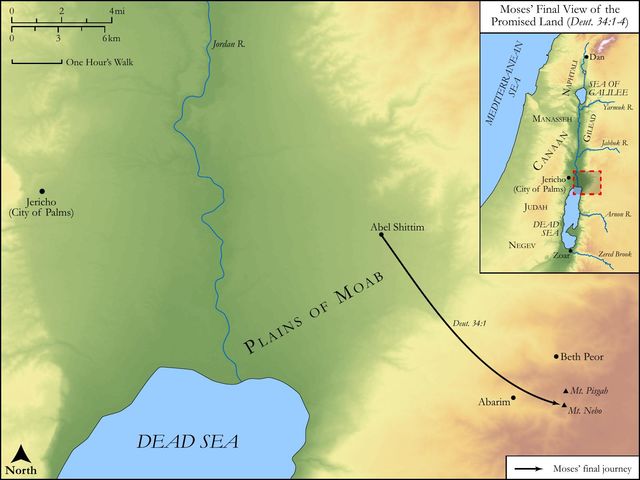
This verse is deeply embedded within Moses' concluding discourses to the Israelites, delivered on the Plains of Moab as they prepared to enter the Promised Land. The preceding chapters, particularly Deuteronomy 29 and Deuteronomy 30, detail Moses' renewal of the Mosaic covenant, reiterating its stipulations, warnings of disobedience, and promises of future restoration. Deuteronomy 31 specifically chronicles Moses' preparations for his impending death, including the commissioning of Joshua as his successor (Deuteronomy 31:7-8) and the command to write down the Law. Verse 25 acts as a direct and immediate prelude to Moses' instruction in Deuteronomy 31:26, where he commands the Levites to place the Book of the Law beside the Ark of the Covenant, ensuring its perpetual presence as a witness against the people.
Historical & Cultural Context
At this pivotal juncture, Israel stood on the threshold of a monumental transition from nomadic wilderness wandering to settled life in Canaan. Moses, the foundational leader and divinely appointed lawgiver, was about to depart, necessitating a clear transfer of authority and the enduring establishment of God's covenant. The Levites, particularly the Kohathite clan, held the unique and perilous privilege of transporting the Ark of the Covenant, a duty meticulously outlined in Numbers 4:15. This responsibility transcended mere logistics; it was profoundly spiritual, signifying their direct proximity to God's holy presence. The Ark itself was the central cultic object, representing God's throne, His active presence among His people, and the very embodiment of the covenant forged at Sinai. The cultural understanding of divine commands being passed through appointed intermediaries like Moses, and the meticulous care required for sacred objects, forms the essential backdrop for this verse.
Key Themes
ShowHideSeveral profound theological and narrative themes converge within this succinct verse. Firstly, Divine Authority and Leadership are paramount, as Moses, acting as God's authoritative mouthpiece, issues a command that carries the full weight of divine instruction, underscoring the absolute importance of adherence to God's revealed will. Secondly, the theme of Custodianship of God's Word is central. The Levites, specifically chosen for their sacred duties, are entrusted not only with the physical Ark but also, by implication, with the Law itself, emphasizing their unique role as guardians and preservers of divine truth. This responsibility foreshadows the ongoing duty of spiritual leaders throughout history to uphold, teach, and transmit God's Word faithfully. Lastly, the Centrality of the Ark of the Covenant is highlighted. As the most holy object in Israel, first described in Exodus 25:10-22, the Ark symbolized God's dwelling presence among His people, His unwavering covenant faithfulness, and His judicial authority. Its mention here reinforces its foundational role in Israel's identity, worship, and relationship with the LORD.
Exposition and Analysis
ShowHideKey Word Analysis
ShowHide(Môsheh), meaning "drawing out (of the water), i.e. rescued." This refers to the Israelite lawgiver, Moses, whose name signifies his miraculous rescue and, by extension, his divinely appointed role as the deliverer and mediator of the covenant between God and Israel. His authority in this verse is paramount, as he acts as God's representative.
(Lêvîyîy), meaning "a Levite or descendant of Levi." This specifically identifies the tribe of Levi, set apart by God for priestly and liturgical service. Within the Levites, particular clans, like the Kohathites, had distinct duties, with the Kohathites uniquely responsible for carrying the Ark and other sacred furnishings of the tabernacle. Their designation here underscores their divinely appointed and exclusive role as guardians of the most holy aspects of Israel's worship and covenant.
(nâsâʼ), a primitive root meaning "to lift, in a great variety of applications, literal and figurative." In this context, it denotes the physical act of transporting the Ark, but it carries a much deeper spiritual connotation of responsibility, privilege, and sacred duty. It implies a careful, reverent handling of a holy object, highlighting the immense privilege and solemn obligation placed upon the Levites as custodians of God's presence.
(bᵉrîyth), meaning "a compact (because made by passing between pieces of flesh); confederacy, (con-) feder(-ate), covenant, league." This term signifies the solemn, binding agreement between God and Israel, established at Sinai. It emphasizes God's promises and Israel's obligations, forming the very foundation of their relationship. The "ark of the covenant" thus embodies God's faithfulness to His promises and the foundational nature of His relationship with His people.
Verse Breakdown
ShowHide"That Moses commanded the Levites,"
This opening clause immediately establishes the source of the command: Moses, acting in his divinely ordained role as leader and lawgiver. His command is not merely human instruction but carries the full weight of divine authority, underscoring the seriousness and binding nature of the directives that follow. The specific mention of "the Levites" immediately narrows the focus to those divinely appointed for sacred service, highlighting their unique and exclusive role in the upcoming task.
"which bare the ark of the covenant of the LORD,"
This descriptive phrase precisely identifies the specific group of Levites being addressed – those entrusted with the most sacred object in Israel. It serves as a powerful reminder of their profound responsibility and privileged access to God's presence, which the Ark symbolized. The mention of "the LORD" (YHWH, the covenant name of God) further emphasizes that the Ark is not merely a religious artifact but the tangible representation of the sovereign God's covenant relationship with His people, demanding the utmost reverence and care.
"saying,"
This simple yet crucial word functions as a direct transition, indicating that the verse is an introduction to Moses' actual command. It prepares the reader for the specific instructions that will be given, setting the stage for the solemn charge regarding the placement and preservation of the Book of the Law, which is detailed in the subsequent verse.
Literary Devices
ShowHideDeuteronomy 31:25 primarily functions as an instance of In medias res and Foreshadowing. The phrase "That Moses commanded..." immediately plunges the reader into the midst of a significant event without extensive preamble, assuming prior knowledge of Moses' established authority and the Levites' sacred role. More importantly, it employs Foreshadowing, setting the stage for the crucial command elaborated in the very next verse (Deuteronomy 31:26), concerning the placement of the Book of the Law beside the Ark. This introductory verse also utilizes Metonymy, where "the ark of the covenant" stands in for God's presence, His covenant relationship with Israel, and the very essence of His revealed will. The specific focus on the Levites "bearing" the Ark emphasizes their Symbolic role as guardians of God's holiness and truth, a responsibility that extends beyond mere physical transportation to profound spiritual stewardship.
Theological and Thematic Connections
ShowHideDeuteronomy 31:25, though concise, is replete with profound theological implications. It underscores the deep reverence due to God's revealed Word and His sacred presence. The meticulous care prescribed for the Ark and, by extension, the Law, highlights God's unwavering demand for holiness, obedience, and faithfulness from His people. It also establishes a foundational paradigm for spiritual leadership: those entrusted with God's truth bear a weighty responsibility to preserve, protect, and faithfully transmit it across generations. The Ark's centrality reminds Israel that their identity, security, and blessing are intrinsically tied to God's covenant presence among them, mediated through His Law and the appointed custodians of His sacred things.
Reflection and Application
ShowHideDeuteronomy 31:25 invites us to ponder the profound value and unassailable authority of God's Word. Just as the Ark and the Law were to be handled with the utmost reverence and meticulous care by the Levites, so too should believers today approach the Bible as the sacred, authoritative, and living revelation of God. This verse challenges us to move beyond mere intellectual assent to a deep, practical, and transformative respect for Scripture, allowing it to profoundly shape our lives, guide our decisions, and inform our understanding of God's character and will. For those in positions of spiritual leadership, it serves as a powerful reminder of the solemn, weighty duty to faithfully teach, diligently protect, and accurately pass on God's truth to the next generation, ensuring its purity, accessibility, and transformative power. Ultimately, it calls each of us to cultivate a life that reflects the indwelling presence of God, living in reverence and obedience to His will, just as the Ark symbolized His presence among ancient Israel.
Questions for Reflection
ShowHideFAQ
ShowHideWhat was the significance of the Ark of the Covenant, and why was it so important for the Levites to bear it?
ShowHideThe Ark of the Covenant was the most sacred object in ancient Israel, symbolizing God's holy presence, His throne, and the very essence of His covenant with His people. It contained the tablets of the Law, representing God's divine instructions, as well as reminders of His provision (manna) and chosen leadership (Aaron's rod that budded). Its paramount importance stemmed from its direct association with God Himself, serving as the physical locus of His dwelling among Israel. The Levites, particularly the Kohathite clan, were divinely appointed to bear the Ark because of its extreme holiness and the danger associated with improper handling. This task was not merely a physical transport but a sacred trust, requiring ritual purity and careful adherence to God's commands, as tragically illustrated by Uzzah's death (2 Samuel 6:6-7). Their exclusive role underscored the absolute necessity of holiness and reverence in approaching God's presence and His Word.
How does Moses' command to the Levites here relate to the broader theme of the Law in Deuteronomy?
ShowHideMoses' command in Deuteronomy 31:25 is deeply intertwined with the overarching theme of the Law that permeates the entire book of Deuteronomy. The book itself is a re-presentation and exposition of the Law, delivered to a new generation on the eve of entering the Promised Land. Moses' act of writing down the Law (Deuteronomy 31:9) and then entrusting it to the Levites to be placed beside the Ark (Deuteronomy 31:26) highlights its perpetual authority, enduring significance, and foundational role in Israel's life. The Law was not merely a set of rules but the very foundation of Israel's covenant relationship with God, guiding their worship, national identity, and daily conduct. By ensuring its placement with the Ark, Moses ensured that God's Word would remain central to Israel's existence, serving as a constant witness, guide, and source of blessing or judgment for all future generations.
Christ-Centered Fulfillment
ShowHideDeuteronomy 31:25, with its profound emphasis on the Ark as the tangible symbol of God's presence and the Levites' sacred duty to bear it alongside the Law, finds its ultimate and glorious fulfillment in Jesus Christ. The Ark symbolized God dwelling among His people, yet it was confined to a physical space, veiled from common access, and accessible only through specific rituals performed by a select few. In Christ, God's presence is no longer localized or veiled but fully, perfectly, and personally embodied in the person of Jesus, the Word made flesh who "dwelt among us" (John 1:14). He is the true and perfect "Ark" of God's new covenant, the very presence of God walking among humanity, revealing the Father fully. Furthermore, just as the Levites were entrusted with bearing the Law, Christ perfectly fulfilled the Law, not by abolishing it, but by bringing it to its intended purpose and demonstrating its righteous demands through His life of perfect obedience (Matthew 5:17). He is the mediator of a new and better covenant, written not on stone tablets but on the hearts of believers by the indwelling Holy Spirit (Jeremiah 31:31-34; 2 Corinthians 3:6). Through His once-for-all sacrifice, Christ became our great High Priest, entering the true heavenly sanctuary, not with the blood of animals, but with His own precious blood, securing eternal redemption for all who believe (Hebrews 9:11-12). We, as believers in Christ, are now "living stones" and a "holy priesthood" (1 Peter 2:5), indwelt by the Holy Spirit (1 Corinthians 6:19), carrying God's presence and His Word not in a physical ark, but in our very beings, fulfilling the spirit of the Levites' ancient charge in a new, profound, and profoundly personal way.