


2 Kings 8:3
Bible text: King James Version (1769 Blayney text) · Public domain
Bible text: King James Version with Strong's numbers · Public domain
Bible text: Berean Standard Bible · Public domain
Bible text: American Standard Version (1901) · Public domain
Bible text: World English Bible, Messianic edition · Public domain
Bible text: Geneva Bible (1599) · Public domain
Bible text: Young's Literal Translation · Public domain
- וַיְהִיvay·Hiand it wasH1961Conj-w ¦ V-Qal-ConsecImperf-3msVerb Qal Consecutive Imperfect 3rd Singular Masculineוַandיְהִיit was
- מִקְצֵהmik·Tzehfrom [the] end ofH7097Prep-m ¦ N-mscNoun Singular Masculine Constructמִfromקְצֵה[the] end of
- שֶׁבַעShe·va'sevenH7651N-csNoun Singular common gender Absolute
- שָׁנִיםsha·NimyearsH8141N-mpNoun Plural Masculine Absolute
- וַתָּשָׁבva·Ta·shovand she returnedH7725Conj-w ¦ V-Qal-ConsecImperf-3fsVerb Qal Consecutive Imperfect 3rd Singular Feminineוַandתָּשָׁבshe returned
- הָאִשָּׁהha·'i·Shahthe womanH802Art ¦ N-fsNoun Singular Feminine Absoluteהָtheאִשָּׁהwoman
- מֵאֶרֶץme·'E·retzfrom [the] land ofH776Prep-m ¦ N-fscNoun Singular Feminine Constructמֵfromאֶרֶץ[the] land of
- פְּלִשְׁתִּיםpe·lish·Tim[the] PhilistinesH6430N-mpNoun Gentilic Plural Masculine Absolute
- וַתֵּצֵאva·te·Tze'and she went outH3318Conj-w ¦ V-Qal-ConsecImperf-3fsVerb Qal Consecutive Imperfect 3rd Singular Feminineוַandתֵּצֵאshe went out
- לִצְעֹקlitz·'Okto cry outH6817Prep-l ¦ V-Qal-InfVerb Qal Infinitive Constructלִtoצְעֹקcry out
- אֶל'eltoH413PrepPreposition
- הַמֶּלֶךְha·Me·lekhthe kingH4428Art ¦ N-msNoun Singular Masculine Absoluteהַtheמֶּלֶךְking
- אֶל'elconcerningH413PrepPreposition
- בֵּיתָהּbei·Tahher houseH1004N-msc ¦ 3fsNoun Singular Masculine Constructבֵּיתָhouseהּher
- וְאֶלve·'eland concerningH413Conj-w ¦ PrepPrepositionוְandאֶלconcerning
- שָׂדָהּsa·Dahher fieldH7704N-msc ¦ 3fsNoun Singular Masculine Constructשָׂדָfieldהּher
English is a literal word-by-word gloss of the Hebrew, not the KJV's wording. Why?
This is the original text the KJV's translators worked from — each Hebrew word with its own literal English meaning in this verse, prepared by scholars at Tyndale House, Cambridge. The KJV translates whole sentences, not word by word, so its wording differs: one Hebrew word can become several English words, and the KJV may choose “the LORD” where the gloss reads “Yahweh”. Both are faithful — they answer different questions. For the KJV's own rendering, switch to the KJV text.
Details
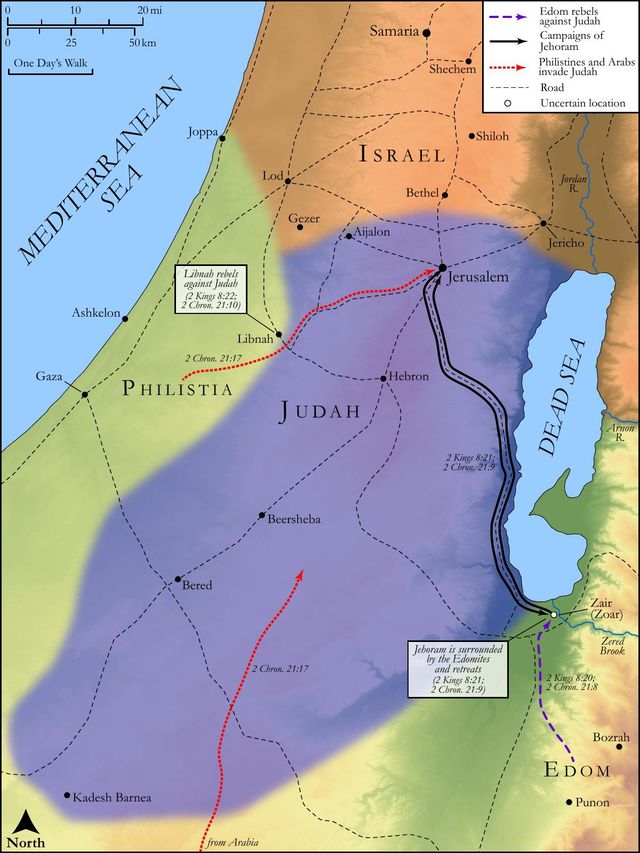
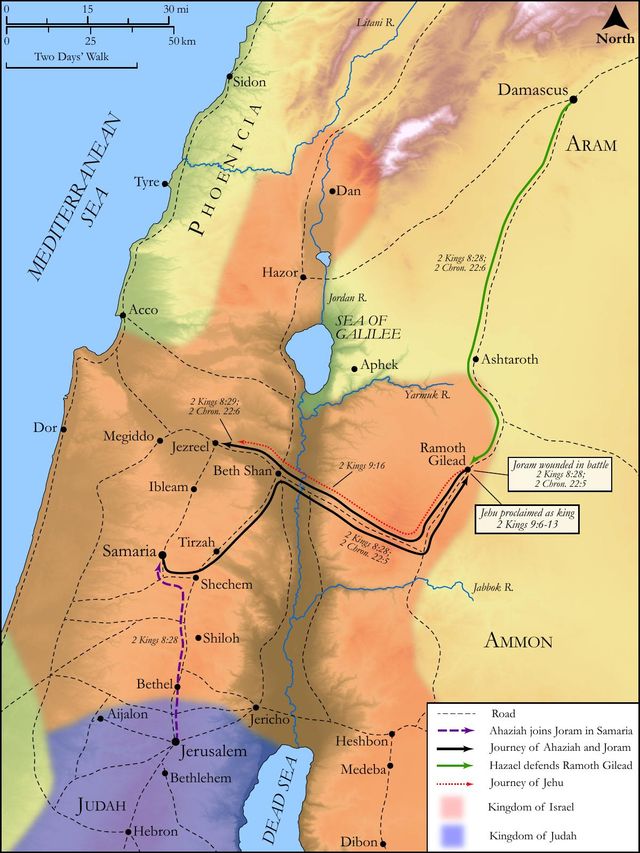
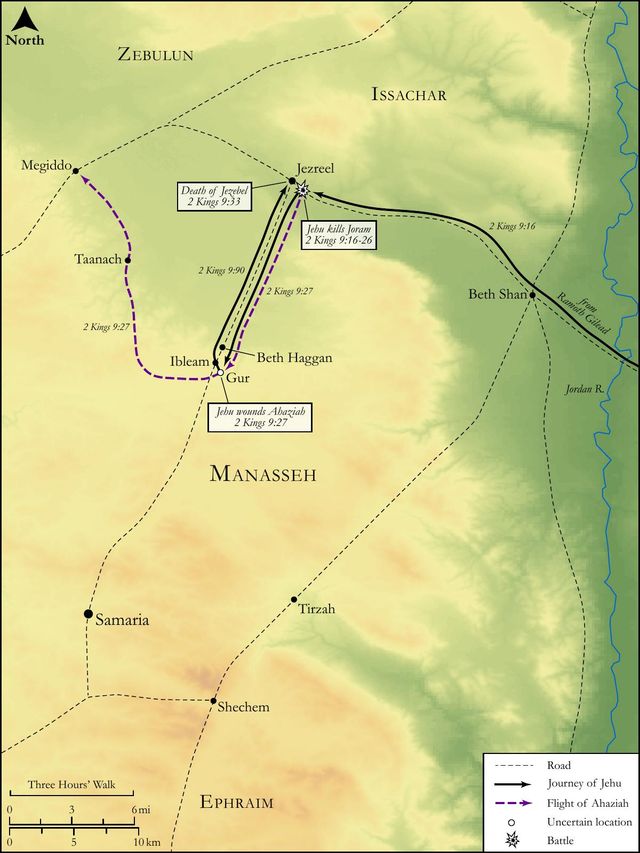
See on the biblical-era maps
Study this verse
Public-domain commentary
Matthew Henry
From his Commentary on the Whole Bible. Henry comments on passages, not single verses — this entry covers 2 Kings 8:1–6. His three-level outline is real structure in the source text, so it is rendered as structure.
Here we have,
I.The wickedness of Israel punished with a long famine, one of God's sore judgments often threatened in the law.
Canaan, that fruitful land, was turned into barrenness, for the iniquity of those that dwelt therein. The famine in Samaria was soon relieved by the raising of that siege, but neither that judgment nor that mercy had a due influence upon them, and therefore the Lord called for another famine; for when he judgeth he will overcome. If less judgments do not prevail to bring men to repentance, he will send greater and longer; they are at his beck, and will come when he calls for them. He does, by his ministers, call for reformation and obedience, and, if those calls be not regarded, we may expect he will call for some plague or other, for he will be heard. This famine continued seven years, as long again as that in Elijah's time; for if men will walk contrary to him, he will heat the furnace yet hotter.
II.The kindness of the good Shunammite to the prophet rewarded by the care that was taken of her in that famine; she was not indeed fed by miracle, as the widow of Sarepta was, but,
1.She had notice given her of this famine before it came, that she might provide accordingly, and was directed to remove to some other country; any where but in Israel she would find plenty. It was a great advantage to Egypt in Joseph's time that they had notice of the famine before it came, so it was to this Shunammite; others would be forced to remove at last, after they had long borne the grievances of the famine, and had wasted their substance, and could not settle elsewhere upon such good terms as she might that went early, before the crowd, and took her stock with her unbroken. It is our happiness to foresee an evil, and our wisdom, when we foresee an evil, and our wisdom, when we foresee it, to hide ourselves.
2.Providence gave her a comfortable settlement in the land of the Philistines, who, though subdued by David, yet were not wholly rooted out. It seems the famine was peculiar to the land of Israel, and other countries that joined close to them had plenty at the same time, which plainly showed the immediate hand of God in it (as in the plagues of Egypt, when they distinguished between the Israelites and the Egyptians) and that the sins of Israel, against whom this judgment was directly levelled, were more provoking to God than the sins of their neighbours, because of their profession of relation to God. You only have I known, therefore will I punish you, Amo 3:2. Other countries had rain when they had none, were free from locusts and caterpillars when they were eaten up with them; for some think this was the famine spoken of, Joe 1:3, Joe 1:4. It is strange that when there was plenty in the neighbouring countries there were not those that made it their business to import corn into the land of Israel, which might have prevented the inhabitants from removing; but, as they were befooled with their idolatries, so they were infatuated even in the matters of their civil interest.
III.Her petition to the king at her return, favoured by the seasonableness of her application to him.
1.When the famine was over she returned out of the land of the Philistines; that was no proper place for an Israelite to dwell any longer than there was a necessity for so doing, for there she could not keep her new moons and her sabbaths as she used to do in her own country, among the schools of the prophets, Kg2 4:23.
2.At her return she found herself kept out of the possession of her own estate, it being either confiscated to the exchequer, seized by the lord, or usurped in her absence by some of the neighbours; or perhaps the person she had entrusted with the management of it proved false, and would neither resign it to her nor come to an account with her for the profits: so hard is it to find a person that one can put a confidence in in a time of trouble, Pro 25:19; Mic 7:5.
3.She made her application to the king himself for redress; for, it seems (be it observed to his praise), he was easy of access, and did himself take cognizance of the complaint of his injured subjects. Time was when she dwelt so securely among her own people that she had no occasion to be spoken for to the king, or to the captain of the host (Kg2 4:13); but now her own familiar friends, in whom she trusted, proved so unjust and unkind that she was glad to appeal to the king against them. Such uncertainty there is in the creature that that may fail us which we most depend upon and that befriend us which we think we shall never need.
4.She found the king talking with Gehazi about Elisha's miracles, Kg2 8:4. It was his shame that he needed now to be informed concerning them, when he might have acquainted himself with them as they were done from Elisha himself, if he had not been wiling to shut his eyes against the convincing evidence of his mission; yet it was his praise that he was now better disposed, and would rather talk with a leper that was capable of giving a good account of them than continue ignorant of them. The law did not forbid all conversation with lepers, but only dwelling with them. There being then no priests in Israel, perhaps the king, or some one appointed by him, had the inspection of lepers, and passed the judgment upon them, which might bring him acquainted with Behazi.
5.This happy coincidence befriended both Behazi's narrative and her petition. Providence is to be acknowledged in ordering the circumstances of events, for sometimes those that are minute in themselves prove of great consequence, as this did, for,
(1.)It made the king ready to believe Gehazi's narrative when it was thus confirmed by the persons most nearly concerned: "This is the woman, and this her son; let them speak for themselves," Kg2 8:5. Thus did God even force him to believe what he might have had some colour to question if he had only had Gehazi's word for it, because he was branded for a liar, witness his leprosy.
(2.)It made him ready to grant her request; for who would not be ready to favour one whom heaven had thus favoured, and to support a life which was given once and again by miracle? In consideration of this the king gave orders that her land should be restored to her and all the profits that were made of it in her absence. If it was to himself that the land and profits had escheated, it was generous and kind to make so full a restitution; he would not (as Pharaoh did in Joseph's time) enrich the crown by the calamities of his subjects. If it was by some other person that her property was invaded, it was an act of justice in the king, and part of the duty of his place, to give her redress, Psa 82:3, Psa 82:4; Pro 31:9. It is not enough for those in authority that they do no wrong themselves, but they must support the right of those that are wronged.
Historical interpretation
Historical reception
1 surviving comment on this verse from the historical church.
“Now Elisha had said to the woman whose son he had restored to life, ‘Get up and go with your household.’ ” This is the Shunammite woman who had received Elisha in her home. And [the prophet] had taken care of her son too, who had died, by reviving him. Elisha predicted to her that a seven-year famine would occur and invited her to find a new home by emigrating. He chose for her Palestine, a close and fertile region, whose inhabitants were rich thanks to their maritime commerce. For the land of the Philistines is entirely situated along the coast, and it had, at that time, some renowned harbors which were full of countless vessels, as is testified by the Scripture in many passages. That is why the patriarchs Abraham and Isaac had looked there for their refuge.From the allegorical point of view, Palestine, which received the righteous who were in exile and symbolically far from the Lord, was a figure of the world. And the people of Palestine detested the people of God and ill-treated the children of Israel who feared God. Later they were defeated by David and gave up their weapons of war, but they took them up again now and then. The world hates the saints and constantly persecutes them. And even after our Lord has defeated it and its prince [the devil] has been thrown out, these two never cease from fighting against his servants, grabbing and destroying the idle and the ignorant.
Continue studying 2 Kings 8:3 across the web’s major study libraries — every link below opens this exact verse, chapter, or book on the destination site.
Read & Compare
 BibleGatewayThis verse in more than 200 translations and 70 languages.
 Bible.comThe YouVersion reader — hundreds of translations, reading plans, and highlights.
 ESV.orgCrossway's official English Standard Version reader.
 NET BibleThe NET translation with 60,000+ translators' notes on every rendering decision.
 STEP BibleTyndale House's free study tool — original text, vocabulary, and scholarly resources.
 BibliaLogos Bible Software's free web reader.
 USCCBThe New American Bible (Revised Edition) with the U.S. bishops' study notes.
Commentaries
 BibleHub CommentariesDozens of classic commentaries on this verse, gathered on one page.
 StudyLightMore than 100 commentary sets — the largest collection on the web.
 BibleRefPlain-English commentary on what this verse means, verse by verse.
 Enduring WordDavid Guzik's free commentary on this chapter, widely used by Bible teachers.
 Bible Study ToolsVerse commentary alongside Greek and Hebrew study aids.
Original Language & Research
- BibleHub InterlinearThe verse word by word — original language, transliteration, and English.
- BibleHub LexiconEvery word's original-language definition and Strong's entry.
 Blue Letter BibleDeep-study tools — Strong's numbers, concordance, and word studies.
 SefariaThe Hebrew text with Rashi and centuries of Jewish commentary.
Sermons, Hymns & Audio


TrulyRandomVerse is not affiliated with these sites and doesn’t control their content. They’re linked because they’re genuinely useful.
Summary
After a seven-year famine, the Shunammite woman, a faithful recipient of Elisha's miraculous interventions, returns to Israel to discover her property likely confiscated or occupied. This verse meticulously details her immediate and decisive action to appeal directly to the reigning king for the restoration of her house and land, highlighting her persistence and the providential timing of her return, which sets the stage for a remarkable act of divine justice and restoration orchestrated by God.
Context
ShowHideLiterary Context
This verse serves as the narrative culmination of a significant subplot within the Elisha cycle, specifically picking up from 2 Kings 8:1-2. Elisha had previously forewarned the Shunammite woman of an impending seven-year famine, advising her to seek refuge elsewhere. Her obedience led her to sojourn in the land of the Philistines. The reader is already intimately familiar with this prominent woman from 2 Kings 4, where her devout hospitality to Elisha was miraculously rewarded with the birth of a son, and later, his resurrection from death. Her return "at the seven years' end" directly fulfills Elisha's prophecy regarding the famine's duration and sets the stage for God's continued faithfulness to her, demonstrating a consistent divine care for those who honor His prophets. The narrative seamlessly transitions from her period of exile to her active pursuit of justice, linking her past experiences of divine intervention with her present need for restoration.
Historical & Cultural Context
Israel and the nations round about were highly susceptible to famine, often caused by prolonged drought, locust infestations, or the disruptions of war, making a seven-year famine an utterly catastrophic event. Such prolonged periods of scarcity could lead to widespread displacement, property abandonment, and subsequent confiscation by the state or occupation by opportunistic individuals. Property rights, particularly land inheritance, were foundational to Israelite society, deeply rooted in Mosaic Law (e.g., Leviticus 25:23-28). The king served as the ultimate arbiter of justice in such matters, and appealing to him directly was a recognized, though often desperate, legal recourse for those seeking redress for grievances, especially concerning property. The "land of the Philistines" (likely the fertile coastal plain) was a viable alternative for refuge, possibly less affected by the specific famine impacting Israel's highlands, offering a temporary haven for the Shunammite woman and her household.
Key Themes
ShowHideThe narrative of the Shunammite woman in 2 Kings 8:3 powerfully illustrates several core themes. Firstly, Divine Providence and Faithfulness are profoundly evident in God's preservation of the woman and her family through a devastating famine in a foreign land, fulfilling Elisha's warning and ensuring her safe return. This underscores God's active involvement in the lives of His people, even in times of severe trial, a theme beautifully echoed in Psalm 37:25. Secondly, Restoration and Justice become central as the woman proactively seeks to reclaim her rightful property. Her "crying unto the king" is an act of faith in the possibility of justice, reflecting God's ultimate desire for righteousness and the vindication of the wronged, a principle seen throughout the prophetic literature (e.g., Isaiah 1:17). Finally, the Enduring Impact of Elisha's Ministry is highlighted. Her story is a testament to the long-term blessings and far-reaching influence of God's servants, demonstrating how divine interventions, initiated through Elisha, continue to unfold in her life, leading to remarkable provision and the restoration of her inheritance, showcasing the lasting legacy of prophetic obedience.
Exposition and Analysis
ShowHideKey Word Analysis
ShowHideThe phrase "at the seven years' end" uses the Hebrew word qâtseh (H7097), which signifies an extremity, a border, or a definite conclusion. Its use here emphasizes the precise fulfillment of Elisha's prophecy regarding the famine's exact duration. This is not a vague approximation but a divinely appointed completion, underscoring God's sovereign control over time and natural events, and the reliability of His prophetic word, marking a clear boundary to a period of hardship.
The verb shûwb (H7725) means "to turn back," "to return," or "to restore." In this context, it primarily signifies her physical journey back to her homeland after a period of exile. However, the semantic range of shûwb also subtly anticipates the theme of restoration that follows, as her return is not merely geographical but sets the stage for the turning back of her circumstances from loss to recovery, hinting at a reversal of fortune.
The verb tsâʻaq (H6817) means "to shriek," "to cry out," or "to appeal." It often carries a connotation of urgency, distress, or a plea for justice, particularly in a legal or judicial context. This was not a casual request but a formal, earnest, and perhaps desperate petition to the highest authority in the land, reflecting the gravity of her situation and her determination to reclaim what was rightfully hers. It implies a public, vocal appeal, emphasizing her vulnerability and her reliance on the king's intervention for redress.
Verse Breakdown
ShowHide"And it came to pass at the seven years' end"
This opening clause immediately establishes the precise fulfillment of Elisha's prophecy from 2 Kings 8:1. It highlights divine timing and the absolute reliability of God's word spoken through His prophet. The famine, a period of immense hardship and displacement, has run its full, divinely appointed course, signaling a new season and the opportunity for the woman's return and the subsequent restoration of her life and property.
"that the woman returned out of the land of the Philistines"
This phrase confirms her obedience to Elisha's instruction to sojourn abroad during the famine. Her survival and safe return from a foreign land underscore God's providential care and protection over her and her family during a period of national crisis. It marks the definitive end of her displacement and the beginning of her re-engagement with her homeland and its attendant challenges, setting the stage for the next phase of God's work in her life.
"and she went forth to cry unto the king for her house and for her land"
This final clause reveals her proactive and determined pursuit of justice. Upon her return, she discovers her property confiscated or occupied, necessitating a direct and urgent appeal to the highest legal authority in the kingdom. Her specific plea for "her house and for her land" emphasizes the foundational importance of inherited property in ancient Israelite society and her rightful claim to it. Her "crying" signifies an urgent, formal, and public petition, demonstrating her faith and resolve in seeking the restoration of what was lost, an act of courageous defense of her rights.
Literary Devices
ShowHideThe narrative in 2 Kings 8:3 skillfully employs several literary devices to enhance its impact and meaning. Narrative Arc is prominently evident as the verse marks a crucial turning point in the Shunammite woman's overarching story, moving from a period of exile and loss to the active pursuit of restoration. It provides a clear resolution to the famine narrative initiated in 2 Kings 8:1-2, shifting the focus to her new challenge. Foreshadowing is present in the precise mention of "the seven years' end," which subtly hints at the restoration to come, as the completion of the famine period naturally leads to the possibility of reclaiming what was lost, implying that a new season of divine intervention is at hand. The act of "crying unto the king" can be seen as Symbolism for seeking divine justice, as the earthly king represents the highest human authority, mirroring the ultimate appeal to God for righteousness and vindication. There is also a subtle Irony in that the woman, who had previously experienced miraculous provision and life through Elisha, now faces a new challenge of dispossession, only to find that God's hand is still at work to restore her through an unexpected chain of events involving the king's servant, Gehazi, Elisha's former attendant.
Theological and Thematic Connections
ShowHideThe Shunammite woman's story in 2 Kings 8:3 is a profound testament to God's enduring faithfulness and His unwavering commitment to justice for His people. Despite a period of severe hardship and displacement, God orchestrates circumstances for her restoration, demonstrating that even in times of apparent loss, His providential care is actively at work behind the scenes. Her courageous appeal to the king underscores the biblical principle that justice should be pursued and that God often uses human means, including earthly authorities, to bring about His righteous purposes. This narrative offers deep comfort and encouragement, assuring believers that God remembers the faithful and actively intervenes to restore what has been lost, whether due to natural calamity, human injustice, or the passage of time. It speaks to a divine economy where faithfulness is honored and justice ultimately prevails.
Reflection and Application
ShowHideThe Shunammite woman's journey from exile to the king's court offers powerful and timeless lessons for contemporary believers. Her story reminds us that life's trials, even those of long duration like a seven-year famine, have a divinely appointed "end." During such seasons, our primary call is to trust implicitly in God's timing and His sovereign plan, even when circumstances compel us to leave our comfort zones or endure significant hardship. Her proactive step to "cry unto the king" is a profound example of faithful persistence; she didn't passively wait for a miracle but actively pursued the restoration of what was rightfully hers. This encourages us to be diligent in seeking justice, advocating for what is right, and exercising our faith through decisive action, whether in fervent prayer, appropriate legal recourse, or compassionate community engagement. Furthermore, her previous acts of hospitality and faithfulness to Elisha, though seemingly unrelated to her current plight, are ultimately instrumental in her remarkable restoration, reminding us that God never forgets our obedience and service. Our past faithfulness can indeed position us for future blessings and unexpected divine interventions, demonstrating God's long memory and intricate care for His own.
Questions for Reflection
ShowHideFAQ
ShowHideWho was the Shunammite woman, and why is she important in the biblical narrative?
ShowHideThe Shunammite woman was a prominent and wealthy woman from Shunem, a town in the Jezreel Valley. She is important primarily for her devout hospitality towards the prophet Elisha, for whom she built a room. In return for her kindness, and despite her advanced age and her husband's, Elisha miraculously prophesied that she would bear a son. Later, when this beloved son died, Elisha miraculously raised him from the dead (2 Kings 4:8-37). Her story highlights profound themes of faith, divine provision, the power of God operating through His prophets, and God's faithfulness to those who honor Him.
Why did the Shunammite woman go to the "land of the Philistines," and what was the significance of her return?
ShowHideThe Shunammite woman went to the land of the Philistines because the prophet Elisha had warned her of an impending seven-year famine that would devastate Israel (2 Kings 8:1-2). Her departure was an act of obedience and faith in Elisha's prophetic word, demonstrating her pragmatism and trust in divine guidance. Her return "at the seven years' end" signifies the precise fulfillment of Elisha's prophecy and marks the end of her period of exile and hardship, setting the stage for the miraculous restoration of her property, further underscoring God's unwavering faithfulness to her and the reliability of His prophetic word.
What does "she went forth to cry unto the king" imply about her situation and the legal system of the time?
ShowHideThe phrase "to cry unto the king" (Hebrew: tsâʻaq) implies a formal, urgent, and often desperate appeal for justice. It suggests that her property (house and land) had been confiscated, occupied, or otherwise lost during her seven-year absence, likely due to the famine, state policy, or opportunistic squatters. In ancient Israel, the king served as the supreme judicial authority, and an appeal to him was a final recourse for those seeking redress, particularly for violations of fundamental property rights or severe grievances. Her action demonstrates her determination, her belief that justice was possible, and her courage in seeking intervention from the highest earthly authority, even in a seemingly insurmountable situation.
Christ-Centered Fulfillment
ShowHideThe Shunammite woman's journey from displacement and loss to the miraculous restoration of her inheritance beautifully prefigures the ultimate restoration found in Jesus Christ. Humanity, alienated from God by sin, has lost its rightful inheritance and place, much like the Shunammite woman lost her land. Yet, Christ, our ultimate Prophet and King, forewarned us of the spiritual famine of sin and then, through His sacrificial death and glorious resurrection, provided the perfect means for our return and restoration to God. He is the great Advocate who intercedes for us before the heavenly King (Hebrews 7:25), not for earthly property, but for our eternal inheritance and reconciliation with God. Just as the Shunammite woman's past faithfulness positioned her for divine intervention, our faith in Christ's finished work positions us to receive abundant life (John 10:10) and the glorious promise that "all things work together for good to those who love God" (Romans 8:28). He is the one who "makes all things new" (Revelation 21:5), ultimately restoring us to a new heaven and new earth where there will be no more tears, sorrow, or loss, fulfilling the deepest longings for justice and complete restoration that the Shunammite woman's story only hints at.