


2 Chronicles 28:7
Bible text: King James Version (1769 Blayney text) · Public domain
Bible text: King James Version with Strong's numbers · Public domain
Bible text: Berean Standard Bible · Public domain
Bible text: American Standard Version (1901) · Public domain
Bible text: World English Bible, Messianic edition · Public domain
Bible text: Geneva Bible (1599) · Public domain
Bible text: Young's Literal Translation · Public domain
- וַיַּהֲרֹגvai·ya·ha·Rogand he killedH2026Conj-w ¦ V-Qal-ConsecImperf-3msVerb Qal Consecutive Imperfect 3rd Singular Masculineוַandיַּהֲרֹגhe killed
- זִכְרִיzikh·RiZikriH2147N-proper-mNoun Proper Masculine
- גִּבּוֹרgi·Bor<the> warrior ofH1368N-mscNoun Singular Masculine Construct
- אֶפְרַיִם'ef·Ra·yimEphraimH669N-proper-mNoun Proper Masculine
- אֶת'et<obj.>H853DirObjMParticle Object Indicator
- מַעֲשֵׂיָהוּma·'a·se·Ya·huMaaseiahH4641N-proper-mNoun Proper Masculine
- בֶּןben[the] son ofH1121N-mscNoun Singular Masculine Construct
- הַמֶּלֶךְha·Me·lekhthe kingH4428Art ¦ N-msNoun Singular Masculine Absoluteהַtheמֶּלֶךְking
- וְאֶתve·'Etand <obj.>H853Conj-w ¦ DirObjMParticle Object Indicatorוְandאֶת<obj.>
- עַזְרִיקָם'az·ri·KamAzrikamH5840N-proper-mNoun Proper Masculine
- נְגִידne·Gid[the] officer ofH5057N-mscNoun Singular Masculine Construct
- הַבָּיִתha·Ba·yitthe houseH1004Art ¦ N-msNoun Singular Masculine Absoluteהַtheבָּיִתhouse
- וְאֶתve·'Etand <obj.>H853Conj-w ¦ DirObjMParticle Object Indicatorוְandאֶת<obj.>
- אֶלְקָנָה'el·ka·NahElkanahH511N-proper-mNoun Proper Masculine
- מִשְׁנֵהmish·Neh[the] second ofH4932N-mscNoun Singular Masculine Construct
- הַמֶּלֶךְha·Me·lekhthe kingH4428Art ¦ N-msNoun Singular Masculine Absoluteהַtheמֶּלֶךְking
English is a literal word-by-word gloss of the Hebrew, not the KJV's wording. Why?
This is the original text the KJV's translators worked from — each Hebrew word with its own literal English meaning in this verse, prepared by scholars at Tyndale House, Cambridge. The KJV translates whole sentences, not word by word, so its wording differs: one Hebrew word can become several English words, and the KJV may choose “the LORD” where the gloss reads “Yahweh”. Both are faithful — they answer different questions. For the KJV's own rendering, switch to the KJV text.
Details
See on the biblical-era maps
Study this verse
Public-domain commentary
Matthew Henry
From his Commentary on the Whole Bible. Henry comments on passages, not single verses — this entry covers 2 Chronicles 28:6–15. His four-level outline is real structure in the source text, so it is rendered as structure.
We have here,
I.Treacherous Judah under the rebukes of God's providence, and they are very severe.
Never was such bloody work made among them since they were a kingdom, and by Israelites too. Ahaz walked in the ways of the kings of Israel, and the king of Israel was the instrument God made use of for his punishment. It is just with God to make those our plagues whom we make our patterns or make ourselves partners with in sin. A war broke out between Judah and Israel, in which Judah was worsted. For,
1.There was a great slaughter of men in the field of battle. Vast numbers (120,000 men, and valiant men too at other times) were slain (Ch2 28:6) and some of the first rank, the king's son for one. He had sacrificed some of this sons to Moloch; justly therefore is this sacrificed to the divine vengeance. Here is another that was next the king, his friend, the prime-minister of state, or perhaps next him in the battle, so that the king himself had a narrow escape, Ch2 28:7. The kingdom of Israel was not strong at this time, and yet strong enough to bring this great destruction upon Judah. But certainly so many men, great men, stout men, could not have been cut off in one day if they had not been strangely dispirited both by the consciousness of their own guilt and by the righteous hand of God upon them. Even valiant men were numbered as sheep for the slaughter, and became an easy prey to the enemy because they had forsaken the Lord God of their fathers, and he had therefore forsaken them.
2.There was a great captivity of women and children, Ch2 28:8. When the army in the field was routed, the cities, and towns, and country villages, were all easily stripped, the inhabitants taken for slaves, and their wealth for a prey.
II.Even victorious Israel under the rebuke of God's word for the bad principle they had gone upon in making war with Judah and the bad use they had made of their success, and the good effect of this rebuke. Here is,
1.The message which God sent them by a prophet, who went out to meet them, not to applaud their valour or congratulate them on their victory, though they returned laden with spoils and triumphs, but in God's name to tell them of their faults and warn them of the judgments of God.
(1.)He told them how they came by this victory of which they were so proud. It was not because God favoured them, or that they had merited it at his hand, but because he was wroth with Judah, and made them the rod of his indignation. Not for your righteousness, be it known to you, but for their wickedness (Deu 9:5) they are broken off; therefore be not you high-minded, but fear lest God also spare not you, Rom 11:20, Rom 11:21.
(2.)He charged them with the abuse of the power God had given them over their brethren. Those understand not what victory is who think it gives them authority to do what they will, and that the longest sword is the clearest claim to lives and estates (Jusque datum sceleri - might is right); no, as it is impolitic not to use a victory, so it is impious to abuse it. The conquerors are here reproved,
[1.]For the cruelty of the slaughter they had made in the field. They had indeed shed the blood of war in war; we suppose that to be lawful, but it turned into sin to them, because they did it from a bad principle of enmity to their brethren and after a bad manner, with a barbarous fury, a rage reaching up to heaven, that is, that cried to God for vengeance against such bloody men, that delighted in military execution. Those that serve God's justice, if they do it with rage and a spirit of revenge, make themselves obnoxious to it, and forfeit the honour of acting for him; for the wrath of man worketh not the righteousness of God.
[2.]For the imperious treatment they gave their prisoners. "You now purpose to keep them under, to use them or sell them as slaves, though they are your brethren and free-born Israelites." God takes notice of what men purpose, as well as of what they say and do.
(3.)He reminded them of their own sins, by which they also were obnoxious to the wrath of God: Are there not with you, even with you, sins against the Lord your God? Ch2 28:10. He appeals to their own consciences, and to the notorious evidence of the thing. "Though you are now made the instruments of correcting Judah for sin, yet do not think that you are therefore innocent yourselves; no, you also are guilty before God." This is intended as a check, [1.] To their triumph in their success. "You are sinners, and it ill becomes sinners to be proud; you have carried the day now, but be not secure, the wheel may ere long return upon yourselves, for, if judgment begin thus with those that have the house of God among them, what shall be the end of such as worship the calves?" [2.] To their severity towards their brethren. "You have now got them under, but you ought to show mercy to them, for you yourselves are undone if you do not find mercy with God. It ill becomes sinners to be cruel. You have transgressions enough to answer for already, and need not add this to the rest."
(4.)He commanded them to release the prisoners, and to send them home again carefully (Ch2 28:11); "for you having sinned, the fierce wrath of God is upon you, and there is no other way of escaping it than by showing mercy."
2.The resolution of the princes thereupon not to detain the prisoners. They stood up against those that came from the war, though flushed with victory, and told them plainly that they should not bring their captives into Samaria, Ch2 28:12, Ch2 28:13. They had sin enough already to answer for, and would have nothing done to add to their trespass. In this they discovered an obedient regard to the word of God by his prophet and a tender compassion towards their brethren, which was wrought in them by the tender mercy of God; for he regarded the affliction of this poor people, and hears their cry, and made them to be pitied of all those that carried them captive, Psa 106:44, Psa 106:46.
3.The compliance of the soldiers with the resolutions of the princes in this matter, and the dismission of the captives thereupon.
(1.)The armed men, though being armed they might be force have maintained their title to what they got by the sword, acquiesced, and left their captives and the spoil to the disposal of the princes (Ch2 28:14), and herein they showed more truly heroic bravery than they did in taking them. It is a great honour for any man to yield to the authority of reason and religion against his interest.
(2.)The princes very generously sent home the poor captives well accommodated, Ch2 28:15. Those that hope to find mercy with God must learn hence with what tenderness to carry themselves towards those that lie at their mercy. It is strange that these princes, who in this instance discovered such a deference to the word of God, and such an influence upon the people, had not so much grace as, in obedience to the calls of God by so many prophets, to root idolatry out of their kingdom, which, soon after this, was the ruin of it.
Continue studying 2 Chronicles 28:7 across the web’s major study libraries — every link below opens this exact verse, chapter, or book on the destination site.
Read & Compare
 BibleGatewayThis verse in more than 200 translations and 70 languages.
 Bible.comThe YouVersion reader — hundreds of translations, reading plans, and highlights.
 ESV.orgCrossway's official English Standard Version reader.
 NET BibleThe NET translation with 60,000+ translators' notes on every rendering decision.
 STEP BibleTyndale House's free study tool — original text, vocabulary, and scholarly resources.
 BibliaLogos Bible Software's free web reader.
 USCCBThe New American Bible (Revised Edition) with the U.S. bishops' study notes.
Commentaries
 BibleHub CommentariesDozens of classic commentaries on this verse, gathered on one page.
 StudyLightMore than 100 commentary sets — the largest collection on the web.
 BibleRefPlain-English commentary on what this verse means, verse by verse.
 Enduring WordDavid Guzik's free commentary on this chapter, widely used by Bible teachers.
 Bible Study ToolsVerse commentary alongside Greek and Hebrew study aids.
Original Language & Research
- BibleHub InterlinearThe verse word by word — original language, transliteration, and English.
- BibleHub LexiconEvery word's original-language definition and Strong's entry.
 Blue Letter BibleDeep-study tools — Strong's numbers, concordance, and word studies.
 SefariaThe Hebrew text with Rashi and centuries of Jewish commentary.
Sermons, Hymns & Audio


TrulyRandomVerse is not affiliated with these sites and doesn’t control their content. They’re linked because they’re genuinely useful.
Summary
Second Chronicles 28:7 records a profoundly devastating moment during the apostate reign of King Ahaz of Judah, detailing the high-profile casualties suffered at the hands of Zichri, a formidable warrior from the northern kingdom of Israel (Ephraim). This tragic event serves as a stark and painful testament to the severe consequences of Ahaz's profound unfaithfulness and the direct divine judgment that relentlessly pursued Judah for its spiritual rebellion, illustrating God's unwavering commitment to His covenant, even in discipline.
Context
ShowHideLiterary Context
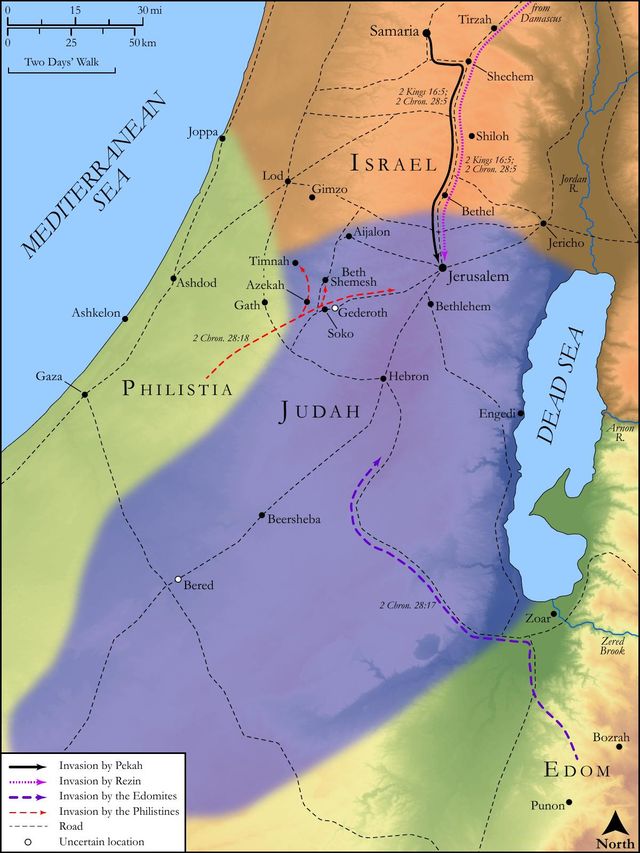
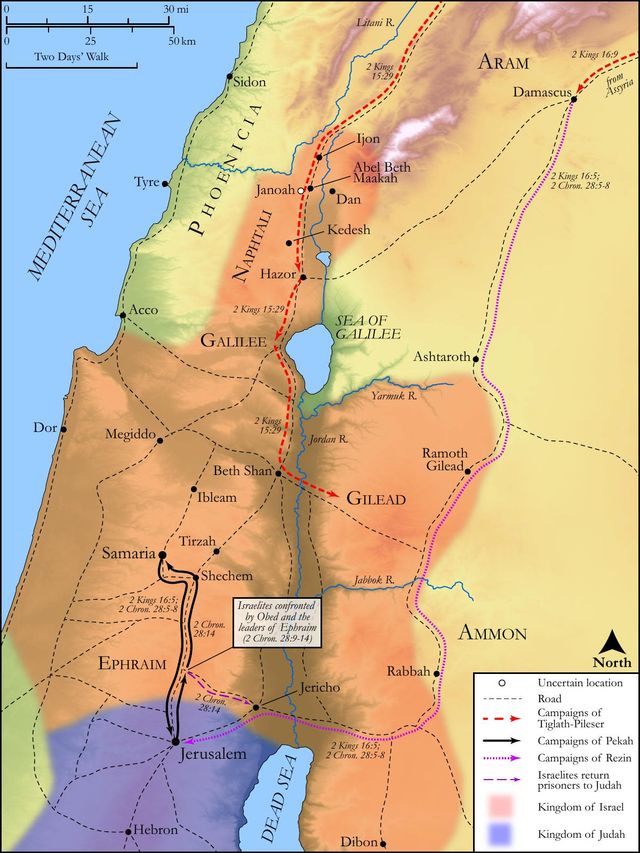
This verse is strategically placed within the somber narrative of King Ahaz's reign, which the Chronicler unequivocally portrays as one of the most wicked and spiritually destructive in Judah's history, paralleling the account in 2 Kings 16. The preceding verses (2 Chronicles 28:1-4) meticulously establish Ahaz's egregious idolatry, including the horrific act of sacrificing his own children to pagan deities and actively promoting widespread pagan worship throughout Judah. As a direct and immediate consequence of this spiritual rebellion, God allowed Judah to be severely afflicted by its neighbors, specifically by the kings of Syria and Israel (2 Chronicles 28:5-6). Verse 6 describes a massive and brutal slaughter, with 120,000 Judean soldiers killed in a single day, emphasizing the scale of the judgment. Verse 7 then narrows the focus, highlighting the most significant and humiliating casualties—those from the royal household and inner circle—thereby underscoring the depth of the defeat and the personal humiliation inflicted upon King Ahaz. The narrative immediately following (2 Chronicles 28:8-15) recounts the capture of a vast number of Judeans and the subsequent prophetic intervention of Oded, who rebukes the Israelite army for their excessive cruelty and commands them to release the captives, remarkably underscoring God's compassion and justice even amidst severe judgment.
Historical & Cultural Context
The events of 2 Chronicles 28:7 unfold during a highly tumultuous period in the history of the divided monarchy, specifically around 735-732 BC. King Ahaz of Judah ruled from Jerusalem, while Pekah reigned in Samaria over the northern kingdom of Israel. The northern kingdom was frequently referred to as Ephraim due to its dominant and most populous tribe. This era was dominated by the burgeoning power of the Assyrian Empire, which exerted immense pressure on the smaller kingdoms of the Levant, forcing them to choose sides or face subjugation. Ahaz, facing a formidable coalition of Syria and Israel (known as the Syro-Ephraimite War), notoriously refused to trust in the Lord for deliverance, instead stripping the temple of its treasures to bribe Assyria for military intervention (2 Chronicles 28:20-21). Culturally, the killing of a king's son and high-ranking officials was far more than a mere military victory; it was a profound act of humiliation, destabilization, and symbolic dismantling of the enemy's leadership, succession, and administrative capacity. The mention of "mighty man" (Hebrew: gibbôwr) signifies a warrior of exceptional renown and prowess, emphasizing the formidable nature of the attacking forces and, by extension, the divine power behind their success as instruments of God's righteous judgment against Judah's apostasy.
Key Themes
ShowHideThe overarching theme permeating this chapter and powerfully highlighted in this verse is Divine Judgment for Apostasy. Ahaz's flagrant idolatry, including the abhorrent practice of child sacrifice, and his profound spiritual disobedience directly provoke God's wrath, leading to severe national affliction. The specific mention of high-ranking casualties underscores the Severity of God's Chastisement, demonstrating unequivocally that no one, regardless of their position or perceived security, is exempt from the consequences of national and individual sin. This aligns perfectly with the covenant curses outlined in Deuteronomy 28, where disobedience brings military defeat, national humiliation, and the loss of leadership. Another critical theme is the Consequences of Sin, illustrating with painful clarity that individual and national unfaithfulness carries dire repercussions, leading to military defeat, significant loss of life, and profound humiliation. The narrative also subtly, yet powerfully, introduces the theme of God's Sovereignty, as even the seemingly independent actions of foreign armies are ultimately orchestrated or permitted by God to achieve His righteous purposes, in this case, to discipline and call His wayward people to repentance, even if Ahaz himself refused to heed the call (2 Chronicles 28:22-23).
Exposition and Analysis
ShowHideKey Word Analysis
ShowHideWhile not a prominent figure elsewhere in biblical history, Zichri is specifically identified as "a mighty man of Ephraim." His name, meaning "memorable" or "my remembrance," ironically highlights his role in a devastating act that would indeed be remembered as a significant blow to Judah. The Chronicler's decision to name him, rather than offering a general reference to "the Ephraimite army," personalizes the devastating blow and emphasizes the individual instrument of God's judgment. The title "mighty man" (H1368, gibbôwr), derived from a root meaning "powerful," denotes a valiant, powerful, or accomplished warrior, emphasizing his prowess and effectiveness in executing the severe judgment against Judah's leadership.
This term (H1121, bên), derived from a root meaning "to build," refers to a son, often implying a builder of the family name or lineage. In the context of "Maaseiah the king's son," it denotes a royal prince, a direct heir or descendant of the monarch. The death of a king's son, especially in battle or through execution, was a direct and deeply humiliating blow to the royal family and the succession, signifying a profound disruption to the continuity and stability of the Davidic dynasty. It represented a direct assault on the future of the kingdom.
This title, combining "governor" (nâgîyd, a commander or chief ruler) with "house" (bayith, referring to the royal household or palace), refers to the chief steward or palace administrator. This was a position of immense authority, often second only to the king himself. The "governor of the house" was responsible for managing the royal household, including its finances, personnel, and daily operations. The death of Azrikam, who held this crucial role, signifies a profound disruption and dismantling of the kingdom's administrative and economic stability, striking at the very heart of Judah's governmental structure and operational capacity.
This phrase (H4932, mishneh, meaning "a second" or "duplicate," combined with H4428, melek, "king") describes Elkanah's position, indicating a chief advisor, a close confidant, or the king's second-in-command, possibly in military or political affairs. This role often involved direct access to the monarch and significant influence on royal decisions and policy. Elkanah's demise underscores the completeness of the defeat, as key pillars of the king's personal and strategic support system were utterly destroyed, leaving Ahaz isolated, vulnerable, and bereft of his most trusted counsel.
Verse Breakdown
ShowHide"And Zichri, a mighty man of Ephraim, slew Maaseiah the king's son"
This clause immediately identifies the specific agent of the slaughter, Zichri, a formidable and renowned warrior from the northern kingdom of Israel, often referred to as Ephraim. The first and most shocking casualty named is Maaseiah, "the king's son." This is a deeply personal, symbolic, and humiliating blow to King Ahaz and the Davidic dynasty. The death of a royal prince signifies not only the extent of Judah's military defeat but also a direct assault on the future, continuity, and legitimacy of the royal line, a profound symbol of God's severe judgment on Ahaz's unfaithfulness.
"and Azrikam the governor of the house"
The second named casualty is Azrikam, who held the highly influential and critical position of "governor of the house." As the chief steward, Azrikam was responsible for the entire royal administration, palace affairs, and often the national treasury, effectively serving as the king's right-hand man in domestic matters. His death represents the catastrophic collapse of Judah's governmental and administrative infrastructure, indicating that the defeat was not merely a battle lost but a pervasive breakdown of the kingdom's leadership and operational capacity, leaving the royal household in disarray.
"and Elkanah [that was] next to the king"
The final named victim, Elkanah, held a position of intimate proximity and significant influence, being "next to the king." This title suggests a chief advisor, a close confidant, or perhaps a high-ranking military commander second only to the monarch. His death further emphasizes the severity and completeness of the defeat, as it targeted the highest echelons of Judah's political, strategic, and personal leadership, leaving King Ahaz isolated, his counsel crippled, and his kingdom utterly vulnerable and exposed.
Literary Devices
ShowHideThe passage employs several potent literary devices to convey the gravity and theological significance of the events. Emphasis is powerfully achieved through the specific naming of three distinct high-ranking individuals, rather than simply stating a general number of casualties. This particularization magnifies the impact of the defeat, making it deeply personal, poignant, and tragic for King Ahaz and the kingdom. The deliberate selection of a royal prince (representing the future and dynasty), the chief administrator (representing the state's operations), and a close advisor (representing the king's personal and strategic support) creates a powerful sense of Synecdoche or Metonymy. These individuals, as parts, stand for the whole: their deaths symbolize the complete dismantling of the royal household, the administrative structure, and the strategic leadership of Judah. There is also a strong element of Irony, as King Ahaz, who sought to secure his kingdom through idolatry and alliances with pagan foreign powers rather than trusting in the Lord, experiences a devastating blow from his own Israelite brethren, highlighting the utter futility and self-destructive nature of his unfaithful strategies. The severity of this specific blow also serves as a chilling Foreshadowing of Judah's eventual downfall and exile, illustrating the progressive and escalating nature of divine judgment when repentance is continually refused.
Theological and Thematic Connections
ShowHideThe tragic events of 2 Chronicles 28:7 powerfully underscore God's unwavering commitment to His covenant and the severe, inescapable consequences of its violation. King Ahaz's profound apostasy, marked by abhorrent idolatry and the horrific practice of child sacrifice, represented a direct and egregious assault on the sacred covenant relationship between God and Judah. In response, God, in His perfect justice and unwavering holiness, allowed Judah to be subjected to devastating judgment, using the northern kingdom of Israel as an instrument of His righteous wrath. The targeted killing of the king's son, the chief administrator, and the king's closest advisor was not random; it was a precise, strategic, and profoundly humiliating blow to the very heart of Judah's leadership, succession, and future, demonstrating with stark clarity that God's judgment reaches even the highest echelons of power and spares no one from the consequences of national sin. This event serves as a timeless theological principle: faithfulness to God brings blessing and protection, while unfaithfulness invites divine discipline and severe repercussions.
Reflection and Application
ShowHideThe account of 2 Chronicles 28:7, though rooted in the ancient history of Judah, offers profound and enduring lessons for contemporary believers and communities in every generation. It serves as a stark and sobering reminder that spiritual fidelity is not merely a private or individual matter but has far-reaching and often devastating consequences, impacting individuals, families, and even entire nations. King Ahaz's reign vividly illustrates the perilous and destructive path of compromising one's faith with worldly practices, pagan ideologies, or idolatry. His desperate pursuit of security through foreign alliances and abhorrent pagan worship, rather than through unwavering trust in the sovereign Lord, ultimately led to national humiliation, devastating loss of life, and the fracturing of his kingdom's leadership. For us today, this narrative challenges us to deeply examine where our ultimate trust and allegiance truly lie. Do we seek security, stability, and significance in financial prosperity, political power, human wisdom, cultural acceptance, or technological advancements, or do we place our unwavering confidence and hope in the sovereign God alone? The severe judgment meted out to Judah underscores that God takes sin, especially covenant unfaithfulness and idolatry, with utmost seriousness. It compels us to remain steadfast and uncompromising in our devotion to God, to cultivate a deep reverence for His commands, and to recognize that true well-being, lasting security, and genuine flourishing flow solely from obedience and faithful allegiance to Him.
Questions for Reflection
ShowHideFAQ
ShowHideWhy did God allow Israel (Ephraim) to defeat Judah so severely, given they were both His people?
ShowHideGod allowed Israel to defeat Judah as a direct and severe act of divine judgment upon King Ahaz and the kingdom of Judah for their extreme apostasy and unfaithfulness. While both Israel and Judah were part of God's covenant people, Judah, under Ahaz, had descended into unprecedented idolatry, including the horrific practice of child sacrifice (2 Chronicles 28:3). God, in His perfect sovereignty and justice, used the northern kingdom as an instrument of His righteous wrath to discipline His wayward people. This is a recurring theme throughout the Old Testament, where God raises up nations, even ungodly ones, to chastise His disobedient people, as seen when He uses Assyria as "the rod of my anger" against Israel in Isaiah 10:5-6. The severity of the defeat was intended to bring Judah to repentance and turn them back to God, though tragically, Ahaz remained unyielding in his rebellion (2 Chronicles 28:22).
What was the significance of killing the king's son, the governor, and Elkanah?
ShowHideThe specific mention of Maaseiah the king's son, Azrikam the governor of the house, and Elkanah who was next to the king, highlights the profound and pervasive nature of Judah's defeat, signifying a targeted and devastating blow to the very heart of the kingdom's leadership. These were not random casualties but represented the highest echelons of power, influence, and the royal lineage. Killing the king's son was a direct blow to the royal succession and a deep personal humiliation for Ahaz, symbolizing the vulnerability and potential end of the Davidic dynasty. The "governor of the house" was the chief administrator, effectively the second most powerful person in the kingdom, and his death meant the collapse of Judah's administrative and economic structure. "Next to the king" implied a chief advisor or close confidant, whose death further isolated Ahaz and crippled his strategic leadership. Their deaths underscored the totality and precision of God's judgment, dismantling the political, administrative, and familial foundations of the kingdom in response to Ahaz's utter rejection of God and His covenant.
Christ-Centered Fulfillment
ShowHideThe devastating judgment upon Judah in 2 Chronicles 28:7, brought about by King Ahaz's profound apostasy and the resulting death of the king's son and key officials, powerfully foreshadows the ultimate consequences of sin and the absolute necessity of a perfect, substitutionary sacrifice. The tragic vulnerability of Maaseiah, a member of the Davidic line, under the weight of divine wrath, dramatically illustrates the inherent brokenness and inability of human kings, their advisors, or any earthly power to secure true safety or eternal salvation. This profound human inadequacy points directly to Jesus Christ, the true Son of David and the eternal King, whose kingdom is not of this world and cannot be overthrown by sin, human enemies, or divine judgment (John 18:36). While the wages of sin are indeed death (Romans 6:23), Christ, the ultimate "mighty man" and victorious warrior (Revelation 19:11-16), willingly became the Lamb of God, taking upon Himself the full weight of divine judgment due to humanity's sin (John 1:29). His sacrificial death on the cross fulfilled the requirement that "without the shedding of blood there is no forgiveness of sins" (Hebrews 9:22), inaugurating a new covenant where forgiveness, true security, and eternal life are found not in human alliances, political positions, or royal lineage, but in Him alone. He is the ultimate "governor of the house," managing God's eternal household, the Church (Hebrews 3:6), and the one truly "next to the King" (God the Father), interceding on our behalf and securing eternal redemption for all who trust in Him (Colossians 1:13-14).