


2 Chronicles 12:13
Bible text: King James Version (1769 Blayney text) · Public domain
Bible text: King James Version with Strong's numbers · Public domain
Bible text: Berean Standard Bible · Public domain
Bible text: American Standard Version (1901) · Public domain
Bible text: World English Bible, Messianic edition · Public domain
Bible text: Geneva Bible (1599) · Public domain
Bible text: Young's Literal Translation · Public domain
- וַיִּתְחַזֵּקvai·yit·cha·Zekand he strengthened himselfH2388Conj-w ¦ V-Hithpael-ConsecImperf-3msVerb Hithpael Consecutive Imperfect 3rd Singular Masculineוַandיִּתְחַזֵּקhe strengthened himself
- הַמֶּלֶךְha·Me·lekhthe kingH4428Art ¦ N-msNoun Singular Masculine Absoluteהַtheמֶּלֶךְking
- רְחַבְעָםre·chav·'AmRehoboamH7346N-proper-mNoun Proper Masculine
- בִּירוּשָׁלִַםbi·ru·sha·Limin JerusalemH3389Prep-b ¦ N-properNoun Proper LocationבִּinירוּשָׁלִַםJerusalem
- וַיִּמְלֹךְvai·yim·Lokhand he reignedH4427Conj-w ¦ V-Qal-ConsecImperf-3msVerb Qal Consecutive Imperfect 3rd Singular Masculineוַandיִּמְלֹךְhe reigned
- כִּיkiforH3588PrtParticle Conditional
- בֶןven[was] a son ofH1121N-mscNoun Singular Masculine Construct
- אַרְבָּעִים'ar·ba·'ImfortyH705N-mpNoun Plural Masculine Absolute
- וְאַחַתve·'a·Chatand oneH259Conj-w ¦ N-fscNoun Singular Feminine Constructוְandאַחַתone
- שָׁנָהsha·Nahyear[s]H8141N-fsNoun Singular Feminine Absolute
- רְחַבְעָםre·chav·'AmRehoboamH7346N-proper-mNoun Proper Masculine
- בְּמָלְכוֹbe·ma·le·Khowhen he became kingH4427Prep-b ¦ V-Qal-Inf ¦ 3msVerb Qal Infinitive Constructבְּwhenמָלְכbecame kingוֹhe
- וּשֲׁבַעu·sha·Va'and seven-H7651Conj-w ¦ N-cscNoun Singular common gender Constructוּandשֲׁבַעseven-
- עֶשְׂרֵה'es·RehteenH6240N-csNoun Singular common gender Absolute
- שָׁנָהsha·Nahyear[s]H8141N-fsNoun Singular Feminine Absolute
- מָלַךְma·Lakhhe reignedH4427V-Qal-Perf-3msVerb Qal Perfect 3rd Singular Masculine
- בִּירוּשָׁלִַםbi·ru·sha·Limin JerusalemH3389Prep-b ¦ N-properNoun Proper LocationבִּinירוּשָׁלִַםJerusalem
- הָעִירHa·'irthe cityH5892Art ¦ N-fsNoun Singular Feminine Absoluteהָtheעִירcity
- אֲשֶׁר'a·SherwhereH834RelParticle Relative
- בָּחַרba·Charhe had chosenH977V-Qal-Perf-3msVerb Qal Perfect 3rd Singular Masculine
- יְהוָהYah·wehYahwehH3068N-properNoun Proper Title
- לָשׂוּםla·Sumto putH7760Prep-l ¦ V-Qal-InfVerb Qal Infinitive Constructלָtoשׂוּםput
- אֶת'et<obj.>H853DirObjMParticle Object Indicator
- שְׁמוֹshe·Mohis nameH8034N-msc ¦ 3msNoun Singular Masculine Constructשְׁמnameוֹhis
- שָׁםshamthereH8033AdvAdverb
- מִכֹּלmi·Kolfrom allH3605Prep-m ¦ N-mscNoun Singular Masculine Constructמִfromכֹּלall
- שִׁבְטֵיshiv·Tei[the] tribes ofH7626N-mpcNoun Plural Masculine Construct
- יִשְׂרָאֵלYis·ra·'ElIsraelH3478N-properNoun Proper Location
- וְשֵׁםve·Shemand [the] name ofH8034Conj-w ¦ N-mscNoun Singular Masculine Constructוְandשֵׁם[the] name of
- אִמּוֹ'i·Mohis motherH517N-fsc ¦ 3msNoun Singular Feminine Constructאִמּmotherוֹhis
- נַעֲמָהna·'a·Mah[was] NaamahH5279N-proper-fNoun Proper Feminine
- הָעַמֹּנִיתHa·'a·mo·Nitthe Ammonite [woman]H5984Art ¦ N-fsNoun Gentilic Singular Feminine AbsoluteהָtheעַמֹּנִיתAmmonite [woman]
English is a literal word-by-word gloss of the Hebrew, not the KJV's wording. Why?
This is the original text the KJV's translators worked from — each Hebrew word with its own literal English meaning in this verse, prepared by scholars at Tyndale House, Cambridge. The KJV translates whole sentences, not word by word, so its wording differs: one Hebrew word can become several English words, and the KJV may choose “the LORD” where the gloss reads “Yahweh”. Both are faithful — they answer different questions. For the KJV's own rendering, switch to the KJV text.
Details
See on the biblical-era map
Study this verse
Public-domain commentary
Matthew Henry
From his Commentary on the Whole Bible. Henry comments on passages, not single verses — this entry covers 2 Chronicles 12:13–16.
The story of Rehoboam's reign is here concluded, much as the story of the other reigns concludes. Two things especially are observable here: - 1. That he was at length pretty well fixed in his kingdom, Ch2 12:13. His fenced cities in Judah did not answer his expectation, so he now strengthened himself in Jerusalem, which he made it his business to fortify, and there he reigned seventeen years, in the city which the Lord had chosen to put his name there. This intimates his honour and privilege, that he had his royal seat in the holy city, which yet was but an aggravation of his impiety - near the temple, but far from God. Frequent skirmishes there were between his subjects and Jeroboam's, such as amounted to continual wars, (Ch2 12:15), but he held his own, and reigned, and, as it should seem, did not so grossly forsake the law of God as he had done (Ch2 12:1) in his fourth year. 2. That he was never rightly fixed in his religion, Ch2 12:14. He never quite cast off God; and yet in this he did evil, that he prepared not, he engaged not, his heart to seek the Lord. See what the fault is laid upon. (1.) He did not serve the Lord because he did not seek the Lord. He did not pray, as Solomon did, for wisdom and grace. If we prayed better, we should be every way better. Or he did not consult the word of God, did not seek to that as his oracle, nor take directions from it. (2.) He made nothing of his religion because he did not set his heart to it, never minded it with any closeness of application, and never any hearty disposition to it, nor ever came up to a steady resolution in it. What little goodness he had was transient and passed away like the morning cloud. He did evil because he was never determined for that which is good. Those are easily drawn by Satan to any evil who are wavering and inconstant in that which is good and are never persuaded to make religion their business.
Continue studying 2 Chronicles 12:13 across the web’s major study libraries — every link below opens this exact verse, chapter, or book on the destination site.
Read & Compare
 BibleGatewayThis verse in more than 200 translations and 70 languages.
 Bible.comThe YouVersion reader — hundreds of translations, reading plans, and highlights.
 ESV.orgCrossway's official English Standard Version reader.
 NET BibleThe NET translation with 60,000+ translators' notes on every rendering decision.
 STEP BibleTyndale House's free study tool — original text, vocabulary, and scholarly resources.
 BibliaLogos Bible Software's free web reader.
 USCCBThe New American Bible (Revised Edition) with the U.S. bishops' study notes.
Commentaries
 BibleHub CommentariesDozens of classic commentaries on this verse, gathered on one page.
 StudyLightMore than 100 commentary sets — the largest collection on the web.
 BibleRefPlain-English commentary on what this verse means, verse by verse.
 Enduring WordDavid Guzik's free commentary on this chapter, widely used by Bible teachers.
 Bible Study ToolsVerse commentary alongside Greek and Hebrew study aids.
Original Language & Research
- BibleHub InterlinearThe verse word by word — original language, transliteration, and English.
- BibleHub LexiconEvery word's original-language definition and Strong's entry.
 Blue Letter BibleDeep-study tools — Strong's numbers, concordance, and word studies.
 SefariaThe Hebrew text with Rashi and centuries of Jewish commentary.
Sermons, Hymns & Audio


TrulyRandomVerse is not affiliated with these sites and doesn’t control their content. They’re linked because they’re genuinely useful.
Summary
Second Chronicles 12:13 offers a succinct yet profound summation of King Rehoboam's reign, detailing his age at accession, the duration of his seventeen-year rule in Jerusalem, and a significant, often overlooked, mention of his mother, Naamah the Ammonitess. This verse functions as a concluding statement to the account of his kingship, subtly highlighting his efforts to stabilize the kingdom after a period of divine judgment and foreign invasion, while simultaneously hinting at the underlying spiritual compromises that characterized his leadership and the broader Davidic line.
Context
ShowHideLiterary Context
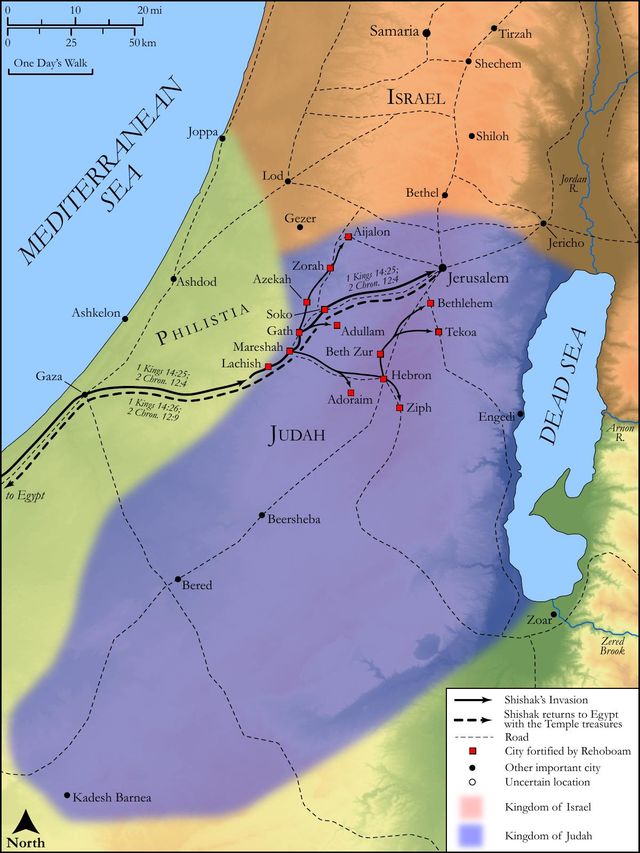
This verse serves as the concluding summary of Rehoboam's reign within 2 Chronicles, following a detailed account of his spiritual decline and its severe consequences. Immediately preceding it is the narrative of Pharaoh Shishak's invasion of Judah, which the chronicler explicitly presents as a direct divine judgment for Rehoboam and the people's unfaithfulness to the Lord, as stated in 2 Chronicles 12:1-2. Although Rehoboam and the princes humbled themselves, thereby averting complete destruction, they suffered significant losses, including the treasures of the Temple and the royal palace, which were taken as tribute by Shishak (2 Chronicles 12:9). The phrase "strengthened himself" in verse 13 suggests a period of recovery and consolidation of power after this humbling experience, allowing him to continue his reign over the southern kingdom of Judah, which had already been fractured due to his initial folly and the people's rejection of his harsh policies (1 Kings 12:16). This summary effectively closes the chapter on Rehoboam, setting the stage for the subsequent accounts of the kings of Judah.
Historical & Cultural Context
Rehoboam's reign unfolded during a pivotal and tumultuous period in Israelite history—the immediate aftermath of the united monarchy's division. Following the death of Solomon, the kingdom fractured into two distinct entities: Israel in the north and Judah in the south. Jerusalem, the capital of Judah, crucially retained its unique status as "the city which the LORD had chosen out of all the tribes of Israel, to put his name there," a profound theological and political cornerstone of the Davidic covenant and the site of the Temple. The explicit mention of Naamah as an Ammonitess is highly significant within this context. Ammonites were a people with whom Israel had a long and often hostile history, and they were explicitly forbidden from entering the assembly of the Lord, even to the tenth generation (Deuteronomy 23:3-6). Solomon's marriage to foreign women, including Naamah, was a direct violation of God's law, intended to prevent syncretism and apostasy, and it ultimately led to his own spiritual decline and the subsequent division of the kingdom (1 Kings 11:1-8). This detail about Rehoboam's mother underscores the deep-seated spiritual compromises present within the royal household, influencing the character and reign of the king from its very inception.
Key Themes
ShowHideThis verse powerfully contributes to several overarching themes within 2 Chronicles. Firstly, it highlights Rehoboam's mixed legacy and resilience. Despite his initial arrogance that led to the kingdom's division and the subsequent divine discipline through Shishak's invasion, he managed to stabilize his rule for seventeen years. This period, though undeniably marked by spiritual compromise, demonstrates a measure of human effort to regain control and maintain the kingdom's stability. Secondly, the verse profoundly reinforces the enduring significance of Jerusalem as "the city which the LORD had chosen out of all the tribes of Israel, to put his name there." This divine election underscores God's unwavering faithfulness to His covenant promises, even amidst the failings of His people and their kings. It emphasizes that Jerusalem's sacred status remained, despite the desecration of the Temple treasures and the spiritual decline of its inhabitants, serving as a constant reminder of God's presence and His ultimate redemptive purposes. Thirdly, the explicit mention of Naamah the Ammonitess draws critical attention to the theme of generational sin and the pervasive influence of foreign alliances and marriages. This detail subtly points to the deep-seated spiritual compromises within the Davidic line, tracing back to Solomon's apostasy, which undoubtedly influenced Rehoboam's character and the spiritual trajectory of his reign, setting a precedent for future kings. This theme is crucial for understanding the chronicler's emphasis on obedience and its consequences throughout the book.
Exposition and Analysis
ShowHideKey Word Analysis
ShowHideThis verb (H2388) carries a range of meanings, including to be strong, courageous, firm, or to seize/take hold. In this context, it denotes Rehoboam's active effort to consolidate his power and fortify his position in Jerusalem after the devastating invasion by Shishak. It suggests a political and military recovery, a human endeavor to regain stability and control, rather than necessarily indicating a spiritual strengthening or a renewed commitment to the Lord. It implies a pragmatic effort to rebuild and secure his kingdom, often contrasting with the spiritual weakness noted elsewhere in his reign.
This word (H977) signifies divine selection, election, or preference. Its use here emphasizes that Jerusalem's status as the place where the Lord put His name was not arbitrary but a deliberate act of God's sovereign will. This divine choice underscores the unique theological significance of Jerusalem and the Temple, making the unfaithfulness of its kings and people all the more grievous, as they defiled a place specifically set apart and chosen by God.
This ethnonym (H5985) identifies Naamah as belonging to the Ammonite people, a group explicitly forbidden from joining the assembly of the Lord due to their historical hostility towards Israel (e.g., Deuteronomy 23:3-6). Her identity as Rehoboam's mother highlights the violation of God's covenant laws regarding intermarriage, a practice that led to syncretism and apostasy during Solomon's reign (1 Kings 11:1-8). This detail serves as a subtle yet potent explanation for the spiritual compromises and moral failings that characterized Rehoboam's reign, linking his personal background to the nation's spiritual trajectory and the consequences of disobedience.
Verse Breakdown
ShowHide"So king Rehoboam strengthened himself in Jerusalem, and reigned:"
This opening clause indicates a period of stabilization and reassertion of authority by Rehoboam. After the humiliation and significant losses inflicted by Shishak's invasion, Rehoboam actively worked to fortify his capital, Jerusalem, and re-establish his control over the kingdom of Judah. The phrase "and reigned" simply confirms the continuation of his kingship, emphasizing his ability to maintain his position and authority despite previous setbacks and divine judgment.
"for Rehoboam [was] one and forty years old when he began to reign, and he reigned seventeen years in Jerusalem,"
This provides crucial chronological details about Rehoboam's life and the duration of his rule. He ascended the throne at 41 years old, a relatively mature age, suggesting a degree of experience, yet his early decisions led to the catastrophic division of the kingdom. His reign of seventeen years signifies a period of relative, albeit often troubled, stability for the southern kingdom, though it was marked by spiritual decline as noted elsewhere in the chronicler's account (2 Chronicles 12:14).
"the city which the LORD had chosen out of all the tribes of Israel, to put his name there."
This parenthetical clause serves as a theological anchor, emphasizing the divine election and sacred status of Jerusalem. It was not merely a political capital but the designated place for God's presence and worship among His people. This reiteration of Jerusalem's unique standing highlights God's enduring faithfulness to His covenant promises concerning the city and the Davidic dynasty, even when human leaders fail and the city itself suffers desecration.
"And his mother's name [was] Naamah an Ammonitess."
This final detail is profoundly significant and deliberate. While the chronicler frequently includes the mother's name, here, her foreign, forbidden ethnicity is explicitly stated. This detail serves as a crucial explanatory factor for Rehoboam's spiritual shortcomings and the kingdom's apostasy. It highlights the lasting consequences of Solomon's disobedience in marrying foreign women, suggesting that Rehoboam's spiritual compromises were, in part, an inherited legacy from his Ammonite mother, who likely retained her pagan influences, thus impacting the spiritual climate of the royal court.
Literary Devices
ShowHideThe chronicler masterfully employs several Literary Devices in this concise summary of Rehoboam's reign. Symbolism is profoundly evident in the repeated emphasis on Jerusalem as "the city which the LORD had chosen...to put his name there." Jerusalem here symbolizes God's enduring covenant faithfulness and His unwavering commitment to His chosen place and people, despite the profound failings of human kings and the nation. The explicit mention of "Naamah an Ammonitess" also functions as a powerful Symbol of the deep-seated spiritual compromise and syncretism that permeated the Davidic line, tracing the root of Rehoboam's failings back to Solomon's forbidden marriages and their long-term consequences. There is a subtle but potent Irony in the phrase "strengthened himself," as Rehoboam's human efforts to secure his throne politically and militarily stand in stark contrast to his spiritual weakness and the nation's apostasy, which ultimately led to divine judgment and a weakened kingdom. This highlights the chronicler's theological perspective that true strength comes from humble reliance on God, not from human might or strategic fortifying. The inclusion of Naamah's ethnicity also serves as a form of Foreshadowing, subtly hinting at the ongoing spiritual struggles and patterns of apostasy that would plague the kingdom of Judah in subsequent reigns, often linked to foreign influences and ungodly alliances that continued to undermine the nation's spiritual integrity.
Theological and Thematic Connections
ShowHide2 Chronicles 12:13, though a summary, is rich with theological implications. It underscores the chronicler's consistent emphasis on the principle of divine retribution and restoration: Rehoboam's initial unfaithfulness led to judgment (Shishak's invasion), but his humbling brought a measure of grace and stability. However, the verse also subtly reveals that this stability was not rooted in deep spiritual revival, as indicated by the later assessment of his reign (2 Chronicles 12:14). The enduring status of Jerusalem as God's chosen city highlights God's unwavering faithfulness to His covenant promises, even when His people are unfaithful. The mention of Naamah the Ammonitess points to the pervasive theme of generational sin and the corrupting influence of ungodly alliances, a recurring motif throughout Israel's history that explains the spiritual trajectory of its leaders.
Reflection and Application
ShowHideRehoboam's reign, concisely summarized in this verse, offers profound and enduring lessons for contemporary believers. His ability to "strengthen himself" after a period of severe divine discipline reminds us that God's grace can indeed provide opportunities for recovery and stability even after our most significant failings. However, the underlying message is that outward stability and human efforts do not automatically equate to inward spiritual health or genuine repentance. Rehoboam's continued reign, despite his humbling, was still characterized by a heart that "did not set his heart to seek the LORD" (2 Chronicles 12:14). This highlights the critical importance of genuine, sustained repentance and a deep, continuous commitment to God, not merely a temporary humbling to escape immediate consequences. Furthermore, the explicit mention of his mother's foreign origin serves as a powerful reminder of the lasting impact of foundational choices and the pervasive influence of our spiritual heritage, both positive and negative. While we are individually accountable for our actions, the spiritual environment and choices of previous generations can significantly shape our own trajectory. This compels us to consider the spiritual legacy we are building and passing on, emphasizing the urgent need for intentional, godly living to counter negative influences and establish a heritage of unwavering faith for future generations.
Questions for Reflection
ShowHideFAQ
ShowHideWhat does it mean that Rehoboam "strengthened himself in Jerusalem"?
ShowHideThe phrase "strengthened himself" (Hebrew: chazaq) indicates that Rehoboam actively consolidated his power and fortified his position in Jerusalem after the devastating invasion by Pharaoh Shishak. It suggests a period of political and military recovery, where he worked diligently to rebuild and secure his kingdom. This was primarily a human effort to regain control and stability, focusing on re-establishing his authority and defenses in the capital, rather than necessarily implying a profound spiritual strengthening or renewed commitment to God, despite his earlier humbling (2 Chronicles 12:6-7).
Why is Jerusalem's status as "the city which the LORD had chosen" emphasized here?
ShowHideThe chronicler frequently highlights Jerusalem's unique theological significance as the place where the Lord chose to "put His name." This emphasis serves to underscore God's unwavering faithfulness to His covenant promises concerning the city and the Davidic dynasty, even amidst the widespread unfaithfulness of His people and their kings. It reminds the reader that despite the desecration of the Temple treasures by Shishak (2 Chronicles 12:9) and Rehoboam's own spiritual shortcomings, God's divine election of Jerusalem remained. This divine choice made the spiritual failures within its sacred bounds all the more grievous, yet it also pointed to God's enduring presence and ultimate redemptive purposes for His chosen dwelling place.
What is the significance of Naamah being an Ammonitess?
ShowHideThe explicit mention of Rehoboam's mother, Naamah, as an Ammonitess is highly significant. According to Mosaic Law, Ammonites were forbidden from entering the assembly of the Lord, even to the tenth generation, due to their historical hostility towards Israel (Deuteronomy 23:3-6). Solomon's marriage to foreign women, including Naamah, was a direct violation of God's commands intended to prevent syncretism and apostasy. This detail subtly points to the deep-seated spiritual compromises within the Davidic royal line, beginning with Solomon's own apostasy (1 Kings 11:1-8). It suggests that Rehoboam's character and the spiritual trajectory of his reign were likely influenced by this ungodly heritage, providing a subtle explanation for his spiritual shortcomings and the nation's continued decline.
Christ-Centered Fulfillment
ShowHideThe narrative of Rehoboam's reign, summarized in 2 Chronicles 12:13, with its blend of human effort, spiritual compromise, and divine faithfulness to a chosen city, finds its ultimate and perfect fulfillment in Jesus Christ. Rehoboam "strengthened himself" through human means, yet his reign remained marred by spiritual weakness and the inherited sin of his lineage. In stark contrast, Jesus is the true King who perfectly strengthens His people, not through political maneuvering or military might, but through His divine power and perfect obedience. He is the faithful Son of David, whose reign is eternal and unblemished by any sin or compromise (Luke 1:32-33). Furthermore, Jerusalem, chosen by the Lord to "put his name there," symbolizes God's desire for a dwelling place among His people. This finds its ultimate reality not in a physical city or a stone temple, but in Christ Himself, who is the true Temple (John 2:19-21) and the very foundation of the New Jerusalem, the heavenly city where God's name is perfectly glorified and His presence fully realized among His redeemed people (Revelation 21:2-3). The mention of Naamah the Ammonitess highlights the pervasive nature of inherited sin and the devastating consequences of ungodly alliances, a stark contrast to Christ, who, though born into a human lineage, was conceived by the Holy Spirit and was without sin (Hebrews 4:15). He came to break the power of sin and its generational curses, offering a new spiritual heritage of adoption into God's family for all who believe in Him (Galatians 3:26-29). Thus, Rehoboam's imperfect reign and the chosen city point forward to the perfect King and the eternal dwelling place found only in Jesus Christ.