


2 Chronicles 12:14
Bible text: King James Version (1769 Blayney text) · Public domain
Bible text: Berean Standard Bible · Public domain
Bible text: American Standard Version (1901) · Public domain
Bible text: World English Bible, Messianic edition · Public domain
Bible text: Geneva Bible (1599) · Public domain
Bible text: Young's Literal Translation · Public domain
- וַיַּעַשׂvai·Ya·'asand he didH6213Conj-w ¦ V-Qal-ConsecImperf-3msVerb Qal Consecutive Imperfect 3rd Singular Masculineוַandיַּעַשׂhe did
- הָרָעha·Ra'<the> evilH7451Art ¦ Adj-msAdjective Singular Masculine Absoluteהָ<the>רָעevil
- כִּיkiforH3588PrtParticle Conditional
- לֹאlo'notH3808NegParticle Negative
- הֵכִיןhe·Khinhe had directedH3559V-Hiphil-Perf-3msVerb Hiphil Perfect 3rd Singular Masculine
- לִבּוֹli·Bohis heartH3820N-msc ¦ 3msNoun Singular Masculine Constructלִבּheartוֹhis
- לִדְרוֹשׁlid·Ro·oshto seekH1875Prep-l ¦ V-Qal-InfVerb Qal Infinitive Constructלִtoדְרוֹשׁseek
- אֶת'et<obj.>H853DirObjMParticle Object Indicator
- יְהוָהYah·wehYahwehH3068N-properNoun Proper Title
English is a literal word-by-word gloss of the Hebrew, not the KJV's wording. Why?
This is the original text the KJV's translators worked from — each Hebrew word with its own literal English meaning in this verse, prepared by scholars at Tyndale House, Cambridge. The KJV translates whole sentences, not word by word, so its wording differs: one Hebrew word can become several English words, and the KJV may choose “the LORD” where the gloss reads “Yahweh”. Both are faithful — they answer different questions. For the KJV's own rendering, switch to the KJV text.
Details
See on the biblical-era map
Study this verse
Public-domain commentary
Matthew Henry
From his Commentary on the Whole Bible. Henry comments on passages, not single verses — this entry covers 2 Chronicles 12:13–16.
The story of Rehoboam's reign is here concluded, much as the story of the other reigns concludes. Two things especially are observable here: - 1. That he was at length pretty well fixed in his kingdom, Ch2 12:13. His fenced cities in Judah did not answer his expectation, so he now strengthened himself in Jerusalem, which he made it his business to fortify, and there he reigned seventeen years, in the city which the Lord had chosen to put his name there. This intimates his honour and privilege, that he had his royal seat in the holy city, which yet was but an aggravation of his impiety - near the temple, but far from God. Frequent skirmishes there were between his subjects and Jeroboam's, such as amounted to continual wars, (Ch2 12:15), but he held his own, and reigned, and, as it should seem, did not so grossly forsake the law of God as he had done (Ch2 12:1) in his fourth year. 2. That he was never rightly fixed in his religion, Ch2 12:14. He never quite cast off God; and yet in this he did evil, that he prepared not, he engaged not, his heart to seek the Lord. See what the fault is laid upon. (1.) He did not serve the Lord because he did not seek the Lord. He did not pray, as Solomon did, for wisdom and grace. If we prayed better, we should be every way better. Or he did not consult the word of God, did not seek to that as his oracle, nor take directions from it. (2.) He made nothing of his religion because he did not set his heart to it, never minded it with any closeness of application, and never any hearty disposition to it, nor ever came up to a steady resolution in it. What little goodness he had was transient and passed away like the morning cloud. He did evil because he was never determined for that which is good. Those are easily drawn by Satan to any evil who are wavering and inconstant in that which is good and are never persuaded to make religion their business.
Continue studying 2 Chronicles 12:14 across the web’s major study libraries — every link below opens this exact verse, chapter, or book on the destination site.
Read & Compare
 BibleGatewayThis verse in more than 200 translations and 70 languages.
 Bible.comThe YouVersion reader — hundreds of translations, reading plans, and highlights.
 ESV.orgCrossway's official English Standard Version reader.
 NET BibleThe NET translation with 60,000+ translators' notes on every rendering decision.
 STEP BibleTyndale House's free study tool — original text, vocabulary, and scholarly resources.
 BibliaLogos Bible Software's free web reader.
 USCCBThe New American Bible (Revised Edition) with the U.S. bishops' study notes.
Commentaries
 BibleHub CommentariesDozens of classic commentaries on this verse, gathered on one page.
 StudyLightMore than 100 commentary sets — the largest collection on the web.
 BibleRefPlain-English commentary on what this verse means, verse by verse.
 Enduring WordDavid Guzik's free commentary on this chapter, widely used by Bible teachers.
 Bible Study ToolsVerse commentary alongside Greek and Hebrew study aids.
Original Language & Research
- BibleHub InterlinearThe verse word by word — original language, transliteration, and English.
- BibleHub LexiconEvery word's original-language definition and Strong's entry.
 Blue Letter BibleDeep-study tools — Strong's numbers, concordance, and word studies.
 SefariaThe Hebrew text with Rashi and centuries of Jewish commentary.
Sermons, Hymns & Audio


TrulyRandomVerse is not affiliated with these sites and doesn’t control their content. They’re linked because they’re genuinely useful.
Summary
Second Chronicles 12:14 delivers a profound and concise theological judgment on the reign of King Rehoboam, Solomon's son, asserting that "he did evil, because he prepared not his heart to seek the LORD." This verse serves as a definitive summary evaluation, revealing that despite moments of outward humility or temporary compliance with divine directives, Rehoboam's fundamental spiritual deficiency lay in his lack of genuine, sustained, and intentional commitment to God. This internal failure ultimately led to a reign characterized by spiritual decline, idolatry, and instability in Judah, offering a stark reminder that true righteousness flows from a heart steadfastly devoted to the Lord.
Context
ShowHideLiterary Context
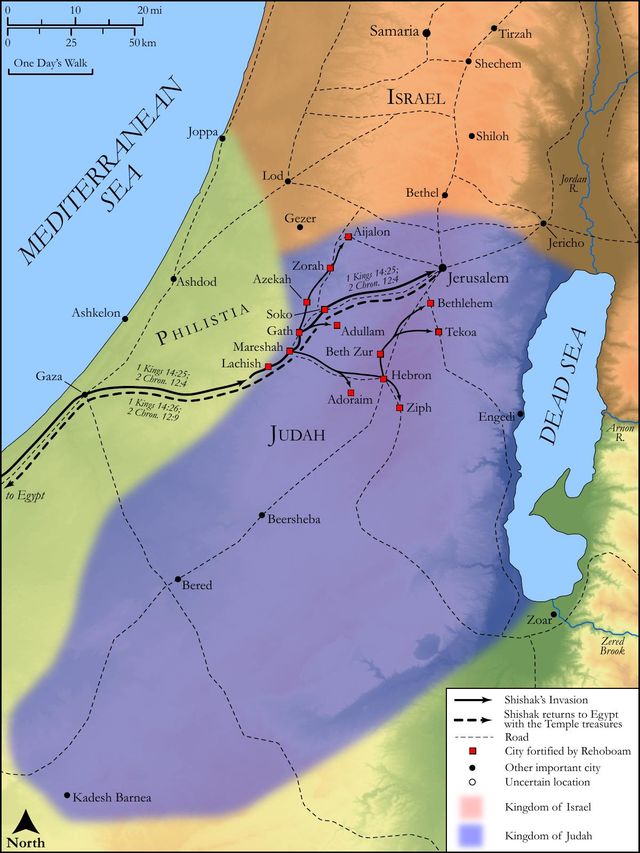
This verse stands within the closing notice of Rehoboam's reign in 2 Chronicles 12, serving as the Chronicler's divinely inspired, definitive summary judgment. The preceding verses detail Rehoboam's initial abandonment of the Law of the Lord, which directly led to the punitive invasion by Shishak, king of Egypt. While Rehoboam and the princes of Israel humbled themselves temporarily in response to the prophet Shemaiah's message, prompting God to relent from complete destruction and grant them "some deliverance" (2 Chronicles 12:6-7), this verse clarifies that such humility was not indicative of a truly transformed or consistently devoted heart. It acts as a theological lens through which to understand the spiritual trajectory of his entire kingship, emphasizing the internal disposition over external, fleeting actions, thus providing the ultimate explanation for the challenges and failures of his rule.
Historical & Cultural Context
Rehoboam ascended to the throne of a united Israel, but his arrogance and refusal to lighten the people's burdens, as advised by the elders, led to the tragic division of the kingdom. His reign, confined to the southern kingdom of Judah, was subsequently marked by the re-establishment of idolatry, the construction of high places, and the proliferation of pagan practices, all contrary to the Mosaic Law and the covenant legacy established by David and Solomon. The invasion by Pharaoh Shishak of Egypt, a historically corroborated event, served as divine chastisement for Judah's widespread apostasy under Rehoboam's leadership. Culturally, kings in ancient Israel were expected to be more than mere political leaders; they were covenant guardians, spiritual examples, and upholders of Yahweh's Law. Rehoboam's profound failure to "prepare his heart" was therefore a severe dereliction of his royal and spiritual duties, directly impacting the entire nation's spiritual health and its relationship with God.
Key Themes
ShowHideThe verse powerfully encapsulates several recurring themes central to the Deuteronomistic History and the Chronicler's distinctive theology. Foremost is the centrality of the heart in one's relationship with God, emphasizing that true righteousness and sustained obedience stem from an inner disposition of sincere devotion, not merely outward conformity or ritualistic observance. This aligns profoundly with the foundational call to love God with "all your heart and with all your soul and with all your might" found in Deuteronomy 6:5. Secondly, it highlights the necessity of intentional and consistent seeking of God. The phrase "prepared not his heart to seek the LORD" underscores that spiritual vitality is not passive but requires deliberate, sustained effort, a settled purpose, and an active pursuit of God's presence and will. Finally, the verse clearly illustrates the consequences of spiritual neglect and superficial faith. Rehoboam's reign, despite moments of reprieve, ultimately demonstrates that a lack of genuine, heart-level commitment to God leads inevitably to spiritual decline, instability, and ultimately, divine judgment, serving as a cautionary tale for all who would lead God's people or walk with God. This principle is further elaborated throughout the Chronicler's work, which frequently links the prosperity or decline of kings and the nation to their faithfulness or unfaithfulness to God, often expressed through their heart's posture, as seen in the contrasting example of King Asa in 2 Chronicles 15:17.
Exposition and Analysis
ShowHideKey Word Analysis
ShowHideFrom the primitive root H3559 (kûwn), this verb properly means "to be erect (i.e. stand perpendicular); hence (causatively) to set up, in a great variety of applications, whether literal (establish, fix, prepare, apply), or figurative (appoint, render sure, proper or prosperous)." In the Hiphil stem, as used here (H3559 H8689), it conveys a causative sense: "to cause to be ready, to direct firmly, to make steadfast, to establish." The negative "prepared not" (לֹא הֵכִין, lo hekhin) therefore implies a failure to intentionally direct, establish, or make his heart steadfastly ready for God. It speaks of a profound lack of settled purpose, deliberate orientation, and firm resolve towards the divine, leaving his heart unfixed and wavering.
The Hebrew word H3820 (lêb), a form of לֵבָב, refers not merely to the emotional center but to the totality of the inner person—the mind, will, intellect, emotions, and moral character. It is the seat of thought, decision, and spiritual life, and figuratively, "the centre of anything." Rehoboam's failure was thus a comprehensive deficiency in his innermost being, affecting his entire disposition, his capacity for moral decision-making, and the very core of his spiritual life. It was a failure of his will and intellect to be properly aligned with God.
From the primitive root H1875 (dârash), this term denotes "a diligent inquiry, an earnest pursuit, a careful consultation, or a persistent investigation." It implies active, intentional effort to know, understand, and obey God's will; to "follow (for pursuit or search); by implication, to seek or ask; specifically to worship." The phrase "to seek the LORD" (לִדְרוֹשׁ יְהוָה, lidrosh Yᵉhôvâh) signifies a commitment to consult God for guidance, to earnestly pursue His presence, and to diligently inquire into His ways, particularly concerning the covenant and the Law. Rehoboam's evil stemmed from his failure to engage in this active, ongoing, and vital spiritual discipline of seeking the self-existent God (H3068, Yᵉhôvâh).
Verse Breakdown
ShowHide"And he did evil"
This opening clause delivers a direct, unequivocal moral, and theological verdict on Rehoboam's reign, rooted in the divine standard of righteousness. The verb "did" (H6213, ʻâsâh) signifies action or making, while "evil" (H7451, raʻ) here encompasses not merely isolated bad deeds but a pervasive pattern of behavior and a general disposition that was contrary to God's covenant commands, particularly in promoting idolatry and failing to uphold true worship. It is a comprehensive condemnation of his character and conduct as king.
"because he prepared not his heart to seek the LORD"
This explanatory clause provides the fundamental, underlying reason for Rehoboam's "evil." It reveals that his outward actions and the negative trajectory of his reign were a direct consequence of an internal, spiritual deficiency. His failure was not primarily a lack of knowledge or opportunity, but a profound lack of intentional, steadfast resolve to orient his inner being—his will, intellect, and affections—towards diligently pursuing God's will and presence. This clause underscores the Chronicler's central theological conviction: true obedience and righteousness flow from a heart genuinely and consistently devoted to God.
Literary Devices
ShowHideThe verse primarily functions as a Summary Judgment, a prominent literary device frequently employed in historical narratives, particularly within the Deuteronomistic History and the Chronicler's work. It provides a concise, authoritative theological evaluation of a king's entire reign, often delivered at its conclusion, encapsulating the essence of their spiritual state and the ultimate cause of their successes or failures. This judgment is presented as a definitive statement, leaving no ambiguity regarding Rehoboam's spiritual condition. Furthermore, the verse employs a clear Cause and Effect relationship: Rehoboam "did evil" (the effect or outcome) because "he prepared not his heart to seek the LORD" (the underlying cause). This highlights the Chronicler's profound theological conviction that a king's internal spiritual disposition directly and decisively influences the well-being, moral trajectory, and ultimate destiny of the nation. The simple, declarative structure of the verse also lends it an air of Didacticism, serving as a potent moral and spiritual lesson for future generations regarding the supreme importance of internal spiritual commitment and the dire consequences of its neglect.
Theological and Thematic Connections
ShowHideThe Chronicler's assessment of Rehoboam profoundly emphasizes the critical importance of the heart in one's relationship with God, a theme woven throughout the entire biblical narrative. It underscores that God looks beyond external actions and superficial displays of piety to the sincerity, intention, and steadfast orientation of the inner person. A prepared heart, one that is intentionally and consistently directed towards seeking God, is presented as the wellspring of true righteousness, sustained obedience, and divine favor. Conversely, a heart that is not prepared—even if it performs temporary acts of humility or outward conformity—ultimately leads to spiritual compromise, moral failure, and divine judgment. This principle resonates deeply with the prophetic call for internal transformation and the wisdom literature's emphasis on guarding the heart above all else, as it determines the course of life. It highlights that genuine faith is not merely intellectual assent or ritualistic performance, but a deeply personal, volitional commitment of one's entire being to God.
Reflection and Application
ShowHide2 Chronicles 12:14 serves as a timeless mirror for self-examination, challenging us to look beyond superficial religiosity and outward appearances to the true condition of our hearts before God. It reminds us that genuine spiritual vitality and enduring faithfulness are not sustained by occasional acts of piety, temporary repentance, or external conformity, but by a consistent, intentional, and deeply rooted commitment to diligently seeking the Lord. In a world that often values outward performance, public image, and immediate results, this verse redirects our focus to the inner disposition, urging us to cultivate a heart that is genuinely prepared, steadfastly directed, and actively pursuing God's will and presence. Our spiritual health, the integrity of our decisions, and our ultimate impact on those around us flow directly from this internal posture. We must honestly ask ourselves: Are we actively and diligently pursuing God's presence, His will, and His wisdom in every area of our lives, or are we allowing our hearts to remain unprepared, distracted, and ultimately, uncommitted? The call is to an ongoing, heart-level pursuit of God that shapes every aspect of our being and doing.
Questions for Reflection
ShowHideFAQ
ShowHideWhat does it mean for a king to "prepare his heart to seek the LORD," and why was Rehoboam's failure so significant?
ShowHideFor a king in ancient Israel, "preparing his heart to seek the LORD" meant much more than personal piety; it encompassed his entire reign, leadership, and the spiritual well-being of the nation. It implied a deliberate, consistent, and steadfast commitment to govern according to God's Law, to consult God through prophets and priests for divine guidance (1 Kings 22:5-8), to eradicate idolatry, and to actively promote true worship among the people. It meant making God's will and covenant commands the foundational principle for all political, social, and spiritual decisions. Rehoboam's failure to do so led directly to the re-establishment of pagan practices, the construction of high places, and a general spiritual decline in Judah, demonstrating that a king's heart-posture profoundly impacted the nation's spiritual health and destiny (2 Chronicles 12:1). His lack of internal resolve rendered his outward acts of humility temporary and ineffective in the long term, leading to a reign marked by instability and compromise.
Christ-Centered Fulfillment
ShowHideRehoboam's tragic failure to prepare his heart to seek the Lord stands in stark contrast to the perfect heart and unwavering devotion of Jesus Christ, the true and eternal King. While Rehoboam's reign was marked by spiritual instability, idolatry, and a divided kingdom due to his internal deficiency, Jesus perfectly embodied the divine expectation of a heart wholly devoted to God. He consistently sought His Father's will, declaring, "I always do what pleases him" (John 8:29). Unlike Rehoboam, whose temporary humbling was superficial and self-serving, Christ's obedience was profound, lifelong, and culminated in His ultimate sacrifice on the cross—a perfect act of seeking and obeying the Father's will for the redemption of humanity (Philippians 2:8). Through His atoning work, Christ not only provides forgiveness for our own unprepared and wayward hearts but also offers a "new heart" and a "new spirit" through the New Covenant, enabling believers to genuinely seek and obey God in a way Rehoboam never could (Ezekiel 36:26-27; Hebrews 8:10). Thus, Rehoboam's tragic flaw highlights humanity's desperate need for Christ, who perfectly embodies the prepared heart and empowers us, by His Spirit, to live in true and sustained devotion to God.