


1 Kings 2:1
Bible text: King James Version (1769 Blayney text) · Public domain
Bible text: Berean Standard Bible · Public domain
Bible text: American Standard Version (1901) · Public domain
Bible text: World English Bible, Messianic edition · Public domain
Bible text: Geneva Bible (1599) · Public domain
Bible text: Young's Literal Translation · Public domain
- וַיִּקְרְבוּvai·yik·re·Vuand they drew nearH7126Conj-w ¦ V-Qal-ConsecImperf-3mpVerb Qal Consecutive Imperfect 3rd Plural Masculineוַandיִּקְרְבוּthey drew near
- יְמֵיye·mei[the] days ofH3117N-mpcNoun Plural Masculine Construct
- דָוִדda·VidDavidH1732N-proper-mNoun Proper Masculine
- לָמוּתla·Mutto dieH4191Prep-l ¦ V-Qal-InfVerb Qal Infinitive Constructלָtoמוּתdie
- וַיְצַוvay·Tzavand he commandedH6680Conj-w ¦ V-Piel-ConsecImperf-3msVerb Piel Consecutive Imperfect 3rd Singular Masculineוַandיְצַוhe commanded
- אֶת'et<obj.>H853DirObjMParticle Object Indicator
- שְׁלֹמֹהshe·lo·MohSolomonH8010N-proper-mNoun Proper Masculine
- בְנוֹve·Nohis sonH1121N-msc ¦ 3msNoun Singular Masculine Constructבְנsonוֹhis
- לֵאמֹרle·Mor<to> sayingH559Prep-l ¦ V-Qal-InfVerb Qal Infinitive Constructלֵ<to>אמֹרsaying
English is a literal word-by-word gloss of the Hebrew, not the KJV's wording. Why?
This is the original text the KJV's translators worked from — each Hebrew word with its own literal English meaning in this verse, prepared by scholars at Tyndale House, Cambridge. The KJV translates whole sentences, not word by word, so its wording differs: one Hebrew word can become several English words, and the KJV may choose “the LORD” where the gloss reads “Yahweh”. Both are faithful — they answer different questions. For the KJV's own rendering, switch to the KJV text.
Details
See on the biblical-era maps
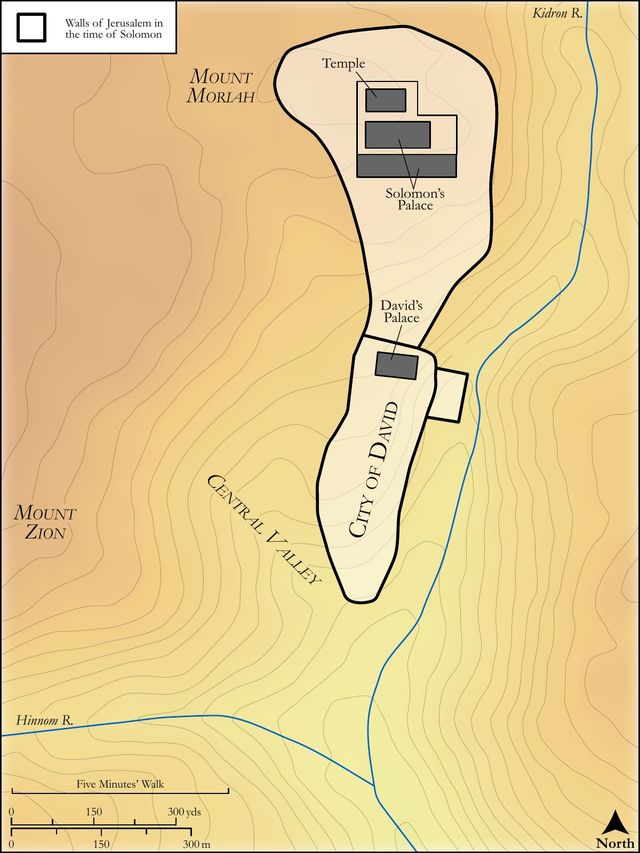
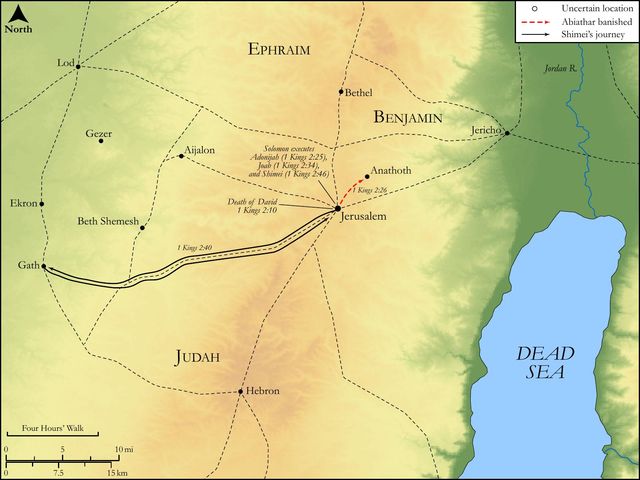
Study this verse
Continue studying 1 Kings 2:1 across the web’s major study libraries — every link below opens this exact verse, chapter, or book on the destination site.
Read & Compare
 BibleGatewayThis verse in more than 200 translations and 70 languages.
 Bible.comThe YouVersion reader — hundreds of translations, reading plans, and highlights.
 ESV.orgCrossway's official English Standard Version reader.
 NET BibleThe NET translation with 60,000+ translators' notes on every rendering decision.
 STEP BibleTyndale House's free study tool — original text, vocabulary, and scholarly resources.
 BibliaLogos Bible Software's free web reader.
 USCCBThe New American Bible (Revised Edition) with the U.S. bishops' study notes.
Commentaries
 BibleHub CommentariesDozens of classic commentaries on this verse, gathered on one page.
 StudyLightMore than 100 commentary sets — the largest collection on the web.
 BibleRefPlain-English commentary on what this verse means, verse by verse.
 Enduring WordDavid Guzik's free commentary on this chapter, widely used by Bible teachers.
 Bible Study ToolsVerse commentary alongside Greek and Hebrew study aids.
Original Language & Research
- BibleHub InterlinearThe verse word by word — original language, transliteration, and English.
- BibleHub LexiconEvery word's original-language definition and Strong's entry.
 Blue Letter BibleDeep-study tools — Strong's numbers, concordance, and word studies.
 SefariaThe Hebrew text with Rashi and centuries of Jewish commentary.
Sermons, Hymns & Audio


TrulyRandomVerse is not affiliated with these sites and doesn’t control their content. They’re linked because they’re genuinely useful.
Summary
This pivotal verse marks the solemn transition of power in Israel, signaling the imminent death of King David and the formal initiation of his son Solomon's reign. After a long and impactful rule, David, now old and near his end, prepares to impart his final, authoritative instructions to Solomon. This passage sets the stage for a critical moment in the history of the monarchy, where the legacy of Israel's greatest king is intentionally transferred to his divinely appointed successor, ensuring the continuity and stability of the kingdom.
Context
ShowHideLiterary Context
1 Kings 2:1 serves as a crucial narrative hinge, closing the dramatic events of David's final days and opening the account of Solomon's establishment on the throne. The preceding chapter, 1 Kings 1, details the intense political intrigue surrounding the succession, particularly Adonijah's failed attempt to usurp the throne. David, despite his frailty, decisively intervened, publicly affirming Solomon as his chosen heir and ensuring his immediate anointing and enthronement. This verse, therefore, moves beyond the immediate crisis of succession to the more profound act of a dying king's final testament, setting the stage for David's solemn charge to Solomon in the verses that follow, which will outline the moral, political, and spiritual foundations for his son's rule.
Historical & Cultural Context
Among the kings of that day, the peaceful and legitimate transfer of power was paramount for stability. The death of a king often presented a vulnerable period, ripe for internal strife or external aggression. David's long reign had solidified Israel's borders and established Jerusalem as its capital, but the kingdom's future depended heavily on the character and actions of his successor. Culturally, a dying patriarch's final words or "charge" (often found in wills or farewell speeches) carried immense weight and authority, serving as a binding ethical and practical guide for the heir. David's actions here reflect this cultural expectation, ensuring that his legacy and the divine promises made to him concerning his dynasty, as recorded in 2 Samuel 7:12-16, would be upheld through Solomon.
Key Themes
ShowHideThis verse encapsulates several profound themes central to the book of 1 Kings and the broader Deuteronomistic History. Firstly, it underscores the theme of succession and legacy, highlighting the critical importance of a divinely ordained and properly executed transfer of power for the continuity of God's covenant people. Secondly, it emphasizes divine sovereignty and human responsibility, as David's impending death reminds us of human mortality, while his deliberate "charge" to Solomon underscores the human duty to steward God's promises and purposes. The stability of the kingdom is directly tied to Solomon's obedience to this charge, echoing the conditional blessings found throughout Deuteronomy 28. Lastly, it introduces the theme of wisdom and obedience, which will become paramount in Solomon's reign. David's final words are not merely advice but authoritative commands, setting the moral and spiritual framework for Solomon's kingship, particularly regarding his adherence to God's law.
Exposition and Analysis
ShowHideKey Word Analysis
ShowHideThis verb (H7126) signifies "to approach," "to draw near," or "to be at hand." In this context, it carries a sense of inevitability and finality regarding David's life. It's not merely that he is old, but that his appointed time for death is actively approaching, marking a divinely ordained conclusion to his earthly reign. This verb often implies a purposeful movement towards a destination, here, the ultimate destination of all humanity.
The standard Hebrew verb (H4191) for "to die." While seemingly straightforward, in the context of a king, it signifies not just the end of an individual life but the cessation of an era and the transfer of immense power and responsibility. The mention of death here is stark and unadorned, emphasizing the universal reality of mortality, even for the most powerful of rulers, and setting a solemn tone for the ensuing transfer of authority.
This is a crucial and potent verb (H6680), meaning "to command," "to instruct," "to lay a charge upon," or "to appoint." It denotes a solemn, authoritative injunction, far stronger than mere advice or suggestion. When used in the context of a dying patriarch or king, it carries the weight of a binding testament or covenantal instruction. David is not simply offering counsel; he is issuing a definitive, non-negotiable directive to Solomon, establishing the foundational principles for his son's rule and the future of the kingdom. This "charge" is a sacred trust, demanding Solomon's utmost obedience.
Verse Breakdown
ShowHide"¶ Now the days of David drew nigh that he should die;"
This opening clause immediately establishes the setting and the somber tone. It highlights David's advanced age and the natural progression of life towards its end. The phrase "drew nigh" emphasizes the imminence and certainty of his death, signaling the conclusion of an extraordinary era in Israelite history. This is not a sudden event but a foreseen, inevitable transition, allowing David to prepare for the transfer of leadership. The paragraph marker (¶) in the KJV indicates a new paragraph in the original text, drawing attention to this significant narrative shift.
"and he charged Solomon his son, saying,"
This second clause reveals David's proactive and intentional response to his impending death. Rather than succumbing to infirmity, David, with the remaining strength and authority of his kingship, takes deliberate action. The verb "charged" underscores the solemn and authoritative nature of his instructions. It signifies a formal, binding directive given to his designated successor, Solomon, who is explicitly identified as "his son," emphasizing both the familial and dynastic nature of the transfer. The phrase "saying" introduces the content of this momentous charge, which will unfold in the subsequent verses.
Literary Devices
ShowHideThe verse employs several significant literary devices. Transition is paramount, as the verse explicitly marks the shift from David's reign to Solomon's, serving as a narrative bridge between the two pivotal figures. It acts as a framing device, introducing David's final, weighty instructions to his son, which will govern the early part of Solomon's kingship. There is an element of foreshadowing, as the mention of David's impending death and his "charge" to Solomon hints at the themes of succession, obedience, and the establishment of Solomon's reign that will dominate the subsequent narrative. The phrase "the days of David drew nigh that he should die" also carries a subtle sense of pathos, evoking the solemnity and finality associated with the passing of a legendary figure, inviting the reader to reflect on the legacy and mortality of even the greatest of kings.
Theological and Thematic Connections
ShowHide1 Kings 2:1 resonates deeply with the broader biblical narrative of divine election, covenant, and the transfer of leadership within God's chosen people. David's impending death and his authoritative charge to Solomon echo the pattern of great leaders in Israel's history preparing their successors, ensuring the continuity of God's work through human instruments. This act is not merely a political maneuver but a theological one, rooted in the understanding that God works through human generations to fulfill His promises. David's concern for Solomon's obedience to God's law reflects the Deuteronomic emphasis on covenant faithfulness as the basis for national blessing and stability. The transfer of the kingdom is thus portrayed as a sacred trust, with the success of the new reign contingent upon adherence to divine commands.
Reflection and Application
ShowHide1 Kings 2:1 offers profound lessons for every believer, transcending the specific context of ancient kingship. It reminds us of the universal reality of human mortality, even for those greatly used by God, prompting us to consider our own finitude and the legacy we are building. More importantly, it highlights the sacred duty of those in positions of influence—parents, mentors, leaders—to intentionally and authoritatively impart wisdom, values, and a sense of responsibility to the next generation. David's "charge" to Solomon was not just about political governance but about spiritual fidelity. This challenges us to consider what spiritual and practical "charges" we are preparing to pass on, ensuring that the truths and values we hold dear continue to flourish beyond our own time. It calls us to live with intentionality, stewarding our gifts and opportunities with an eye towards the future and the generations that will follow.
Questions for Reflection
ShowHideFAQ
ShowHideWhat was the significance of David's death at this point in the narrative?
ShowHideDavid's impending death is highly significant as it marks the end of a foundational era in Israel's history. David had unified the tribes, established Jerusalem as the capital, and received the crucial Davidic Covenant (2 Samuel 7:12-16), promising an eternal dynasty. His death necessitates the transfer of this divinely sanctioned kingdom to his successor. The narrative emphasizes his death not as a tragic end, but as a natural, expected transition that allows for the fulfillment of God's promises through the next generation. It underscores the transient nature of human life and leadership, even for the greatest of kings, while highlighting the enduring nature of God's covenant.
Why was it important for David to "charge" Solomon before he died?
ShowHideIt was critically important for David to "charge" Solomon because it was the formal, authoritative act of a dying king passing on his final will and testament to his successor. In Israel, such a "charge" (Hebrew: tsavah) was a binding injunction, not mere advice. It served to solidify the legitimacy of the new king, provide a moral and political framework for his rule, and ensure the continuity of the kingdom according to divine principles. David's charge to Solomon, detailed in the subsequent verses, focuses on obedience to God's law and dealing with certain individuals, demonstrating David's concern for the spiritual and political stability of the kingdom after his passing. This act ensured a smooth, divinely sanctioned transition of power, preventing chaos and upholding the covenant.
Christ-Centered Fulfillment
ShowHideWhile 1 Kings 2:1 describes the passing of an earthly king and the transfer of a temporal kingdom, it powerfully foreshadows the ultimate, eternal reign of Jesus Christ. David, though a great king, faced mortality and had to pass on his kingdom to a successor, Solomon, whose reign would eventually falter due to disobedience, as chronicled in 1 Kings 11. This contrasts sharply with the King of kings, Jesus, who is not subject to death but has conquered it, triumphing over its power as detailed in Hebrews 2:14-15. David's "charge" to Solomon was a human attempt to secure the kingdom's future, but Jesus's "charge" to His disciples, the Great Commission found in Matthew 28:18-20, establishes an eternal, spiritual kingdom that will never end or be passed to another. Unlike Solomon, who inherited a kingdom built by David, Jesus inherits all authority in heaven and on earth by virtue of His divine nature and redemptive work, as proclaimed in Philippians 2:9-11. David's death marked the end of an era; Christ's death and resurrection inaugurated a new covenant and an everlasting reign, fulfilling the very promise of an eternal Davidic descendant, as prophesied in Luke 1:32-33.