


1 Kings 1:10
Bible text: King James Version (1769 Blayney text) · Public domain
Bible text: Berean Standard Bible · Public domain
Bible text: American Standard Version (1901) · Public domain
Bible text: World English Bible, Messianic edition · Public domain
Bible text: Geneva Bible (1599) · Public domain
Bible text: Young's Literal Translation · Public domain
- וְאֶתve·'Etand <obj.>H853Conj-w ¦ DirObjMParticle Object Indicatorוְandאֶת<obj.>
- נָתָןna·TanNathanH5416N-proper-mNoun Proper Masculine
- הַנָּבִיאha·na·Vi'the prophetH5030Art ¦ N-msNoun Singular Masculine Absoluteהַtheנָּבִיאprophet
- וּבְנָיָהוּu·ve·na·Ya·huand BenaiahH1141Conj-w ¦ N-proper-mNoun Proper MasculineוּandבְנָיָהוּBenaiah
- וְאֶתve·'Etand <obj.>H853Conj-w ¦ DirObjMParticle Object Indicatorוְandאֶת<obj.>
- הַגִּבּוֹרִיםha·gi·bo·Rimthe mighty [men]H1368Art ¦ N-mpNoun Plural Masculine Absoluteהַtheגִּבּוֹרִיםmighty [men]
- וְאֶתve·'Etand <obj.>H853Conj-w ¦ DirObjMParticle Object Indicatorוְandאֶת<obj.>
- שְׁלֹמֹהshe·lo·MohSolomonH8010N-proper-mNoun Proper Masculine
- אָחִיו'a·Chivhis brotherH251N-msc ¦ 3msNoun Singular Masculine Constructאָחִיbrotherוhis
- לֹאlo'notH3808NegParticle Negative
- קָרָאka·Ra'he invitedH7121V-Qal-Perf-3msVerb Qal Perfect 3rd Singular Masculine
English is a literal word-by-word gloss of the Hebrew, not the KJV's wording. Why?
This is the original text the KJV's translators worked from — each Hebrew word with its own literal English meaning in this verse, prepared by scholars at Tyndale House, Cambridge. The KJV translates whole sentences, not word by word, so its wording differs: one Hebrew word can become several English words, and the KJV may choose “the LORD” where the gloss reads “Yahweh”. Both are faithful — they answer different questions. For the KJV's own rendering, switch to the KJV text.
Details
See on the biblical-era maps
Study this verse
Public-domain commentary
Matthew Henry
From his Commentary on the Whole Bible. Henry comments on passages, not single verses — this entry covers 1 Kings 1:5–10.
David had much affliction in his children. Amnon and Absalom had both been his grief; the one his first-born, the other his third, Sa2 3:2, Sa2 3:3. His second, whom he had by Abigail, we will suppose he had comfort in; his fourth was Adonijah (Sa2 3:4); he was one of those that were born in Hebron; we have heard nothing of him till now, and here we are told that he was a comely person, and that he was next in age, and (as it proved) next in temper to Absalom, Kg1 1:6. And, further, that in his father's eyes he had been a jewel, but was now a thorn.
I.His father had made a fondling of him, Kg1 1:6.
He had not displeased him at any time. It is not said that he never displeased his father; it is probably that he had done so frequently, and his father was secretly troubled at his misconduct and lamented it before God. But his father had not displeased him, by crossing him in his humours, denying him any thing he had a mind to, or by calling him to an account as to what he had done and where he had been, or by keeping him to his book or his business, or reproving him for what he saw or heard of that he did amiss; he never said to him, Why hast thou done so? because he saw it was uneasy to him, and he could not bear it without fretting. It was the son's fault that he was displeased at reproof and took it for affront, whereby he lost the benefit of it; and it was the father's fault that, because he saw it displeased him, he did not reprove him; and now he justly smarted for indulging him. Those who honour their sons more than God, as those do who keep them not under good discipline, thereby forfeit the honour they might expect from their sons.
II.He, in return, made a fool of his father.
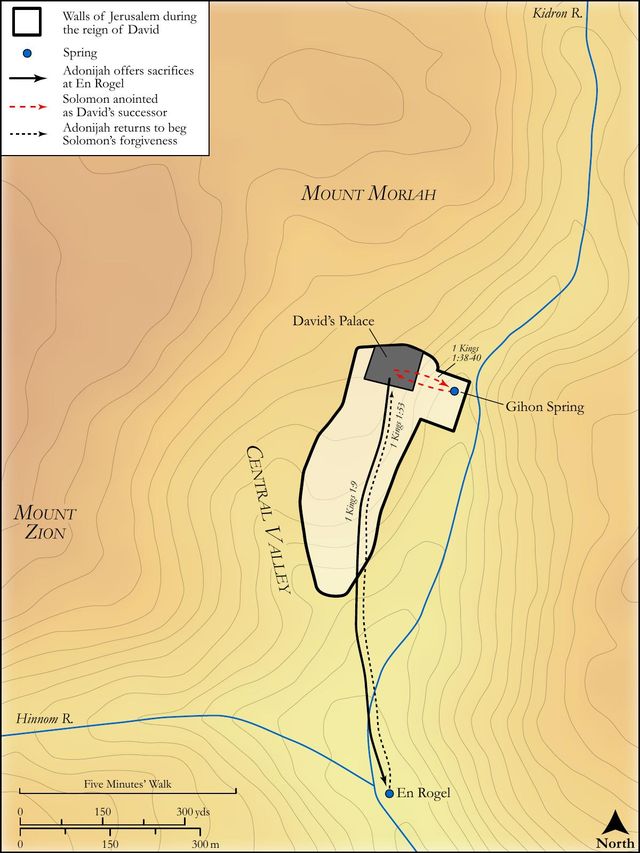
Because he was old, and confined to his bed, he thought no notice was to be taken of him, and therefore exalted himself, and said, I will be king, Kg1 1:5. Children that are indulged learn to be proud and ambitious, which is the ruin of a great many young people. The way to keep them humble is to keep them under. Observe Adonijah's insolence. 1. He looked upon the days of mourning for his father to be at hand, and therefore he prepared to succeed him, though he knew that by the designation both of God and David Solomon was to be the man; for public notice had been given of it by David himself, and the succession settled, as it were by act of parliament, in pursuance of God's appointment, Ch1 22:9; Ch1 23:1. This entail Adonijah attempted by force to cut off, in contempt both of God and his father. Thus is the kingdom of Christ opposed, and there are those that say, "We will not have him to reign over us." 2. He looked upon his father as superannuated and good for nothing, and therefore he entered immediately upon the possession of the throne. He cannot wait till his father's head be laid low, but it must now be said, Adonijah reigns (Kg1 1:18), and, God save king Adonijah, Kg1 1:25. His father is not fit to govern, for he is old and past ruling, nor Solomon, for he is young, and not yet able to rule; and therefore Adonijah will take the government upon him. It argues a very base and wicked mind for children to insult over their parents because of the infirmities of their age. 3. In pursuance of this ambitious project, (1.) He got a great retinue (Kg1 1:5), chariots and horsemen, both for state and strength, to wait on him, and to fight for him. (2.) He made great interest with no less than Joab, the general of the army, and Abiathar the high priest, Kg1 1:7. That he should make his court to those who by their influence in church and camp were capable of doing him great service is not strange; but we may well wonder by what arts they could be drawn to follow him and help him. They were old men, who had been faithful to David in the most difficult and troublesome of his times, men of sense and experience, who, one would think, would not easily be wheedled. They could not propose any advantage to themselves by supporting Adonijah, for they were both at the top of their preferment and stood fast in it. They could not be ignorant of the entail of the crown upon Solomon, which it was not in their power to cut off, and therefore it was their interest to oblige him. But God, in this matter, left them to themselves, perhaps to correct them for some former misconduct with a scourge of their own making. We are told (Kg1 1:8) who those were that were of such approved fidelity to David that Adonijah had not the confidence so much as to propose his project to them - Zadok, Benaiah, and Nathan. A man that has given proofs of his resolute adherence to that which is good shall not be asked to do a bad thing. (3.) He prepared a great entertainment (Kg1 1:9) at En-rogel, not far from Jerusalem; his guests were the king's sons, and the king's servants, whom he feasted and caressed to bring them over to his party; but Solomon was not invited, either because he despised him or because he despaired of him, Kg1 1:10. Such as serve their own belly, and will be in the interest of those that will feast them what side soever they are of, are an easy prey to seducers, Rom 16:18. Some think that Adonijah slew these sheep and oxen, even fat ones, for sacrifice, and that it was a religious feast he made, beginning his usurpation with a show of devotion, as Absalom under the colour of a vow (Sa2 15:7), which he might do the more plausibly when he had the high priest himself on his side. It is a pity that any occasion should ever be given to say, In nomine Domini incipit omne malam - In the name of the Lord begins all evil, and that all religious exercises should be made to patronise all religious practices.
Continue studying 1 Kings 1:10 across the web’s major study libraries — every link below opens this exact verse, chapter, or book on the destination site.
Read & Compare
 BibleGatewayThis verse in more than 200 translations and 70 languages.
 Bible.comThe YouVersion reader — hundreds of translations, reading plans, and highlights.
 ESV.orgCrossway's official English Standard Version reader.
 NET BibleThe NET translation with 60,000+ translators' notes on every rendering decision.
 STEP BibleTyndale House's free study tool — original text, vocabulary, and scholarly resources.
 BibliaLogos Bible Software's free web reader.
 USCCBThe New American Bible (Revised Edition) with the U.S. bishops' study notes.
Commentaries
 BibleHub CommentariesDozens of classic commentaries on this verse, gathered on one page.
 StudyLightMore than 100 commentary sets — the largest collection on the web.
 BibleRefPlain-English commentary on what this verse means, verse by verse.
 Enduring WordDavid Guzik's free commentary on this chapter, widely used by Bible teachers.
 Bible Study ToolsVerse commentary alongside Greek and Hebrew study aids.
Original Language & Research
- BibleHub InterlinearThe verse word by word — original language, transliteration, and English.
- BibleHub LexiconEvery word's original-language definition and Strong's entry.
 Blue Letter BibleDeep-study tools — Strong's numbers, concordance, and word studies.
 SefariaThe Hebrew text with Rashi and centuries of Jewish commentary.
Sermons, Hymns & Audio


TrulyRandomVerse is not affiliated with these sites and doesn’t control their content. They’re linked because they’re genuinely useful.
Summary
1 Kings 1:10 is a pivotal verse in the unfolding narrative of David's succession, meticulously detailing the strategic omissions from Adonijah's self-proclaimed coronation feast. By deliberately excluding key figures such as Nathan the prophet, Benaiah son of Jehoiada, David's loyal mighty men, and Solomon, Adonijah unequivocally signals his intent to usurp the throne, bypassing both legitimate authority and divine appointment, thereby setting the stage for a dramatic and decisive conflict over the kingdom's future.
Context
ShowHideLiterary Context
This verse is situated at a critical juncture in the book of 1 Kings, immediately following Adonijah's audacious self-exaltation and declaration of kingship in 1 Kings 1:5. The preceding verses establish King David's advanced age and physical frailty, creating a perceived power vacuum that Adonijah attempts to exploit. Verse 10 specifically lists those who were not invited to his feast, providing a stark contrast to the allies he did gather (Joab and Abiathar, mentioned in 1 Kings 1:7). This deliberate exclusion of key loyalists and the divinely appointed successor (Solomon) directly precipitates the swift and decisive counter-action by Nathan and Bathsheba, leading to Solomon's anointing as king, as detailed in the subsequent verses of 1 Kings 1. The verse functions as a crucial plot point, clarifying the lines of allegiance and opposition.
Historical & Cultural Context
The succession of kings in ancient Israel was often a perilous and contested affair, especially when the reigning monarch was incapacitated or near death. While primogeniture (right of the firstborn) was a common custom, it was not always strictly followed, particularly when a king had multiple wives and sons, or when divine decree intervened, as seen with David himself (1 Samuel 16:1-13). Adonijah, as David's eldest surviving son, might have felt he had a legitimate claim based on custom. However, David had previously promised the throne to Solomon, a promise known to key figures like Nathan and Bathsheba (1 Kings 1:13). Adonijah's feast at En-rogel, a traditional site for festive gatherings outside Jerusalem, served as a de facto coronation, a common practice to consolidate support and publicly declare one's claim to the throne. The exclusion of specific individuals was a calculated political move, aiming to neutralize potential opposition by denying them a platform or recognition.
Key Themes
ShowHideThis verse powerfully contributes to several overarching themes in 1 Kings and the broader Deuteronomistic History. It highlights the theme of Divine Appointment vs. Human Ambition, showcasing Adonijah's self-serving efforts to seize power in direct opposition to God's established will for Solomon (1 Chronicles 22:9-10). The verse also underscores the theme of Loyalty and Betrayal, as Adonijah's actions reveal a betrayal of David's wishes and a challenge to the established order, contrasting sharply with the unwavering loyalty of those he excluded. Furthermore, it sets the stage for the Struggle for the Throne, a recurring motif in monarchical narratives, where the rightful heir must contend with rivals. The strategic exclusions listed in 1 Kings 1:10 are pivotal in demonstrating Adonijah's illegitimate claim and foreshadowing the inevitable conflict that will determine the future of the Davidic dynasty.
Exposition and Analysis
ShowHideKey Word Analysis
ShowHideThis term refers to an inspired individual, one who speaks on behalf of God, conveying divine messages. Nathan's role as "the prophet" signifies his direct connection to God's will and his authority as a divine messenger. His exclusion by Adonijah is a deliberate rejection of prophetic counsel and, by extension, God's established order, particularly concerning the succession of Solomon, which Nathan had been instrumental in affirming.
This word describes powerful, valiant warriors, often referring to David's elite, loyal, and highly skilled military force. These were the core of David's personal guard and military strength, known for their unwavering loyalty to the king. Their exclusion from Adonijah's feast is highly significant, indicating that Adonijah did not have the support of the established military elite, a crucial factor for any successful coup. It implies their continued allegiance to David and, by extension, to Solomon, whom David intended to be his successor.
This primitive root means "to call out to," "to invite," or "to summon." The explicit statement that these individuals were not called (indicated by the preceding Hebrew negative particle) highlights Adonijah's deliberate and calculated act of exclusion. It signifies not merely an oversight but a conscious decision to bypass or alienate those who represented legitimate authority, divine counsel, and military power loyal to David and God's chosen successor. This omission is a political statement of defiance and an attempt to consolidate power without their endorsement or opposition.
Verse Breakdown
ShowHide"But Nathan the prophet"
Nathan was a trusted advisor to King David, God's messenger who delivered both divine judgment (2 Samuel 12:1-15) and promises concerning the Davidic dynasty (2 Samuel 7:1-17). His exclusion underscores Adonijah's disregard for divine counsel and prophetic authority, as Nathan was known to be a proponent of Solomon's succession.
"and Benaiah"
Benaiah, the son of Jehoiada, was a formidable military leader, head of David's personal bodyguard, and later became commander of the army under Solomon (1 Kings 2:34-35). His absence from Adonijah's feast indicates a lack of support from the most powerful and loyal military figures, signaling that Adonijah's claim lacked the necessary military backing from the legitimate royal guard.
"and the mighty men"
This refers collectively to David's elite fighting force, renowned for their bravery and loyalty. Their exclusion further emphasizes Adonijah's failure to secure the allegiance of the kingdom's most potent military asset. This group represented the backbone of David's power, and their non-invitation highlighted the illegitimate and precarious nature of Adonijah's attempted coup.
"and Solomon his brother, he called not."
Solomon was David's chosen successor, promised the throne by divine decree and David's oath to Bathsheba (1 Kings 1:13). Adonijah's deliberate exclusion of Solomon, his half-brother and direct rival, was a clear act of usurpation. It was an attempt to bypass the legitimate line of succession and deny Solomon any claim or presence at the "coronation," thereby attempting to invalidate his future kingship.
Literary Devices
ShowHideThe verse employs several impactful literary devices that underscore its significance. Exclusion is the most prominent, as the entire verse is structured around a list of those not invited, highlighting Adonijah's calculated political maneuvering and his attempt to circumvent legitimate authority. This selective Enumeration of key figures (Nathan, Benaiah, the mighty men, Solomon) serves to underscore the profound significance of their absence; each name represents a pillar of David's kingdom and God's established order. The verse also utilizes Foreshadowing, as Adonijah's deliberate omissions immediately signal the illegitimacy of his claim and hint at the swift and decisive counter-action that will follow, setting the stage for the dramatic confrontation over the throne. Furthermore, there is an implicit Contrast between those who are loyal to David and God's will (the excluded) and those who align with Adonijah's rebellious ambition, highlighting the moral and theological stakes of the succession crisis.
Theological and Thematic Connections
ShowHide1 Kings 1:10 powerfully illustrates the tension between human ambition and divine sovereignty, a recurring theme throughout biblical narrative. Adonijah's calculated exclusions reveal a human attempt to control destiny and secure power through political maneuvering, disregarding established order and, more importantly, God's pre-ordained plan for the Davidic dynasty. This act of usurpation, by sidelining those aligned with God's will and David's promise, serves as a stark reminder that true authority and lasting success do not stem from self-exaltation or the manipulation of circumstances, but from alignment with God's purposes. The narrative demonstrates that God's plan for succession, though momentarily challenged, ultimately prevails, highlighting His faithfulness to His covenant promises and His ability to thwart human schemes that oppose His will.
Reflection and Application
ShowHideAdonijah's actions in 1 Kings 1:10 serve as a timeless cautionary tale about the dangers of unchecked ambition and the folly of pursuing personal gain at the expense of divine will and legitimate authority. His deliberate exclusion of key individuals who represented wisdom, military strength, and divine appointment highlights a common human tendency to surround ourselves with those who affirm our desires, while consciously sidelining voices of truth, counsel, or opposition. For us today, this verse prompts introspection: Are we, like Adonijah, prone to excluding those who might challenge our self-serving plans, or are we open to godly counsel and divine direction, even when it diverges from our own desires? True wisdom lies in discerning God's path and aligning our aspirations with His sovereign purposes, trusting that His plans for us are for welfare and not for evil, to give us a future and a hope, as promised in Jeremiah 29:11. This narrative encourages us to embrace humility and submission to God's ultimate authority, recognizing that His ways are always higher and more beneficial than our own.
Questions for Reflection
ShowHideFAQ
ShowHideWhy was it so significant that these specific people were not invited to Adonijah's feast?
ShowHideThe exclusion of Nathan the prophet, Benaiah, the mighty men, and Solomon was profoundly significant because these individuals represented the core pillars of legitimate authority, divine counsel, and military power loyal to King David and, crucially, to God's chosen successor, Solomon. Nathan was God's messenger and David's trusted advisor, fully aware of David's promise to Solomon regarding the throne (1 Kings 1:13). Benaiah and the "mighty men" were the elite military force, known for their unwavering loyalty to David, and their support was absolutely essential for any successful claim to the throne. Solomon himself was David's divinely appointed heir, whose succession had been confirmed by God (1 Chronicles 22:9-10). By not inviting them, Adonijah was attempting to bypass the established order, ignore divine will, and consolidate power without the endorsement or potential opposition of those who could legitimately challenge his claim. It was a calculated political maneuver to secure the throne through illegitimate means, revealing his disregard for both human and divine authority.
Christ-Centered Fulfillment
ShowHide1 Kings 1:10, with its depiction of a contested throne and the rightful heir being momentarily sidelined by an ambitious rival, powerfully foreshadows the ultimate struggle for the true kingship of humanity, culminating in the person of Jesus Christ. Just as Solomon was the divinely appointed king, often overlooked by human ambition, so too was Jesus, the Son of David, rejected by many who sought a different kind of king or kingdom (John 1:11). The "exclusion" of Solomon from Adonijah's feast finds its ultimate parallel in the world's rejection of Christ, who came not with earthly pomp but in humility, yet was the rightful heir to all things (Hebrews 1:2). Despite human attempts to usurp authority or deny His reign, Christ's kingdom is eternal and His appointment by the Father is unshakeable (Psalm 2:6-8). The narrative of Solomon's eventual enthronement, despite Adonijah's rebellion, points to the certainty of Christ's ultimate triumph and the establishment of His everlasting kingdom, where He reigns as the true King of kings and Lord of lords, whom no one can exclude from His rightful throne. His reign is not by human invitation or political maneuvering, but by divine decree and ultimate victory over all opposing powers, as seen in Philippians 2:9-11.