


1 Chronicles 16:11
Bible text: King James Version (1769 Blayney text) · Public domain
Bible text: Berean Standard Bible · Public domain
Bible text: American Standard Version (1901) · Public domain
Bible text: World English Bible, Messianic edition · Public domain
Bible text: Geneva Bible (1599) · Public domain
Bible text: Young's Literal Translation · Public domain
- דִּרְשׁוּdir·ShuseekH1875V-Qal-Imp-2mpVerb Qal Imperative 2nd Plural Masculine
- יְהוָהYah·wehYahwehH3068N-properNoun Proper Title
- וְעֻזּוֹve·'u·Zoand his strengthH5797Conj-w ¦ N-msc ¦ 3msNoun Singular Masculine Constructוְandעֻזּstrengthוֹhis
- בַּקְּשׁוּba·ke·ShuseekH1245V-Piel-Imp-2mpVerb Piel Imperative 2nd Plural Masculine
- פָנָיוfa·Navhis faceH6440N-mpc ¦ 3msNoun Plural Masculine Constructפָנָיfaceוhis
- תָּמִידta·MidcontinuallyH8548N-msNoun Singular Masculine Absolute
English is a literal word-by-word gloss of the Hebrew, not the KJV's wording. Why?
This is the original text the KJV's translators worked from — each Hebrew word with its own literal English meaning in this verse, prepared by scholars at Tyndale House, Cambridge. The KJV translates whole sentences, not word by word, so its wording differs: one Hebrew word can become several English words, and the KJV may choose “the LORD” where the gloss reads “Yahweh”. Both are faithful — they answer different questions. For the KJV's own rendering, switch to the KJV text.
Details
See on the biblical-era map
Study this verse
Public-domain commentary
Matthew Henry
From his Commentary on the Whole Bible. Henry comments on passages, not single verses — this entry covers 1 Chronicles 16:7–36.
We have here the thanksgiving psalm which David, by the Spirit, composed, and delivered to the chief musician, to be sung upon occasion of the public entry the ark made into the tent prepared for it. Some think he appointed this hymn to be daily used in the temple service, as duly as the day came; whatever other psalms they sung, they must not omit this. David had penned many psalms before this, some in the time of his trouble by Saul. This was composed before, but was now first delivered into the hand of Asaph, for the use of the church. It is gathered out of several psalms (from the beginning to Ch1 16:23 is taken from Psa 105:1, etc.; and then Ch1 16:23 is the whole 96th psalm, with little variation; Ch1 16:34 is taken from Psa 136:1 and divers others; and then the last two verses are taken from the close of Ps. 106), which some think warrants us to do likewise, and make up hymns out of David's psalms, a part of one and a part of another put together so as may be most proper to express and excite the devotion of Christians. These psalms will be best expounded in their proper places (if the Lord will); here we take them as they are put together, with a design to thank the Lord (Ch1 16:7), a great duty, to which we need to be excited and in which we need to be assisted. 1. Let God be glorified in our praises; let his honour be the centre in which all the lines meet. Let us glorify him by our thanksgivings (Give thanks to the Lord), by our prayers (Call on his name, Ch1 16:8), by our songs (Sing psalms unto him), by our discourse - Talk of all his wondrous works, Ch1 16:9. Let us glorify him as a great God, and greatly to be praised (Ch1 16:25), as supreme God (above all gods), as sole God, for all others are idols, Ch1 16:26. Let us glorify him as most bright and blessed in himself (Glory and honour are in his presence, Ch1 16:27), as creator (The Lord made the heavens), as the ruler of the whole creation (His judgments are in all the earth, Ch1 16:14), and as ours - He is the Lord our God. Thus must we give unto the Lord the glory due to his name (Ch1 16:28, Ch1 16:29), and own it, and much more, his due. 2. Let other be edified and instructed: Make known his deeds among the people (Ch1 16:8), declare his glory among the heathen (Ch1 16:24), that those who are strangers to him may be led into acquaintance with him, allegiance to him, and the adoration of him. Thus must we serve the interests of his kingdom among men, that all the earth may fear before him, Ch1 16:30. 3. Let us be ourselves encouraged to triumph and trust in God. Those that give glory to God's name are allowed to glory in it (Ch1 16:10), to value themselves upon their relation to God and venture themselves upon his promise to them. Let the heart of those rejoice that seek the Lord, much more of those that have found him. Seek him, and his strength, and his face: that is, seek him by the ark of his strength, in which he manifests himself. 4. Let the everlasting covenant be the great matter of our joy and praise (Ch1 16:15): Be mindful of his covenant. In the parallel place it is, He will be ever mindful of it, Psa 105:8. Seeing God never will forget it, we never must. The covenant is said to be commanded, because God has obliged us to obey the conditions of it, and because he has both authority to make the promise and ability to make it good. This covenant was ancient, yet never to be forgotten. It was made with Abraham, Isaac, and Jacob, who were long since dead (Ch1 16:16-18), yet still sure to the spiritual seed, and the promises of it pleadable. 5. Let God's former mercies to his people of old, to our ancestors and our predecessors in profession, be commemorated by us now with thankfulness to his praise. Let it be remembered how God protected the patriarchs in their unsettled condition. When they came strangers to Canaan and were sojourners in it, when they were few and might easily have been swallowed up, when they were continually upon the remove and so exposed, when there were many that bore them ill-will and sought to do them mischief, yet no man was suffered to do them wrong - not the Canaanites, Philistines, Egyptians. Kings were reproved and plagued for their sakes. Pharaoh was so, and Abimelech. They were the anointed of the Lord, sanctified by his grace, sanctified by his glory, and had received the unction of the Spirit. They were his prophets, instructed in the things of God themselves and commissioned to instruct others (and prophets are said to be anointed, Kg1 19:16; Isa 61:1); therefore, if any touch them, they touch the apple of God's eye; if any harm them, it is at their peril, Ch1 16:19-22. 6. Let the great salvation of the Lord be especially the subject of our praises (Ch1 16:23): Show forth from day to day his salvation, that is (says bishop Patrick), his promised salvation by Christ. We have reason to celebrate that from day to day; for we daily receive the benefits of it, and it is a subject that can never be exhausted. 7. Let God be praised by a due and constant attendance upon him in the ordinances he has appointed: Bring an offering, then the fruit of the ground, now the fruit of the lips, of the heart (Heb 13:15), and worship him in the beauty of holiness, in the holy places and in a holy manner, Ch1 16:29. Holiness is the beauty of the Lord, the beauty of all sanctified souls and all religious performances. 8. Let God's universal monarchy be the fear and joy of all people. Let us reverence it: Fear before him, all the earth. And let us rejoice in it: Let the heavens be glad and rejoice, because the Lord reigns, and by his providence establishes the world, so that, though it be moved, it cannot be removed, nor the measures broken which Infinite Wisdom has taken in the government of it, Ch1 16:30, Ch1 16:31. 9. Let the prospect of the judgment to come inspire us with an awful pleasure, Let earth and sea, fields and woods, though in the great day of the Lord they will all be consumed, yet rejoice that he will come, doth come, to judge the earth, Ch1 16:32, Ch1 16:33. 10. In the midst of our praises we must not forget to pray for the succour and relief of those saints and servants of God that are in distress (Ch1 16:35): Save us, gather us, deliver us from the heathen, those of us that are scattered and oppressed. When we are rejoicing in God's favours to us we must remember our afflicted brethren, and pray for their salvation and deliverance as our own. We are members one of another; and therefore when we mean, "Lord, save them," it is not improper to say, "Lord, save us." Lastly, Let us make God the Alpha and Omega of our praises. David begins with (Ch1 16:8), Give thanks to the Lord; he concludes (Ch1 16:36), Blessed be the Lord. And whereas in the place whence this doxology is taken (Psa 106:48) it is added, Let all the people say, Amen, Hallelujah, here we find they did according to that directory: All the people said, Amen, and praised the Lord. When the Levites had finished this psalm or prayer and praise, then, and not till then, the people that attended signified their consent and concurrence by saying, Amen, And so they praised the Lord, much affected no doubt with this newly instituted way of devotion, which had been hitherto used in the schools of the prophets only, Sa1 10:5. And, if this way of praising God please the Lord better than an ox or a bullock that has horns and hoofs, the humble shall see it and be glad, Psa 69:31, Psa 69:32.
Continue studying 1 Chronicles 16:11 across the web’s major study libraries — every link below opens this exact verse, chapter, or book on the destination site.
Read & Compare
 BibleGatewayThis verse in more than 200 translations and 70 languages.
 Bible.comThe YouVersion reader — hundreds of translations, reading plans, and highlights.
 ESV.orgCrossway's official English Standard Version reader.
 NET BibleThe NET translation with 60,000+ translators' notes on every rendering decision.
 STEP BibleTyndale House's free study tool — original text, vocabulary, and scholarly resources.
 BibliaLogos Bible Software's free web reader.
 USCCBThe New American Bible (Revised Edition) with the U.S. bishops' study notes.
Commentaries
 BibleHub CommentariesDozens of classic commentaries on this verse, gathered on one page.
 StudyLightMore than 100 commentary sets — the largest collection on the web.
 BibleRefPlain-English commentary on what this verse means, verse by verse.
 Enduring WordDavid Guzik's free commentary on this chapter, widely used by Bible teachers.
 Bible Study ToolsVerse commentary alongside Greek and Hebrew study aids.
Original Language & Research
- BibleHub InterlinearThe verse word by word — original language, transliteration, and English.
- BibleHub LexiconEvery word's original-language definition and Strong's entry.
 Blue Letter BibleDeep-study tools — Strong's numbers, concordance, and word studies.
 SefariaThe Hebrew text with Rashi and centuries of Jewish commentary.
Sermons, Hymns & Audio


TrulyRandomVerse is not affiliated with these sites and doesn’t control their content. They’re linked because they’re genuinely useful.
Summary
1 Chronicles 16:11, a profound exhortation from David's psalm of thanksgiving, calls the people of God to an active, persistent, and intimate pursuit of the Almighty. It encapsulates a lifelong spiritual discipline, urging believers to diligently seek God's very person, to depend entirely on His divine power, and to earnestly desire His manifest presence and favor without interruption. This verse serves as a timeless directive for cultivating a vibrant and enduring relationship with the Creator.
Context
ShowHideLiterary Context
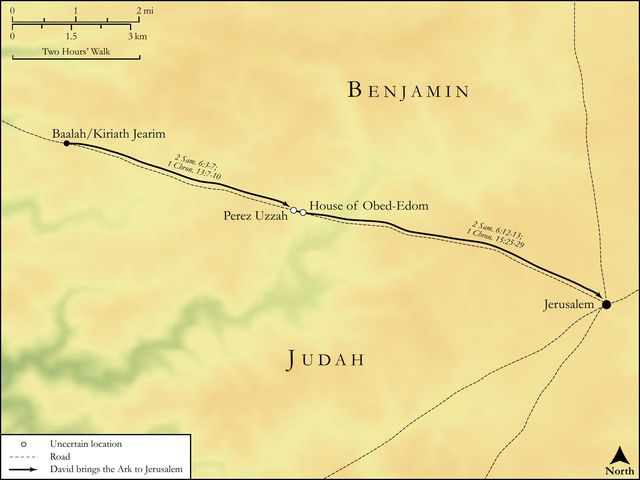
This powerful verse is embedded within a grand psalm of thanksgiving and praise (1 Chronicles 16:7-36) delivered by King David on the momentous occasion of bringing the Ark of the Covenant to Jerusalem. The Ark's arrival marked a pivotal moment, symbolizing God's dwelling presence among His people and establishing Jerusalem as the spiritual and political heart of the nation. David's psalm, which incorporates elements from Psalm 105 (verses 1-15) and Psalm 96 (verses 1-13), serves as a comprehensive liturgy of worship, recounting God's faithfulness throughout Israel's history and calling the people to a life of worship and obedience. Verse 11, specifically, is a direct, imperative command, standing out as a concise summary of the posture of heart required for a true relationship with God amidst the broader narrative of praise and remembrance.
Historical & Cultural Context
The bringing of the Ark to Jerusalem (detailed in 1 Chronicles 15) was more than a ceremonial event; it was a foundational act for the Davidic kingdom. For ancient Israel, the Ark of the Covenant represented God's tangible presence, His throne, and the very symbol of His covenant with His people. Its relocation from Kirjath-jearim to Jerusalem, after years of neglect and misplacement, signified the re-establishment of proper worship and God's centrality in national life under David's leadership. Culturally, seeking the "face" of a king or deity implied desiring their favor, counsel, and direct presence, often involving a journey or an earnest petition. The emphasis on "strength" was crucial for a nation surrounded by enemies, highlighting reliance on divine power rather than military might. This event solidified Jerusalem's identity as the city of God and laid the groundwork for the future Temple.
Key Themes
ShowHideThe psalm in 1 Chronicles 16 and this verse in particular contribute to several overarching themes. Firstly, the Sovereignty and Faithfulness of God are paramount, as the psalm recounts His mighty deeds and covenant promises from Abraham to the Exodus. Secondly, the theme of Worship and Praise is central, with David leading the nation in exuberant adoration, establishing a pattern for future generations. Thirdly, Divine Presence is highlighted through the Ark, underscoring God's desire to dwell among His people. Finally, 1 Chronicles 16:11 powerfully articulates the theme of Diligent Pursuit and Dependence on God. It underscores that a true relationship with God is not passive but requires active, intentional, and continuous engagement, relying on His strength and desiring His intimate fellowship, a theme echoed in the New Testament's call to "seek first the kingdom of God" (Matthew 6:33).
Exposition and Analysis
ShowHideKey Word Analysis
ShowHideA primitive root; properly, to tread or frequent; usually to follow (for pursuit or search); by implication, to seek or ask; specifically to worship; ask, [idiom] at all, care for, [idiom] diligently, inquire, make inquisition, (necro-) mancer, question, require, search, seek (for, out), [idiom] surely. This verb implies far more than a casual glance or a vague desire. It denotes an intense, diligent, and persistent inquiry; a thorough investigation; or even frequenting a place to consult someone. It suggests an earnest, purposeful quest, a deep longing that drives one to actively pursue and consult. In this context, it signifies a wholehearted commitment to know God more intimately, to understand His will, and to experience His presence.
Or (fully) עוֹז; from עָזַז; strength in various applications (force, security, majesty, praise); boldness, loud, might, power, strength, strong. This word refers to God's mighty power, His refuge, His ability to protect, defend, and enable. It speaks of divine omnipotence and invincibility. To "seek His strength" is an acknowledgment of human weakness and a declaration of absolute dependence on God's limitless might, recognizing that true security, victory, and effectiveness come not from human effort but from His empowering presence.
Plural (but always as singular) of an unused noun פָּנֶה; from פָּנָה); the face (as the part that turns); used in a great variety of applications (literally and figuratively); also (with prepositional prefix) as a preposition (before, etc.); [phrase] accept, a-(be-) fore(-time), against, anger, [phrase] as (long as), at, [phrase] battle, [phrase] because (of), [phrase] beseech, countenance, edge, [phrase] employ, endure, [phrase] enquire, face, favour, fear of, for, forefront(-part), form(-er time, -ward), from, front, heaviness, [idiom] him(-self), [phrase] honourable, [phrase] impudent, [phrase] in, it, look(-eth) (-s), [idiom] me, [phrase] meet, [idiom] more than, mouth, of, off, (of) old (time), [idiom] on, open, [phrase] out of, over against, the partial, person, [phrase] please, presence, propect, was purposed, by reason of, [phrase] regard, right forth, [phrase] serve, [idiom] shewbread, sight, state, straight, [phrase] street, [idiom] thee, [idiom] them(-selves), through ([phrase] -out), till, time(-s) past, (un-) to(-ward), [phrase] upon, upside ([phrase] down), with(-in, [phrase] -stand), [idiom] ye, [idiom] you. While literally meaning "face," in biblical idiom, "face" often represents the presence, favor, and direct manifestation of a person. To "seek His face" is to desire God's intimate fellowship, His personal guidance, His approval, and the shining of His favor upon one's life. It speaks to a longing for personal communion and a direct encounter with the living God, much like one would desire to be in the immediate presence of a beloved friend or a revered sovereign.
Verse Breakdown
ShowHide"Seek the LORD"
This is the foundational command, an imperative to actively and intentionally pursue God Himself. It's a call to direct one's entire being—mind, will, and emotions—towards knowing, understanding, and experiencing the person of Yahweh, the covenant-keeping God. It implies a personal, relational quest that prioritizes God above all else.
"and his strength"
Following the command to seek the LORD, this phrase specifies an essential aspect of that pursuit: seeking His power and might. It acknowledges human limitation and the absolute necessity of divine empowerment for life, service, and overcoming challenges. This is not seeking strength from God as a separate entity, but seeking God as the source of all strength, recognizing that true power resides in His very being.
"seek his face"
This repetition of "seek" with a different object emphasizes a distinct yet complementary aspect of the pursuit. To seek God's "face" is to long for His manifest presence, His favor, His intimate communion, and His direct guidance. It speaks to a desire for personal intimacy and a relationship where one experiences God's approval and guidance, much like a child seeks the approving gaze of a parent.
"continually"
This crucial adverb qualifies all preceding commands, transforming them from occasional acts into a perpetual lifestyle. It underscores the ongoing, relentless, and unwavering nature of this pursuit. Seeking God, His strength, and His face is not a one-time decision or a sporadic effort, but a consistent, lifelong journey of devotion, prayer, and obedience, maintaining an uninterrupted awareness of and connection with God in every moment and circumstance.
Literary Devices
ShowHideThe verse employs several potent literary devices to convey its urgent and profound message. Repetition is prominently used with the word "seek" ("Seek the LORD... seek his face"), which serves to emphasize the imperative nature of the command and to highlight the two primary facets of this pursuit: seeking God's person and seeking His presence/favor. This creates a powerful rhetorical effect, underscoring the importance of persistent engagement. The structure also exhibits a form of parallelism, where the second clause ("seek his face continually") echoes and expands upon the first ("Seek the LORD and his strength"), reinforcing the central theme of active pursuit. Furthermore, metonymy is evident in the phrase "seek his face," where "face" stands in for God's entire presence, favor, and intimate communion. This allows for a concise yet rich expression of a deep theological concept. Finally, the use of the imperative mood throughout the verse ("Seek... seek") renders the instruction a direct command, imbuing it with authority and urgency, calling the worshiper to immediate and sustained action.
Theological and Thematic Connections
ShowHide1 Chronicles 16:11 encapsulates a fundamental theological truth about the nature of humanity's relationship with God: it must be one of active, intentional, and persistent pursuit. This verse underscores God's desire for an intimate, personal connection with His creation, not merely ritualistic observance. It highlights human dependence on divine power, acknowledging that our strength is insufficient for the challenges of life and the demands of righteousness. The call to "seek His face continually" speaks to the very essence of worship—a ceaseless longing for God's presence, favor, and guidance, recognizing Him as the ultimate source of all good. This pursuit is not just for personal benefit but is foundational for a community that desires to live under God's blessing and direction, echoing the covenantal relationship established from the beginning.
Reflection and Application
ShowHide1 Chronicles 16:11 offers timeless guidance for every believer, calling us beyond passive faith to an active, dynamic, and lifelong engagement with God. To "seek the LORD" means to intentionally prioritize Him in every facet of our lives, making daily prayer, diligent Bible study, and thoughtful meditation on His Word non-negotiable practices. It means cultivating a heart that genuinely longs for His presence above all else, recognizing that true fulfillment and purpose are found only in Him. The command to "seek His strength" reminds us that self-reliance is a spiritual dead end; instead, we are called to humbly acknowledge our limitations and lean entirely on His omnipotence, especially in moments of weakness, temptation, or overwhelming challenge. Finally, "continually" emphasizes that this pursuit is not a sporadic effort but a consistent, conscious lifestyle, a constant awareness of God's presence and an ongoing alignment of our will with His, ensuring that our relationship with Him remains vibrant and transformative in every season of life.
Questions for Reflection
ShowHideFAQ
ShowHideWhy is "continually" so important in seeking God, and what does it practically look like?
ShowHideThe adverb "continually" (Hebrew: tāmîd) is crucial because it transforms the act of seeking God from an occasional event into a perpetual lifestyle. It emphasizes that our relationship with God is not meant to be sporadic or limited to specific times like church services or personal devotions, but rather an ongoing, conscious engagement that pervades every aspect of our existence. Practically, this means cultivating a constant awareness of God's presence throughout the day, inviting Him into our thoughts, decisions, and interactions. It involves regular prayer that extends beyond formal prayer times, becoming a continuous dialogue with God (as encouraged in 1 Thessalonians 5:17). It also implies a consistent commitment to reading and meditating on His Word, allowing it to shape our worldview and guide our steps. This continuous seeking guards against spiritual complacency, fosters deep intimacy, and ensures that our reliance on God is not just in moments of crisis but in the everyday rhythm of life, aligning our will with His in all circumstances.
Christ-Centered Fulfillment
ShowHide1 Chronicles 16:11 finds its ultimate and most profound fulfillment in Jesus Christ. He is the very embodiment of the "face" of God that we are called to seek, for as John 1:18 declares, "No man hath seen God at any time; the only begotten Son, which is in the bosom of the Father, he hath declared him." In Christ, God's presence is not merely symbolized by an Ark but is fully manifested in human flesh, making Him Immanuel, "God with us" (Matthew 1:23). When we "seek the LORD," we are ultimately seeking Jesus, for He is the Way, the Truth, and the Life, and "no man cometh unto the Father, but by me" (John 14:6). Furthermore, the "strength" we are to seek is perfectly found in Christ, who empowers believers to live righteously and overcome the world, as Philippians 4:13 affirms, "I can do all things through Christ which strengtheneth me." Through His atoning work, we now have bold access to God's presence, able to "come boldly unto the throne of grace" (Hebrews 4:16), fulfilling the desire to "seek His face continually." Thus, the Old Testament command becomes a New Testament reality: to live a Christ-centered life is to continually seek the One who is God's perfect revelation, inexhaustible strength, and abiding presence.