


1 Chronicles 15:26
Bible text: King James Version (1769 Blayney text) · Public domain
Bible text: King James Version with Strong's numbers · Public domain
Bible text: Berean Standard Bible · Public domain
Bible text: American Standard Version (1901) · Public domain
Bible text: World English Bible, Messianic edition · Public domain
Bible text: Geneva Bible (1599) · Public domain
Bible text: Young's Literal Translation · Public domain
- וַיְהִיvay·Hiand it wasH1961Conj-w ¦ V-Qal-ConsecImperf-3msVerb Qal Consecutive Imperfect 3rd Singular Masculineוַandיְהִיit was
- בֶּעְזֹרbe'·Zorbecause helpedH5826Prep-b ¦ V-Qal-InfVerb Qal Infinitive Constructבֶּbecauseעְזֹרhelped
- הָאֱלֹהִיםha·'E·lo·Him<the> GodH430Art ¦ N-mpNoun Plural Masculine Absoluteהָ<the>אֱלֹהִיםGod
- אֶת'Et<obj.>H853DirObjMParticle Object Indicator
- הַלְוִיִּםhal·vi·Yimthe LevitesH3881Art ¦ N-mpNoun Gentilic Plural Masculine AbsoluteהַtheלְוִיִּםLevites
- נֹשְׂאֵיno·se·'Ei[the] bearers ofH5375V-Qal-Prtcpl-mpVerb Qal Participle Plural Masculine Construct
- אֲרוֹן'a·Ron[the] ark ofH727N-mscNoun Singular Masculine Construct
- בְּרִיתbe·rit[the] covenant ofH1285N-fscNoun Singular Feminine Construct
- יְהוָהYah·wehYahwehH3068N-properNoun Proper Title
- וַיִּזְבְּחוּvai·yiz·be·Chuand they sacrificedH2076Conj-w ¦ V-Qal-ConsecImperf-3mpVerb Qal Consecutive Imperfect 3rd Plural Masculineוַandיִּזְבְּחוּthey sacrificed
- שִׁבְעָהshiv·'ahsevenH7651N-csNoun Singular common gender Absolute
- פָרִיםfa·Rimyoung bullsH6499N-mpNoun Plural Masculine Absolute
- וְשִׁבְעָהve·shiv·'Ahand sevenH7651Conj-w ¦ N-csNoun Singular common gender Absoluteוְandשִׁבְעָהseven
- אֵילִים'ei·LimramsH352N-mpNoun Plural Masculine Absolute
English is a literal word-by-word gloss of the Hebrew, not the KJV's wording. Why?
This is the original text the KJV's translators worked from — each Hebrew word with its own literal English meaning in this verse, prepared by scholars at Tyndale House, Cambridge. The KJV translates whole sentences, not word by word, so its wording differs: one Hebrew word can become several English words, and the KJV may choose “the LORD” where the gloss reads “Yahweh”. Both are faithful — they answer different questions. For the KJV's own rendering, switch to the KJV text.
Details
See on the biblical-era map
Study this verse
Public-domain commentary
Matthew Henry
From his Commentary on the Whole Bible. Henry comments on passages, not single verses — this entry covers 1 Chronicles 15:25–29. His two-level outline is real structure in the source text, so it is rendered as structure.
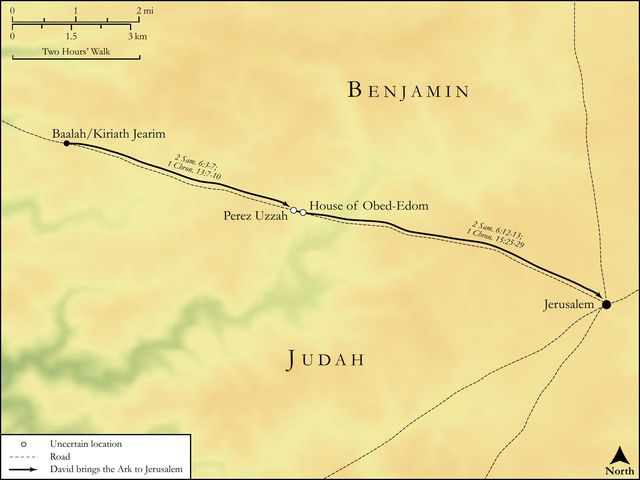
All things being got ready for the carrying of the ark to the city of David, and its reception there, we have here an account of the solemnity of this conveyance thither from the house of Obed-edom.
I.God helped the Levites that carried it.
The ark was no very great burden, that those who carried it needed any extraordinary help. But,
1.It is good to take notice of the assistance of the divine providence even in those things that fall within the compass of our natural powers: if God did not help us, we could not stir a step.
2.In all our religious exercises we must particularly derive help from heaven. See Act 26:22. All our sufficiency for holy duties is from God.
3.The Levites, remembering the breach upon Uzza, were probably ready to tremble when they took up the ark; but God helped them, that is, he encouraged them to it, silenced their fears, and strengthened their faith.
4.God helped them to do it decently and well, and without making any mistake. If we perform any religious duties so as to escape a breach, and come off with our lives, we must own it is God that helps us; for, if left to ourselves, we should be guilty of some fatal miscarriages. God's ministers that bear the vessels of the Lord have special need of divine help in their ministrations, that God in them may be glorified and his church edified. And, if God help the Levites, the people have the benefit of it.
II.When they experienced the tokens of God's presence with them they offered sacrifices of praise to him, Ch1 15:26.
This also he helped them to do. They offered these bullocks and rams perhaps by way of atonement for the former error, that it might not now be remembered against them, as well as by way of acknowledgment for the help now received.
III.There were great expressions of rejoicing used:
the sacred music was played, David danced, the singers sang, and the common people shouted, Ch1 15:27, Ch1 15:28. This we had before, Sa2 6:14, Sa2 6:15. Learn hence,
1.That we serve a good master, who delights to have his servants sing at their work.
2.That times of public reformation are, and should be, times of public rejoicing. Those are unworthy of the ark that are not glad of it.
3.It is not any disparagement to the greatest of men to show themselves zealous in the acts of devotion. Michal indeed despised David (Ch1 15:29); but her despising him did not make him at all despicable; he did not regard it himself, nor did any that were wise and good (and why should we covet the esteem of any but such?) think the worse of him.
Continue studying 1 Chronicles 15:26 across the web’s major study libraries — every link below opens this exact verse, chapter, or book on the destination site.
Read & Compare
 BibleGatewayThis verse in more than 200 translations and 70 languages.
 Bible.comThe YouVersion reader — hundreds of translations, reading plans, and highlights.
 ESV.orgCrossway's official English Standard Version reader.
 NET BibleThe NET translation with 60,000+ translators' notes on every rendering decision.
 STEP BibleTyndale House's free study tool — original text, vocabulary, and scholarly resources.
 BibliaLogos Bible Software's free web reader.
 USCCBThe New American Bible (Revised Edition) with the U.S. bishops' study notes.
Commentaries
 BibleHub CommentariesDozens of classic commentaries on this verse, gathered on one page.
 StudyLightMore than 100 commentary sets — the largest collection on the web.
 BibleRefPlain-English commentary on what this verse means, verse by verse.
 Enduring WordDavid Guzik's free commentary on this chapter, widely used by Bible teachers.
 Bible Study ToolsVerse commentary alongside Greek and Hebrew study aids.
Original Language & Research
- BibleHub InterlinearThe verse word by word — original language, transliteration, and English.
- BibleHub LexiconEvery word's original-language definition and Strong's entry.
 Blue Letter BibleDeep-study tools — Strong's numbers, concordance, and word studies.
 SefariaThe Hebrew text with Rashi and centuries of Jewish commentary.
Sermons, Hymns & Audio


TrulyRandomVerse is not affiliated with these sites and doesn’t control their content. They’re linked because they’re genuinely useful.
Summary
1 Chronicles 15:26 narrates a pivotal moment in King David's second, successful attempt to bring the Ark of the Covenant to Jerusalem. This verse highlights the profound divine favor and active assistance God provided to the Levites as they meticulously bore the sacred Ark according to His prescribed instructions, thereby preventing a repeat of the previous tragic outcome. In response to this manifest divine help and the successful, reverent transport of God's tangible presence, the Levites offered a significant sacrifice of seven bullocks and seven rams, demonstrating profound gratitude, reverent worship, and an unequivocal acknowledgment of God's sovereign hand in their sacred task.
Context
ShowHideLiterary Context
This verse is strategically placed within the broader narrative of King David's earnest efforts to establish Jerusalem as the spiritual and political heart of Israel by bringing the Ark of the Covenant there. It immediately follows David's meticulous preparations, which included consecrating the Levites and instructing them on the precise, divinely ordained method of carrying the Ark (as detailed in 1 Chronicles 15:1-15). The preceding chapter, 1 Chronicles 13, recounts the disastrous first attempt to transport the Ark, which resulted in Uzzah's death because the Ark was moved on a new cart rather than being carried by the Levites on poles, as explicitly commanded by Mosaic Law. Therefore, 1 Chronicles 15:26 serves as a crucial turning point, powerfully demonstrating that diligent obedience to God's specific commands regarding holy things leads to divine blessing and protection, standing in stark contrast to the tragic consequences of disobedience.
Historical & Cultural Context
The Ark of the Covenant was undeniably the most sacred object in ancient Israel, representing God's very throne and His manifest presence among His people (as indicated in Exodus 25:22). Its proper handling was governed by extremely strict Mosaic laws, particularly those found in Numbers 4:15, which explicitly commanded that only the Kohathite Levites were permitted to carry it on poles, and under no circumstances were they to touch the Ark itself. The cultural practice of offering sacrifices, especially bullocks and rams, was central to Israelite worship, serving various purposes including thanksgiving, atonement, and dedication. The number "seven" held immense symbolic meaning in Scripture, as in the seven days of creation, frequently representing completeness, perfection, divine fullness, or covenantal fulfillment, thereby indicating a comprehensive, wholehearted, and divinely sanctioned offering.
Key Themes
ShowHideThis verse powerfully illustrates several key themes prevalent throughout the books of Chronicles and the broader Old Testament narrative. Firstly, it underscores the sovereignty and active involvement of God in the affairs of His people, particularly in sacred endeavors. The explicit phrase "when God helped the Levites" directly attributes the success to divine intervention, not merely human effort or careful planning. Secondly, it highlights the critical importance of obedience to God's revealed will. The successful transport of the Ark, in stark contrast to the earlier failure, profoundly demonstrates that God's blessings and protection are contingent upon adherence to His specific instructions, especially concerning worship and the handling of holy things. Finally, the subsequent offerings emphasize the theme of appropriate worship and thanksgiving. The Levites' immediate response of sacrifice signifies a heart of profound gratitude and reverence for God's protection and enablement, acknowledging His grace and seeking to honor Him fully. This echoes the broader Chronicler's emphasis on proper temple worship and the abundant blessings that flow from it, as seen in David's comprehensive song of thanksgiving in 1 Chronicles 16.
Exposition and Analysis
ShowHideKey Word Analysis
ShowHideThis is the plural form of Eloah, often used to refer to the supreme God. In this context, it emphasizes the singular, sovereign God of Israel, highlighting His divine authority and active presence. The use of this term here underscores that the success was not due to chance or human strength, but to the direct intervention of the Almighty.
This primitive root signifies active assistance, support, or aid, often implying protection. It's not merely that God permitted the Levites to succeed, but that He actively sustained, protected, and empowered them. This divine intervention was absolutely crucial, especially given the previous disaster with Uzzah, underscoring God's grace in enabling them to perform their sacred duty without mishap. It points to God's faithfulness to His covenant people, even when they learn from past mistakes and return to obedience.
Derived from a root meaning "to cut" (referencing the ancient practice of cutting animals in two and passing between the pieces to seal an agreement), this word signifies a compact, confederacy, or league. In this context, "ark of the covenant" refers to the sacred chest containing the tablets of the Law, representing God's solemn agreement and relationship with Israel. Its presence underscores the theological significance of the event, as the Ark was the tangible symbol of God's faithfulness to His promises and His presence among His people.
Verse Breakdown
ShowHide"And it came to pass, when God helped the Levites"
This opening clause immediately establishes the divine initiative and enablement as the primary cause for the success of the Ark's transport. It highlights God's active involvement and protective grace, preventing any harm or error that might have occurred during such a sacred and potentially perilous task. This phrase serves as a foundational theological statement, attributing the successful outcome directly and unequivocally to God's intervention and benevolent care.
"that bare the ark of the covenant of the LORD"
This specifies the human agents of the action – the Levites – and the supremely sacred object of their duty – the Ark. Crucially, it implies that they were performing their duty in the divinely appointed manner, carrying the Ark on poles on their shoulders as commanded by Mosaic Law. This detail stands in stark contrast with the earlier failed attempt and powerfully underscores the critical importance of diligent obedience to God's specific instructions for handling holy things and approaching His presence.
"that they offered seven bullocks and seven rams"
This describes the Levites' immediate, appropriate, and lavish response to God's manifest help and the successful completion of their sacred task. The offering of "seven" bullocks and rams signifies a complete, perfect, and abundant sacrifice of profound thanksgiving and worship. It was an act of deep gratitude for God's protection and enablement, acknowledging His hand in their success and perhaps also serving as an act of purification for the present sacred duty or an atonement for any past errors.
Literary Devices
ShowHideThe verse employs several significant literary devices that enrich its meaning. Narrative Contrast is powerfully at play, implicitly comparing this successful, divinely-helped transport of the Ark with the disastrous previous attempt detailed in 1 Chronicles 13. This stark contrast highlights the dire consequences of disobedience versus the abundant blessings of diligent obedience. Symbolism is profoundly evident in the number "seven" used for the sacrifices, which universally represents completeness, perfection, divine fullness, or covenantal integrity, indicating a wholehearted and comprehensive act of worship and gratitude. The sacrifices themselves are symbolic acts of Thanksgiving and potentially Atonement, expressing the Levites' profound reverence, acknowledgment of God's favor, and a desire for purity. Furthermore, the explicit declaration "when God helped the Levites" is a clear example of Divine Intervention, directly attributing the success to God's active hand rather than mere human effort or good fortune, thereby underscoring His absolute sovereignty and active, merciful care for His people.
Theological and Thematic Connections
ShowHide1 Chronicles 15:26 profoundly illustrates the enduring theological principle that true success in God's work is not merely a result of human effort, meticulous planning, or even perfect execution, but fundamentally depends on divine enablement and grace. While the Levites' diligent obedience to the Law was absolutely necessary and commendable, it was God's active "help" that ensured their safety and the Ark's successful journey. This highlights a crucial theological truth: while God calls for our obedience, faithfulness, and diligent participation, He is the ultimate source of strength, protection, and blessing in all spiritual endeavors. Their subsequent offering of lavish sacrifices demonstrates that a proper and heartfelt response to God's grace and intervention is profound thanksgiving and worship, acknowledging His sovereignty, goodness, and enabling power. This verse reminds us that even when we diligently follow God's commands, we must humbly recognize that any success or fruitfulness is ultimately His doing, prompting a response of heartfelt gratitude, devotion, and renewed commitment.
Reflection and Application
ShowHide1 Chronicles 15:26 offers timeless and deeply practical lessons for believers in every generation. It powerfully encourages us to approach all our endeavors, especially those related to God's work and kingdom, with both diligent preparation and humble, unwavering reliance on divine help. Just as the Levites meticulously followed God's instructions yet received His explicit "help," we are called to be obedient, faithful, and diligent stewards, but always to acknowledge that our effectiveness, safety, and ultimate success rest entirely in God's hands. This verse challenges us to move beyond mere human effort, self-reliance, or a works-based mentality, recognizing that true spiritual fruitfulness and protection are gifts of God's sovereign grace. When God intervenes and blesses our obedience, our natural and appropriate response should be one of profound thanksgiving and worship, offering back to Him our very best, just as the Levites presented their seven bullocks and seven rams. It also serves as a powerful reminder that God is incredibly gracious to those who genuinely learn from their past mistakes, humble themselves, and earnestly seek to walk in His prescribed ways, trusting implicitly in His unfailing help.
Questions for Reflection
ShowHideFAQ
ShowHideWhy is "God helped" so significant in this verse, especially after the previous attempt to move the Ark?
ShowHideThe phrase "when God helped" is profoundly significant because it explicitly attributes the success and safety of the Ark's transport not to human cleverness, strength, or even perfect obedience alone, but to God's active and gracious intervention. In the previous attempt (recorded in 1 Chronicles 13), Uzzah died because the Ark was transported incorrectly on a new cart, and he touched it when it seemed unstable. This tragedy underscored the extreme holiness of God and the strictness of His commands regarding the Ark. Therefore, in 1 Chronicles 15:26, the mention of God's "help" highlights His divine mercy and enablement. Despite David and the Levites' meticulous preparations and adherence to the Law this time, the successful, uneventful journey was a direct result of God's protective hand, preventing any repeat of the previous fatal error. It emphasizes that even when obeying God's commands, our ability to perform sacred duties without mishap is ultimately dependent on His sovereign grace and active support, a testament to His faithfulness to those who seek Him.
What is the significance of "seven bullocks and seven rams" being offered as sacrifices?
ShowHideThe offering of "seven bullocks and seven rams" carries immense symbolic and theological weight. The number seven in biblical numerology frequently represents completeness, perfection, fullness, or divine covenant. By offering seven of each animal, the Levites were presenting a comprehensive, perfect, and wholehearted sacrifice. These offerings were primarily acts of profound thanksgiving and worship, acknowledging God's manifest help, protection, and blessing in allowing them to successfully complete the sacred task of transporting the Ark. They likely also served as an act of purification or atonement, perhaps for past errors (like the Uzzah incident) or simply as a dedication for the sacred work they were performing. This full and complete offering demonstrated their deep reverence, gratitude, and commitment to honoring God appropriately for His grace and faithfulness, signifying a desire for full reconciliation and devotion.
Christ-Centered Fulfillment
ShowHide1 Chronicles 15:26, with its profound emphasis on God's active "help" and the Levites' proper, reverent handling of the Ark, powerfully foreshadows the ultimate divine "help" and the true, embodied presence of God found in Jesus Christ. The Ark of the Covenant, representing God's dwelling among His people and the tangible symbol of His covenant, finds its ultimate and perfect fulfillment in the person of Jesus, who is God incarnate, dwelling among us. Just as God actively helped the Levites to bear His sacred presence safely, so too does God, through Christ, enable us to approach His holiness and bear His life-transforming message to the world. The numerous sacrifices of bullocks and rams, offered in thanksgiving and atonement for the Levites' success and perhaps past errors, point forward to the singular, perfect, and complete sacrifice of Jesus Christ. His death on the cross is the ultimate, once-for-all offering, making full and perfect atonement for sin once for all, thereby rendering the continual animal sacrifices obsolete. Furthermore, the divine enablement ("God helped") that allowed the Levites to perform their sacred duty without harm prefigures the Holy Spirit's empowerment of believers in the New Covenant. We are called to "carry" the good news of God's presence and salvation, not by our own strength or wisdom, but through the help of the Holy Spirit, who guides, protects, and empowers us to fulfill the Great Commission to the ends of the earth. Thus, this Old Testament account of divine assistance and proper worship finds its glorious and complete fulfillment in the person and redemptive work of Christ, and in the Spirit-empowered life of the Church.