


Revelation 18:3
- ὅτιhotiForG3754CONJConjunction
- ἐκekofG1537PREPPreposition
- τοῦtoutheG3588T-GSMDefinite article Genitive Singular Masculine
- οἴνουoinouwineG3631N-GSMNoun Genitive Singular Masculine
- τοῦtouof theG3588T-GSMDefinite article Genitive Singular Masculine
- θυμοῦthumouwrathG2372N-GSMNoun Genitive Singular Masculine
- τῆςtēsof theG3588T-GSFDefinite article Genitive Singular Feminine
- πορνείαςporneiassexual immoralityG4202N-GSFNoun Genitive Singular Feminine
- αὐτῆςautēsof herG846P-GSFPersonal pronoun Genitive Singular Feminine
- πέπωκανpepōkanthey have drunkG4095V-RAI-3PVerb Perfect Active Indicative 3rd Plural
- πάνταpantaallG3956A-NPNAdjective Nominative Plural Neuter
- τὰtatheG3588T-NPNDefinite article Nominative Plural Neuter
- ἔθνηethnēnationsG1484N-NPNNoun Nominative Plural Neuter
- καὶkaiandG2532CONJConjunction
- οἱhoitheG3588T-NPMDefinite article Nominative Plural Masculine
- βασιλεῖςbasileiskingsG935N-NPMNoun Nominative Plural Masculine
- τῆςtēsof theG3588T-GSFDefinite article Genitive Singular Feminine
- γῆςgēsearthG1093N-GSFNoun Genitive Singular Feminine
- μετ᾽met᾽withG3326PREPPreposition
- αὐτῆςautēsherG846P-GSFPersonal pronoun Genitive Singular Feminine
- ἐπόρνευσανeporneusancommitted sexual immoralityG4203V-AAI-3PVerb Aorist Active Indicative 3rd Plural
- καὶkaiandG2532CONJConjunction
- οἱhoitheG3588T-NPMDefinite article Nominative Plural Masculine
- ἔμποροιemporoimerchantsG1713N-NPMNoun Nominative Plural Masculine
- τῆςtēsof theG3588T-GSFDefinite article Genitive Singular Feminine
- γῆςgēsearthG1093N-GSFNoun Genitive Singular Feminine
- ἐκekthroughG1537PREPPreposition
- τῆςtēstheG3588T-GSFDefinite article Genitive Singular Feminine
- δυνάμεωςdunameōspowerG1411N-GSFNoun Genitive Singular Feminine
- τοῦtouof theG3588T-GSNDefinite article Genitive Singular Neuter
- στρήνουςstrēnoussensualityG4764N-GSNNoun Genitive Singular Neuter
- αὐτῆςautēsof herG846P-GSFPersonal pronoun Genitive Singular Feminine
- ἐπλούτησανeploutēsanwere enrichedG4147V-AAI-3PVerb Aorist Active Indicative 3rd Plural
English is a literal word-by-word gloss of the Greek, not the KJV's wording. Why?
This is the original text the KJV's translators worked from — each Greek word with its own literal English meaning in this verse, prepared by scholars at Tyndale House, Cambridge. The KJV translates whole sentences, not word by word, so its wording differs: one Greek word can become several English words, and the KJV may choose “charity” where the gloss reads “love”. Both are faithful — they answer different questions. For the KJV's own rendering, switch to the KJV text.
Details
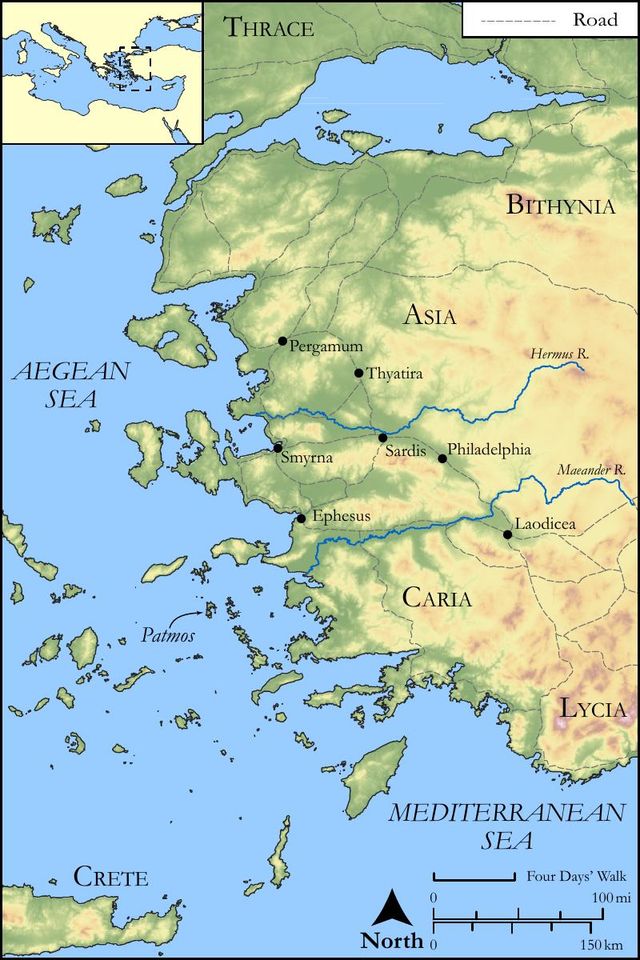
See on the biblical-era map

Study this verse
Public-domain commentary
Matthew Henry
From his Commentary on the Whole Bible. Henry comments on passages, not single verses — this entry covers Revelation 18:1–8.
The downfall and destruction of Babylon form an event so fully determined in the counsels of God, and of such consequence to his interests and glory, that the visions and predictions concerning it are repeated. 1. Here is another angel sent from heaven, attended with great power and lustre, Rev 18:1. He had not only light in himself, to discern the truth of his own prediction, but to inform and enlighten the world about that great event; and not only light to discern it, but power to accomplish it. 2. This angel publishes the fall of Babylon, as a thing already come to pass; and this he does with a mighty strong voice, that all might hear the cry, and might see how well this angel was pleased to be the messenger of such tidings. Here seems to be an allusion to the prediction of the fall of pagan Babylon (Isa 21:9), where the word is repeated as it is here: has fallen, has fallen. Some have thought a double fall is hereby intended, first her apostasy, and then her ruin; and they think the words immediately following favour their opinion; She has become the habitation of devils, and the hold of every foul spirit, and the cage of every unclean and hateful bird, Rev 18:2. But this is also borrowed from Isa 21:9, and seems to describe not so much her sin of entertaining idols (which are truly called devils) as her punishment, it being a common notion that unclean spirits, as well as ominous and hateful birds, used to haunt a city or house that lay in its ruins. 3. The reason of this ruin is declared (Rev 18:3); for, though God is not obliged to give any account of his matters, yet he is pleased to do so, especially in those dispensations of providence that are most awful and tremendous. The wickedness of Babylon had been very great; for she had not only forsaken the true God herself, and set up idols, but had with great art and industry drawn all sorts of men into the spiritual adultery, and by her wealth and luxury had retained them in her interest. 4. Fair warning is given to all that expect mercy from God, that they should not only come out of her, but be assisting in her destruction, Rev 18:4, Rev 18:5. Here observe, (1.) God may have a people even in Babylon, some who belong to the election of grace. (2.) God's people shall be called out of Babylon, and called effectually. (3.) Those that are resolved to partake with wicked men in their sins must receive of their plagues. (4.) When the sins of a people reach up to heaven, the wrath of God will reach down to the earth. (5.) Though private revenge is forbidden, yet God will have his people act under him, when called to it, in pulling down his and their inveterate and implacable enemies, Rev 18:6. (6.) God will proportion the punishment of sinners to the measure of their wickedness, pride, and security, Rev 18:7. (7.) When destruction comes on a people suddenly, the surprise is a great aggravation of their misery, Rev 18:8.
Historical interpretation
Four Centuries of Reception
5 surviving comments on this verse. Each one is dated, so this reads as a timeline rather than a list.
Select a marker to jump to its quote. Markers stagger vertically where authors wrote within a few decades of each other.
[The kings of the earth fornicated] with each other. For it would be impossible for all kings to commit fornication with a single harlot. Rather, since the evil and profligate, who are members of the harlot, corrupt each other, they are said to commit fornication with the harlot, that is, by a sinful manner of life. Then it says that “all the merchants of the earth were made rich by the wealth of her wantonness.” Here it speaks of those who were wealthy in their sins. For excess in luxury makes for poverty rather than for wealth.
This passage refers to three kinds of sins, and it also mentions the same number of those persons who transgress by them. It refers to avarice, which according to the apostle is also called a “servitude of idols”; licentiousness by the word fornication; and gluttony in that which pleases. Against this the Lord forewarned, saying, “Do not allow your hearts to be weighed down in dissipation and drunkenness.” It says that the kings of the earth have committed fornication with it. For merchants are enriched, as it says, by avarice, although some [interpreters] prefer to interpret this to mean that they are rich in sins rather than in wealth. By nations it designates that promiscuous multitude of the lewd crowd; by kings it refers to those among them who appear for a time to succeed; and by merchants it refers to those who in their desire for earthly riches trade their souls by an unhappy barter for temporal abundance. Such persons act wholly contrary to the words of the Lord: “What shall a man give in return for his life?”
And how did the present Babylon cause the nations to drink the wine of its fornication? By becoming in every way their leader in every transgression and by sending gifts to obedient cities making their rulers enemies of truth and righteousness. It says that because of the abundance of the riches of its injustice, it gave the merchants of the earth opportunities for profit because it consumed well beyond its needs and was wanton toward those in need.
And the merchants of the earth have become rich through the power of her luxury. Those who are called rich in sins exchange their souls in an unhappy trade for temporal abundance. For the excess of luxury makes them poor rather than rich.
For from of the fury of her fornication all the nations have been drunk. By "fornication" here he means their greed and love of money; for such is the manner of prostitutes. For those in the aforesaid city have indeed grown wealthy by all the nations, and after conquering them they ordained that they should pay tribute. And the kings say that the inhabitants of it have become partners and sharers of its love of money, and the merchants who trade there, it is said, grew rich from its wealth, that is, from its arrogance and unbridled, lavish and degenerate way of life, loading and disposing all kinds of cargo there.
Continue studying Revelation 18:3 across the web’s major study libraries — every link below opens this exact verse, chapter, or book on the destination site.
Read & Compare
 BibleGatewayThis verse in more than 200 translations and 70 languages.
 Bible.comThe YouVersion reader — hundreds of translations, reading plans, and highlights.
 ESV.orgCrossway's official English Standard Version reader.
 NET BibleThe NET translation with 60,000+ translators' notes on every rendering decision.
 STEP BibleTyndale House's free study tool — original text, vocabulary, and scholarly resources.
 BibliaLogos Bible Software's free web reader.
 USCCBThe New American Bible (Revised Edition) with the U.S. bishops' study notes.
Commentaries
 BibleHub CommentariesDozens of classic commentaries on this verse, gathered on one page.
 StudyLightMore than 100 commentary sets — the largest collection on the web.
 BibleRefPlain-English commentary on what this verse means, verse by verse.
 Enduring WordDavid Guzik's free commentary on this chapter, widely used by Bible teachers.
 Bible Study ToolsVerse commentary alongside Greek and Hebrew study aids.
Original Language & Research
- BibleHub InterlinearThe verse word by word — original language, transliteration, and English.
- BibleHub LexiconEvery word's original-language definition and Strong's entry.
 Blue Letter BibleDeep-study tools — Strong's numbers, concordance, and word studies.
 CNTR CollationThe earliest Greek manuscripts of this verse, collated letter by letter.
Sermons, Hymns & Audio


TrulyRandomVerse is not affiliated with these sites and doesn’t control their content. They’re linked because they’re genuinely useful.
Summary
Revelation 18:3 vividly portrays the pervasive global influence and moral corruption of "Babylon the Great," a symbolic entity representing the world system in rebellion against God. This verse details how nations, their leaders, and their economic powers have become deeply entangled in Babylon's spiritual idolatry and luxurious excesses, leading to a widespread spiritual intoxication and complicity in her unrighteousness. It underscores the profound reach of this corrupting force and sets the stage for the imminent divine judgment upon her.
Context
ShowHideLiterary Context
Revelation 18:3 is an integral part of the prophetic narrative concerning the fall and judgment of "Babylon the Great," which is introduced in detail in Revelation 17. Chapter 17 describes Babylon as a "great harlot" seated on many waters, symbolizing her widespread influence, and riding a scarlet beast, indicating her alliance with worldly political power. Chapter 18 then elaborates on the reasons for her destruction, focusing on her economic and moral corruption and the lament of those who profited from her. Verse 3, specifically, serves as a summary indictment, articulating the global scope of her spiritual "fornication" and economic exploitation, thereby justifying the severe judgment that follows, as described in subsequent verses like Revelation 18:4-8.
Historical & Cultural Context
While "Babylon" in Revelation is primarily symbolic, it draws heavily on historical and cultural allusions. Ancient Babylon, known for its idolatry, luxury, and oppression of God's people (e.g., Jeremiah 51), serves as a powerful archetype. In John's day, Rome, with its imperial cult, vast trade networks, and oppressive rule, would have been a clear contemporary parallel. The "fornication" refers not merely to sexual immorality but to spiritual idolatry and unholy alliances, a common Old Testament metaphor for Israel's unfaithfulness to God (e.g., Ezekiel 16). The "merchants" and "delicacies" reflect the opulent trade and material wealth of the Roman Empire, which often came at the expense of justice and spiritual integrity.
Key Themes
ShowHideThis verse powerfully contributes to several overarching themes within Revelation and biblical theology. It highlights the theme of global corruption and spiritual idolatry, showing how the allure of worldly power and wealth can lead nations and their leaders astray from faithfulness to God, echoing warnings found in passages like 1 John 2:15-17. It also emphasizes the theme of economic exploitation and luxury, where the pursuit of material gain becomes an idolatrous end in itself, leading to moral decay and injustice, a concept often critiqued in prophetic literature such as Amos 8:4-6. Finally, it strongly foreshadows the theme of divine judgment and justice, asserting that God will ultimately hold accountable all systems and individuals who engage in such spiritual and moral corruption, reinforcing the message of Revelation 14:8.
Exposition and Analysis
ShowHideKey Word Analysis
ShowHideWhile literally referring to sexual immorality, in the prophetic context of Revelation, porneía signifies spiritual unfaithfulness, idolatry, and illicit alliances. It denotes a departure from loyalty to God, often involving the worship of false gods or the pursuit of worldly power and wealth in place of divine allegiance. Here, it describes the spiritual adultery committed by nations and kings with Babylon, prioritizing worldly gain over God's truth.
This term denotes intense passion, fierce indignation, or burning anger. In the phrase "wine of the wrath of her fornication," it suggests that the intoxicating influence of Babylon's spiritual idolatry is itself a vehicle of God's wrath, leading nations to their own destruction. It implies that the very means by which Babylon corrupts others will become the instrument of her own downfall, as God's righteous judgment is poured out.
This word refers to excessive luxury, wantonness, or the insolent pride that stems from abundance. It highlights the opulent and self-indulgent nature of Babylon's wealth, which is often accumulated through unjust or exploitative means. The "abundance of her delicacies" signifies the seductive allure of material prosperity and sensual pleasure that draws the merchants of the earth into complicity with Babylon's corrupt system.
Verse Breakdown
ShowHide"For all nations have drunk of the wine of the wrath of her fornication,"
This clause reveals the universal reach of Babylon's corrupting influence. "All nations" signifies a global spiritual intoxication, where humanity has willingly imbibed the intoxicating "wine" of Babylon's spiritual idolatry and unfaithfulness. The "wine of the wrath of her fornication" is a powerful metaphor, suggesting that the very practices of Babylon—her spiritual prostitution and rebellion against God—are a source of divine judgment, leading those who partake to experience God's indignation. It implies a self-inflicted judgment, where their participation in her sin brings about their ruin.
"and the kings of the earth have committed fornication with her,"
This second clause focuses on the political leaders, the "kings of the earth," emphasizing their direct complicity in Babylon's spiritual harlotry. Their "fornication" is not merely passive participation but active engagement in unholy alliances and idolatrous practices. This signifies their prioritization of worldly power, political stability, and material gain over loyalty to God, forming a spiritual adultery with the corrupt world system rather than aligning with God's kingdom and His righteous standards.
"and the merchants of the earth are waxed rich through the abundance of her delicacies."
The final clause highlights the economic dimension of Babylon's corruption. The "merchants of the earth" represent the global commercial powers who have amassed immense wealth and prosperity by engaging with and benefiting from Babylon's luxurious and often exploitative economic system. The "abundance of her delicacies" points to the lavish lifestyle and excessive material comforts that characterize Babylon, which are sustained by a system built on greed and self-indulgence, further cementing the world's entanglement with her unrighteousness.
Literary Devices
ShowHideRevelation 18:3 is rich in Symbolism and Metaphor. "Babylon the Great" is a central symbol, representing not a literal city but a comprehensive worldly system of rebellion against God, characterized by idolatry, economic exploitation, and political oppression. The act of "drinking of the wine" is a powerful metaphor for spiritual intoxication and willing participation in Babylon's corrupt ways, leading to spiritual delusion and moral decay. The "wine of the wrath of her fornication" is a complex metaphor that combines the idea of Babylon's seductive sin with the impending divine judgment, suggesting that her very acts of sin bring about God's wrath. "Fornication" itself is a profound metaphor for spiritual idolatry and unfaithfulness to God, drawing on Old Testament prophetic imagery of Israel's unfaithfulness. The "kings of the earth" and "merchants of the earth" are synecdoches, representing the political and economic powers of the world, highlighting the global reach of Babylon's influence. Finally, "delicacies" serves as a symbol of the excessive luxury and material indulgence that characterizes Babylon's allure and contributes to her downfall.
Theological and Thematic Connections
ShowHideRevelation 18:3 profoundly underscores the pervasive nature of sin within human systems and the seductive power of worldly allurements. It reveals a theological truth that humanity, from the highest political offices to the most powerful economic enterprises, is susceptible to spiritual idolatry when it prioritizes worldly gain, power, and pleasure over allegiance to God. The "fornication" committed with Babylon represents a radical departure from divine covenant, a spiritual adultery where humanity gives its devotion and allegiance to the corrupt world system rather than to the one true God. This entanglement inevitably leads to a state of spiritual intoxication and moral decay, ultimately incurring divine wrath. The verse serves as a stark reminder that God sees and will judge all forms of pervasive corruption and unfaithfulness, ensuring that justice will ultimately prevail over unrighteousness.
Reflection and Application
ShowHideRevelation 18:3 serves as a profound call to spiritual discernment and ethical living for believers today. In a world saturated with consumerism, political ideologies, and economic systems that often prize gain above righteousness, and power above piety, this verse challenges us to critically evaluate where our loyalties lie. Are we, like the nations, kings, and merchants, subtly or overtly drinking from the "wine of Babylon's fornication," allowing worldly values to intoxicate our spiritual senses and compromise our faithfulness to Christ? This passage urges us to recognize the seductive nature of luxury, the corrupting influence of unchecked power, and the idolatry inherent in making wealth an ultimate pursuit. It calls us to live as pilgrims and exiles, maintaining a distinct identity and allegiance to God's kingdom, even while living within earthly systems. Our application involves resisting the pressure to conform to the world's values, seeking justice in economic and political spheres, and prioritizing spiritual integrity over material gain, always remembering that true richness is found in Christ alone.
Questions for Reflection
ShowHideFAQ
ShowHideWhat does "Babylon the Great" represent in Revelation?
ShowHide"Babylon the Great" in Revelation is a powerful symbol, not a literal city in the first century. It represents the comprehensive world system in rebellion against God, embodying all forms of human pride, idolatry, economic exploitation, and political oppression that stand in opposition to God's righteous rule. It is a composite symbol drawing on the historical Babylon (known for its idolatry and oppression of Israel) and likely referencing the Roman Empire of John's day, which was characterized by imperial cult worship, vast wealth, and persecution of Christians. Ultimately, it signifies any and all human systems—political, economic, or even religious—that lead people away from God and into spiritual "fornication" or idolatry, as seen in Revelation 17:1-6.
Christ-Centered Fulfillment
ShowHideRevelation 18:3, while describing the pervasive sin and impending judgment of the world system, ultimately points to the necessity and triumph of Christ. The "wine of the wrath of her fornication" stands in stark contrast to the "wine" of the new covenant, which is the blood of Christ shed for the forgiveness of sins (Matthew 26:28). While Babylon intoxicates nations with spiritual idolatry leading to wrath, Jesus offers true spiritual liberation and reconciliation with God. The "fornication" of the kings and nations highlights humanity's unfaithfulness, a condition that only Christ's perfect obedience and atoning sacrifice can rectify (Romans 5:19). The "merchants waxing rich through her delicacies" underscores the world's pursuit of fleeting material wealth, which is ultimately exposed as worthless in light of Christ's eternal kingdom and the true riches found in Him (Philippians 3:7-8). Christ, as the Lamb who was slain, is the one who triumphs over all the corrupt systems of this world (Revelation 5:12-13), and His followers are called to "come out of her" (Revelation 18:4) to align themselves fully with His righteous and eternal reign, finding their true satisfaction and security not in worldly delicacies but in the abundance of His grace and glory (John 6:35).