


Revelation 18:23
will never again shine in you,
the voice of bridegroom and bride
will never again be heard in you.
“For your businessmen were the most powerful on earth,
all the nations were deceived by your magic spell.
- καὶkaiAndG2532CONJConjunction
- φῶςphōs[the] lightG5457N-NSNNoun Nominative Singular Neuter
- λύχνουluchnouof lampG3088N-GSMNoun Genitive Singular Masculine
- οὐoucertainlyG3756PRT-NNegative Particle Negative
- μὴmēnotG3361PRT-NNegative Particle Negative
- φάνῃphanēmay shineG5316V-2AAS-3SVerb 2nd Aorist Active Subjunctive 3rd Singular
- ἐνeninG1722PREPPreposition
- σοὶsoiyouG4771P-2DSPersonal pronoun Dative 2nd Singular
- ἔτιetiany longerG2089ADVAdverb
- καὶkaiandG2532CONJConjunction
- φωνὴphōnē[the] voiceG5456N-NSFNoun Nominative Singular Feminine
- νυμφίουnumphiouof a bridegroomG3566N-GSMNoun Genitive Singular Masculine
- καὶkaiandG2532CONJConjunction
- νύμφηςnumphēsa brideG3565N-GSFNoun Genitive Singular Feminine
- οὐoucertainlyG3756PRT-NNegative Particle Negative
- μὴmēnotG3361PRT-NNegative Particle Negative
- ἀκουσθῇakousthēamay be heardG191V-APS-3SVerb Aorist Passive Subjunctive 3rd Singular
- ἐνeninG1722PREPPreposition
- σοὶsoiyouG4771P-2DSPersonal pronoun Dative 2nd Singular
- ἔτιetiany longerG2089ADVAdverb
- ὅτιhotiforG3754CONJConjunction
- οἱhoitheG3588T-NPMDefinite article Nominative Plural Masculine
- ἔμποροίemporoimerchantsG1713N-NPMNoun Nominative Plural Masculine
- σουsouof youG4771P-2GSPersonal pronoun Genitive 2nd Singular
- ἦσανēsanwereG1510V-IAI-3PVerb Imperfect Active Indicative 3rd Plural
- οἱhoitheG3588T-NPMDefinite article Nominative Plural Masculine
- μεγιστᾶνεςmegistanesgreat onesG3175N-NPMNoun Nominative Plural Masculine
- τῆςtēsof theG3588T-GSFDefinite article Genitive Singular Feminine
- γῆςgēsearthG1093N-GSFNoun Genitive Singular Feminine
- ὅτιhotibecauseG3754CONJConjunction
- ἐνenbyG1722PREPPreposition
- τῇtēatheG3588T-DSFDefinite article Dative Singular Feminine
- φαρμακείᾳpharmakeiasorceryG5331N-DSFNoun Dative Singular Feminine
- σουsouof youG4771P-2GSPersonal pronoun Genitive 2nd Singular
- ἐπλανήθησανeplanēthēsanwere deceivedG4105V-API-3PVerb Aorist Passive Indicative 3rd Plural
- πάνταpantaallG3956A-NPNAdjective Nominative Plural Neuter
- τὰtatheG3588T-NPNDefinite article Nominative Plural Neuter
- ἔθνηethnēnationsG1484N-NPNNoun Nominative Plural Neuter
English is a literal word-by-word gloss of the Greek, not the KJV's wording. Why?
This is the original text the KJV's translators worked from — each Greek word with its own literal English meaning in this verse, prepared by scholars at Tyndale House, Cambridge. The KJV translates whole sentences, not word by word, so its wording differs: one Greek word can become several English words, and the KJV may choose “charity” where the gloss reads “love”. Both are faithful — they answer different questions. For the KJV's own rendering, switch to the KJV text.
Details
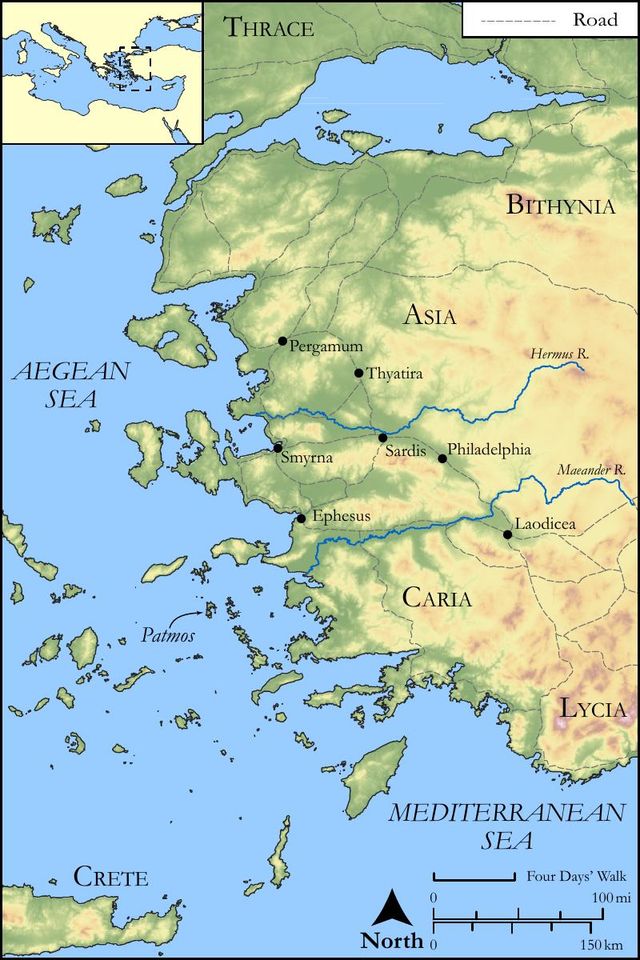
See on the biblical-era map

Study this verse
Public-domain commentary
Matthew Henry
From his Commentary on the Whole Bible. Henry comments on passages, not single verses — this entry covers Revelation 18:9–24. His three-level outline is real structure in the source text, so it is rendered as structure.
Here we have,
I.A doleful lamentation made by Babylon's friends for her fall; and here observe,
1.Who are the mourners, namely, those who had been bewitched by her fornication, those who had been sharers in her sensual pleasures, and those who had been gainers by her wealth and trade - the kings and the merchants of the earth: the kings of the earth, whom she had flattered into idolatry by allowing them to be arbitrary and tyrannical over their subjects, while they were obsequious to her; and the merchants, that is, those who trafficked with her for indulgences, pardons, dispensations, and preferments; these will mourn, because by this craft they got their wealth.
2.What was the manner of their mourning.
(1.)They stood afar off, they durst not come nigh her. Even Babylon's friends will stand at a distance from her fall. Though they had been partakers with her in her sins, and in her sinful pleasures and profits, they were not willing to bear a share in her plagues.
(2.)They made a grievous outcry: Alas! alas! that great city, Babylon, that mighty city!
(3.)They wept, and cast dust upon their heads, Rev 18:19. The pleasures of sin are but for a season, and they will end in dismal sorrow. All those who rejoice in the success of the church's enemies will share with them in their downfall; and those who have most indulged themselves in pride and pleasure are the least able to bear calamities; their sorrows will be as excessive as their pleasure and jollity were before.
3.What was the cause of their mourning; not their sin, but their punishment. They did not lament their fall into idolatry, and luxury, and persecution, but their fall into ruin - the loss of their traffic and of their wealth and power. The spirit of antichrist is a worldly spirit, and their sorrow is a mere worldly sorrow; they did not lament for the anger of God, that had now fallen upon them, but for the loss of their outward comfort. We have a large schedule and inventory of the wealth and merchandise of this city, all which was suddenly lost (Rev 18:12, Rev 18:13), and lost irrecoverably (Rev 18:14): All things which were dainty and goodly have departed from thee, and thou shalt find them no more at all. The church of God may fall for a time, but she shall rise again; but the fall of Babylon will be an utter overthrow, like that of Sodom and Gomorrah. Godly sorrow is some support under affliction, but mere worldly sorrow adds to the calamity.
II.An account of the joy and triumph there was both in heaven and earth at the irrecoverable fall of Babylon:
while her own people were bewailing her, the servants of God were called to rejoice over her, Rev 18:20. Here observe,
1.How universal this joy would be: heaven and earth, angels and saints, would join in it; that which is matter of rejoicing to the servants of God in this world is matter of rejoicing to the angels in heaven.
2.How just and reasonable; and that,
(1.)Because the fall of Babylon was an act of God's vindictive justice. God was then avenging his people's cause. They had committed their cause to him to whom vengeance belongs, and now the year of recompence had come for the controversies of Zion; and, though they did not take pleasure in the miseries of any, yet they had reason to rejoice in the discoveries of the glorious justice of God.
(2.)Because it was an irrecoverable ruin. This enemy should never molest them any more, and of this they were assured by a remarkable token (Rev 18:21): An angel from heaven took up a stone like a great millstone, and cast it into the sea, saying, "Thus shall Babylon be thrown down with violence, and be found no more at all; the place shall be no longer habitable by man, no work shall be done there, no comfort enjoyed, no light seen there, but utter darkness and desolation, as the reward of her great wickedness, first in deceiving the nations with her sorceries, and secondly in destroying and murdering those whom she could not deceive," Rev 18:24. Such abominable sins deserved so great a ruin.
Historical interpretation
Two Centuries of Reception
3 surviving comments on this verse. Each one is dated, so this reads as a timeline rather than a list.
Select a marker to jump to its quote. Markers stagger vertically where authors wrote within a few decades of each other.
Babylon is likened to a great millstone which is thrown down, for the revolving of times, as though it were a millstone, grinds down those who love the world, and it sends them in circles. Of these the Scriptures say, “The wicked walk in a circle.” … “The sound of harpers and musicians and flute players and trumpeters is no longer heard in her.” That is, the joy and happiness of the wicked passes away and is no longer to be found. And it adds the reason for this, “for your merchants were the great men of the earth,” that is, they had received good things in their lives. “The blood of the prophets and the saints was found in her and of all who have been slain by [her] upon the earth.” Did the same city kill the apostles that also killed the prophets and all of the rest of the martyrs? Rather, this is the city of all the proud and arrogant, which Cain established by the blood of his brother and which he named after the name of his son, Enoch, that is, after his posterity. For all the wicked in whom Babylon resides succeed one another and persecute the church of God until the end of the world. In the city of Cain “all the righteous blood” is poured out “from the blood of righteous Abel to the blood of Zechariah,” that is, of the people and of the priests, “between the sanctuary and the altar,” that is, between the people and the priests. This was said because not only the people but also the priests conspired in the death of Zechariah.… This is the city which killed the prophets and stoned those who were sent to it. This is that city that is built upon blood, as the Scriptures say, “Woe to him who builds a city with blood and founds a city on iniquity.”
Just as a millstone sinks with force into the sea, so also the destruction of this Babylon will be sudden, so that afterward no trace of her will be found. The absence of harpers, minstrels and the rest is an indication of this. And he gives the reason for this. [Babylon] deceived all nations with her sorcery and was the recipient of the blood of prophets and the other saints. It is possible that this passage depicts the impious Babylon among the Persians, for at various times until now she has received the blood of many saints and continually rejoices in sorceries and deceptions. And this gives us an occasion for prayer, that she receive the rewards prophesied for arrogance against Christ and his servants.
For your merchants were the great men of the earth. That is, because in your life you received your good things (Luke 16).
Continue studying Revelation 18:23 across the web’s major study libraries — every link below opens this exact verse, chapter, or book on the destination site.
Read & Compare
 BibleGatewayThis verse in more than 200 translations and 70 languages.
 Bible.comThe YouVersion reader — hundreds of translations, reading plans, and highlights.
 ESV.orgCrossway's official English Standard Version reader.
 NET BibleThe NET translation with 60,000+ translators' notes on every rendering decision.
 STEP BibleTyndale House's free study tool — original text, vocabulary, and scholarly resources.
 BibliaLogos Bible Software's free web reader.
 USCCBThe New American Bible (Revised Edition) with the U.S. bishops' study notes.
Commentaries
 BibleHub CommentariesDozens of classic commentaries on this verse, gathered on one page.
 StudyLightMore than 100 commentary sets — the largest collection on the web.
 BibleRefPlain-English commentary on what this verse means, verse by verse.
 Enduring WordDavid Guzik's free commentary on this chapter, widely used by Bible teachers.
 Bible Study ToolsVerse commentary alongside Greek and Hebrew study aids.
Original Language & Research
- BibleHub InterlinearThe verse word by word — original language, transliteration, and English.
- BibleHub LexiconEvery word's original-language definition and Strong's entry.
 Blue Letter BibleDeep-study tools — Strong's numbers, concordance, and word studies.
 CNTR CollationThe earliest Greek manuscripts of this verse, collated letter by letter.
Sermons, Hymns & Audio


TrulyRandomVerse is not affiliated with these sites and doesn’t control their content. They’re linked because they’re genuinely useful.
Summary
Revelation 18:23 delivers a stark pronouncement of the complete and irreversible desolation of "Babylon the Great," a symbolic entity representing a powerful, corrupt global system that has amassed immense wealth and influence through unrighteous means. This verse vividly portrays the cessation of all signs of life, joy, and normal societal function within this fallen power, directly linking its catastrophic downfall to its pervasive economic corruption and its insidious spiritual deception that ensnared nations.
Context
ShowHideLiterary Context
Revelation 18:23 is the climactic statement in a series of woes and laments over the fall of "Babylon the Great," which began in Revelation 17. The preceding verses (Revelation 18:21-22 specifically) describe the sudden, violent, and utterly final nature of Babylon's destruction, using the imagery of a mighty millstone cast into the sea. This verse builds upon that imagery by detailing the absence of what once defined Babylon's vibrancy and allure: light, music, and the sounds of celebration. It then provides the dual rationale for this judgment, pointing to its corrupt economic practices and its widespread spiritual manipulation, thereby concluding the prophetic indictment of this powerful, anti-God system.
Historical & Cultural Context
The imagery of a city's complete desolation, marked by the absence of light and joyous sounds, resonates deeply with Old Testament prophecies against historical cities like ancient Babylon (Isaiah 13:20-22) and Tyre (Ezekiel 26:13). In the ancient world, the flickering light of a lamp or candle was essential for life, commerce, and social gatherings after sunset, while the sounds of a bridegroom and bride signified new beginnings, family, and community joy. Their absence symbolized utter ruin, a place devoid of life and hope. The "merchants" and "great men of the earth" reflect the immense economic power and global reach of the Roman Empire, which many scholars see as the primary historical referent for "Babylon" in John's time, known for its vast trade networks and pervasive influence.
Key Themes
ShowHideThis verse powerfully encapsulates several major themes found throughout the Book of Revelation. Firstly, it underscores the theme of Divine Judgment against all forms of human rebellion and corruption, demonstrating God's ultimate sovereignty over worldly powers. Secondly, it highlights the Utter Desolation that awaits those who oppose God, emphasizing the finality of their ruin. Thirdly, it exposes the twin evils of Economic Corruption and Spiritual Deception, revealing how worldly power often intertwines with greed and false spiritual practices to mislead humanity. The phrase "by thy sorceries were all nations deceived" points to the pervasive nature of spiritual falsehoods, a recurring warning throughout Scripture against those who seek to lead people astray from the truth of God.
Exposition and Analysis
ShowHideKey Word Analysis
ShowHideThis term refers to a "wholesale tradesman" or a merchant engaged in large-scale international commerce. In the context of Babylon, it underscores the vast economic power and global reach of this system, implying that its influence was built upon extensive trade and financial dealings, often conducted with exploitative or unrighteous methods.
While literally meaning "soil" or "land," in this context, "earth" signifies the entire terrene globe, including its inhabitants and nations. This emphasizes the universal scope of Babylon's economic and deceptive influence, indicating that its power was not confined to a single locality but extended globally, impacting "all nations."
This word, from which we derive "pharmacy," literally refers to the use of drugs, potions, or medicines. However, in the New Testament, and particularly in Revelation, it carries the broader meaning of magic, spiritual enchantment, witchcraft, and deceptive practices often associated with idolatry and false religion. It implies a manipulative spiritual influence that deludes and ensnares, leading nations away from truth and righteousness through spiritual falsehoods and occult practices.
This verb means "to cause to roam from safety, truth, or virtue," or "to go astray, err, seduce, wander." It highlights the active and intentional nature of Babylon's spiritual manipulation, indicating that its "sorceries" were not merely passive influences but deliberate acts designed to lead people and nations into spiritual error and away from God.
Verse Breakdown
ShowHide"And the light of a candle shall shine no more at all in thee;"
This clause signifies the complete cessation of all light, joy, guidance, and prosperity within Babylon. In the ancient world, light was essential for life, work, and celebration. Its absence denotes utter darkness, desolation, and the end of any form of flourishing or hope. The double negative "no more at all" (Greek: ou mḗ eti) intensely emphasizes the absolute and irreversible nature of this judgment.
"and the voice of the bridegroom and of the bride shall be heard no more at all in thee:"
This imagery represents the end of all celebration, new beginnings, and the continuation of community life. Weddings were central to societal joy and the promise of future generations. Their silence indicates a permanent ruin, a place devoid of life, relationships, and any prospect of renewal or happiness. Like the candle's light, this sound marks the complete absence of vibrancy.
"for thy merchants were the great men of the earth;"
This clause provides the first reason for Babylon's judgment: its immense economic power and global influence. Its "merchants" (wholesale traders) were the "great men" (grandees, powerful leaders) of the world, suggesting that Babylon's prosperity was built upon a system that dominated global commerce and exerted control over nations through financial means, often implying exploitation and injustice.
"for by thy sorceries were all nations deceived."
This second clause reveals the deeper, spiritual reason for Babylon's downfall. Its "sorceries" (Greek: pharmakeía) refer to spiritual manipulation, witchcraft, and deceptive practices. This indicates that Babylon's influence was not merely economic but also profoundly spiritual, leading "all nations" astray through false teachings, idolatry, and occult practices that deluded people and turned them away from God's truth.
Literary Devices
ShowHideRevelation 18:23 is rich with Symbolism and Imagery. The "light of a candle" and "voice of the bridegroom and of the bride" are powerful symbols of life, joy, hope, and social vitality. Their complete absence (Hyperbole through "no more at all") underscores the absolute and irreversible nature of Babylon's destruction, portraying a city utterly devoid of any sign of life or future. The verse employs Parallelism by presenting two clauses of desolation followed by two clauses explaining the reasons for this judgment, creating a rhythmic and emphatic declaration. The description of "merchants" and "great men" highlights the Metonymy of economic power representing the entire corrupt system. Most significantly, "sorceries" functions as a potent Metaphor for spiritual deception and manipulation, extending beyond literal drug use to encompass all forms of spiritual falsehood that ensnare and mislead humanity.
Theological and Thematic Connections
ShowHideThe judgment pronounced upon Babylon in Revelation 18:23 resonates with profound theological implications regarding God's justice and the nature of worldly power. It reveals that systems built on greed, exploitation, and spiritual deception, no matter how powerful or globally influential, are ultimately subject to divine reckoning. This verse serves as a stark reminder that true prosperity and lasting joy are found not in material accumulation or worldly dominance, but in alignment with God's righteous character. The deception wrought by Babylon's "sorceries" highlights the spiritual warfare at play, where false teachings and manipulative practices lead nations away from the truth, underscoring the critical need for discernment and adherence to God's Word.
Reflection and Application
ShowHideRevelation 18:23 challenges believers to critically examine the foundations of power, wealth, and influence in our world. It warns against the seductive allure of systems that promise prosperity and control but are built on unrighteousness and spiritual falsehood. For us today, "Babylon" can represent any globalized system—economic, political, or cultural—that prioritizes profit and power over justice, truth, and human dignity, and that subtly or overtly leads people away from God. This verse calls for spiritual discernment, urging us to recognize and resist the "sorceries" of our age—the deceptive ideologies, manipulative media, and false promises that seek to enthrall and mislead. It encourages us to invest our hope and energy not in fleeting earthly empires, but in the eternal kingdom of God, finding our joy and true security in Christ alone. Ultimately, it reinforces the comforting truth that God's justice will prevail, and every system that opposes Him will face ultimate desolation, making way for His righteous reign.
Questions for Reflection
ShowHideFAQ
ShowHideWhat is the significance of the "light of a candle" and "voice of the bridegroom and bride" ceasing?
ShowHideThe cessation of the "light of a candle" and the "voice of the bridegroom and of the bride" signifies the complete and utter desolation of "Babylon the Great." In the ancient world, light was essential for daily life, commerce, and safety after dark; its absence implies total darkness, lack of guidance, and the end of all activity and prosperity. Similarly, the sounds of a bridegroom and bride were synonymous with weddings, which symbolized joy, new beginnings, family, and the continuation of community life. Their silence indicates that all celebration, hope, and the very fabric of society have been irrevocably destroyed. This imagery powerfully conveys the finality and totality of God's judgment, leaving Babylon as a place utterly devoid of life, joy, and future. This kind of imagery is also found in Old Testament prophecies of judgment, such as in Jeremiah 25:10.
Christ-Centered Fulfillment
ShowHideRevelation 18:23, while a declaration of judgment, ultimately points to the triumph of Christ. The cessation of light in Babylon stands in stark contrast to Jesus, who is the true Light of the world, whose light shines in the darkness and can never be overcome (John 1:4-5). The silence of the bridegroom and bride in Babylon's ruin foreshadows the glorious and eternal celebration of the Marriage Supper of the Lamb, where Christ, the ultimate Bridegroom, unites with His pure and radiant Bride, the Church (Ephesians 5:25-27). While Babylon's merchants were the "great men of the earth," Jesus is the King of kings and Lord of lords, whose reign is eternal and righteous. The deception that enslaved nations through Babylon's "sorceries" is utterly defeated by Christ, who came to destroy the works of the devil and to set the captives free from spiritual blindness and bondage (Luke 4:18). Thus, Babylon's fall is not just an end, but a necessary prelude to the full establishment of Christ's kingdom, where His light, joy, and truth will reign supreme forever.