


Psalms 83:15
Bible text: King James Version (1769 Blayney text) · Public domain
Bible text: Berean Standard Bible · Public domain
Bible text: American Standard Version (1901) · Public domain
Bible text: World English Bible, Messianic edition · Public domain
Bible text: Geneva Bible (1599) · Public domain
Bible text: Young's Literal Translation · Public domain
- כֵּןkensoH3651AdvAdverb
- תִּרְדְּפֵםtir·de·Femyou will pursue themH7291V-Qal-Imperf-2ms ¦ 3mpVerb Qal Imperfect 2nd Singular Masculineתִּרְדְּפֵyou will pursueםthem
- בְּסַעֲרֶךָbe·sa·'a·Re·khawith your stormH5591Prep-b ¦ N-msc ¦ 2msNoun Singular Masculine Constructבְּwithסַעֲרֶstormךָyour
- וּבְסוּפָתְךָu·ve·su·fa·te·Khaand with your storm-windH5492Conj-w ¦ Prep-b ¦ N-fsc ¦ 2msNoun Singular Feminine Constructוּandבְwithסוּפָתְstorm-windךָyour
- תְבַהֲלֵםte·va·ha·Lemyou will terrify themH926V-Piel-Imperf-2ms ¦ 3mpVerb Piel Imperfect 2nd Singular Masculineתְבַהֲלֵyou will terrifyםthem
English is a literal word-by-word gloss of the Hebrew, not the KJV's wording. Why?
This is the original text the KJV's translators worked from — each Hebrew word with its own literal English meaning in this verse, prepared by scholars at Tyndale House, Cambridge. The KJV translates whole sentences, not word by word, so its wording differs: one Hebrew word can become several English words, and the KJV may choose “the LORD” where the gloss reads “Yahweh”. Both are faithful — they answer different questions. For the KJV's own rendering, switch to the KJV text.
Details
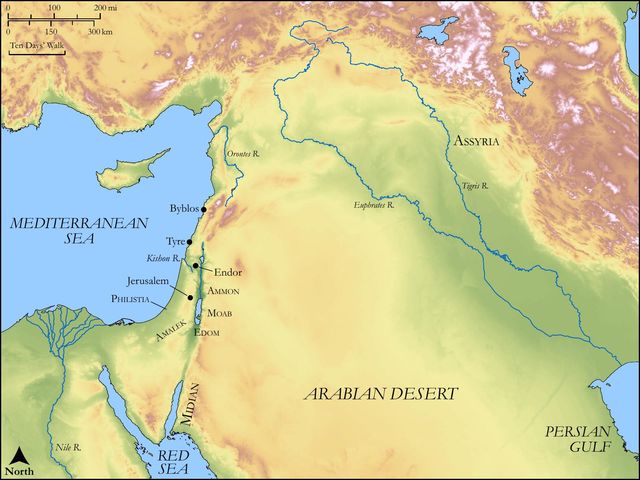
See on the biblical-era map
Study this verse
Public-domain commentary
Matthew Henry
From his Commentary on the Whole Bible. Henry comments on passages, not single verses — this entry covers Psalms 83:9–18. His three-level outline is real structure in the source text, so it is rendered as structure.
The psalmist here, in the name of the church, prays for the destruction of those confederate forces, and, in God's name, foretels it; for this prayer that it might be so amounts to a prophecy that it shall be so, and this prophecy reaches to all the enemies of the gospel-church; whoever they be that oppose the kingdom of Christ, here they may read their doom. The prayer is, in short, that these enemies, who were confederate against Israel, might be defeated in all their attempts, and that they might prove their own ruin, and so God's Israel might be preserved and perpetuated. Now this is here illustrated,
I.By some precedents.
Let that be their punishment which has been the fate of others who have formerly set themselves against God's Israel. The defeat and discomfiture of former combinations may be pleaded in prayer to God and improved for the encouragement of our own faith and hope, because God is the same still that ever he was, the same to his people and the same against his and their enemies; with him is no variableness.
1.He prays that their armies might be destroyed as the armies of former enemies had been (Psa 83:9, Psa 83:10): Do to them as to the Midianites; let them be routed by their own fears, for so the Midianites were, more than by Gideon's 300 men. Do to them as to the army under the command of Sisera (who was general under Jabin king of Canaan) which God discomfited (Jdg 4:15) at the brook Kishon, near to which was Endor. They became as dung on the earth; their dead bodies were thrown like dung laid in heaps, or spread, to fatten the ground; they were trodden to dirt by Barak's small but victorious army; and this was fitly made a precedent here, because Deborah made it so to aftertimes when it was fresh. Jdg 5:31, So let all thy enemies perish, O Lord! that is, So they shall perish.
2.He prays that their leaders might be destroyed as they had been formerly. The common people would not have been so mischievous if their princes had not set them on, and therefore they are particularly prayed against, Psa 83:11, Psa 83:12. Observe,
(1.)What their malice was against the Israel of God. They said, Let us take to ourselves the houses of God in possession (Psa 83:12), the pleasant places of God (so the word is), by which we may understand the land of Canaan, which was a pleasant land and was Immanuel's land, or the temple, which was indeed God's pleasant place (Isa 64:11), or (as Dr. Hammond suggests) the pleasant pastures, which these Arabians, who traded in cattle, did in a particular manner seek after. The princes and nobles aimed to enrich themselves by this war; and their armies must be made as dung for the earth, to serve their covetousness and their ambition.
(2.)What their lot should be. They shall be made like Oreb and Zeeb (two princes of the Midianites, who, when their forces were routed, were taken in their flight by the Ephraimites and slain, Jdg 7:25), and like Zeba and Zalmunna, whom Gideon himself slew, Jdg 8:21. "Let these enemies of ours be made as easy a prey to us as they were to the conquerors then." We may not prescribe to God, but we may pray to God that he will deal with the enemies of his church in our days as he did with those in the days of our fathers.
II.He illustrates it by some similitudes, and prays,
1.That God would make them like a wheel (Psa 83:13), that they might be in continual motion, unquiet, unsettled, and giddy in all their counsels and resolves, that they might roll down easily and speedily to their own ruin. Or, as some think, that they might be broken by the judgments of God, as the corn is broken, or beaten out, by the wheel which was then used in threshing. Thus, when a wise king scatters the wicked, he is said to bring the wheel over them, Pro 20:26. Those that trust in God have their hearts fixed; those that fight against him are unfixed, like a wheel.
2.That they might be chased as stubble, or chaff, before the fierce wind. "The wheel, though it continually turn round, is fixed on its own axis; but let them have no more fixation than the light stubble has, which the wind hurries away, and nobody desires to save it, but is willing it should go," Psa 1:4. Thus shall the wicked be driven away in his wickedness, and chased out of the world.
3.That they might be consumed, as wood by the fire, or as briers and thorns, as fern or furze, upon the mountains, by the flames, Psa 83:14. When the stubble is driven by the wind it will rest, at last, under some hedge, in some ditch or other; but he prays that they might not only be driven away as stubble, but burnt up as stubble. And this will be the end of wicked men (Heb 6:8) and particularly of all the enemies of God's church. The application of these comparisons we have (Psa 83:15): So persecute them with thy tempest, persecute them to their utter ruin, and make them afraid with thy storm. See how sinners are made miserable; the storm of God's wrath raises terrors in their own hearts, and so they are made completely miserable. God can deal with the proudest and most daring sinner that has bidden defiance to his justice, and can make him afraid as a grasshopper. It is the torment of devils that they tremble.
III.He illustrates it by the good consequences of their confusion, Psa 83:16-18.
He prays here that God, having filled their hearts with terror, would thereby fill their faces with shame, that they might be ashamed of their enmity to the people of God (Isa 26:11), ashamed of their folly in acting both against Omnipotence itself and their own true interest. They did what they could to put God's people to shame, but the shame will at length return upon themselves. Now,
1.The beginning of this shame might be a means of their conversion: "Let them be broken and baffled in their attempts, that they may seek thy name, O Lord! Let them be put to a stand, that they may have both leisure and reason to pause a little, and consider who it is that they are fighting against and what an unequal match they are for him, and may therefore humble and submit themselves and desire conditions of peace. Let them be made to fear thy name, and perhaps that will bring them to seek thy name." Note, That which we should earnestly desire and beg of God for our enemies and persecutors is that God would bring them to repentance, and we should desire their abasement in order to this, no other confusion to them than what may be a step towards their conversion.
2.If it did not prove a means of their conversion, the perfecting of it would redound greatly to the honour of God. If they will not be ashamed and repent, let them be put to shame and perish; if they will not be troubled and turned, which would soon put an end to all their trouble, a happy end, let them be troubled for ever, and never have peace: this will be for God's glory (Psa 83:18), that other men may know and own, if they themselves will not, that thou, whose name alone is JEHOVAH (that incommunicable, though not ineffable name) art the Most High over all the earth. God's triumphs over his and his church's enemies will be incontestable proofs,
(1.)That he is, according to his name JEHOVAH, a self-existent self-sufficient Being, that has all power and perfection in himself.
(2.)That he is the most high God, sovereign Lord of all, above all gods, above all kings, above all that exalt themselves and pretend to be high.
(3.)That he is so, not only over the land of Israel, but over all the earth, even those nations of the earth that do not know him or own him; for his kingdom rules over all. These are great and unquestionable truths, but men will hardly be persuaded to know and believe them; therefore the psalmist prays that the destruction of some might be the conviction of others. The final ruin of all God's enemies, in the great day, will be the effectual proof of this, before angels and men, when the everlasting shame and contempt to which sinners shall rise (Dan 12:2) shall redound to the everlasting honour and praise of that God to whom vengeance belongs.
Historical interpretation
Historical reception
1 surviving comment on this verse from the historical church.
This levity, by which consent is easily given to what is evil, is followed by severe torment; therefore he proceeds:—
"Like as the fire that burns up the wood, and as the flame that consumes the mountains" [Psalm 83:14]: "so shall You persecute them with Your tempest, and in Your anger shall disturb them" [Psalm 83:15]. Wood, he says, for its barrenness, mountains for their loftiness; for such are the enemies of God's people, barren of righteousness, full of pride. When he says, "fire" and "flame," he means to repeat under another term, the idea of God judging and punishing. But in saying, "with Your tempest," he means, as he goes on to explain, "Your anger:" and the former expression, "You shall persecute," answers to, "You shall disturb." We must take care, however, to understand, that the anger of God is free from any turbulent emotion; for His anger is an expression for His just method of taking vengeance: as the law might be said to be angry when its ministers are moved to punish by its sanction.
Continue studying Psalms 83:15 across the web’s major study libraries — every link below opens this exact verse, chapter, or book on the destination site.
Read & Compare
 BibleGatewayThis verse in more than 200 translations and 70 languages.
 Bible.comThe YouVersion reader — hundreds of translations, reading plans, and highlights.
 ESV.orgCrossway's official English Standard Version reader.
 NET BibleThe NET translation with 60,000+ translators' notes on every rendering decision.
 STEP BibleTyndale House's free study tool — original text, vocabulary, and scholarly resources.
 BibliaLogos Bible Software's free web reader.
 USCCBThe New American Bible (Revised Edition) with the U.S. bishops' study notes.
Commentaries
 BibleHub CommentariesDozens of classic commentaries on this verse, gathered on one page.
 StudyLightMore than 100 commentary sets — the largest collection on the web.
 BibleRefPlain-English commentary on what this verse means, verse by verse.
 Enduring WordDavid Guzik's free commentary on this chapter, widely used by Bible teachers.
 Bible Study ToolsVerse commentary alongside Greek and Hebrew study aids.
Original Language & Research
- BibleHub InterlinearThe verse word by word — original language, transliteration, and English.
- BibleHub LexiconEvery word's original-language definition and Strong's entry.
 Blue Letter BibleDeep-study tools — Strong's numbers, concordance, and word studies.
 SefariaThe Hebrew text with Rashi and centuries of Jewish commentary.
Sermons, Hymns & Audio


TrulyRandomVerse is not affiliated with these sites and doesn’t control their content. They’re linked because they’re genuinely useful.
Summary
Psalms 83:15 is a fervent imprecatory plea from the psalmist, Asaph, calling upon God to unleash His overwhelming divine power against the confederacy of nations threatening Israel. It implores the Almighty to pursue and terrify these adversaries with the irresistible force of a "tempest" and a "storm," thereby discomfiting their malicious designs and demonstrating God's supreme sovereignty and justice in vindicating His name and protecting His chosen people.
Context
ShowHideLiterary Context
Psalms 83 stands as a powerful national lament and imprecatory prayer within Book Three of the Psalter (Psalms 73-89), a collection often marked by communal distress and appeals for divine deliverance. The psalm opens with an urgent cry for God to break His perceived silence (verses 1-2), detailing the insidious conspiracy of a formidable coalition of enemies intent on eradicating Israel's very existence (verses 3-8). Following this exposition of the threat, the psalmist transitions into a series of impassioned petitions for divine judgment, drawing parallels to past acts of God's intervention (verses 9-12). Verse 15 is a climactic request for God to deploy His control over natural forces as instruments of His wrath, building upon the vivid imagery of divine judgment introduced in the preceding verses, such as likening the enemies to wind-driven chaff or a consuming fire, as vividly depicted in Psalms 83:13-14. The ultimate goal of this judgment, as the psalm concludes, is the universal recognition of God's unique and supreme sovereignty.
Historical & Cultural Context
This psalm likely reflects a period of profound national insecurity for ancient Israel, possibly during the tumultuous era of the Divided Monarchy or a post-exilic challenge, when various regional powers frequently formed alliances to oppress or annihilate the Israelite nation. The specific enumeration of adversaries in Psalms 83:6-8, including Edom, Moab, Ammon, Philistia, Tyre, and Assyria, points to a broad and existential threat. Within the Hebrew worldview, powerful natural phenomena like storms, whirlwinds, and tempests were not seen as random occurrences but as direct, tangible manifestations of divine power, wrath, and judgment, for "the LORD hath his way in the whirlwind and in the storm." The psalmist's appeal to God's command over the "tempest" and "storm" would have resonated deeply with a culture that recognized the raw, destructive force of nature as a direct extension of a deity's will, often signifying a theophany or an act of divine intervention.
Key Themes
ShowHidePsalms 83:15 profoundly contributes to several overarching themes present within the psalm and broader biblical theology. Foremost is the theme of Divine Justice and Vengeance, portraying God not as a passive observer but as an active, righteous judge who will decisively confront injustice, the oppression of His covenant people, and the blasphemy of His holy name. The psalmist's petition is not born of personal malice but from a fervent desire for God's righteous justice to be executed. Secondly, the verse powerfully underscores God's Absolute Sovereignty Over Creation. The "tempest" and "storm" are not uncontrolled forces but divinely directed instruments, demonstrating God's absolute command over all natural elements, which He can wield to achieve His redemptive and judicial purposes, a truth echoed in passages like Nahum 1:3. Finally, and crucially, the ultimate purpose of this requested judgment, as explicitly stated in Psalms 83:18, is the Vindication of God's Name and Glory. The destruction and discomfiture of the enemies serve to reveal God's unique identity as "JEHOVAH" and His supreme authority "over all the earth," compelling all nations to acknowledge Him as the one true God.
Exposition and Analysis
ShowHideKey Word Analysis
ShowHideThis primitive root means "to run after (usually with hostile intent; figuratively (of time) gone by); chase, put to flight, follow (after, on), hunt, (be under) persecute(-ion, -or), pursue(-r)." In this context, it signifies God's active, relentless, and hostile pursuit of the enemies. It implies not merely a defeat but a sustained divine action that drives them away, harasses them, and leaves them no escape, ensuring their complete discomfiture.
This word refers to "a hurricane; storm(-y), tempest, whirlwind." It denotes a violent, tumultuous wind or gale, often associated with God's powerful and destructive presence, particularly in contexts of judgment. The psalmist invokes this word to depict an overwhelming, chaotic natural phenomenon directly controlled and unleashed by God, emphasizing the irresistible force and intensity of the divine judgment.
This primitive root means "to tremble inwardly (or palpitate), i.e. (figuratively) be (causative, make) (suddenly) alarmed or agitated; by implication to hasten anxiously; be (make) affrighted (afraid, amazed, dismayed, rash), (be, get, make) haste(-n, -y, -ily), (give) speedy(-ily), thrust out, trouble, vex." Here, it describes the desired psychological and emotional effect on the enemies: to be suddenly terrified, dismayed, and thrown into anxious haste, leading to their complete disarray and flight.
Verse Breakdown
ShowHide"So persecute them with thy tempest"
This initial clause is a direct and urgent petition to God, the sovereign Lord. The psalmist implores God to actively and relentlessly pursue and harass the enemies of Israel, employing His divine "tempest." This "tempest" (Hebrew: çaʻar) is a powerful, destructive natural force, a metaphor for God's active, overwhelming, and terrifying judgment. The request is for God to unleash His might to drive the adversaries away, causing them to flee in terror and disarray, leaving them no refuge from His wrath.
"and make them afraid with thy storm"
This second clause functions in powerful synonymous parallelism with the first, reinforcing and intensifying the plea for divine intervention. It specifies the desired psychological and emotional outcome of God's action: to instill profound fear, panic, and dismay in the enemies. The "storm" (Hebrew: çûwphâh, a hurricane or whirlwind, often associated with divine wrath) is depicted as the instrument through which God will cause their terror, leading to their utter discomfiture and eventual defeat. The ultimate goal is not merely physical destruction but a breaking of their will and spirit, ensuring their recognition of God's power and their inability to oppose Him and His people.
Literary Devices
ShowHidePsalms 83:15 masterfully employs several potent literary devices to convey its urgent and powerful message. The most prominent is Synonymous Parallelism, where the second half of the verse, "and make them afraid with thy storm," closely echoes and amplifies the meaning of the first half, "So persecute them with thy tempest." This structural repetition serves to intensify the psalmist's fervent plea for God's decisive action and underscores the overwhelming nature of the divine judgment being invoked. Imagery is central to the verse's power, as it vividly depicts God wielding the raw, destructive forces of nature—the "tempest" and the "storm"—as instruments of His wrath. These powerful images evoke a visceral sense of irresistible force, inescapable terror, and chaotic disarray for the enemies. Furthermore, there is a clear element of Anthropomorphism, where God is described as actively "persecuting" and "making afraid." This attribution of human-like actions and intentions to the divine emphasizes God's direct, personal involvement in the affairs of humanity and His unwavering commitment to executing justice on behalf of His covenant people.
Theological and Thematic Connections
ShowHideThis verse, characteristic of the imprecatory psalms, offers profound theological insights into the nature of God and His active relationship with His covenant people. It powerfully affirms God's character as a righteous and just judge who is neither indifferent to injustice nor passive in the face of threats against His people or His holy name. The invocation of natural forces like "tempest" and "storm" underscores God's absolute and unchallengeable sovereignty over all creation, demonstrating that even the most chaotic and destructive elements are entirely under His command and can be deployed for His divine purposes of judgment, vindication, and the revelation of His glory. While the Old Testament frequently portrays God's direct and often forceful intervention against His enemies, it is crucial to understand that such prayers are deeply rooted in a covenantal framework where Israel's adversaries were often perceived as direct enemies of God's redemptive plan and His very being. The ultimate aim of such judgment, as the psalm's conclusion makes clear, transcends mere vengeance; it is fundamentally about the revelation of God's unique and supreme identity to all nations, compelling them to acknowledge Him alone as the Most High.
Reflection and Application
ShowHidePsalms 83:15, like all imprecatory psalms, challenges contemporary believers to engage deeply with the raw human emotions of distress, injustice, and the profound desire for divine rectification in the face of evil. While the New Testament unequivocally calls us to love our enemies and pray for those who persecute us, this psalm serves as a vital reminder that God is indeed a righteous and active judge who will ultimately bring perfect justice to the earth. It encourages us to cultivate a profound trust in God's perfect timing and His sovereign methods for vindication, recognizing that vengeance belongs exclusively to Him, as powerfully affirmed in Romans 12:19. For us today, this verse can be a powerful source of comfort and strength, reminding us of God's absolute sovereignty and His unfailing ability to protect His people and uphold His glory amidst any opposition. When we ourselves face overwhelming adversaries, profound injustice, or spiritual attacks, we can find solace and courage in knowing that the Lord of the "tempest" and "storm" is our ultimate refuge and strength, and He will ultimately set all things right, ensuring that His glorious name is magnified among all nations.
Questions for Reflection
ShowHideFAQ
ShowHideDoes Psalms 83:15 encourage believers to pray for harm on their enemies?
ShowHidePsalms 83:15, like other imprecatory psalms, expresses a raw, intense, and righteous cry for divine justice against those who actively threaten God's people and blaspheme His holy name. In the Old Testament covenantal context, the enemies of Israel were often viewed as direct enemies of God's covenant and His redemptive plan for humanity. The psalmist's prayer is not born of personal vengeance or malice but from a deep desire for God's righteous judgment to be executed for the vindication of His name and the protection of His chosen people. For New Testament believers, the teachings of Jesus Christ provide a new and higher ethical framework, calling us to love your enemies and to pray for those who persecute you. While we acknowledge God's ultimate justice and His absolute sovereignty over all things, including the execution of judgment, our specific prayers for those who oppose us should be for their repentance, transformation, and salvation. We are called to leave the execution of divine wrath to God's perfect timing and method, as Romans 12:19 powerfully reminds us. These psalms, therefore, serve to remind us of God's unwavering character as a just judge who will ultimately set all things right, rather than serving as a direct template for our personal prayers for retribution.
Christ-Centered Fulfillment
ShowHidePsalms 83:15, with its fervent plea for God to unleash His "tempest" and "storm" upon His enemies, finds its most profound Christ-centered fulfillment in the person and work of Jesus Christ. Ultimately, the righteous wrath of God, symbolized by such overwhelming and destructive natural forces, was poured out not upon humanity's enemies, but upon God's own Son, Jesus Christ, on the cross. There, Jesus willingly bore the full "storm" of divine judgment for the sins of the world, becoming the ultimate atoning sacrifice that perfectly reconciles humanity to God, as powerfully articulated in 2 Corinthians 5:21. Furthermore, Jesus Himself demonstrated absolute divine authority over literal tempests, famously calming the raging storm on the Sea of Galilee with a mere word, as recorded in Mark 4:39, thereby revealing His inherent sovereignty over creation—the very forces the psalmist invokes for judgment. While the psalmist prays for God to "persecute" enemies with a storm, Christ teaches His followers a new covenant ethic to love their enemies and pray for their salvation, embodying a radical grace that seeks reconciliation and redemption rather than immediate retribution. Yet, Christ is also the one who will return as the ultimate, righteous judge, when the "day of the Lord" will indeed come with overwhelming fire and judgment, as foretold in 2 Peter 3:10, bringing final justice and vindication for God's name and His people, thereby fulfilling the ultimate purpose of the psalmist's cry for God's glorious and decisive intervention.