

 TRV
TRV
- English
- King James KJV
- Complete Jewish CJB
- World English WEBM
- Berean Standard BSB
- American Standard ASV
- Geneva GNV
- Young's Literal YLT
- Douay-Rheims DRC
- International
- Shqip ALB
- العربية SVD
- বাংলা BN-IRV
- မြန်မာ Judson
- 简体文 CUV-S
- 繁體中文 CUV-T
- Čeština BKR
- Nederlands STVE
- Français LSG
- Deutsch SCH
- Ελληνικά Vamvas
- ગુજરાતી GU-IRV
- Hausa HCB
- עברית Hebrew
- हिन्दी HCV
- Magyar KAROLI
- Bahasa Indonesia INDO-TB
- Italiano Diodati
- 日本語 Kougo
- 한국어 Korean
- മലയാളം MAL
- मराठी MRCV
- Norsk DNB
- فارسی OPV
- Polski BG
- Português Almeida
- Română Cornilescu
- Русский Synodal
- Español RVG
- Kiswahili Neno
- Svenska SV1917
- Tagalog TAG-ADB
- தமிழ் TCV
- తెలుగు TSA
- ภาษาไทย THAI-KJV
- Українська Ohienko
- Tiếng Việt CADMAN
- Yorùbá YCB
Colossians 2:4-12
Warning Against False Philosophy and Deceit
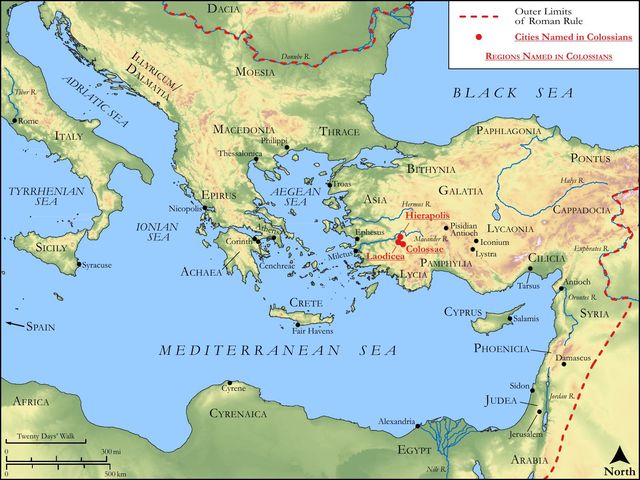
In this passage
- Who
- Where
- When
- About
See also
Where else Scripture says this.
1 Timothy 6:20
O Timothy, guard what has been entrusted to you. Avoid irreverent, empty chatter and the opposing arguments of so-called “knowledge,”from verse 8Ephesians 3:17
so that Christ may dwell in your hearts through faith. Then you, being rooted and grounded in love,from verse 7Ephesians 5:6
Let no one deceive you with empty words, for because of such things the wrath of God is coming on the sons of disobedience.from verse 4Colossians 1:19
For God was pleased to have all His fullness dwell in Him,from verse 9Colossians 1:10
so that you may walk in a manner worthy of the Lord and may please Him in every way: bearing fruit in every good work, growing in the knowledge of God,from verse 6John 1:14
The Word became flesh and made His dwelling among us. We have seen His glory, the glory of the one and only Son from the Father, full of grace and truth.from verse 9Jeremiah 17:8
He is like a tree planted by the waters that sends out its roots toward the stream. It does not fear when the heat comes, and its leaves are always green. It does not worry in a year of drought, nor does it cease to produce fruit.from verse 7John 10:30
I and the Father are one.”from verse 91 John 2:6
Whoever claims to abide in Him must walk as Jesus walked.from verse 6Matthew 7:15
Beware of false prophets. They come to you in sheep’s clothing, but inwardly they are ravenous wolves.from verse 81 Thessalonians 4:1
Finally, brothers, we ask and encourage you in the Lord Jesus to live in a way that is pleasing to God, just as you have received from us. This is how you already live, so you should do so all the more.from verse 6Galatians 4:9
But now that you know God, or rather are known by God, how is it that you are turning back to those weak and worthless principles? Do you wish to be enslaved by them all over again?from verse 8
Where this happens

Study this passage
Commentary written on this passage, not on a single verse.
Public-domain commentary
Matthew Henry
From his Commentary on the Whole Bible. Henry comments on passages, not single verses — this entry covers Colossians 2:4–12. His three-level outline is real structure in the source text, so it is rendered as structure.
The apostle cautions the Colossians against deceivers (Col 2:4): And this I say lest any man beguile you with enticing words; and Col 2:8, Lest any man spoil you. He insists so much upon the perfection of Christ and the gospel revelation, to preserve them from the ensnaring insinuations of those who would corrupt their principles. Note, 1. The way in which Satan spoils souls is by beguiling them. He deceives them, and by this means slays them. He is the old serpent who beguiled Eve through his subtlety, Co2 11:3. He could not ruin us if he did not cheat us; and he could not cheat us but by our own fault and folly. 2. Satan's agents, who aim to spoil them, beguile them with enticing words. See the danger of enticing words; how many are ruined by the flattery of those who lie in wait to deceive, and by the false disguises and fair appearances of evil principles and wicked practices. By good words, and fair speeches, they deceive the hearts of the simple, Rom 16:18. "You ought to stand upon your guard against enticing words, and be aware and afraid of those who would entice you to any evil; for that which they aim at is to spoil you." If sinners entice thee, consent thou not, Pro 1:10. Observe,
I.A sovereign antidote against seducers (Col 2:6, Col 2:7):
As you have therefore received Christ Jesus the Lord, so walk you in him, rooted and built up, etc. Here note,
1.All Christians have, in profession at least, received Jesus Christ the Lord, received him as Christ, the great prophet of the church, anointed by God to reveal his will; as Jesus the great high priest, and Saviour from sin and wrath, by the expiatory sacrifice of himself; and as Lord, or sovereign and king, whom we are to obey and be subject to. - Received him, consented to him, taken him for ours in every relation and every capacity, and for all the purposes and uses of them.
2.The great concern of those who have received Christ is to walk in him - to make their practices conformable to their principles and their conversation agreeable to their engagements. As we have received Christ, or consented to be his, so we must walk with him in our daily course and keep up our communion with him.
3.The more closely we walk with Christ the more we are rooted and established in the faith. A good conversation is the best establishment of a good faith. If we walk in him, we shall be rooted in him; and the more firmly we are rooted in him the more closely we shall walk in him: Rooted and built up. Observe, We cannot be built up in Christ, unless we be first rooted in him. We must be united to him by a lively faith, and heartily consent to his covenant, and then we shall grow up in him in all things. - As you have been taught - "according to the rule of the Christian doctrine, in which you have been instructed." Observe, A good education has a good influence upon our establishment. We must be established in the faith, as we have been taught, abounding therein. Observe, Being established in the faith, we must abound therein, and improve in it more and more; and this with thanksgiving. The way to have the benefit and comfort of God's grace is to be much in giving thanks for it. We must join thanksgiving to all our improvements, and be sensible of the mercy of all our privileges and attainments. Observe,
II.The fair warning given us of our danger:
Beware lest any man spoil you through philosophy and vain deceit, after the tradition of men, after the rudiments of the world, and not after Christ, Col 2:8. There is a philosophy which is a noble exercise of our reasonable faculties, and highly serviceable to religion, such a study of the works of God as leads us to the knowledge of God and confirms our faith in him. But there is a philosophy which is vain and deceitful, which is prejudicial to religion, and sets up the wisdom of man in competition with the wisdom of God, and while it pleases men's fancies ruins their faith; as nice and curious speculations about things above us, or of no use and concern to us; or a care of words and terms of art, which have only an empty and often a cheating appearance of knowledge. After the tradition of men, after the rudiments of the world: this plainly reflects upon the Jewish pedagogy or economy, as well as the Pagan learning. The Jews governed themselves by the traditions of their elders and the rudiments or elements of the world, the rites and observances which were only preparatory and introductory to the gospel state; the Gentiles mixed their maxims of philosophy with their Christian principles; and both alienated their minds from Christ. Those who pin their faith on other men's sleeves, and walk in the way of the world, have turned away from following after Christ. The deceivers were especially the Jewish teachers, who endeavoured to keep up the law of Moses in conjunction with the gospel of Christ, but really in competition with it and contradiction to it. Now here the apostle shows,
1.That we have in Christ the substance of all the shadows of the ceremonial law; for example,
(1.)Had they then the Shechinah, or special presence of God, called the glory, from the visible token of it? So have we now in Jesus Christ (Col 2:9): For in him dwelleth all the fulness of the Godhead bodily. Under the law, the presence of God dwelt between the cherubim, in a cloud which covered the mercy-seat; but now it dwells in the person of our Redeemer, who partakes of our nature, and is bone of our bone and flesh of our flesh, and has more clearly declared the Father to us. It dwells in him bodily; not as the body is opposed to the spirit, but as the body is opposed to the shadow. The fulness of the Godhead dwells in the Christ really, and not figuratively; for he is both God and man.
(2.)Had they circumcision, which was the seal of the covenant? In Christ we are circumcised with the circumcision made without hands (Col 2:11), by the work of regeneration in us, which is the spiritual or Christian circumcision. He is a Jew who is one inwardly, and circumcision is that of the heart, Rom 2:29. This is owing to Christ, and belongs to the Christian dispensation. It is made without hands; not by the power of any creature, but by the power of the blessed Spirit of God. We are born of the Spirit, Joh 3:5. And it is the washing of regeneration, and renewing of the Holy Spirit, Tit 3:5. It consists in putting off the body of the sins of the flesh, in renouncing sin and reforming our lives, not in mere external rites. It is not the putting away of the filth of the flesh, but the answer of a good conscience towards God, Pe1 3:21. And it is not enough to put away some one particular sin, but we must put off the whole body of sin. The old man must be crucified, and the body of sin destroyed, Rom 6:6. Christ was circumcised, and, by virtue of our union to him, we partake of that effectual grace which puts off the body of the sins of the flesh. Again, The Jews thought themselves complete in the ceremonial law; but we are complete in Christ, Col 2:10. That was imperfect and defective; if the first covenant had been faultless, there would no place have been sought for the second (Heb 8:7), and the law was but a shadow of good things, and could never, by those sacrifices, make the comers thereunto perfect, Heb 10:1. But all the defects of it are made up in the gospel of Christ, by the complete sacrifice for sin and revelation of the will of God. Which is the head of all principality and power. As the Old Testament priesthood had its perfection in Christ, so likewise had the kingdom of David, which was the eminent principality and power under the Old Testament, and which the Jews valued themselves so much upon. And he is the Lord and head of all the powers in heaven and earth, of angels and men. Angels, and authorities, and powers are subject to him, Pe1 3:22.
2.We have communion with Christ in his whole undertaking (Col 2:12): Buried with him in baptism, wherein also you have risen with him. We are both buried and rise with him, and both are signified by our baptism; not that there is anything in the sign or ceremony of baptism which represents this burying and rising, any more than the crucifixion of Christ is represented by any visible resemblance in the Lord's supper: and he is speaking of the circumcision made without hands; and says it is through the faith of the operation of God. But the thing signified by our baptism is that we are buried with Christ, as baptism is the seal of the covenant and an obligation to our dying to sin; and that we are raised with Christ, as it is a seal and obligation to our living to righteousness, or newness of life. God in baptism engages to be to us a God, and we become engaged to be his people, and by his grace to die to sin and to live to righteousness, or put off the old man and put on the new.
Historical interpretation
Three Centuries of Reception
47 surviving comments on this passage. Each one is dated, so this reads as a timeline rather than a list.
Select a marker to jump to its quote. Markers stagger vertically where authors wrote within a few decades of each other.
They moreover affirm that the Saviour is shown to be derived from all the Aeons, and to be in Himself everything by the following passage: "Every male that openeth the womb." For He, being everything, opened the womb of the enthymesis of the suffering Aeon, when it had been expelled from the Pleroma. This they also style the second Ogdoad, of which we shall speak presently. And they state that it was clearly on this account that Paul said, "And He Himself is all things;" and again, "All things are to Him, and of Him are all things;" and further, "In Him dwelleth all the fulness of the Godhead;" and yet again, "All things are gathered together by God in Christ." Thus do they interpret these and any like passages to be found in Scripture.
These things, then, were given for a sign; but the signs were not unsymbolical, that is, neither unmeaning nor to no purpose, inasmuch as they were given by a wise Artist; but the circumcision after the flesh typified that after the Spirit. For "we "says the apostle, "have been circumcised with the circumcision made without hands."
"As ye have therefore received Christ Jesus the Lord, so walk in Him, rooted and built up in Him, and stablished in the faith.".
"Beware lest any man spoil you of faith in Christ by philosophy and vain deceit "which does away with providence, "after the tradition of men; "for the philosophy which is in accordance with divine tradition establishes and confirms providence, which, being done away with, the economy of the Saviour appears a myth, while we are influenced "after the elements of the world, and not after Christ."
I hear also those words of his, "And these things I say, lest any man should beguile you with enticing words, or one should enter in to spoil you.".
But seeking ends in finding, driving out the empty trifling, and approving of the contemplation which confirms our faith. "And this I say, lest any man beguile you with enticing words"
To attain the knowledge of God is impossible for those who are still under the control of their passions. Therefore they cannot attain the salvation they hope for as they have not obtained any knowledge of God. He who fails to attain this end is clearly subject to the charge of being ignorant of God, and ignorance of God is shown by a man's manner of life. It is absolutely impossible at the same time to be a man of understanding and not to be ashamed to gratify the body. Nor can the view that pleasure is the supreme Good be reconciled with the view that only the beautiful is good, or that only the Lord is beautiful, and God alone is good and is alone to be loved. "You are circumcised in Christ with a circumcision not done with hands, which consists rather in the putting away of the carnal body, in the circumcision of Christ."
And again, "Beware lest any man spoil you through philosophy and vain deceit, after the tradition of men, after the rudiments of the world, and not after Christ; ".
For Paul too, in the Epistles, plainly does not disparage philosophy; but deems it unworthy of the man who has attained to the elevation of the Gnostic, any more to go back to the Hellenic "philosophy "figuratively calling it the rudiments of this world".
So also to the Colossians, who were Greek converts, "Beware lest any man spoil you by philosophy and vain deceit, after the tradition of men, after the rudiments of this world, and not after Christ".
It is the prerogative of the Gnostic, then, to know how to make use of speech, and when, and how, and to whom. And already the apostle, by saying, "After the rudiments of the world, and not after Christ".
"Now the wild olive is inserted into the fatness of the olive"