


Numbers 22:41
Bible text: King James Version (1769 Blayney text) · Public domain
Bible text: King James Version with Strong's numbers · Public domain
Bible text: Berean Standard Bible · Public domain
Bible text: American Standard Version (1901) · Public domain
Bible text: World English Bible, Messianic edition · Public domain
Bible text: Geneva Bible (1599) · Public domain
Bible text: Young's Literal Translation · Public domain
- וַיְהִיvay·Hiand it wasH1961Conj-w ¦ V-Qal-ConsecImperf-3msVerb Qal Consecutive Imperfect 3rd Singular Masculineוַandיְהִיit was
- בַבֹּקֶרva·Bo·kerin the morningH1242Prep-b ¦ N-msNoun Singular Masculine Absoluteבַin theבֹּקֶרmorning
- וַיִּקַּחvai·yi·Kachand he tookH3947Conj-w ¦ V-Qal-ConsecImperf-3msVerb Qal Consecutive Imperfect 3rd Singular Masculineוַandיִּקַּחhe took
- בָּלָקba·LakBalakH1111N-proper-mNoun Proper Masculine
- אֶת'et<obj.>H853DirObjMParticle Object Indicator
- בִּלְעָםbil·'AmBalaamH1109N-proper-mNoun Proper Masculine
- וַיַּעֲלֵהוּvai·ya·'a·Le·huand he brought up himH5927Conj-w ¦ V-Hiphil-ConsecImperf-3ms ¦ 3msVerb Hiphil Consecutive Imperfect 3rd Singular Masculineוַandיַּעֲלֵhe brought upהוּhim
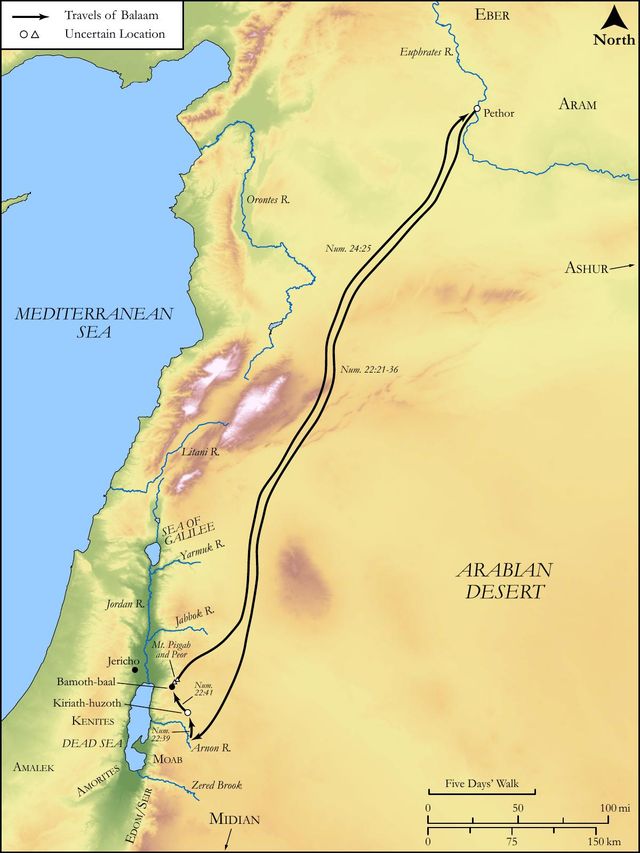
- בָּמוֹתba·MotBamothH1120N-properNoun Proper Location
- בָּעַלBa·'alBaalH1168N-properNoun Proper Location
- וַיַּרְאvai·Yar'and he sawH7200Conj-w ¦ V-Qal-ConsecImperf-3msVerb Qal Consecutive Imperfect 3rd Singular Masculineוַandיַּרְאhe saw
- מִשָּׁםmi·Shamfrom thereH8033Prep-m ¦ AdvAdverbמִfromשָּׁםthere
- קְצֵהke·Tzeh[the] outskirt[s] ofH7097N-mscNoun Singular Masculine Construct
- הָעָםha·'Amthe peopleH5971Art ¦ N-msNoun Singular Masculine Absoluteהָtheעָםpeople
English is a literal word-by-word gloss of the Hebrew, not the KJV's wording. Why?
This is the original text the KJV's translators worked from — each Hebrew word with its own literal English meaning in this verse, prepared by scholars at Tyndale House, Cambridge. The KJV translates whole sentences, not word by word, so its wording differs: one Hebrew word can become several English words, and the KJV may choose “the LORD” where the gloss reads “Yahweh”. Both are faithful — they answer different questions. For the KJV's own rendering, switch to the KJV text.
Details
See on the biblical-era map
Study this verse
Public-domain commentary
Matthew Henry
From his Commentary on the Whole Bible. Henry comments on passages, not single verses — this entry covers Numbers 22:36–41.
We have here the meeting between Balak and Balaam, confederate enemies to God's Israel; but here they seem to differ in their expectations of the success. 1. Balak speaks of it with confidence, not doubting but to gain his point now that Balaam had come. In expectation of this, he went out to meet him, even to the utmost border of his country (Num 22:36), partly to gratify his own impatient desire to see one he had such great expectations from, and partly to do honour to Balaam, and so to engage him with his utmost power to serve him. See what respect heathen princes paid to those that had but the name and face of prophets, and pretended to have any interest in heaven; and how welcome one was that came with his mouth full of curses. What a shame is it then that the ambassadors of Christ are so little respected by most, so much despised by some, and that those are so coldly entertained who bring tidings of peace and a blessing! Balak has now nothing to complain of but that Balaam did not come sooner, Num 22:37. And he thinks that he should have considered the importunity Balak had used, Did I not earnestly send to thee? (and the importunity of people inferior to kings has prevailed with many against their inclinations), and that he should also have considered Balak's intentions concerning him: Am not I able to promote thee to honour? Balak, as king, was in his own kingdom the fountain of honour, and Balaam should have his choice of all the preferments that were in his gift; he therefore thinks himself affronted by Balaam's delays, which looked as if he thought the honours he prepared not worthy his acceptance. Note, Promotion to honour is a very tempting bait to many people; and it were well if we would be drawn into the service of God by the honour he sets before us. Why do we delay to come unto him? Is not he able to promote us to honour? 2. Balaam speaks doubtfully of the issue, and bids Balak not depend to much upon him (Num 22:38): "Have I now any power at all to say any thing? I have come, but what the nearer am I? Gladly would I curse Israel; but I must not, I cannot, God will not suffer me." He seems to speak with vexation at the hook in his nose and the bridle in his jaws, such as Sennacherib was tied up with, Isa 37:29. 3. They address themselves with all speed to the business. Balaam is nobly entertained over night, a sacrifice of thanksgiving is offered to the gods of Moab, for the safe arrival of this welcome guest, and his is treated with a feast upon the sacrifice, Num 22:40. And the next morning, that no time might be lost, Balak takes Balaam in his chariot to the high places of his kingdom, not only because their holiness (such as it was), he thought, might give some advantage to his divinations, but their height might give him a convenient prospect of the camp of Israel, which was to be the butt or mark at which he must shoot his envenomed arrows. And now Balaam is really as solicitous to please Balak as ever he had pretended to be to please God. See what need we have to pray every day, Our Father in heaven, lead us not into temptation.
Continue studying Numbers 22:41 across the web’s major study libraries — every link below opens this exact verse, chapter, or book on the destination site.
Read & Compare
 BibleGatewayThis verse in more than 200 translations and 70 languages.
 Bible.comThe YouVersion reader — hundreds of translations, reading plans, and highlights.
 ESV.orgCrossway's official English Standard Version reader.
 NET BibleThe NET translation with 60,000+ translators' notes on every rendering decision.
 STEP BibleTyndale House's free study tool — original text, vocabulary, and scholarly resources.
 BibliaLogos Bible Software's free web reader.
 USCCBThe New American Bible (Revised Edition) with the U.S. bishops' study notes.
Commentaries
 BibleHub CommentariesDozens of classic commentaries on this verse, gathered on one page.
 StudyLightMore than 100 commentary sets — the largest collection on the web.
 BibleRefPlain-English commentary on what this verse means, verse by verse.
 Enduring WordDavid Guzik's free commentary on this chapter, widely used by Bible teachers.
 Bible Study ToolsVerse commentary alongside Greek and Hebrew study aids.
Original Language & Research
- BibleHub InterlinearThe verse word by word — original language, transliteration, and English.
- BibleHub LexiconEvery word's original-language definition and Strong's entry.
 Blue Letter BibleDeep-study tools — Strong's numbers, concordance, and word studies.
 SefariaThe Hebrew text with Rashi and centuries of Jewish commentary.
Sermons, Hymns & Audio


TrulyRandomVerse is not affiliated with these sites and doesn’t control their content. They’re linked because they’re genuinely useful.
Summary
Numbers 22:41 culminates the initial phase of Balak's desperate stratagem, as the Moabite king escorts the prophet Balaam of Mesopotamia to the "high places of Baal." This elevated location, a notorious site for pagan worship, was strategically chosen to grant Balaam an unobstructed, panoramic view of the sprawling Israelite encampment. Balak's intention was for Balaam to pronounce a potent and comprehensive curse against the vast multitude, believing that visual access and the invocation of Baal would ensure its efficacy. The verse thus meticulously sets the stage for the unfolding spiritual confrontation, highlighting the collision between human machinations rooted in fear and idolatry, and the immutable sovereignty of God, who will ultimately transform intended maledictions into divine blessings.
Context
ShowHideLiterary Context
Numbers 22:41 serves as the concluding verse of a pivotal chapter that initiates the expansive and complex narrative of Balak and Balaam, a significant literary unit spanning Numbers 22-24. Chapter 22 meticulously details Balak's profound fear of the numerous Israelites encamped on the plains of Moab (Numbers 22:3), his subsequent diplomatic efforts to summon Balaam from Pethor (Numbers 22:6), and the intricate theological drama involving Balaam's interactions with the Lord and the miraculous intervention of the angel of the Lord. The preceding verses recount Balaam's journey, the talking donkey episode, and his eventual arrival and reception in Moab. Verse 41 acts as a crucial transition, shifting the narrative focus from Balaam's journey and initial encounter with Balak to the first of three distinct attempts by Balak to secure a curse against Israel. Each attempt is staged from a different strategic vantage point—first the high places of Baal, then the field of Zophim, and finally the top of Peor—underscoring Balak's persistent, yet ultimately futile, efforts to manipulate divine power.
Historical & Cultural Context
The "high places of Baal" (Hebrew: bamot Ba'al) were ubiquitous cultic sites among the nations, particularly in Canaanite territories. These were typically elevated geographical features, such as hills or constructed mounds, dedicated to the worship of various deities, most notably Baal, the Canaanite storm and fertility god. Such sites often featured altars, standing stones (massebot), and sacred poles (asherim), and were notorious for idolatrous practices explicitly condemned by Yahweh (e.g., Deuteronomy 12:2). Balak, as the king of Moab, naturally operated within the religious framework of his culture, seeking to harness the perceived power of Baal against the God of Israel. The practice of employing foreign diviners or seers, like Balaam, was also a common diplomatic and military strategy in this period, as rulers believed these individuals possessed unique spiritual access to influence outcomes through blessings or curses. Balak's insistence that Balaam "see the utmost part of the people" reflects a belief prevalent among the nations that a clear, comprehensive view of the target was essential for the efficacy and scope of magical rites or curses.
Key Themes
ShowHideNumbers 22:41 significantly contributes to several profound themes woven throughout the Balaam narrative and the broader book of Numbers. Firstly, it vividly portrays the clash between paganism and divine sovereignty. Balak's reliance on idolatrous practices and foreign divination stands in stark contrast to the Lord's absolute and unyielding control over all events, demonstrating that no human or demonic power can thwart His purposes. Secondly, the verse underscores the theme of God's unwavering protection of His covenant people. Despite Balak's elaborate and strategically planned attempts to curse Israel, the narrative consistently reveals that God's chosen nation is inviolable, a truth powerfully echoed when Balaam is compelled to bless Israel (Numbers 23:11) and later affirmed in Deuteronomy 23:5, where the Lord explicitly states He turned the curse into a blessing. Finally, the verse introduces the theme of strategic opposition, showcasing the lengths to which adversaries will go to undermine God's people, often seeking perceived spiritual or physical vantage points from which to launch their attacks, only to find their efforts ultimately futile.
Exposition and Analysis
ShowHideKey Word Analysis
ShowHideThis proper noun (H1109) refers to the prophet of Mesopotamia summoned by Balak. The etymology, "not (of the) people" or "foreigner," subtly highlights his outsider status relative to Israel, yet he is paradoxically chosen by God to deliver His message. Balaam is a complex figure, a diviner who acknowledges Yahweh's authority but is also tempted by worldly gain, making him a crucial instrument in demonstrating God's sovereign control over even those outside His covenant.
The term bâmâh (plural bamot) denotes an "elevation" or "high place," often referring to a cultic site. When combined with Ba'al, it specifically identifies these as elevated places dedicated to the worship of the Canaanite storm and fertility god Baal. By bringing Balaam to such a site, Balak was not merely seeking a geographical vantage point but was attempting to invoke and harness the spiritual power of his national deity, Baal, against the God of Israel, signifying a direct challenge to Yahweh's supremacy and a reliance on idolatrous practices.
This word (H7097) signifies an "extremity," "end," "edge," or "border." In this context, it refers to the furthest visible boundary of the Israelite encampment. Balak's intention was for Balaam to see the entire, vast Israelite multitude, believing that a comprehensive visual scope was necessary for the curse to be effective against the whole people. This detail underscores Balak's strategic thinking and his adherence to ancient magical beliefs, where the extent of the target influenced the potency of the magical act. It also subtly emphasizes the sheer numerical strength of Israel, which was the primary source of Balak's fear.
Verse Breakdown
ShowHide"And it came to pass on the morrow"
This temporal marker (H1242, bôqer') indicates the immediate progression of events following Balaam's arrival and the initial feast with Balak. It highlights the urgency and haste with which Balak pursued his objective, allowing no delay in his attempt to curse Israel. The "morrow" implies a new day, a fresh beginning for Balak's plan, yet it will ultimately be a day that reveals the futility of his efforts against divine will.
"that Balak took Balaam"
This simple clause emphasizes Balak's active role (H3947, lâqach', "to take") as the instigator and guide in this spiritual confrontation. He is not merely requesting Balaam's services but is personally leading him to the chosen site, demonstrating his direct involvement and desperate investment in the outcome of the impending spiritual battle.
"and brought him up into the high places of Baal"
This is the pivotal action of the verse, specifying the location for the attempted curse. The phrase "brought him up" (H5927, ʻâlâh', "to ascend") indicates an elevation, while the "high places of Baal" are not just geographical points but are deeply imbued with pagan religious significance. This choice symbolizes Balak's reliance on false deities and his attempt to counter the power of the true God with the perceived power of idolatry, setting the stage for a profound spiritual conflict.
"that thence he might see the utmost [part] of the people"
This final clause (H7200, râʼâh', "to see"; H7097, qâtseh', "extremity"; H5971, ʻam', "people") reveals Balak's strategic rationale for choosing this specific elevated location. He believed that a full, unobstructed view of the vast Israelite camp was essential for Balaam to pronounce a comprehensive and effective curse against the entire nation. It underscores the magical thinking prevalent among the nations, where physical proximity or visual contact was thought to enhance the power and reach of a curse or blessing.
Literary Devices
ShowHideNumbers 22:41 expertly employs several literary devices to deepen its theological and narrative impact. Foreshadowing is prominently featured, as Balak's meticulous preparations and the strategic choice of a pagan cultic site subtly foreshadow the ultimate futility of his efforts against a divinely protected people. The very act of bringing Balaam to a place associated with Baal worship establishes a dramatic contrast between the impotent false gods and the sovereign Lord, who will ultimately control Balaam's utterances. There is also a strong element of irony in Balak's careful planning, as his attempts to gain a strategic advantage will only serve to highlight God's superior power and turn his intended curses into blessings. Furthermore, the "high places of Baal" function as powerful symbolism, representing not merely a physical location but the entire system of pagan idolatry, human opposition, and spiritual darkness arrayed against God's immutable purposes for His chosen people.
Theological and Thematic Connections
ShowHideThis verse powerfully illustrates the clash between human will, driven by fear and idolatry, and the unyielding sovereignty of God. Balak's meticulously planned attempt to curse Israel from a pagan high place underscores the belief of the nations in localized deities and the efficacy of magical rites. However, the broader narrative of Balaam demonstrates that such human machinations are utterly powerless against the divine decree. God's plan for Israel's blessing and protection cannot be thwarted by any king, diviner, or pagan deity. The choice of the "high places of Baal" also serves as a stark reminder of the constant spiritual battle between the worship of the true God and the allure of idolatry, a theme pervasive throughout Israel's history, emphasizing that God alone is supreme.
Reflection and Application
ShowHideNumbers 22:41 serves as a profound reminder that even when adversaries meticulously plan and strategically position themselves to harm God's people, their efforts are ultimately subject to divine oversight and often become instruments for God's greater purposes. Balak's reliance on pagan high places and his desire for a full view of Israel highlight the human tendency to seek control and power through means contrary to God's will, often driven by fear and a lack of faith. For believers today, this verse encourages steadfast trust in God's sovereign protection, even when facing formidable opposition, whether spiritual, relational, or pervasive. It challenges us to recognize that true power resides not in strategic vantage points or human schemes, but in the omnipotence of God, who can turn any intended curse into a blessing. Our response to perceived threats should not be fear or reliance on worldly solutions, but confident faith in the God who defends His own and whose purposes cannot be thwarted.
Questions for Reflection
ShowHideFAQ
ShowHideWhy did Balak specifically choose the "high places of Baal" for Balaam to curse Israel?
ShowHideBalak's choice of the "high places of Baal" was deeply significant and multifaceted, reflecting both cultural practice and strategic intent. Firstly, these were established cultic sites for the worship of Baal, a prominent Canaanite deity associated with storms, fertility, and power. By bringing Balaam there, Balak was attempting to invoke the spiritual power of his national god against the God of Israel, believing that a curse pronounced from such a sacred, powerful location would be more effective. Secondly, these "high places" were typically elevated, offering a strategic panoramic view of the Israelite encampment. Balak believed that for Balaam's curse to be potent and comprehensive, he needed to "see the utmost part of the people," encompassing the entire vast multitude. This combination of religious invocation and strategic positioning reflects Balak's desperate attempt to harness all available spiritual and physical resources to thwart the perceived threat of Israel, demonstrating his reliance on pagan practices in direct opposition to Yahweh. The narrative, however, ultimately reveals the futility of such efforts against God's sovereign will, as seen later when Balaam is compelled to bless Israel (Numbers 23:11).
Christ-Centered Fulfillment
ShowHideThe narrative of Balak and Balaam, culminating in Numbers 22:41, profoundly foreshadows the ultimate futility of all opposition against God's people and His divine plan, finding its ultimate fulfillment in Christ. Just as Balak sought to curse Israel from the "high places of Baal," symbolizing the world's spiritual and physical opposition, so too does the world, under the influence of the "prince of the power of the air" (Ephesians 2:2), continually scheme against the Church, the new Israel of God. Yet, Christ Himself is the ultimate fulfillment of God's unassailable blessing. He is the one whom God has blessed and through whom all nations are blessed, fulfilling the promise to Abraham (Galatians 3:8-9). Any curse pronounced against those who are "in Christ" is rendered null and void, for He has become a curse for us to redeem us from the curse of the law (Galatians 3:13). Furthermore, just as God turned Balaam's intended curses into blessings for Israel, so too does God work all things, even the schemes of the enemy, for the good of those who love Him and are called according to His purpose (Romans 8:28). In Christ, we stand on a foundation far more secure than any "high place," for our ultimate security is found in His finished work on the cross and His eternal intercession for us (Hebrews 7:25).