


Matthew 8:19
Bible text: King James Version (1769 Blayney text) · Public domain
Bible text: Berean Standard Bible · Public domain
Bible text: American Standard Version (1901) · Public domain
Bible text: World English Bible, Messianic edition · Public domain
Bible text: Geneva Bible (1599) · Public domain
Bible text: Young's Literal Translation · Public domain
- καὶkaiAndG2532CONJConjunction
- προσελθὼνproselthōnhaving come to [Him]G4334V-2AAP-NSMVerb 2nd Aorist Active Participle Nominative Singular Masculine
- εἷςheisoneG1520A-NSMAdjective Nominative Singular Masculine
- γραμματεὺςgrammateusscribeG1122N-NSMNoun Nominative Singular Masculine
- εἶπενeipensaidG2036V-2AAI-3SVerb 2nd Aorist Active Indicative 3rd Singular
- αὐτῷ·autōto HimG846P-DSMPersonal pronoun Dative Singular Masculine
- διδάσκαλεdidaskaleTeacherG1320N-VSM-TNoun Vocative Singular Masculine Person Gentilic
- ἀκολουθήσωakolouthēsōI will followG190V-FAI-1SVerb Future Active Indicative 1st Singular
- σοιsoiYouG4771P-2DSPersonal pronoun Dative 2nd Singular
- ὅπουhopouwhereverG3699CONJConjunction
- ἐὰνeanifG1437CONDConjunction
- ἀπέρχῃaperchēYou shall goG565V-PNS-2SVerb Present Middle Or Passive Deponent Subjunctive 2nd Singular
English is a literal word-by-word gloss of the Greek, not the KJV's wording. Why?
This is the original text the KJV's translators worked from — each Greek word with its own literal English meaning in this verse, prepared by scholars at Tyndale House, Cambridge. The KJV translates whole sentences, not word by word, so its wording differs: one Greek word can become several English words, and the KJV may choose “charity” where the gloss reads “love”. Both are faithful — they answer different questions. For the KJV's own rendering, switch to the KJV text.
Details
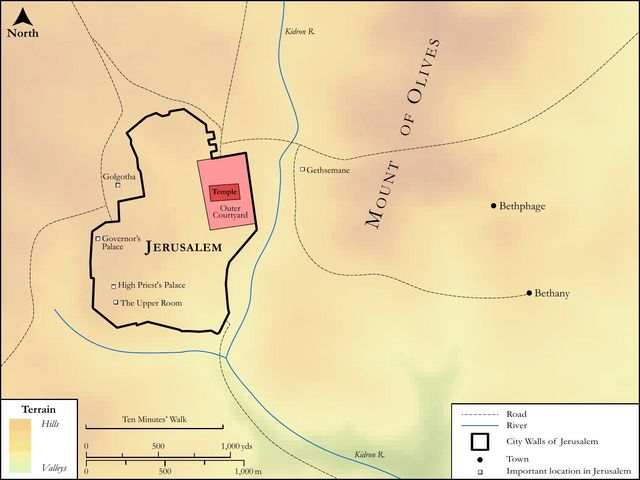
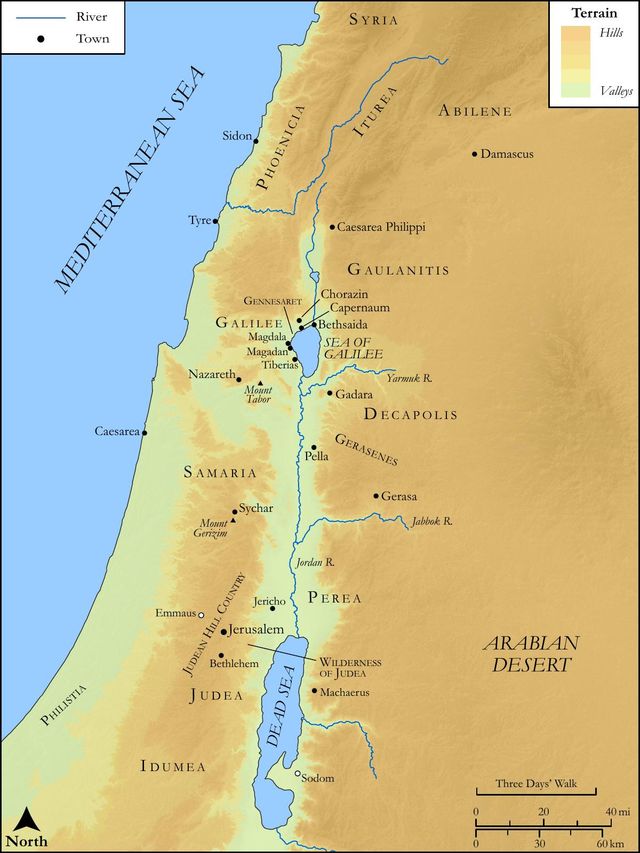
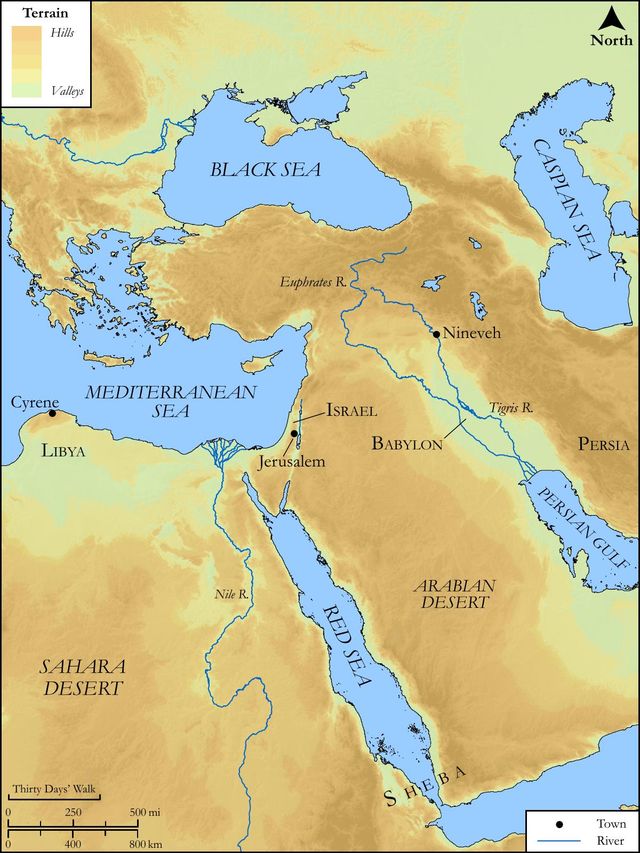
See on the biblical-era maps
Study this verse
Public-domain commentary
Matthew Henry
From his Commentary on the Whole Bible. Henry comments on passages, not single verses — this entry covers Matthew 8:18–22. His four-level outline is real structure in the source text, so it is rendered as structure.
Here is, I. Christ's removing to the other side of the sea of Tiberias, and his ordering his disciples, whose boats attended him, to get their transport-vessels ready, in order to it, Mat 8:18. The influences of this Sun of righteousness were not to be confined to one place, but diffused all the country over; he must go about to do good; the necessities of souls called to him, Come over, and help us (Act 16:9); he removed when he saw great multitudes about him. Though by this it appeared that they were desirous to have him there, he knew there were others as desirous to have him with them, and they must have their share of him: his being acceptable and useful in one place was no objection against, but a reason for, his going to another. Thus he would try the multitudes that were about him, whether their zeal would carry them to follow him, and attend on him, when his preaching was removed to some distance. Many would be glad of such helps, if they could have them at next door, who will not be at the pains to follow them to the other side; and thus Christ shook off those who were less zealous, and the perfect were made manifest.
II.Christ's communication with two, who, upon his remove to the other side, were loth to stay behind, and had a mind to follow him, not as others, who were his followers at large, but to come into close discipleship, which the most were shy of; for it carried such a face of strictness as they could not like, nor be well reconciled to; but here is an account of two who seemed desirous to come into communion, and yet were not right; which is here given as a specimen of the hindrances by which many are kept from closing with Christ, and cleaving to him; and a warning to us, to set out in following Christ, so as that we may not come short; to lay such a foundation, as that our building may stand.
We have here Christ's managing of two different tempers, one quick and eager, the other dull and heavy; and his instructions are adapted to each of them, and designed for our use.
1.Here is one that was too hasty in promising; and he was a certain scribe (Mat 8:19), a scholar, a learned man, one of those that studied and expounded the law; generally we find them in the gospels to be men of no good character; usually coupled with the Pharisees, as enemies to Christ and his doctrine. Where is the scribe? Co1 1:20. He is very seldom following Christ; yet here was one that bid pretty fair for discipleship, a Saul among the prophets. Now observe,
(1.)How he expressed his forwardness; Master, I will follow thee, whithersoever thou goest. I know not how any man could have spoken better. His profession of a self-dedication to Christ is,
[1.]Very ready, and seems to be ex mero motu - from his unbiased inclination: he is not called to it by Christ, nor urged by any of the disciples, but, of his own accord, he proffers himself to be a close follower of Christ; he is not a pressed man, but a volunteer.
[2.]Very resolute; he seems to be at a point in this matter; he does not say, "I have a mind to follow thee;" but, "I am determined, I will do it." [3.] It was unlimited and without reserve; "I will follow thee whithersoever thou goest; not only to the other side of the country, but if it were to the utmost regions of the world." Now we should think ourselves sure of such a man as this; and yet it appears, by Christ's answer, that his resolution was rash, his ends low and carnal: either he did not consider at all, or not that which was to be considered; he saw the miracles Christ wrought, and hoped he would set up a temporal kingdom, and he wished to apply betimes for a share in it. Note, There are many resolutions for religion, produced by some sudden pangs of conviction, and taken up without due consideration, that prove abortive, and come to nothing: soon ripe, soon rotten.
(2.)How Christ tried his forwardness, whether it were sincere or not, Mat 8:20. He let him know that this Son of man, whom he is so eager to follow, has not where to lay his head, Mat 8:20. Now from this account of Christ's deep poverty, we observe,
[1.]That it is strange in itself, that the Son of God, when he came into the world, should put himself into such a very low condition, as to want the convenience of a certain resting-place, which the meanest of the creatures have. If he would take our nature upon him, one would think, he should have taken it in its best estate and circumstances: no, he takes it in its worst. See here, First, How well provided for the inferior creatures are: The foxes have holes; though they are not only not useful, but hurtful, to man, yet God provides holes for them in which they are earthed: man endeavours to destroy them, but thus they are sheltered; their holes are their castles. The birds of the air, though they take no care for themselves, yet are taken care of, and have nests (Psa 104:17); nests in the field; some of them nests in the house; in God's courts, Psa 84:3. Secondly, How poorly the Lord Jesus was provided for. it may encourage us to trust God for necessaries, that the beasts and birds have such good provision; and may comfort us, if we want necessaries, that our Master did so before us. Note, Our Lord Jesus, when he was here in the world, submitted to the disgraces and distresses of extreme poverty; for our sakes he became poor, very poor. He had not a settlement, had not a place of repose, not a house of his own, to put his head in, not a pillow of his own, to lay his head on. he and his disciples lived upon the charity of well-disposed people, that ministered to him of their substance, Luk 8:2. Christ submitted to this, not only that he might in all respects humble himself, and fulfil the scriptures, which spake of him as poor and needy, but that he might show us the vanity of worldly wealth, and teach us to look upon it with a holy contempt; that he might purchase better things for us, and so make us rich, Co2 8:9.
[2.]It is strange that such a declaration should be made on this occasion. When a scribe offered to follow Christ, one would think he would have encouraged him, and said, Come, and I will take care of thee; one scribe might be capable of doing him more credit and service than twelve fishermen: but Christ saw his heart, and answered to the thoughts of that, and therein teaches us all how to come to Christ. First, The scribe's resolve seems to have been sudden; and Christ would have us, when we take upon us a profession of religion, to sit down and count the cost (Luk 14:28), to do it intelligently, and with consideration, and choose the way of godliness, not because we know no other, but because we know no better. It is no advantage to religion, to take men by surprise, ere they are aware. They that take up a profession in a pang, will throw it off again in a fret; let them, therefore, take time, and they will have done the sooner: let him that will follow Christ know the worst of it, and expect to lie hard, and fare hard. Secondly, His resolve seems to have been from a worldly, covetous principle. He saw what abundance of cures Christ wrought, and concluded that he had large fees, and would get an estate quickly, and therefore he would follow him in hopes of growing rich with him; but Christ rectifies his mistake, and tells him, he was so far from growing rich, that he had not a place to lay his head on; and that if he follow him, he cannot expect to fare better than he fared. Note, Christ will accept none for his followers that aim at worldly advantages in following him, or design to make any thing but heaven of their religion. We have reason to think that this scribe, hereupon, went away sorrowful, being disappointed in a bargain which he thought would turn to account; he is not for following Christ, unless he can get by him.
2.Here is another that was too slow in performing. Delay in execution is as bad, on the one hand, as precipitancy in resolution is on the other hand; when we have taken time to consider, and then have determined, let it never be said, we left that to be done tomorrow, which we could do today. This candidate for the ministry was one of Christ's disciples already (Mat 8:21), a follower of him at large. Clemens Alexandrinus tells us, from an ancient tradition, that this was Philip; he seems to be better qualified and disposed than the former; because not so confident and presumptuous: a bold, eager, over-forward temper is not the most promising in religion; sometimes the last are first, and the first last. Now observe here,
(1.)The excuse that this disciple made, to defer an immediate attendance on Christ (Mat 8:21); "Lord, suffer me first to go and bury my father. Before I come to be a close and constant follower of thee, let me be allowed to perform this last office of respect to my father; and in the mean time, let it suffice to be a hearer of thee now and then, when I can spare time." His father (some think) was now sick, or dying, or dead; others think, he was only aged, and not likely in a course of nature, to continue long; and he desired leave to attend upon him in his sickness, at his death, and to his grave, and then he would be at Christ's service. This seemed a reasonable request, and yet it was not right. He had not the zeal he should have had for the work, and therefore pleaded this, because it seemed a plausible plea. Note, An unwilling mind never wants an excuse. The meaning of Non vacat is, Non placet - The want of leisure is the want of inclination. We will suppose it to come from a true filial affection and respect for his father, yet still the preference should have been given to Christ. Note, Many are hindered from and in the way of serious godliness, by an over-concern for their families and relations; these lawful things undo us all, and our duty to God is neglected, and postponed, under colour of discharging our debts to the world; here therefore we have need to double our guard.
(2.)Christ's disallowing of this excuse (Mat 8:22); Jesus said to him, Follow me; and, no doubt, power accompanied this word to him, as to others, and he did follow Christ, and cleaved to him, as Ruth to Naomi, when the scribe, in the verses before, like Orpah, took leave of him. That said, I will follow thee; to this Christ said, Follow me; comparing them together, it is intimated that we are brought to Christ by the force of his call to us, not of our promises to him; it is not of him that willeth, nor of him that runneth, but of God that showeth mercy; he calls whom he will, Rom 9:16. And further, Note, Though chosen vessels may make excuses, and delay their compliance with divine calls a great while, yet Christ will at length answer their excuses, conquer their unwillingness, and bring them to his feet; when Christ calls, he will overcome, and make the call effectual, Sa1 3:10. His excuse is laid aside as insufficient; Let the dead bury their dead. It is a proverbial expression; "Let one dead man bury another: rather let them lie unburied, than that the service of Christ should be neglected. Let the dead spiritually bury the dead corporally; let worldly offices be left to worldly people; do not thou encumber thyself with them. Burying the dead, and especially a dead father, is a good work, but it is not thy work at this time: it may be done as well by others, that are not called and qualified, as thou art, to be employed for Christ; thou hast something else to do, and must not defer that." Note, Piety to God must be preferred before piety to parents, though that is a great and needful part of our religion. The Nazarites, under the law, were not to mourn for their own parents, because they were holy to the Lord (Num 6:6-8); nor was the high priest to defile himself for the dead, no, not for his own father, Lev 21:11, Lev 21:12. And Christ requires of those who would follow him, that they hate father and mother (Luk 14:26); love them less than God; we must comparatively neglect and disesteem our nearest relations, when they come in competition with Christ, and either our doing for him, or our suffering for him.
Historical interpretation
Five Centuries of Reception
10 surviving comments on this verse. Each one is dated, so this reads as a timeline rather than a list.
Select a marker to jump to its quote. Markers stagger vertically where authors wrote within a few decades of each other.
The name disciples is not to be supposed to be confined to the twelve Apostles; for we read of many disciples besides the twelve.
Otherwise; This Scribe being one of the doctors of the Law, asks if he shall follow Him, as though it were not contained in the Law that this is He whom it were gain to follow. Therefore He discovers the feeling of unbelief under the diffidence of his enquiry. For the taking up of the faith is not by question but by following.
The disciple does not ask whether he shall follow Him; for he already believed that he ought to follow, but prays to be suffered first to bury his father.
Also, because we are taught in the beginning of the Lord's prayer, first to say, Our Father, which art in heaven; and since this disciple represents the believing people; he is here reminded that he has one only Father in heaven (Mat. 23:9.), and that between a believing son and an unbelieving Father the filial relation does not hold good. We are also admonished that the unbelieving dead are not to be mingled with the memories of the saints, and that they are also dead who live out of God; and the dead are buried by the dead, because by the faith of God it behoves the living to cleave to the living (God.)
And the multitudes for their part evinced this great love, and were following with much affection; but some one person, a slave of wealth, and possessed with much arrogance, approaches Him, and saith, "Master, I will follow Thee whithersoever Thou goest."
Seest thou how great his arrogance? For as not deigning to be numbered with the multitude, and indicating that he is above the common sort, so he comes near. Because such is the Jewish character; full of unseasonable confidence.
Yet nevertheless the Lord rebuked not his unseasonable confidence, teaching us to bear even with such as these. Therefore He doth not openly convict them who are devising mischief, but replies to their secret thought, leaving it to themselves only to know that they are convicted, and doubly doing them good, first by showing that He knows what is in their conscience, next by granting unto them concealment after this manifestation, and allowing them to recover themselves again, if they will: which thing He doth in the case of this man also.
For he, seeing the many signs, and many drawn after Him, thought to make a gain out of such miracles; wherefore also he was forward to follow Him. And whence is this manifest? From the answer which Christ makes, meeting not the question, as it stands verbally, but the temper shown in its meaning.
Because Christ not only healed the body, but purified the soul also, He desired to show forth true wisdom, not only by curing diseases, but by doing nothing with ostentation; and therefore it is said, Now when Jesus saw great multitudes about him, he commanded his disciples to cross over to the other side. This He did at once teaching us to be lowly, softening the ill-will of the Jews, and teaching us to do nothing with ostentation.
Observe that He does not dismiss the multitudes, that He may not offend them. He did say to them, Depart ye, but bade His disciples go away from thence, thus the crowds might hope to be able to follow.
Observe also how great his pride; approaching and speaking as though he disdained to be considered as one of the multitude; desiring to show that he was above the rest.
So Christ answers him not so much to what he had said, but to the obvious purpose of his mind. Jesus saith unto him, The foxes have holes, and the birds of the air have nests, but the Son of man hath not where to lay his head; as though He had said;
This was not to send him away, but rather to convict him of evil intentions; at the same time permitting him if he would to follow Christ with the expectation of poverty.
This saying does not condemn natural affection to our parents, but shows that nothing ought to be more binding on us than the business of heaven; that to this we ought to apply ourselves with all our endeavours, and not to be slack, however necessary or urgent are the things that draw us aside. For what could be more necessary than to bury a father? What more easy? For it could not need much time. But in this the Lord rescued him from much evil, weeping, and mourning, and from the pains of expectation. For after the funeral there must come examination of the will, division of the inheritance, and other things of the same sort; and thus trouble following trouble, like the waves, would have borne him far from the port of truth. But if you are not yet satisfied, reflect further that oftentimes the weak are not permitted to know the time, or to follow to the grave; even though the dead be father, mother, or son; yet are they not charged with cruelty that hinder them; it is rather the reverse of cruelty. And it is a much greater evil to draw one away from spiritual discourse; especially when there were who should perform the rites; as here, Leave the dead to bury their dead.
This moreover shows that this dead man was not his; for, I suppose, he that was dead was of the unbelieving. If you wonder at the young man, that in a matter so necessary he should have asked Jesus, and not have gone away of his own accord, wonder much more that he abode with Jesus after he was forbidden to depart; which was not from lack of affection, but that he might not interrupt a business yet more necessary.
"Now when Jesus saw great multitudes about Him, He gave commandment to depart unto the other side."
Seest thou again His freedom from ostentation? in that as the others say, "He charged the devils not to say it was He," so this writer saith, He repels the multitudes from Him. Now in so doing, He was at once both training us to be moderate, and at the same time allaying the envy of the Jews, and teaching us to do nothing for display. For He was not, we know, a healer to bodies only, but a curer also of the soul, and a teacher of self-restraint; by both disclosing Himself, both by putting away their diseases, and by doing nought for display. Because they indeed were cleaving unto Him, loving Him, and marvelling at Him, and desiring to look upon Him. For who would depart from one who was doing such miracles? Who would not long, were it only to see the face, and the mouth that was uttering such words?
For not by any means in working wonders only was He wonderful, but even when merely showing Himself, He was full of great grace; and to declare this the prophet said, "Fair in beauty beyond the children of men." And if Esaias saith, "He hath no form nor comeliness" he affirms it either in comparison of the glory of His Godhead, which surpasses all utterance and description; or as declaring what took place at His passion, and the dishonor which He underwent at the season of the cross, and the mean estate which throughout His life He exemplified in all respects.
Further: He did not first give "commandment to depart unto the other side," nor until He had healed them. For surely they could not have borne it. As therefore on the mountain they not only continued with Him while exhorting them, but also when it was silence followed Him; so here too, not in His miracles only did they wait on Him, but also when He had ceased again, from His very countenance receiving no small benefit. For if Moses had his face made glorious, and Stephen like that of an angel; consider thou our common Lord, what manner of person it was likely He would appear at such a time.
Many now perchance have fallen into a passionate desire of seeing that form; but if we are willing we shall behold one far better than that. For if we can pass through our present life with Christian boldness, we shall receive Him in the clouds, meeting Him in an immortal and incorruptible body.
But observe how He doth not simply drive them away, lest He should hurt them. For He did not say, "withdraw," but "gave commandment to depart to the other side," giving them to expect that He would surely come thither.
(Verse 19, 20) And one scribe, approaching, said to him: Teacher, I will follow you wherever you go. And Jesus says to him: Foxes have dens, and birds of the sky have nests, but the Son of Man has nowhere to lay his head. This scribe of the law, who knew only the letter that kills, if he had said: Lord, I will follow you wherever you go, he would not have been rejected by the Lord; but because he esteemed one teacher out of many, and was a learner of letters, which is more significantly said in Greek, γραμματεὺς, and not a spiritual hearer: therefore, he has no place where Jesus can lay his head. Now, it is shown to us, and because of this the scribe is rejected, that he, seeing the greatness of the signs, wanted to follow the Savior in order to seek profit from the miracles of his works, desiring the same thing that Simon Magus wanted to buy from Peter (Acts 8). Therefore, such a faith is rightfully condemned by the Lord's judgment and it is said to him: Why do you desire to follow me because of riches and the profits of the world, when I am of such great poverty that I don't even have a small shelter and I don't use my own roof?
This Scribe of the Law who knew but the perishing letter, would not have been turned away had his address been, 'Lord, I will follow Thee.' But because he esteemed the Saviour only as one of many masters, and was a 1man of the letter (which is better expressed in Greek, γραμματεὺς) not a spiritual hearer, therefore he had no place where Jesus might lay His head. It is suggested to us that he sought to follow the Lord, because of His great miracles, for the sake of the gain to be derived from them; and was therefore rejected; seeking the same thing as did Simon Magus when he would have given Peter money.
Why do you seek to follow Me for the sake of the riches and gain of this world, when My poverty is such that I have neither lodging nor home of My own?
In what one thing is this disciple like the Scribe? The one called Him Master, the other confesses Him as his Lord. The one from filial piety asks permission to go and bury his father; the other offers to follow, not seeking a master, but by means of his master seeking gain for himself.
But if the dead shall bury the dead, we ought not to be careful for the dead but for the living, lest while we are anxious for the dead, we ourselves should be counted dead.
The scribe’s declaration is prompt indeed, but proud. The Lord was on his way toward his final suffering, descent into hell and ascent into heaven. Is human frailty really prepared to follow him “wherever he goes”? This is more a foolish presumption than a confession of faith. Later the Lord would say to the apostle Peter, when he thought that he would follow the Savior in every circumstance: “Where I am going you are not able to follow me now.” And when Peter obstinately insisted and said that death would not separate him from [Jesus], he heard that he would deny the Lord three times. In this he was censured, as it were, for his pride. Thus the one who promised, while confessing Christ, that he would not be separated from him by death is cut off from fellowship with him by a little maidservant’s question.
Or; He did this as one desiring to shun the thronging of the multitude. But they hung upon Him in admiration, crowding to see Him. For who would depart from one who did such miracles? Who would not wish to look upon His open face, to see His mouth that spoke such things? For if Moses' countenance was made glorious, and Stephen's as that of an Angel, gather from this how it was to have been supposed that their common Lord must have then appeared; of whom the Prophet speaks, Thy form is fair above the sons of men. (Ps. 45:2.)
What happened between the command of the Lord given, and their crossing over, the Evangelist purposes to relate in what follows; And one of the Scribes came to him and said, Master, I will follow thee whithersoever thou goest.
(Mor. xix. 1.) Otherwise; The fox is a crafty animal, lying hid in ditches and dens, and when it comes abroad never going in a straight path, but in crooked windings; birds raise themselves in the air. By the foxes then are meant the subtle and deceitful dæmons, by the birds the proud dæmons; as though He had said; Deceitful and proud dæmons have their abode in your heart; but my lowliness finds no rest in a proud spirit.
(Mor. iv. 27.) The dead also bury the dead, when sinners protect sinners. They who exalt sinners with their praises, hide the dead under a pile of words.
Sunset shadows forth the passion and death of Him Who said, While I am in the world, I am the light of the world. (John 9:5.) Who while He lived temporally in the flesh, taught only a few of the Jews; but having trodden under foot the kingdom of death, promised the gifts of faith to all the Gentiles throughout the world.
Heretics confiding in their art are signified by the foxes, the evil spirits by the birds of the air, who have their holes and their nests, that is, their abodes in the heart of the Jewish people. Another of his disciples saith unto him, Lord, suffer me first to go and bury my father.
From this we may also take occasion to observe, that lesser goods are to be sometimes forfeited for the sake of securing greater.
Continue studying Matthew 8:19 across the web’s major study libraries — every link below opens this exact verse, chapter, or book on the destination site.
Read & Compare
 BibleGatewayThis verse in more than 200 translations and 70 languages.
 Bible.comThe YouVersion reader — hundreds of translations, reading plans, and highlights.
 ESV.orgCrossway's official English Standard Version reader.
 NET BibleThe NET translation with 60,000+ translators' notes on every rendering decision.
 STEP BibleTyndale House's free study tool — original text, vocabulary, and scholarly resources.
 BibliaLogos Bible Software's free web reader.
 USCCBThe New American Bible (Revised Edition) with the U.S. bishops' study notes.
Commentaries
 BibleHub CommentariesDozens of classic commentaries on this verse, gathered on one page.
 StudyLightMore than 100 commentary sets — the largest collection on the web.
 BibleRefPlain-English commentary on what this verse means, verse by verse.
 Enduring WordDavid Guzik's free commentary on this chapter, widely used by Bible teachers.
 Bible Study ToolsVerse commentary alongside Greek and Hebrew study aids.
Original Language & Research
- BibleHub InterlinearThe verse word by word — original language, transliteration, and English.
- BibleHub LexiconEvery word's original-language definition and Strong's entry.
 Blue Letter BibleDeep-study tools — Strong's numbers, concordance, and word studies.
 CNTR CollationThe earliest Greek manuscripts of this verse, collated letter by letter.
Sermons, Hymns & Audio


TrulyRandomVerse is not affiliated with these sites and doesn’t control their content. They’re linked because they’re genuinely useful.
Summary
Matthew 8:19 introduces a pivotal encounter where a learned scribe approaches Jesus with an enthusiastic declaration of unwavering commitment: "Master, I will follow thee whithersoever thou goest." This verse sets the stage for Jesus' subsequent teaching on the true cost of discipleship, immediately challenging the scribe's potentially superficial understanding of what it means to truly follow the Son of Man. It highlights the contrast between initial zeal and the profound demands of genuine commitment to Christ.
Context
ShowHideLiterary Context
This verse is strategically placed within a section of Matthew's Gospel (chapters 8-9) that showcases Jesus' authority through a series of miraculous healings and exorcisms. Immediately preceding this account are the healing of a centurion's servant (Matthew 8:5-13) and Peter's mother-in-law (Matthew 8:14-15), followed by a summary of Jesus casting out spirits and healing many (Matthew 8:16-17). These powerful displays of divine power would have undoubtedly drawn crowds and attention, making the scribe's approach understandable. The verse also serves as an immediate prelude to Jesus' challenging response in Matthew 8:20, which reveals the demanding nature of true discipleship, and a similar exchange with another potential follower in Matthew 8:21-22.
Historical & Cultural Context
Scribes (Greek: grammateús) were highly respected figures in first-century Jewish society, serving as experts in the Mosaic Law, interpreters of scripture, and often as legal advisors. They were typically associated with the religious establishment, often Pharisees, and enjoyed a settled, stable lifestyle, unlike itinerant teachers. Their social standing and intellectual pursuits meant they were not accustomed to the hardships of a wandering existence. For a scribe to express a desire to follow an itinerant rabbi like Jesus "whithersoever thou goest" was a significant and potentially radical departure from his expected way of life, indicating a profound, albeit possibly naive, impression Jesus had made. This context underscores the weight of the scribe's declaration and the implicit challenge in Jesus' subsequent reply.
Key Themes
ShowHideMatthew 8:19 contributes to several overarching themes in Matthew's Gospel and the broader biblical narrative. It highlights the theme of the cost of discipleship, setting up Jesus' direct teaching on the sacrifices required to follow Him, a theme further developed in passages like Matthew 10:37-39 and Luke 14:25-33. The scribe's eager yet perhaps unexamined commitment also introduces the theme of initial enthusiasm versus enduring commitment, a tension often seen in those drawn to Christ for superficial reasons. Furthermore, it touches on Jesus' authority and wisdom, as He is addressed as "Master" (teacher), and His response demonstrates His profound understanding of the human heart and the true demands of His kingdom, distinguishing genuine faith from fleeting interest.
Exposition and Analysis
ShowHideKey Word Analysis
ShowHideReferring to a writer, professionally a scribe or secretary. In the New Testament, this term denotes a learned man, an expert in the Jewish law, often associated with the Pharisees and the religious elite. Their presence indicates a significant social standing and intellectual authority.
Meaning an instructor or teacher. This was a common and respectful title used for religious teachers or rabbis, acknowledging Jesus' authority and wisdom in matters of faith and doctrine.
Meaning to be in the same way with, to accompany, or specifically, to follow as a disciple. This word implies not just physical accompaniment but a commitment to adopt the teacher's way of life and teachings, signifying a deep personal allegiance.
Verse Breakdown
ShowHide"And a certain scribe came,"
This clause introduces a specific individual, a "scribe," a man of learning and social standing, who takes the initiative to approach Jesus. The use of "certain" (G1520, heîs) emphasizes that this is one particular individual among the crowds, making his personal declaration stand out. His coming to Jesus suggests he has been observing or listening, and is now moved to act.
"and said unto him,"
This simple phrase sets up the direct discourse that follows, indicating a personal address from the scribe to Jesus. It highlights the communicative nature of the encounter, where the scribe articulates his intent.
"Master, I will follow thee whithersoever thou goest."
This is the core declaration of the verse. The scribe addresses Jesus with respect ("Master") and expresses a bold, seemingly unconditional commitment ("I will follow thee whithersoever thou goest"). The phrase "whithersoever thou goest" (Greek, eán hópou apérchomai) conveys an absolute willingness to accompany Jesus to any place, implying a readiness to abandon his current life and embrace an itinerant existence, no matter the destination or hardship.
Literary Devices
ShowHideThe verse primarily employs Direct Discourse, allowing the scribe's enthusiastic declaration to be heard verbatim, which immediately establishes his character and intent. This direct speech functions as a setup for the Antithesis found in Jesus' subsequent response in Matthew 8:20, where Jesus contrasts the scribe's eager offer with the harsh realities of discipleship. There is also an element of Foreshadowing, as the scribe's seemingly boundless commitment is implicitly challenged by the unstated, yet soon-to-be-revealed, demands of following Jesus. The scribe's statement itself is an example of Hyperbole, expressing an extreme and unqualified pledge, which Jesus will then ground in a more sober reality.
Theological and Thematic Connections
ShowHideMatthew 8:19 serves as a crucial moment for understanding the nature of true discipleship, moving beyond superficial enthusiasm to the profound demands of following Christ. The scribe's eager declaration, while commendable in its zeal, likely stemmed from an incomplete understanding of the sacrifices involved. Jesus' response, though not in this verse, immediately clarifies that discipleship is not merely an intellectual assent or an admiration for power, but a radical reorientation of life that often entails discomfort, insecurity, and the relinquishing of worldly comforts. This encounter therefore acts as a timeless reminder that while the call to follow Jesus is open to all, it requires a sober assessment of the cost and a willingness to prioritize Christ above all else, including personal security and familial ties.
Reflection and Application
ShowHideThe scribe's declaration in Matthew 8:19 resonates deeply with the human tendency to be drawn to the perceived benefits or excitement of faith without fully grasping its demanding nature. We, too, can be quick to declare our allegiance to Christ when things are good, when we witness His power, or when we feel a surge of spiritual emotion. However, true discipleship, as Jesus makes clear, often involves a willingness to step out of our comfort zones, embrace uncertainty, and prioritize His kingdom above our own personal security or ambitions. This verse challenges us to examine the depth of our commitment: Are we willing to follow Jesus not just where it's convenient or comfortable, but "whithersoever thou goest," even into paths of sacrifice, self-denial, and unforeseen challenges? It calls us to move beyond initial enthusiasm to a steadfast, calculated commitment rooted in a full understanding of what it means to truly walk with Christ.
Questions for Reflection
ShowHideFAQ
ShowHideWhy is the scribe's offer to follow Jesus significant?
ShowHideThe scribe's offer is significant because scribes were highly respected, learned individuals in Jewish society, typically enjoying a stable and comfortable life. Their profession involved interpreting and teaching the Law, and they were usually settled in their communities. For such a person to offer to follow an itinerant teacher like Jesus "whithersoever thou goest" was a radical proposal, indicating a profound impression Jesus had made. It suggests a willingness to abandon a life of security and prestige for an unknown future, highlighting the compelling nature of Jesus' ministry, even if the scribe's understanding of the full cost was incomplete, as Jesus' subsequent response in Matthew 8:20 implies.
What does "whithersoever thou goest" imply about the scribe's commitment?
ShowHideThe phrase "whithersoever thou goest" (Greek: eán hópou apérchomai) expresses an unconditional and absolute willingness to accompany Jesus to any place, no matter how remote, difficult, or uncertain. It implies a readiness to abandon his settled life, his home, and his social standing to embrace an itinerant existence alongside Jesus. While seemingly a declaration of profound commitment, Jesus' immediate reply in Matthew 8:20 suggests that the scribe's enthusiasm may not have fully grasped the practical hardships and sacrifices inherent in such a radical commitment.
How does Jesus respond to this offer, and what does it teach us?
ShowHideWhile Matthew 8:19 records the scribe's offer, Jesus' response is found immediately in Matthew 8:20: "The foxes have holes, and the birds of the air have nests; but the Son of man hath not where to lay his head." This stark reply teaches us that true discipleship involves hardship, self-denial, and a willingness to forsake worldly comforts and security. Jesus doesn't reject the scribe, but he clarifies the demanding reality of following Him, emphasizing that His kingdom is not one of earthly comfort or prestige, but often one of sacrifice and homelessness for the sake of the Gospel. It underscores the importance of counting the cost before committing to follow Christ, as also taught in Luke 14:28-33.
Christ-Centered Fulfillment
ShowHideMatthew 8:19, with the scribe's eager declaration to follow Jesus "whithersoever thou goest," finds its deepest fulfillment in the person and work of Christ Himself. Jesus is the ultimate example of one who truly went "whithersoever" the Father sent Him, even to the point of profound suffering and death. His entire earthly ministry, from His humble birth to His sacrificial death, was a journey of perfect obedience to the Father's will, a path that led Him to have "nowhere to lay his head" (Matthew 8:20). He perfectly embodied the self-denial and cross-bearing that He calls His disciples to embrace (Luke 9:23). Therefore, when we are called to follow Jesus, we are not merely imitating a human teacher, but aligning ourselves with the very Son of God who emptied Himself, taking the form of a servant, and became obedient to the point of death on a cross (Philippians 2:7-8). Our ability to follow Him, even into hardship, is empowered by His Spirit, who enables us to walk in the same path of faith and obedience that He pioneered, knowing that He has already overcome the world (John 16:33) and promises ultimate rest for those who take His yoke upon them (Matthew 11:28-30).