


Matthew 7:11
Bible text: King James Version (1769 Blayney text) · Public domain
Bible text: King James Version with Strong's numbers · Public domain
Bible text: Berean Standard Bible · Public domain
Bible text: American Standard Version (1901) · Public domain
Bible text: World English Bible, Messianic edition · Public domain
Bible text: Geneva Bible (1599) · Public domain
Bible text: Young's Literal Translation · Public domain
- εἰeiIfG1487CONDConjunction
- οὖνounthereforeG3767CONJConjunction
- ὑμεῖςhumeisyou yourselvesG4771P-2NPPersonal pronoun Nominative 2nd Plural
- πονηροὶponēroievilG4190A-NPMAdjective Nominative Plural Masculine
- ὄντεςontesbeingG1510V-PAP-NPMVerb Present Active Participle Nominative Plural Masculine
- οἴδατεoidateyou knowG1492V-RAI-2PVerb Perfect Active Indicative 2nd Plural
- δόματαdomatagiftsG1390N-APNNoun Accusative Plural Neuter
- ἀγαθὰagathagoodG18A-APNAdjective Accusative Plural Neuter
- διδόναιdidonaito giveG1325V-PANVerb Present Active Infinitive
- τοῖςtoisto theG3588T-DPNDefinite article Dative Plural Neuter
- τέκνοιςteknoischildrenG5043N-DPNNoun Dative Plural Neuter
- ὑμῶνhumōnof youG4771P-2GPPersonal pronoun Genitive 2nd Plural
- πόσῳposōhow muchG4214Q-DSNCorrelative or Interrogative pronoun Dative Singular Neuter
- μᾶλλονmallonmoreG3123ADVAdverb
- ὁhotheG3588T-NSMDefinite article Nominative Singular Masculine
- πατὴρpatērFatherG3962N-NSM-TNoun Nominative Singular Masculine Title
- ὑμῶνhumōnof youG4771P-2GPPersonal pronoun Genitive 2nd Plural
- ὁhowho [is]G3588T-NSMDefinite article Nominative Singular Masculine
- ἐνeninG1722PREPPreposition
- τοῖςtoistheG3588T-DPMDefinite article Dative Plural Masculine
- οὐρανοῖςouranoisheavensG3772N-DPMNoun Dative Plural Masculine
- δώσειdōseiwill giveG1325V-FAI-3SVerb Future Active Indicative 3rd Singular
- ἀγαθὰagathagood thingsG18A-APNAdjective Accusative Plural Neuter
- τοῖςtoisto thoseG3588T-DPMDefinite article Dative Plural Masculine
- αἰτοῦσινaitousinaskingG154V-PAP-DPMVerb Present Active Participle Dative Plural Masculine
- αὐτόν;autonHim?G846P-ASMPersonal pronoun Accusative Singular Masculine
English is a literal word-by-word gloss of the Greek, not the KJV's wording. Why?
This is the original text the KJV's translators worked from — each Greek word with its own literal English meaning in this verse, prepared by scholars at Tyndale House, Cambridge. The KJV translates whole sentences, not word by word, so its wording differs: one Greek word can become several English words, and the KJV may choose “charity” where the gloss reads “love”. Both are faithful — they answer different questions. For the KJV's own rendering, switch to the KJV text.
Details
See on the biblical-era maps
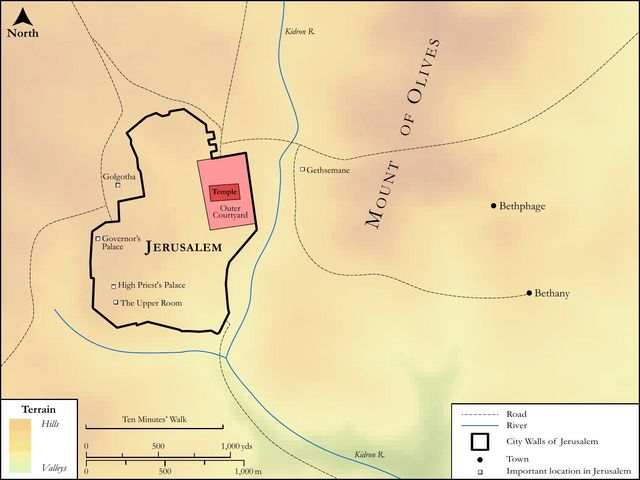
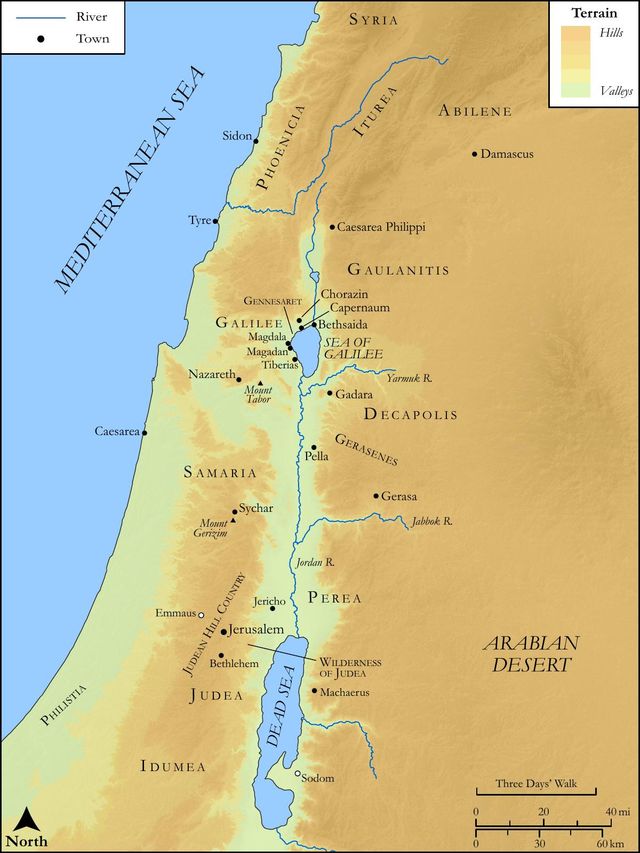
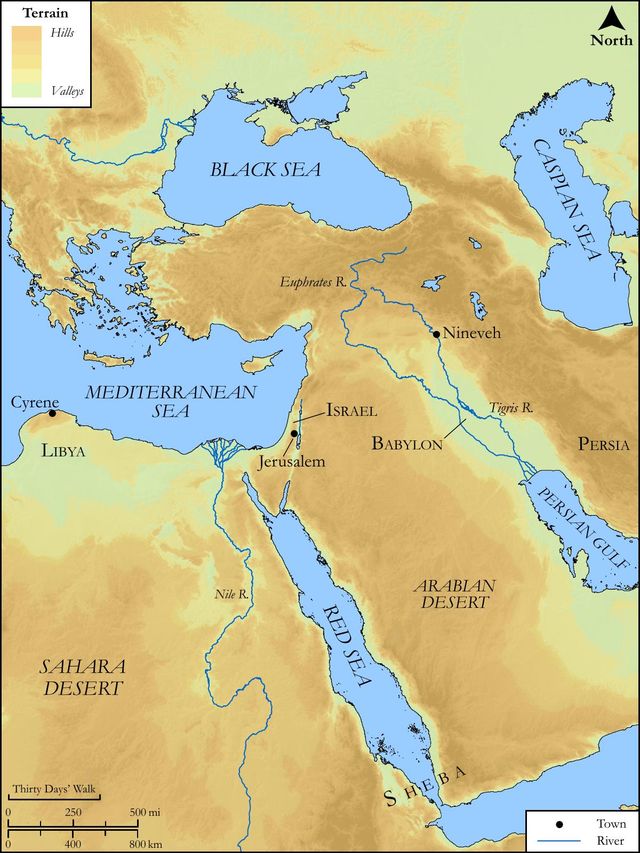
Study this verse
Public-domain commentary
Matthew Henry
From his Commentary on the Whole Bible. Henry comments on passages, not single verses — this entry covers Matthew 7:7–11. His four-level outline is real structure in the source text, so it is rendered as structure.
Our Saviour, in the foregoing chapter, had spoken of prayer as a commanded duty, by which God is honoured, and which, if done aright, shall be rewarded; here he speaks of it as the appointed means of obtaining what we need, especially grace to obey the precepts he had given, some of which are so displeasing to flesh and blood.
I.Here is a precept in three words to the same purport, Ask, Seek, Knock (Mat 7:7); that is, in one word, "Pray; pray often; pray with sincerity and seriousness; pray, and pray again; make conscience of prayer, and be constant in it; make a business of prayer, and be earnest in it. Ask, as a beggar asks alms." Those that would be rich in grace, must betake themselves to the poor trade of begging, and they shall find it a thriving trade. "Ask; represent your wants and burthens to God, and refer yourselves to him for support and supply, according to his promise. Ask as a traveller asks the way; to pray is to enquire of God, Eze 36:37. Seek, as for a thing of value that we have lost, or as the merchantman that seeks goodly pearls. Seek by prayer, Dan 9:3. Knock, as he that desires to enter into the house knocks at the door." We would be admitted to converse with God, would be taken into his love, and favour, and kingdom; sin has shut and barred the door against us; by prayer, we knock; Lord, Lord, open to us. Christ knocks at our door (Rev 3:20; Sol 5:2); and allows us to knock at his, which is a favour we do not allow to common beggars. Seeking and knocking imply something more than asking and praying.
1.We must not only ask but seek; we must second our prayers with our endeavors; we must, in the use of the appointed means, seek for that which we ask for, else we tempt God. When the dresser of the vineyard asked for a year's respite for the barren fig-tree, he added, I will dig about it, Luk 13:7, Luk 13:8. God gives knowledge and grace to those that search the scriptures, and wait at Wisdom's gates; and power against sin to those that avoid the occasions of it.
2.We must not only ask, but knock; we must come to God's door, must ask importunately; not only pray, but plead and wrestle with God; we must seek diligently; we must continue knocking; must persevere in prayer, and in the use of means; must endure to the end in the duty.
II.Here is a promised annexed:
our labour in prayer, if indeed we do labour in it, shall not be in vain: where God finds a praying heart, he will be found a prayer-hearing God; he shall give thee an answer of peace. The precept is threefold, ask, seek, knock; there is precept upon precept; but the promise is sixfold, line upon line, for our encouragement; because a firm belief of the promise would make us cheerful and constant in our obedience. Now here,
1.The promise is made, and made so as exactly to answer the precept, Mat 7:7. Ask, and it shall be given you; not lent you, not sold you, but given you; and what is more free than gift? Whatever you pray for, according to the promise, whatever you ask, shall be given you, if God see it fit for you, and what would you have more? It is but ask and have; ye have not, because ye ask not, or ask not aright: what is not worth asking, is not worth having, and then it is worth nothing. Seek, and ye shall find, and then you do not lose your labour; God is himself found of those that seek him, and if we find him we have enough. "Knock, and it shall be opened; the door of mercy and grace shall no longer be shut against you as enemies and intruders, but opened to you as friends and children. It will be asked, who is at the door? If you be able to say, a friend, and have the ticket of promise ready to produce in the hand of faith, doubt not of admission. If the door be not opened at the first knock, continue instant in prayer; it is an affront to a friend to knock at his door, and then go away; though he tarry, yet wait."
2.It is repeated, Mat 7:8. It is to the same purport, yet with some addition. (1.) It is made to extend to all that pray aright; "Not only you my disciples shall receive what you pray for, but every one that asketh, receiveth, whether Jew or Gentile, young or old, rich or poor, high or low, master or servant, learned or unlearned, they are all alike welcome to the throne of grace, if they come in faith: for God is no respecter of persons." (2.) It is made so as to amount to a grant, in words of the present tense, which is more than a promise for the future. Every one that asketh, not only shall receive, but receiveth; by faith, applying and appropriating the promise, we are actually interested and invested in the good promised: so sure and inviolable are the promises of God, that they do, in effect, give present possession: an active believer enters immediately, and makes the blessings promised his own. What have we in hope, according to the promise, is as sure, and should be as sweet, as what we have in hand. God hath spoken in his holiness, and then Gilead is mine, Manasseh mine (Psa 108:7, Psa 108:8); it is all mine own, if I can but make it so by believing it so. Conditional grants become absolute upon the performance of the condition; so here, he that asketh, receiveth. Christ hereby puts his fiat to the petition; and he having all power, that is enough.
3.It is illustrated, by a similitude taken from earthly parents, and their innate readiness to give their children what they ask. Christ appeals to his hearers, What man is there of you, though never so morose and ill-humoured, whom if his son ask bread, will he give him a stone? Mat 7:9, Mat 7:10. Whence he infers (Mat 7:11), If ye then, being evil, yet grant your children's requests, much more will your heavenly Father give you the good things you ask. Now this is of use,
(1.)To direct our prayers and expectations.
[1.]We must come to God, as children to a Father in heaven, with reverence and confidence. How naturally does a child in want or distress run to the father with its complaints; My head, my head; thus should the new nature send us to God for supports and supplies.
[2.]We must come to him for good things, for those he gives to them that ask him; which teaches us to refer ourselves to him; we know not what is good for ourselves (Ecc 6:12), but he knows what is good for us, we must therefore leave it with him; Father, thy will be done. The child is here supposed to ask bread, that is necessary, and a fish, that is wholesome; but if the child should foolishly ask for a stone, or a serpent, for unripe fruit to eat, or a sharp knife to play with, the father, though kind, is so wise as to deny him. We often ask that of God which would do us harm if we had it; he knows this, and therefore does not give it to us. Denials in love are better than grants in anger; we should have been undone ere this if we had had all we desired; this is admirably well expressed by a heathen, Juvenal, Sat. 10.
Permittes ipsis expendere numinibus, quid
Conveniat nobis, rebusque sit utile nostris,
Nam pro jucundis aptissima quaeque dabunt dii.
Carior est illis homo, quam sibi: nos animorum
Impulsu, et caeca, magnaque cupidine ducti,
Conjugium petimus, partumque uxoris; at illis
Notum est, qui pueri, qualisque futura sit uxor.
Entrust thy fortune to the powers above.
Leave them to manage for thee, and to grant
What their unerring wisdom sees thee want:
In goodness, as in greatness, they excel;
Ah, that we lov'd ourselves but half so well!
We, blindly by our headstrong passions led,
Seek a companion, and desire to wed;
Then wish for heirs: but to the gods alone
Our future offspring and our wives are known.
(2.)To encourage our prayers and expectations. We may hope that we shall not be denied and disappointed: we shall not have a stone for bread, to break our teeth (though we have a hard crust to employ our teeth), nor a serpent for a fish, to sting us; we have reason indeed to fear it, because we deserve it, but God will be better to us than the desert of our sins. The world often gives stones for bread, and serpents for fish, but God never does; nay, we shall be heard and answered, for children are by their parents.
[1.]God has put into the hearts of parents a compassionate inclination to succour and supply their children, according to their need. Even those that have had little conscience of duty, yet have done it, as it were by instinct. No law was ever thought necessary to oblige parents to maintain their legitimate children, nor, in Solomon's time, their illegitimate ones.
[2.]He has assumed the relation of a Father to us, and owns us for his children; that from the readiness we find in ourselves to relieve our children, we may be encouraged to apply ourselves to him for relief. What love and tenderness fathers have are from him; not from nature but from the God of nature; and therefore they must needs be infinitely greater in himself. He compares his concern for his people to that of a father for his children (Psa 103:13), nay, to that of a mother, which is usually more tender, Isa 66:13; Isa 49:14, Isa 49:15. But here it is supposed, that his love, and tenderness, and goodness, far excel that of any earthly parent; and therefore it is argued with a much more, and it is grounded upon this undoubted truth, that God is a better Father, infinitely better than any earthly parents are; his thoughts are above theirs. Our earthly fathers have taken care of us; we have taken care of our children; much more will God take care of his; for they are evil, originally so; the degenerate seed of fallen Adam; they have lost much of the good nature that belonged to humanity, and among other corruptions, have that of crossness and unkindness in them; yet they give good things to their children, and they know how to give, suitably and seasonably; much more will God, for he takes up when they forsake, Psa 27:10. And, First, God is more knowing; parents are often foolishly fond, but God is wise, infinitely so; he knows what we need, what we desire, and what is fit for us. Secondly, God is more kind. If all the compassions of all the tender fathers in the world were crowded into the bowels of one, yet compared with the tender mercies of our God, they would be but as a candle to the sun, or a drop to the ocean. God is more rich, and more ready to give to his children than the fathers of our flesh can be; for he is the Father of our spirits, an ever-loving, ever-living Father. The bowels of Fathers yearn even towards undutiful children, towards prodigals, as David's toward Absalom, and will not all this serve to silence disbelief?
Historical interpretation
Nine Centuries of Reception
12 surviving comments on this verse. Each one is dated, so this reads as a timeline rather than a list.
Select a marker to jump to its quote. Markers stagger vertically where authors wrote within a few decades of each other.
Do not want to be more merciful than God, or rather, if you wish it, you will not be able, not even in the least degree. How should you? As far as the heaven is from the earth, Scripture says, so far are My counsels from your counsels: and again, If ye, He says, being evil, know how to give good gifts unto your children, how much more your heavenly Father?
There are two things behoveful for one that prays; that he ask earnestly; and that he ask such things as he ought to ask. And those are spiritual things; as Solomon, because he asked such things as were right, received speedily.
This He said not detracting from human nature, nor confessing the whole human race to be evil; but He calls paternal love evil when compared with His own goodness. Such is the superabundance of His love towards men.
And if thou doubt my affirmation, at any rate believe His example.
"For what man is there of you," saith He, "whom if his son ask bread, will he give him a stone?"
Because, as among men, if thou keep on doing so, thou art even accounted troublesome, and disgusting: so with God, when thou doest not so, then thou dost more entirely provoke Him. And if thou continue asking, though thou receive not at once, thou surely wilt receive. For to this end was the door shut, that He may induce thee to knock: to this end He doth not straightway assent, that thou mayest ask. Continue then to do these things, and thou wilt surely receive. For that thou mightest not say, "What then if I should ask and not receive?" He hath blocked up thy approach with that similitude, again framing arguments, and by those human things urging us to be confident on these matters; implying by them that we must not only ask, but ask what we ought.
"For which of you is there, a father, of whom if his son shall ask bread, will he give him a stone?" So that if thou receive not, thy asking a stone is the cause of thy not receiving. For though thou be a son, this suffices not for thy receiving: rather this very thing even hinders thy receiving, that being a son, thou askest what is not profitable.
Do thou also therefore ask nothing worldly, but all things spiritual, and thou wilt surely receive. For so Solomon, because he asked what he ought, behold how quickly he received. Two things now, you see, should be in him that prays, asking earnestly, and asking what he ought: "since ye too," saith He, "though ye be fathers, wait for your sons to ask: and if they should ask of you anything inexpedient, ye refuse the gifts; just as, if it be expedient, ye consent and bestow it." Do thou too, considering these things, not withdraw until thou receive; until thou have found, retire not; relax not thy diligence, until the door be opened. For if thou approach with this mind, and say, "Except I receive, I depart not;" thou wilt surely receive, provided thou ask such things, as are both suitable for Him of whom thou askest to give, and expedient for thee the petitioner. But what are these? To seek the things spiritual, all of them; to forgive them that have trespassed, and so to draw nigh asking forgiveness; "to lift up holy hands without wrath and doubting." If we thus ask, we shall receive. As it is, surely our asking is a mockery, and the act of drunken rather than of sober men.
"What then," saith one, "if I ask even spiritual things, and do not receive?" Thou didst not surely knock with earnestness; or thou madest thyself unworthy to receive; or didst quickly leave off.
"And wherefore," it may be inquired, "did He not say, what things we ought to ask"? Nay verily, He hath mentioned them all in what precedes, and hath signified for what things we ought to draw nigh. Say not then, "I drew nigh, and did not receive." For in no case is it owing to God that we receive not, God who loves us so much as to surpass even fathers, to surpass them as far as goodness doth this evil nature.
"For if ye, being evil, know how to give good gifts unto your children, how much more your heavenly Father."
Now this He said, not to bring an evil name on man's nature, nor to condemn our race as bad; but in contrast to His own goodness He calls paternal tenderness evil, so great is the excess of His love to man.
Seest thou an argument unspeakable, of power to arouse to good hopes even him that hath become utterly desperate?
Or perhaps he called the Apostles evil, in their person condemning the whole human race, whose heart is set to evil from his infancy, as we read in Genesis. Nor is it any wonder that He should call this generation evil, (Gen. 8:22.) as the Apostle also speaks, Seeing the days are evil.
(Ver. 11, 12.) So if you, being evil, know how to give good things to your children, how much more will your Father who is in heaven give good things to those who ask Him! Therefore, whatever you want men to do to you, do also to them, for this is the Law and the Prophets. It should be noted that when he referred to the apostles as evil, unless perhaps under the guise of the apostles the entire race of men is condemned, whose hearts are inclined to evil from infancy in comparison to divine mercy. Read Genesis (Genesis 8). It is not surprising if people of this age are called evil, since even the apostle Paul recalls: Redeeming the time, for the days are evil (Ephesians 5:16).
(Serm. 61. 5.) In that God sometimes delays His gifts, He but recommends, and does not deny them. For that which is long looked for is sweeter when obtained; but that is held cheap, which comes at once. Ask then and seek things righteous. For by asking and seeking grows the appetite of taking. God reserves for you those things which He is not willing to give you at once, that you may learn greatly to desire great things. Therefore we ought always to pray and not to fail.
(Serm. in Mont. ii. 21.) As above He had cited the birds of the air and the lilies of the field, that our hopes may rise from the less to the greater; so also does He in this place, when He says, Or what man among you?
(ubi sup.) Or; He calls evil (Eph. 5:16.) those who are lovers of this age; whence also the good things which they give are to be called good according to their sense who esteem them as good; nay, even in the nature of things they are goods, that is, temporal goods, and such as pertain to this weak life.
(Serm. 61, 3.) For that good thing which makes men good is God. Gold and silver are good things not as making you good, but as with them you may do good. If then we be evil, yet as having a Father who is good let us not remain ever evil.
(Serm. in Mont. ii. 21.) If then we being evil, know how to give that which is asked of us, how much more is it to be hoped that God will give us good things when we ask Him?
But how do evil people give good gifts? Those whom he here calls evil are sinners. As such they are still lovers of this world. It is in accordance with their notion of good that their gifts are to be called good. Their gifts are called good, that is, because the givers consider them good. Although these things are good in the order of nature, they are nevertheless temporal things pertaining to the infirmities of life. Moreover, whenever an evil person bestows them, he is not giving what is his own, for "the earth and the fullness thereof is the Lord's.… Who made heaven and earth, the sea, and all things that are in them." So even we who are evil know how to give what is asked. How much more confidence ought we to have that God will give us good things when we ask. God will not deceive us by giving us one thing rather than another when we ask of him. Even we do not deceive our children. And whatever good gifts we bestow, we give what is God's and not our own.
Lest perchance any one considering how great is the difference between God and man, and weighing his own sins should despair of obtaining, and so never take in hand to ask; therefore He proposes a comparison of the relation between father and son; that should we despair because of our sins, we may hope because of God's fatherly goodness.
And what are the things that we ought to ask, he shows under the likeness of a loaf, and a fish. The loaf is the word concerning the knowledge of God the Father. The stone is all falsehood that has a stumbling-block of offence to the soul.
Because in comparison of God who is preeminently good, all men seem to be evil, as all light shows dark when compared with the sun.
He says good things, because God does not give all things to them that ask Him, but only good things.
By the fish we may understand the word concerning Christ, by the serpent the Devil himself. Or by the loaf may be understood spiritual doctrine; by the stone ignorance; by the fish the water of Holy Baptism; by the serpent the wiles of the Devil, or unbelief.
The sense therefore is; we need not fear that should we ask of God our Father bread, that is doctrine or love, He will give us a stone; that is, that He will suffer our heart to be contracted either by the frost of hatred or by hardness of soul; or that when we ask for faith, He will suffer us to die of the poison of unbelief. Thence it follows, If then ye being evil.
And be it known that where Matthew says, He shall give good things, Luke has, shall give his Holy Spirit. (Luke 11:13.) But this ought not to seem contrary, because all the good things which man receives from God, are given by the grace of the Holy Spirit.
Or; bread which is the common food signifies charity, without which the other virtues are of no avail. The fish signifies faith, which is born of the water of baptism, is tossed in the midst of the waves of this life and yet lives. Luke adds a third thing, an egg, (Luke 11:12.) which signifies hope; for an egg is the hope of the animal. To charity, He opposes a stone, that is, the hardness of hatred; to faith, a serpent, that is, the venom of treachery; to hope, a scorpion, that is, despair, which stings backward, as the scorpion.
He calls men evil by comparison with God, for our nature is good, being God’s creation. But we become evil by our own choice.
(ord.) For from God we receive only such things as are good, of what kind soever they may seem to us when we receive them; for all things work together for good to His beloved.
Continue studying Matthew 7:11 across the web’s major study libraries — every link below opens this exact verse, chapter, or book on the destination site.
Read & Compare
 BibleGatewayThis verse in more than 200 translations and 70 languages.
 Bible.comThe YouVersion reader — hundreds of translations, reading plans, and highlights.
 ESV.orgCrossway's official English Standard Version reader.
 NET BibleThe NET translation with 60,000+ translators' notes on every rendering decision.
 STEP BibleTyndale House's free study tool — original text, vocabulary, and scholarly resources.
 BibliaLogos Bible Software's free web reader.
 USCCBThe New American Bible (Revised Edition) with the U.S. bishops' study notes.
Commentaries
 BibleHub CommentariesDozens of classic commentaries on this verse, gathered on one page.
 StudyLightMore than 100 commentary sets — the largest collection on the web.
 BibleRefPlain-English commentary on what this verse means, verse by verse.
 Enduring WordDavid Guzik's free commentary on this chapter, widely used by Bible teachers.
 Bible Study ToolsVerse commentary alongside Greek and Hebrew study aids.
Original Language & Research
- BibleHub InterlinearThe verse word by word — original language, transliteration, and English.
- BibleHub LexiconEvery word's original-language definition and Strong's entry.
 Blue Letter BibleDeep-study tools — Strong's numbers, concordance, and word studies.
 CNTR CollationThe earliest Greek manuscripts of this verse, collated letter by letter.
Sermons, Hymns & Audio


TrulyRandomVerse is not affiliated with these sites and doesn’t control their content. They’re linked because they’re genuinely useful.
Summary
Matthew 7:11, a pivotal statement within Jesus's Sermon on the Mount, provides profound assurance regarding God's benevolent character and His unwavering willingness to respond to the prayers of His children. Through a powerful a fortiori argument, Jesus contrasts the inherent limitations and "evil" nature of human parents with the perfect goodness of the Heavenly Father, thereby instilling deep confidence in believers to approach God with their requests, certain of His generous and wise provision.
Context
ShowHideLiterary Context
This verse serves as the climactic conclusion to Jesus's teaching on prayer found in Matthew 7:7-11. Immediately preceding it, Jesus delivers the well-known exhortation to "Ask, and it shall be given you; seek, and ye shall find; knock, and it shall be opened unto you" (Matthew 7:7). The entire section, embedded within the broader Sermon on the Mount, emphasizes the accessibility and efficacy of prayer for those who live according to kingdom principles. Matthew 7:11 solidifies the foundation for persistent prayer by grounding it in the very character of God as a loving and generous Father, providing the ultimate motivation for His disciples to pray with confidence.
Historical & Cultural Context
In ancient Jewish society, the family unit was central, and the role of parents, particularly fathers, in providing for their children was deeply ingrained. Jesus leverages this universal human experience—the natural instinct of parents to care for their offspring—to illustrate a divine truth. The concept of God as a benevolent "Father" was present in Jewish thought, but Jesus's emphasis on an intimate, accessible, and supremely generous Heavenly Father was revolutionary. The term "evil" (Greek: ponērós) used to describe human parents would have been understood not as an accusation of malicious intent in their giving, but as a theological acknowledgment of humanity's fallen, sinful nature in contrast to God's perfect righteousness and absolute goodness. This distinction would resonate with a Jewish audience familiar with the concept of human imperfection before a holy God.
Key Themes
ShowHideMatthew 7:11 contributes significantly to several overarching themes within the Sermon on the Mount and the broader Gospel of Matthew. Firstly, it underscores God's Infinite Goodness and Benevolence, presenting Him as a Father who delights in giving good things to His children, far surpassing any human capacity for generosity. Secondly, it provides Assurance in Prayer, dismantling any doubt about God's willingness to hear and respond to the petitions of His people. This theme builds upon the earlier exhortations to "ask, seek, and knock" (Matthew 7:7). Thirdly, the verse highlights the theme of Divine Provision, emphasizing that God's gifts are not merely what we desire, but what is truly "good" and beneficial for us, often extending beyond material needs to spiritual blessings, as clarified in the parallel passage in Luke 11:13. Finally, it reinforces the Father-Child Relationship between God and believers, inviting an intimate and trusting approach to Him.
Exposition and Analysis
ShowHideKey Word Analysis
ShowHideThis adjective (G4190) describes human parents as "hurtful," "wicked," or "culpable." In this context, it does not imply that human parents are intentionally malicious when giving gifts to their children. Rather, it serves as a stark theological contrast to God's perfect nature, highlighting humanity's inherent fallenness and sinfulness. Even in their imperfect state, human parents possess a natural inclination to provide for their offspring, which Jesus uses as a baseline for comparison.
This verb (G1325) is central to the verse, appearing twice. It means "to give," "bestow," or "grant." Its broad application signifies the act of providing, whether by human parents or by God. The repetition emphasizes the act of benefaction, drawing a direct parallel between the human act of giving and the divine act, though one is infinitely superior in quality and scope.
This adjective (G18) describes the quality of the gifts. It means "good" in any sense, encompassing that which is beneficial, wholesome, and morally sound. When applied to God's gifts, it signifies perfect goodness, implying that God's provision is always aligned with His perfect will and is truly beneficial for the recipient, even if it doesn't always match human desires.
Verse Breakdown
ShowHide"If ye then, being evil, know how to give good gifts unto your children,"
This clause establishes the premise of Jesus's argument. It acknowledges the universal human experience of parents, despite their fallen and imperfect nature ("being evil"), possessing the innate wisdom and desire to provide beneficial things ("good gifts") for their offspring. The "if" (G1487, ei) sets up a conditional statement that is understood to be true and universally observable, forming the lesser part of the comparison.
"how much more shall your Father which is in heaven give good things to them that ask him?"
This is the conclusion of Jesus's a fortiori argument. Building on the established premise, Jesus moves from the lesser (imperfect human parents) to the greater (the perfectly good and heavenly Father). The phrase "how much more" (G4214 pósos G3123 mâllon) highlights the immense qualitative difference. If flawed humans give good gifts, then the perfectly righteous, omniscient, and loving God will certainly and abundantly provide "good things" (G18, agathós) to those who petition Him (G154, aitéō). This underscores God's boundless generosity, His perfect wisdom in knowing what is truly good, and His eagerness to bless His children.
Literary Devices
ShowHideThe primary literary device employed in Matthew 7:11 is the a fortiori argument, also known as an argument from the lesser to the greater. Jesus constructs a logical progression: if a lesser entity (imperfect human parents) can perform a certain benevolent act (giving good gifts), then a greater entity (the perfectly good Heavenly Father) will surely perform an even greater benevolent act (giving good things). This form of reasoning is highly persuasive, leading the listener to an undeniable conclusion about God's character. Complementing this, Jesus uses Contrast between the "evil" nature of human parents and the perfect goodness of the "Father which is in heaven," thereby magnifying the divine attribute. The entire verse functions as a Rhetorical Question, implicitly asking "Is it not obvious?" and compelling the audience to affirm the overwhelming generosity of God. This rhetorical strategy engages the listener, making the truth more impactful than a simple declarative statement.
Theological and Thematic Connections
ShowHideMatthew 7:11 profoundly shapes our understanding of God's character, revealing Him as a perfectly good, loving, and generous Father who delights in providing for His children. This verse elevates the concept of prayer from a mere ritual to an intimate conversation with a benevolent parent, assuring believers that their Heavenly Father is not distant or reluctant, but eager to bestow what is truly beneficial. It challenges us to trust in God's wisdom regarding what constitutes "good things," recognizing that His perspective transcends our limited desires, always aiming for our ultimate spiritual and holistic well-being. This passage reinforces the New Testament emphasis on God as a personal Father, inviting a relationship of confident dependence rather than fearful supplication.
Reflection and Application
ShowHideMatthew 7:11 is a powerful anchor for our faith, especially when we face unanswered prayers or doubt God's care. It calls us to cultivate a deep and unwavering trust in the Heavenly Father's character, recognizing that His goodness far surpasses our own capacity for benevolence. This verse encourages persistent prayer, not as a means to manipulate God, but as an expression of our dependence on His perfect wisdom and love. It prompts us to re-evaluate our definition of "good things," shifting our focus from immediate desires to God's ultimate, holistic provision for our lives, which often includes spiritual growth, character formation, and alignment with His will. Ultimately, it invites us to approach God with the confidence of a beloved child, knowing that He is always working for our true good, even when His answers differ from our expectations.
Questions for Reflection
ShowHideFAQ
ShowHideWhat does Jesus mean by calling human parents "evil" in this verse?
ShowHideThe term "evil" (Greek: ponērós) used here does not imply that human parents are inherently malicious or intentionally harmful when giving gifts to their children. Rather, it is a theological statement acknowledging humanity's fallen nature and inherent sinfulness in contrast to God's perfect righteousness and absolute goodness. Even in their imperfect, fallen state, human parents possess a natural, God-given instinct to love and provide for their offspring. Jesus uses this common, relatable human experience as a baseline to highlight the infinitely greater and purer goodness of the Heavenly Father.
What are the "good things" God promises to give to those who ask Him?
ShowHideThe "good things" (Greek: agathós) God promises are broad and encompass everything that is truly beneficial, wholesome, and aligned with His perfect will for His children. While this can include material provisions, the parallel passage in Luke 11:13 clarifies that the preeminent "good gift" God gives is the Holy Spirit. This suggests that God's provision extends beyond our immediate desires to spiritual blessings, guidance, wisdom, comfort, and the transforming presence of the Spirit, all of which are genuinely good for our growth, well-being, and conformity to Christ's image. God's "good things" are always perfect and serve His ultimate redemptive purposes.
Christ-Centered Fulfillment
ShowHideMatthew 7:11 finds its ultimate fulfillment and deepest meaning in Jesus Christ. He is the perfect embodiment of the Heavenly Father's goodness and the very means by which we become children of God, able to approach Him with confidence. It is through Christ that humanity, once alienated by sin, is reconciled to the Father, gaining access to His abundant "good things." Jesus Himself is the supreme "good gift" from the Father, as John 3:16 declares, for "God so loved the world, that he gave his only begotten Son." Furthermore, the ultimate "good thing" that the Father gives, as clarified in Luke 11:13, is the Holy Spirit, who was poured out upon believers after Christ's ascension, as promised by Jesus (Acts 2:33). Thus, Christ not only reveals the Father's heart of generosity but also serves as the mediator through whom all of God's good gifts, culminating in the indwelling Spirit and eternal life, are bestowed upon those who ask in faith. He is the living assurance that the Father's promise to give "good things" is eternally trustworthy and unfailingly true.