


Matthew 5:10
Bible text: King James Version (1769 Blayney text) · Public domain
Bible text: Berean Standard Bible · Public domain
Bible text: American Standard Version (1901) · Public domain
Bible text: World English Bible, Messianic edition · Public domain
Bible text: Geneva Bible (1599) · Public domain
Bible text: Young's Literal Translation · Public domain
- ΜακάριοιMakarioiBlessed [are]G3107A-NPMAdjective Nominative Plural Masculine
- οἱhoithoseG3588T-NPMDefinite article Nominative Plural Masculine
- δεδιωγμένοιdediōgmenoipersecutedG1377V-RPP-NPMVerb Perfect Passive Participle Nominative Plural Masculine
- ἕνεκενhenekenon account ofG1752PREPPreposition
- δικαιοσύνηςdikaiosunēsrighteousnessG1343N-GSFNoun Genitive Singular Feminine
- ὅτιhotiforG3754CONJConjunction
- αὐτῶνautōntheirsG846P-GPMPersonal pronoun Genitive Plural Masculine
- ἐστινestinisG1510V-PAI-3SVerb Present Active Indicative 3rd Singular
- ἡhētheG3588T-NSFDefinite article Nominative Singular Feminine
- βασιλείαbasileiakingdomG932N-NSFNoun Nominative Singular Feminine
- τῶνtōnof theG3588T-GPMDefinite article Genitive Plural Masculine
- οὐρανῶνouranōnheavensG3772N-GPMNoun Genitive Plural Masculine
English is a literal word-by-word gloss of the Greek, not the KJV's wording. Why?
This is the original text the KJV's translators worked from — each Greek word with its own literal English meaning in this verse, prepared by scholars at Tyndale House, Cambridge. The KJV translates whole sentences, not word by word, so its wording differs: one Greek word can become several English words, and the KJV may choose “charity” where the gloss reads “love”. Both are faithful — they answer different questions. For the KJV's own rendering, switch to the KJV text.
Details
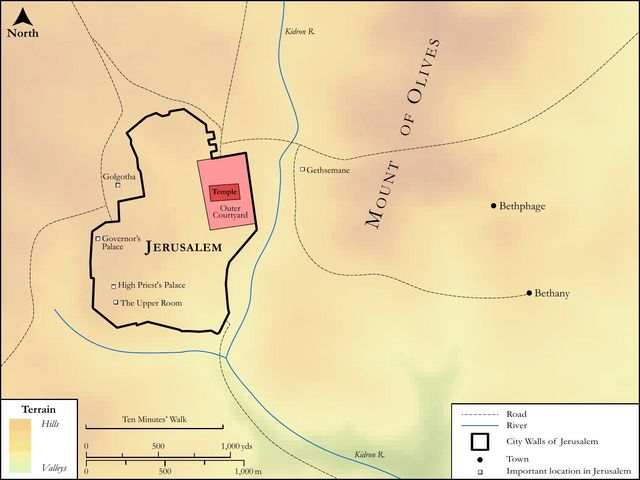
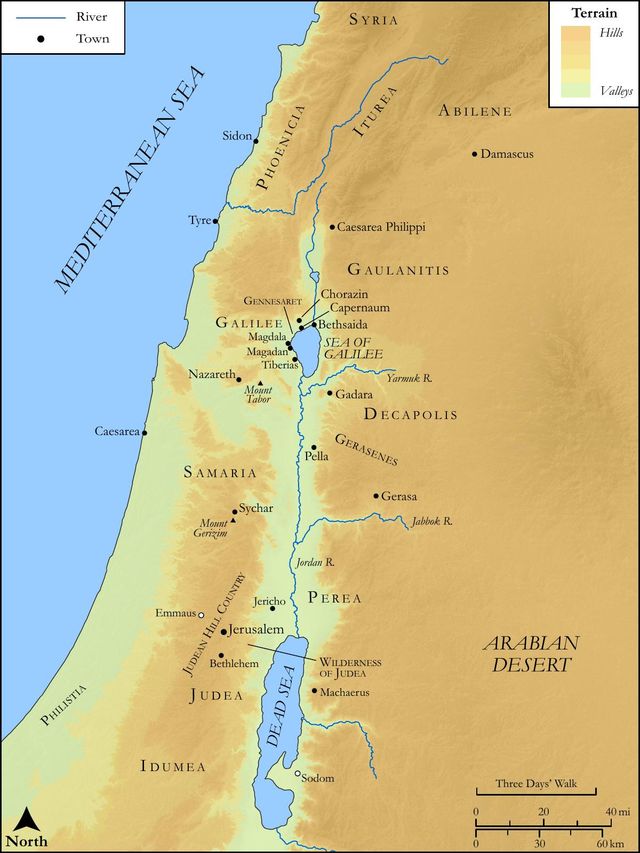
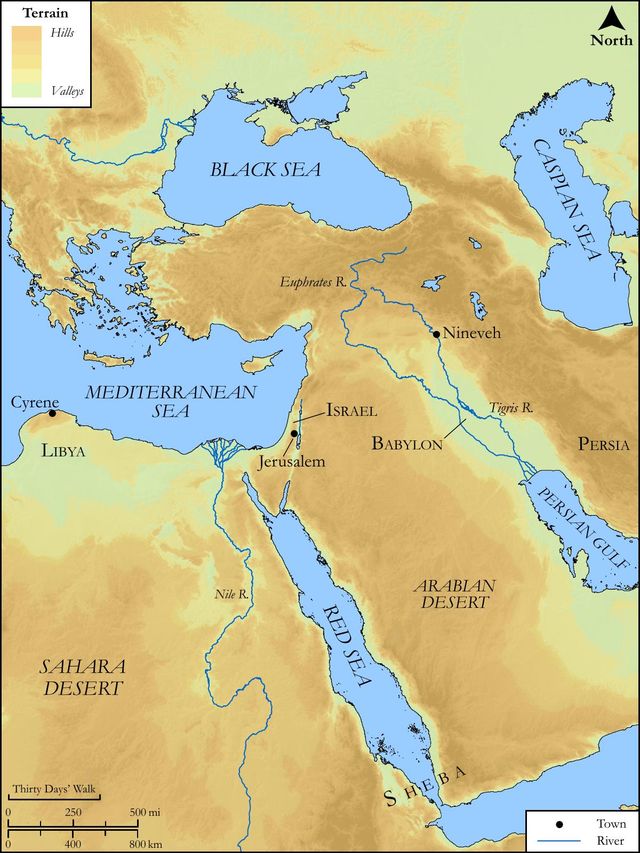
See on the biblical-era maps
Study this verse
Public-domain commentary
Matthew Henry
From his Commentary on the Whole Bible. Henry comments on passages, not single verses — this entry covers Matthew 5:3–12. His three-level outline is real structure in the source text, so it is rendered as structure.
Christ begins his sermon with blessings, for he came into the world to bless us (Acts iii. 26), as the great High Priest of our profession; as the blessed Melchizedec; as He in whom all the families of the earth should be blessed, Gen. xii. 3. He came not only to purchase blessings for us, but to pour out and pronounce blessings on us; and here he does it as one having authority, as one that can command the blessing, even life for evermore, and that is the blessing here again and again promised to the good; his pronouncing them happy makes them so; for those whom he blesses, are blessed indeed. The Old Testament ended with a curse (Mal. iv. 6), the gospel begins with a blessing; for hereunto are we called, that we should inherit the blessing. Each of the blessings Christ here pronounces has a double intention: 1. To show who they are that are to be accounted truly happy, and what their characters are. 2. What that is wherein true happiness consists, in the promises made to persons of certain characters, the performance of which will make them happy. Now,
1.This is designed to rectify the ruinous mistakes of a blind and carnal world. Blessedness is the thing which men pretend to pursue; Who will make us to see good? Ps. iv. 6. But most mistake the end, and form a wrong notion of happiness; and then no wonder that they miss the way; they choose their own delusions, and court a shadow. The general opinion is, Blessed are they that are rich, and great, and honourable in the world; they spend their days in mirth, and their years in pleasure; they eat the fat, and drink the sweet, and carry all before them with a high hand, and have every sheaf bowing to their sheaf; happy the people that is in such a case; and their designs, aims, and purposes are accordingly; they bless the covetous (Ps. x. 3); they will be rich. Now our Lord Jesus comes to correct this fundamental error, to advance a new hypothesis, and to give us quite another notion of blessedness and blessed people, which, however paradoxical it may appear to those who are prejudiced, yet is in itself, and appears to be to all who are savingly enlightened, a rule and doctrine of eternal truth and certainty, by which we must shortly be judged. If this, therefore, be the beginning of Christ's doctrine, the beginning of a Christian's practice must be to take his measures of happiness from those maxims, and to direct his pursuits accordingly.
2.It is designed to remove the discouragements of the weak and poor who receive the gospel, by assuring them that his gospel did not make those only happy that were eminent in gifts, graces, comforts, and usefulness; but that even the least in the kingdom of heaven, whose heart was upright with God, was happy in the honours and privileges of that kingdom.
3.It is designed to invite souls to Christ, and to make way for his law into their hearts. Christ's pronouncing these blessings, not at the end of his sermon, to dismiss the people, but at the beginning of it, to prepare them for what he had further to say to them, may remind us of mount Gerizim and mount Ebal, on which the blessings and cursings of the law were read, Deut. xxvii. 12, &c. There the curses are expressed, and the blessings only implied; here the blessings are expressed, and the curses implied: in both, life and death are set before us; but the law appeared more as a ministration of death, to deter us from sin; the gospel as a dispensation of life, to allure us to Christ, in whom alone all good is to be had. And those who had seen the gracious cures wrought by his hand (ch. iv. 23, 24), and now heard the gracious words proceeding out of his mouth, would say that he was all of a piece, made up of love and sweetness.
4.It is designed to settle and sum up the articles of agreement between God and man. The scope of the divine revelation is to let us know what God expects from us, and what we may then expect from him; and no where is this more fully set forth in a few words than here, nor with a more exact reference to each other; and this is that gospel which we are required to believe; for what is faith but a conformity to these characters, and a dependence upon these promises? The way to happiness is here opened, and made a highway (Isa. xxxv. 8); and this coming from the mouth of Jesus Christ, it is intimated that from him, and by him, we are to receive both the seed and the fruit, both the grace required, and the glory promised. Nothing passes between God and fallen man, but through his hand. Some of the wiser heathen had notions of blessedness different from the rest of mankind, and looking toward this of our Saviour. Seneca, undertaking to describe a blessed man, makes it out, that it is only an honest, good man that is to be so called: De vita beata. cap. 4. Cui nullum bonum malumque sit, nisi bonus malusque animus—Quem nec extollant fortuita, nec frangant—Cui vera voluptas erit voluptatum comtemplio—Cui unum bonum honestas, unum malum turpitudo.—In whose estimation nothing is good or evil, but a good or evil heart—Whom no occurrences elate or deject—Whose true pleasure consists in a contempt of pleasure—To whom the only good is virtue, and the only evil vice.
Our Saviour here gives us eight characters of blessed people; which represent to us the principal graces of a Christian. On each of them a present blessing is pronounced; Blessed are they; and to each a future blessing is promised, which is variously expressed, so as to suit the nature of the grace or duty recommended.
Do we ask then who are happy? It is answered,
I.The poor in spirit are happy, v.
3. There is a poor-spiritedness that is so far from making men blessed that it is a sin and a snare—cowardice and base fear, and a willing subjection to the lusts of men. But this poverty of spirit is a gracious disposition of soul, by which we are emptied of self, in order to our being filled with Jesus Christ. To be poor in spirit is, 1. To be contentedly poor, willing to be emptied of worldly wealth, if God orders that to be our lot; to bring our mind to our condition, when it is a low condition. Many are poor in the world, but high in spirit, poor and proud, murmuring and complaining, and blaming their lot, but we must accommodate ourselves to our poverty, must know how to be abased, Phil. iv. 12. Acknowledging the wisdom of God in appointing us to poverty, we must be easy in it, patiently bear the inconveniences of it, be thankful for what we have, and make the best of that which is. It is to sit loose to all worldly wealth, and not set our hearts upon it, but cheerfully to bear losses and disappointments which may befal us in the most prosperous state. It is not, in pride or pretence, to make ourselves poor, by throwing away what God has given us, especially as those in the church of Rome, who vow poverty, and yet engross the wealth of the nations; but if we be rich in the world we must be poor in spirit, that is, we must condescend to the poor and sympathize with them, as being touched with the feeling of their infirmities; we must expect and prepare for poverty; must not inordinately fear or shun it, but must bid it welcome, especially when it comes upon us for keeping a good conscience, Heb. x. 34. Job was poor in spirit, when he blessed God in taking away, as well as giving. 2. It is to be humble and lowly in our own eyes. To be poor in spirit, is to think meanly of ourselves, of what we are, and have, and do; the poor are often taken in the Old Testament for the humble and self-denying, as opposed to those that are at ease, and the proud; it is to be as little children in our opinion of ourselves, weak, foolish, and insignificant, ch. xviii. 4; xix. 14. Laodicea was poor in spirituals, wretchedly and miserably poor, and yet rich in spirit, so well increased with goods, as to have need of nothing, Rev. iii. 17. On the other hand, Paul was rich in spirituals, excelling most in gifts and graces, and yet poor in spirit, the least of the apostles, less than the least of all saints, and nothing in his own account. It is to look with a holy contempt upon ourselves, to value others and undervalue ourselves in comparison of them. It is to be willing to make ourselves cheap, and mean, and little, to do good; to become all things to all men. It is to acknowledge that God is great, and we are mean; that he is holy and we are sinful; that he is all and we are nothing, less than nothing, worse than nothing; and to humble ourselves before him, and under his mighty hand. 3. It is to come off from all confidence in our own righteousness and strength, that we may depend only upon the merit of Christ for our justification, and the spirit and grace of Christ for our sanctification. That broken and contrite spirit with which the publican cried for mercy to a poor sinner, is that poverty of spirit. We must call ourselves poor, because always in want of God's grace, always begging at God's door, always hanging on in his house.
Now, (1.) This poverty in spirit is put first among the Christian graces. The philosophers did not reckon humility among their moral virtues, but Christ puts it first. Self-denial is the first lesson to be learned in his school, and poverty of spirit entitled to the first beatitude. The foundation of all other graces is laid in humility. Those who would build high must begin low; and it is an excellent preparative for the entrance of gospel-grace into the soul; it fits the soil to receive the seed. Those who are weary and heavy laden, are the poor in spirit, and they shall find rest with Christ.
(2.)They are blessed. Now they are so, in this world. God looks graciously upon them. They are his little ones, and have their angels. To them he gives more grace; they live the most comfortable lives, and are easy to themselves and all about them, and nothing comes amiss to them; while high spirits are always uneasy.
(3.)Theirs is the kingdom of heaven. The kingdom of grace is composed of such; they only are fit to be members of Christ's church, which is called the congregation of the poor (Ps. lxxiv. 19); the kingdom of glory is prepared for them. Those who thus humble themselves, and comply with God when he humbles them, shall be thus exalted. The great, high spirits go away with the glory of the kingdoms of the earth; but the humble, mild, and yielding souls obtain the glory of the kingdom of heaven. We are ready to think concerning those who are rich, and do good with their riches, that, no doubt, theirs is the kingdom of heaven; for they can thus lay up in store a good security for the time to come; but what shall the poor do, who have not wherewithal to do good? Why, the same happiness is promised to those who are contentedly poor, as to those who are usefully rich. If I am not able to spend cheerfully for his sake, if I can but want cheerfully for his sake, even that shall be recompensed. And do not we serve a good master then?
II.They that mourn are happy (v.
4); Blessed are they that mourn. This is another strange blessing, and fitly follows the former. The poor are accustomed to mourn, the graciously poor mourn graciously. We are apt to think, Blessed are the merry; but Christ, who was himself a great mourner, says, Blessed are the mourners. There is a sinful mourning, which is an enemy to blessedness—the sorrow of the world; despairing melancholy upon a spiritual account, and disconsolate grief upon a temporal account. There is a natural mourning, which may prove a friend to blessedness, by the grace of God working with it, and sanctifying the afflictions to us, for which we mourn. But there is a gracious mourning, which qualifies for blessedness, an habitual seriousness, the mind mortified to mirth, and an actual sorrow. 1. A penitential mourning for our own sins; this is godly sorrow, a sorrow according to God; sorrow for sin, with an eye to Christ, Zech. xii. 10. Those are God's mourners, who live a life of repentance, who lament the corruption of their nature, and their many actual transgressions, and God's withdrawings from them; and who, out of regard to God's honour, mourn also for the sins of others, and sigh and cry for their abominations, Ezek. ix. 4. 2. A sympathizing mourning for the afflictions of others; the mourning of those who weep with them that weep, are sorrowful for the solemn assemblies, for the desolations of Zion (Zeph. iii. 18; Ps. cxxxvii. 1), especially who look with compassion on perishing souls, and weep over them, as Christ over Jerusalem.
Now these gracious mourners, (1.) Are blessed. As in vain and sinful laughter the heart is sorrowful, so in gracious mourning the heart has a serious joy, a secret satisfaction, which a stranger does not intermeddle with. They are blessed, for they are like the Lord Jesus, who was a man of sorrows, and of whom we never read that he laughed, but often that he wept. The are armed against the many temptations that attend vain mirth, and are prepared for the comforts of a sealed pardon and a settled peace. (2.) They shall be comforted. Though perhaps they are not immediately comforted, yet plentiful provision is made for their comfort; light is sown for them; and in heaven, it is certain, they shall be comforted, as Lazarus, Luke xvi. 25. Note, The happiness of heaven consists in being perfectly and eternally comforted, and in the wiping away of all tears from their eyes. It is the joy of our Lord; a fulness of joy and pleasures for evermore; which will be doubly sweet to those who have been prepared for them by this godly sorrow. Heaven will be a heaven indeed to those who go mourning thither; it will be a harvest of joy, the return of a seed-time of tears (Ps. cxxvi. 5, 6); a mountain of joy, to which our way lies through a vale of tears. See Isa. lxvi. 10.
III.The meek are happy (v.
5); Blessed are the meek. The meek are those who quietly submit themselves to God, to his word and to his rod, who follow his directions, and comply with his designs, and are gentle towards all men (Tit. iii. 2); who can bear provocation without being inflamed by it; are either silent, or return a soft answer; and who can show their displeasure when there is occasion for it, without being transported into any indecencies; who can be cool when others are hot; and in their patience keep possession of their own souls, when they can scarcely keep possession of any thing else. They are the meek, who are rarely and hardly provoked, but quickly and easily pacified; and who would rather forgive twenty injuries than revenge one, having the rule of their own spirits.
These meek ones are here represented as happy, even in this world. 1. They are blessed, for they are like the blessed Jesus, in that wherein particularly they are to learn of him, ch. xi. 29. They are like the blessed God himself, who is Lord of his anger, and in whom fury is not. They are blessed, for they have the most comfortable, undisturbed enjoyment of themselves, their friends, their God; they are fit for any relation, and condition, any company; fit to live, and fit to die. 2. They shall inherit the earth; it is quoted from Ps. xxxvii. 11, and it is almost the only express temporal promise in all the New Testament. Not that they shall always have much of the earth, much less that they shall be put off with that only; but this branch of godliness has, in a special manner, the promise of life that now is. Meekness, however ridiculed and run down, has a real tendency to promote our health, wealth, comfort, and safety, even in this world. The meek and quiet are observed to live the most easy lives, compared with the froward and turbulent. Or, They shall inherit the land (so it may be read), the land of Canaan, a type of heaven. So that all the blessedness of heaven above, and all the blessings of earth beneath, are the portion of the meek.
IV.They that hunger and thirst after righteousness are happy, v.
6. Some understand this as a further instance of our outward poverty, and a low condition in this world, which not only exposes men to injury and wrong, but makes it in vain for them to seek to have justice done to them; they hunger and thirst after it, but such is the power on the side of their oppressors, that they cannot have it; they desire only that which is just and equal, but it is denied them by those that neither fear God nor regard men. This is a melancholy case! Yet, blessed are they, if they suffer these hardships for and with a good conscience; let them hope in God, who will see justice done, right take place, and will deliver the poor from their oppressors, Ps. ciii. 6. Those who contentedly bear oppression, and quietly refer themselves to God to plead their cause, shall in due time be satisfied, abundantly satisfied, in the wisdom and kindness which shall be manifested in his appearances for them. But it is certainly to be understood spiritually, of such a desire as, being terminated on such an object, is gracious, and the work of God's grace in the soul, and qualifies for the gifts of the divine favour. 1. Righteousness is here put for all spiritual blessings. See Ps. xxiv. 5; ch. vi. 33. They are purchased for us by the righteousness of Christ; conveyed and secured by the imputation of that righteousness to us; and confirmed by the faithfulness of God. To have Christ made of God to us righteousness, and to be made the righteousness of God in him; to have the whole man renewed in righteousness, so as to become a new man, and to bear the image of God; to have an interest in Christ and the promises—this is righteousness. 2. These we must hunger and thirst after. We must truly and really desire them, as one who is hungry and thirsty desires meat and drink, who cannot be satisfied with any thing but meat and drink, and will be satisfied with them, though other things be wanting. Our desires of spiritual blessings must be earnest and importunate; "Give me these, or else I die; every thing else is dross and chaff, unsatisfying; give me these, and I have enough, though I had nothing else." Hunger and thirst are appetites that return frequently, and call for fresh satisfactions; so these holy desires rest not in any thing attained, but are carried out toward renewed pardons, and daily fresh supplies of grace. The quickened soul calls for constant meals of righteousness, grace to do the work of every day in its day, as duly as the living body calls for food. Those who hunger and thirst will labour for supplies; so we must not only desire spiritual blessings, but take pains for them in the use of the appointed means. Dr. Hammond, in his practical Catechism, distinguishes between hunger and thirst. Hunger is a desire of food to sustain, such as sanctifying righteousness. Thirst is the desire of drink to refresh, such as justifying righteousness, and the sense of our pardon.
Those who hunger and thirst after spiritual blessings, are blessed in those desires, and shall be filled with those blessings. (1.) They are blessed in those desires. Though all desires of grace are not grace (feigned, faint desires are not), yet such a desire as this is; it is an evidence of something good, and an earnest of something better. It is a desire of God's own raising, and he will not forsake the work of his own hands. Something or other the soul will be hungering and thirsting after; therefore they are blessed who fasten upon the right object, which is satisfying, and not deceiving; and do not pant after the dust of the earth, Amos ii. 7; Isa. lv. 2. (2.) They shall be filled with those blessings. God will give them what they desire to complete their satisfaction. It is God only who can fill a soul, whose grace and favour are adequate to its just desires; and he will fill those with grace for grace, who, in a sense of their own emptiness, have recourse to his fulness. He fills the hungry (Luke i. 53), satiates them, Jer. xxxi. 25. The happiness of heaven will certainly fill the soul; their righteousness shall be complete, the favour of God and his image, both in their full perfection.
V.The merciful are happy, v.
7. This, like the rest, is a paradox; for the merciful are not taken to be the wisest, nor are likely to be the richest; yet Christ pronounces them blessed. Those are the merciful, who are piously and charitably inclined to pity, help, and succour persons in misery. A man may be truly merciful, who has not wherewithal to be bountiful or liberal; and then God accepts the willing mind. We must not only bear our own afflictions patiently, but we must, by Christian sympathy, partake of the afflictions of our brethren; pity must be shown (Job vi. 14), and bowels of mercy put on (Col. iii. 12); and, being put on, they must put forth themselves in contributing all we can for the assistance of those who are any way in misery. We must have compassion on the souls of others, and help them; pity the ignorant, and instruct them; the careless, and warn them; those who are in a state of sin, and snatch them as brands out of the burning. We must have compassion on those who are melancholy and in sorrow, and comfort them (Job xvi. 5); on those whom we have advantage against, and not be rigorous and severe with them; on those who are in want, and supply them; which if we refuse to do, whatever we pretend, we shut up the bowels of our compassion, James ii. 15, 16; 1 John iii. 17. Draw out thy soul by dealing thy bread to the hungry, Isa. lviii. 7, 10. Nay, a good man is merciful to his beast.
Now as to the merciful. 1. They are blessed; so it was said in the Old Testament; Blessed is he that considers the poor, Ps. xli. 1. Herein they resemble God, whose goodness is his glory; in being merciful as he is merciful, we are, in our measure, perfect as he is perfect. It is an evidence of love to God; it will be a satisfaction to ourselves, to be any way instrumental for the benefit of others. One of the purest and most refined delights in this world, is that of doing good. In this word, Blessed are the merciful, is included that saying of Christ, which otherwise we find not in the gospels, It is more blessed to give than to receive, Acts xx. 35. 2. They shall obtain mercy; mercy with men, when they need it; he that watereth, shall be watered also himself (we know not how soon we may stand in need of kindness, and therefore should be kind); but especially mercy with God, for with the merciful he will show himself merciful, Ps. xviii. 25. The most merciful and charitable cannot pretend to merit, but must fly to mercy. The merciful shall find with God sparing mercy (ch. vi. 14), supplying mercy (Prov. xix. 17), sustaining mercy (Ps. xli. 2), mercy in that day (2 Tim. i. 18); may, they shall inherit the kingdom prepared for them (ch. xxv. 34, 35); whereas they shall have judgment without mercy (which can be nothing short of hell-fire) who have shown no mercy.
VI.The pure in heart are happy (v.
8); Blessed are the poor in heart, for they shall see God. This is the most comprehensive of all the beatitudes; here holiness and happiness are fully described and put together.
1.Here is the most comprehensive character of the blessed: they are pure in heart. Note, True religion consists in heart-purity. Those who are inwardly pure, show themselves to be under the power of pure and undefiled religion. True Christianity lies in the heart, in the purity of heart; the washing of that from wickedness, Jer. iv. 14. We must lift up to God, not only clean hands, but a pure heart, Ps. xxiv. 4, 5; 1 Tim. i. 5. The heart must be pure, in opposition to mixture—an honest heart that aims well; and pure, in opposition to pollution and defilement; as wine unmixed, as water unmuddied. The heart must be kept pure from fleshly lusts, all unchaste thoughts and desires; and from worldly lusts; covetousness is called filthy lucre; from all filthiness of flesh and spirit, all that which come out of the heart, and defiles the man. The heart must be purified by faith, and entire for God; must be presented and preserved a chaste virgin to Christ. Create in me such a clean heart, O God!
2.Here is the most comprehensive comfort of the blessed; They shall see God. Note,
(1.)It is the perfection of the soul's happiness to see God; seeing him, as we may by faith in our present state, is a heaven upon earth; and seeing him as we shall in the future state, in the heaven of heaven. To see him as he is, face to face, and no longer through a glass darkly; to see him as ours, and to see him and enjoy him; to see him and be like him, and be satisfied with that likeness (Ps. xvii. 15); and to see him for ever, and never lose the sight of him; this is heaven's happiness.
(2.)The happiness of seeing God is promised to those, and those only, who are pure in heart. None but the pure are capable of seeing God, nor would it be a felicity to the impure. What pleasure could an unsanctified soul take in the vision of a holy God? As he cannot endure to look upon their iniquity, so they cannot endure to look upon his purity; nor shall any unclean thing enter into the new Jerusalem; but all that are pure in heart, all that are truly sanctified, have desires wrought in them, which nothing but the sight of God will sanctify; and divine grace will not leave those desires unsatisfied.
VII.The peace-makers are happy, v.
9. The wisdom that is from above is first pure, and then peaceable; the blessed ones are pure toward God, and peaceable toward men; for with reference to both, conscience must be kept void of offence. The peace-makers are those who have, 1. A peaceable disposition: as, to make a lie, is to be given and addicted to lying, so, to make peace, is to have a strong and hearty affection to peace. I am for peace, Ps. cxx. 7. It is to love, and desire, and delight in peace; to be put in it as in our element, and to study to be quiet. 2. A peaceable conversation; industriously, as far as we can, to preserve the peace that it be not broken, and to recover it when it is broken; to hearken to proposals of peace ourselves, and to be ready to make them to others; where distance is among brethren and neighbours, to do all we can to accommodate it, and to be repairers of the breaches. The making of peace is sometimes a thankless office, and it is the lot of him who parts a fray, to have blows on both sides; yet it is a good office, and we must be forward to it. Some think that this is intended especially as a lesson for ministers, who should do all they can to reconcile those who are at variance, and to promote Christian love among those under their charge.
Now, (1.) Such persons are blessed; for they have the satisfaction of enjoying themselves, by keeping the peace, and of being truly serviceable to others, by disposing them to peace. They are working together with Christ, who came into the world to slay all enmities, and to proclaim peace on earth. (2.) They shall be called the children of God; it will be an evidence to themselves that they are so; God will own them as such, and herein they will resemble him. He is the God of peace; the Son of God is the Prince of peace; the Spirit of adoption is a Spirit of peace. Since God has declared himself reconcilable to us all, he will not own those for his children who are implacable in their enmity to one another; for if the peacemakers are blessed, woe to the peace-breakers! Now by this it appears, that Christ never intended to have his religion propagated by fire and sword, or penal laws, or to acknowledge bigotry, or intemperate zeal, as the mark of his disciples. The children of this world love to fish in troubled waters, but the children of God are the peace-makers, the quiet in the land.
VIII.Those who are persecuted for righteousness' sake, are happy.
This is the greatest paradox of all, and peculiar to Christianity; and therefore it is put last, and more largely insisted upon than any of the rest, v. 10-12. This beatitude, like Pharaoh's dream, is doubled, because hardly credited, and yet the thing is certain; and in the latter part there is change of the person, "Blessed are ye—ye my disciples, and immediate followers. This is that which you, who excel in virtue, are more immediately concerned in; for you must reckon upon hardships and troubles more than other men." Observe here,
1.The case of suffering saints described; and it is a hard case, and a very piteous one.
(1.)They are persecuted, hunted, pursued, run down, as noxious beasts are, that are sought for to be destroyed; as if a Christian did caput gerere lupinum—bear a wolf's head, as an outlaw is said to do—any one that finds him may slay him; they are abandoned as the offscouring of all things; fined, imprisoned, banished, stripped of their estates, excluded from all places of profit and trust, scourged, racked, tortured, always delivered to death, and accounted as sheep for the slaughter. This has been the effect of the enmity of the serpent's seed against the holy seed, ever since the time of righteous Abel. It was so in Old-Testament times, as we find, Heb. xi. 35, &c. Christ has told us that it would much more be so with the Christian church, and we are not to think it strange, 1 John iii. 13. He has left us an example.
(2.)The are reviled, and have all manner of evil said against them falsely. Nicknames, and names of reproach, are fastened upon them, upon particular persons, and upon the generation of the righteous in the gross, to render them odious; sometimes to make them formidable, that they may be powerfully assailed; things are laid to their charge that they knew not, Ps. xxxv. 11; Jer. xx. 18; Acts xvii. 6, 7. Those who have had no power in their hands to do them any other mischief, could yet do this; and those who have had power to persecute, had found it necessary to do this too, to justify themselves in their barbarous usage of them; they could not have baited them, if they had not dressed them in bear-skins; nor have given them the worst of treatment, if they had not first represented them as the worst of men. They will revile you, and persecute you. Note, Reviling the saints is persecuting them, and will be found so shortly, when hard speeches must be accounted for (Jude 15), and cruel mockings, Heb. xi. 36. They will say all manner of evil of you falsely; sometimes before the seat of judgment, as witnesses; sometimes in the seat of the scornful, with hypocritical mockers at feasts; they are the song of the drunkards; sometimes to face their faces, as Shimei cursed David; sometimes behind their backs, as the enemies of Jeremiah did. Note, There is no evil so black and horrid, which, at one time or other, has not been said, falsely, of Christ's disciples and followers.
(3.)All this is for righteousness' sake (v. 10); for my sake, v. 11. If for righteousness' sake, then for Christ's sake, for he is nearly interested in the work of righteousness. Enemies to righteousness are enemies to Christ. This precludes those from the blessedness who suffer justly, and are evil spoken of truly for their real crimes; let such be ashamed and confounded, it is part of their punishment; it is not the suffering, but the cause, that makes the martyr. Those suffer for righteousness' sake, who suffer because they will not sin against their consciences, and who suffer for doing that which is good. Whatever pretence persecutors have, it is the power of godliness that they have an enmity to; it is really Christ and his righteousness that are maligned, hated, and persecuted; For thy sake I have borne reproach, Ps. lxix. 9; Rom. viii. 36.
2.The comforts of suffering saints laid down.
(1.)They are blessed; for they now, in their life-time, receive their evil things (Luke xvi. 25), and receive them upon a good account. They are blessed; for it is an honour to them (Acts v. 41); it is an opportunity of glorifying Christ, of doing good, and of experiencing special comforts and visits of grace and tokens of his presence, 2 Cor. i. 5; Dan. iii. 25; Rom. viii. 29.
(2.)They shall be recompensed; Theirs is the kingdom of heaven. They have at present a sure title to it, and sweet foretastes of it; and shall ere long be in possession of it. Though there be nothing in those sufferings than can, in strictness, merit of God (for the sins of the best deserve the worst), yet this is here promised as a reward (v. 12); Great is your reward in heaven: so great, as far to transcend the service. It is in heaven, future, and out of sight; but well secured, out of the reach of chance, fraud, and violence. Note, God will provide that those who lose for him, though it be life itself, shall not lose by him in the end. Heaven, at last, will be an abundant recompence for all the difficulties we meet with in our way. This is that which has borne up the suffering saints in all ages—this joy set before them.
(3.)"So persecuted they the prophets that were before you, v. 12. They were before you in excellency, above what you are yet arrived at; they were before you in time, that they might be examples to you of suffering affliction and of patience, James v. 10. They were in like manner persecuted and abused; and can you expect to go to heaven in a way by yourself? Was not Isaiah mocked for his line upon line? Elisha for his bald head? Were not all the prophets thus treated? Therefore marvel not at it as a strange thing, murmur not at it as a hard thing; it is a comfort to see the way of suffering a beaten road, and an honour to follow such leaders. That grace which was sufficient for them, to carry them through their sufferings, shall not be deficient to you. Those who are your enemies are the seed and successors of them who of old mocked the messengers of the Lord," 2 Chron. xxxvi. 16; ch. xxiii. 31; Acts vii. 52.
Historical interpretation
Eleven Centuries of Reception
14 surviving comments on this verse. Each one is dated, so this reads as a timeline rather than a list.
Select a marker to jump to its quote. Markers stagger vertically where authors wrote within a few decades of each other.
He remembered the award (which the Lord assigns) in the Gospel: "Blessed are they who are persecuted for righteousness' sake, for theirs is the kingdom of heaven." Yet, when he thus contrasted the recompense of the reward, he did not deny the flesh's restoration; since the recompense is due to the same substance to which the dissolution is attributed,-that is, of course, the flesh.
It remains for us, lest ancient times may perhaps have had the sacrament (exclusively) their own, to review the modern Christian system, as though, being also from God, it might be different from what preceded, and besides, therefore, opposed thereto in its code of rules likewise, so that its Wisdom knows not to murder her own sons! Evidently, in the case of Christ both the divine nature and the will and the sect are different from any previously known! He will have commanded either no martyrdoms at all, or those which must be understood in a sense different from the ordinary, being such a person as to urge no one to a risk of this kind as to promise no reward to them who suffer for Him, because He does not wish them to suffer; and therefore does He say, when setting forth His chief commands, "Blessed are they who are persecuted for righteousness' sake, for theirs is the kingdom of heaven." The following statement, indeed, applies first to all without restriction, then specially to the apostles themselves: "Blessed shall ye be when men shall revile you, and persecute you, and shall say all manner of evil against you, for my sake.
Thus, lastly, He includes those in the beatitude whose will is ready to suffer all things for Christ, who is our righteousness. For these then also is the kingdom preserved, for they are in the contempt of this world poor in spirit.
(in Luc. vi. 23.) Otherwise; the first kingdom of heaven was promised to the Saints, in deliverance from the body; the second, that after the resurrection they should be with Christ. For after your resurrection you shall begin to possess the earth delivered from death, and in that possession shall find comfort. Pleasure follows comfort, and Divine mercy pleasure. But on whom God has mercy, him He calls, and he whom He calls, beholds Him that called him. He who beholds God is adopted into the rights of divine birth, and then at length as the son of God is delighted with the riches of the heavenly kingdom. The first then begins, the last is perfected.
Not without reason did the Lord previously mention hungering and thirsting for justice. He instructs us so to thirst in our desire for justice that for its sake we should despise the world’s persecutions, the punishments of the body and death itself. The martyrs above all are the epitome of those who for the righteousness of faith and the name of Christ endure persecution in this world. To them a great hope is promised, namely, the possession of the kingdom of heaven. The apostles were chief examples of this blessedness, and with them all the just people who for the sake of righteousness were afflicted with various persecutions. Due to their faith they have come into the heavenly realms.
Blessed are they who suffer persecution for righteousness' sake, that is for virtue, for defending others, for piety, for all these things are spoken of under the title of righteousness. This follows the beatitude upon the peacemakers, that we may not be led to suppose that it is good to seek peace at all times.
Wonder not if you do not hear 'the kingdom' mentioned under each beatitude; for in saying shall be comforted, shall find mercy, and the rest, in all these the kingdom of heaven is tacitly understood, so that you must not look for any of the things of sense. For indeed he would not be blessed who was to be crowned with those things which depart with this life.
Blessed are they which are persecuted for righteousness' sake. That is, for virtue's sake, for succor given to others, and for godliness: it being ever His wont to call by the name of righteousness the whole practical wisdom of the soul.
Then see the prize again: Because your reward is great in heaven. But thou, though thou hear not of a kingdom given in each one of the blessings, be not discouraged. For although He give different names to the rewards, yet He brings all into His kingdom. Thus, both when He saith, they that mourn shall be comforted; and, they that show mercy shall obtain mercy; and, the pure in heart shall see God; and, the peacemakers shall be called the children of God; nothing else but the Kingdom doth He shadow out by all these sayings. For such as enjoy these, shall surely attain unto that. Think not therefore that this reward is for the poor in spirit only, but for those also who hunger after righteousness, for the meek, and for all the rest without exception.
Since on this account He hath set His blessing on them all, that thou mightest not look for anything sensible: for that man cannot be blessed, who is crowned with such things as come to an end with this present life, and hurry by quicker than a shadow.
(Verse 10.) Blessed are those who are persecuted for righteousness' sake, for theirs is the kingdom of heaven. Notice that it explicitly adds (or, says), for righteousness' sake. For many endure persecution for their own sins and are not righteous. Also, consider that the blessedness of true circumcision is ultimately achieved through martyrdom.
And those promises can indeed be fulfilled in this life, as we believe them to have been fulfilled in the case of the apostles. For that all-embracing change into the angelic form, which is promised after this life, cannot be explained in any words. Blessed, therefore, are they which are persecuted for righteousness' sake, for theirs is the kingdom of heaven. This eighth sentence, which goes back to the starting-point, and makes manifest the perfect man, is perhaps set forth in its meaning both by the circumcision on the eighth day in the Old Testament, and by the resurrection of the Lord after the Sabbath, the day which is certainly the eighth, and at the same time the first day; and by the celebration of the eight festival days which we celebrate in the case of the regeneration of the new man; and by the very number of Pentecost. For to the number seven, seven times multiplied, by which we make forty-nine, as it were an eighth is added, so that fifty may be made up, and we, as it were, return to the starting-point: on which day the Holy Spirit was sent, by whom we are led into the kingdom of heaven, and receive the inheritance, and are comforted; and are fed, and obtain mercy, and are purified, and are made peacemakers; and being thus perfect, we bear all troubles brought upon us from without for the sake of truth and righteousness.
(Serm. in Mont. i. 2.) When peace is once firmly established within, whatever persecutions he who has been cast without raises, or carries on, he increases that glory which is in the sight of God.
(ubi sup.) Or, the eighth beatitude, as it were, returns to the commencement, because it shows the perfect complete character. In the first then and the eighth, the kingdom of heaven is named, for the seven go to make the perfect man, the eighth manifests and proves his perfectness, that all may be conducted to perfection by these steps.
(ubi sup.) The number of these sentences should be carefully attended to; to these seven degrees of blessedness agree the operation of that seven-form Holy Spirit which Isaiah described. But as He began from the highest, so here He begins from the lowest; for there we are taught that the Son of God will descend to the lowest; here that man will ascend from the lowest to the likeness of God. Here the first place is given to fear, which is suitable for the humble, of whom it is said, Blessed are the poor in spirit, that is, those who think not high things, but who fear. The second is piety, which belongs to the meek; for he who seeks piously, reverences, does not find fault, does not resist; and this is to become meek. The third is knowledge, which belongs to those that mourn, who have learned to what evils they are enslaved which they once pursued as goods. The fourth, which is fortitude, rightly belongs to those who hunger and thirst, who seeking joy in true goods, labour to turn away from earthly lusts. The fifth, counsel, is appropriate for the merciful, for there is one remedy to deliver from so great evils, viz. to give and to distribute to others. The sixth is understanding, and belongs to the pure in heart, who with purged eye can see what eye seeth not. The seventh is wisdom, and may be assigned to the peacemakers, in whom is no rebellious motion, but they obey the Spirit. Thus the one reward, the kingdom of heaven, is put forth under various names. In the first, as was right, is placed the kingdom of heaven, which is the beginning of perfect wisdom; as if it should be said, The fear of the Lord is the beginning of wisdom. To the meek, an inheritance, as to those who with piety seek the execution of a father's will. To those that mourn, comfort, as to persons who know what they had lost, and in what they were immersed. To the hungry, plenty, as a refreshment to those who labour for salvation. To the merciful, mercy, that to those who have followed the best counsel, that may be showed which they have showed to others. To the pure in heart the faculty of seeing God, as to men bearing a pure eye to understand the things of eternity. To the peacemakers, the likeness of God. And all these things we believe may be attained in this life, as we believe they were fulfilled in the Apostles; for as to the things after this life they cannot be expressed in any words.
“For the sake of justice.” This addition clearly distinguishes the martyr from the robber. For the robber too in return for evil deeds suffers at the law’s hand and doesn’t ask for a prize or garland but instead pays the due penalty. It is not the penalty as such but the basis for the penalty that makes the martyr. Let us first choose the right reason, and then let us endure the penalty without anxiety.There were three crosses in a single place when Christ suffered: he himself was in the middle, and at his two sides were two robbers. Look at the penalty: it is similar for all three. Yet one of the robbers found paradise on the cross. The man in the middle, judging, condemns the proud man and receives the humble man. That piece of wood served as a judgment seat for Christ. He who judges, who is able to make the judgment correctly, says to the robber who confessed: “Truly I tell you, today you will be with me in paradise.” For the robber was humbling himself. Note what he had so simply said, “Remember me, Lord, when you come to your kingdom.” The implication: I know my evil deeds. May I continually be crucified until you come. And because everybody who lowers himself shall be lifted up, Christ immediately expressed his thought and showed his mercy.
(vid. Phil. 3:2:3.) He said not, Blessed are they who suffer persecution of the Gentiles; that we may not suppose the blessing pronounced on those only who are persecuted for refusing to sacrifice to idols; yea, whoever suffers persecution of heretics because he will not forsake the truth is likewise blessed, seeing he suffers for righteousness. Moreover, if any of the great ones, who seem to be Christians, being corrected by you on account of his sins, shall persecute you, you are blessed with John the Baptist. For if the Prophets are truly martyrs when they are killed by their own countrymen, without doubt he who suffers in the cause of God has the reward of martyrdom though he suffers from his own people. Scripture therefore does not mention the persons of the persecutors, but only the cause of persecution, that you may learn to look, not by whom, but why you suffer.
It is not only the martyrs who are persecuted; many others are persecuted as well, for helping those who have been wronged, and simply for every virtue which they possess. For "righteousness" means every virtue. Thieves and murderers are also persecuted, but they are not blessed.
(ap. Anselm.) The peacemakers have thus the place of highest honour, inasmuch as he who is called the king's son, is the highest in the king's house. This beatitude is placed the seventh in order, because in the sabbath shall be given the repose of true peace, the six ages being passed away.
Continue studying Matthew 5:10 across the web’s major study libraries — every link below opens this exact verse, chapter, or book on the destination site.
Read & Compare
 BibleGatewayThis verse in more than 200 translations and 70 languages.
 Bible.comThe YouVersion reader — hundreds of translations, reading plans, and highlights.
 ESV.orgCrossway's official English Standard Version reader.
 NET BibleThe NET translation with 60,000+ translators' notes on every rendering decision.
 STEP BibleTyndale House's free study tool — original text, vocabulary, and scholarly resources.
 BibliaLogos Bible Software's free web reader.
 USCCBThe New American Bible (Revised Edition) with the U.S. bishops' study notes.
Commentaries
 BibleHub CommentariesDozens of classic commentaries on this verse, gathered on one page.
 StudyLightMore than 100 commentary sets — the largest collection on the web.
 BibleRefPlain-English commentary on what this verse means, verse by verse.
 Enduring WordDavid Guzik's free commentary on this chapter, widely used by Bible teachers.
 Bible Study ToolsVerse commentary alongside Greek and Hebrew study aids.
Original Language & Research
- BibleHub InterlinearThe verse word by word — original language, transliteration, and English.
- BibleHub LexiconEvery word's original-language definition and Strong's entry.
 Blue Letter BibleDeep-study tools — Strong's numbers, concordance, and word studies.
 CNTR CollationThe earliest Greek manuscripts of this verse, collated letter by letter.
Sermons, Hymns & Audio


TrulyRandomVerse is not affiliated with these sites and doesn’t control their content. They’re linked because they’re genuinely useful.
Summary
Matthew 5:10, the eighth and final Beatitude in Jesus's Sermon on the Mount, presents a profound paradox: true blessedness is found not in worldly comfort or ease, but in enduring hardship and opposition specifically for the sake of living righteously according to God's divine standards. This declaration assures those who suffer for their unwavering commitment to Christ and His kingdom that they are recipients of divine favor and are guaranteed the ultimate reward of God's eternal reign.
Context
ShowHideLiterary Context
This verse serves as the climactic conclusion to the Beatitudes, found in Matthew 5:3-12. While the preceding seven Beatitudes describe various virtues and their corresponding blessings, Matthew 5:10 directly addresses the inevitable consequence of embodying those virtues in a world often hostile to God's ways. It anticipates the challenges and opposition that true disciples will face, providing comfort and assurance. The subsequent verses, Matthew 5:11-12, expand upon this theme, specifying the types of persecution (reviling, false accusation) and reiterating the call to rejoice in such suffering, linking it to the historical persecution of the prophets. The phrase "kingdom of heaven" acts as an inclusio, bookending the Beatitudes by appearing in both Matthew 5:3 and Matthew 5:10, emphasizing its central importance as both a present reality and a future inheritance.
Historical & Cultural Context
Jesus delivered the Sermon on the Mount to His disciples and a large crowd, likely on a hillside overlooking the Sea of Galilee. In Jewish thought of the time, suffering was often associated with sin or divine judgment, while prosperity was seen as a sign of God's favor. Jesus radically redefines this understanding, asserting that suffering for righteousness' sake is not a sign of disfavor but a mark of blessedness and alignment with God's will. This teaching would have been counter-cultural and challenging, preparing His followers for the opposition they would inevitably face from both religious authorities and the broader pagan world as they proclaimed the Gospel. The early church, as recorded in the book of Acts, quickly experienced the truth of this Beatitude, facing widespread persecution for their faith.
Key Themes
ShowHideThis Beatitude contributes significantly to several overarching themes within the Sermon on the Mount and the broader Gospel of Matthew. It underscores the Cost of Discipleship, making it clear that following Jesus is not a path of ease but one that may involve significant opposition and suffering, as seen in Jesus's own life and the call to take up one's cross. It also deepens the understanding of True Blessedness, which is not contingent on external circumstances or worldly approval, but on divine favor and an inner spiritual state rooted in obedience to God, as opposed to the superficial blessings often sought by humanity. Finally, it reinforces the centrality of the Kingdom of Heaven, presenting it as the ultimate reward and vindication for those who faithfully endure persecution for righteousness, emphasizing its present spiritual reality and its future, eternal consummation.
Exposition and Analysis
ShowHideKey Word Analysis
ShowHideThis term signifies a state of supreme happiness, profound inner joy, and divine favor that is independent of external circumstances. It describes the enviable state of those who are recipients of God's special grace and approval, rather than a fleeting emotion. It is a declaration of God's commendation upon those who embody the qualities described in the Beatitudes.
Derived from a verb meaning "to pursue" or "to chase," this word implies active, hostile pursuit, harassment, and ill-treatment. It suggests being driven away, hounded, or subjected to various forms of opposition, ranging from verbal abuse and social ostracism to physical violence and even death, all because of one's beliefs or actions.
This comprehensive term refers to equity of character or act. In a Christian context, it encompasses not merely moral uprightness or adherence to legal codes, but a holistic conformity to God's divine will and character. It involves living justly, pursuing truth, advocating for what is right in God's eyes, and demonstrating a life that reflects God's own holiness and justice, often leading to conflict with a world that rejects such standards.
Verse Breakdown
ShowHide"Blessed are they which are persecuted"
This opening clause immediately establishes the paradox. Jesus declares as "blessed" (divinely favored, supremely happy) those who are actively suffering ill-treatment and opposition. This challenges conventional notions of happiness and prosperity, asserting that true blessedness is not the absence of suffering, but a spiritual state experienced even amidst adversity, when that adversity is for a specific, holy cause.
"for righteousness' sake"
This crucial qualifier defines the reason for the persecution. The blessing is not for suffering in general, nor for suffering due to one's own wrongdoing or foolishness. Instead, it is specifically for suffering that arises because one lives in accordance with God's will, upholds His truth, pursues justice, and embodies the character of Christ. This distinguishes noble suffering from self-inflicted or deserved hardship.
"for theirs is the kingdom of heaven."
This concluding phrase provides the ultimate reason for the blessedness and the powerful motivation for enduring persecution. The "kingdom of heaven" refers both to the present spiritual reign of God in the lives of believers and the future, eternal inheritance and full manifestation of God's sovereign rule. It signifies ultimate vindication, divine reward, and participation in God's eternal glory, assuring believers that their suffering is not in vain but leads to an eternal, glorious destiny.
Literary Devices
ShowHideMatthew 5:10 masterfully employs Paradox by declaring those who are persecuted as "blessed," challenging the intuitive human understanding that suffering is antithetical to happiness. This highlights a divine perspective where hardship endured for a righteous cause leads to profound spiritual favor. The verse also utilizes Inclusio, as the phrase "kingdom of heaven" (first appearing in Matthew 5:3) reappears here, effectively bookending the Beatitudes and emphasizing the kingdom as both the starting point and the ultimate reward for those who embody these virtues. Furthermore, there is a strong sense of Emphasis through the direct and declarative statement, underscoring the certainty of the blessing and the promise for those who faithfully endure.
Theological and Thematic Connections
ShowHideMatthew 5:10 connects deeply with the broader biblical narrative of suffering for God's name and the ultimate triumph of His kingdom. Throughout Scripture, prophets, apostles, and faithful believers have faced opposition precisely because of their unwavering commitment to divine truth and justice. This Beatitude affirms that such suffering is not a sign of God's abandonment but a mark of authentic discipleship, aligning believers with the path of Christ Himself. It underscores the eschatological hope that present suffering is temporary and pales in comparison to the eternal glory and vindication awaiting those who remain faithful. The promise of the kingdom of heaven serves as the ultimate assurance that God's reign will ultimately prevail, and His persecuted saints will share in His victory.
Reflection and Application
ShowHideMatthew 5:10 offers profound comfort and a challenging call to self-examination for believers in every generation. In a world that often values comfort and ease above all else, this Beatitude reminds us that true spiritual well-being can be found even amidst adversity, provided that adversity is a direct consequence of our faithfulness to Christ and His righteous standards. It compels us to consider the nature of our own suffering: is it a result of our own choices, or is it a badge of honor worn for standing firm in our faith? Embracing this truth means recognizing that opposition for righteousness is not a failure, but an affirmation of our alignment with God's purposes. It encourages us to persevere with joy, knowing that our ultimate reward is not found in earthly recognition but in the eternal inheritance of the kingdom of heaven, which far outweighs any temporal hardship.
Questions for Reflection
ShowHideFAQ
ShowHideWhat does "persecuted for righteousness' sake" specifically mean?
ShowHideThis phrase is crucial. It means suffering or opposition that arises directly because one is living in accordance with God's moral standards, upholding His truth, pursuing justice, or confessing faith in Christ. It's not about suffering due to personal mistakes, foolishness, or general hardship. For example, a Christian facing ridicule for refusing to compromise on ethical business practices, or a believer being ostracized for sharing the Gospel, would be suffering "for righteousness' sake." Jesus further clarifies this in Matthew 5:11-12, stating that being reviled, persecuted, and falsely accused for His sake also falls under this category.
How is the "kingdom of heaven" a reward for the persecuted?
ShowHideThe "kingdom of heaven" in this context refers to both a present spiritual reality and a future eternal inheritance. For those persecuted for righteousness, the kingdom is already theirs in a spiritual sense—they are living under God's sovereign rule, experiencing His presence, and participating in His divine purposes. The ultimate reward, however, is the full and glorious consummation of God's kingdom in eternity. This includes eternal life, perfect fellowship with God, vindication before all creation, and sharing in Christ's reign. It is the ultimate assurance that their suffering is not in vain but leads to an infinitely greater and lasting glory, as articulated in passages like Revelation 7:13-17.
Christ-Centered Fulfillment
ShowHideMatthew 5:10 finds its ultimate fulfillment in the person and work of Jesus Christ Himself. He is the supremely "Blessed" one, yet He was the most "persecuted for righteousness' sake" in all of history. Jesus perfectly embodied righteousness, living a life of flawless obedience to the Father's will, and it was precisely this righteousness that provoked the intense opposition and persecution He endured, culminating in His crucifixion. His suffering was not for His own sin, but for the sake of God's righteous plan of redemption, as prophesied in Isaiah 53:5. Through His perfect life, sacrificial death, and glorious resurrection, Jesus inaugurated the "kingdom of heaven" and secured its blessings for all who believe. Believers, by virtue of their union with Christ, are called to participate in His suffering (Philippians 3:10), knowing that their persecution for righteousness' sake is a sign of their true discipleship and a pathway to sharing in His ultimate glory and the full inheritance of His eternal kingdom (Romans 8:17). Thus, the Beatitude is not merely a moral exhortation but a promise rooted in Christ's own experience and His victory over sin and suffering, inviting His followers into His blessed, kingdom reality.