


Matthew 26:45
Bible text: King James Version (1769 Blayney text) · Public domain
Bible text: King James Version with Strong's numbers · Public domain
Bible text: Berean Standard Bible · Public domain
Bible text: American Standard Version (1901) · Public domain
Bible text: World English Bible, Messianic edition · Public domain
Bible text: Geneva Bible (1599) · Public domain
Bible text: Young's Literal Translation · Public domain
- ΤότεToteThenG5119ADVAdverb
- ἔρχεταιerchetaiHe comesG2064V-PNI-3SVerb Present Middle Or Passive Deponent Indicative 3rd Singular
- πρὸςprostoG4314PREPPreposition
- τοὺςtoustheG3588T-APMDefinite article Accusative Plural Masculine
- μαθητὰςmathētasdisciplesG3101N-APMNoun Accusative Plural Masculine
- αὐτοῦautouof himG846P-GSMPersonal pronoun Genitive Singular Masculine
- καὶkaiandG2532CONJConjunction
- λέγειlegeisaysG3004V-PAI-3SVerb Present Active Indicative 3rd Singular
- αὐτοῖς·autoisto themG846P-DPMPersonal pronoun Dative Plural Masculine
- καθεύδετεkatheudeteSleepG2518V-PAI-2PVerb Present Active Indicative 2nd Plural
- τὸto<the>G3588T-ASNDefinite article Accusative Singular Neuter
- λοιπὸνloiponlater onG3063A-ASNAdjective Accusative Singular Neuter
- καὶkaiandG2532CONJConjunction
- ἀναπαύεσθε·anapauesthetake your restG373V-PMI-2PVerb Present Middle Indicative 2nd Plural
- ἰδοὺidouBeholdG2400INJInterjection
- ἤγγικενēngikenhas drawn nearG1448V-RAI-3SVerb Perfect Active Indicative 3rd Singular
- ἡhētheG3588T-NSFDefinite article Nominative Singular Feminine
- ὥραhōrahourG5610N-NSFNoun Nominative Singular Feminine
- καὶkaiandG2532CONJConjunction
- ὁhotheG3588T-NSMDefinite article Nominative Singular Masculine
- υἱὸςhuiosSonG5207N-NSM-TNoun Nominative Singular Masculine Title
- τοῦtou<the>G3588T-GSMDefinite article Genitive Singular Masculine
- ἀνθρώπουanthrōpouof ManG444N-GSM-TNoun Genitive Singular Masculine Title
- παραδίδοταιparadidotaiis betrayedG3860V-PPI-3SVerb Present Passive Indicative 3rd Singular
- εἰςeisintoG1519PREPPreposition
- χεῖραςcheiras[the] handsG5495N-APFNoun Accusative Plural Feminine
- ἁμαρτωλῶνhamartōlōnof sinnersG268A-GPMAdjective Genitive Plural Masculine
English is a literal word-by-word gloss of the Greek, not the KJV's wording. Why?
This is the original text the KJV's translators worked from — each Greek word with its own literal English meaning in this verse, prepared by scholars at Tyndale House, Cambridge. The KJV translates whole sentences, not word by word, so its wording differs: one Greek word can become several English words, and the KJV may choose “charity” where the gloss reads “love”. Both are faithful — they answer different questions. For the KJV's own rendering, switch to the KJV text.
Details
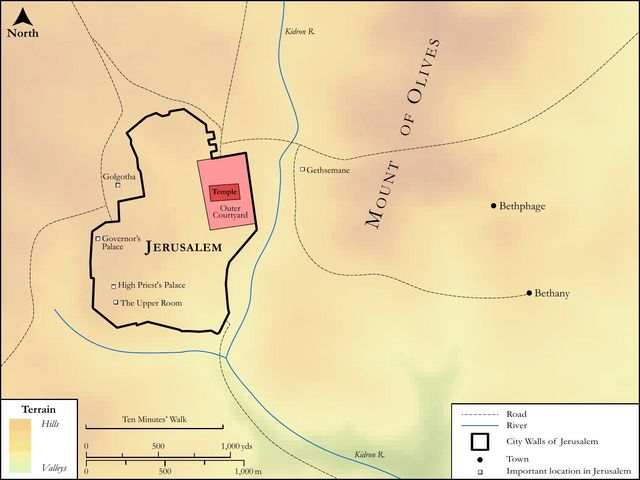
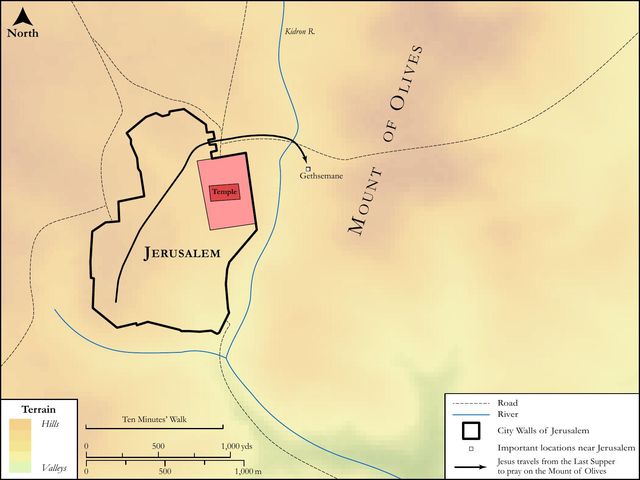
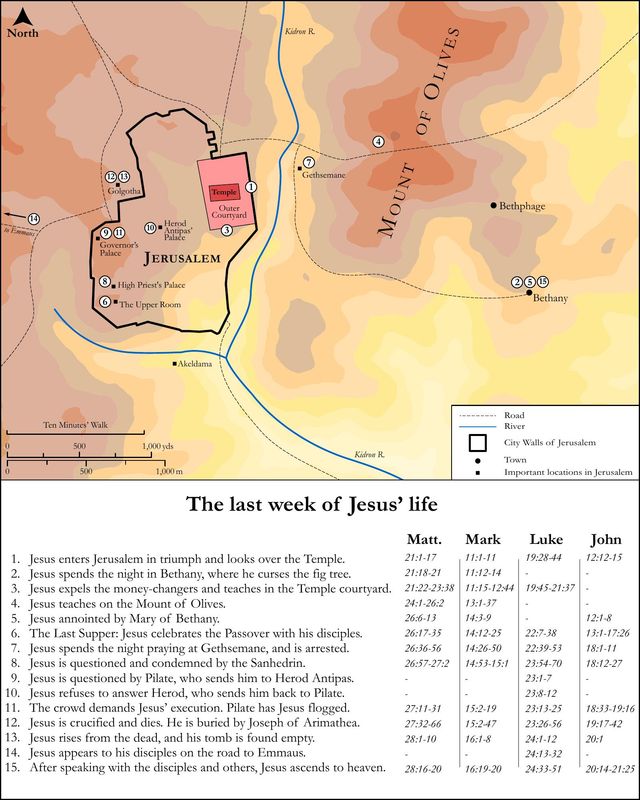
See on the biblical-era maps
Study this verse
Historical interpretation
Three Centuries of Reception
9 surviving comments on this verse. Each one is dated, so this reads as a timeline rather than a list.
Select a marker to jump to its quote. Markers stagger vertically where authors wrote within a few decades of each other.
Or, the sleep He now bids His disciples take is of a different sort from that which is related above to have befallen them. Then He found them sleeping, not taking repose, but because their eyes were heavy, but now they are not merely to sleep, but to take their rest, that this order may be rightly observed, namely, that we first watch with prayer that we enter not into temptation, and afterwards sleep and take our rest, when having found a place for the Lord, a tabernacle for the God of Jacob, (Ps. 132:3.) we may go up into our bed, and give sleep to our eyes. It may be also that the soul, unable to sustain a continual energy by reason of its union with the flesh, may blamelessly admit some relaxations, which may be the moral interpretation of slumbers, and then again after due time be quickened to new energy.
Then, undoubtedly after the third prayer, he came to the disciples. But the sleep he now orders them to sleep is not that which, as is written, came upon the disciples twice before. For at first "he found them sleeping" but not at rest, and "again he came and found them sleeping, for their eyes were heavy." But now he orders them not simply to sleep but to take their rest. Indeed, there is a big difference between the sleep implied in Christ's second command to "sleep now and take your rest" and the sleep that is against his will after he orders them to "remain here and watch one hour with me." There was nothing contradictory between his words "watch with me" and later, "Sleep on and take your rest." He simply kept a certain order, so that first indeed we should watch and pray that we do not enter into temptation, and then we should sleep and take our rest according to Christ's command.
After His persevering prayer, after His departures and several returns, He takes away their fear, restores their confidence, and exhorts them to sleep on, and take their rest.
Or, He bids them sleep on, and take their rest, because He now confidently awaited His Father's will concerning the disciples, concerning which He had said, Thy will be done, and in obedience to which He drunk the cup that was to pass from Him to us, diverting upon Himself the weakness of our body, the terrors of dismay, and even the pains of death itself.
And whereas, when He returned and found them sleeping, He rebukes them the first time, the second time says nothing, the third time bids them take their rest; the interpretation of this is, that at the first after His resurrection, when He finds them dispersed, distrustful, and timorous, He rebukes them; the second time, when their eyes were heavy to look upon the liberty of the Gospel, He visited them, sending them the Spirit, the Paraclete; for, held back by attachment to the Law, they slumbered in respect of faith; but the third time, when He shall come in His glory, He shall restore them to quietness and confidence.
"And He came and found them asleep." For besides that it was late at night, their eyes also were weighed down by their despondency. And the third time He went and spake the same thing, establishing the fact, that He was become man. For the second and third time is in the Scriptures especially indicative of truth; like as Joseph also said to Pharaoh, "Did the dream appear to thee the second time? For truth was this done, and that thou mightest be assured that this shall surely be." Therefore He too once, and twice, and three times spake the same thing, for the sake of proving the incarnation.
And wherefore came He the second time? In order to reprove them, for that they were so drowned in despondency, as not to have any sense even of His presence. He did not however reprove them, but stood apart from them a little, showing their unspeakable weakness, that not even when they had been rebuked, were they able to endure. But He doth not awake and rebuke them again, lest He should smite them that were already smitten, but He went away and prayed, and when He is come back again, He saith, "Sleep on now, and take your rest." And yet then there was need to be wakeful, but to show that they will not bear so much as the sight of the dangers, but will be put to flight and desert Him from their terror, and that He hath no need of their succor, and that He must by all means be delivered up, "Sleep on now," He saith, "and take your rest; behold the hour is at hand, and the Son of Man is betrayed into the hands of sinners."
He shows again that what is done belongs to a divine dispensation.
But He doth not this only, but also, by saying, "into the hands of sinners," He cheers up their minds, showing it was the effect of their wickedness, not of His being liable to any charge.
"Rise, let us be going; behold, he is at hand that doth betray me." For by all means He taught them, that the matter was not of necessity, nor of weakness, but of some secret dispensation. For, as we see, He foreknew that Judas would come, and so far from flying, He even went to meet him.
Indeed it behoved them then to watch, but He said this to show that the prospect of coming evils was more than they would bear, that He had no need of their aid, and that it must needs be that He should be delivered up.
The words, the hour is at hand, point out that all that has been done was by Divine interference; and that, into the hands of sinners, show that this was the work of their wickedness, not that He was guilty of any crime.
Having concluded His third prayer, and having obtained that the Apostles' terror should be corrected by subsequent penitence, He goes forth undaunted by the prospect of His own Passion to meet His pursuers, and offers Himself voluntarily to be sacrificed. Arise, let us be going; as much as to say, Let them not find you trembling, let us go forth willingly to death, that they may see us confident and rejoicing in suffering; Lo, he that shall betray me draweth near.
(Verse 45.) Then he came to his disciples and said to them: Sleep now, and rest: behold, the hour is at hand, and the Son of man shall be delivered into the hands of sinners (Matthew 26 and 2 Corinthians 13). After he had prayed three times, that every word might stand in the mouth of two or three witnesses, and had obtained by subsequent penance that the fear of the apostles be corrected, he proceeds secure in his passion to his persecutors, and offers himself to be put to death, and says to his disciples:
(de Cons. Ev. iii. 4.) This speech as Matthew has it seems self-contradictory. For how could He say, Sleep on, and take your rest, and immediately continue, Rise, let us be going. This contradiction some have endeavoured to reconcile by supposing the words, Sleep on, and take your rest, to be an ironical rebuke, and not a permission; it might be rightly so taken if need were. But as Mark records it, when He had said, Sleep on, and take your rest, He added, it is enough, and then continued, The hour is come, behold, the Son of man is betrayed into the hands of sinners; (Mark 14:41.) we clearly understand the Lord to have been silent some time after He had said, Sleep on, to allow of their doing so, and then after some interval to have roused them with, Behold, the hour is at hand. And as Mark fills up the sense with, it is enough, that is, ye have had rest enough.
Or, He prays thrice for the Apostles, and for Peter in particular, who was to deny Him thrice.
Continue studying Matthew 26:45 across the web’s major study libraries — every link below opens this exact verse, chapter, or book on the destination site.
Read & Compare
 BibleGatewayThis verse in more than 200 translations and 70 languages.
 Bible.comThe YouVersion reader — hundreds of translations, reading plans, and highlights.
 ESV.orgCrossway's official English Standard Version reader.
 NET BibleThe NET translation with 60,000+ translators' notes on every rendering decision.
 STEP BibleTyndale House's free study tool — original text, vocabulary, and scholarly resources.
 BibliaLogos Bible Software's free web reader.
 USCCBThe New American Bible (Revised Edition) with the U.S. bishops' study notes.
Commentaries
 BibleHub CommentariesDozens of classic commentaries on this verse, gathered on one page.
 StudyLightMore than 100 commentary sets — the largest collection on the web.
 BibleRefPlain-English commentary on what this verse means, verse by verse.
 Enduring WordDavid Guzik's free commentary on this chapter, widely used by Bible teachers.
 Bible Study ToolsVerse commentary alongside Greek and Hebrew study aids.
Original Language & Research
- BibleHub InterlinearThe verse word by word — original language, transliteration, and English.
- BibleHub LexiconEvery word's original-language definition and Strong's entry.
 Blue Letter BibleDeep-study tools — Strong's numbers, concordance, and word studies.
 CNTR CollationThe earliest Greek manuscripts of this verse, collated letter by letter.
Sermons, Hymns & Audio


TrulyRandomVerse is not affiliated with these sites and doesn’t control their content. They’re linked because they’re genuinely useful.
Summary
Matthew 26:45 captures a pivotal and deeply poignant moment in the Garden of Gethsemane, immediately following Jesus' agonizing prayers and the disciples' repeated failure to remain vigilant. Jesus confronts His sleeping disciples with a sorrowful declaration, signifying the end of His private spiritual struggle and the imminent commencement of His Passion. He reveals that "the hour is at hand" for the Son of Man to be "betrayed into the hands of sinners," marking the divinely appointed transition from prayerful preparation to active surrender, setting the stage for His arrest and crucifixion.
Context
ShowHideLiterary Context
This verse is situated at the climax of Jesus' Gethsemane experience, following His three intense prayers where He wrestled with the Father's will concerning His impending suffering and death (Matthew 26:36-44). Each time Jesus returned from prayer, He found Peter, James, and John, whom He had specifically asked to "watch with me" (Matthew 26:38), overcome by sleep. This repeated failure highlights the disciples' human weakness in stark contrast to Jesus' unwavering resolve and obedience. The declaration in Matthew 26:45 serves as a dramatic turning point, signaling that the time for prayerful vigilance has passed, and the pre-ordained events of betrayal and arrest are now immediate. It directly precedes the arrival of Judas and the arresting party in Matthew 26:47-50.
Historical & Cultural Context
The setting is the Garden of Gethsemane, located on the western slope of the Mount of Olives, just outside Jerusalem's walls. This was a place Jesus and His disciples often frequented (John 18:2). The events unfold during the Passover week, a time of immense religious fervor and pilgrimage in Jerusalem, which also heightened the tension for the Jewish authorities seeking to apprehend Jesus. The phrase "hands of sinners" would have resonated deeply, as it referred to both the Jewish religious leaders who sought His death and the Roman authorities who would execute the sentence. The concept of betrayal, especially by a close associate, carried profound social and spiritual disgrace within Jewish culture, echoing Old Testament prophecies of a trusted friend turning against the righteous (Psalm 41:9).
Key Themes
ShowHideMatthew 26:45 powerfully encapsulates several core themes. Firstly, it underscores the Sovereignty of God over human events; Jesus' betrayal is not an accidental occurrence but part of a divinely ordained "hour." Secondly, it starkly contrasts Jesus' Perfect Obedience and Vigilance with the Disciples' Human Frailty and Spiritual Weakness. Despite their love for Jesus, their physical weariness repeatedly overcame their spiritual resolve to "watch and pray" (Matthew 26:41). Thirdly, the declaration of "the hour is at hand" emphasizes the Imminence of Christ's Suffering and Sacrifice, marking the transition from anticipation to fulfillment of His redemptive mission. Finally, the use of the title "Son of Man" highlights Jesus' Messianic Identity in the context of His suffering, linking His human experience to His divine authority and prophetic destiny (Daniel 7:13-14).
Exposition and Analysis
ShowHideKey Word Analysis
ShowHideFrom katá (down) and a root meaning "to sleep," this word means "to lie down to rest, i.e., to fall asleep." In this context, Jesus' use of the imperative "sleep on" is not a genuine command but carries a tone of sorrowful irony, resignation, or even a rhetorical question. It signifies that the opportunity for the disciples to provide spiritual support through vigilance has passed, and their failure has now become irrelevant to the unfolding, inevitable divine plan.
Derived from engýs (near), this verb means "to make near" or "to approach." Here, it conveys the absolute immediacy and certainty of the "hour." It's not merely that the time is approaching, but that it has arrived and is actively pressing in, emphasizing the critical, divinely appointed moment for Jesus' surrender and the commencement of His Passion.
From pará (beside) and dídōmi (to give), this verb literally means "to give over, surrender, or hand over." While it can mean to transmit or entrust, in this context, especially concerning Judas, it unmistakably carries the sense of treachery and delivery into the hands of enemies. It highlights the active role of Judas and the passive surrender of Jesus into the power of others, fulfilling prophecy.
Verse Breakdown
ShowHide"Then cometh he to his disciples, and saith unto them,"
This phrase sets the scene, depicting Jesus' return to His inner circle after His third period of agonizing prayer. His repeated finding of them asleep underscores their human weakness and the profound solitude of His spiritual struggle. The "saith unto them" introduces Jesus' final, poignant address before His arrest.
"Sleep on now, and take your rest:"
As analyzed above, this is not a literal command but a deeply ironic or sorrowful statement. It conveys a sense of resignation, indicating that the time for watching and praying with Him has concluded. The opportunity for them to participate in His vigil has passed, and the divine plan will now proceed regardless of their wakefulness. It highlights the stark reality of their failure and the weight of the moment.
"behold, the hour is at hand,"
The interjection "behold" (G2400, idoú) draws immediate attention to the gravity of the impending event. "The hour" (G5610, hōra) is a significant theological concept throughout the Gospels, especially in John, referring to the divinely appointed time for Jesus' suffering, death, and subsequent glorification. The phrase "is at hand" (G1448, engízō) emphasizes the absolute immediacy and certainty of this preordained moment, signaling that the period of anticipation is over.
"and the Son of man is betrayed into the hands of sinners."
This clause reveals the specific nature of "the hour." "The Son of man" (G5207, huiós, and G444, ánthrōpos) is Jesus' preferred self-designation, emphasizing both His true humanity and His unique messianic, prophetic, and judicial authority, particularly in the context of His suffering. The passive voice "is betrayed" (G3860, paradídōmi) underscores the active role of Judas and the passive surrender of Jesus, yet within God's sovereign plan. "Into the hands" (G1519, eis, and G5495, cheír) signifies being delivered into the power and authority of others. "Sinners" (G268, hamartōlós) refers broadly to those who oppose God's will and law, specifically here the Jewish religious authorities and the Roman soldiers who would carry out the arrest and crucifixion.
Literary Devices
ShowHideMatthew 26:45 is rich in Irony, particularly in Jesus' command, "Sleep on now, and take your rest." This is not a genuine invitation to continue sleeping but a sorrowful, perhaps even rhetorical, acknowledgment that their failure to watch has rendered their vigilance moot. The moment for shared spiritual struggle has passed. There is profound Contrast between Jesus' intense spiritual agony and perfect obedience to the Father's will, and the disciples' physical and spiritual weariness. The verse also employs Foreshadowing, as Jesus explicitly states the imminent betrayal, preparing the reader for the arrival of Judas and the mob. The phrase "the hour is at hand" functions as a form of Dramatic Irony, as the disciples remain oblivious to the profound significance of this "hour" that Jesus has long anticipated and now declares to be upon them. Finally, the title "Son of man" serves as a powerful Symbol, representing Jesus' dual nature as both fully human and divinely appointed Messiah, whose suffering is central to His redemptive mission.
Theological and Thematic Connections
ShowHideMatthew 26:45 stands as a profound theological statement, revealing God's sovereign control over even the most heinous acts of human sin, such as betrayal. Jesus' declaration that "the hour is at hand" underscores the concept of divine timing, affirming that His suffering and death were not random occurrences but part of a preordained plan for humanity's redemption. Despite the disciples' weakness, Jesus' unwavering resolve to submit to the Father's will shines through, highlighting His perfect obedience as the ultimate example for believers. This moment in Gethsemane is a poignant illustration of the cost of discipleship and the reality of human frailty in the face of spiritual warfare, yet it also emphasizes Christ's solitary journey to the cross for the sake of all.
Reflection and Application
ShowHideMatthew 26:45 offers a powerful call to spiritual introspection and practical application for believers today. Jesus' profound solitude in Gethsemane, even amidst His closest companions, reminds us that there are moments in our spiritual journey where we must face trials and make difficult choices alone, relying solely on God's strength. The disciples' failure to stay awake serves as a timeless warning against spiritual complacency and the dangers of allowing physical weariness or worldly distractions to hinder our vigilance in prayer and our commitment to Christ. We are called to "watch and pray" not just for Jesus, but for ourselves, lest we enter into temptation. Furthermore, Jesus' unwavering acceptance of "the hour" teaches us about radical submission to God's sovereign will, even when it leads through suffering. Our faith is deepened when we trust that God's timing is perfect, and His plan, though sometimes painful, is always for our ultimate good and His glory. This verse encourages us to cultivate a spirit of readiness, understanding that our "hour" of testing or opportunity may be "at hand" at any moment, requiring our full spiritual engagement.
Questions for Reflection
ShowHideFAQ
ShowHideWhy did Jesus tell them to "sleep on now, and take your rest" if the hour was at hand?
ShowHideJesus' statement, "Sleep on now, and take your rest," is widely interpreted not as a literal command for the disciples to continue sleeping, but as a deeply sorrowful, ironic, or rhetorical expression of resignation. The opportunity for them to support Him through vigilant prayer had passed due to their repeated failures. It signifies that their spiritual support was no longer a factor in the unfolding divine plan. The time for shared vigil was over; the inevitable "hour" of betrayal and suffering had arrived, and Jesus would face it alone. It highlights the profound solitude of His mission and the disciples' inability to truly comprehend or participate in the depth of His agony.
What is the significance of "the hour" being "at hand"?
ShowHide"The hour" (Greek: hōra) is a crucial theological concept in the Gospels, particularly in John, referring to the specific, divinely appointed time for Jesus' suffering, death, and subsequent glorification. For example, in John 12:23, Jesus declares, "The hour has come for the Son of Man to be glorified." In Matthew 26:45, "at hand" (Greek: engízō) emphasizes the absolute imminence and certainty of this moment. It signifies that the period of anticipation and preparation is over, and the preordained events of His Passion are about to commence immediately. This highlights God's sovereign control over all events, even the betrayal, demonstrating that Jesus was not a victim of circumstance but was willingly fulfilling His Father's plan.
Who are the "sinners" into whose hands the Son of Man is betrayed?
ShowHideThe term "sinners" (Greek: hamartōlós) in this context refers broadly to those who are alienated from God and act contrary to His will. Specifically, it encompasses both the Jewish religious authorities (the chief priests, elders, and scribes of the Sanhedrin) who conspired to have Jesus arrested and condemned (Matthew 26:3-4), and the Roman soldiers and authorities who would carry out the arrest, trial, and crucifixion (Matthew 27:27-31). Jesus' statement underscores that He was being delivered into the power of those who were morally and spiritually opposed to God, yet this very act was part of God's redemptive plan.
Christ-Centered Fulfillment
ShowHideMatthew 26:45, with its declaration of "the hour is at hand, and the Son of man is betrayed into the hands of sinners," profoundly points to the Christ-centered fulfillment of God's redemptive plan. Jesus, the "Son of Man" (a title linking Him to both humanity and the divine figure of Daniel 7:13-14), willingly embraces His impending betrayal and suffering. This act of being "betrayed into the hands of sinners" is not a defeat but a deliberate step in His journey to the cross, as foretold by the prophets (Isaiah 53:5-7). His passive surrender, though initiated by Judas's treachery, is ultimately an active obedience to His Father's will, demonstrating His perfect love and submission (Philippians 2:8). The "hour" that has arrived is the very moment for which He came into the world—to offer Himself as the spotless Lamb of God, whose sacrifice would take away the sin of the world (John 1:29). Thus, this verse in Gethsemane is not merely a statement of impending doom but a powerful affirmation of Christ's sovereign purpose in laying down His life to secure salvation and eternal rest for all who believe (Hebrews 10:10).