


Matthew 24:47
Bible text: King James Version (1769 Blayney text) · Public domain
Bible text: Berean Standard Bible · Public domain
Bible text: American Standard Version (1901) · Public domain
Bible text: World English Bible, Messianic edition · Public domain
Bible text: Geneva Bible (1599) · Public domain
Bible text: Young's Literal Translation · Public domain
- ἀμὴνamēnAmenG281INJ-HEBInterjection
- λέγωlegōI sayG3004V-PAI-1SVerb Present Active Indicative 1st Singular
- ὑμῖνhuminto youG4771P-2DPPersonal pronoun Dative 2nd Plural
- ὅτιhotithatG3754CONJConjunction
- ἐπὶepioverG1909PREPPreposition
- πᾶσινpasinallG3956A-DPNAdjective Dative Plural Neuter
- τοῖςtoistheG3588T-DPNDefinite article Dative Plural Neuter
- ὑπάρχουσινhuparchousinpossessionsG5225V-PAP-DPNVerb Present Active Participle Dative Plural Neuter
- αὐτοῦautouof himG846P-GSMPersonal pronoun Genitive Singular Masculine
- καταστήσειkatastēseihe will setG2525V-FAI-3SVerb Future Active Indicative 3rd Singular
- αὐτόνautonhimG846P-ASMPersonal pronoun Accusative Singular Masculine
English is a literal word-by-word gloss of the Greek, not the KJV's wording. Why?
This is the original text the KJV's translators worked from — each Greek word with its own literal English meaning in this verse, prepared by scholars at Tyndale House, Cambridge. The KJV translates whole sentences, not word by word, so its wording differs: one Greek word can become several English words, and the KJV may choose “charity” where the gloss reads “love”. Both are faithful — they answer different questions. For the KJV's own rendering, switch to the KJV text.
Details
See on the biblical-era maps

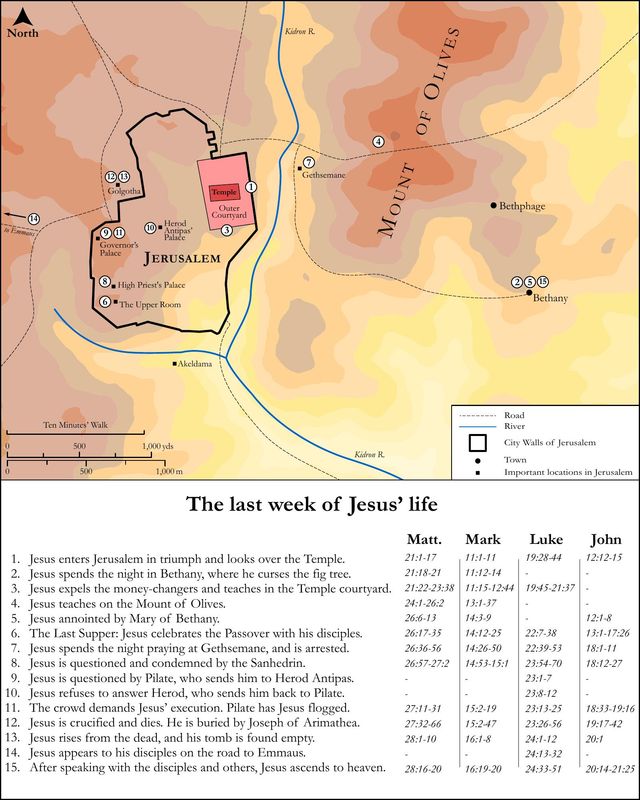
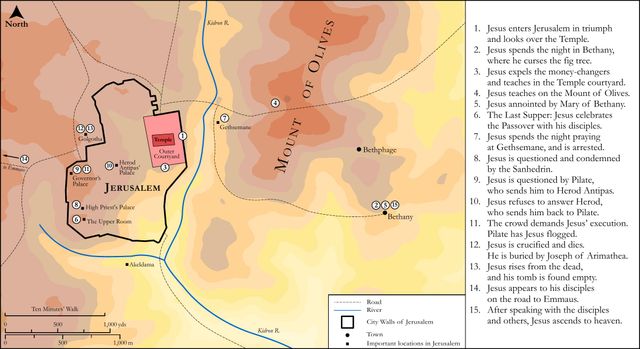
Study this verse
Historical interpretation
Ten Centuries of Reception
12 surviving comments on this verse. Each one is dated, so this reads as a timeline rather than a list.
Select a marker to jump to its quote. Markers stagger vertically where authors wrote within a few decades of each other.
That he may reign with Christ, to whom the Father has committed all that is His. And as the son of a good father set over all that is his, He shall communicate of His dignity and glory to His faithful and wise stewards, that they also may be above the whole creation.
Although he urged everyone to exercise an indefatigable vigilance, Christ commanded the princes of the people, the bishops, to demonstrate a special attentiveness in expectation of his advent. The bishop is represented in this parable by the faithful and wise servant who was set over the household. He is fully equipped and enabled to care for the people entrusted to him. He needs to be attentive to his instructions and obedient to the commandments. When he speaks the truth and prudently applies doctrine, he will confirm the weak, heal the broken, convert sinners and feed his household with the Word of life—their eternal food. If he is found performing these tasks diligently, he will receive glory from the Lord as a faithful servant and effective steward. He will be set over all his possessions. In other words, he will be established in the midst of the glory of God. Nothing could possibly be better than this.
Though the Lord had given above a general exhortation to all in common to unwearied vigilance, yet He adds a special charge to the rulers of the people, that is, the Bishops, of watchfulness in looking for His coming. Such He calls a faithful servant, and wise master of the household, careful for the needs and interests of the people entrusted to Him.
That is, obedient to his Lord's command, by the seasonableness of his teaching dispensing the word of life to a household which is to be nourished for the food of eternity.
Or, shall set him over all his goods, that is, shall place him in the glory of God, because beyond this is nothing better.
For in the last days false prophets shall be multiplied, and such as corrupt the word; and the sheep shall be changed into wolves, and love into hatred: for through the abounding of iniquity the love of many shall wax cold. For men shall hate, and persecute, and betray one another. And then shall appear the deceiver of the world, the enemy of the truth, the prince of lies, [2 Thessalonians 2:3-12] whom the Lord Jesus "shall destroy with the spirit of His mouth, who takes away the wicked with His lips; and many shall be offended at Him. But they that endure to the end, the same shall be saved. And then shall appear the sign of the Son of man in heaven;" [Isaiah 11:4; Matthew 24:1-51] and afterwards shall be the voice of a trumpet by the archangel; and in that interval shall be the revival of those that were asleep. And then shall the Lord come, and all His saints with Him, with a great concussion above the clouds, with the angels of His power, [Matthew 16:27] in the throne of His kingdom, to condemn the devil, the deceiver of the world, and to render to every one according to his deeds. "Then shall the wicked go away into everlasting punishment, but the righteous shall go into life eternal," [Matthew 25:46] to inherit those things "which eye has not seen, nor ear heard, nor have entered into the heart of man, such things as God has prepared for them that love Him;" [1 Corinthians 2:9] and they shall rejoice in the kingdom of God, which is in Christ Jesus.
In this He rebukes such as have less care for their souls, than they have of guarding their money against an expected thief.
That He says, Whom think ye is that faithful and nine servant, does not imply ignorance, for even the Father we find asking a question, as that, Adam, where art thou? (Gen. 3:9.)
He requires two things of such servant, fidelity and prudence; He calls him faithful, because he appropriates to himself none of his Lord's goods, and wastes nought idly and unprofitably. He calls him prudent, as knowing on what he ought to lay out the things committed to him.
This parable may be also fitted to the case of secular rulers; for each ought to employ the things he has to the common benefit, and not to the hurt of his fellow-servants, nor to his own ruin; whether it be wisdom or dominion, or whatever else he has.
And He instructs His hearer not only by the honour which awaits the good, but by the punishment which threatens the wicked, adding, If that evil servant shall say in his heart, &c.
Then, as He had fallen upon the mention of the judgment, He directs His discourse to the teachers next, speaking of punishment and honors; and having put first them that do right, He ends with them that continue in sin, making His discourse to close with that which is alarming.
Wherefore He first saith this, "Who then is the faithful and wise servant, whom his Lord shall set over His household to give them their meat in theirs due season? Blessed is that servant, whom his Lord when He cometh shall find so doing. Verily I say unto you, that He shall make him ruler over all His goods."
Tell me, is this too the language of one who is in ignorance? For if because He said, "neither doth the Son know," thou sayest He is ignorant of it; as He saith, "who then?" what wilt thou say? Wilt thou say He is ignorant of this too? Away with the thought. For not even one of them that are frantic would say this. And yet in the former case one might assign a cause; but here not even this. And what when He said, "Peter, lovest thou me?" asking it, knew He not so much as this? nor when He said, "Where have ye laid Him?"
And the Father too will be found to be saying such things. For He Himself likewise saith, "Adam, where art thou?" and, "The cry of Sodom and Gomorrah is waxed great before me. I will go down therefore, and see whether their doings be according to their cry which cometh unto me, and if not, I will know." And elsewhere He saith, "Whether they will hear, whether they will understand." And in the gospel too, "It may be they will reverence my Son:" all which are expressions of ignorance. But not in ignorance did He say these things, but as compassing objects such as became Him: in the case of Adam, that He might drive him to make an excuse for his sin: in that of the Sodomites, that He might teach us never to be positive, till we are present at the very deeds; in that of the prophet, that the prediction might not appear in the judgment of the foolish a kind of compulsion to disobedience; and in the parable in the gospel, that He might show that they ought to have done this, and to have reverenced the Son: but here, as well that they may not be curious, nor over busy again, as that He might indicate that this was a rare and precious thing. And see of what great ignorance this saying is indicative, if at least He know not even him that is set over. For He blesses him indeed, "For blessed," saith He, "is that servant;" but He saith not who this is. "For who is he," He saith, "whom His Lord shall set over?" and, "Blessed is he whom He shall find so doing."
But these things are spoken not of money only, but also of speech, and of power, and of gifts, and of every stewardship, wherewith each is entrusted. This parable would suit rulers in the state also, for every one is bound to make full use of what he hath for the common advantage. If it be wisdom thou hast, if power, if wealth, if what it may, let it not be for the hurt of thy fellow-servants, neither for thine own ruin. For this cause, therefore, He requires both things of him, wisdom, and fidelity: for sin arises from folly also. He calls him faithful then, because he hath purloined nothing, neither misspent his Lord's goods without aim or fruit; and wise, because he knew how to dispense the things given him, according as was fit. For indeed we have need of both things, as well not to purloin the goods of our Master, as also to dispense them as is fit. But if the one be wanting, the other halteth. For if he be faithful and steal not, yet were to waste and to spend upon that which concerned him not, great were the blame; and if he should know how to dispense it well, yet were to purloin, again there is no common charge against him.
And let us also that have money listen to these things. For not unto teachers only doth He discourse, but also unto the rich. For either sort were entrusted with riches; those that teach with the more necessary wealth, ye with what is inferior. When then at the time that the teachers are scattering abroad the greater, ye are not willing to show forth your liberality even in the less, or rather not liberality but honesty (for ye give the things of another), what excuse will you have? But now, before the punishment of them that do the contrary things, let us hear the honor of him that approveth himself. "For verily I say unto you, He will set him over all His goods."
What can be equal to this honor? what manner of speech will be able to set forth the dignity, the blessedness, when the King of Heaven, He that possesseth all things, is about to set a man over "all His goods?" Wherefore also He calleth him wise, because he knew, not to give up great things for small, but having been temperate here, hath attained to Heaven.
After this, as He ever doth, not by the honor only laid up for the good, but also by the punishment threatened against the wicked, doth He correct the hearers. Wherefore also He added, "But and if the evil servant say in his heart, my Lord delayeth His coming; and shall begin to smite his fellow servants, and shall eat and drink with the drunken: the Lord of that servant shall come in a day when he looketh not for Him, and in an hour that he is not aware of, and shall cut him asunder, and shall appoint him his portion with the hypocrites: there shall be weeping and gnashing of teeth."
But if any one should say, "Seest thou what a thought hath entered into his mind, because of the day's not being known, 'my Lord,' he saith, 'delayeth His coming?'" we should affirm, that it was not because the day is not known, but because the servant is evil. Else wherefore came not this thought into the heart of the faithful and wise servant. For what, even though the Lord tarry, O wretched man, surely thou lookest that He will come. Why then dost thou not take care?
Hence then we learn, that He doth not so much as tarry. For this judgment is not the Lord's, but that of the evil servant's mind, wherefore also he is blamed for this. For in proof that He doth not tarry, hear Paul saying, "The Lord is at hand, be careful for nothing;" and, "He that cometh will come, and will not tarry."
But do thou hear also what followeth, and learn how continually He reminds them of their ignorance of the day, showing that this is profitable to the servants, and fitted to waken and thoroughly to rouse them. For what though some gained nothing hereby? For neither by other things profitable for them were some profited, but nevertheless He ceaseth not to do His part.
What then is the purport of that which followeth? "For He shall come in a day when he looketh not for Him, and in an hour that he is not aware of;" and shall inflict upon him extreme punishment. Seest thou how even everywhere He puts this, the fact of their ignorance, indicating that it was profitable, and by this making them always earnest minded? For this is the point at which He labors, that we should be always on the watch; and since it is always in luxury that we are supine, but in afflictions we are braced up, therefore everywhere He saith this, that when there is relaxation, then come the terrors. And as further back He showed this by the example of Noah, even so here He saith it is, when that servant is drunken, when he is beating, and that his punishment shall be intolerable.
But let us not regard only the punishment appointed for him, but let us look to this other point too, lest we ourselves also be unawares to ourselves doing the same things. For to this servant are they like, who have money, and give not to the needy. For thou too art steward of thine own possessions, not less than he who dispenses the alms of the church. As then he has not a right to squander at random and at hazard the things given by you for the poor, since they were given for the maintenance of the poor; even so neither mayest thou squander thine own. For even though thou hast received an inheritance from thy father, and hast in this way all thou possessest: even thus all are God's. And then thou for thy part desirest that what thou hast given should be thus carefully dispensed, and thinkest thou not that God will require His own of us with greater strictness, or that He suffers them to be wasted at random? These things are not, they are not so. Because for this end, He left these things in thine hand, in order "to give them their meat in due season." But what meaneth, "in due season?" To the needy, to the hungry. For like as thou gavest to thy fellow-servant to dispense, even so doth the Lord will thee too to spend these things on what is needful. Therefore though He was able to take them away from thee, He left them, that thou mightest have opportunity to show forth virtue; that bringing us into need one of another, He might make our love for one another more fervent.
But thou, when thou hast received, so far from giving, dost even beat. And yet if not to give be blame, what excuse is there for beating? But this, it seems to me, He speaks, hinting at the insolent, and the covetous, and indicating the charge to be heavy, when they beat them, whom they were commanded to feed.
But He seemeth to be here hinting also at those that live in luxury, since for luxury too there is laid up a great punishment. "For He eateth and drinketh," it is said, "with the drunken," pointing at gluttony. For not for this purpose didst thou receive, that thou should spend it on luxury, but that thou shouldest lay it out on alms. What! are they thine own things which thou hast? With the goods of the poor hast thou been entrusted, though thou be possessed of them by honest labor, or though it be by inheritance from thy father. What, could not God have taken away these things from thee? But He doth not this, to give thee power to be liberal to the poor.
But mark thou, I pray thee, how throughout all the parables He punishes them that lay not out their money upon the needy. For neither had the virgins robbed other men's goods, but they had not given their own; neither had he that buried the one talent embezzled, but he had not doubled; neither are they that overlooked the hungry punished, because they seized the possessions of others, but because they did not lay out their own, like as also this servant.
Let us hearken, as many as please the belly, as many as lay out on costly banquets the riches that pertain not at all to us, but belong to the needy. For do not, because out of great love to man thou art commanded to give as of thine, therefore suppose these things to be indeed thine own. He lent them to thee, that thou mightest be able to approve thyself. Do not then suppose them to be thine, when giving Him His own. For neither, if thou hadst lent to any one, that he might go and be able to find means of gain, wouldest thou say the money was his. To thee then also hath God given, that thou mightest traffic for Heaven. Make not then the exceeding greatness of His love to man a cause of ingratitude.
The Lord of that servant shall come in a day when he looketh not for Him, is to rouse the stewards to watchfulness and carefulness. He shall cut him in sunder, is not to be understood of execution by the sword, but that he shall sever him from the company of the saints.
And shall appoint him his portion with the hypocrites, with those, namely, that were in the field, and grinding at the mill, and were nevertheless left. For as we often say that the hypocrite is one who is one thing, and passes himself for another; so in the field and at the mill he seemed to be doing the same as others, but the event proved that his purpose was different.
(Ep. 199. 1.) The temper of this servant is shown in his behaviour, which is thus expressed by his good Master; his tyranny, and shall begin to beat his fellow servants, his sensuality, and to eat and drink with the drunken. So that when he said, My Lord delayeth His coming, he is not to be supposed to speak from desire to see the Lord, such as was that of him who said, My soul is athirst for the living God; when shall I come? (Ps. 42:2.) This shows that he was grieved at the delay, seeing that what was hastening towards him seemed to his longing desires to be coming slowly.
(Ep. 199 in fin.) Putting aside this wicked servant, who, there is no doubt, hates his Master's coming, let us set before our eyes these good servants, who anxiously expect their Lord's coming. One looks for His coming sooner, another later, the third confesses his ignorance of the matter. Let us see which is most agreeable to the Gospel. One says, Let us watch and pray, because the Lord will quickly come; another, Let us watch and pray, because this life is short and uncertain, though the Lord's coming may be distant; and the third, Let us watch, because this life is short and uncertain, and we know not the time when the Lord will come. What else does this man say than what we hear the Gospel say, Watch, because ye know not the hour in which the Lord shall come? All indeed, through longing for the kingdom, desire that that should be true which the first thinks, and if it should so come to pass, the second and third would rejoice with him; but if it should not come to pass, it were to be feared that the belief of its supporters might be shaken by the delay, and they might begin to think that the Lord's coming shall be, not remote, but never. He who believes with the second that the Lord's coming is distant will not be shaken in faith, but will receive an unlooked for joy. He who confesses his ignorance which of these is true, wishes for the one, is resigned to the other, but errs in neither, because he neither affirms or denies either.
Nor yet does it imply the impossibility of attaining perfect virtue, but only the difficulty.
It should be observed, that as there is great difference of desert between good preachers and good hearers, so is there great difference between their rewards. The good hearers, if He finds them watching He will make to sit down to meat, as Luke speaks; but the good preachers He will set over all His goods.
The lord is Christ, the household over which He appoints is the Church Catholic. It is hard then to find one man who is both faithful and wise, but not impossible; for He would not pronounce a blessing on a character that could never be, as when He adds, Blessed is that servant whom his lord when he cometh shall find so doing.
Not that they only, but that they before others, shall be rewarded as well for their own lives as for their superintendence of the flock.
Typically, we may understand his beating his fellow servants, of offending the consciences of the weak by word, or by evil example.
Or, appoints him his portion with the hypocrites, that is, a twofold share of punishment, that of fire and frost; to the fire belongs the weeping, to the frost the gnashing of teethk.
The Lord is doubtful who that wise and faithful servant will be "whom his lord hath made ruler over his household," to show that such a man is rare and hard to find. Two things are required of every steward: faith and wisdom. For if he is faithful and steals nothing, but lacks wisdom and foolishly squanders the household goods, he is of no use; and if he is wise but yet steals, likewise he is of no use. So whoever shall be found then to have been both faithful and wise will also obtain the things that are more excellent, that is, the kingdom of heaven. For the saints will be the inheritors of all of God’s possessions. The faithful and wise servant is also every teacher who gives in due season food proper to each one who is taught by him. Such a one was Paul who at times gave milk to drink [to the young in faith] and at other times spoke wisdom [to the more mature], for he was a faithful servant, though before he had been a blasphemer; and he was also a wise servant understanding the thoughts of the enemy. So too everyone who receives anything from God, whether it be money, authority, or dominion, should administer these things faithfully and wisely, since he will give an account.
(ord.) For rare indeed is such faithful servant serving his Master for his Master's sake, feeding Christ's sheep not for lucre but for love of Christ, skilled to discern the abilities, the life, and the manner of those put under him, whom the Lord sets over, that is, who is called of God, and has not thrust himself in.
Continue studying Matthew 24:47 across the web’s major study libraries — every link below opens this exact verse, chapter, or book on the destination site.
Read & Compare
 BibleGatewayThis verse in more than 200 translations and 70 languages.
 Bible.comThe YouVersion reader — hundreds of translations, reading plans, and highlights.
 ESV.orgCrossway's official English Standard Version reader.
 NET BibleThe NET translation with 60,000+ translators' notes on every rendering decision.
 STEP BibleTyndale House's free study tool — original text, vocabulary, and scholarly resources.
 BibliaLogos Bible Software's free web reader.
 USCCBThe New American Bible (Revised Edition) with the U.S. bishops' study notes.
Commentaries
 BibleHub CommentariesDozens of classic commentaries on this verse, gathered on one page.
 StudyLightMore than 100 commentary sets — the largest collection on the web.
 BibleRefPlain-English commentary on what this verse means, verse by verse.
 Enduring WordDavid Guzik's free commentary on this chapter, widely used by Bible teachers.
 Bible Study ToolsVerse commentary alongside Greek and Hebrew study aids.
Original Language & Research
- BibleHub InterlinearThe verse word by word — original language, transliteration, and English.
- BibleHub LexiconEvery word's original-language definition and Strong's entry.
 Blue Letter BibleDeep-study tools — Strong's numbers, concordance, and word studies.
 CNTR CollationThe earliest Greek manuscripts of this verse, collated letter by letter.
Sermons, Hymns & Audio


TrulyRandomVerse is not affiliated with these sites and doesn’t control their content. They’re linked because they’re genuinely useful.
Summary
Matthew 24:47 concludes the Parable of the Faithful and Wise Servant, a key component of Jesus' Olivet Discourse. This verse pronounces a profound reward for the servant who, upon the master's unexpected return, is found diligently managing his household and possessions. It underscores the principle that faithfulness and responsible stewardship in the present, particularly in light of Christ's anticipated return, will be met with significant divine recognition, promotion, and greater responsibility in the future kingdom.
Context
ShowHideLiterary Context
Matthew 24:47 is the climactic statement of the Parable of the Faithful and Wise Servant, found in Matthew 24:45-51. This parable is strategically placed within the broader Olivet Discourse, Jesus' extensive teaching on the Mount of Olives concerning the signs of His coming and the end of the age. The preceding verses (Matthew 24:45-46) introduce the contrast between the faithful servant, who provides food for the household at the proper time, and the wicked servant, who neglects his duties. Verse 47 serves as the direct promise of reward for the diligent servant, immediately preceding the dire consequences outlined for the unfaithful one in Matthew 24:48-51. Thus, it functions as a powerful incentive and a clear articulation of the positive outcome of vigilance.
Historical & Cultural Context
The parable reflects the common master-servant relationships prevalent in Judaea and under Rome. A wealthy landowner (master) would often entrust the management of his entire estate, including other servants and resources, to a trusted steward (servant) while he was away, perhaps on a long journey. The steward's responsibility was comprehensive, requiring integrity, diligence, and foresight. The master's unexpected return was a common motif in such narratives, emphasizing the need for constant readiness and accountability. The "goods" (Greek: hypárchonta) would include not only material possessions but also the management of the master's affairs, his reputation, and the well-being of his household. This context highlights the significant trust placed in the servant and the immense authority implied by being made "ruler over all his goods."
Key Themes
ShowHideThis verse, within its broader context, contributes to several foundational themes. Foremost is the theme of Stewardship and Accountability, emphasizing that believers are entrusted with God's resources—time, talents, spiritual gifts, material possessions, and opportunities—and are expected to manage them faithfully until Christ's return. It powerfully illustrates the theme of Reward for Faithfulness, demonstrating that diligent service is not overlooked but will be honored with divine recognition and increased responsibility, as also seen in the Parable of the Talents in Matthew 25:14-30. The underlying call for Preparedness and Vigilance is central to the entire Olivet Discourse, urging believers to live in constant readiness for the Lord's unexpected return, actively engaged in their assigned duties rather than idly waiting or neglecting responsibilities. Finally, the promise of being made "ruler over all his goods" points to Divine Recognition and Future Authority, suggesting that faithful service in this life prepares believers for significant roles and blessings in God's eternal kingdom, a concept echoed in passages like Revelation 2:26-27.
Exposition and Analysis
ShowHideKey Word Analysis
ShowHideThis word, transliterated from the Hebrew, signifies "firm," "trustworthy," or "surely." When Jesus uses "Verily I say unto you," it serves as a solemn affirmation, underscoring the absolute truth and certainty of the statement that follows. It demands the listener's full attention and emphasizes the divine authority behind the promise.
Derived from katá (down) and hístēmi (to stand), this verb means "to place down permanently," "to appoint," "to establish," or "to set over." It denotes a formal, authoritative, and lasting designation. The master doesn't just give a temporary assignment; he formally appoints the faithful servant to a position of comprehensive authority, signifying complete trust and a significant promotion.
This term refers to "things extant or in hand," specifically property, possessions, or substance. In the context of the parable, it encompasses all of the master's estate, wealth, and affairs. The faithful servant is not merely rewarded with a portion but is entrusted with the management of all that belongs to the master, highlighting the immense scope of the future reward and responsibility.
Verse Breakdown
ShowHide"Verily I say unto you,"
Jesus begins with a solemn and authoritative declaration, signaling the profound importance and certainty of the truth He is about to reveal. This phrase, characteristic of Jesus' teaching, underscores the divine origin and unwavering truthfulness of His words.
"That he shall make him ruler"
This clause describes the master's decisive action towards the faithful servant. The master will formally appoint or establish the servant in a position of authority. This is not a casual delegation but a comprehensive and official promotion, signifying deep trust and recognition of the servant's proven faithfulness.
"over all his goods."
This specifies the scope of the servant's new authority. The faithful servant will be given charge over the entirety of the master's possessions and estate. This indicates a reward that is not merely compensatory but transformative, elevating the servant to a position of immense responsibility and privilege, reflecting the master's complete confidence.
Literary Devices
ShowHideThe primary literary device at play in Matthew 24:47, and indeed the broader passage, is Parable. Jesus uses this extended metaphor of a master and servant to convey profound spiritual truths about the Kingdom of God, discipleship, and eschatology. The earthly scenario of managing a household upon a master's return serves as an analogy for believers' stewardship of God's gifts and their readiness for Christ's Second Coming. The phrase "ruler over all his goods" also employs Hyperbole to emphasize the lavishness and comprehensiveness of the reward. While not necessarily literal in an earthly sense, it powerfully conveys the idea of immense trust and authority granted to the faithful. Furthermore, Symbolism is evident, where the master represents Christ, the servants represent believers, and the "goods" symbolize all that God entrusts to humanity—time, talents, resources, and spiritual responsibilities.
Theological and Thematic Connections
ShowHideMatthew 24:47 profoundly connects the present reality of Christian discipleship to the future hope of the Kingdom. It teaches that our faithfulness in managing the "goods" (resources, opportunities, gifts) entrusted to us by God in this life is directly linked to the authority and responsibility we will receive in the age to come. This verse underscores the principle of divine justice and reward, where God honors diligent and obedient service not merely with salvation, but with active participation and elevated roles within His eternal reign. It highlights that the Christian life is not passive waiting, but active stewardship, preparing us for greater service and glory in Christ's kingdom.
Reflection and Application
ShowHideMatthew 24:47 serves as a powerful call to intentional and diligent living for every believer. It reminds us that our lives are not our own, but we are stewards of all that God has graciously given us – our time, talents, spiritual gifts, material resources, relationships, and even our very breath. The promise of being made "ruler over all his goods" should ignite a deep sense of purpose and motivation, recognizing that our faithfulness in seemingly small or mundane tasks today is noticed by God and is a preparation for greater responsibilities and blessings in His eternal kingdom. This verse encourages us to live with an eternal perspective, investing our lives in ways that honor God and advance His purposes, knowing that our labor in the Lord is never in vain and will be richly rewarded. It challenges us to examine how we are currently managing what has been entrusted to us, urging us to prioritize kingdom values and to serve with integrity and love, always anticipating the glorious return of our Master.
Questions for Reflection
ShowHideFAQ
ShowHideWhat does "all his goods" specifically refer to in this parable?
ShowHideIn the context of the parable, "all his goods" (Greek: hypárchonta) refers to the master's entire estate, property, and possessions, including the management of his household and other servants. The faithful servant is entrusted with comprehensive authority over everything belonging to the master. Theologically and spiritually, for believers, "all his goods" symbolizes all that God has entrusted to us: our time, talents, spiritual gifts, material resources, opportunities, and even the gospel message itself. It encompasses every aspect of our lives and responsibilities as stewards of God's grace and kingdom. The reward signifies a share in Christ's future reign and increased responsibility in the new heavens and new earth, as seen in passages like Revelation 3:21.
Is the reward of being made "ruler over all his goods" a literal promise for believers in the future?
ShowHideWhile the parable uses earthly imagery, the promise of being made "ruler over all his goods" points to a profound spiritual reality and future blessing. It signifies that faithful believers will receive significant honor, authority, and responsibility in God's eternal kingdom. This is not necessarily about literal earthly possessions, but about sharing in Christ's reign and having active roles in the new creation. Scriptures such as Revelation 2:26-27 and Revelation 20:6 speak of believers reigning with Christ. The emphasis is on the immense trust and partnership God will grant to those who have proven faithful in this life, reflecting the principle found in Luke 16:10 that "He who is faithful in a very little thing is faithful also in much."
Christ-Centered Fulfillment
ShowHideMatthew 24:47, while speaking of the faithful servant's reward, finds its ultimate fulfillment and deepest meaning in Christ Himself. Jesus is the quintessential faithful servant, who perfectly carried out the will of His Father, even to the point of death on the cross (Philippians 2:8). Unlike the human servant who is merely a steward, Jesus is the Son, the rightful heir to "all his goods"—indeed, to all creation (Hebrews 1:2). His perfect faithfulness and obedience culminated not in a promotion, but in His exaltation to the highest place, where He was given "the name that is above every name" and every knee bows to Him (Philippians 2:9-11). Furthermore, it is through Christ's work that believers are enabled to be faithful stewards. We are made "ruler over all his goods" not by our own merit, but by grace through faith in Him, and by His empowering Spirit. Our future inheritance and co-reign with Christ (2 Timothy 2:12) is secured by His faithfulness, and our participation in His kingdom is a direct result of our union with Him, the true and faithful Master who will return to reward His servants.