


Luke 23:17
Bible text: King James Version (1769 Blayney text) · Public domain
Bible text: World English Bible, Messianic edition · Public domain
Bible text: Geneva Bible (1599) · Public domain
Bible text: Young's Literal Translation · Public domain
- ἀνάγκηνanagkēnnecessityG318N-ASFNoun Accusative Singular Feminine
- δέdenowG1161CONJConjunction
- εἶχενeichenhadG2192V-IAI-3SVerb Imperfect Active Indicative 3rd Singular
- ἀπολύεινapolueinto releaseG630V-PANVerb Present Active Infinitive
- αὐτοῖςautoisto themG846P-DPMPersonal pronoun Dative Plural Masculine
- κατὰkataaccording toG2596PREPPreposition
- ἑορτὴνhe'ortēnfeastG1859N-ASFNoun Accusative Singular Feminine
- ἕναhenaoneG1520A-ASMAdjective Accusative Singular Masculine
English is a literal word-by-word gloss of the Greek, not the KJV's wording. Why?
This is the original text the KJV's translators worked from — each Greek word with its own literal English meaning in this verse, prepared by scholars at Tyndale House, Cambridge. The KJV translates whole sentences, not word by word, so its wording differs: one Greek word can become several English words, and the KJV may choose “charity” where the gloss reads “love”. Both are faithful — they answer different questions. For the KJV's own rendering, switch to the KJV text.
Details
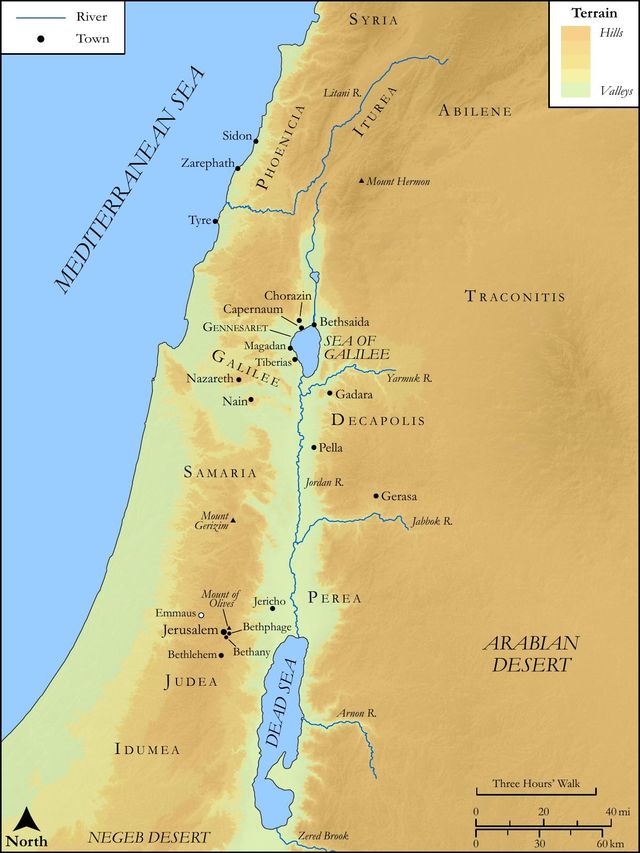
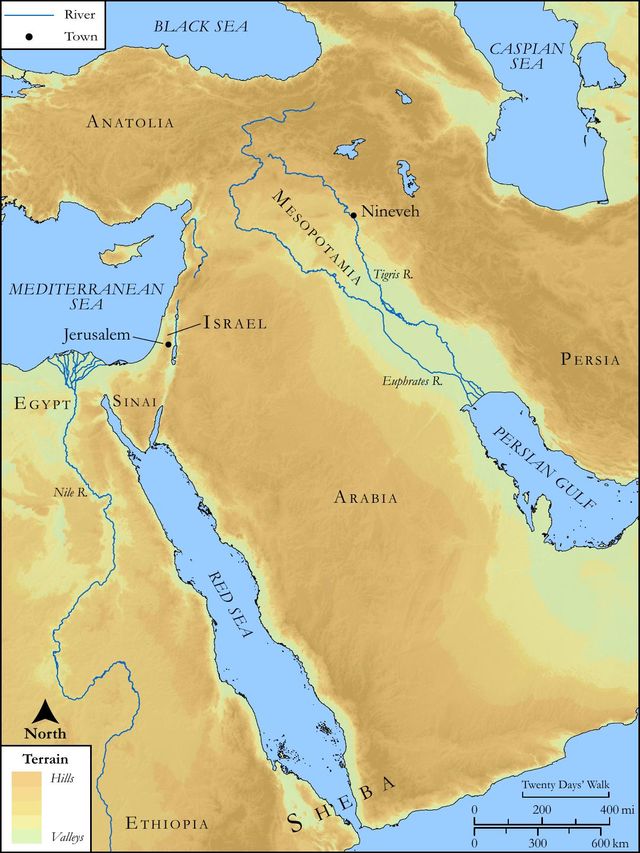
See on the biblical-era maps

Study this verse
Public-domain commentary
Matthew Henry
From his Commentary on the Whole Bible. Henry comments on passages, not single verses — this entry covers Luke 23:13–25. His two-level outline is real structure in the source text, so it is rendered as structure.
We have here the blessed Jesus run down by the mob, and hurried to the cross in the storm of a popular noise and tumult, raised by the malice and artifice of the chief priests, as agents for the prince of the power of the air.
I.Pilate solemnly protests that he believes he has done nothing worthy of death or of bonds.
And, if he did believe so, he ought immediately to have discharged him, and not only so, but to have protected him from the fury of the priests and rabble, and to have bound his prosecutors to their good behaviour for their insolent conduct. But, being himself a bad man, he had no kindness for Christ, and, having made himself otherwise obnoxious, was afraid of displeasing either the emperor or the people; and therefore, for want of integrity, he called together the chief priests, and rulers, and people (whom he should have dispersed, as a riotous and seditious assembly, and forbid them to come near him), and will hear what they have to say, to whom he should have turned a deaf ear, for he plainly saw what spirit actuated them (Luk 23:14): "You have brought," saith he, "this man to me, and, because I have a respect for you, I have examined him before you, and have heard all you have to allege against him, and I can make nothing of it: I find no fault in him; you cannot prove the things whereof you accuse him."
II.He appeals to Herod concerning him (Luk 23:15):
"I sent you to him, who is supposed to have known more of him than I have done, and he has sent him back, not convicted of any thing, nor under any mark of his displeasure; in his opinion, his crimes are not capital. He has laughed at him as a weak man, but has not stigmatized him as a dangerous man." He thought Bedlam a fitter place for him than Tyburn.
III.He proposes to release him, if they will but consent to it.
He ought to have done it without asking leave of them, Fiat justitia, ruat coelum - Let justice have its course, though the heavens should be desolated. But the fear of man brings many into this snare, that, whereas justice should take place, though heaven and earth come together, they will do an unjust thing, against their consciences, rather than pull an old house about their ears. Pilate declares him innocent, and therefore has a mind to release him; yet, to please the people,
1.He will release him under the notion of a malefactor, because of necessity he must release one (Luk 23:17); so that whereas he ought to have been released by an act of justice, and thanks to nobody, he would have him released by an act of grace, and not be beholden to the people for it.
2.He will chastise him, and release him. If no fault be to be found in him, why should he be chastised? There is as much injustice in scourging as in crucifying an innocent man; nor would it be justified by pretending that this would satisfy the clamours of the people, and make him the object of their pity who was not to be the object of their envy. We must not do evil that good may come.
IV.The people choose rather to have Barabbas released, a wretched fellow, that had nothing to recommend him to their favour but the daringness of his crimes. He was imprisoned for a sedition made in the city, and for murder (of all crimes among men the least pardonable), yet this was the criminal that was preferred before Christ: Away with this man, and release unto us Barabbas, Luk 23:18, Luk 23:19. And no wonder that such a man is the favourite and darling of such a mob, he that was really seditious, rather than he that was really loyal and falsely accused of sedition.
V.When Pilate urged the second time that Christ should be released, they cried out, Crucify him, crucify him, Luk 23:20, Luk 23:21.
They not only will have him die, but will have him die so great a death; nothing less will serve but he must be crucified: Crucify him, crucify him.
VI.When Pilate the third time reasoned with them, to show them the unreasonableness and injustice of it, they were the more peremptory and outrageous (Luk 23:22): "Why? What evil hath he done? Name his crime. I have found no cause of death, and you cannot say what cause of death you have found in him; and therefore, if you will but speak the word, I will chastise him and let him go." But popular fury, the more it is complimented, the more furious it grows; they were instant with loud voices, with great noises or outcries, not requesting, but requiring, that he might be crucified; as if they had as much right, at the feast, to demand the crucifying of one that was innocent as the release of one that was guilty.
VII.Pilate's yielding, at length, to their importunity.
The voice of the people and of the chief priests prevailed, and were too hard for Pilate, and overruled him to go contrary to his convictions and inclinations. He had not courage to go against so strong a stream, but gave sentence that it should be as they required, Luk 23:24. Here is judgment turned away backward, and justice standing afar off, for fear of popular fury. Truth is fallen in the street, and equity cannot enter, Isa 59:14. Judgment was looked for, but behold oppression; righteousness, but behold a cry, Isa 5:7. This is repeated in Luk 23:25, with the aggravating circumstance of the release of Barabbas: He released unto them him that for sedition and murder was cast into prison, who hereby would be hardened in his wickedness, and do the more mischief, because him they had desired, being altogether such a one as themselves; but he delivered Jesus to their will, and he could not deal more barbarously with him than to deliver him to their will, who hated him with a perfect hatred, and whose tender mercies were cruelty.
Historical interpretation
Seven Centuries of Reception
9 surviving comments on this verse. Each one is dated, so this reads as a timeline rather than a list.
Select a marker to jump to its quote. Markers stagger vertically where authors wrote within a few decades of each other.
Many have been crucified throughout the world, but the demons are not afraid of any of these. These people died because of their own sins, but Christ died for the sin of others. He “did not sin, neither was deceit found in his mouth.” It was not Peter, who could be suspected of partiality, who said this, but Isaiah, who, although not present in the flesh, in spirit foresaw the Lord’s coming in the flesh. Why do I bring only the prophet as a witness? Take the witness of Pilate himself. He passed judgment on him, by saying, “I find no guilt in this man.” When he delivered him over and washed his hands, he said, “I am innocent of the blood of this just man.” The robber is another witness to Jesus’ innocence. He is the first man to enter paradise. He rebuked his friend and said, “We are receiving what our deeds deserved, but this man has done nothing wrong, because you and I were present at his judgment.”
Here Pilate, who as a judge acquits Christ, is made the minister of His crucifixion. He is sent to Herod, sent back to Pilate, as it follows, Nor yet Herod, for I sent you to him, and behold nothing worthy of death is done unto him. They both refuse to pronounce Him guilty, yet for fear's sake, Pilate gratifies the cruel desires of the Jews.
Not unreasonably do they seek the pardon of a murderer, who were themselves demanding the death of the innocent. Such are the laws of iniquity, that what innocence hates, guilt loves. And here the interpretation of the name affords a figurative resemblance, for Barabbas is in Latin, the son of a father. Those then to whom it is said, Ye are of your father the Devil, are represented as about to prefer to the true Son of God the son of their father, that is, Antichrist.
Similarly, I think that this is a prototype of all judgments that they would condemn those whom they believed to be innocent. However, it is evident that the Gentiles are more tolerant than the Jews, as Pilate's association with them demonstrates, and they are more persuaded by divine works. But what about those who crucified the Lord of majesty? It is not without reason that murderers seek absolution, as they sought the destruction of the innocent. Such unjust laws have the quality of hating innocence and loving crime. However, in the interpretation of the name, it gives the appearance of a figure; for Barabbas is translated to mean 'son of the father' in Latin: therefore, those to whom it is said, 'You are of your father the devil,' are shown to prefer the son of their father, Antichrist, over the true Son of God.
He is sent to Herod, sent back to Pilate. And although neither of them pronounce him guilty, they still comply with the desires of someone else's cruelty. Indeed, Pilate washed his hands, but he did not wash away his deeds; for a judge ought not to yield to envy or fear, so as to deliver the blood of an innocent person. His wife warned him: grace shone in the darkness; divinity was evident; yet she did not temper the sacrilegious sentence in this way.
For they thought they could add this, namely, that Jesus was worse than a robber, and so wicked, that neither for mercy's sake, or by the privilege of the feast, ought He to be let free.
They brought the holy and just One to Pilate. They spoke violent and unrestrained words against him and poured out falsely invented accusations. They persisted in the ferocity with which they accused him. Pilate then ruled that it should be as they desired, although he had publicly said, “I find no wickedness in this man.” It says, “They cried out, ‘Away with him, crucify him!’ ” The Lord had rebuked this unmerciful and unlawful cry by the voice of the prophet Isaiah. It is written, “The vineyard of the Lord of hosts is the house of Israel, and the men of Judah are his pleasant planting; and he looked for justice, but behold, bloodshed; for righteousness, but behold, a cry!” In another place, he said of them, “Woe to them, for they have strayed from me! Destruction to them, for they have rebelled against me! I would redeem them, but they speak lies against me.” It is written again, “Their princes shall fall by the sword, because of the rudeness of their tongue.”
Now, he had to release one to them at the feast. He had to do so, not by the sanction of imperial law, but bound by the annual custom of the nation, whom he was pleased to gratify with such things.
Perish then those writings, which, composed so long a time after Christ, convict not the accused of magical arts against Pilate, but the writers themselves of treachery and lying against Christ.
As if he said, I will subject Him to all the scourgings and mockings you desire, but do not thirst after the innocent blood. It follows, For of necessity he must release one unto them, &c. an obligation not imposed by a decree of the imperial law, but binding by the annual custom of the nation, whom in such things he was glad to please.
Even to this day their request still clings to the Jews. For since when they had the choice given to them, they chose a robber for Jesus, a murderer for a Saviour; rightly lost they both life and salvation, and became subject to such robberies and seditions among themselves as to forfeit both their country and kingdom.
With the worst kind of death, that is, crucifixion, they long to murder the innocent. For they who hung on the cross, with their hands and feet fixed by nails to the wood, suffered a prolonged death, that their agony might not quickly cease; but the death of the cross was chosen by our Lord, as that which having overcome the Devil, He was about to place as a trophy on the brows of the faithful.
This chastisement wherewith Pilate sought to satisfy the people, lest their rage should go even so far as to crucify Jesus, John's words bear testimony that he not only threatened but performed together with mockings and scourgings. But when they saw all their charges which they brought against the Lord baffled by Pilate's diligent questioning, they resort at last to prayers only; entreating that He might be crucified.
Wherefore by the testimony of two men, Jesus is declared innocent, but the Jews His accusers brought forward no witness whom they could believe. See then how truth triumphs. Jesus is silent, and His enemies witness for Him; the Jews make loud cries, and not one of them corroborates their clamour.
Pilate therefore lenient and easy, yet wanting in firmness for the truth, because afraid of being accused, adds, I will therefore chastise him and release him.
For the Romans permitted the Jews to live according to their own laws and customs. And it was a natural custom of the Jews to seek pardon of the prince for those who were condemned, as they asked Jonathan of Saul. And hence it is now added, with respect to their petition, And they cried all at once, Away with this man, and release unto us Barabbas, &c. (1 Sam. 14:45.)
Thus it came to pass, the once holy nation rages to slay, the Gentile Pilate forbids slaughter; as it follows, Pilate therefore spoke again unto them, but they cried out, Crucify, &c.
Three times did Pilate acquit Christ, for it follows, And he said unto them the third time, Why, what evil hath he done? I will chastise him, and let him go.
They cry out the third time against Christ, that by this third voice, they may approve the murder to be their own, which by their entreaties they extorted; for it follows, And Pilate gave sentence that it should be as they required. And he released him that for sedition and murder was cast into prison, but delivered Jesus to their will.
Continue studying Luke 23:17 across the web’s major study libraries — every link below opens this exact verse, chapter, or book on the destination site.
Read & Compare
 BibleGatewayThis verse in more than 200 translations and 70 languages.
 Bible.comThe YouVersion reader — hundreds of translations, reading plans, and highlights.
 ESV.orgCrossway's official English Standard Version reader.
 NET BibleThe NET translation with 60,000+ translators' notes on every rendering decision.
 STEP BibleTyndale House's free study tool — original text, vocabulary, and scholarly resources.
 BibliaLogos Bible Software's free web reader.
 USCCBThe New American Bible (Revised Edition) with the U.S. bishops' study notes.
Commentaries
 BibleHub CommentariesDozens of classic commentaries on this verse, gathered on one page.
 StudyLightMore than 100 commentary sets — the largest collection on the web.
 BibleRefPlain-English commentary on what this verse means, verse by verse.
 Enduring WordDavid Guzik's free commentary on this chapter, widely used by Bible teachers.
 Bible Study ToolsVerse commentary alongside Greek and Hebrew study aids.
Original Language & Research
- BibleHub InterlinearThe verse word by word — original language, transliteration, and English.
- BibleHub LexiconEvery word's original-language definition and Strong's entry.
 Blue Letter BibleDeep-study tools — Strong's numbers, concordance, and word studies.
 CNTR CollationThe earliest Greek manuscripts of this verse, collated letter by letter.
Sermons, Hymns & Audio


TrulyRandomVerse is not affiliated with these sites and doesn’t control their content. They’re linked because they’re genuinely useful.
Summary
Luke 23:17 serves as a crucial parenthetical interjection within the Gospel narrative, clarifying for the reader the customary practice of the Roman governor to release a prisoner to the Jewish populace during the Passover festival. This verse provides essential context for Pontius Pilate's subsequent attempt to release Jesus, highlighting the established tradition that Pilate sought to leverage in his efforts to avoid condemning an innocent man, thereby setting the stage for the dramatic and pivotal choice between Jesus and Barabbas.
Context
ShowHideLiterary Context
This verse is strategically placed within the account of Jesus' trial before Pontius Pilate, specifically after Pilate's initial declaration of Jesus' innocence in Luke 23:4 and before he presents the crowd with the choice between Jesus and Barabbas in Luke 23:18-19. It functions as an explanatory note, interrupting the direct flow of the narrative to ensure the reader understands the underlying custom that frames Pilate's actions. Without this parenthetical remark, Pilate's offer might seem arbitrary or unmotivated, but with it, his maneuvering becomes clear as an attempt to utilize an established tradition to resolve his dilemma regarding Jesus. The verse sets the stage for the profound irony of the crowd choosing a known insurrectionist and murderer over the innocent Son of God.
Historical & Cultural Context
The "feast" mentioned is the Passover (Pesach), one of the most significant annual pilgrimage festivals for Jews, commemorating their liberation from slavery in Egypt. During this time, Jerusalem would be flooded with Jewish pilgrims, creating a volatile atmosphere often prone to unrest. To maintain order and perhaps to foster some goodwill, it had become a customary practice for the Roman procurator to release a prisoner. While not a codified law, this tradition is attested by all four Gospels (Matthew 27:15, Mark 15:6, John 18:39), suggesting it was a well-established custom by the time of Jesus. This gesture was likely a calculated political move by the Roman authorities, aimed at appeasing the Jewish populace during a period of heightened religious and nationalistic fervor, thereby mitigating potential rebellion.
Key Themes
ShowHideLuke 23:17 contributes to several key themes within the broader narrative of Jesus' passion and Luke's Gospel. Firstly, it highlights the Roman Custom of releasing a prisoner at Passover, which becomes the vehicle for the climactic decision regarding Jesus. Secondly, it underscores Pilate's Dilemma and his repeated attempts to release Jesus, whom he found innocent (Luke 23:4, Luke 23:14-15, Luke 23:22). This custom offered Pilate a perceived legal or customary pathway to avoid condemning Jesus directly. Thirdly, and most significantly, this verse serves as a Foreshadowing of the Choice that will be presented to the crowd, setting the stage for their tragic rejection of the Messiah in favor of a criminal, a choice that profoundly reveals the spiritual blindness and rebellion of humanity against God's appointed King.
Exposition and Analysis
ShowHideKey Word Analysis
ShowHideThis term (G318) signifies constraint, distress, or a binding obligation. In this context, it refers not to an absolute legal requirement but to a strong customary expectation or established tradition. It implies that the practice of releasing a prisoner at the feast was so deeply ingrained and expected by the populace that the governor felt compelled, or "of necessity," to adhere to it. This "necessity" highlights the political pressure Pilate was under to maintain order and appease the Jewish leaders and crowd during a volatile festival.
The verb (G630) means "to free fully," "to dismiss," or "to set at liberty." Here, it specifically denotes the act of releasing a prisoner from custody. The choice of this word emphasizes the act of granting freedom, which becomes tragically ironic as the crowd chooses to free a guilty man (Barabbas) while condemning the innocent Son of God. This term sets up the dramatic contrast between the one who is truly free (Jesus, though bound) and the one who is set free by human decree (Barabbas).
This noun (G1859) refers to a festival or holy day. In this context, it unequivocally points to the Passover festival, the most important annual Jewish celebration. The mention of "the feast" grounds the custom in a specific, highly significant religious and cultural event, underscoring the heightened spiritual and nationalistic fervor of the time, which contributed to the intensity of the crowd's demands against Jesus.
Verse Breakdown
ShowHide"(For of necessity"
This introductory phrase explains the underlying reason for Pilate's subsequent actions. The "necessity" here refers to a strong customary obligation or an established tradition rather than a strict legal mandate. It indicates that the release of a prisoner during the Passover was an expected and customary practice that Pilate felt compelled to uphold, likely to maintain peace and appease the Jewish populace during a volatile festival.
"he must release one unto them"
This clause clarifies the action required by the custom: the Roman governor (Pilate) was expected to release one prisoner to the Jewish people. The phrase "unto them" emphasizes that this release was a gesture directed towards the crowd, intended to satisfy their expectations. This sets the stage for the dramatic choice Pilate will offer, which he hopes will lead to Jesus' freedom.
"at the feast.)"
This final phrase specifies the timing and context of this custom, linking it directly to the annual Passover festival. This detail is crucial for understanding the historical and cultural backdrop of Jesus' trial, as the Passover was a time of heightened religious and nationalistic sentiment, making the governor's appeasement gestures particularly important for maintaining order.
Literary Devices
ShowHideLuke 23:17, though a brief parenthetical note, effectively employs several literary devices. Most prominently, it functions as a Parenthetical Explanation, providing crucial background information to the reader without interrupting the main dialogue between Pilate and the Jewish leaders. This technique ensures clarity and allows the narrative to flow while still delivering vital context. The verse also utilizes Foreshadowing, as it explicitly states the custom that will directly lead to the pivotal choice between Jesus and Barabbas, thereby building dramatic tension. Furthermore, there is an element of Irony present, as this "necessity" of releasing a prisoner, intended to foster goodwill, ultimately becomes the mechanism through which the innocent Son of God is condemned while a guilty insurgent is set free, highlighting humanity's profound spiritual blindness and rejection of truth.
Theological and Thematic Connections
ShowHideLuke 23:17, while a concise explanatory note, holds significant theological weight by revealing the intricate interplay between human customs, political expediency, and divine sovereignty. It underscores how even seemingly mundane or politically motivated human actions can be woven into God's overarching redemptive plan. The "necessity" of releasing a prisoner, a human tradition, becomes the very stage upon which humanity's rejection of its Messiah is vividly displayed. This rejection, however, is not a defeat for God's purposes but rather the fulfillment of prophecies concerning the suffering servant and the Lamb of God, whose innocent sacrifice would atone for the sins of the world. The verse subtly points to the profound cost of salvation, reminding us that our freedom was purchased not by a customary release, but by the unjust condemnation and death of the perfectly innocent One.
Reflection and Application
ShowHideLuke 23:17 serves as a stark reminder that even within the confines of human traditions and political machinations, God's sovereign plan is meticulously unfolding. This seemingly minor detail about a Roman custom becomes the very mechanism through which the world's profound rejection of its Savior is made manifest. It challenges us to consider our own choices: do we, like the crowd, prefer the "Barabbas" of our own desires, rebellion, or worldly comforts over the "Jesus" who offers true life and freedom? The verse compels us to reflect on the nature of true justice and the world's often inverted values, where innocence is condemned and guilt is celebrated. For believers, it deepens our appreciation for the immense cost of our salvation, reminding us that our liberation from sin was not a matter of customary release, but of the innocent Lamb of God being unjustly sacrificed in our stead. It calls us to examine our hearts, ensuring that our allegiances are firmly placed on Christ, who willingly endured rejection for our redemption.
Questions for Reflection
ShowHideFAQ
ShowHideWas the custom of releasing a prisoner at Passover a Roman or Jewish tradition?
ShowHideWhile the custom was practiced by the Roman governor, it appears to have been a gesture initiated by the Romans to appease the Jewish populace during the Passover festival, a time of heightened religious and nationalistic fervor. It's not explicitly a Jewish religious law or tradition, but rather a Roman administrative practice adopted to maintain peace and order in a volatile province. All four Gospels (Matthew 27:15, Mark 15:6, Luke 23:17, John 18:39) attest to its existence, suggesting it was a well-known and expected practice by the time of Jesus.
Christ-Centered Fulfillment
ShowHideLuke 23:17, though a parenthetical note, profoundly contributes to the Christ-centered narrative by setting the stage for the ultimate substitutionary sacrifice. The "necessity" for Pilate to release a prisoner at the feast becomes the very mechanism through which humanity's rejection of its true King is dramatically enacted. The crowd's choice of Barabbas, a rebel and murderer, over Jesus, the innocent Son of God, is a chilling foreshadowing of the world's ongoing spiritual blindness and rebellion against divine truth. Yet, it is precisely through this unjust condemnation that God's redemptive plan is fulfilled. Jesus, the sinless Lamb of God, willingly takes the place of the guilty, enduring the penalty that humanity deserved. His "release" from the bonds of death on the third day (Luke 24:1-7) is not by human custom or political appeasement, but by divine power, signifying His victory over sin and death and offering true freedom to all who believe (Romans 6:23). Thus, the custom of releasing a prisoner at Passover, while a human tradition, serves as a poignant backdrop against which the unparalleled, divinely ordained release of humanity from sin through Christ's sacrifice is illuminated.