


Luke 15:25
Bible text: King James Version (1769 Blayney text) · Public domain
Bible text: Berean Standard Bible · Public domain
Bible text: American Standard Version (1901) · Public domain
Bible text: World English Bible, Messianic edition · Public domain
Bible text: Geneva Bible (1599) · Public domain
Bible text: Young's Literal Translation · Public domain
- ἮνĒnWasG1510V-IAI-3SVerb Imperfect Active Indicative 3rd Singular
- δὲdenowG1161CONJConjunction
- ὁhotheG3588T-NSMDefinite article Nominative Singular Masculine
- υἱὸςhuiossonG5207N-NSMNoun Nominative Singular Masculine
- αὐτοῦautouof himG846P-GSMPersonal pronoun Genitive Singular Masculine
- ὁhotheG3588T-NSMDefinite article Nominative Singular Masculine
- πρεσβύτεροςpresbuteroselderG4245N-NSMNoun Nominative Singular Masculine
- ἐνeninG1722PREPPreposition
- ἀγρῷagrō[the] fieldG68N-DSMNoun Dative Singular Masculine
- καὶkaiandG2532CONJConjunction
- ὡςhōswhileG5613PRTParticle or Disjunctive
- ἐρχόμενοςerchomenoscoming [up]G2064V-PNP-NSMVerb Present Middle Or Passive Deponent Participle Nominative Singular Masculine
- ἤγγισενēngisenhe drew nearG1448V-AAI-3SVerb Aorist Active Indicative 3rd Singular
- τῇtēato theG3588T-DSFDefinite article Dative Singular Feminine
- οἰκίᾳoikiahouseG3614N-DSFNoun Dative Singular Feminine
- ἤκουσενēkousenhe heardG191V-AAI-3SVerb Aorist Active Indicative 3rd Singular
- συμφωνίαςsumphōniasmusicG4858N-GSFNoun Genitive Singular Feminine
- καὶkaiandG2532CONJConjunction
- χορῶνchorōndancingG5525N-GPMNoun Genitive Plural Masculine
English is a literal word-by-word gloss of the Greek, not the KJV's wording. Why?
This is the original text the KJV's translators worked from — each Greek word with its own literal English meaning in this verse, prepared by scholars at Tyndale House, Cambridge. The KJV translates whole sentences, not word by word, so its wording differs: one Greek word can become several English words, and the KJV may choose “charity” where the gloss reads “love”. Both are faithful — they answer different questions. For the KJV's own rendering, switch to the KJV text.
Details
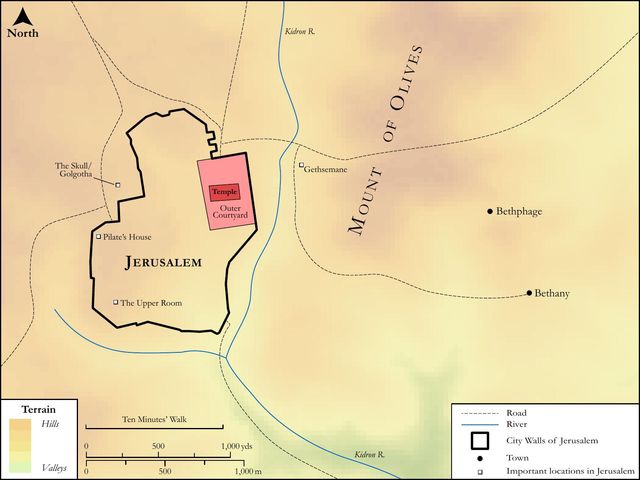
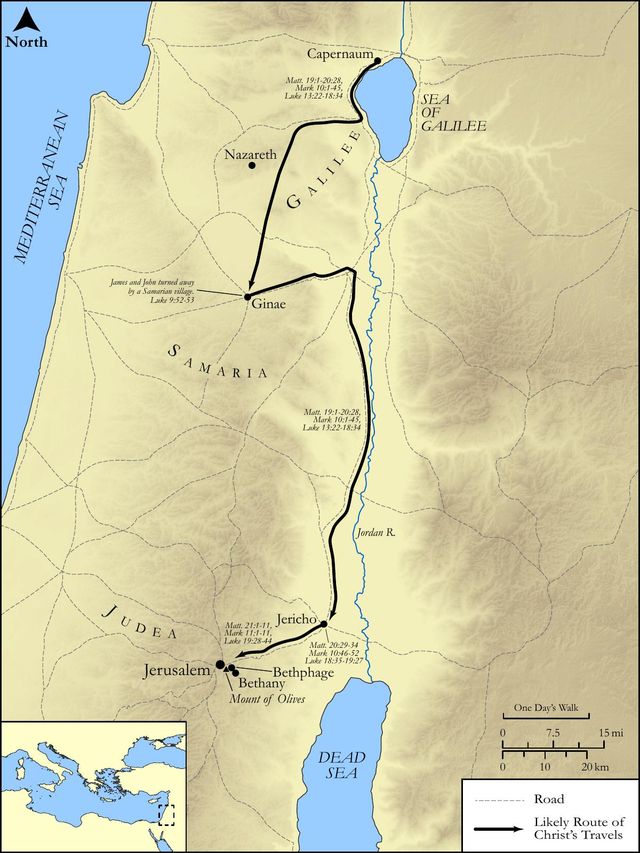
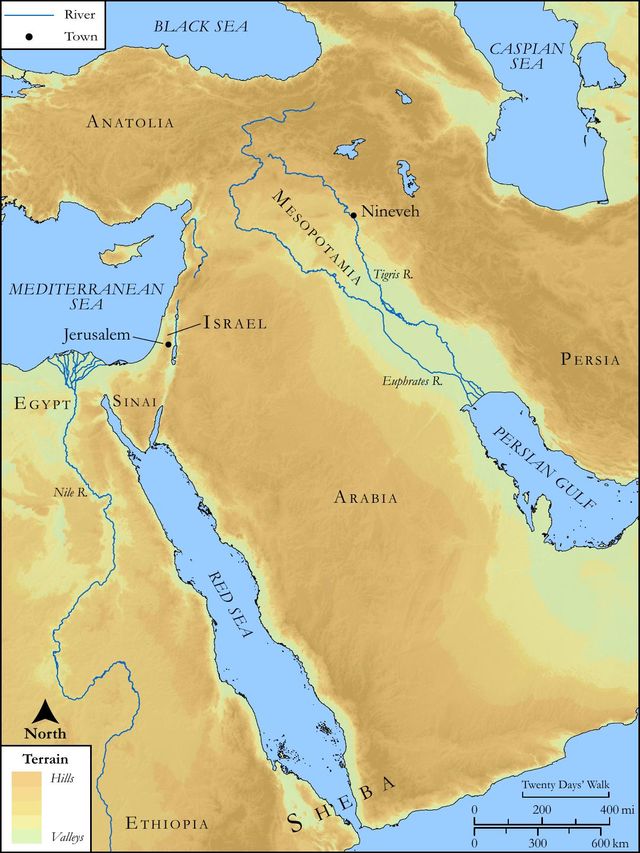
See on the biblical-era maps
Study this verse
Public-domain commentary
Matthew Henry
From his Commentary on the Whole Bible. Henry comments on passages, not single verses — this entry covers Luke 15:11–32. His four-level outline is real structure in the source text, so it is rendered as structure.
We have here the parable of the prodigal son, the scope of which is the same with those before, to show how pleasing to God the conversion of sinners is, of great sinners, and how ready he is to receive and entertain such, upon their repentance; but the circumstances of the parable do much more largely and fully set forth the riches of gospel grace than those did, and it has been, and will be while the world stands, of unspeakable use to poor sinners, both to direct and to encourage them in repenting and returning to God. Now,
I.The parable represents God as a common Father to all mankind, to the whole family of Adam.
We are all his offspring, have all one Father, and one God created us, Mal. ii. 10. From him we had our being, in him we still have it, and from him we receive our maintenance. He is our Father, for he has the educating and portioning of us, and will put us in his testament, or leave us out, according as we are, or are not, dutiful children to him. Our Saviour hereby intimates to those proud Pharisees that these publicans and sinners, whom they thus despised, were their brethren, partakers of the same nature, and therefore they ought to be glad of any kindness shown them. God is the God, not of the Jews only, but of the Gentiles, (Rom. iii. 29): the same Lord over all, that is rich in mercy to all that call upon him.
II.It represents the children of men as of different characters, though all related to God as their common Father.
He had two sons, one of them a solid grave youth, reserved and austere, sober himself, but not at all good-humoured to those about him; such a one would adhere to his education, and not be easily drawn from it; but the other volatile and mercurial, and impatient of restraint, roving, and willing to try his fortune, and, if he fall into ill hands, likely to be a rake, notwithstanding his virtuous education. Now this latter represents the publicans and sinners, whom Christ is endeavouring to bring to repentance, and the Gentiles, to whom the apostles were to be sent forth to preach repentance. The former represents the Jews in general, and particularly the Pharisees, whom he was endeavouring to reconcile to that grace of God which was offered to, and bestowed upon, sinners.
The younger son is the prodigal, whose character and case are here designed to represent that of a sinner, that of every one of us in our natural state, but especially of some. Now we are to observe concerning him,
1.His riot and ramble when he was a prodigal, and the extravagances and miseries he fell into. We are told,
(1.)What his request to his father was (v. 12): He said to his father, proudly and pertly enough, "Father, give me"—he might have put a little more in his mouth, and have said, Pray give me, or, Sir, if you please, give me, but he makes an imperious demand—"give me the portion of goods that falleth to me; not so much as you think fit to allot to me, but that which falls to me as my due." Note, It is bad, and the beginning of worse, when men look upon God's gifts as debts. "Give me the portion, all my child's part, that falls to me;" not, "Try me with a little, and see how I can manage that, and accordingly trust me with more;" but, "Give it me all at present in possession, and I will never expect any thing in reversion, any thing hereafter." Note, The great folly of sinners, and that which ruins them, is being content to have their portion in hand, now in this lifetime to receive their good things. They look only at the things that are seen, that are temporal, and covet only a present gratification, but have no care for a future felicity, when that is spent and gone. And why did he desire to have his portion in his own hands? Was it that he might apply himself to business, and trade with it, and so make it more? No, he had no thought of that. But,
[1.]He was weary of his father's government, of the good order and discipline of his father's family, and was fond of liberty falsely so called, but indeed the greatest slavery, for such a liberty to sin is. See the folly of many young men, who are religiously educated, but are impatient of the confinement of their education, and never think themselves their own masters, their own men, till they have broken all God's bands in sunder, and cast away his cords from them, and, instead of them, bound themselves with the cords of their own lust. Here is the original of the apostasy of sinners from God; they will not be tied up to the rules of God's government; they will themselves be as gods, knowing no other good and evil than what themselves please.
[2.]He was willing to get from under his father's eye, for that was always a check upon him, and often gave a check to him. A shyness of God, and a willingness to disbelieve his omniscience, are at the bottom of the wickedness of the wicked.
[3.]He was distrustful of his father's management. He would have his portion of goods himself, for he thought that his father would be laying up for hereafter for him, and, in order to that, would limit him in his present expenses, and that he did not like.
[4.]He was proud of himself, and had a great conceit of his own sufficiency. He thought that if he had but his portion in his own hands he could manage it better than his father did, and make a better figure with it. There are more young people ruined by pride than by any one lust whatsoever. Our first parents ruined themselves and all theirs by a foolish ambition to be independent, and not to be beholden even to God himself; and this is at the bottom of sinners' persisting in their sin—they will be for themselves.
(2.)How kind his father was to him: He divided unto them his living. He computed what he had to dispose of between his sons, and gave the younger son his share, and offered the elder his, which ought to be a double portion; but, it should seem, he desired his father to keep it in his own hands still, and we may see what he got by it (v. 31): All that I have is thine. He got all by staying for something in reserve. He gave the younger son what he asked, and the son had no reason to complain that he did him any wrong in the dividend; he had as much as he expected, and perhaps more.
[1.]Thus he might now see his father's kindness, how willing he was to please him and make him easy, and that he was not such an unkind father as he was willing to represent him when he wanted an excuse to be gone.
[2.]Thus he would in a little time be made to see his own folly, and that he was not such a wise manager for himself as he would be thought to be. Note, God is a kind Father to all his children, and gives to them all life, and breath, and all things, even to the evil and unthankful, dieilen autois ton bion—He divided to them life. God's giving us life is putting us in a capacity to serve and glorify him.
(3.)How he managed himself when he had got his portion in his own hands. He set himself to spend it as fast as he could, and, as prodigals generally do, in a little time he made himself a beggar: not many days after, v. 13. Note, if God leave us ever so little to ourselves, it will not be long ere we depart from him. When the bridle of restraining grace is taken off we are soon gone. That which the younger son determined was to be gone presently, and, in order to that, he gathered all together. Sinners, that go astray from God, venture their all.
Now the condition of the prodigal in this ramble of his represents to us a sinful state, that miserable state into which man is fallen.
[1.]A sinful state is a state of departure and distance from God. First, It is the sinfulness of sin that it is an apostasy from God. He took his journey from his father's house. Sinners are fled from God; they go a whoring from him; they revolt from their allegiance to him, as a servant that runs from his service, or a wife that treacherously departs from her husband, and they say unto God, Depart. They get as far off him as they can. The world is the far country in which they take up their residence, and are as at home; and in the service and enjoyment of it they spend their all. Secondly. It is the misery of sinners that they are afar off from God, from him who is the Fountain of all good, and are going further and further from him. What is hell itself, but being afar off from God?
[2.]A sinful state is a spending state: There he wasted his substance with riotous living (v. 13), devoured it with harlots (v. 30), and in a little time he had spent all, v. 14. He bought fine clothes, spent a great deal in meat and drink, treated high, associated with those that helped him to make an end of what he had in a little time. As to this world, they that live riotously waste what they have, and will have a great deal to answer for, that they spend that upon their lusts which should be for the necessary substance of themselves and their families. But this is to be applied spiritually. Wilful sinners waste their patrimony; for they misemploy their thoughts and all the powers of their souls, misspend their time and all their opportunities, do not only bury, but embezzle, the talents they are entrusted to trade with for their Master's honour; and the gifts of Providence, which were intended to enable them to serve God and to do good with, are made the food and fuel of their lusts. The soul that is made a drudge, either to the world or to the flesh, wastes its substance, and lives riotously. One sinner destroys much good, Eccl. ix. 18. The good he destroys is valuable, and it is none of his own; they are his Lord's goods that he wastes, which must be accounted for.
[3.]A sinful state is a wanting state: When he had spent all upon his harlots, they left him, to seek such another prey; and there arose a mighty famine in that land, every thing was scarce and dear, and he began to be in want, v. 14. Note, Wilful waste brings woeful want. Riotous living in time, perhaps in a little time, brings men to a morsel of bread, especially when bad times hasten on the consequences of bad husbandry, which good husbandry would have provided for. This represents the misery of sinners, who have thrown away their own mercies, the favour of God, their interest in Christ, the strivings of the Spirit, and admonitions of conscience; these they gave away for the pleasure of sense, and the wealth of the world, and then are ready to perish for want of them. Sinners want necessaries for their souls; they have neither food nor raiment for them, nor any provision for hereafter. A sinful state is like a land where famine reigns, a mighty famine; for the heaven is as brass (the dews of God's favour and blessing are withheld, and we must needs want good things if God deny them to us), and the earth is as iron (the sinner's heart, that should bring forth good things, is dry and barren, and has no good in it). Sinners are wretchedly and miserably poor, and, what aggravates it, they brought themselves into that condition, and keep themselves in it by refusing the supplies offered.
[4.]A sinful state is a vile servile state. When this young man's riot had brought him to want his want brought him to servitude. He went, and joined himself to a citizen of that country, v. 15. The same wicked life that before was represented by riotous living is here represented by servile living; for sinners are perfect slaves. The devil is the citizen of that country; for he is both in city and country. Sinners join themselves to him, hire themselves into his service, to do his work, to be at his beck, and to depend upon him for maintenance and a portion. They that commit sin are the servants of sin, John viii. 34. How did this young gentleman debase and disparage himself, when he hired himself into such a service and under such a master as this! He sent him into the fields, not to feed sheep (there had been some credit in that employment; Jacob, and Moses, and David, kept sheep), but to feed swine. The business of the devil's servants is to make provision for the flesh, to fulfil the lusts thereof, and that is no better than feeding greedy, dirty, noisy swine; and how can rational immortal souls more disgrace themselves?
[5.]A sinful state is a state of perpetual dissatisfaction. When the prodigal began to be in want, he thought to help himself by going to service; and he must be content with the provision which not the house, but the field, afforded; but it is poor provision: He would fain have filled his belly, satisfied his hunger, and nourished his body, with the husks which the swine did eat, v. 16. A fine pass my young master had brought himself to, to be fellow-commoner with the swine! Note, That which sinners, when they depart from God, promise themselves satisfaction in, will certainly disappoint them; they are labouring for that which satisfieth not, Isa. lv. 2. That which is the stumbling-block of their iniquity will never satisfy their souls, nor fill their bowels, Ezek. vii. 19. Husks are food for swine, but not for men. The wealth of the world and the entertainments of sense will serve for bodies; but what are these to precious souls? They neither suit their nature, nor satisfy their desires, nor supply their needs. He that takes up with them feeds on wind (Hos. xii. 1), feeds on ashes, Isa. xliv. 20.
[6.]A sinful state is a state which cannot expect relief from any creature. This prodigal, when he could not earn his bread by working, took to begging; but no man gave unto him, because they knew he had brought all this misery upon himself, and because he was rakish, and provoking to every body; such poor are least pitied. This, in the application of the parable, intimates that those who depart from God cannot be helped by any creature. In vain do we cry to the world and the flesh (those gods which we have served); they have that which will poison a soul, but have nothing to give it which will feed and nourish it. If thou refuse God's help, whence shall any creature help thee?
[7.]A sinful state is a state of death: This my son was dead, v. 24, 32. A sinner is not only dead in law, as he is under a sentence of death, but dead in state too, dead in trespasses and sins, destitute of spiritual life; no union with Christ, no spiritual senses exercised, no living to God, and therefore dead. The prodigal in the far country was dead to his father and his family, cut off from them, as a member from the body or a branch from the tree, and therefore dead, and it is his own doing.
[8.]A sinful state is a lost state: This my son was lost—lost to every thing that was good—lost to all virtue and honour—lost to his father's house; they had no joy of him. Souls that are separated from God are lost souls; lost as a traveller that is out of his way, and, if infinite mercy prevent not, will soon be lost as a ship that is sunk at sea, lost irrecoverably.
[9.]A sinful state is a state of madness and frenzy. This is intimated in that expression (v. 17), when he came to himself, which intimates that he had been beside himself. Surely he was so when he left his father's house, and much more so when he joined himself to the citizen of that country. Madness is said to be in the heart of sinners, Eccl. ix. 3. Satan has got possession of the soul; and how raging mad was he that was possessed by Legion! Sinners, like those that are mad, destroy themselves with foolish lusts, and yet at the same time deceive themselves with foolish hopes; and they are, of all diseased persons, most enemies to their own cure.
2.We have here his return from this ramble, his penitent return to his father again. When he was brought to the last extremity, then he bethought himself how much it was his interest to go home. Note, We must not despair of the worst; for while there is life there is hope. The grace of God can soften the hardest heart, and give a happy turn to the strongest stream of corruption. Now observe here,
(1.)What was the occasion of his return and repentance. It was his affliction; when he was in want, then he came to himself. Note, Afflictions, when they are sanctified by divine grace, prove happy means of turning sinners from the error of their ways. By them the ear is opened to discipline and the heart disposed to receive instructions; and they are sensible proofs both of the vanity of the world and of the mischievousness of sin. Apply it spiritually. When we find the insufficiency of creatures to make us happy, and have tried all other ways of relief for our poor souls in vain, then it is time to think of returning to God. When we see what miserable comforters, what physicians of no value, all but Christ are, for a soul that groans under the guilt and power of sin, and no man gives unto us what we need, then surely we shall apply ourselves to Jesus Christ.
(2.)What was the preparative for it; it was consideration. He said within himself, he reasoned with himself, when he recovered his right mind, How many hired servants of my father's have bread enough! Note, Consideration is the first step towards conversion, Ezek. xviii. 28. He considers, and turns. To consider is to retire into ourselves, to reflect upon ourselves, to compare one thing with another, and determine accordingly. Now observe what it was that he considered.
[1.]He considered how bad his condition was: I perish with hunger. Not only, "I am hungry," but, "I perish with hunger, for I see not what way to expect relief." Note, Sinners will not come to the service of Christ till they are brought to see themselves just ready to perish in the service of sin; and the consideration of that should drive us to Christ. Master, save us, we perish. And though we be thus driven to Christ he will not therefore reject us, nor think himself dishonoured by our being forced to him, but rather honoured by his being applied to in a desperate case.
[2.]He considered how much better it might be made if he would but return: How many hired servants of my father's, the meanest in his family, the very day-labourers, have bread enough, and to spare, such a good house does he keep! Note, First, In our Father's house there is bread for all his family. This was taught by the twelve loaves of showbread, that were constantly upon the holy table in the sanctuary, a loaf for every tribe. Secondly, There is enough and to spare, enough for all, enough for each, enough to spare for such as will join themselves to his domestics, enough and to spare for charity. Yet there is room; there are crumbs that fall from his table, which many would be glad of, and thankful for. Thirdly, Even the hired servants in God's family are well provided for; the meanest that will but hire themselves into his family, to do his work, and depend upon his rewards, shall be well provided for. Fourthly, The consideration of this should encourage sinners, that have gone astray from God, to think of returning to him. Thus the adulteress reasons with herself, when she is disappointed in her new lovers: I will go and return to my first husband, for then was it better with me than now, Hos. ii. 7.
(3.)What was the purpose of it. Since it is so, that his condition is so bad, and may be bettered by returning to his father, his consideration issues, at length, in this conclusion: I will arise, and go to my father. Note, Good purposes are good things, but still good performances are all in all.
[1.]He determined what to do: I will arise and go to my father. He will not take any longer time to consider of it, but will forthwith arise and go. Though he be in a far country, a great way off from his father's house, yet, far as it is, he will return; every step of backsliding from God must be a step back again in return to him. Though he be joined to a citizen of this country, he makes no difficulty of breaking his bargain with him. We are not debtors to the flesh; we are under no obligation at all to our Egyptian task-masters to give them warning, but are at liberty to quit the service when we will. Observe with what resolution he speaks: "I will arise, and go to my father: I am resolved I will, whatever the issue be, rather than stay here and starve."
[2.]He determined what to say. True repentance is a rising, and coming to God: Behold, we come unto thee. But what words shall we take with us? He here considers what to say. Note, In all our addresses to God, it is good to deliberate with ourselves beforehand what we shall say, that we may order our cause before him, and fill our mouth with arguments. We have liberty of speech, and we ought to consider seriously with ourselves, how we may use that liberty to the utmost, and yet not abuse it. Let us observe what he purposed to say.
First, He would confess his fault and folly: I have sinned. Note, Forasmuch as we have all sinned, it behoves us, and well becomes us, to own that we have sinned. The confession of sin is required and insisted upon, as a necessary condition of peace and pardon. If we plead not guilty, we put ourselves upon a trial by the covenant of innocency, which will certainly condemn us. If guilty, with a contrite, penitent, and obedient heart, we refer ourselves to the covenant of grace, which offers forgiveness to those that confess their sins.
Secondly, He would aggravate it, and would be so far from extenuating the matter that he would lay a load upon himself for it: I have sinned against Heaven, and before thee. Let those that are undutiful to their earthly parents think of this; they sin against heaven, and before God. Offences against them are offences against God. Let us all think of this, as that which renders our sin exceedingly sinful, and should render us exceedingly sorrowful for it. 1. Sin is committed in contempt of God's authority over us: We have sinned against Heaven. God is here called Heaven, to signify how highly he is exalted above us, and the dominion he has over us, for the Heavens do rule. The malignity of sin aims high; it is against Heaven. The daring sinner is said to have set his mouth against the heavens, Ps. lxiii. 9. Yet it is impotent malice, for we cannot hurt the heavens. Nay, it is foolish malice; what is shot against the heavens will return upon the head of him that shoots it, Ps. vii. 16. Sin is an affront to the God of heaven, it is a forfeiture of the glories and joys of heaven, and a contradiction to the designs of the kingdom of heaven. 2. It is committed in contempt of God's eye upon us: "I have sinned against Heaven and yet before thee, and under thine eye," than which there could not be a greater affront put upon him.
Thirdly, He would judge and condemn himself for it, and acknowledge himself to have forfeited all the privileges of the family: I am no more worthy to be called thy son, v. 19. He does not deny the relation (for that was all he had to trust to), but he owns that his father might justly deny the relation, and shut his doors against him. He had, at his own demand, the portion of goods that belonged to him, and had reason to expect no more. Note, It becomes sinners to acknowledge themselves unworthy to receive any favour from God, and to humble and abase themselves before him.
Fourthly, He would nevertheless sue for admission into the family, though it were into the meanest post there: "Make me as one of thy hired servants: that is good enough, and too good for me." Note, True penitents have a high value for God's house, and the privileges of it, and will be glad of any place, so they may but be in it, though it be but as door-keepers, Ps. lxxxiv. 10. If it be imposed on him as a mortification to sit with the servants, he will not only submit to it, but count it a preferment, in comparison with his present state. Those that return to God, from whom they have revolted, cannot but be desirous some way or other to be employed for him, and put into a capacity of serving and honouring him: "Make me as a hired servant, that I may show I love my father's house as much as ever I slighted it."
Fifthly, In all this he would have an eye to his father as a father: "I will arise, and go to my father, and will say unto him, Father." Note, Eyeing God as a Father, and our Father, will be of great use in our repentance and return to him. It will make our sorrow for sin genuine, our resolutions against it strong, and encourage us to hope for pardon. God delights to be called Father both by penitents and petitioners. Is not Ephraim a dear son?
(4.)What was the performance of this purpose: He arose, and came to his father. His good resolve he put in execution without delay; he struck while the iron was hot, and did not adjourn the thought to some more convenient season. Note, It is our interest speedily to close with our convictions. Have we said that we will arise and go? Let us immediately arise and come. He did not come halfway, and then pretend that he was tired and could get no further, but, weak and weary as he was, he made a thorough business of it. If thou wilt return, O Israel, return unto me, and do thy first works.
3.We have here his reception and entertainment with his father: He came to his father; but was he welcome? Yes, heartily welcome. And, by the way, it is an example to parents whose children have been foolish and disobedient, if they repent, and submit themselves, not to be harsh and severe with them, but to be governed in such a case by the wisdom that is from above, which is gentle and easy to be entreated; herein let them be followers of God, and merciful, as he is. But it is chiefly designed to set forth the grace and mercy of God to poor sinners that repent and return to him, and his readiness to forgive them. Now here observe,
(1.)The great love and affection wherewith the father received the son: When he was yet a great way off his father saw him, v. 20. He expressed his kindness before the son expressed his repentance; for God prevents us with the blessings of his goodness. Even before we call he answers; for he knows what is in our hearts. I said, I will confess, and thou forgavest. How lively are the images presented here!
[1.]Here were eyes of mercy, and those eyes quick-sighted: When he was yet a great way off his father saw him, before any other of the family were aware of him, as if from the top of some high tower he had been looking that way which his son was gone, with such a thought as this, "O that I could see yonder wretched son of mine coming home!" This intimates God's desire of the conversion of sinners, and his readiness to meet them that are coming towards him. He looketh on men, when they are gone astray from him, to see whether they will return to him, and he is aware of the first inclination towards him.
[2.]Here were bowels of mercy, and those bowels turning within him, and yearning at the sight of his son: He had compassion. Misery is the object of pity, even the misery of a sinner; though he has brought it upon himself, yet God compassionates. His soul was grieved for the misery of Israel, Hos. xi. 8; Judg. x. 16.
[3.]Here were feet of mercy, and those feet quick-paced: He ran. This denotes how swift God is to show mercy. The prodigal son came slowly, under a burden of shame and fear; but the tender father ran to meet him with his encouragements.
[4.]Here were arms of mercy, and those arms stretched out to embrace him: He fell on his neck. Though guilty and deserving to be beaten, though dirty and newly come from feeding swine, so that any one who had not the strongest and tenderest compassions of a father would have loathed to touch him, yet he thus takes him in his arms, and lays him in his bosom. Thus dear are true penitents to God, thus welcome to the Lord Jesus.
[5.]Here were lips of mercy, and those lips dropping as a honey-comb: He kissed him. This kiss not only assured him of his welcome, but sealed his pardon; his former follies shall be all forgiven, and not mentioned against him, nor is one word said by way of upbraiding. This was like David's kissing Absalom, 2 Sam. xiv. 33. And this intimates how ready, and free, and forward the Lord Jesus is to receive and entertain poor returning repenting sinners, according to his Father's will.
(2.)The penitent submission which the poor prodigal made to his father (v. 21): He said unto him, Father, I have sinned. As it commends the good father's kindness that he showed it before the prodigal expressed his repentance, so it commends the prodigal's repentance that he expressed it after his father had shown him so much kindness. When he had received the kiss which sealed his pardon, yet he said, Father, I have sinned. Note, Even those that have received the pardon of their sins, and the comfortable sense of their pardon, must have in their hearts a sincere contrition for it, and with their mouths must make a penitent confession of it, even of those sins which they have reason to hope are pardoned. David penned the fifty-first psalm after Nathan had said, The Lord has taken away thy sin, thou shall not die. Nay, the comfortable sense of the pardon of sin should increase our sorrow for it; and that is ingenuous evangelical sorrow which is increased by such a consideration. See Ezek. xvi. 63, Thou shalt be ashamed and confounded, when I am pacified towards thee. The more we see of God's readiness to forgive us, the more difficult it should be to us to forgive ourselves.
(3.)The splendid provision which this kind father made for the returning prodigal. He was going on in his submission, but one word we find in his purpose to say (v. 19) which we do not find that he did say (v. 21), and that was, Make me as one of thy hired servants. We cannot think that he forgot it, much less that he changed his mind, and was now either less desirous to be in the family or less willing to be a hired servant there than when he made that purpose; but his father interrupted him, prevented his saying it: "Hold, son, talk no more of thy unworthiness, thou art heartily welcome, and, though not worthy to be called a son, shalt be treated as a dear son, as a pleasant child." He who is thus entertained at first needs not ask to be made as a hired servant. Thus when Ephraim bemoaned himself God comforted him, Jer. xxxi. 18-20. It is strange that here is not one word of rebuke: "Why did you not stay with your harlots and your swine? You could never find the way home till beaten hither with your own rod." No, here is nothing like this; which intimates that, when God forgives the sins of true penitents, he forgets them, he remembers them no more, they shall not be mentioned against them, Ezek. xviii. 22. But this is not all; here is rich and royal provision made for him, according to his birth and quality, far beyond what he did or could expect. He would have thought it sufficient, and been very thankful, if his father had but taken notice of him, and bid him go to the kitchen, and get his dinner with his servants; but God does for those who return to their duty, and cast themselves upon his mercy, abundantly above what they are able to ask or think. The prodigal came home between hope and fear, fear of being rejected and hope of being received; but his father was not only better to him than his fears, but better to him than his hopes—not only received him, but received him with respect.
[1.]He came home in rags, and his father not only clothed him, but adorned him. He said to the servants, who all attended their master, upon notice that his son was come, Bring forth the best robe, and put it on him. The worst old clothes in the house might have served, and these had been good enough for him; but the father calls not for a coat, but for a robe, the garment of princes and great men, the best robe—ten stolen ten proten. There is a double emphasis: "that robe, that principal robe, you know which I mean;" the first robe (so it may be read); the robe he wore before he ran his ramble. When backsliders repent and do their first works, they shall be received and dressed in their first robes. "Bring hither that robe, and put it on him; he will be ashamed to wear it, and think that it ill becomes him who comes home in such a dirty pickle, but put it on him, and do not merely offer it to him: and put a ring on his hand, a signet-ring, with the arms of the family, in token of his being owned as a branch of the family." Rich people wore rings, and his father hereby signified that though he had spent one portion, yet, upon his repentance, he intended him another. He came home barefoot, his feet perhaps sore with travel, and therefore, "Put shoes on his feet, to make him easy." Thus does the grace of God provide for true penitents. First, The righteousness of Christ is the robe, that principal robe, with which they are clothed; they put on the Lord Jesus Christ, are clothed with that Sun. The robe of righteousness is the garment of salvation, Isa. lxi. 10. A new nature is this best robe; true penitents are clothed with this, being sanctified throughout. Secondly, The earnest of the Spirit, by whom we are sealed to the day of redemption, is the ring on the hand. After you believed you were sealed. They that are sanctified are adorned and dignified, are put in power, as Joseph was by Pharaoh's giving him a ring: "Put a ring on his hand, to be before him a constant memorial of his father's kindness, that he may never forget it." Thirdly, The preparation of the gospel of peace is as shoes for our feet (Eph. vi. 15), so that, compared with this here, signifies (saith Grotius) that God, when he receives true penitents into his favour, makes use of them for the convincing and converting of others by their instructions, at least by their examples. David, when pardoned, will teach transgressors God's ways, and Peter, when converted, will strengthen his brethren. Or it intimates that they shall go on cheerfully, and with resolution, in the way of religion, as a man does when he has shoes on his feet, above what he does when he is barefoot.
[2.]He came home hungry, and his father not only fed him, but feasted him (v. 23): "Bring hither the fatted calf, that has been stall-fed, and long reserved for some special occasion, and kill it, that my son may be satisfied with the best we have." Cold meat might have served, or the leavings of the last meal; but he shall have fresh meat and hot meat, and the fatted calf can never be better bestowed. Note, There is excellent food provided by our heavenly Father for all those that arise and come to him. Christ himself is the Bread of Life; his flesh is meat indeed, and his blood drink indeed; in him there is a feast for souls, a feast for fat things. It was a great change with the prodigal, who just before would fain have filled his belly with husks. How sweet will the supplies of the new covenant be, and the relishes of its comforts, to those who have been labouring in vain for satisfaction in the creature! Now he found his own words made good, In my father's house there is bread enough and to spare.
(4.)The great joy and rejoicing occasioned by his return. The bringing of the fatted calf was designed to be not only a feast for him, but a festival for the family: "Let us all eat, and be merry, for it is a good day; for this my son was dead, when he was in his ramble, but his return is as life from the dead, he is alive again; we thought that he was dead, having heard nothing from him of a long time, but behold he lives; he was lost, we gave him up for lost, we despaired of hearing of him, but he is found." Note,
[1.]The conversion of a soul from sin to God is the raising of that soul from death to life, and the finding of that which seemed to be lost: it is a great, and wonderful, and happy change. What was in itself dead is made alive, what was lost to God and his church is found, and what was unprofitable becomes profitable, Philem. 11. It is such a change as that upon the face of the earth when the spring returns.
[2.]The conversion of sinners is greatly pleasing to the God of heaven, and all that belong to his family ought to rejoice in it; those in heaven do, and those on earth should. Observe, It was the father that began the joy, and set all the rest on rejoicing. Therefore we should be glad of the repentance of sinners, because it accomplishes God's design; it is the bringing of those to Christ whom the Father had given him, and in whom he will be for ever glorified. We joy for your sakes before our God, with an eye to him (1 Thess. iii. 9), and ye are our rejoicing in the presence of our Lord Jesus Christ, who is the Master of the family, 1 Thess. ii. 19. The family complied with the master: They began to be merry. Note, God's children and servants ought to be affected with things as he is.
4.We have here the repining and envying of the elder brother, which is described by way of reproof to the scribes and Pharisees, to show them the folly and wickedness of their discontent at the repentance and conversion of the publicans and sinners, and the favour Christ showed them; and he represents it so as not to aggravate the matter, but as allowing them still the privileges of elder brethren: the Jews had those privileges (though the Gentiles were favoured), for the preaching of the gospel must begin at Jerusalem. Christ, when he reproved them for their faults, yet accosted them mildly, to smooth them into a good temper towards the poor publicans. But by the elder brother here we may understand those who are really good, and have been so from their youth up, and never went astray into any vicious course of living, who comparatively need no repentance; and to such these words in the close, Son, thou art ever with me, are applicable without any difficulty, but not to the scribes and Pharisees. Now concerning the elder brother, observe,
(1.)How foolish and fretful he was upon occasion of his brother's reception, and how he was disgusted at it. It seems he was abroad in the field, in the country, when his brother came, and by the time he had returned home the mirth was begun; When he drew nigh to the house he heard music and dancing, either while the dinner was getting ready, or rather after they had eaten and were full, v. 25. He enquired what these things meant (v. 26), and was informed that his brother was come, and his father had made him a feast for his welcome home, and great joy there was because he had received him safe and sound, v. 27. It is but one word in the original, he had received him hygiainonta—in health, well both in body and mind. He received him not only well in body, but a penitent, returned to his right mind, and well reconciled to his father's house, cured of his vices and his rakish disposition, else he had not been received safe and sound. Now this offended him to the highest degree: He was angry, and would not go in (v. 28), not only because he was resolved he would not himself join in the mirth, but because he would show his displeasure at it, and would intimate to his father that he should have kept out his younger brother. This shows what is a common fault,
[1.]In men's families. Those who have always been a comfort to their parents think they should have the monopoly of their parents' favours, and are apt to be too sharp upon those who have transgressed, and to grudge their parents' kindness to them.
[2.]In God's family. Those who are comparatively innocents seldom know how to be compassionate towards those who are manifestly penitents. The language of such we have here, in what the elder brother said (v. 29, 30), and it is written for warning to those who by the grace of God are kept from scandalous sin, and kept in the way of virtue and sobriety, that they sin not after the similitude of this transgression. Let us observe the particulars of it. First, He boasted of himself and his own virtue and obedience. He had not only not run from his father's house, as his brother did, but had made himself as a servant in it, and had long done so: Lo, these many years do I serve thee, neither transgressed I at any time thy commandment. Note, It is too common for those that are better than their neighbours to boast of it, yea, and to make their boast of it before God himself, as if he were indebted to them for it. I am apt to think that this elder brother said more than was true, when he gloried that he had never transgressed his father's commands, for them I believe he would not have been so obstinate as now he was to his father's entreaties. However, we will admit it comparatively; he had not been so disobedient as his brother had been. O what need have good men to take heed of pride, a corruption that arises out of the ashes of other corruptions! Those that have long served God, and been kept from gross sins, have a great deal to be humbly thankful for, but nothing proudly to boast of. Secondly, He complained of his father, as if he had not been so kind as he ought to have been to him, who had been so dutiful: Thou never gavest me a kid, that I might make merry with my friends. He was out of humour now, else he would not have made this complaint; for, no questions, if he had asked such a thing at any time, he might have had it at the first word; and we have reason to think that he did not desire it, but the killing of the fatted calf put him upon making this peevish reflection. When men are in a passion they are apt to reflect in a way they would not if they were in their right mind. He had been fed at his father's table, and had many a time been merry with him and the family; but his father had never given him so much as a kid, which was but a small token of love compared with the fatted calf. Note, Those that think highly of themselves and their services are apt to think hardly of their master and meanly of his favours. We ought to own ourselves utterly unworthy of those mercies which God has thought fit to give us, much more of those that he has not thought fit to give us, and therefore we must not complain. He would have had a kid, to make merry with his friends abroad, whereas the fatted calf he grudged so much was given to his brother, not to make merry with his friends abroad, but with the family at home: the mirth of God's children should be with their father and his family, in communion with God and his saints, and not with any other friends. Thirdly, He was very ill-humoured towards his younger brother, and harsh in what he thought and said concerning him. Some good people are apt to be overtaken in this fault, nay, and to indulge themselves too much in it, to look with disdain upon those who have not preserved their reputation so clean as they have done, and to be sour and morose towards them, yea, though they have given very good evidence of their repentance and reformation. This is not the Spirit of Christ, but of the Pharisees. Let us observe the instances of it. 1. He would not go in, except his brother were turned out; one house shall not hold him and his own brother, no, not his father's house. The language of this was that of the Pharisee (Isa. lxv. 5): Stand by thyself, come not near to me, for I am holier than thou; and (ch. xviii. 11) I am not as other men are, nor even as this publican. Note, Though we are to shun the society of those sinners by whom we are in danger of being infected, yet we must not be shy of the company of penitent sinners, by whom we may get good. He saw that his father had taken him in, and yet he would not go in to him. Note, We think too well of ourselves, if we cannot find in our hearts to receive those whom God hath received, and to admit those into favour, and friendship, and fellowship with us, whom we have reason to think God has a favour for, and who are taken into friendship and fellowship with him. 2. He would not call him brother; but this thy son, which sounds arrogantly, and not without reflection upon his father, as if his indulgence had made him a prodigal: "He is thy son, thy darling." Note, Forgetting the relation we stand in to our brethren, as brethren, and disowning that, are at the bottom of all our neglects of our duty to them and our contradictions to that duty. Let us give our relations, both in the flesh and in the Lord, the titles that belong to them. Let the rich call the poor brethren, and let the innocents call the penitents so. 3. He aggravated his brother's faults, and made the worst of them, endeavouring to incense his father against him: He is thy son, who hath devoured thy living with harlots. It is true, he had spent his own portion foolishly enough (whether upon harlots or no we are not told before, perhaps that was only the language of the elder brother's jealousy and ill will), but that he had devoured all his father's living was false; the father had still a good estate. Now this shows how apt we are, in censuring our brethren, to make the worst of every thing, and to set it out in the blackest colours, which is not doing as we would be done by, nor as our heavenly Father does by us, who is not extreme to mark iniquities. 4. He grudged him the kindness that his father showed him: Thou hast killed for him the fatted calf, as if he were such a son as he should be. Note, It is a wrong thing to envy penitents the grace of God, and to have our eye evil because he is good. As we must not envy those that are the worst of sinners the gifts of common providence (Let not thine heart envy sinners), so we must not envy those that have been the worst of sinners the gifts of covenant love upon their repentance; we must not envy them their pardon, and peace, and comfort, no, nor any extraordinary gift which God bestows upon them, which makes them eminently acceptable or useful. Paul, before his conversion, had been a prodigal, had devoured his heavenly Father's living by the havoc he made of the church; yet when after his conversion he had greater measures of grace given him, and more honour put upon him, than the other apostles, they who were the elder brethren, who had been serving Christ when he was persecuting him, and had not transgressed at any time his commandment, did not envy him his visions and revelations, nor his more extensive usefulness, but glorified God in him, which ought to be an example to us, as the reverse of this elder brother.
(2.)Let us now see how favourable and friendly his father was in his carriage towards him when he was thus sour and ill-humoured. This is as surprising as the former. Methinks the mercy and grace of our God in Christ shine almost as brightly in his tender and gentle bearing with peevish saints, represented by the elder brother here, as before in his reception of prodigal sinners upon their repentance, represented by the younger brother. The disciples of Christ themselves had many infirmities, and were men subject to like passions as others, yet Christ bore with them, as a nurse with her children. See 1 Thess. ii. 7.
[1.]When he would not come in, his father came out, and entreated him, accosted him mildly, gave him good words, and desired him to come in. He might justly have said, "If he will not come in, let him stay out, shut the doors against him, and send him to seek a lodging where he can find it. Is not the house my own? and may I not do what I please in it? Is not the fatted calf my own? and may I not do what I please with it?" No, as he to meet the younger son, so now he goes to court the elder, did not send a servant out with a kind message to him, but went himself. Now, First, This is designed to represent to us the goodness of God; how strangely gentle and winning he has been towards those that were strangely froward and provoking. He reasoned with Cain: Why art thou wroth? He bore Israel's manners in the wilderness, Acts xiii. 18. How mildly did God reason with Elijah, when he was upon the fret (1 Kings xix. 46), and especially with Jonah, whose case was very parallel with this here, for he was there disquieted at the repentance of Nineveh, and the mercy shown to it, as the elder brother here; and those questions, Dost thou well to be angry? and, Should not I spare Nineveh? are not unlike these expostulations of the father with the elder brother here. Secondly, It is to teach all superiors to be mild and gentle with their inferiors, even when they are in a fault and passionately justify themselves in it, than which nothing can be more provoking; and yet even in that case let fathers not provoke their children to more wrath, and let masters forbear threatening, and both show all meekness.
[2.]His father assured him that the kind entertainment he gave his younger brother was neither any reflection upon him nor should be any prejudice to him (v. 31): "Thou shalt fare never the worse for it, nor have ever the less for it. Son, thou art ever with me; the reception of him is no rejection of thee, nor what is laid out on him any sensible diminution of what I design for thee; thou shalt still remain entitled to the pars enitia (so our law calls it), the double portion (so the Jewish law called it); thou shalt be hæres ex asse (so the Roman law called it): all that I have is thine, by an indefeasible title." If he had not given him a kid to make merry with his friends, he had allowed him to eat bread at his table continually; and it is better to be happy with our Father in heaven than merry with any friend we have in this world. Note, First, It is the unspeakable happiness of all the children of God, who keep close to their Father's house, that they are, and shall be, ever with him. They are so in this world by faith; they shall be so in the other world by fruition; and all that he has is theirs; for, if children, then heirs, Rom. viii. 17. Secondly, Therefore we ought not to envy others God's grace to them because we shall have never the less for their sharing in it. If we be true believers, all that God is, all that he has, is ours; and, if others come to be true believers, all that he is, and all that he has, is theirs too, and yet we have not the less, as they that walk in the light and warmth of the sun have all the benefit they can have by it, and yet not the less for others having as much; for Christ in his church is like what is said of the soul in the body: it is tota in toto—the whole in the whole, and yet tota in qualibet parte—the whole in each part.
Historical interpretation
Seven Centuries of Reception
16 surviving comments on this verse. Each one is dated, so this reads as a timeline rather than a list.
Select a marker to jump to its quote. Markers stagger vertically where authors wrote within a few decades of each other.
The elder son then as a husbandman was engaged in husbandry, digging not the land, but the field of the soul, and planting trees of salvation, that is to say, the virtues.
But the younger son, that is the Gentile people, is envied by Israel as the elder brother, the privilege of his father's blessing. Which the Jews did because Christ sat down to meat with the Gentiles, as it follows; And he was angry, and would not go in, &c.
(Hom. 64. in Matt.) But it is asked, whether one who grieves at the prosperity of others is affected by the passion of envy. We must answer, that no Saint grieves at such things; but rather looks upon the good things of others as his own. Now we must not take every thing contained in the parable literally, but bringing out the meaning which the author had in view, search for nothing farther. This parable then was written to the end that sinners should not despair of returning, knowing that they shall obtain great things. Therefore he introduces others so troubled at these good things as to be consumed with envy, but those who return, treated with such great honour as to become themselves an object of envy to others.
(in Ep. 21. ad Damasum.) Or he says, Thou never gavest me a kid, that is, no blood of prophet or priest has delivered us from the Roman power.
(Ubi sup.) Now in that which he says, Thou hast killed for him the fatted calf, he confesses that Christ has come, but envy has no wish to be saved.
(ubi sup.) Or after having said, "This is boasting, not truth," the father does not agree with him, but restrains him in another way, saying, Thou art with me, by the law under which thou art bound; not as though he had not sinned, but because God continually drew him back by chastening. Nor is it wonderful that he lies to his father who hates his brother.
(ubi sup.) Or, in another way, all justice in comparison of the justice of God is injustice. Therefore Paul says, Who shall deliver me from the body of this death? (Rom. 7:24.) and hence were the Apostles moved with anger at the request of the sons of Zebedee. (Matt. 20:24.)
(ubi sup.) The elder son is the people of Israel, not indeed gone into a distant country, yet not in the house, but in the field, that is, in the paternal wealth of the Law and the Prophets, choosing to work earthly things. But coming from the field he began to draw nigh to the house, that is, the labour of his servile works being condemned by the same Scriptures, he was looking upon the liberty of the Church. Whence it follows; And as he came and drew nigh to the house, he heard music and dancing; that is, men filled with the Holy Spirit, with harmonious voices preaching the Gospel. It follows, And he called one of the servants, &c. that is, he takes one of the prophets to read, and as he searches in it, asks in a manner, why are those feasts celebrated in the Church at which he finds himself present? His Father's servant, the prophet, answers him. For it follows; And he said unto him, Thy brother is come, &c. As if he should say, Thy brother was in the farthest parts of the earth, but hence the greater rejoicing of those who sing a new song, because His praise is from the end of the earth; (Is. 42:10.) and for his sake who was afar off, was slain the Man who knows how to bear our infirmities, for they who have not been told of Him have seen Him. (See Isa. 53:4; 52:15.)
For we also sometimes experience something of this sort. For some there are who live a perfectly honourable and consistent life, practising every kind of virtuous action, and abstaining from every thing disapproved by the law of God, and crowning themselves with perfect praises in the sight of God and of men: while another is perhaps weak and trodden down, and humbled unto every kind of wickedness, guilty of base deeds, loving impurity, given to covetousness, and stained with all evil. And yet such a one often in old age turns unto God, and asks the forgiveness of his former offences: he prays for mercy, and putting away from him his readiness to fall into sin, sets his affection on virtuous deeds. Or even perhaps when about to close his mortal life, he is admitted to divine baptism, and puts away his offences, God being merciful unto him.
And perhaps sometimes persons are indignant at this, and even say, 'This man, who has been guilty of such and such actions, and has spoken such and such words, has not paid unto the judge the retribution of his conduct, but has been counted worthy of a grace thus noble and admirable: he has been inscribed among the sons of God, and honoured with the glory of the saints.' Such complaints men sometimes give utterance too from an empty narrowness of mind, not conforming to the purpose of the universal Father. For He greatly rejoices when He sees those who were lost obtaining salvation, and raises them up again to that which they were in the beginning, giving them the dress of freedom, and adorning them with the chief robe, and putting a ring upon their hand, even the orderly behaviour which is pleasing to God and suitable to the free.
If anyone says that the virtuous and sober son signifies Israel according to the flesh, we cannot agree to this opinion. In no way is it fitting to say that Israel chose a blameless life. Throughout the whole inspired Scripture, we see them accused of being rebels and disobedient.…I think it is right to mention this also. Some refer to the person of our Savior as that fatted calf that the father killed when his son was called to conversion.… If any one imagines that the virtuous and sober son means the physical Israel, how can Israel honestly say that he never gave him a kid? Whether we call it calf or kid, Christ is to be understood as the sacrifice offered for sin. He was not sacrificed only for the Gentiles but also that he might redeem Israel, who by reason of his frequent transgression of the law had brought great blame on himself. The wise Paul bears witness to this, saying, “For this reason Jesus also, that he might sanctify the people by his blood, suffered outside the gate.”
Which we also ourselves sometimes feel; for some live a most excellent and perfect life, another off time even in his old age is converted to God, or perhaps when just about to close his last day, through God's mercy washes away his guilt. But this mercy some men reject from restless timidity of mind, not counting upon the will of our Saviour, who rejoices in the salvation of those who are perishing.
The Father steps outside and says to his son, “Son, you are always with me.” How is he with his son? In the person of Abel, Enoch, Shem, Noah, Abraham, Isaac, Jacob, Moses, and all the holy men from which stems Christ’s Jewish lineage read in the Gospel when it says, “Abraham begot Isaac, Isaac begot Jacob,” and so on.
The older brother, the older son coming from the field, the people of the law, hears the music and dancing in the Father’s house, yet he does not want to enter. “The harvest indeed is abundant, but the laborers are few.” Every day we see this same thing happen with our own eyes. The Jewish people comes to its Father’s house, the church. It stands outside because of its jealousy. It hears the harp of David echoing, and the music from the singing of the psalms, and the dancing carried on by so many assembled races. It does not wish to enter. Through jealousy, it remains outside. In horror, it judges its Gentile brother by its own ancient customs, and meanwhile, it is depriving itself of its Father’s goods and excluding itself from his joys.
“All that is mine is yours.” How is this? The law, prophecy, temple, priesthood, sacrifices, kingdom, and the gifts are for you. This is the greatest gift of all: Christ was born. Since you through your jealousy wish to destroy your brother, you are no longer worthy to possess your Father’s banquets and joys.
And as he came and drew near to the house, he heard music and dancing. The son draws near to the house when those more considerate among the Israelites (for many such were found among them, and often are found) condemn the labor of servile works and from the same Scriptures consider the freedom of the Church. He hears music and dancing, that is, those filled with the Spirit preaching the Gospel with harmonious voices, to whom it was said: "I beseech you, brethren, that you all speak the same thing" (1 Cor. 1), and of those living in harmony, being of one soul and heart in the praises of God.
But his elder son was in the field. The elder son is the people of Israel who, although he did not go into the distant land, is said not to have stayed at home, but in the field, because the same people neither forsook the Creator to the point of worshipping idols, nor penetrated into the depths of the law they had received, but content with merely the letter of the law, they were accustomed both to work and hope for outward and earthly things, hearing through the prophet: "If you are willing and obedient, you shall eat the good of the land" (Isaiah 1).
While the Scribes and Pharisees were murmuring about His receiving sinners, our Saviour put three parables to them successively. In the two first He hints at the joy He has with the angels in the salvation of penitents. But in the third He not only declares His own joy and that of His angels, but He also blames the murmurings of those who were envious. For He says, Now his elder son was in the field.
Or to take the whole differently; the character of the son who seems to complain is put for all those who are offended at the sudden advances and salvation of the perfect, as David introduces one who took offence at the peace of sinners.
Or he was in the field, that is, in the world, pampering his own flesh, that he might be filled with bread, and sowing in tears that he might reap in joy, but when he found what was being done, he was unwilling to enter into the common joy.
Or by this parable our Lord reproves the will of the Pharisees, whom according to the argument he terms just, as if to say, Let it be that you are truly just, having transgressed none of the commandments, must we then for this reason refuse to admit those who turn away from their iniquities?
The son then says to the father, For nothing I left a life of sorrow, ever harassed by sinners who were my enemies, and never hast thou for my sake ordered a kid to be slain, (that is, a sinner who persecuted me,) that I might enjoy myself for a little. Such a kid was Ahab to Elijah, who said, Lord, they have killed thy prophets. (1 Kings 19:14.)
Here is the celebrated question—how is it that the son who lived a God-pleasing life in all other respects, and who faithfully served his father, could display such envy? The question will be answered if one considers the reason why this parable was told. This parable and the ones preceding it were told because the Pharisees, who considered themselves pure and righteous, were grumbling at the Lord because He received harlots and publicans. The Pharisees murmured indignantly, believing themselves to be more righteous than the publicans, which is why the Lord presented this parable. Consider that the figure of the son who is seen to grumble is understood to refer to all those who are scandalized at the sudden good fortune and deliverance of sinners. Such men grumble, not because of envy, but because neither they nor we can understand the outpouring of God’s compassion for man. Does not David bring forward the figure of a man scandalized at the peace of sinners (Ps. 72:3)? And Jeremiah likewise, when he says, Why is it that the way of ungodly men prosper? Thou hast planted them, and they have taken root (Jer. 12:1-2). Such thoughts reflect man’s weak and poor understanding, which easily ignites with annoyance and questions the good fortune of the wicked, which seems undeserved.
In this parable, therefore, the Lord is saying to the Pharisees words like these: “Let us suppose that you are as righteous as that elder son and well-pleasing to the Father; I entreat you who are righteous and pure not to grumble, as this elder son did, against the gladness which we are showing over the salvation of the sinner, who is also a son.” Do you see that this parable is not about envy? Instead, by means of this parable, the Lord is instructing the minds of the Pharisees, so that they will not be vexed that the Lord receives sinners, even though they themselves are righteous and have fulfilled every commandment of God. It is no wonder that we too become vexed at those who appear undeserving. God’s compassion is so great, and He gives to us so abundantly of His own good things, that we may even grumble at His generosity. That criticism follows generosity is a fact to which we refer in everyday speech. If we do good to someone who fails to thank us, we often say to him, “Everyone says I am a fool for having been so good to you.” We use this expression, even if no one has actually criticized us, because extreme generosity is so often followed by criticism that to suggest the latter is to prove the former. But let us turn to the particulars of the parable, in brief.
The elder son was in the field, that is, in this world, working his own land, meaning his flesh, so that he might have his fill of bread, sowing with tears so that he might reap with rejoicing. When he learned what was being done, he did not want to enter into the common joy. But the compassionate father goes out and begs him to come in, and explains to him the reason for the joy, that a man who was dead has come back to life. Because as a man he did not understand, and because he was scandalized, the elder son accused the father of not giving him even a young goat, while for the prodigal son he slaughtered the fatted calf. What does the kid, the young goat, signify? You may learn here. Every young goat is considered to be of the portion of sinners who are placed on the left side. The righteous son is saying, then, “I have passed my life in toil and labor, I have been persecuted, suffered hardships, been oppressed by sinners, and on my behalf you have never slaughtered and killed a kid, that is, a sinner who afflicts me, so that I might have some small measure of rest.” For example, King Ahab was just such a goat to the Prophet Elijah. Ahab persecuted Elijah, but the Lord did not quickly give this goat over to the slaughter so that Elijah could have some small rest, and take his ease with his friends, the prophets. Therefore Elijah complained to God, Lord, they have digged down Thine altars, and have slain Thy prophets (III Kings 19:10) And Saul was a goat to David, as were also all those who slandered David. But the Lord allowed them to tempt him, and did not slay them to give David some rest. Therefore David said, How long shall sinners, 0 Lord, how long shall sinners boast (Ps. 93:3)? The elder son in the parable is saying these things: “You did not count me worthy of any consolation in all my toils; you never handed over to me for slaughter any of these who were afflicting me. But now you save the prodigal son who never had to toil.”
This is the entire purpose of the parable—to correct the Pharisees who were grumbling that He had accepted sinners. The parable also instructs us that no matter how righteous we may be, we ought not to rebuff sinners, nor to grumble when God accepts them. The younger son, therefore, represents the harlots and the publicans; the elder son represents those Pharisees and scribes who consider themselves righteous. It is as if God were saying, “Let us suppose that you are indeed righteous and have not transgressed any commandments; if some others have turned away from wickedness, why do you not accept them as your brothers and fellow laborers?” I am not unaware that some have interpreted the elder son to signify the angels, and the younger son, the latter-born nature of men which rebelled against the commandment it was given and went astray. Still others have said that the two sons represent the Israelites and the Gentiles who later believed. But the simple truth is this: the person of the elder son signifies the righteous, and the person of the younger son signifies sinners who have repented and returned. The entirety of the parable is given for the sake of the Pharisees, to teach them not to be vexed that sinners are received, even if they themselves are righteous. Let no one be vexed at the judgments of God—let him be patient with those apparent sinners who prosper, and are saved. How do you know whether a man whom you think is a sinner has not repented, and on this account has been accepted? Or that he has secret virtues on account of which God looks favorably upon him?
Continue studying Luke 15:25 across the web’s major study libraries — every link below opens this exact verse, chapter, or book on the destination site.
Read & Compare
 BibleGatewayThis verse in more than 200 translations and 70 languages.
 Bible.comThe YouVersion reader — hundreds of translations, reading plans, and highlights.
 ESV.orgCrossway's official English Standard Version reader.
 NET BibleThe NET translation with 60,000+ translators' notes on every rendering decision.
 STEP BibleTyndale House's free study tool — original text, vocabulary, and scholarly resources.
 BibliaLogos Bible Software's free web reader.
 USCCBThe New American Bible (Revised Edition) with the U.S. bishops' study notes.
Commentaries
 BibleHub CommentariesDozens of classic commentaries on this verse, gathered on one page.
 StudyLightMore than 100 commentary sets — the largest collection on the web.
 BibleRefPlain-English commentary on what this verse means, verse by verse.
 Enduring WordDavid Guzik's free commentary on this chapter, widely used by Bible teachers.
 Bible Study ToolsVerse commentary alongside Greek and Hebrew study aids.
Original Language & Research
- BibleHub InterlinearThe verse word by word — original language, transliteration, and English.
- BibleHub LexiconEvery word's original-language definition and Strong's entry.
 Blue Letter BibleDeep-study tools — Strong's numbers, concordance, and word studies.
 CNTR CollationThe earliest Greek manuscripts of this verse, collated letter by letter.
Sermons, Hymns & Audio


TrulyRandomVerse is not affiliated with these sites and doesn’t control their content. They’re linked because they’re genuinely useful.
Summary
Luke 15:25 introduces the elder son, a pivotal character in the Parable of the Lost Son, as he returns from the field to discover a lavish celebration at his father's house. The sounds of "musick and dancing" immediately signal an extraordinary event, setting the stage for his contrasting reaction to the joy surrounding his younger brother's return and highlighting the parable's deeper themes of grace, forgiveness, and differing responses to God's boundless love.
Context
ShowHideLiterary Context
This verse immediately shifts the narrative focus from the joyous reunion between the father and the repentant younger son. The preceding verses Luke 15:20-24 describe the father's overwhelming compassion, his running to embrace his son, and his command for the most extravagant celebration imaginable: the best robe, a ring, sandals, and the fatted calf. This lavish display of unconditional love and restoration sets a high bar for the celebration's intensity. Luke 15:25 then introduces the elder son, who has been absent from these events, creating dramatic tension as he approaches the scene of revelry, unaware of its cause. His arrival and subsequent discovery of the celebration's purpose will propel the final, crucial segment of the parable, exploring themes of legalism, resentment, and the nature of true sonship.
Historical & Cultural Context
In ancient Jewish society, the elder son held a position of significant privilege and responsibility. He was typically the primary heir, responsible for managing the family estate in his father's absence or after his death. His diligent work in the field would have been seen as commendable and expected. Celebrations involving "musick and dancing" (Greek: symphōnía and chorós) were common expressions of profound joy and community gathering, often accompanying weddings, festivals, or significant family events. The killing of a "fatted calf" (mentioned in Luke 15:23) was reserved for the most important occasions, signifying extreme honor and expense. For the elder son to hear such sounds upon his return would instantly convey that an event of immense significance, far beyond the ordinary, was unfolding within his home. This cultural backdrop amplifies the elder son's later reaction, as the scale of the celebration would suggest a profound, perhaps even scandalous, reason for the festivity.
Key Themes
ShowHideLuke 15:25 introduces and underscores several key themes central to the entire chapter. Firstly, it highlights the contrast between duty and grace. The elder son's diligent work in the field represents a life of obedience and adherence to expectations, setting him apart from the younger son's reckless abandon. Yet, the celebration he encounters is not a reward for duty but an expression of unmerited grace. Secondly, the verse foreshadows the theme of resentment and self-righteousness that will define the elder son's character. His inability to share in the joy of his brother's return, as revealed in later verses like Luke 15:28-30, stands in stark contrast to the father's unconditional love, mirroring the Pharisees' grumbling against Jesus's association with "sinners" (Luke 15:1-2). Finally, the "musick and dancing" symbolize God's boundless joy over repentance, a theme woven throughout all three parables in Luke 15.
Exposition and Analysis
ShowHideKey Word Analysis
ShowHideFrom engýs, meaning "near," this verb signifies to "make near" or "approach." In this context, it describes the elder son's physical movement towards the house. It's not merely a casual arrival but an active drawing near, which intensifies the moment of discovery. The sound of celebration reaches him as he approaches, building anticipation for what he will find.
Derived from sýmphōnos ("harmonious"), this term literally means "unison of sound" or "symphony." It refers to a concert of instruments, suggesting a full, orchestrated sound rather than simple singing or a single instrument. The use of symphōnía emphasizes the grand, elaborate, and joyous nature of the celebration, indicating a significant and well-planned event.
This word refers to a "ring dance" or a "choir" (in the sense of a company of dancers or singers). In Israel, dancing was a common and public expression of joy, celebration, and communal festivity. Coupled with symphōnía, chorós paints a vivid picture of uninhibited, communal rejoicing, underscoring the depth of the father's delight and the scale of the welcome.
Verse Breakdown
ShowHide"Now his elder son was in the field"
This clause establishes the elder son's location and activity. He is engaged in his expected duties, working diligently. This detail sets up a contrast with the unearned celebration inside the house and highlights his commitment to his responsibilities, which will later become the basis for his resentment.
"and as he came and drew nigh to the house"
This describes the elder son's approach. The phrase "drew nigh" (Greek: engízō) suggests a gradual but definite movement towards the family home. The timing is crucial; he is returning from his labor, completely unaware of the dramatic events that have transpired in his absence. His physical proximity to the house brings him within earshot of the festivities.
"he heard musick and dancing"
This is the sensory trigger for the elder son's discovery. The sounds of "musick" (Greek: symphōnía, a full orchestra) and "dancing" (Greek: chorós, communal ring dances) are unmistakable signs of a major, joyous celebration. These sounds are vibrant and public, indicating a profound and unreserved expression of happiness, which immediately alerts him that something extraordinary has occurred.
Literary Devices
ShowHideLuke 15:25 is rich with Foreshadowing and Contrast. The sounds of "musick and dancing" serve as a powerful Foreshadowing device, signaling a momentous event that will soon be revealed to the elder son and, by extension, to the reader. These sounds immediately create anticipation for his reaction. The verse also employs Contrast by placing the elder son "in the field," engaged in dutiful labor, against the backdrop of the house filled with spontaneous, unbridled celebration. This stark Juxtaposition of the elder son's routine, solitary work with the communal, exuberant joy of the father's house highlights the different spiritual postures represented in the parable: the dutiful but potentially self-righteous versus the radically graceful and forgiving. The Symbolism of "musick and dancing" itself represents the joy of salvation and restoration, making the elder son's later refusal to participate all the more poignant.
Theological and Thematic Connections
ShowHideLuke 15:25 serves as a critical pivot point, setting the stage for the parable's profound theological message about God's radical grace and humanity's varied responses to it. The father's unreserved celebration of the lost son's return reflects God's own boundless joy over a repentant sinner, a joy so immense that it overflows into exuberant festivity. However, the elder son's encounter with this joy, rather than eliciting participation, will expose a deeper theological tension: the struggle of those who believe they have earned their place through obedience to accept God's unmerited favor shown to others. This highlights the danger of legalism and self-righteousness, which can blind one to the very heart of God's kingdom, where grace triumphs over works. The parable challenges listeners to examine their own hearts, asking whether they truly rejoice in the salvation of others or harbor resentment towards God's indiscriminate love.
Reflection and Application
ShowHideLuke 15:25 invites us to a profound self-examination regarding our attitudes towards grace, forgiveness, and the celebration of others' redemption. As the elder son approaches the house, he hears the sounds of joy, yet these sounds will ultimately lead him not to participation but to resentment. This prompts us to consider our own hearts: When we witness God's lavish grace extended to those we might deem "unworthy" or who have "squandered" their lives, is our first instinct to rejoice with the Father, or do we, like the elder son, feel a sense of injustice or unappreciated loyalty? This verse challenges us to move beyond a transactional understanding of faith, where blessings are earned through dutiful service, and embrace the radical, unmerited nature of God's love. It calls us to cultivate a heart that delights in the restoration of the lost, recognizing that true sonship is not about what we do, but about who the Father is and His boundless love for all His children.
Questions for Reflection
ShowHideFAQ
ShowHideWhy is the elder son's reaction so important in this parable?
ShowHideThe elder son's reaction is crucial because it shifts the parable's focus from the joy of repentance to the challenge of self-righteousness. While the younger son represents the "sinners" Jesus welcomed (Luke 15:1-2), the elder son represents the "righteous" (like the Pharisees and scribes) who grumbled at Jesus's universal reach. His inability to share in the father's joy reveals a heart that understands obligation but not grace, duty but not love. His presence highlights that the parable is not just about the lost being found, but also about those who are "always with" the Father (Luke 15:31) needing to understand and embrace the Father's heart for the lost. It challenges the self-righteous to recognize their own need for grace and to participate in the joy of God's kingdom.
Christ-Centered Fulfillment
ShowHideLuke 15:25, with its introduction of the elder son and the sounds of celebration, profoundly foreshadows the tension between human merit and divine grace, a tension ultimately resolved in Christ. The father's unbridled joy and lavish welcome for the prodigal son perfectly illustrate God the Father's heart, which finds its ultimate expression in Jesus Christ. Christ is the one who came not to call the righteous, but sinners to repentance (Luke 5:32). He is the ultimate embodiment of the father's compassionate pursuit of the lost, leaving the ninety-nine to seek the one (Luke 15:4-7). The elder son's resentment, rooted in his sense of earned righteousness, starkly contrasts with the gospel message that salvation is not by works but by grace through faith (Ephesians 2:8-9). Christ's sacrifice on the cross is the ultimate "fatted calf," providing the basis for the grand celebration of reconciliation and restoration for all who turn to Him, regardless of their past. Through His atoning work, believers are not merely tolerated but are fully embraced into the Father's house, clothed in His righteousness (2 Corinthians 5:21), and invited to partake in the eternal "musick and dancing" of His kingdom, a joy that overcomes all legalism and self-righteousness.