


Judges 16:4
- וַיְהִיvay·Hiand it wasH1961Conj-w ¦ V-Qal-ConsecImperf-3msVerb Qal Consecutive Imperfect 3rd Singular Masculineוַandיְהִיit was
- אַחֲרֵי'a·cha·reiafterH310Adj-mpcAdjective Numerical Plural Masculine Construct
- כֵןKhenthusH3651AdvAdverb
- וַיֶּאֱהַבvai·ye·'e·Havand he lovedH157Conj-w ¦ V-Qal-ConsecImperf-3msVerb Qal Consecutive Imperfect 3rd Singular Masculineוַandיֶּאֱהַבhe loved
- אִשָּׁה'i·Shaha womanH802N-fsNoun Singular Feminine Absolute
- בְּנַחַלbe·Na·chalin [the] valley ofH5158Prep-b ¦ N-mscNoun Singular Masculine Constructבְּinנַחַל[the] valley of
- שֹׂרֵקso·RekSorekH7796N-properNoun Proper Location
- וּשְׁמָהּu·she·Mahand her nameH8034Conj-w ¦ N-msc ¦ 3fsNoun Singular Masculine Constructוּandשְׁמָnameהּher
- דְּלִילָהde·li·Lah[was] DelilahH1807N-proper-fNoun Proper Feminine
English is a literal word-by-word gloss of the Hebrew, not the KJV's wording. Why?
This is the original text the KJV's translators worked from — each Hebrew word with its own literal English meaning in this verse, prepared by scholars at Tyndale House, Cambridge. The KJV translates whole sentences, not word by word, so its wording differs: one Hebrew word can become several English words, and the KJV may choose “the LORD” where the gloss reads “Yahweh”. Both are faithful — they answer different questions. For the KJV's own rendering, switch to the KJV text.
Details
See on the biblical-era map
Study this verse
Public-domain commentary
Matthew Henry
From his Commentary on the Whole Bible. Henry comments on passages, not single verses — this entry covers Judges 16:4–17. His three-level outline is real structure in the source text, so it is rendered as structure.
The burnt child dreads the fire; yet Samson, that has more than the strength of a man, in this comes short of the wisdom of a child; for, though he had been more than once brought into the highest degree of mischief and danger by the love of women and lusting after them, yet he would not take warning, but is here again taken in the same snare, and this third time pays for all. Solomon seems to refer especially to this story of Samson when, in his caution against uncleanness, he gives this account of a whorish woman (Pro 7:26), that she hath cast down many wounded, yea, many strong men have been slain by her; and (Pro 6:26) that the adulteress will hunt for the precious life. This bad woman, that brought Samson to ruin, is here named Delilah, an infamous name, and fitly used to express the person, or thing, that by flattery or falsehood brings mischief and destruction on those to whom kindness is pretended. See here,
I.The affection Samson had for Delilah:
he loved her, Jdg 16:4. Some think she was his wife, but then he would have had her home to his own house; others that he courted her to make her his wife; but there is too much reason to suspect that it was a sinful affection he had for her, and that he lived in uncleanness with her. Whether she was an Israelite or a Philistine is not certain. If an Israelite, which is scarcely probable, yet she had the heart of a Philistine.
II.The interest which the lords of the Philistines made with her to betray Samson, Jdg 16:5.
1.That which they told her they designed was to humble him, or afflict him; they would promise not to do him any hurt, only they would disable him not to do them any. And so much conscience it should seem they made of this promise that even then, when he lay ever so much at their mercy, they would not kill him, no, not when the razor that cut his hair might sooner and more easily have cut his throat.
2.That which they desired, in order hereunto, was to know where his great strength lay, and by what means he might be bound. Perhaps they imagined he had some spell or charm which he carried about with him, by the force of which he did these great things, and doubted not but that, if they could get this from him, he would be manageable; and therefore, having had reason enough formerly to know which was his blind side, hoped to find out his riddle a second time by ploughing with his heifer. They engaged Delilah to get it out of him, telling her what a kindness it would be to them, and perhaps assuring her it should not be improved to any real mischief, either to him or her.
3.For this they bid high, promised to give her each of them 1100 pieces of silver, 5500 in all. So many shekels amounted to above 1000l. sterling; with this she was hired to betray one she pretended to love. See what horrid wickedness the love of money is the root of. Our blessed Saviour was thus betrayed by one whom he called friend, and with a kiss too, for filthy lucre. No marvel if those who are unchaste, as Delilah, be unjust; such as lose their honesty in one instance will in another.
III.The arts by which he put her off from time to time, and kept his own counsel a great while.
She asked him where his great strength lay, and whether it were possible for him to be bound and afflicted (Jdg 16:6), pretending that she only desired he would satisfy her curiosity in that one thing, and that she thought it was impossible he should be bound otherwise than by her charms.
1.When she urged him very much, he told her,
(1.)That he might be bound with seven green withs, Jdg 16:7. The experiment was tried (Jdg 16:8), but it would not do: he broke the withs as easily as a thread of tow is broken when it toucheth the fire, Jdg 16:9.
(2.)When she still continued her importunity (Jdg 16:10) he told her that with two new ropes he might be so cramped and hampered that he might be as easily dealt with as any other man, Jdg 16:11. This experiment was tried too, but it failed: the new ropes broke from off his arm like a thread, Jdg 16:12.
(3.)When she still pressed him to communicate the secret, and upbraided him with it as an unkindness that he had bantered her so long, he then told her that the weaving of the seven locks of his head would make a great alteration in him, Jdg 16:13. This came nearer the matter than any thing he had yet said, but it would not do: his strength appeared to be very much in his hair, when, upon the trial of this, purely by the strength of his hair, he carried away the pin of the beam and the web.
2.In the making of all these experiments, it is hard to say whether there appears more of Samson's weakness or Delilah's wickedness.
(1.)Could any thing be more wicked than her restless and unreasonable importunity with him to discover a secret which she knew would endanger his life if ever it were lodged any where but in his own breast? What could be more base and disingenuous, more false and treacherous, than to lay his head in her lap, as one whom she loved, and at the same time to design the betraying of him to those by whom he was mortally hated?
(2.)Could any thing be more weak than for him to continue a parley with one who, he so plainly saw, was aiming to do him a mischief, - that he should lend an ear so long to such an impudent request, that she might know how to do him a mischief, - that when he perceived liers in wait for him in the chamber, and that they were ready to apprehend him if they had been able, he did not immediately quit the chamber, with a resolution never to come into it any more, - nay, that he should again lay his head in that lap out of which he had been so often roused with that alarm, The Philistines are upon thee, Samson? One can hardly imagine a man so perfectly besotted, and void of all consideration, as Samson now was; but whoredom is one of those things that take away the heart. It is hard to say what Samson meant in suffering her to try so often whether she could weaken and afflict him; some think he did not certainly know himself where his strength lay, but, it should seem, he did know, for, when he told her that which would disable him indeed, it is said, He told her all his heart. It seems, he designed to banter her, and to try if he could turn it off with a jest, and to baffle the liers in wait, and make fools of them; but it was very unwise in him that he did not quit the field as soon as ever he perceived that he was not able to keep the ground.
IV.The disclosure he at last made of this great secret; and, if the disclosure proved fatal to him, he must thank himself, who had not power to keep his own counsel from one that manifestly sought his ruin. Surely in vain is the net spread in the sight of any bird, but in Samson's sight is the net spread, and yet he is taken in it. If he had not been blind before the Philistines put out his eyes, he might have seen himself betrayed. Delilah signifies a consumer; she was so to him. Observe,
1.How she teazed him, telling him she would not believe he loved her, unless he would gratify her in this matter (Jdg 16:15): How canst thou say, I love thee, when they heart is not with me? That is, "when thou canst not trust me with the counsels of they heart?" Passionate lovers cannot bear to have their love called in question; they would do any thing rather than their sincerity should be suspected. Here therefore Delilah had this fond fool (excuse me that I call him so) at an advantage. This expostulation is indeed grounded upon a great truth, that those only have our love, not that have our good words or our good wishes, but that have our hearts. That is love without dissimulation; but it is falsehood and flattery in the highest degree to say we love those with whom our hearts are not. How can we say we love either our brother, whom we have seen, or God, whom we have not seen, if our hearts be not with him? She continued many days vexatious to him with her importunity, so that he had no pleasure of his life with her (Jdg 16:16); why then did he not leave her? It was because he was captivated to her by the power of love, falsely so called, but truly lust. This bewitched and perfectly intoxicated him, and by the force of it see,
2.How she conquered him (Jdg 16:17): He told her all his heart. God left him to himself to do this foolish thing, to punish him for indulging himself in the lusts of uncleanness. The angel that foretold his birth said nothing of his great strength, but only that he should be a Nazarite, and particularly that no razor should come upon his head, Jdg 13:5. His consecration to God was to be his strength, for he was to be strengthened according to the glorious power of that Spirit which wrought in him mightily, that his strength, by promise, not by nature, might be a type and figure of the spiritual strength of believers, Col 1:11, Col 1:29. Therefore the badge of his consecration was the pledge of his strength; if he lose the former, he knows he forfeits the latter. "If I be shaven, I shall no longer be a Nazarite, and then my strength will be lost." The making of his bodily strength to depend so much on his hair, which could have no natural influence upon it either one way or other, teaches us to magnify divine institutions, and to expect God's grace, and the continuance of it, only the use of those means of grace wherein he has appointed us to attend upon him, the word, sacraments, and prayer. In these earthen vessels is this treasure.
Historical interpretation
Fourteen Centuries of Reception
4 surviving comments on this verse. Each one is dated, so this reads as a timeline rather than a list.
Select a marker to jump to its quote. Markers stagger vertically where authors wrote within a few decades of each other.
Overcome by love of money, Achan led to destruction all the people of the fathers. So Joshua the son of Nun, who could stay the sun from setting, could not stay the love of money in people from creeping on. At the sound of his voice the sun stood still, but love of money stayed not. When the sun stood still, Joshua completed his triumph, but when love of money went on, he almost lost the victory.Why? Did not the woman Delilah’s love of money deceive Samson, the bravest man of all? So he who had torn apart the roaring lion with his hands; who, when bound and handed over to his enemies, alone, without help, burst his bonds and killed a thousand of them; who broke the cords interwoven with sinews as though they were but the slight threads of a net; he, I say, having laid his head on the woman’s knee, was robbed of the decoration of his victory-bringing hair, that which gave him his might. Money flowed into the lap of the woman, and the favor of God forsook the man.
Love of money, then, is deadly. Money is seductive, as it defiles those who have it and does not help those who do not.
But now his licence transgressed the limits not only of his paternal territory, but of good morals, such as ancient discipline had prescribed, and this brought upon him destruction in the end. For although he had experienced in his first marriage the treachery of a foreign wife, and ought to have avoided it in future, he did not shun connecting himself with the harlot Delilah, and by his passionate love of her opened a way for the craft of his enemies to assail him. For the Philistines came up to her, and promised each of them to give her eleven hundred pieces of silver if she would disclose to them wherein his assurance of strength lay, that by means of this knowledge they might entrap and take him.
But she having once prostituted herself for money, began during the banquet and the blandishments of love, cunningly and craftily to inquire of him in what respect his strength excelled that of others, and at the same time, as if solicitous and fearful for his safety, to entreat him to confide to his beloved by what means he could be bound and subdued into the power of others. But he, still self-possessed and unshaken, opposed craft to the allurements of the harlot, and told her that if he were bound with withs yet green and not dried, his strength would be like that of other men. When the Philistines learnt this from Delilah, they bound him while asleep with green withs, and then awoke him as though on a sudden, but found that he had not fallen off from his accustomed fortitude, but bursting its bonds his freed strength was able to resist and drive back a host of assailants.
Why was the mighty man Samson rejected by God, he who was set apart and consecrated to God while still in the womb; whose birth was announced by an angel, like John, the son of Zacharias; who was granted great power and worked great wonders [and who by the supernatural strength which God poured into his body smote a thousand men with the jawbone of an ass and became a saviour and judge unto Israel]? Was it not because he defiled his holy members by union with a harlot? For this reason God departed from him and surrendered him to his enemies.
Dalila: Some are of opinion she was married to Samson; others that she was his harlot. If the latter opinion be true, we cannot wonder that, in punishment of his lust, the Lord delivered him up, by her means, into the hands of his enemies. However if he was guilty, it is not to be doubted but that under his afflictions he heartily repented and returned to God, and so obtained forgiveness of his sins.
Continue studying Judges 16:4 across the web’s major study libraries — every link below opens this exact verse, chapter, or book on the destination site.
Read & Compare
 BibleGatewayThis verse in more than 200 translations and 70 languages.
 Bible.comThe YouVersion reader — hundreds of translations, reading plans, and highlights.
 ESV.orgCrossway's official English Standard Version reader.
 NET BibleThe NET translation with 60,000+ translators' notes on every rendering decision.
 STEP BibleTyndale House's free study tool — original text, vocabulary, and scholarly resources.
 BibliaLogos Bible Software's free web reader.
 USCCBThe New American Bible (Revised Edition) with the U.S. bishops' study notes.
Commentaries
 BibleHub CommentariesDozens of classic commentaries on this verse, gathered on one page.
 StudyLightMore than 100 commentary sets — the largest collection on the web.
 BibleRefPlain-English commentary on what this verse means, verse by verse.
 Enduring WordDavid Guzik's free commentary on this chapter, widely used by Bible teachers.
 Bible Study ToolsVerse commentary alongside Greek and Hebrew study aids.
Original Language & Research
- BibleHub InterlinearThe verse word by word — original language, transliteration, and English.
- BibleHub LexiconEvery word's original-language definition and Strong's entry.
 Blue Letter BibleDeep-study tools — Strong's numbers, concordance, and word studies.
 SefariaThe Hebrew text with Rashi and centuries of Jewish commentary.
Sermons, Hymns & Audio


TrulyRandomVerse is not affiliated with these sites and doesn’t control their content. They’re linked because they’re genuinely useful.
Summary
Judges 16:4 marks a pivotal and tragic turning point in the narrative of Samson, the divinely empowered judge of Israel. Despite a history of personal failures and national complications stemming from his involvement with Philistine women, Samson once again succumbs to his carnal desires, developing a deep affection for a woman named Delilah from the strategically significant Valley of Sorek. This verse sets the ominous stage for Samson's ultimate betrayal, the catastrophic loss of his Nazirite strength, and his subsequent capture by the Philistines, powerfully illustrating the perilous consequences of spiritual compromise and misplaced affection.
Context
ShowHideLiterary Context
Judges 16:4 immediately follows Samson's audacious and defiant escape from Gaza, where he tore away the city gates and carried them to Hebron, a dramatic display of his immense strength even after a morally questionable encounter with a harlot (Judges 16:1-3). This recurring pattern of Samson's personal moral failures contrasting sharply with his divine empowerment is a central motif throughout his narrative in the book of Judges. His initial marriage to a Philistine woman in Timnah (Judges 14) also ended in betrayal and conflict, yet he persistently gravitates towards intimate relationships with women from Israel's primary oppressors. The introduction of Delilah in this verse represents the culmination of this destructive and self-defeating pattern, directly leading to the unraveling of his Nazirite vow and his eventual downfall, serving as the climactic and tragic turning point of Samson's personal narrative within the broader cycle of Israel's apostasy and divine deliverance.
Historical & Cultural Context
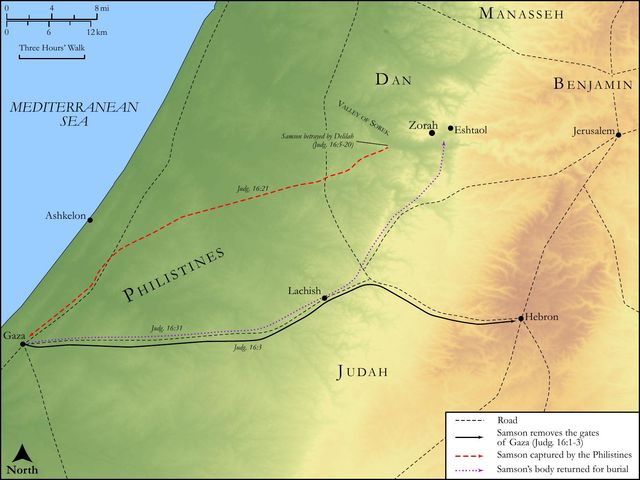
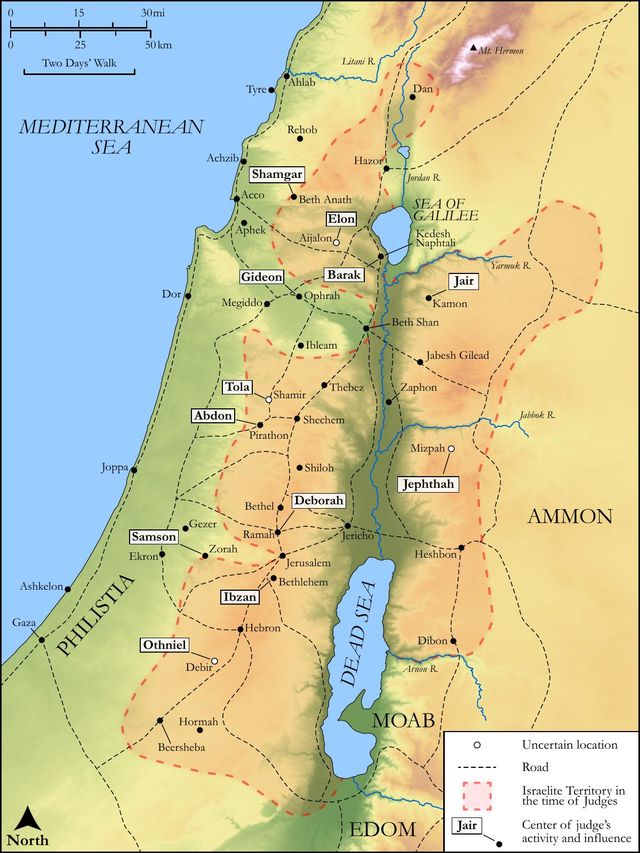
The "valley of Sorek" (Nahal Sorek) was a fertile wadi that functioned as a natural borderland between the Israelite territory of Judah and the Philistine pentapolis. Its strategic location meant that interactions, both peaceful and hostile, between Israelites and Philistines were common and often fraught with tension. The Philistines were the dominant oppressors of Israel during Samson's era, and their constant presence and pervasive cultural influence posed a significant and ongoing threat to Israel's spiritual distinctiveness and covenant fidelity. For an Israelite judge, consecrated to God through a Nazirite vow, to engage in a deeply intimate relationship with a woman from this enemy territory—especially one who would prove to be an agent of their adversaries—was a profound act of cultural, national, and spiritual compromise. Such intermarriages and intimate relationships were frequently forbidden or strongly discouraged in the Old Testament due to the inherent risk of idolatry, assimilation, and the erosion of Israel's unique identity as God's chosen people.
Key Themes
ShowHideThis verse powerfully contributes to several crucial themes prevalent not only in the book of Judges but also throughout the biblical narrative. Firstly, it underscores the theme of spiritual compromise and the danger of misplaced affection. Samson, despite his extraordinary calling and divinely bestowed strength, consistently allows his carnal desires to override his spiritual discernment and commitment to God. His "love" for Delilah is portrayed as an infatuation that blinds him to obvious and repeated dangers, powerfully illustrating how personal weakness and unbridled passion can undermine even the most potent divine gifts and callings. Secondly, it highlights the insidious nature of sin and its gradual, escalating progression. Samson's repeated compromises, from his initial marriage in Timnah to his encounter in Gaza and now to his entanglement in Sorek, vividly demonstrate how unaddressed desires and unchecked patterns of disobedience can lead to increasingly severe consequences, ultimately culminating in spiritual and physical enslavement. Finally, it subtly touches upon the overarching theme of divine sovereignty amidst human failure, as God's ultimate purposes for delivering Israel from the Philistines would indeed be achieved, even through Samson's tragic and costly end, demonstrating God's ability to work through flawed instruments.
Exposition and Analysis
ShowHideKey Word Analysis
ShowHideThis primitive root signifies having affection for someone, whether sexually or otherwise. In the context of Samson's character and his previous relationships, this "love" for Delilah appears to be rooted in strong physical attraction and passionate infatuation rather than a deep, covenantal bond based on mutual respect, shared values, or spiritual compatibility. It is a desire that blinds him to obvious dangers and ultimately leads to his downfall, highlighting the destructive potential of affections not guided by wisdom or divine principle.
Derived from a root meaning "languishing" (from H1807, which itself comes from H1809, "to dangle, be weak, languish"), the name "Delilah" is profoundly ironic and serves as a powerful instance of nominative determinism. Given her pivotal role in Samson's downfall, her very name foreshadows her function as the instrument of Samson's weakening, enfeeblement, and ultimate betrayal. She embodies the seductive power that can lead to spiritual and physical ruin, causing strength to languish.
This geographical name literally means "a vine" or "choice vine." The "valley of Sorek" was a fertile region known for its vineyards. This detail is highly symbolic, especially in relation to Samson's Nazirite vow, which strictly prohibited him from consuming any product of the vine (e.g., wine, grapes, even grape seeds or skins) and from cutting his hair, which was the visible sign of his consecration to God (Numbers 6). The "choice vine" imagery subtly hints at the temptation and spiritual "intoxication" that would lead Samson astray, ultimately resulting in the cutting of his hair—the symbolic "severing" of his connection to his vow—much like a vine is cut.
Verse Breakdown
ShowHide"And it came to pass afterward"
This phrase serves as a narrative bridge, linking the current event to Samson's previous exploits, specifically his audacious escape from Gaza. It signifies a continuation of his life's trajectory, which is notably marked by a recurring pattern of engaging with Philistine women despite the negative and often violent consequences. This opening suggests a troubling lack of learning or repentance from past mistakes, setting the ominous stage for an even more devastating and ultimately fatal encounter.
"that he loved a woman in the valley of Sorek"
This clause introduces both the object of Samson's affection and the critical geographical setting. The verb "loved" (as discussed above) indicates a powerful emotional or physical attraction that drives Samson's actions. The "valley of Sorek" is a crucial detail, placing the woman in a border region that was likely Philistine territory or under their strong influence, thereby underscoring the ongoing spiritual and national compromise inherent in Samson's repeated choices to pursue relationships with women from Israel's enemies.
"whose name [was] Delilah"
The explicit naming of Delilah in this verse immediately signals her profound importance and distinguishes her from previous, often unnamed, women in Samson's life (like the harlot in Gaza). By giving her a name, the narrative elevates her role from a casual encounter to that of a significant, named antagonist. Her name itself, potentially meaning "weakener" or "betrayer," serves as a potent and chilling foreshadowing of her pivotal and destructive role in Samson's narrative, marking her as the instrument of his downfall.
Literary Devices
ShowHideJudges 16:4 is rich in foreshadowing, as the introduction of Delilah and the specific setting in the Valley of Sorek immediately signals impending doom for Samson. The audience, well aware of Samson's previous failures with Philistine women and the inherent dangers of such entanglements, anticipates the tragic outcome of this new relationship. There is also profound irony at play: Samson, a judge endowed with superhuman strength by God specifically to deliver Israel from its Philistine oppressors, is repeatedly undone by his own moral weakness and carnal desires, particularly for women from those very enemies. His immense physical might is rendered useless by his spiritual and emotional frailty. The verse also functions as a critical point in a pattern of repetition, reinforcing Samson's consistent inability to control his passions and exercise spiritual discernment, leading him into compromising relationships that ultimately threaten his divine calling and his life. Finally, the symbolism of the "valley of Sorek" (literally, "valley of the choice vine") subtly alludes to Samson's Nazirite vow, which prohibited grape products, creating a poignant and ironic backdrop for his spiritual decline and the eventual cutting of his hair, which was the visible sign of his consecration.
Theological and Thematic Connections
ShowHideJudges 16:4 serves as a stark and enduring warning against the dangers of spiritual compromise and the insidious nature of unbridled desire. Samson's tragic story powerfully illustrates that even those uniquely gifted and called by God are not immune to temptation and the devastating consequences of consistently yielding to sin. His "love" for Delilah, rooted in infatuation and carnal appetite rather than godly wisdom, highlights the critical importance of discernment in all relationships and the imperative to guard one's heart against influences that can subtly erode spiritual integrity and commitment. The narrative underscores that while God's ultimate purposes will prevail, personal disobedience carries severe and often tragic consequences, leading to personal bondage, suffering, and a diminished witness. It reminds believers that true strength lies not merely in physical prowess or gifted abilities, but in unwavering faithfulness, obedience, and a disciplined heart that prioritizes God's will above all personal desires.
Reflection and Application
ShowHideSamson's tragic trajectory, culminating in his entanglement with Delilah, offers timeless and sobering lessons for every believer across generations. This verse calls us to a profound and honest self-examination regarding the true affections of our hearts and the discerning choices we make, particularly in our relationships. It is a powerful reminder that our greatest vulnerabilities often lie not in overt external threats, but in unaddressed internal desires, unchecked passions, and subtle compromises that gradually erode our spiritual foundations. We are challenged to consider what "valleys of Sorek" might exist in our own lives—places, relationships, or even habits that, while initially appearing attractive, harmless, or even beneficial, carry the insidious potential to subtly erode our spiritual commitments, compromise our walk with God, and ultimately lead to spiritual or moral downfall. True spiritual strength is not merely about avoiding overt sin, but about cultivating a disciplined heart that vigilantly guards against the gradual creep of compromise and diligently seeks divine wisdom in all its affections and choices.
Questions for Reflection
ShowHideFAQ
ShowHideWas Delilah a Philistine?
ShowHideWhile the biblical text does not explicitly state Delilah's ethnicity, her residence in the "valley of Sorek," a border region frequently under Philistine control and influence, strongly suggests she was either Philistine or at least deeply sympathetic to their cause. The fact that the Philistine lords directly approach her to betray Samson (Judges 16:5) further supports her alignment with Israel's enemies. Given Samson's consistent and destructive pattern of being drawn to Philistine women (his wife in Timnah, the harlot in Gaza), it is overwhelmingly probable that Delilah continued this pattern of dangerous entanglement.
Why did Samson keep falling for Philistine women despite the dangers?
ShowHideSamson's repeated attraction to Philistine women highlights a tragic and persistent flaw in his character: a profound struggle with carnal desires, a lack of spiritual discernment, and a failure to learn from past consequences. Despite his divine calling and supernatural strength, he consistently allowed his physical appetites and personal passions to override his Nazirite vows and his sacred role as Israel's judge and deliverer. This pattern demonstrates the powerful and often blinding grip of temptation and the human tendency to repeat destructive behaviors, even when the negative consequences are painfully evident. It underscores that even divinely empowered individuals are profoundly vulnerable to personal weakness and the allure of forbidden desires, a theme echoed in the lives of other biblical figures who struggled with similar issues, such as King Solomon, whose foreign wives led him into idolatry (1 Kings 11:1-8).
Christ-Centered Fulfillment
ShowHideSamson's tragic story, particularly his entanglement with Delilah, serves as a poignant and powerful contrast that ultimately points us to the perfect obedience, unwavering faithfulness, and uncompromised strength of Jesus Christ. Samson, despite his miraculous physical strength, was ultimately weakened and betrayed by his own carnal desires and misplaced affections, leading to his capture, humiliation, and the loss of his anointing. He was a deliverer who himself desperately needed deliverance from his own sin and self-indulgence. In stark contrast, Jesus, the true and greater Deliverer, faced every conceivable temptation (Hebrews 4:15) yet never succumbed to sin, perfectly fulfilling the will of His Father in every regard. While Samson's strength was physical, temporary, and ultimately compromised, Christ's power is spiritual, eternal, and absolute, demonstrated not by tearing down city gates but by conquering sin and death on the cross. Unlike Samson, who was ensnared by a "love" that led to betrayal and bondage, Christ's love for His Church, His bride, is pure, self-sacrificial, and eternally faithful (Ephesians 5:25-27). Where Samson's personal failures led to his eyes being gouged out and a life of physical bondage, Christ, through His perfect obedience and atoning sacrifice, opened the eyes of the spiritually blind and set the captives free from the bondage of sin and death (Luke 4:18). Samson's story, therefore, underscores humanity's desperate need for a Savior whose strength is not compromised by human weakness, a need perfectly met in the unblemished life and atoning work of Jesus, the Lamb of God who truly takes away the sin of the world.