


Joshua 22:22
Bible text: King James Version (1769 Blayney text) · Public domain
Bible text: King James Version with Strong's numbers · Public domain
Bible text: Berean Standard Bible · Public domain
Bible text: American Standard Version (1901) · Public domain
Bible text: World English Bible, Messianic edition · Public domain
Bible text: Geneva Bible (1599) · Public domain
Bible text: Young's Literal Translation · Public domain
- אֵל'elElH410N-msNoun Singular Masculine Absolute
- אֱלֹהִים'E·lo·HimGodH430N-mpNoun Plural Masculine Absolute
- יְהוָהYah·wehYahwehH3068N-properNoun Proper Title
- אֵל'elElH410N-msNoun Singular Masculine Absolute
- אֱלֹהִים'E·lo·HimGodH430N-mpNoun Plural Masculine Absolute
- יְהוָהYah·wehYahwehH3068N-properNoun Proper Title
- הוּאhu'heH1931Pro-3msPronoun Personal 3rd Singular Masculine
- יֹדֵעַyo·De·a'[is] knowingH3045V-Qal-Prtcpl-msVerb Qal Participle Singular Masculine Absolute
- וְיִשְׂרָאֵלve·Yis·ra·'Eland IsraelH3478Conj-w ¦ N-properNoun Proper LocationוְandיִשְׂרָאֵלIsrael
- הוּאhu'itH1931Pro-3msPronoun Personal 3rd Singular Masculine
- יֵדָעye·Da'let it knowH3045V-Qal-Imperf-3msVerb Qal Imperfect 3rd Singular Masculine
- אִם'imifH518PrtParticle Conditional
- בְּמֶרֶדbe·Me·redin rebellionH4777Prep-b ¦ N-msNoun Singular Masculine Absoluteבְּinמֶרֶדrebellion
- וְאִםve·'imand ifH518Conj-w ¦ PrtParticle Conditionalוְandאִםif
- בְּמַעַלbe·Ma·'alin unfaithfulnessH4604Prep-b ¦ N-msNoun Singular Masculine Absoluteבְּinמַעַלunfaithfulness
- בַּיהוָהba·Yah·wehon YahwehH3068Prep-b ¦ N-properNoun Proper TitleבַּonיהוָהYahweh
- אַל'almay notH408NegParticle Negative
- תּוֹשִׁיעֵנוּto·shi·'E·nuyou save usH3467V-Hiphil-Imperf-2ms ¦ 1cpVerb Hiphil Imperfect 2nd Singular Masculineתּוֹשִׁיעֵyou saveנוּus
- הַיּוֹםhai·Yomthe dayH3117Art ¦ N-msNoun Singular Masculine Absoluteהַtheיּוֹםday
- הַזֶּהha·Zeh<the> thisH2088Art ¦ PrtParticle Demonstrativeהַ<the>זֶּהthis
English is a literal word-by-word gloss of the Hebrew, not the KJV's wording. Why?
This is the original text the KJV's translators worked from — each Hebrew word with its own literal English meaning in this verse, prepared by scholars at Tyndale House, Cambridge. The KJV translates whole sentences, not word by word, so its wording differs: one Hebrew word can become several English words, and the KJV may choose “the LORD” where the gloss reads “Yahweh”. Both are faithful — they answer different questions. For the KJV's own rendering, switch to the KJV text.
Details
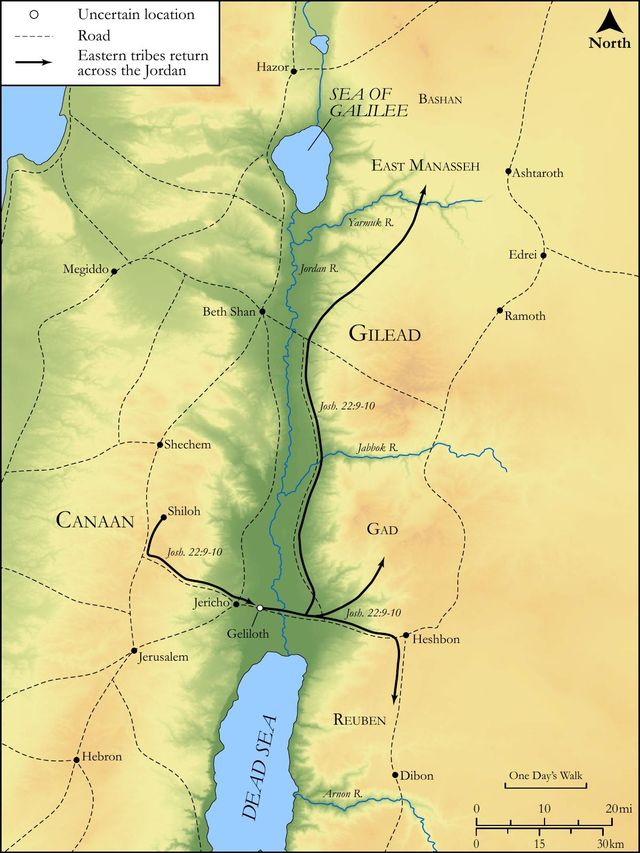
See on the biblical-era map
Study this verse
Historical interpretation
Historical reception
1 surviving comment on this verse from the historical church.
But let us see what sacrament lies within this deed. The former people of the circumcision are represented in Reuben, who was the firstborn; but also in Gad, who also is the firstborn out of Zilpah; and Manasseh, no less a firstborn. But insofar as I say “firstborn,” I speak chronologically. Therefore, these things are said not that it might be evident some division and separation is between us and those who were righteous before the coming of Christ, but that they might reveal themselves to still be our brothers even if they existed before the coming of Christ. For although they possessed an altar then before the coming of the Savior, nevertheless, they knew and perceived that it was not that true altar but that it was a form and figure of what would be the true altar. Those persons knew this because the true victims and those who were able to take away sins were not offered on that altar that the firstborn people possessed but on this one where Jesus was. Here the heavenly victims, here the true sacrifices are consumed. Therefore, they are made “one flock and one shepherd,” those former righteous ones and those who are now Christians.
Continue studying Joshua 22:22 across the web’s major study libraries — every link below opens this exact verse, chapter, or book on the destination site.
Read & Compare
 BibleGatewayThis verse in more than 200 translations and 70 languages.
 Bible.comThe YouVersion reader — hundreds of translations, reading plans, and highlights.
 ESV.orgCrossway's official English Standard Version reader.
 NET BibleThe NET translation with 60,000+ translators' notes on every rendering decision.
 STEP BibleTyndale House's free study tool — original text, vocabulary, and scholarly resources.
 BibliaLogos Bible Software's free web reader.
 USCCBThe New American Bible (Revised Edition) with the U.S. bishops' study notes.
Commentaries
 BibleHub CommentariesDozens of classic commentaries on this verse, gathered on one page.
 StudyLightMore than 100 commentary sets — the largest collection on the web.
 BibleRefPlain-English commentary on what this verse means, verse by verse.
 Enduring WordDavid Guzik's free commentary on this chapter, widely used by Bible teachers.
 Bible Study ToolsVerse commentary alongside Greek and Hebrew study aids.
Original Language & Research
- BibleHub InterlinearThe verse word by word — original language, transliteration, and English.
- BibleHub LexiconEvery word's original-language definition and Strong's entry.
 Blue Letter BibleDeep-study tools — Strong's numbers, concordance, and word studies.
 SefariaThe Hebrew text with Rashi and centuries of Jewish commentary.
Sermons, Hymns & Audio


TrulyRandomVerse is not affiliated with these sites and doesn’t control their content. They’re linked because they’re genuinely useful.
Summary
Joshua 22:22 powerfully captures the fervent and dramatic declaration of innocence from the Transjordanian tribes—Reuben, Gad, and the half-tribe of Manasseh—to the rest of Israel. Accused of rebellion and idolatry for erecting a large altar by the Jordan River, which was misinterpreted as a rival worship site, these tribes passionately appeal to the omniscient God of Israel as their ultimate witness. Their emphatic, repeated invocation of "The LORD God of gods" serves as a solemn oath, affirming their unwavering loyalty to Yahweh and their willingness to face divine judgment if their intentions were indeed rebellious or faithless, thereby seeking vindication before both God and their brethren.
Context
ShowHideLiterary Context
Joshua 22 marks a pivotal transition point in the book of Joshua, following the successful conquest and division of the land of Canaan. The chapter details the dismissal of the Transjordanian tribes—Reuben, Gad, and the half-tribe of Manasseh—who had faithfully assisted their brethren in the western campaigns. As they return to their inheritance east of the Jordan River, they construct a large, prominent altar. This act immediately provokes alarm and suspicion among the western tribes, who perceive it as a grave act of apostasy, a challenge to the singular worship centered at the Tabernacle in Shiloh, and a direct violation of the covenant. The narrative builds tension as the western tribes gather for war, sending a formidable delegation led by Phinehas, the son of Eleazar the priest, to confront the accused. Joshua 22:22 is the emotional and theological climax of the Transjordanian tribes' impassioned defense, a desperate plea for understanding and a profound appeal to divine omniscience. The resolution of this conflict, based on clear communication and shared understanding, ultimately underscores the vital importance of unity within the covenant community.
Historical & Cultural Context
The nations round about, the Canaanites chief among them, served many gods, making the Israelites' monotheistic covenant with Yahweh utterly unique. Central to this covenant was the command for exclusive worship of Yahweh, often symbolized by a single, authorized place of sacrifice, as detailed in Deuteronomy 12. At this time, the Tabernacle in Shiloh served as the central sanctuary for all Israel, the sole legitimate site for national worship and sacrifice. Any unauthorized altar was therefore seen not merely as a minor infraction but as a direct challenge to Yahweh's sovereignty, a potential lure to idolatry, and a grave threat to the fragile unity of the nascent Israelite nation. The memory of past national sins, such as the apostasy at Baal-Peor, which resulted in a devastating plague, loomed large in the collective consciousness. The Jordan River, while a geographical boundary, also held symbolic significance, potentially dividing the unified people of God. The western tribes' swift and severe reaction reflects their profound concern for maintaining the purity of Yahweh worship and avoiding any action that could provoke divine wrath upon the entire community, as seen in the aftermath of Achan's sin.
Key Themes
ShowHideJoshua 22:22 powerfully articulates several core themes crucial to the book of Joshua and the broader Old Testament narrative. Firstly, it highlights Divine Omniscience and Sovereignty, emphasizing God's absolute knowledge of human hearts and motives, even when intentions are misunderstood by others. The repeated invocation of "The LORD God of gods" underscores Yahweh's supreme authority over all creation and His role as the ultimate judge, a truth echoed in Psalm 139. Secondly, the verse underscores the paramount importance of Purity of Worship and Loyalty to Yahweh. The Transjordanian tribes' vehement denial of "rebellion" or "transgression" demonstrates their deep commitment to exclusive worship of the covenant God and their abhorrence of idolatry or spiritual compromise. This concern for covenant fidelity is a recurring motif throughout the Pentateuch and the historical books, as seen in the warnings of Deuteronomy 6:4-5. Finally, the desperate plea, "(save us not this day,)" vividly portrays the Seriousness of Apostasy and covenant breaking. It reveals the profound understanding that turning away from Yahweh, whether through idolatry or unfaithfulness, carried severe, even existential, consequences for the individual and the nation, a warning consistently found in passages like Deuteronomy 28. The incident ultimately champions National Unity under Yahweh, demonstrating how communication and shared commitment to God's covenant can overcome division.
Exposition and Analysis
ShowHideKey Word Analysis
ShowHideThis powerful, emphatic phrase combines three distinct Hebrew terms for God (H3068, H410, H430) to declare Yahweh's absolute supremacy. It is a superlative construction, literally "Yahweh, God of gods," emphasizing that Yahweh is not merely a god, but the ultimate, sovereign God above all other gods, powers, or earthly authorities. It functions as a solemn oath, calling upon the supreme Deity as the ultimate witness and judge of their intentions, underscoring the gravity and truthfulness of their subsequent declaration.
This term signifies an act of revolt, defiance, or insurrection against an established authority, whether human or divine. In this context, it refers to a political and religious act of breaking allegiance with Yahweh and the unified Israelite confederacy. The accusation implied that the Transjordanian tribes were attempting to establish a rival religious system or a separate national identity, directly challenging the covenant and the divinely ordained order.
This word denotes an act of unfaithfulness, treachery, or sacrilege, particularly a breach of trust or a violation of sacred things or duties owed to God. It carries the nuance of acting deceptively or secretly against a covenant obligation. Unlike "rebellion" which might imply open revolt, maʻal often points to a hidden or insidious act of disloyalty, such as misusing consecrated items or failing to fulfill a sacred vow. The Transjordanian tribes vehemently deny this specific charge, highlighting their commitment to the sanctity of Yahweh's worship.
Verse Breakdown
ShowHide"The LORD God of gods, the LORD God of gods,"
This emphatic repetition serves as a solemn, profound invocation. It is a desperate and reverent appeal to Yahweh, the supreme God, as the ultimate witness and judge. The doubling underscores the gravity of their oath and their complete reliance on God's perfect knowledge, asserting His unique authority over all other deities or powers.
"he knoweth,"
This clause directly asserts God's omniscience. The Transjordanian tribes are confident that Yahweh, who sees all hearts and motives, knows their true, innocent intentions behind building the altar, even when their brethren misunderstand. It is a direct appeal to divine vindication, trusting in God's perfect discernment.
"and Israel he shall know;"
This expresses their hope and prayer that just as God knows their innocence, He will also make that truth known to the rest of Israel. It implies a fervent desire for reconciliation and the restoration of trust, believing that God will ultimately reveal the truth and clear their name before the entire nation, thereby preserving unity.
"if [it be] in rebellion,"
This introduces a conditional statement, directly addressing the primary accusation leveled against them. They are asserting that if their act was indeed a deliberate revolt against Yahweh's authority or the unity of Israel, then they deserve the most severe consequences for such a grave breach of covenant.
"or if in transgression against the LORD,"
This second part of the conditional statement addresses the accusation of unfaithfulness or sacrilege. They are denying any hidden disloyalty or violation of sacred covenant obligations, reinforcing their commitment to the purity and exclusivity of Yahweh's worship, and their abhorrence of any spiritual compromise.
"(save us not this day,)"
This is a powerful, almost hyperbolic, plea that underscores the extreme gravity with which they view the sin of rebellion or transgression. They are essentially saying, "If we are truly guilty of such a heinous act against the LORD, then let us face the full, unmitigated judgment; do not spare us." It is a desperate declaration of their integrity, willing to forfeit their lives if their intentions were impure, thereby demonstrating the depth of their commitment to Yahweh and the covenant.
Literary Devices
ShowHideJoshua 22:22 is rich in literary devices that amplify its dramatic and theological weight. The most prominent is Repetition, specifically the doubling of "The LORD God of gods." This emphatic reiteration serves to underscore the profound solemnity of the moment and the absolute supremacy of the God to whom they appeal. It functions as a powerful Invocation and a solemn Oath, calling upon the highest divine authority to bear witness to their truthfulness. The structure of the verse also employs a Conditional Statement ("if [it be] in rebellion, or if in transgression against the LORD"), which sets up a stark contrast between their alleged guilt and their fervent denial, leading to a dire consequence. The concluding plea, "(save us not this day,)" is a striking example of Hyperbole, an intentional overstatement designed to convey the extreme sincerity and depth of their commitment. By inviting divine judgment upon themselves if they are guilty, they dramatically assert their innocence and unwavering loyalty to Yahweh, making their plea incredibly impactful.
Theological and Thematic Connections
ShowHideJoshua 22:22 profoundly articulates the foundational theological truth of God's omniscience and His role as the ultimate judge of human hearts. The Transjordanian tribes' appeal to "The LORD God of gods" demonstrates a deep understanding that while human judgment can be flawed and based on outward appearances or misunderstandings, God alone knows the true intentions and motives of the heart. This incident underscores the extreme gravity with which the Israelites viewed covenant fidelity and the abhorrence of idolatry or any act that could splinter the unity of God's people. It serves as a powerful reminder that true worship is not merely about outward acts but about the purity of intention and unwavering allegiance to Yahweh, and that the consequences of spiritual rebellion are dire, demanding either repentance or judgment.
Reflection and Application
ShowHideThe intense drama of Joshua 22:22 offers enduring lessons for believers today, particularly concerning communication, integrity, and our relationship with God. In a world prone to misunderstanding and quick judgment, this passage highlights the critical importance of clear, charitable communication. The entire conflict arose from a misinterpretation of intentions; had the Transjordanian tribes communicated their purpose earlier, or had the western tribes inquired before assuming the worst, the brink of civil war could have been avoided. This reminds us to seek understanding, ask clarifying questions, and extend grace rather than immediately assuming ill intent in our relationships, whether in family, church, or community. Furthermore, when our motives are questioned or we are falsely accused, this verse provides immense comfort and a model for integrity. We can rest in the profound truth that God, "The LORD God of gods," knows our hearts perfectly, even when others do not or cannot. Our ultimate vindication rests not in human approval but in divine omniscience. This should motivate us to live with integrity, knowing that our true allegiance and intentions are transparent before Him. Finally, the verse serves as a sober reminder of the profound seriousness of spiritual rebellion and unfaithfulness to God. The Transjordanian tribes' willingness to face judgment if guilty underscores that our allegiance must be solely to the Lord, and any deviation or compromise is a grave matter that demands our utmost attention and repentance.
Questions for Reflection
ShowHideFAQ
ShowHideWhy did the other tribes react so strongly to the altar, even preparing for war?
ShowHideThe western tribes reacted with such intensity because they interpreted the construction of a large altar by the Transjordanian tribes as a direct violation of God's covenant commands, specifically the prohibition against building rival altars or engaging in idolatry. According to Mosaic Law, particularly Deuteronomy 12, there was to be only one central place of worship and sacrifice for all Israel, which was the Tabernacle in Shiloh at that time. Any deviation was seen as an act of "rebellion" (Hebrew: mered) and "transgression" (Hebrew: ma'al) against Yahweh, which could provoke divine wrath upon the entire nation, as had happened with Achan's sin or the apostasy at Baal-Peor. Their fear was not just of a localized sin but of a national catastrophe, leading them to prepare for preemptive action to cleanse the land and avert God's judgment.
What was the actual purpose of the altar built by the Transjordanian tribes?
ShowHideThe Transjordanian tribes (Reuben, Gad, and half-Manasseh) built the altar not for sacrifice or rival worship, but as a "witness" or "memorial" (Joshua 22:27-28). They intended it to be a visible sign to future generations on both sides of the Jordan River that they shared in the same covenant with Yahweh and were part of the unified nation of Israel. They feared that in the future, the western tribes might deny their eastern brethren a share in the worship of the LORD because of the geographical barrier of the Jordan River. The altar was meant to be a permanent reminder of their shared heritage and their right to worship at the central sanctuary, ensuring their descendants would not be cut off from the covenant community. This purpose is clearly articulated in their defense, found in Joshua 22:23-29.
Christ-Centered Fulfillment
ShowHideJoshua 22:22, with its fervent appeal to God's omniscience and the desperate plea for vindication from accusations of rebellion and transgression, finds its ultimate fulfillment and resolution in the person and work of Jesus Christ. The Transjordanian tribes' cry, "The LORD God of gods, he knoweth," foreshadows the perfect knowledge of God embodied in Christ, who truly knows the hearts of all men, as demonstrated in John 2:24-25. He is not only the ultimate witness but also the final Judge, before whom all intentions and actions are laid bare (Romans 14:10-12). The fear of "rebellion" and "transgression" against the LORD, which threatened national unity and divine wrath in Joshua's day, points to humanity's universal sinfulness and our inherent rebellion against God's holy standard (Romans 3:23). Christ, the perfect Lamb of God, entered into our human condition to bear the full weight of this "transgression" and "rebellion" on the cross (Isaiah 53:5), offering the ultimate sacrifice that cleanses us from all unrighteousness (1 John 1:7). Through His atoning work, He reconciles us to God, bridging the chasm of sin and establishing a new covenant where true worship is no longer bound to physical altars or geographical locations, but is offered in spirit and truth (John 4:23-24). Thus, Christ Himself is the ultimate "witness" of God's covenant faithfulness and the perfect means by which humanity can be truly vindicated and united with God, overcoming the ultimate division caused by sin.