


Joshua 15:30
Bible text: King James Version (1769 Blayney text) · Public domain
Bible text: Berean Standard Bible · Public domain
Bible text: American Standard Version (1901) · Public domain
Bible text: World English Bible, Messianic edition · Public domain
Bible text: Geneva Bible (1599) · Public domain
Bible text: Young's Literal Translation · Public domain
- וְאֶלְתּוֹלַדve·'el·to·Ladand EltoladH513Conj-w ¦ N-properNoun Proper LocationוְandאֶלְתּוֹלַדEltolad
- וּכְסִילu·khe·Siland KesilH3686Conj-w ¦ N-properNoun Proper LocationוּandכְסִילKesil
- וְחָרְמָהve·cha·re·Mahand HormahH2767Conj-w ¦ N-properNoun Proper LocationוְandחָרְמָהHormah
English is a literal word-by-word gloss of the Hebrew, not the KJV's wording. Why?
This is the original text the KJV's translators worked from — each Hebrew word with its own literal English meaning in this verse, prepared by scholars at Tyndale House, Cambridge. The KJV translates whole sentences, not word by word, so its wording differs: one Hebrew word can become several English words, and the KJV may choose “the LORD” where the gloss reads “Yahweh”. Both are faithful — they answer different questions. For the KJV's own rendering, switch to the KJV text.
Details
See on the biblical-era maps
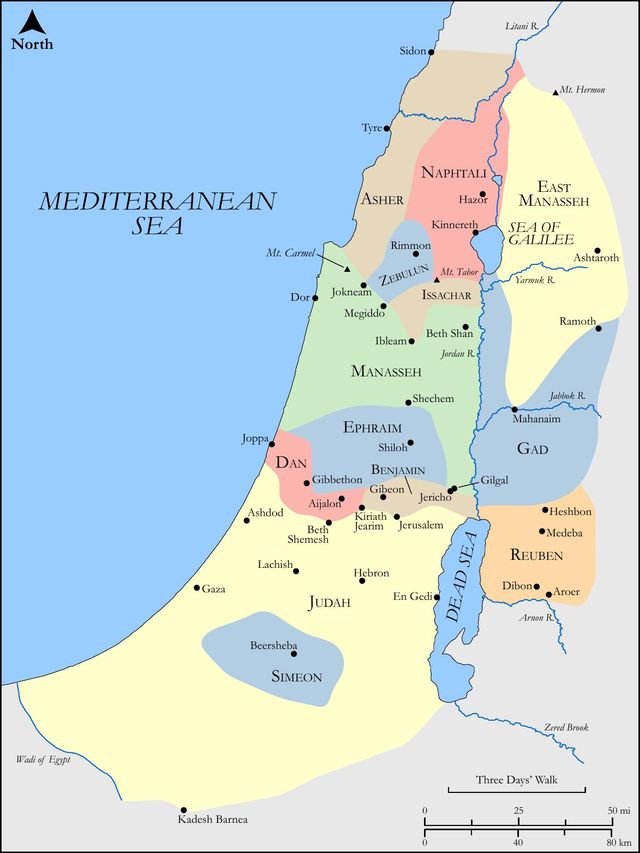
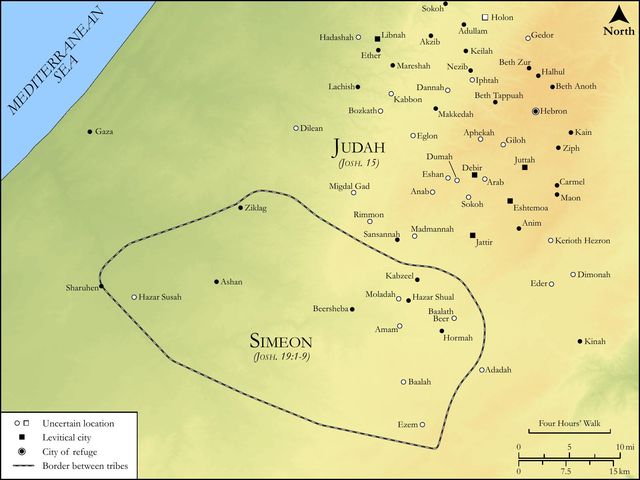
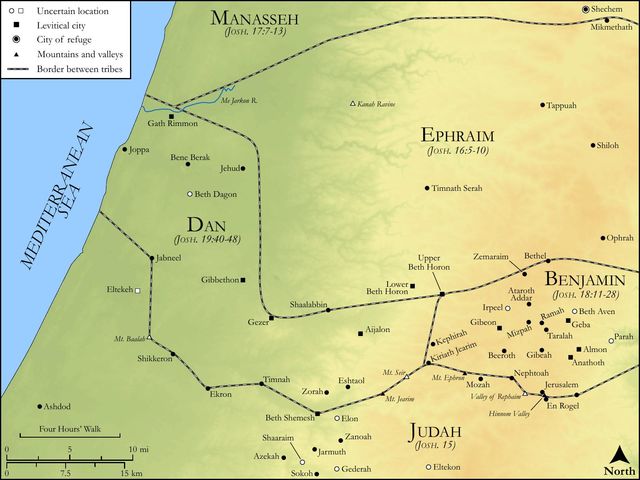
Study this verse
Public-domain commentary
Matthew Henry
From his Commentary on the Whole Bible. Henry comments on passages, not single verses — this entry covers Joshua 15:20–63. His two-level outline is real structure in the source text, so it is rendered as structure.
We have here a list of the several cities that fell within the lot of the tribe of Judah, which are mentioned by name, that they might know their own, and both keep it and keep to it, and might neither through cowardice nor sloth lose the possession of what was their own.
I.The cities are here named, and numbered in several classes, which they then could account for the reason of better than we can now. Here are,
1.Some that are said to be the uttermost cities towards the coast of Edom, Jos 15:21-32. Here are thirty-eight named, and yet said to be twenty-nine (Jos 15:32), because nine of these were afterwards transferred to the lot of Simeon, and are reckoned as belonging to that, as appears by comparing Jos 19:2, etc.; therefore those only are counted (though the rest are named) which remained to Judah.
2.Others that are said to be in the valley (Jos 15:33) are counted to be fourteen, yet fifteen are named; but it is probable that Gederah and Gederathaim were either two names or two parts of one and the same city.
3.Then sixteen are named without any head of distinction, Jos 15:37-41, and nine more, Jos 15:42-44.
4.Then the three Philistine-cities, Ekron, Ashdod, and Gaza, Jos 15:45-47.
5.Cities in the mountains, eleven in all (Jos 15:48-51), nine more (Jos 15:52-54), ten more (Jos 15:55-57), six more (Jos 15:58, Jos 15:59), then two (Jos 15:60), and six in the wilderness, a part of the country not so thick of inhabitants as some others were.
II.Now here,
1.We do not find Bethlehem, which was afterwards the city of David, and was ennobled by the birth of our Lord Jesus in it. But that city, which at the best was but little among the thousands of Judah (Mic 5:2), except that it was thus dignified, was now so little as not to be accounted one of the cities, but perhaps was one of the villages not named. Christ came to give honour to the places he was related to, not to receive honour from them.
2.Jerusalem is said to continue in the hands of the Jebusites (Jos 15:63), for the children of Judah could not drive them out, through their sluggishness, stupidity, and unbelief. Had they attempted it with vigour and resolution, we have reason to think God would not have been wanting to them to give them success; but they could not do it, because they would not. Jerusalem was afterwards to be the holy city, the royal city, the city of the great King, the brightest ornament of all the land of Israel. God has designed it should be so. It may therefore be justly looked upon as a punishment of their neglect to conquer other cities which God had given them that they were so long kept out of this.
3.Among the cities of Judah (in all 114) we meet with Libnah, which in Joram's days revolted, and probably set up for a free independent state (Kg2 8:22), and Lachish, where king Amaziah was slain (Kg1 14:19); it led the dance in idolatry (Mic 1:13); it was the beginning of sin to the daughter of Zion. Giloh, Ahithophel's town, is here mentioned, and Tekoa, of which the prophet Amos was, and near which Jehoshaphat obtained that glorious victory, Ch2 20:20, etc., and Maresha, where Asa was a conqueror. Many of the cities of this tribe occur in the history of David's troubles. Adullam, Ziph, Keilah, Maon, Engedi, Ziklag, here reckoned in this tribe, were places near which David had most of his haunts; for, though sometimes Saul drove him out from the inheritance of the Lord, yet he kept as close to it as he could. The wilderness of Judah he frequented much, and in it John Baptist preached, and there the kingdom of heaven commenced, Mat 3:1. The riches of this country no doubt answered Jacob's blessing of this tribe, that he should wash his garments in wine, Gen 49:11. And, in general, Judah, thou art he whom thy brethren shall praise, not envy.
Continue studying Joshua 15:30 across the web’s major study libraries — every link below opens this exact verse, chapter, or book on the destination site.
Read & Compare
 BibleGatewayThis verse in more than 200 translations and 70 languages.
 Bible.comThe YouVersion reader — hundreds of translations, reading plans, and highlights.
 ESV.orgCrossway's official English Standard Version reader.
 NET BibleThe NET translation with 60,000+ translators' notes on every rendering decision.
 STEP BibleTyndale House's free study tool — original text, vocabulary, and scholarly resources.
 BibliaLogos Bible Software's free web reader.
 USCCBThe New American Bible (Revised Edition) with the U.S. bishops' study notes.
Commentaries
 BibleHub CommentariesDozens of classic commentaries on this verse, gathered on one page.
 StudyLightMore than 100 commentary sets — the largest collection on the web.
 BibleRefPlain-English commentary on what this verse means, verse by verse.
 Enduring WordDavid Guzik's free commentary on this chapter, widely used by Bible teachers.
 Bible Study ToolsVerse commentary alongside Greek and Hebrew study aids.
Original Language & Research
- BibleHub InterlinearThe verse word by word — original language, transliteration, and English.
- BibleHub LexiconEvery word's original-language definition and Strong's entry.
 Blue Letter BibleDeep-study tools — Strong's numbers, concordance, and word studies.
 SefariaThe Hebrew text with Rashi and centuries of Jewish commentary.
Sermons, Hymns & Audio


TrulyRandomVerse is not affiliated with these sites and doesn’t control their content. They’re linked because they’re genuinely useful.
Summary
Joshua 15:30, a concise verse listing the towns of Eltolad, Chesil, and Hormah, functions as a meticulous record within the broader account of Judah's tribal inheritance in the Promised Land. This seemingly simple enumeration underscores God's unwavering faithfulness in fulfilling His ancient covenant promises to Israel, demonstrating the precise and divinely ordained division of territory among the tribes, thereby establishing their identity and secure possession of the land He pledged.
Context
ShowHideLiterary Context
Joshua 15 is entirely dedicated to detailing the vast land inheritance allotted to the tribe of Judah, which was the largest and most prominent of the Israelite tribes. This chapter follows the initial conquest narratives and precedes the allocation of land to the other tribes, emphasizing Judah's preeminence and the significance of its inheritance. The chapter meticulously outlines Judah's boundaries (see Joshua 15:1-12) and then provides an extensive catalog of cities within its various regions (see Joshua 15:21-62), grouped by district. Joshua 15:30 falls within the list of cities located in the southernmost part of Judah's inheritance, specifically among the twenty-nine cities of the Negeb (see Joshua 15:21-32). This detailed record, though appearing as a mere list, is crucial for understanding the fulfillment of God's promises and the establishment of Israel's territorial identity.
Historical & Cultural Context
The division of the land was the culmination of generations of divine promise and miraculous intervention, marking Israel's transition from a nomadic people to a settled nation. In Israel, land ownership and defined boundaries were paramount for identity, security, and economic stability. The meticulous recording of these boundaries and cities served as a legal and historical document, affirming Israel's rightful possession of Canaan as a divine grant. The Negeb, where these cities were located, was a semi-arid southern region, challenging to inhabit but strategically important as a buffer zone. The inclusion of these specific towns highlights the thoroughness of the land distribution, ensuring that every part of the promised territory was accounted for and assigned, reinforcing the divine authority behind the allocation.
Key Themes
ShowHideThe detailed land distribution in Joshua 15, including the specific towns in Joshua 15:30, powerfully illustrates several key themes. First, it is a tangible demonstration of Divine Faithfulness and the Fulfillment of Prophecy. God's ancient promise to Abraham regarding the land (e.g., Genesis 12:7) is now meticulously realized. Second, it emphasizes Order and Boundaries, reflecting God's desire for structure and distinct identity among His people. These precise geographical descriptions established clear, God-ordained boundaries for each tribe, crucial for maintaining peace and the distinct inheritance of each family. Finally, the sheer detail underscores God's Meticulousness and Sovereignty, showing that even the seemingly minor details of His plan are brought to fruition with precision, affirming the reliability of His Word and His comprehensive care for His people.
Exposition and Analysis
ShowHideKey Word Analysis
ShowHideThis name, as defined by Strong's H513, means "God (is) generator." It signifies the divine origin or sustenance implied in the town's name, subtly pointing to God's active role in the very existence of these settlements. Eltolad is a relatively obscure town mentioned only here and in 1 Chronicles 4:29 as "Tolad," indicating its location within the territory later shared with or absorbed by the tribe of Simeon. Its inclusion here emphasizes the comprehensive nature of the land allocation, even for smaller, less prominent settlements.
As defined by Strong's H3686, "Kesil" is simply a place in Palestine. While its direct meaning as a place name is simply the name itself, the underlying Hebrew root (כְּסִיל, kᵉçîyl) often means "foolish" or "stupid." This name is also found as "Bethul" in 1 Chronicles 4:30 and possibly "Bethuel" in Genesis 22:22. Its inclusion, like Eltolad, highlights the exhaustive nature of the land list, ensuring every designated locality was recorded as part of Judah's inheritance.
Deriving from the root ḥāram, meaning "to devote to destruction" or "to utterly destroy," the name "Hormah" itself signifies a place "devoted" or "utterly destroyed." Hormah has a rich and often tragic history in Israel's narrative. It was the site where rebellious Israelites were defeated by the Amalekites and Canaanites after refusing to enter the Promised Land (Numbers 14:45). Later, it became a site of decisive Israelite victory and utter destruction of the Canaanites under the "ban" (herem), leading to its renaming as Hormah (Numbers 21:3; Judges 1:17). Its inclusion in Judah's inheritance list, therefore, carries a profound historical and theological weight, reminding the reader of God's judgment and Israel's past struggles and triumphs, all culminating in the fulfillment of the land promise.
Verse Breakdown
ShowHide"And Eltolad,"
This phrase introduces the first of three towns, Eltolad, located in the southern region (Negeb) of Judah's vast inheritance. Its inclusion emphasizes the meticulous detail with which the land was surveyed and allocated, ensuring that even smaller, perhaps less prominent, settlements were accounted for in the divinely orchestrated distribution. This precision underscores God's thoroughness in fulfilling His promises.
"and Chesil,"
The second town listed, Chesil, further highlights the comprehensive nature of the land inventory. Like Eltolad, its specific location within the Negeb underscores the precise geographical boundaries established for the tribe of Judah, affirming their divinely granted territory. The repetition of the conjunction "and" links these towns together as part of a continuous, exhaustive list, reinforcing the idea of a complete and undisputed possession.
"and Hormah,"
The third and most historically significant town in this list, Hormah, concludes the verse. Its mention here signifies its inclusion within Judah's assigned territory, despite its previous tumultuous history as a battleground for Israel. Its name, meaning "devotion to destruction," serves as a subtle but powerful reminder of God's past judgments against the Canaanites and Israel's eventual triumph in fulfilling the divine mandate to conquer the land, bringing a complex historical narrative into the simple act of listing a town.
Literary Devices
ShowHideJoshua 15:30, though brief, employs several significant literary devices. The most prominent is Catalog or Enumeration, as the verse is part of an extensive list of towns. This device serves to emphasize the comprehensiveness and precision of the land distribution, acting as a legal and historical record that meticulously documents the fulfillment of God's promises. The Repetition of the conjunction "and" ("And Eltolad, and Chesil, and Hormah") creates a rhythmic, almost litany-like effect, reinforcing the idea of a complete and exhaustive inventory, leaving no doubt that every designated locality was included. Furthermore, the name "Hormah" itself functions as Symbolism and Allusion. Its etymology and rich historical background (as a place of both Israelite defeat and decisive victory under the ban) imbue the simple listing with deeper theological meaning, subtly reminding the reader of God's justice, Israel's past struggles and failures, and their ultimate success in the conquest, all within the context of receiving their promised inheritance.
Theological and Thematic Connections
ShowHideThe meticulous detail of Joshua 15:30, listing seemingly minor towns, serves as a profound testament to God's character and His unwavering commitment to His covenant promises. It underscores that God is a God of precision, order, and absolute faithfulness, who fulfills His Word down to the smallest detail. This comprehensive land distribution was not merely a geographical exercise but the tangible manifestation of God's ancient pledge to Abraham and his descendants, establishing their identity as a people rooted in a divinely granted inheritance. This earthly inheritance foreshadows the spiritual inheritance believers receive in Christ, demonstrating that God's promises, whether physical or spiritual, are always brought to fruition.
Reflection and Application
ShowHideWhile a list of ancient towns might initially seem mundane, Joshua 15:30, when viewed within its broader context, offers profound lessons for believers today. It serves as a powerful reminder that God is a God of meticulous detail and unwavering faithfulness. Just as He precisely divided the land and fulfilled every aspect of His promise to Israel, He is intimately involved in the details of our lives and will faithfully bring His promises to fruition for us. This should build our trust and confidence in His character, encouraging us to lean on Him even when circumstances seem chaotic or His plan unclear. The very existence of such precise historical records in Scripture validates the trustworthiness of God's inspired Word, assuring us that every part of the Bible, even the seemingly less dramatic passages, contributes to the grand narrative of His redemptive plan and His steadfast love. We are called to live with the same attention to the "details" of our spiritual walk, knowing that God cares about every aspect of our obedience and growth, and that our faithfulness, even in small things, contributes to His larger purposes.
Questions for Reflection
ShowHideFAQ
ShowHideWhy are these lists of towns so long and seemingly tedious in the Book of Joshua?
ShowHideThese extensive lists, like the one in Joshua 15:30, serve multiple crucial purposes beyond mere geographical notation. First, they act as a legal and historical deed, documenting the precise fulfillment of God's ancient covenant promises to Abraham regarding the land (e.g., Genesis 15:18). They provided clear, divinely ordained boundaries for each tribe, preventing future disputes and establishing their identity and inheritance. Second, they underscore God's faithfulness and meticulousness, demonstrating that every detail of His plan is brought to fruition, reinforcing the reliability of His Word. Third, these lists served as a tangible witness to future generations that Israel truly possessed the land as a divine gift, solidifying their national identity and their unique relationship with Yahweh, reminding them of His power and provision.
Christ-Centered Fulfillment
ShowHideWhile Joshua 15:30 meticulously details the earthly inheritance of Judah, its ultimate fulfillment points to the far greater spiritual inheritance found in Jesus Christ. The land of Canaan, though a precious gift, was a temporary and earthly possession, a shadow of the enduring reality to come. Christ, however, is the ultimate fulfillment of all God's promises, securing for believers an eternal and heavenly inheritance that transcends any physical territory. Just as the land was a gift of grace to Israel, salvation and eternal life are gifts of grace through faith in Christ, freely given and eternally secured. Believers are now considered "heirs according to the promise" through Christ, inheriting not a piece of land but a spiritual kingdom and eternal life (Galatians 3:29). We are "chosen... and destined... to obtain an inheritance" in Him (Ephesians 1:11), a "kingdom that cannot be shaken" (Hebrews 12:28). The meticulous detail of Joshua 15:30, ensuring every town was accounted for, beautifully foreshadows the comprehensive and perfect work of Christ, who ensures that every promise of God finds its "Yes" and "Amen" in Him, granting us a secure and eternal inheritance that will never fade (2 Corinthians 1:20).