


Joshua 12:17
Bible text: King James Version (1769 Blayney text) · Public domain
Bible text: Berean Standard Bible · Public domain
Bible text: American Standard Version (1901) · Public domain
Bible text: World English Bible, Messianic edition · Public domain
Bible text: Geneva Bible (1599) · Public domain
Bible text: Young's Literal Translation · Public domain
- מֶלֶךְMe·lekh[the] king ofH4428N-mscNoun Singular Masculine Construct
- תַּפּוּחַta·Pu·achTappuahH8599N-properNoun Proper Location
- אֶחָד'e·ChadoneH259Adj-fsAdjective Numerical Singular Feminine Absolute
- מֶלֶךְMe·lekh[the] king ofH4428N-mscNoun Singular Masculine Construct
- חֵפֶרChe·ferHepherH2660N-properNoun Proper Location
- אֶחָד'e·ChadoneH259Adj-fsAdjective Numerical Singular Feminine Absolute
English is a literal word-by-word gloss of the Hebrew, not the KJV's wording. Why?
This is the original text the KJV's translators worked from — each Hebrew word with its own literal English meaning in this verse, prepared by scholars at Tyndale House, Cambridge. The KJV translates whole sentences, not word by word, so its wording differs: one Hebrew word can become several English words, and the KJV may choose “the LORD” where the gloss reads “Yahweh”. Both are faithful — they answer different questions. For the KJV's own rendering, switch to the KJV text.
Details
See on the biblical-era map
Study this verse
Public-domain commentary
Matthew Henry
From his Commentary on the Whole Bible. Henry comments on passages, not single verses — this entry covers Joshua 12:7–24. His two-level outline is real structure in the source text, so it is rendered as structure.
We have here a breviate of Joshua's conquests.
I.The limits of the country he conquered.
It lay between Jordan on the east and the Mediterranean Sea on the west, and extended from Baal-gad near Lebanon in the north to Halak, which lay upon the country of Edom in the south, v. 7. The boundaries are more largely described, Num 34:2, etc. But what is here said is enough to show that God had been as good as his word, and had given them possession of all he had promised them by Moses, if they would but have kept it.
II.The various kinds of land that were found in this country, which contributed both to its pleasantness and to its fruitfulness, Jos 12:8.
There were mountains, not craggy, and rocky, and barren, which are frightful to the traveller and useless to the inhabitants, but fruitful hills, such as put forth precious things (Deu 33:15), which charmed the spectator's eye and filled the owner's hand. And valleys, not mossy and boggy, but covered with corn, Psa 65:13. There were plains, and springs to water them; and even in that rich land there were wildernesses too, or forests, which were not so thickly inhabited as other parts, yet had towns and houses in them, but served as foils to set off the more pleasant and fruitful countries.
III.The several nations that had been in possession of this country - Hittites, Amorites, Canaanites, etc., all of them descended from Canaan, the accursed son of Ham, Gen 10:15-18. Seven nations they are called (Deu 7:1), and so many are there reckoned up, but here six only are mentioned, the Girgashites being either lost or left out, though we find them, Gen 10:16 and Gen 15:21. Either they were incorporated with some other of these nations, or, as the tradition of the Jews is, upon the approach of Israel under Joshua they all withdrew and went into Africa, leaving their country to be possessed by Israel, with whom they saw it was to no purpose to contend, and therefore they are not named among the nations that Joshua subdued.
IV.A list of the kings that were conquered and subdued by the sword of Israel, some in the field, others in their own cities, thirty-one in all, and very particularly named and counted, it should seem, in the order in which they were conquered; for the catalogue begins with the kings of Jericho and Ai, then takes in the king of Jerusalem and the princes of the south that were in confederacy with him, and then proceeds to those of the northern association. Now,
1.This shows what a very fruitful country Canaan then was, which could support so many kingdoms, and in which so many kings chose to throng together rather than disperse themselves into other countries, which we may suppose not yet inhabited, but where, though they might find more room, they could not expect such plenty and pleasure: this was the land God spied out for Israel; and yet at this day it is one of the most barren, despicable, and unprofitable countries in the world: such is the effect of the curse it lies under, since its possessors rejected Christ and his gospel, as was foretold by Moses, Deu 29:23.
2.It shows what narrow limits men's ambition was then confined to. These kings contented themselves with the government, each of them, of one city and the towns and villages that pertained to it; and no one of them, for aught that appears, aimed to make himself master of the rest, but, when there was occasion, all united for the common safety. Yet it should seem that what was wanting in the extent of their territories was made up in the absoluteness of their power, their subjects being all their tenants and vassals, and entirely at their command.
3.It shows how good God was to Israel, in giving them victory over all these kings, and possession of all these kingdoms, and what obligations he hereby laid upon them to observe his statutes and to keep his laws, Psa 105:44, Psa 105:45. Here were thirty-one kingdoms, or seigniories, to be divided among nine tribes and a half of Israel. Of these there fell to the lot of Judah the kingdoms of Hebron, Jarmuth, Lachish, Eglon, Debir, Arad, Libnan, and Adullam, eight in all, besides part of the kingdom of Jerusalem and part of Geder. Benjamin had the kingdoms of Jericho, Ai, Jerusalem, Makkedah, Beth-el, and the nations of Gilgal, six in all. Simeon had the kingdom of Hormah and part of Geder. Ephraim had the kingdoms of Gezer and Tirzah. Manasseh (that half-tribe) had the kingdoms of Tappuah and Hepher, Taanach and Megiddo. Asher had the kingdoms of Aphek and Achshaph. Zebulun had the kingdoms of Lasharon, Shimron-meron, and Jokneam. Naphtali had the kingdoms of Madon, Hazor, and Kedesh. And Issachar had that of Dor. These were some of the great and famous kings that God smote, for his mercy endureth for ever; and gave their land for a heritage, even a heritage unto Israel his servant, for his mercy endureth for ever, Psa 136:17, etc.
Historical interpretation
Historical reception
2 surviving comments on this verse. Each one is dated, so this reads as a timeline rather than a list.
Select a marker to jump to its quote. Markers stagger vertically where authors wrote within a few decades of each other.
And if “a wise man shall understand the words from his own mouth and shall hear knowledge on his lips,” we must either declare rashly that the prophets were not wise, if they have not understood “the words from their own mouth,” or admit that the prophets were wise, because they have received what is correct and true and have understood “the words from their own mouth” and borne knowledge on their lips. It is clear that Moses saw in his mind the truth of the law and the allegorical meanings related to the anagogical sense of the stories he recorded, and that Joshua understood the true distribution of land which took place after the overthrow of the twenty-nine kings, since he could see better than us that the things accomplished through himself were shadows of certain realities.
Whoever believes in me will also do the works which I do, and will do even greater ones. And where is this word which he said, “The disciple is not greater than his master” [illustrated]? For example, Moses killed only three kings, but Joshua killed thirty. [Moses] persevered in prayer, made supplication, but did not enter [the promised land]. It was Joshua rather who entered and shared out the inheritance. Likewise, Samuel was greater than Eli, and Elisha received a double portion of his master’s spirit after his ascension, like the Lord our Savior, for his disciples effected twice through their signs.
Continue studying Joshua 12:17 across the web’s major study libraries — every link below opens this exact verse, chapter, or book on the destination site.
Read & Compare
 BibleGatewayThis verse in more than 200 translations and 70 languages.
 Bible.comThe YouVersion reader — hundreds of translations, reading plans, and highlights.
 ESV.orgCrossway's official English Standard Version reader.
 NET BibleThe NET translation with 60,000+ translators' notes on every rendering decision.
 STEP BibleTyndale House's free study tool — original text, vocabulary, and scholarly resources.
 BibliaLogos Bible Software's free web reader.
 USCCBThe New American Bible (Revised Edition) with the U.S. bishops' study notes.
Commentaries
 BibleHub CommentariesDozens of classic commentaries on this verse, gathered on one page.
 StudyLightMore than 100 commentary sets — the largest collection on the web.
 BibleRefPlain-English commentary on what this verse means, verse by verse.
 Enduring WordDavid Guzik's free commentary on this chapter, widely used by Bible teachers.
 Bible Study ToolsVerse commentary alongside Greek and Hebrew study aids.
Original Language & Research
- BibleHub InterlinearThe verse word by word — original language, transliteration, and English.
- BibleHub LexiconEvery word's original-language definition and Strong's entry.
 Blue Letter BibleDeep-study tools — Strong's numbers, concordance, and word studies.
 SefariaThe Hebrew text with Rashi and centuries of Jewish commentary.
Sermons, Hymns & Audio


TrulyRandomVerse is not affiliated with these sites and doesn’t control their content. They’re linked because they’re genuinely useful.
Summary
Joshua 12:17 is a succinct yet profoundly significant verse, nestled within a comprehensive chapter that meticulously catalogues the kings and city-states conquered by Israel under the unified leadership of Moses and Joshua. This specific entry, naming the kings of Tappuah and Hepher, serves as a powerful testament to the systematic and complete fulfillment of God's covenant promise to deliver the land of Canaan into the hands of His people, underscoring both divine faithfulness and the thoroughness of the conquest.
Context
ShowHideLiterary Context
Joshua 12 functions as a grand summary and a strategic "roll call" of vanquished enemies, marking the triumphant conclusion of the main conquest narrative (Joshua 1-11) before the detailed accounts of land distribution commence in Joshua 13. This chapter provides a comprehensive and undeniable record, demonstrating the full extent of God's deliverance and Israel's success in dispossessing the inhabitants of Canaan. Verse 17, by listing the kings of Tappuah and Hepher, contributes two more specific entries to the total of thirty-one kings defeated by Joshua, reinforcing the systematic and complete nature of the victory. It acts as a final, authoritative statement that the primary military phase of the conquest was indeed accomplished, setting the stage for the tribal inheritances.
Historical & Cultural Context
Canaan in the days of Joshua was characterized by numerous independent city-states, each typically ruled by a "king" who controlled the city and its surrounding territory. These rulers often formed alliances but were ultimately distinct entities. The Canaanites, known for their fortified cities, advanced military capabilities, and deeply entrenched polytheistic practices (including child sacrifice and cultic prostitution), represented a significant spiritual and military threat to Israel. God's command to dispossess these nations, as detailed in passages like Deuteronomy 7:1-2, was not merely a territorial acquisition but a divine judgment against the profound wickedness of these peoples and a necessary step to preserve Israel's spiritual purity. The meticulous listing of defeated kings, including those of Tappuah and Hepher, would have served as a historical and legal record, affirming Israel's divinely sanctioned right to the land and their successful execution of God's mandate.
Key Themes
ShowHideThe entire list in Joshua 12, including the specific mention in Joshua 12:17, powerfully illustrates several core themes central to the book of Joshua and the broader Old Testament narrative. First, it highlights Divine Faithfulness in fulfilling God's covenant promises to Abraham to give his descendants the land of Canaan, as recorded in Genesis 15:18-21. Every defeated king stands as a tangible testament to God actively fighting for His people. Second, the sheer number of kings (thirty-one under Joshua) underscores the Completeness of the Conquest. It was not a partial or superficial victory but a thorough subjugation of the land, paving the way for its distribution among the tribes, as anticipated in Joshua 13:1ff. Finally, this chapter powerfully asserts God's Sovereignty Over Kingdoms. Even the most powerful kings of fortified cities were no match for the Lord's intervention, affirming that God is supreme over all earthly rulers and nations.
Exposition and Analysis
ShowHideKey Word Analysis
ShowHideMeaning "a king; royal." In Canaan, a "king" (melek) was not merely a ceremonial figure but the absolute ruler of a city-state, embodying its military, political, and economic power. The defeat of a king signified the complete subjugation of his city and its surrounding territory. The repeated mention of "the king of" underscores that these were not just cities taken, but organized, sovereign entities whose leadership was decisively overthrown by divine power working through Israel.
Meaning "properly, united, i.e. one; or (as an ordinal) first." The Hebrew word echad, meaning "one," following each king's name, serves as a precise tally mark. It emphasizes the individual and distinct nature of each victory. This seemingly simple word reinforces the comprehensive and systematic character of the conquest, indicating that each king, no matter how minor or remote, was individually and completely defeated, contributing to the total count of thirty-one. It highlights the meticulous record-keeping and the thoroughness of God's work in fulfilling His promises.
Verse Breakdown
ShowHide"The king of Tappuah, one;"
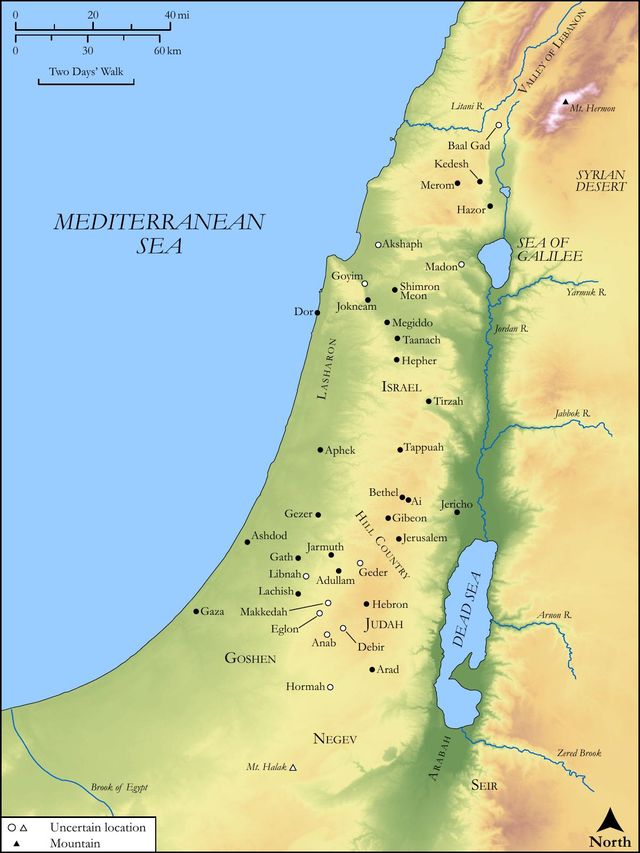
This clause signifies the complete and decisive defeat of the ruler of the city-state of Tappuah. Tappuah (H8599, Tappûwach), likely meaning "apple" or "apple region," was a specific geographic location in the hill country of Ephraim (Joshua 17:7-8). The phrase "one" indicates a singular, accomplished victory, counting this specific king among the total number of vanquished enemies. It represents the successful overthrow of a distinct center of Canaanite power, contributing to the overall claim of territory.
"the king of Hepher, one;"
Parallel in structure to the preceding clause, this phrase records the equally complete and decisive defeat of the ruler of Hepher. Hepher (H2660, Chêpher), a place name meaning "a pit of shame," was another distinct geographical location, part of the tribal inheritance of Manasseh (Joshua 17:2). The repetition of "one" reinforces the systematic tallying of each individual victory, emphasizing that no king or city was overlooked in the divinely orchestrated conquest. This highlights the thoroughness of God's work in establishing Israel in the land.
Literary Devices
ShowHideJoshua 12:17, as part of the broader chapter, employs several key literary devices that amplify its theological message. The most prominent is Catalogue or List, where the entire chapter functions as a comprehensive inventory of conquered kings. This meticulous listing serves as an authoritative historical and theological record, providing irrefutable evidence of God's faithfulness in fulfilling His covenant promises. The repetitive structure, "The king of X, one; the king of Y, one," demonstrates Anaphora, which creates a rhythmic, almost litany-like effect, emphasizing the systematic and relentless nature of the conquest. This Repetition also underscores the distinctness of each victory while contributing to the cumulative triumph. The Conciseness of the entries, often just a name and a number, lends an objective, factual tone, highlighting the accomplished reality of the victories without elaborate narrative detail. This terse style conveys the finality and completeness of the conquest.
Theological and Thematic Connections
ShowHideJoshua 12:17, by contributing to the meticulous tally of defeated kings, powerfully reinforces the theological truth that God is a covenant-keeping God who actively intervenes in history to fulfill His promises. The conquest of Canaan, including the specific victories over Tappuah and Hepher, was not merely a human military endeavor but a divine act of judgment against the wickedness of the Canaanites and a demonstration of God's unwavering commitment to His people, Israel. These victories serve as a tangible testament to God's power and sovereignty over all earthly kingdoms, proving that no human stronghold, no matter how fortified, can stand against His will. The meticulous record ensures that Israel, and future generations, would remember that their inheritance was a gift from God, secured by His might, not their own.
Reflection and Application
ShowHideThe detailed list of conquered kings in Joshua 12, including the seemingly minor entries of Tappuah and Hepher, offers profound spiritual lessons for believers today. Just as God meticulously fulfilled His ancient promises to Israel, demonstrating His power and faithfulness in overcoming formidable enemies, so too can we trust in His unwavering commitment to us. This chapter encourages us to reflect on the "conquests" in our own lives—the challenges overcome, the temptations resisted, the spiritual battles won—and to attribute these victories to God's active hand. It reminds us that no obstacle, no spiritual foe, and no personal stronghold is too great for God's power to overcome. We are called to remember His past faithfulness as a foundation for our present trust and future hope, knowing that the God who delivered Israel from thirty-one kings is the same God who empowers us to live victoriously in Christ.
Questions for Reflection
ShowHideFAQ
ShowHideWhy does Joshua 12 list so many kings individually, even seemingly minor ones like Tappuah and Hepher?
ShowHideThe meticulous listing of each king, even those from less prominent cities like Tappuah and Hepher, serves several crucial purposes. Firstly, it underscores the comprehensive and thorough nature of the conquest. It demonstrates that the Israelites, empowered by God, did not achieve a partial victory but systematically dispossessed all the major Canaanite rulers and their territories, fulfilling the divine command to take possession of the land (Numbers 33:53). Secondly, it acts as a historical and legal document, providing irrefutable evidence of Israel's claim to the land and the divine fulfillment of God's covenant promises to Abraham (Genesis 15:18-21). Each "one" signifies a distinct, complete victory. Finally, it highlights God's absolute sovereignty. No enemy, no matter how seemingly insignificant or how powerful, could withstand the Lord's intervention, reinforcing the theme that the victory was ultimately God's, not Israel's (Deuteronomy 9:3).
Christ-Centered Fulfillment
ShowHideThe conquest narrative in Joshua, culminating in the list of defeated kings in Joshua 12, finds its ultimate Christ-centered fulfillment in the person and work of Jesus Christ. Just as Joshua led Israel to conquer earthly kings and possess a physical inheritance, Jesus, the greater Joshua (whose name is the Greek equivalent of Joshua), came to conquer spiritual enemies and secure an eternal inheritance for His people. The defeat of the kings of Tappuah and Hepher foreshadows Christ's decisive victory over the powers of darkness. Through His death on the cross and resurrection, Jesus "disarmed the rulers and authorities and put them to open shame, by triumphing over them in Him" (Colossians 2:15). He conquered sin, death, and the devil, the ultimate "kings" who held humanity captive (Hebrews 2:14-15). The comprehensive nature of the conquest in Joshua 12 points to the completeness of Christ's victory, which leaves no spiritual foe undefeated. Believers, through faith in Him, are now "more than conquerors" (Romans 8:37) and are promised an eternal inheritance in the heavenly Canaan, secured not by their own might, but by the triumph of the King of kings and Lord of lords.