


Job 8:17
Bible text: King James Version (1769 Blayney text) · Public domain
Bible text: Berean Standard Bible · Public domain
Bible text: American Standard Version (1901) · Public domain
Bible text: World English Bible, Messianic edition · Public domain
Bible text: Geneva Bible (1599) · Public domain
Bible text: Young's Literal Translation · Public domain
- עַל'aloverH5921PrepPreposition
- גַּלgala heapH1530N-msNoun Singular Masculine Absolute
- שָׁרָשָׁיוsha·ra·Shavits rootsH8328N-mpc ¦ 3msNoun Plural Masculine Constructשָׁרָשָׁיrootsוits
- יְסֻבָּכוּye·su·Ba·khuthey are interwovenH5440V-Pual-Imperf-3mpVerb Pual Imperfect 3rd Plural Masculine
- בֵּיתbeitbetweenH1004Adj-mscAdjective Numerical Singular Masculine Construct
- אֲבָנִים'a·va·NimstonesH68N-fpNoun Plural Feminine Absolute
- יֶחֱזֶהye·che·Zehit seesH2372V-Qal-Imperf-3msVerb Qal Imperfect 3rd Singular Masculine
English is a literal word-by-word gloss of the Hebrew, not the KJV's wording. Why?
This is the original text the KJV's translators worked from — each Hebrew word with its own literal English meaning in this verse, prepared by scholars at Tyndale House, Cambridge. The KJV translates whole sentences, not word by word, so its wording differs: one Hebrew word can become several English words, and the KJV may choose “the LORD” where the gloss reads “Yahweh”. Both are faithful — they answer different questions. For the KJV's own rendering, switch to the KJV text.
Details
See on the biblical-era map
Study this verse
Public-domain commentary
Matthew Henry
From his Commentary on the Whole Bible. Henry comments on passages, not single verses — this entry covers Job 8:8–19. His four-level outline is real structure in the source text, so it is rendered as structure.
Bildad here discourses very well on the sad catastrophe of hypocrites and evil-doers and the fatal period of all their hopes and joys. He will not be so bold as to say with Eliphaz that none that were righteous were ever cut off thus (Job 4:7); yet he takes it for granted that God, in the course of his providence, does ordinarily bring wicked men, who seemed pious and were prosperous, to shame and ruin in this world, and that, by making their prosperity short, he discovers their piety to be counterfeit. Whether this will certainly prove that all who are thus ruined must be concluded to have been hypocrites he will not say, but rather suspect, and thinks the application is easy.
I.He proves this truth, of the certain destruction of all the hopes and joys of hypocrites, by an appeal to antiquity and the concurring sentiment and observation of all wise and good men; and an undoubted truth it is, if we take in the other world, that, if not in this life, yet in the life to come, hypocrites will be deprived of all their trusts and all their triumphs: whether Bildad so meant or no, we must so take it. Let us observe the method of his proof, Job 8:8-10.
1.He insists not on his own judgment and that of his companions: We are but of yesterday, and know nothing, Job 8:9. He perceived that Job had no opinion of their abilities, but thought they knew little. "We will own," says Bildad, "that we know nothing, are as ready to confess our ignorance as thou art to condemn it; for we are but of yesterday in comparison, and our days upon earth are short and transient, and hastening away as a shadow. And hence," (1.) "We are not so near the fountain-head of divine revelation" (which then for aught that appears, was conveyed by tradition) "as the former age was; and therefore we must enquire what they said and recount what we have been told of their sentiments." Blessed be God, now that we have the word of God in writing, and are directed to search that, we need not enquire of the former age, nor prepare ourselves to the search of their fathers; for, though we ourselves are but of yesterday, the word of God in the scripture is as nigh to us as it was to them (Rom 10:8), and it is the more sure word of prophecy, to which we must take heed. If we study and keep God's precepts, we may by them understand more than the ancients, Psa 119:99,Psa 119:100. (2.) "We do not live so long as those of the former age did, to make observations upon the methods of divine providence, and therefore cannot be such competent judges as they in a cause of this nature." Note, The shortness of our lives is a great hindrance to the improvement of our knowledge, and so are the frailty and weakness of our bodies. Vita brevis, ars longa - life is short, the progress of art boundless.
2.He refers to the testimony of the ancients and to the knowledge which Job himself had of their sentiments. "Do thou enquire of the former age, and let them tell thee, not only their own judgment in this matter, but the judgment also of their fathers, Job 8:8. They will teach thee, and inform thee (Job 8:10), that all along, in their time, the judgments of God followed wicked men. This they will utter out of their hearts, that is, as that which they firmly believe themselves, which they are greatly affected with and desirous to acquaint and affect others with." Note,
(1.)For the right understanding of divine Providence, and the unfolding of the difficulties of it, it will be of use to compare the observations and experiences of former ages with the events of our own day; and, in order thereto, to consult history, especially the sacred history, which is the most ancient, infallibly true, and written designedly for our learning.
(2.)Those that would fetch knowledge from the former ages must search diligently, prepare for the search, and take pains for the search.
(3.)Those words are most likely to reach to the hearts of the learners that come from the hearts of the teachers. Those shall teach thee best that utter words out of their heart, that speak by experience, and not by rote, of spiritual and divine things. The learned bishop Patrick suggests that Bildad being a Shuhite, descended from Shuah one of Abraham's sons by Keturah (Gen 25:2), in this appeal which he makes to history he has a particular respect to the rewards which the blessing of God secured to the posterity of faithful Abraham (who hitherto, and long after, continued in his religion) and to the extirpation of those eastern people, neighbours to Job (in whose country they were settled), for their wickedness, whence he infers that it is God's usual way to prosper the just and root out the wicked, though for a while they may flourish.
II.He illustrates this truth by some similitudes.
1.The hopes and joys of the hypocrite are here compared to a rush or flag, v. 11-13.
(1.)It grows up out of the mire and water. The hypocrite cannot gain his hope without some false rotten ground or other out of which to raise it, and with which to support it and keep it alive, any more than the rush can grow without mire. He grounds it on his worldly prosperity, the plausible profession he makes of religion, the good opinion of his neighbours, and his own good conceit of himself, which are no solid foundation on which to build his confidence. It is all but mire and water; and the hope that grows out of it is but rush and flag.
(2.)It may look green and gay for a while (the rush outgrows the grass), but it is light and hollow, and empty, and good for nothing. It is green for show, but of no use.
(3.)It withers presently, before any other herb, v. 12. Even while it is in its greenness it is dried away and gone in a little time. Note, The best state of hypocrites and evil-doers borders upon withering; even when it is green it is going. The grass is cut down and withers (Psa 90:6); but the rush is not cut down and yet withers, withers before it grows up (Psa 129:6): as it has no use, so it has no continuance. So are the paths of all that forget God (v. 13); they take the same way that the rush does, for the hypocrite's hope shall perish. Note,
[1.]Forgetfulness of God is at the bottom of men's hypocrisy, and of the vain hopes with which they flatter and deceive themselves in their hypocrisy. Men would not be hypocrites if they did not forget that the God with whom they have to do searches the heart and requires truth there, that he is a Spirit and has his eye on our spirits; and hypocrites would have no hope if they did not forget that God is righteous, and will not be mocked with the torn and the lame.
[2.]The hope of hypocrites is a great cheat upon themselves, and, though it may flourish for a while, it will certainly perish at last, and they with it.
2.They are here compared to a spider's web, or a spider's house (as it is in the margin), a cobweb, Job 8:14, Job 8:15. The hope of the hypocrite,
(1.)Is woven out of his own bowels; it is the creature of his own fancy, and arises merely from a conceit of his own merit and sufficiency. There is a great deal of difference between the work of the bee and that of the spider. A diligent Christian, like the laborious bee, fetches in all his comfort from the heavenly dews of God's word; but the hypocrite, like the subtle spider, weaves his out of a false hypothesis of his own concerning God, as if he were altogether such a one as himself.
(2.)He is very fond of it, as the spider of her web; pleases himself with it, wraps himself in it, calls it his house, leans upon it, and holds it fast. It is said of the spider that she takes hold with her hands, and is in kings' palaces, Pro 30:28. So does a carnal worldling hug himself in the fulness and firmness of his outward prosperity; he prides himself in that house as his palace, fortifies himself in it as his castle, and makes use of it as the spider of her web, to ensnare those he has a mind to prey upon. So does a formal professor; he flatters himself in his own eyes, doubts not of his salvation, is secure of heaven, and cheats the world with his vain confidences.
(3.)It will easily and certainly be swept away, as the cobweb with the besom, when God shall come to purge his house. The prosperity of worldly people will fail them when they expect to find safety and happiness in it. They seek to hold fast their estates, but God is plucking them out of their hands; and whose shall all those things be, which they have provided? or what the better they will be for them? The confidences of hypocrites will fail them. I tell you, I know you not. The house built on the sand will fall in the storm, when the builder most needs it and promised himself the benefit of it. When a wicked man dies his expectation perishes. The ground of his hopes will prove false; he will be disappointed of the thing he hoped for, and his foolish hope with which he buoyed himself up will be turned into endless despair; and thus his hope will be cut off, his web, that refuge of lies, swept away, and he crushed in it.
3.The hypocrite is here compared to a flourishing and well-rooted tree, which, though it do not wither of itself, yet will easily be cut down and its place no it no more. The secure and prosperous sinner may think himself wronged when he is compared to a rush and a flag; he thinks he has a better root. "We will allow him his conceit," says Bildad, "and give him all the advantage he can desire, and bring him in suddenly cut off." He is here represented as Nebuchadnezzar was in his own dream (Dan 4:10) by a great tree.
(1.)See this tree fair and flourishing (Job 8:16) like a green bay-tree (Psa 37:35), green before the sun, it keeps its greenness in defiance of the scorching sun-beams, and his branch shoots forth under the protection of his garden-wall and with the benefit of his garden-soil. See it fixed, and taking deep root, never likely to be overthrown by stormy winds, for his roots are interwoven with the stones (Job 8:17); it grows in firm ground, not, as the rush, of mire and water. Thus does a wicked man, when he prospers in the world, think himself secure; his wealth is a high wall in his own conceit.
(2.)See this tree felled and forgotten notwithstanding, destroyed from his place (Job 8:18), and so entirely extirpated that there shall remain no sign or token where it grew. The very place say, I have not seen thee; and the standers by shall say the same. I sought him, but he could not be found, Psa 37:36. He made a great show and a great noise for a time, but he is gone of a sudden, and neither root nor branch is left him, Mal 4:1. This is the joy (that is, this is the end and conclusion) of the wicked man's way (Job 8:19); this is that which all his joy comes to. The way of the ungodly shall perish, Psa 1:6. His hope, he thought, would in the issue be turned into joy; but this is the issue, this is the joy. The harvest shall be a heap in the day of grief and of desperate sorrow, Isa 17:11. This is the best of it; and what then is the worst of it? But shall he not leave a family behind him to enjoy what he has? No, out of the earth (not out of his roots) shall others grow, that are nothing akin to him, and shall fill up his place, and rule over that for which he labored. Others (that is, others of the same spirit and disposition) shall grow up in his place, and be as secure as ever he was, not warned by his fall. The way of worldlings is their folly, and yet there is a race of those that approve their sayings, Psa 49:13.
Historical interpretation
Historical reception
2 surviving comments on this verse. Each one is dated, so this reads as a timeline rather than a list.
81. For what do we understand by the name of ‘roots’ save the hidden thoughts, which issue forth out of sight, but rise up in the display of works in open day? as it is also said by the Prophet concerning the seed of the Word, And the remnant that is escaped of the house of Judah shall again take root downward and bear fruit upward. [Is. 37, 31] For to ‘take root downward,’ is to multiply good thoughts in the secret depths, but ‘to bear fruit upward,’ is to show forth by the doing of practice what one has thought that is right. Now by the title of ‘stones’ in Holy Writ men are denoted, as it is said to Holy Church by Isaiah, And I will make thy battlements jasper, and thy gates of carved stones. [Is. 54, 12] And he made it plain what it was that he called those stones, where he added, All thy children taught of the Lord. As it is also expressed by Peter in giving admonition, Ye also, as lively stones, are built up a spiritual house. [1 Pet. 2, 5] Here therefore, whereas they are called ‘stones,’ but are not in any wise called ‘living stones,’ by the bare appellation of stones may be set forth the lost and the Elect mixed together. Therefore this rush, ‘which abideth in the place of stones, wrappeth his roots about the heap of rocks,’ in that every hypocrite multiplies the thoughts of his heart, in seeking out the admiration of men; for in all that hypocrites do, seeing that in their secret thoughts they look out for the applauses of their fellow-creatures, like rushes as it were they ‘send out roots into the heap of the rocks.’ For on the point of acting they imagine their praises, and when applauded, they dwell upon them secretly with themselves in the thoughts of their heart. They rejoice that they have distinguished themselves first and foremost in the esteem of men; and while they are puffed up and swoln in themselves by their applause, they often themselves secretly wonder at what they are. They long to appear day by day higher than themselves, and grow to a height by extraordinary arts in practice. For as habits of virtue enfeeble every thing bad, so presumption strengthens the same. For it forces the mind to grow quick, and to be in high condition at the expense of strength, in that what the prime quality of health withholds, the love of applause enjoins. Whence too, as we said, they look out for witnesses of their deeds; but if, it chance that witnesses of the thing are wanting, they themselves relate what they have done, and when they begin to be elated with applause, they add a little, by lying, to these works of theirs, which they describe themselves to have done. But even when they do give true accounts, by the act of telling them they are making them alien to them, in that when they are rewarded with the desired acknowledgments of esteem, they are dispossessed of their inward recompensing of them.
82. For in this, that they publish their good, they point out to the evil spirits, like enemies plotting against them, what to make spoil of. Whose life, truly, is represented by that sin of Hezekiah, which is well known to everyone, who after that by a single prayer, and in the space of a single night, he had laid low an hundred fourscore and five thousand of his enemies, by an Angel smiting them, after that he had brought back the sun close to its setting into the higher regions of the heavens, after that he had spun out the web of life to longer dimensions, now already narrowed by the end approaching, showed to the welcomed messengers of the king of Babylon all the good treasures that he possessed, but directly heard from the voice of the Prophet, Behold, the days come, that all that is in thine house shall be carried away into Babylon: nothing shall be left, saith the Lord. [2 Kings 20, 17] In this way, in this self-same way, do hypocrites, after they are grown to a height by great attainments in virtue, because they are indifferent to guard against the plots of evil spirits, and will not remain hidden in those attainments, by displaying their good things, make them over to the enemy; and by betraying it to view, they lose in a moment whatsoever they perform by taking pains in a long course of time. Hence it is said by the Psalmist, And He delivered their strength into captivity, and their glory into the enemy's hand. [Ps. 78, 61] For the ‘strength’ and ‘glory’ of presumptuous men is ‘given over into the enemy's hand,’ in that every good thing, that is exhibited in the desire of praise, is made over to our secret adversary's right of possession; for he calls his enemies to the spoil, who reveals his treasures to their knowledge; since so long as we are severed from the safety of the Eternal Land, we are walking along a way until robbers lying in wait. He then that dreads to be robbed on the road, must of necessity bide the treasures that he carries. O wretched beings, who by going after the praises of men, waste to themselves all the fruits of their labours, and whilst they aim to show themselves to the eyes of others, blast all that they do. Which same when the evil spirits prompt to boastfulness, taking them for a prey they strip bare their works, as we have said. Whence ‘Truth’ in setting forth by the Prophet the rancour of our old enemies, under the form of a particular people, saith, He hath laid my vineyard waste, and barked my fig-tree: he hath made it clean bare, and despoiled [V. so.] it; the branches thereof are made white. [Joel 1, 7] For by spirits lying in wait the vineyard of God is made a desert, when the soul that is replenished with fruits is wasted with the longing after the praise of men. That people barks the fig-tree of God, in that carrying away the misguided soul in the appetite for applause, in the degree that it draws her on to ostentation, it strips her of the covering of humility, and ‘making it clean bare despoils it,’ in that so long as it is withdrawn from sight in its goodness, it is as it were clothed with the bark of its own covering. But when the mind longs for that it has done to be seen by others, it is as though ‘the fig-tree despoiled’ had lost the bark that covered it. And it is properly added there, The branches thereof are made white; in that his works being displayed to the eyes of men, turn ,white; a name for sanctity is gotten, when right practice is made appear, but whereas upon the bark being removed, the branches of this fig-tree wither, it is to be observed with due discrimination that the deeds of presumptuous men, when they are paraded before human eyes, by the same act whereby they aim to win favour, are rendered dry and sapless. Therefore the mind that is shown to view in boasting is rightly called a fig-tree barked, in that it is at once white, in so far as it is seen, and within a little of withering, in so far as it is denuded of the covering of the bark. The things we do, therefore, are to be kept within, if we expect to receive from the Umpire within the recompense of our work. It is hence that ‘Truth’ saith in the Gospel, But when thou doest alms, let not thy left hand know what thy right hand doeth, that thine alms may be in secret; and thy Father, which seeth in secret, shall reward thee openly. [Matt. 6, 3. 4.] It is hence that it is said of the Church of the Elect by the Psalmist, The king's daughter is all glorious within. [Ps. 45, 13] Hence Paul saith, For our glory [V. so.] is this, the testimony of our conscience. [2 Cor. 1, 12] For the king's daughter is the Church, which is begotten in good practice by the preaching of spiritual Princes. But ‘her glory is within,’ in that what she does she holds not for the boasting of outward display. Paul describes his ‘glory’ as ‘the testimony of his conscience,’ in that not aiming at the applause of another's man's lips, he knows no such thing as placing the satisfactions of his life out of himself.
83. Therefore the things that we do must be kept concealed, lest by carrying them negligently on the journey of the present life, we lose them, through the invasion of the spirits that hunt for spoil. And yet ‘Truth’ saith, Let them see your good works, that they may glorify your Father which is in heaven. [Matt. 5, 16] But assuredly it is one thing when in the display of our works the glory of the Giver is our aim, and quite another when our own praise is the thing sought for in the gift of His bounty. And hence again in the Gospel the same ‘Truth’ saith, Take heed that ye do not your works before men, to be seen of them. Therefore when our works are displayed to men, we must first weigh well, in entering into the heart, what is aimed at by the prosecution of such display. For if we make the glory of the Giver our end, even our works that are made public we keep hidden in His sight. But if we desire to win our own applause by them, they are thenceforth cast out of His sight without, even though they be known nothing of by numbers.
84. Now it belongs to those that are exceeding perfect, so to seek the glory of their Maker by the works shown, as not to know what it is to exult in self-congratulation upon the praise bestowed upon them. For then only is a praiseworthy work displayed to men without harm, when the praise awarded is genuinely trodden under in the mind's contempt. Which same as the weak sort do not perfectly get above in contemning it, it remains of necessity that they keep out of sight the good that they do. For often from the very first beginning of the display, they seek their own praise. And often in the displaying of their works, they desire to publish the gloriousness of the Creator, but being received with applause, they are carried off into desire of their own praise. And whilst they neglect to call themselves to account within, being dissipated without, they do not know what they do, and their work ministers to their pride, and they fancy that they are rendering it in the service of the Giver. Thus ‘a rush abideth among the stones,’ in that the hypocrite stands there, where he sets fast the purpose of his mind. For whilst he goes about to get the testimony of numbers, he takes his stand, as it were, in the heap of stones. But the same hypocrite that is represented by the designation of ‘a rush,’ whilst he brings his body under by abstinence, whilst by bestowing in alms all that he possesses, he spends himself in efforts of pity, whilst he gets instruction in the knowledge of the sacred Law, whilst he employs the word of preaching; who that beheld him so filled with bounty, would account him a stranger to the grace of the Giver? And yet the Hand of heavenly Dispensation vouchsafes to him the gifts of works, and withholds the lot of the inheritance. It lavishes endowments for working, yet disowns the life of the worker. For when the gift vouchsafed is applied toward his own praise, in the eye of the interior Light, he is darkened by the shadow of pride.
Therefore, pay attention. Because they are called “rocks” but are not in any wise called “living stones,” the lost and the elect may be mixed together by the bare appellation of “stones.” Therefore this plant, “which lives among stones, wraps its roots around the heap of rocks,” in that every hypocrite multiplies the thoughts of his heart in seeking out human admiration. For in all that hypocrites do, seeing that in their secret thoughts they look out for the applauses of their fellow-creatures, like rushes, as it were, they “send out roots into the heap of the rocks.” For when they are about to act, they imagine the praises of others, and when applauded, they dwell upon these praises secretly within themselves in the thoughts of their heart. They rejoice that they have distinguished themselves first and foremost in the esteem of people; while they are puffed up and swollen in themselves by human applause, they often secretly wonder what they are. They long to appear day by day higher than they really are and grow to a height by practicing their extraordinary arts. As habits of virtue weaken everything bad, so presumption strengthens evil.… The hypocrite is “destroyed from his place” when death intervenes and he is separated from the applause of the present life.… When justly condemning the life of the pretender, “Truth” does not know him or recognize the good works he has done, for the pretender never acted with a right purpose in mind. Thus, when Christ comes to judge, he will say to the foolish virgins, “Truly, I say to you, I do not know you.” While he perceives a corrupt mind, he condemns even the corruption of the flesh. But would that hypocrites’ own ruin alone were enough for them and that their wicked pains did not vehemently urge others to a life of duplicity.… Hence according to the hypocrites’ perspective, every degree of simplicity of character is criminal. For they sit in judgment on people whose character is transparent. Purity of heart they term stupidity … and believe they have enlightened those persons whom they have forced to surrender the fortress of wisdom, purity of heart.
Continue studying Job 8:17 across the web’s major study libraries — every link below opens this exact verse, chapter, or book on the destination site.
Read & Compare
 BibleGatewayThis verse in more than 200 translations and 70 languages.
 Bible.comThe YouVersion reader — hundreds of translations, reading plans, and highlights.
 ESV.orgCrossway's official English Standard Version reader.
 NET BibleThe NET translation with 60,000+ translators' notes on every rendering decision.
 STEP BibleTyndale House's free study tool — original text, vocabulary, and scholarly resources.
 BibliaLogos Bible Software's free web reader.
 USCCBThe New American Bible (Revised Edition) with the U.S. bishops' study notes.
Commentaries
 BibleHub CommentariesDozens of classic commentaries on this verse, gathered on one page.
 StudyLightMore than 100 commentary sets — the largest collection on the web.
 BibleRefPlain-English commentary on what this verse means, verse by verse.
 Enduring WordDavid Guzik's free commentary on this chapter, widely used by Bible teachers.
 Bible Study ToolsVerse commentary alongside Greek and Hebrew study aids.
Original Language & Research
- BibleHub InterlinearThe verse word by word — original language, transliteration, and English.
- BibleHub LexiconEvery word's original-language definition and Strong's entry.
 Blue Letter BibleDeep-study tools — Strong's numbers, concordance, and word studies.
 SefariaThe Hebrew text with Rashi and centuries of Jewish commentary.
Sermons, Hymns & Audio


TrulyRandomVerse is not affiliated with these sites and doesn’t control their content. They’re linked because they’re genuinely useful.
Summary
Job 8:17, spoken by Bildad the Shuhite, employs vivid botanical imagery to illustrate the superficial and ultimately unsustainable prosperity of the wicked. This verse is central to Bildad's argument that suffering is a direct consequence of sin, implying Job's afflictions are punitive. He likens the unrighteous to a plant whose roots, rather than delving into fertile soil for true stability, merely cling to a "heap" of debris and "seeth the place of stones," thereby depicting a life built on unstable ground, destined for swift and inevitable decay.
Context
ShowHideLiterary Context
Job 8:17 is situated within Bildad's second discourse (Job 8:1-22), which directly follows Job's despairing lament in Job 7. Bildad, one of Job's three friends, consistently champions the traditional wisdom of his era, asserting God's perfect justice and maintaining that severe suffering is invariably a direct consequence of grave sin. His speech functions as a rigid rebuttal to Job's claims of innocence and his profound questioning of divine justice. Bildad's argument progresses from a general affirmation of God's righteousness (Job 8:3-7) to a specific application of this principle to the wicked, utilizing the metaphor of a plant that flourishes briefly but lacks a deep, sustaining foundation. This botanical imagery culminates in verses like Job 8:17, setting the stage for the inevitable downfall of the unrighteous, which he contrasts with the eventual restoration promised to the upright (Job 8:20-22). The verse thus serves as a critical component of Bildad's flawed attempt to explain Job's suffering through a simplistic cause-and-effect theology.
Historical & Cultural Context
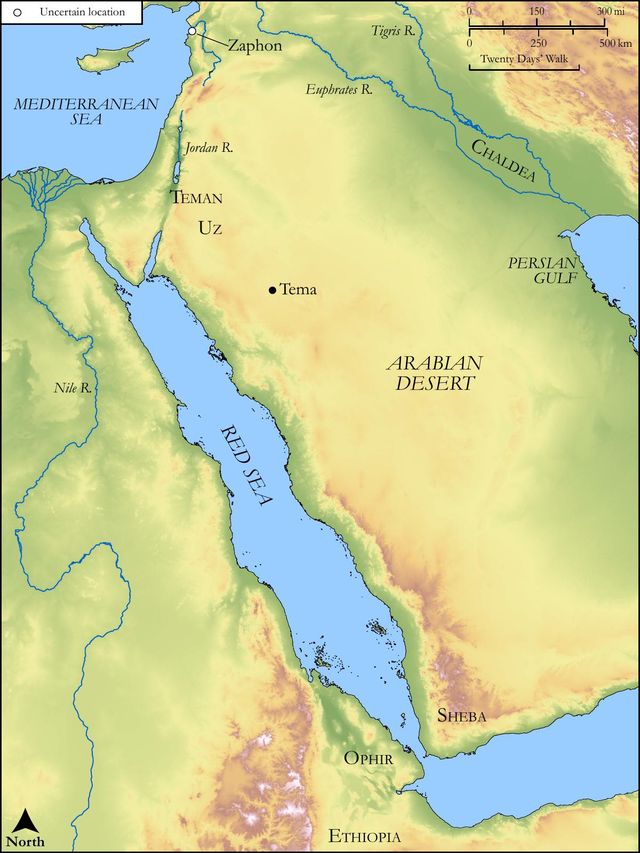
The Book of Job is set in the land of Uz, a region likely in Edom or northern Arabia, reflecting a patriarchal, pre-Mosaic era. The imagery of plants, agriculture, and the land was deeply resonant in the lands of the patriarchs, where life was intimately tied to the land's fertility and the availability of water. A plant with "roots wrapped about the heap" and "seeth the place of stones" would immediately evoke a picture of a plant struggling in barren, rocky, or unstable ground. This contrasts sharply with the ideal of a tree "planted by streams of water" (as beautifully depicted in Psalm 1:3). Such an environment, characterized by "stones" and "heaps" of debris, symbolized desolation, instability, and lack of sustenance, a stark contrast to the verdant imagery associated with divine blessing and prosperity. This cultural understanding profoundly underscores the precariousness of the plant's existence and, by extension, the precariousness of the wicked person's apparent success.
Key Themes
ShowHideJob 8:17 powerfully contributes to several overarching themes within the Book of Job and broader biblical wisdom literature. Firstly, it highlights the Fleeting Nature of Ungodly Prosperity, asserting that any success not rooted in righteousness is ultimately unstable and temporary, contrasting sharply with the enduring nature of true blessing. Secondly, the verse underscores the theme of Superficiality versus True Rootedness, emphasizing that outward appearances of flourishing can mask an inner lack of substance and a precarious foundation. The "heap" and "place of stones" symbolize an infertile and unstable environment, representing a life devoid of genuine spiritual or moral grounding. Finally, from Bildad's perspective, this verse reinforces the theme of Divine Retribution and Justice, albeit through a narrow and ultimately incomplete lens. He believes God's justice inevitably exposes and dismantles the prosperity of the wicked, even if it appears to thrive for a season, thereby justifying Job's suffering as a consequence of sin—a view the book ultimately challenges. These themes are echoed throughout wisdom literature, such as in Proverbs 11:28 or Psalm 73.
Exposition and Analysis
ShowHideKey Word Analysis
ShowHideThis term refers to "something rolled, i.e. a heap of stone or dung (plural ruins), by analogy, a spring of water (plural waves)." In this context, it vividly conveys an unstable, unfertile, and often desolate environment. It is not rich, life-giving soil but rather a collection of loose, unproductive material, symbolizing a foundation that offers no true security or sustenance. The roots' "wrapping about" such a heap suggests a desperate, superficial clinging rather than a deep, nourishing penetration.
This primitive root means "to gaze at; mentally to perceive, contemplate (with pleasure); specifically, to have a vision of." The anthropomorphic application of "seeing" to the plant emphasizes its precarious existence. It implies an awareness of its barren surroundings, highlighting the futility of its superficial attachment and its inability to find genuine sustenance or stability in such an unyielding setting.
This term refers to "a stone." When combined with "place" (Hebrew, bayith' from H1004, meaning "house" or "place"), "place of stones" reinforces the imagery of a rocky, barren, and inhospitable environment. It speaks of a landscape where life struggles to take hold, devoid of the fertile earth necessary for robust growth. The presence of stones signifies an unyielding, unfertile ground, incapable of supporting deep, enduring life.
Verse Breakdown
ShowHide"His roots are wrapped about the heap"
This clause paints a vivid picture of a plant whose root system, instead of penetrating deep into rich, stable soil, merely clings to or superficially coils around a pile of loose stones or debris. The Hebrew root for "wrapped about" (H5440, çâbak') means "to entwine" or "fold together," underscoring the plant's desperate inability to find true purchase. This imagery symbolizes a life built on a precarious, unstable foundation, lacking genuine depth, security, or intrinsic nourishment. It speaks to a superficial connection to temporary or inadequate resources, destined for instability.
"[and] seeth the place of stones"
This second clause complements the first by further emphasizing the barrenness and desolation of the plant's environment. The plant "seeing" the "place of stones" (a rocky, infertile area) highlights its awareness of its own precarious position and the lack of vital sustenance around it. It is surrounded by an environment incapable of sustaining deep, enduring life. This vividly portrays the unrighteous person's apparent prosperity as being situated in a context that is fundamentally hostile to true, lasting vitality, foreshadowing its inevitable decline and ultimate futility.
Literary Devices
ShowHideJob 8:17 is rich in Imagery and Metaphor, which are central to Bildad's argument. The entire verse functions as an extended Metaphor where the wicked person's apparent, fleeting prosperity is likened to a plant. This plant, despite outward appearances of growth, possesses roots that are precariously "wrapped about the heap" and "seeth the place of stones." This botanical imagery creates a vivid mental picture of instability and superficiality. The "heap" and "place of stones" serve as powerful Symbols of an unstable, infertile, and ultimately unsustainable foundation, representing a life built on unrighteousness or lacking true spiritual depth. The Anthropomorphism of the plant "seeing" its environment further emphasizes its precarious situation and awareness of its impending doom. The stark contrast between the outward appearance of life and the inner reality of precariousness is a key element of this metaphorical comparison, effectively conveying Bildad's message about the transient nature of the wicked's success.
Theological and Thematic Connections
ShowHideJob 8:17, while part of Bildad's flawed theological framework, powerfully illustrates the biblical theme of the critical importance of a solid foundation for life and faith. It serves as a potent warning against the deceptive nature of superficial prosperity that lacks deep, spiritual roots. True flourishing, from a comprehensive biblical perspective, is not merely outward success or material gain, but an inner vitality and stability derived from a genuine, abiding connection to God and His truth. The transient nature of the plant rooted in stones serves as a stark contrast to the enduring stability and fruitfulness promised to those whose lives are grounded in righteousness and divine wisdom. This concept resonates throughout Scripture, emphasizing that ultimate security, lasting blessing, and true sustenance come from God alone, not from fleeting worldly achievements or possessions.
Reflection and Application
ShowHideJob 8:17 challenges us to critically examine the foundations upon which we are building our lives. Are our "roots" deeply embedded in the fertile soil of God's Word, His unchanging character, and His enduring promises, or are we merely clinging to the "heap" of transient worldly successes, superficial relationships, or fleeting pleasures? This verse serves as a potent reminder that outward appearances can be deceptive; true stability and lasting fruitfulness come from an internal, spiritual rootedness that can withstand the inevitable storms and seasons of life. It calls us to cultivate a life of integrity, authenticity, and deep dependence on God, rather than pursuing a superficial prosperity that is ultimately destined to wither. Our spiritual health and longevity are directly proportional to the depth and quality of our roots.
Questions for Reflection
ShowHideFAQ
ShowHideDoes Job 8:17 mean that all suffering is a direct result of sin?
ShowHideNo, not necessarily. While Bildad, in Job 8:17 and his broader discourse, argues from a traditional perspective that suffering is a direct consequence of sin, the Book of Job as a whole ultimately challenges and refutes this simplistic view. Job's suffering is explicitly shown to be not a result of his sin, but rather part of a divine test. The verse uses a metaphor to illustrate the fleeting nature of the wicked person's prosperity, not to provide a universal explanation for suffering. The book teaches that God's ways are more complex than human wisdom can fully grasp, and suffering can have multiple purposes beyond mere punishment, as profoundly illustrated in Job 1:8-12.
What is the significance of the plant "seeing" the place of stones?
ShowHideThe plant "seeing" the place of stones (KJV "seeth the place of stones") is a powerful anthropomorphic detail that emphasizes the plant's precarious and ultimately doomed situation. It suggests an almost conscious awareness of its barren surroundings, highlighting the futility of its superficial attachment. The plant is not deeply rooted in nourishing soil but is surrounded by an environment that offers no life or stability. This imagery underscores the idea that the wicked person's apparent prosperity is inherently unstable and exists within a context that is fundamentally hostile to true, lasting vitality, thereby foreshadowing its inevitable decline, as described in Job 8:18-19.
How does this verse relate to the concept of "building on a solid foundation"?
ShowHideJob 8:17 serves as a negative example, powerfully illustrating the critical importance of building on a solid foundation. The plant's roots are "wrapped about the heap" and it "seeth the place of stones," symbolizing a foundation that is unstable, infertile, and ultimately incapable of sustaining life. This contrasts sharply with the biblical teaching of building one's life on a firm, enduring foundation, most notably found in Jesus' parable of the wise and foolish builders in Matthew 7:24-27. The wise builder builds on rock, enduring the storms, while the foolish builder builds on sand, leading to collapse. Job 8:17 vividly depicts the "sand" or "heap" of worldly instability that cannot endure.
Christ-Centered Fulfillment
ShowHideWhile Job 8:17, spoken by Bildad, describes the precariousness of the wicked's superficial prosperity, its imagery finds profound Christ-centered fulfillment in the person and work of Jesus. Jesus is the ultimate "true vine" (as He Himself declared in John 15:1), the singular source of all genuine life and fruitfulness, standing in stark contrast to the plant with roots clinging to a "heap" of stones. He is the solid rock upon whom we are called to build our lives, as taught in the transformative parable of the wise and foolish builders (see Matthew 7:24-25). Unlike the unstable "place of stones" that promises no true sustenance, Jesus offers "living water" (as He told the Samaritan woman in John 4:10-14), ensuring that those rooted in Him will never thirst. The New Testament continually calls believers to be "rooted and built up in him" (Colossians 2:7), emphasizing that true spiritual vitality, unwavering stability, and enduring prosperity come only from a deep, abiding connection to Christ, who is the very foundation and substance of all genuine life. His sacrificial death on the cross removed the "stony ground" of sin and unrighteousness, making possible a new life of deep rootedness in God's grace and truth, a life that truly flourishes.