


Genesis 45:24
Bible text: King James Version (1769 Blayney text) · Public domain
Bible text: Berean Standard Bible · Public domain
Bible text: American Standard Version (1901) · Public domain
Bible text: World English Bible, Messianic edition · Public domain
Bible text: Geneva Bible (1599) · Public domain
Bible text: Young's Literal Translation · Public domain
- וַיְשַׁלַּחvay·sha·Lachand he sent offH7971Conj-w ¦ V-Piel-ConsecImperf-3msVerb Piel Consecutive Imperfect 3rd Singular Masculineוַandיְשַׁלַּחhe sent off
- אֶת'et<obj.>H853DirObjMParticle Object Indicator
- אֶחָיו'e·Chavhis brothersH251N-mpc ¦ 3msNoun Plural Masculine Constructאֶחָיbrothersוhis
- וַיֵּלֵכוּvai·ye·Le·khuand they wentH1980Conj-w ¦ V-Qal-ConsecImperf-3mpVerb Qal Consecutive Imperfect 3rd Plural Masculineוַandיֵּלֵכוּthey went
- וַיֹּאמֶרvai·Yo·merand he saidH559Conj-w ¦ V-Qal-ConsecImperf-3msVerb Qal Consecutive Imperfect 3rd Singular Masculineוַandיֹּאמֶרhe said
- אֲלֵהֶם'a·le·Hemto themH413Prep ¦ 3mpPrepositionאֲלֵtoהֶםthem
- אַל'almay notH408NegParticle Negative
- תִּרְגְּזוּtir·ge·Zuyou stir upH7264V-Qal-Imperf-2mpVerb Qal Imperfect 2nd Plural Masculine
- בַּדָּרֶךְba·Da·rekhon the wayH1870Prep-b ¦ N-csNoun Singular common gender Absoluteבַּon theדָּרֶךְway
English is a literal word-by-word gloss of the Hebrew, not the KJV's wording. Why?
This is the original text the KJV's translators worked from — each Hebrew word with its own literal English meaning in this verse, prepared by scholars at Tyndale House, Cambridge. The KJV translates whole sentences, not word by word, so its wording differs: one Hebrew word can become several English words, and the KJV may choose “the LORD” where the gloss reads “Yahweh”. Both are faithful — they answer different questions. For the KJV's own rendering, switch to the KJV text.
Details
See on the biblical-era maps


Study this verse
Public-domain commentary
Matthew Henry
From his Commentary on the Whole Bible. Henry comments on passages, not single verses — this entry covers Genesis 45:16–24. His three-level outline is real structure in the source text, so it is rendered as structure.
Here is, 1. The kindness of Pharaoh to Joseph, and to his relations for his sake: he bade his brethren welcome (Gen 45:16), though it was a time of scarcity, and they were likely to be a charge to him. Nay, because it pleased Pharaoh, it pleased his servants too, at least they pretended to be pleased because Pharaoh was. He engaged Joseph to send for his father down to Egypt, and promised to furnish them with all conveniences both for his removal thither and his settlement there. If the good of all the land of Egypt (as it was not better stocked than any other land, thanks to Joseph, under God) would suffice him, he was welcome to it all, it was all his own, even the fat of the land (Gen 45:18), so that they need not regard their stuff, Gen 45:20. What they had in Canaan he reckoned but stuff, in comparison with what he had for them in Egypt; and therefore if they should be constrained to leave some of that behind them, let them not be discontented; Egypt would afford them enough to make up the losses of their removal. Thus those for whom Christ intends shares in his heavenly glory ought not to regard the stuff of this world: The best of its enjoyments are but stuff, but lumber; we cannot make sure of it while we are here, much less can we carry it away with us; let us not therefore be solicitous about it, nor set our eyes or hearts upon it. There are better things reserved for us in that blessed land whither our Joseph has gone to prepare a place.
II.The kindness of Joseph to his father and brethren.
Pharaoh was respectful to Joseph, in gratitude, because he had been an instrument of much good to him and his kingdom, not only preserving it from the common calamity, but helping to make it considerable among the nations; for all their neighbours would say, "Surely the Egyptians are a wise and an understanding people, that are so well stocked in a time of scarcity." For this reason Pharaoh never thought any thing too much that he could do for Joseph. Note, There is a gratitude owing even to inferiors; and when any have shown us kindness we should study to requite it, not only to them, but to their relations. And Joseph likewise was respectful to his father and brethren in duty, because they were his near relations, though his brethren had been his enemies, and his father long a stranger.
1.He furnished them for necessity, Gen 45:21. He gave them wagons and provisions for the way, both going and coming; for we never find that Jacob was very rich, and, at this time, when the famine prevailed, we may suppose he was rather poor.
2.He furnished them for ornament and delight. To his brethren he gave two suits a piece of good clothes, to Benjamin five suits, and money besides in his pocket, Gen 45:22. To his father he sent a very handsome present of the varieties of Egypt, Gen 45:23. Note, Those that are wealthy should be generous, and devise liberal things; what is an abundance good for, but to do good with it?
3.He dismissed them with a seasonable caution: See that you fall not out by the way, Gen 45:24. He knew they were but too apt to be quarrelsome; and what had lately passed, which revived the remembrance of what they had done formerly against their brother, might give them occasion to quarrel. Joseph had observed them to contend about it, Gen 42:22. To one they would say, "It was you that first upbraided him with his dreams;" to another, "It was you that stripped him of his fine coat;" to another, "It was you that threw him into the pit," etc. Now Joseph, having forgiven them all, lays this obligation upon them, not to upbraid one another. This charge our Lord Jesus has given to us, that we love one another, that we live in peace, that whatever occurs, or whatever former occurrences are remembered, we fall not out. For,
(1.)We are brethren, we have all one Father.
(2.)We are his brethren, and we shame our relation to him who is our peace, if we fall out.
(3.)We are guilty, verily guilty, and, instead of quarrelling with one another, have a great deal of reason to fall out with ourselves.
(4.)We are, or hope to be, forgiven of God whom we have all offended, and therefore should be ready to forgive one another.
(5.)We are by the way, a way that lies through the land of Egypt, where we have many eyes upon us, that seek occasion and advantage against us, a way that leads to Canaan, where we hope to be for ever in perfect peace.
Historical interpretation
Historical reception
3 surviving comments on this verse. Each one is dated, so this reads as a timeline rather than a list.
Select a marker to jump to its quote. Markers stagger vertically where authors wrote within a few decades of each other.
Joseph commanded them not to quarrel on the way. The quarrel which he forbade them was that one say to another, “It was you who counseled us to throw him into the pit,” while another would contend with his brother, saying, “It was you who urged us to sell him naked and in chains to the Arabs.” “As I have forgiven all of you, you forgive each other.”
Now “he sent away his brothers, and they departed. And Joseph said to them, ‘Be not angry on the way.’ ” How well he teaches us to guard against anger, for that can separate even brothers who love one another.… Is this not what our Lord Jesus said when he was about to depart from this body, when he was sending away his disciples, that they should not be angry on the way? For he says, “Peace I leave with you, my peace I give to you.” For where there is peace, wrath does not have place, discord is removed, dissension routed. And so this is what he is saying, “My peace I give to you,” that is, “Be not angry on the way.” … On this account also, when the Lord Jesus sent away his disciples to preach the gospel, he sent them without gold, without silver, without money, without a staff, and he did it so that he might remove incentives to quarreling and the tools of vengeance.
Hence to allay their ill feeling and hostility to one another, Joseph said, “Don’t squabble on the way,” but rather remember that I hold no grudge against you for what was done to me, and be kindly disposed to one another. Who could adequately admire the virtue of this good man who fulfilled in generous measure the moral values of the New Testament? What Christ recommends to the apostles in these words, “Love your enemies; pray for those who abuse you,” this man even surpassed. I mean, not only did he give evidence of such wonderful love for those who did away with him as far as they could, but he did everything to convince them that they had not sinned against him. O what extraordinary good sense! O what marvelous degree of sound values and generosity of love for God! “Surely it was not you who did this against me,” he is saying, you see. “It was God’s care for me that permitted this to happen so as to guarantee the realization of my dreams and so that I might prove an adequate occasion of survival for you.”
Continue studying Genesis 45:24 across the web’s major study libraries — every link below opens this exact verse, chapter, or book on the destination site.
Read & Compare
 BibleGatewayThis verse in more than 200 translations and 70 languages.
 Bible.comThe YouVersion reader — hundreds of translations, reading plans, and highlights.
 ESV.orgCrossway's official English Standard Version reader.
 NET BibleThe NET translation with 60,000+ translators' notes on every rendering decision.
 STEP BibleTyndale House's free study tool — original text, vocabulary, and scholarly resources.
 BibliaLogos Bible Software's free web reader.
 USCCBThe New American Bible (Revised Edition) with the U.S. bishops' study notes.
Commentaries
 BibleHub CommentariesDozens of classic commentaries on this verse, gathered on one page.
 StudyLightMore than 100 commentary sets — the largest collection on the web.
 BibleRefPlain-English commentary on what this verse means, verse by verse.
 Enduring WordDavid Guzik's free commentary on this chapter, widely used by Bible teachers.
 Bible Study ToolsVerse commentary alongside Greek and Hebrew study aids.
Original Language & Research
- BibleHub InterlinearThe verse word by word — original language, transliteration, and English.
- BibleHub LexiconEvery word's original-language definition and Strong's entry.
 Blue Letter BibleDeep-study tools — Strong's numbers, concordance, and word studies.
 SefariaThe Hebrew text with Rashi and centuries of Jewish commentary.
Sermons, Hymns & Audio


TrulyRandomVerse is not affiliated with these sites and doesn’t control their content. They’re linked because they’re genuinely useful.
Summary
After the profound revelation of his identity and the emotional reconciliation with his brothers, Joseph sends them back to Canaan with a crucial final instruction: "See that ye fall not out by the way." This admonition, delivered as they embarked on the significant journey to bring Jacob and their families to Egypt, underscores Joseph's deep desire for enduring unity, peace, and mutual trust within his family, guarding against any renewed strife, fear, or recrimination that could jeopardize their mission and the fragile reconciliation they had just experienced.
Context
ShowHideLiterary Context
Genesis 45:24 immediately follows the dramatic and deeply emotional reunion between Joseph and his brothers. In the preceding verses (Genesis 45:1-15), Joseph, now the powerful governor of Egypt, reveals his true identity to his astonished and terrified brothers. He quickly reassures them, attributing their actions to God's sovereign plan to preserve life (Genesis 45:5-8). Pharaoh himself confirms this plan, inviting Jacob and his entire household to settle in Egypt and enjoy the best of the land (Genesis 45:16-20). Joseph then provides them with wagons, provisions, and changes of clothes for their journey back to Canaan to retrieve their father and families. As they depart, this final instruction serves as a poignant and practical capstone to the intense reconciliation, emphasizing the need to maintain the newly restored peace on their critical journey.
Historical & Cultural Context
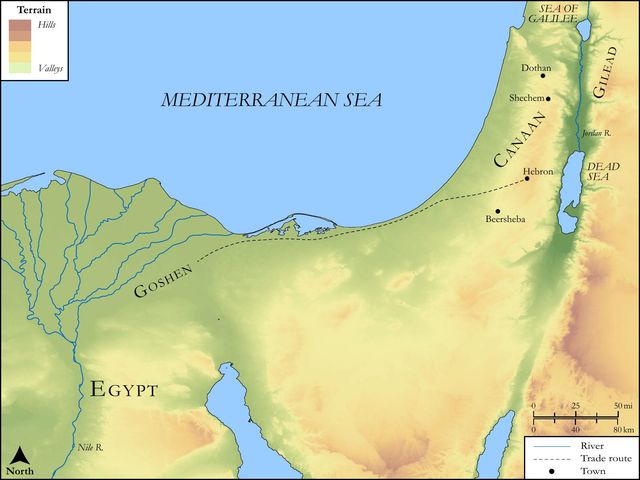
The journey from Egypt back to Canaan was a significant undertaking, covering a considerable distance through potentially challenging terrain. Travel in ancient times was often arduous, requiring cooperation and vigilance. Furthermore, the family dynamics of Jacob's household had historically been fraught with tension, jealousy, and betrayal, culminating in Joseph's sale into slavery (Genesis 37:18-28). The brothers carried the heavy burden of their past sin, and the recent emotional upheaval of Joseph's revelation, while bringing reconciliation, could easily reignite old wounds or anxieties. Joseph's warning reflects an understanding of human nature and the specific history of his family, recognizing that the stresses of the journey combined with lingering guilt or suspicion could lead to renewed conflict, jeopardizing the success of their vital mission to bring their father and the entire family to safety in Egypt during the severe famine.
Key Themes
ShowHideThis verse contributes significantly to several overarching themes within Genesis and the broader biblical narrative. It highlights the theme of reconciliation and forgiveness, demonstrating that true reconciliation requires ongoing effort to maintain peace and prevent the resurgence of past grievances. It underscores divine providence in human affairs, as Joseph consistently attributes the events to God's overarching plan for preservation, yet couples this with the human responsibility to act in unity. The instruction also touches upon the theme of family unity as foundational to the covenant people, foreshadowing the importance of communal harmony for God's chosen nation. Furthermore, it subtly introduces the concept of the journey of faith, where the "way" represents not just a physical path but the course of life, requiring believers to guard against discord as they pursue God's purposes, echoing later biblical calls for peace among God's people, such as those found in Psalm 133:1.
Exposition and Analysis
ShowHideKey Word Analysis
ShowHideThis word signifies not merely dispatching but often implies sending with a purpose or mission. Joseph "sent away" his brothers, not just dismissing them, but commissioning them for the vital task of bringing their father and families to Egypt. This purposeful sending underscores the importance of their journey and the need for unity in its execution.
This primitive root conveys a strong sense of quivering, agitation, or trembling, often associated with violent emotion like anger, fear, or rage. The negative command "אל תרגזו" (al tirgəzû) is a powerful injunction against becoming agitated, quarreling, or giving way to fear or internal strife. It encompasses both emotional turmoil and its outward manifestation in conflict, urging them to maintain composure and peace.
While literally meaning a "road" or "path," derek frequently extends figuratively to denote a "course of life" or "mode of action." In this context, it refers not only to the physical journey back to Canaan but also implicitly to the broader "way" of their restored relationship and future interactions as a family, emphasizing the need for peace and unity throughout their shared existence.
Verse Breakdown
ShowHide"So he sent his brethren away, and they departed"
This clause describes the immediate action following Joseph's instructions and provisions. Joseph, having fulfilled his role as host and reconciler, formally dismisses his brothers, commissioning them for their return journey. The phrase "they departed" signifies their immediate obedience and the commencement of their crucial mission.
"and he said unto them, See that ye fall not out by the way"
This is Joseph's final, direct admonition. The imperative "See that ye" (implied in the Hebrew negative command) emphasizes the seriousness and urgency of his warning. The core of the instruction, "fall not out," directly addresses the potential for discord, agitation, or quarreling. "By the way" specifies the context—the journey itself—but also extends metaphorically to their ongoing interactions and the path of their restored family life. Joseph's concern is that the emotional weight of their past and present circumstances does not lead to renewed conflict or recrimination among them.
Literary Devices
ShowHideJoseph's instruction employs several literary devices. The primary device is Admonition, a strong warning or counsel against a specific behavior, highlighting the practical wisdom and foresight of Joseph as a leader. This admonition also functions as Foreshadowing, subtly hinting at the potential for discord that could arise from the brothers' deep-seated guilt and past trauma, even after reconciliation. The phrase "by the way" serves as a form of Symbolism, representing not only the literal physical journey but also the metaphorical journey of their lives and their restored family relationships. It implies that the principles of unity and peace are essential for navigating any shared path, whether physical or relational. The directness of the command, "See that ye fall not out," provides a stark Contrast to the earlier period of intense familial strife, underscoring the preciousness of the newly found peace.
Theological and Thematic Connections
ShowHideJoseph's instruction transcends a simple practical warning, offering profound theological insights into the nature of reconciliation and human responsibility within God's sovereign plan. While God orchestrates events for good (Genesis 50:20), human beings are still called to actively participate in maintaining peace and unity, especially after forgiveness has been extended. This verse highlights that true reconciliation is not merely an event but an ongoing process requiring intentional effort to prevent old wounds from festering or new conflicts from arising. It underscores the fragility of restored relationships and the constant need for grace, patience, and mutual respect. This commitment to unity among God's people is a recurring theme throughout Scripture, emphasizing that internal harmony is crucial for the flourishing of the community and the effective pursuit of God's purposes.
Reflection and Application
ShowHideJoseph's simple yet profound instruction to his brothers resonates deeply with the challenges of maintaining peace and unity in all human relationships, particularly within families, communities, and the church. Reconciliation, whether with a family member, a friend, or a fellow believer, is a precious gift that requires diligent cultivation. We are called to actively guard against the resurgence of old resentments, to choose peace over conflict, and to extend grace and patience to one another, especially when navigating life's challenging "ways"—be it a difficult season, a shared project, or the daily grind. Just as the brothers had a vital mission to bring their father to safety, believers are called to unity as they pursue God's purposes in the world. Internal strife can distract from, hinder, and even derail the work to which God has called us. This verse serves as a timeless reminder that our journey of faith is best walked in harmony, bearing one another's burdens and actively seeking to preserve the bond of peace.
Questions for Reflection
ShowHideFAQ
ShowHideWhy was Joseph so concerned about his brothers quarreling?
ShowHideJoseph's concern stemmed from a deep understanding of his family's tumultuous history and the psychological impact of their recent reconciliation. Their past was marked by profound jealousy, betrayal, and a near-murderous plot against him (Genesis 37). Even though reconciliation had occurred, the emotional intensity of Joseph's revelation, coupled with the long, arduous journey back to Canaan and the ongoing stress of the famine, created fertile ground for old wounds to resurface. Joseph desired to preserve the fragile peace he had initiated, prevent renewed accusations or self-recrimination among them, and ensure their safe and harmonious arrival with Jacob, which was crucial for the family's survival and the fulfillment of God's plan.
Does "fall not out by the way" only apply to families?
ShowHideWhile Joseph's instruction was specifically given to his family, its wisdom is universally applicable. The phrase "by the way" can be understood metaphorically as life's journey, and the admonition against "falling out" applies to any group undertaking a shared purpose. This includes churches, communities, teams, or even marriages. It underscores the importance of unity, patience, mutual respect, and forgiveness in all relationships to achieve common goals, maintain peace, and avoid unnecessary conflict that can hinder progress or cause distress. The principle is a timeless call to harmonious living.
How does this verse relate to Christian unity today?
ShowHideThis verse serves as a powerful Old Testament precursor to the New Testament's consistent emphasis on Christian unity. Just as Joseph sought to prevent discord among his reconciled brothers, Christ and the apostles repeatedly call believers to live in peace and harmony, avoiding division and strife (1 Corinthians 1:10). The church, as the family of God, is on a shared journey of faith, and internal conflict can severely impede its witness and mission. Ephesians 4:1-3 explicitly calls believers to "walk worthy of the calling with which you were called, with all humility and gentleness, with longsuffering, bearing with one another in love, endeavoring to keep the unity of the Spirit in the bond of peace." Joseph's warning reminds us that maintaining unity requires intentional effort, forgiveness, and a focus on our common purpose in Christ.
Christ-Centered Fulfillment
ShowHideJoseph's role in Genesis 45:24 as a reconciler, provider, and peacemaker for his estranged brothers profoundly foreshadows the redemptive work of Jesus Christ. Just as Joseph, though wronged, freely forgave his brothers and brought them into a place of safety and abundant provision in Egypt, so too does Jesus Christ, the ultimate Lamb of God, forgive humanity's sins against God and reconcile us to the Father through His atoning sacrifice (2 Corinthians 5:18-19). Joseph's command to "fall not out by the way" anticipates Christ's own fervent prayers and commands for unity among His disciples (John 17:20-23), emphasizing that the peace He bestows is not merely an absence of conflict but a divine unity to be actively pursued and guarded by His followers. As believers journey through this world, they are called to live in harmony, reflecting the reconciliation they have received in Christ and bearing witness to His transformative power, thus fulfilling the desire for unity that Joseph expressed for his earthly family.