


Genesis 41:35
Bible text: King James Version (1769 Blayney text) · Public domain
Bible text: King James Version with Strong's numbers · Public domain
Bible text: Berean Standard Bible · Public domain
Bible text: American Standard Version (1901) · Public domain
Bible text: World English Bible, Messianic edition · Public domain
Bible text: Geneva Bible (1599) · Public domain
Bible text: Young's Literal Translation · Public domain
- וְיִקְבְּצוּve·yik·be·Tzuand let them gatherH6908Conj-w ¦ V-Qal-ConjImperf-3mpVerb Qal Conjunction+Imperfect 3rd Plural Masculineוְandיִקְבְּצוּlet them gather
- אֶת'et<obj.>H853DirObjMParticle Object Indicator
- כָּלkolallH3605N-mscNoun Singular Masculine Construct
- אֹכֶל'o·khel[the] food ofH400N-mscNoun Singular Masculine Construct
- הַשָּׁנִיםha·sha·Nimthe yearsH8141Art ¦ N-mpNoun Plural Masculine Absoluteהַtheשָּׁנִיםyears
- הַטֹּבֹתha·to·Vot<the> goodH2896Art ¦ Adj-fpAdjective Plural Feminine Absoluteהַ<the>טֹּבֹתgood
- הַבָּאֹתha·ba·'Otthat are comingH935Art ¦ V-Qal-Prtcpl-fpVerb Qal Participle Plural Feminine Absoluteהַthatבָּאֹתare coming
- הָאֵלֶּהha·'E·leh<the> theseH428Art ¦ PrtParticle Demonstrativeהָ<the>אֵלֶּהthese
- וְיִצְבְּרוּve·yitz·be·ruand let them store upH6651Conj-w ¦ V-Qal-ConjImperf-3mpVerb Qal Conjunction+Imperfect 3rd Plural Masculineוְandיִצְבְּרוּlet them store up
- בָרvargrainH1250N-msNoun Singular Masculine Absolute
- תַּחַתTa·chatunderH8478N-mscNoun Singular Masculine Construct
- יַדyad[the] hand ofH3027N-cscNoun Singular common gender Construct
- פַּרְעֹהpar·'OhPharaohH6547N-msNoun Title Singular Masculine Absolute
- אֹכֶל'O·khelfoodH400N-msNoun Singular Masculine Absolute
- בֶּעָרִיםbe·'a·Rimin the citiesH5892Prep-b ¦ N-mpNoun Plural Masculine Absoluteבֶּin theעָרִיםcities
- וְשָׁמָרוּve·sha·Ma·ruand they will keep [it]H8104Conj-w ¦ V-Qal-ConsecPerf-3cpVerb Qal Consecutive Perfect 3rd Plural common genderוְandשָׁמָרוּthey will keep [it]
English is a literal word-by-word gloss of the Hebrew, not the KJV's wording. Why?
This is the original text the KJV's translators worked from — each Hebrew word with its own literal English meaning in this verse, prepared by scholars at Tyndale House, Cambridge. The KJV translates whole sentences, not word by word, so its wording differs: one Hebrew word can become several English words, and the KJV may choose “the LORD” where the gloss reads “Yahweh”. Both are faithful — they answer different questions. For the KJV's own rendering, switch to the KJV text.
Details
See on the biblical-era maps


Study this verse
Public-domain commentary
Matthew Henry
From his Commentary on the Whole Bible. Henry comments on passages, not single verses — this entry covers Genesis 41:33–45. His four-level outline is real structure in the source text, so it is rendered as structure.
Here is, I. The good advice that Joseph gave to Pharaoh, which was, 1. That in the years of plenty he should lay up for the years of famine, buy up corn when it was cheap, that he might both enrich himself and supply the country when it would be dear and scarce. Note, Fair warning should always be followed with good counsel. Therefore the prudent man foresees the evil, that he may hide himself. God has in his word told us of a day of trial and exigence before us, when we shall need all the grace we can get, and all little enough, "Now, therefore, provide accordingly." Note, further, Times of gathering must be diligently improved, because there will come a time of spending. Let us go to the ant, and learn of her this wisdom, Pro 6:6-8. 2. Because that which is everybody's work commonly proves nobody's work, he advises Pharaoh to appoint officers who should make it their business, and to select some one person to preside in the affair, Gen 41:33. Probably, if Joseph had not advised this, it would not have been done; Pharaoh's counsellors could no more improve the dream than his magicians interpret it; therefore it is said of him (Psa 105:22) that he taught the senators wisdom. Hence we may justly infer with Solomon (Ecc 4:13), Better is a poor and a wise child than an old and foolish king.
II.The great honour that Pharaoh did to Joseph.
1.He gave him an honourable testimony: He is a man in whom the Spirit of God is; and this puts a great excellency upon any man; such men ought to be valued, Gen 41:38. He is a nonsuch for prudence: There is none so discreet and wise as thou art, Gen 41:39. Now he is abundantly recompensed for the disgrace that had been done him; and his righteousness is as the morning light, Psa 37:6.
2.He put him into an honourable office; not only employed him to buy up corn, but made him prime-minister of state, comptroller of the household - Thou shalt be over my house, chief justice of the kingdom - according to thy word shall all my people be ruled, or armed, as some read it, and then it bespeaks him general of the forces. Him commission was very ample: I have set thee over all the land of Egypt (Gen 41:41); without thee shall no man life up his hand or foot (Gen 41:44); all the affairs of the kingdom must pass through his hand. Nay (Gen 41:40), only in the throne will I be greater than thou. Note, It is the wisdom of princes to prefer those, and the happiness of people to have those preferred, to places of power and trust, in whom the Spirit of God is. It is probable that there were those about the court who opposed Joseph's preferment, which occasioned Pharaoh so often to repeat the grant, and with that solemn sanction (Gen 41:44), I am Pharaoh. When the proposal was made that there should be a corn-master-general nominated, it is said (Gen 41:37), Pharaoh's servants were all pleased with the proposal, each hoping for the place; but when Pharaoh said to them, "Joseph shall be the man," we do not read that they made him any answer, being uneasy at it, and acquiescing only because they could not help it. Joseph had enemies, no doubt, archers that shot at him, and hated him (Gen 49:23), as Daniel, Dan 6:4.
3.He put upon him all the marks of honour imaginable, to recommend him to the esteem and respect of the people as the king's favourite, and one whom he delighted to honour.
(1.)He gave him his own ring, as a ratification of his commission, and in token of peculiar favour; or it was like delivering him the great seal.
(2.)He put fine clothes upon him, instead of his prison garments. For those that are in kings' palaces must wear soft clothing; he that, in the morning, was dragging his fetters of iron, before night was adorned with a chain of gold.
(3.)He made him ride in the second chariot to his own, and ordered all to do homage to him: "Bow the knee, as to Pharaoh himself." (4.) He gave him a new name, to show his authority over him, and yet such a name as bespoke the value he had for him, Zaphnathpaaneah - A revealer of secrets. (5.) He married him honourably to a prince's daughter. Where God had been liberal in giving wisdom and other merits, Pharaoh was not sparing in conferring honours. Now this preferment of Joseph was,
[1.]An abundant recompense for his innocent and patient suffering, a lasting instance of the equity and goodness of Providence, and an encouragement to all good people to trust in a good God.
[2.]It was typical of the exaltation of Christ, that great revealer of secrets (Joh 1:18), or, as some translate Joseph's new name, the Saviour of the world. The brightest glories of the upper world are put upon him, the highest trust is lodged in his hand, and all power is given to him both in heaven and earth. He is gatherer, keeper, and disposer, of all the stores of divine grace, and chief ruler of the kingdom of God among men. The work of minsters is to cry before him, "Bow the knee; kiss the Son."
Continue studying Genesis 41:35 across the web’s major study libraries — every link below opens this exact verse, chapter, or book on the destination site.
Read & Compare
 BibleGatewayThis verse in more than 200 translations and 70 languages.
 Bible.comThe YouVersion reader — hundreds of translations, reading plans, and highlights.
 ESV.orgCrossway's official English Standard Version reader.
 NET BibleThe NET translation with 60,000+ translators' notes on every rendering decision.
 STEP BibleTyndale House's free study tool — original text, vocabulary, and scholarly resources.
 BibliaLogos Bible Software's free web reader.
 USCCBThe New American Bible (Revised Edition) with the U.S. bishops' study notes.
Commentaries
 BibleHub CommentariesDozens of classic commentaries on this verse, gathered on one page.
 StudyLightMore than 100 commentary sets — the largest collection on the web.
 BibleRefPlain-English commentary on what this verse means, verse by verse.
 Enduring WordDavid Guzik's free commentary on this chapter, widely used by Bible teachers.
 Bible Study ToolsVerse commentary alongside Greek and Hebrew study aids.
Original Language & Research
- BibleHub InterlinearThe verse word by word — original language, transliteration, and English.
- BibleHub LexiconEvery word's original-language definition and Strong's entry.
 Blue Letter BibleDeep-study tools — Strong's numbers, concordance, and word studies.
 SefariaThe Hebrew text with Rashi and centuries of Jewish commentary.
Sermons, Hymns & Audio


TrulyRandomVerse is not affiliated with these sites and doesn’t control their content. They’re linked because they’re genuinely useful.
Summary
Genesis 41:35 presents Joseph's divinely inspired counsel to Pharaoh, outlining a meticulous strategy for national food security. This verse mandates the systematic collection and centralized storage of surplus grain during the seven predicted years of abundance, establishing a critical reserve designed to sustain Egypt and its inhabitants through the subsequent seven years of severe famine. Joseph's foresight and administrative genius, guided by God, were instrumental in preserving the nation from widespread devastation.
Context
ShowHideLiterary Context
This verse is a pivotal moment following Pharaoh's disturbing dreams of fat and lean cows, and full and withered ears of corn, which Joseph, by divine revelation, interprets as seven years of abundant harvest followed by seven years of devastating famine throughout Egypt (Genesis 41:29-31). Recognizing the profound wisdom and divine origin of Joseph's insights, Pharaoh elevates him from prison to the second most powerful position in Egypt, entrusting him with the implementation of a comprehensive national food security plan (Genesis 41:39-44). Verse 35 specifically details the practical, proactive first step of Joseph's strategic proposal: the systematic gathering and centralized storage of grain during the impending years of plenty. This immediate directive underscores the urgency and foresight required to avert future catastrophe.
Historical & Cultural Context
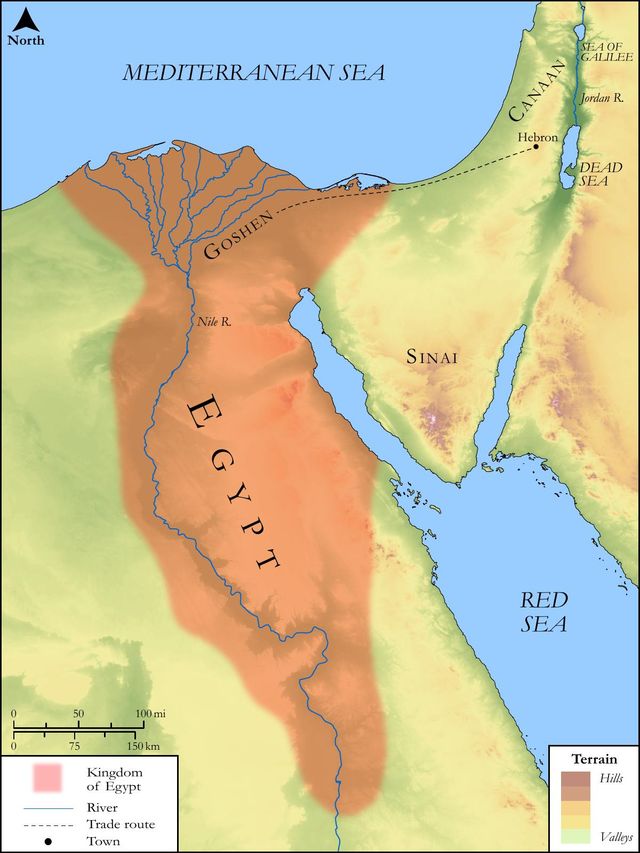
Ancient Egypt was an agrarian society whose prosperity was entirely dependent on the annual inundation of the Nile River. A consistent, predictable flood brought fertile silt, ensuring bountiful harvests. However, variations in the flood levels could lead to either excessive or insufficient water, resulting in famine or superabundance. The concept of storing grain in granaries was well-established in Egypt and the lands round about, a common practice for managing agricultural cycles. Pharaoh, as the divine king, held absolute authority over the land and its resources, making a centralized, top-down approach to food management both feasible and necessary for a national crisis of this scale. The "cities" mentioned would have included established administrative centers and potentially purpose-built granaries, reflecting the logistical infrastructure required for such an immense undertaking.
Key Themes
ShowHideGenesis 41:35 contributes significantly to several overarching themes within the book of Genesis and biblical theology. It powerfully illustrates Divine Providence, demonstrating how God sovereignly orchestrates events and uses human agents, even in pagan nations, to accomplish His purposes, ultimately preserving the lineage of Abraham. The verse also highlights Wisdom and Foresight, showcasing Joseph's divinely granted ability to not only interpret God's revelation but also to devise a practical, actionable plan for national survival. Furthermore, it underscores the principle of Stewardship and Resource Management, emphasizing the responsible handling of abundance as preparation for future scarcity. This proactive approach is a recurring biblical theme, seen in various contexts, such as the instructions for the Sabbath year and the Year of Jubilee in Leviticus 25. Finally, the passage exemplifies the critical role of Effective Leadership in times of crisis, as Pharaoh's willingness to heed Joseph's counsel and Joseph's own administrative prowess were essential for the plan's success.
Exposition and Analysis
ShowHideGenesis 41:35 presents the practical core of Joseph's divinely inspired strategy for Egypt's survival. The verse is a direct command, outlining a proactive and systematic approach to resource management.
Key Word Analysis
ShowHideMeaning "to grasp, i.e. collect; assemble (selves), gather (bring) (together, selves together, up), heap, resort, surely, take up." This word emphasizes a deliberate, comprehensive collection effort, not merely casual harvesting. It implies bringing together what is dispersed into a unified whole, highlighting the national and centralized nature of the task.
Meaning "good (as an adjective) in the widest sense; used likewise as a noun... beautiful, best, better, bountiful, cheerful, at ease... pleasant, precious, prosperity, ready, sweet, wealth, welfare, (be) well(-favoured)." This adjective describes the quality of the years, signifying not just adequate harvests but extraordinarily abundant, prosperous seasons, making the collection of surplus feasible and significant.
Meaning "a hand (the open one (indicating power, means, direction, etc.)... dominion, power, under." This phrase is an idiom signifying authority, control, and direct supervision. Placing the corn "under the hand of Pharaoh" means it was to be gathered and managed directly by the royal administration, ensuring a centralized, national effort rather than leaving it to individual farmers.
Verse Breakdown
ShowHide"And let them gather all the food of those good years that come"
This initial clause establishes the imperative for immediate and comprehensive action. "All the food" signifies the totality of the surplus, emphasizing that no part of the abundance should be wasted or overlooked. The phrase "those good years that come" highlights the foresight and proactive nature of the plan, stressing that the period of prosperity is not merely for immediate consumption but for strategic preparation for the future. This command underscores the principle of utilizing present blessings for future security.
"and lay up corn under the hand of Pharaoh"
This clause specifies the nature of the commodity and the authority under which it is to be managed. "Corn" in the King James Version refers broadly to any cereal grain, such as wheat or barley, which were staple crops in ancient Egypt. The directive to "lay up" (from H6651 tsâbar, meaning "to aggregate, heap up") indicates systematic storage, not just temporary holding. Crucially, "under the hand of Pharaoh" signifies a centralized, governmental initiative. This was not a task for individual farmers but a unified national effort, overseen by the highest authority, ensuring efficiency, equity, and the necessary scale for a national crisis. Joseph, as Pharaoh's chief administrator, would be the architect and executor of this vast logistical undertaking.
"and let them keep food in the cities"
This final clause specifies the strategic locations for storage and preservation. By "cities," it implies established urban centers with existing infrastructure or the capacity to build large granaries. Storing food in multiple, accessible locations would facilitate equitable distribution during the famine, preventing localized shortages and ensuring that the entire nation could be sustained. The verb "keep" (from H8104 shâmar, meaning "to guard, protect, preserve") emphasizes the long-term preservation of the stored food, indicating measures to protect it from spoilage, pests, and theft. This detail reveals a well-conceived plan for both collection and future dissemination.
Literary Devices
ShowHideThe verse employs several literary devices to convey its urgent and strategic message. The pervasive use of the Imperative Mood ("let them gather," "lay up," "let them keep") underscores the urgency and authoritative nature of Joseph's counsel, presented as a direct command from Pharaoh to his people. The Repetition of "food" (using H400 'ôkel) at the beginning and end of the verse emphasizes the central concern: sustenance for the nation. Symbolism is present in the phrase "under the hand of Pharaoh," where "hand" symbolizes the king's absolute power, authority, and direct control over the national resources. This phrase also functions as a form of Metonymy, where "hand" stands in for the entire governmental apparatus. Furthermore, the entire verse serves as a form of Foreshadowing, hinting at the severity of the coming famine by detailing the extraordinary measures required for preparation, thereby building narrative tension and highlighting the divine wisdom behind the plan.
Theological and Thematic Connections
ShowHideGenesis 41:35 serves as a profound illustration of God's sovereign providence working through human wisdom and diligence. While the plan for national survival originated from God's revelation to Joseph, its successful execution required immense human administrative skill, foresight, and disciplined effort. This dynamic highlights a core biblical truth: God often achieves His purposes and provides for His people not through miraculous intervention alone, but by empowering and guiding human agents in their prudent actions. The verse thus underscores the vital principle of wise stewardship of resources, teaching that periods of abundance are not solely for immediate consumption but are divine opportunities for responsible management, saving, and investment for future needs, reflecting a long-term perspective that trusts in God's overarching plan while exercising human responsibility.
Reflection and Application
ShowHideThe principles embedded in Genesis 41:35 remain profoundly relevant for individuals, families, and nations today, offering timeless wisdom for navigating life's unpredictable seasons. Personally, this verse encourages financial prudence and the building of reserves during times of prosperity, whether for unexpected emergencies, future investments, or supporting others in need. It aligns with the wisdom found in Proverbs 30:25. Spiritually, it calls for cultivating a deep walk with God and building spiritual resilience during peaceful times, recognizing that seasons of trial are inevitable. Just as Joseph prepared for a physical famine, we are called to prepare for spiritual droughts or periods of testing by diligently storing up God's Word, nurturing our faith, and strengthening our relationship with Him. On a societal level, the verse serves as a timeless blueprint for governments, organizations, and communities to engage in strategic long-term planning, responsible resource management, and disaster preparedness, ensuring collective well-being and stability in an unpredictable world. It reminds us that true leadership involves foresight and proactive action for the common good.
Questions for Reflection
ShowHideFAQ
ShowHideWhat does "corn" mean in the King James Version of Genesis 41:35?
ShowHideIn the 1611 King James Version, "corn" (H1250, bâr) is a general term referring to any type of cereal grain, such as wheat or barley, which were staple crops in ancient Egypt. It does not refer specifically to maize, which is what "corn" often signifies in modern American English. This distinction is crucial for understanding the agricultural context of Joseph's plan, as maize was not native to the Old World until after the discovery of the Americas.
Was Joseph's plan purely human wisdom, or was it divinely inspired?
ShowHideJoseph explicitly states that both his interpretation of Pharaoh's dreams and the subsequent strategic plan came directly from God. He tells Pharaoh, "It is not in me: God shall give Pharaoh an answer of peace" (Genesis 41:16). Furthermore, he clarifies that "the thing is established by God, and God will shortly bring it to pass" (Genesis 41:32). Pharaoh himself recognized the divine origin of Joseph's wisdom, asking, "Can we find such a one as this is, a man in whom the Spirit of God is?" (Genesis 41:38). While the execution required immense human wisdom and administrative skill, the foundational insight and the understanding of the impending crisis were divinely revealed, underscoring God's active involvement in human affairs.
Why was the food to be gathered "under the hand of Pharaoh"?
ShowHideThe phrase "under the hand of Pharaoh" (H3027, yâd) signifies that the collection and storage of food would be a centralized, national effort directed and controlled by the highest governmental authority. This was essential for such a massive undertaking, ensuring uniform standards, efficient logistics, and equitable distribution across the entire land, rather than leaving it to individual, uncoordinated efforts. It prevented hoarding, ensured fair access, and allowed for the strategic allocation of resources necessary to sustain the entire population during the severe famine. Joseph, as Pharaoh's appointed administrator, would effectively wield this authority.
How does this verse apply to modern life beyond just food storage?
ShowHideThe principles of Genesis 41:35 extend far beyond literal food storage. It teaches foresight, wise stewardship of all resources—financial, time, spiritual, emotional, and even relational. It calls for proactive planning for future challenges, rather than reactive crisis management. For individuals, it encourages building savings, investing in education, and cultivating strong character during times of ease. For societies, it serves as a model for strategic planning, responsible governance, disaster preparedness, and sustainable resource management, ensuring collective well-being and stability in an unpredictable world. The core message is to use periods of abundance wisely to prepare for inevitable periods of scarcity or difficulty.
Christ-Centered Fulfillment
ShowHideJoseph, through his divinely given wisdom and administrative foresight, became the savior of Egypt and, crucially, of his own family, preserving the lineage through which the Messiah would ultimately come. In this, Joseph serves as a profound type of Christ. Just as Joseph gathered and stored provision during years of plenty to sustain life during famine, so Christ, through His abundant grace and the spiritual riches He offers, provides eternal sustenance for humanity. He is the true "bread of life" (John 6:35), who came that we "might have life, and that they might have it more abundantly" (John 10:10). In Him are "hidden all the treasures of wisdom and knowledge" (Colossians 2:3), enabling us to navigate the "famines" of sin and spiritual death. Through His sacrificial act, Christ has laid up an inexhaustible store of grace and salvation, freely offered to all who believe, ensuring eternal life and provision that transcends any earthly need or spiritual famine (Ephesians 1:7-8). He is the ultimate keeper of our souls, safeguarding us in His divine "cities" of refuge and hope.