


Genesis 41:10
Bible text: King James Version (1769 Blayney text) · Public domain
Bible text: Berean Standard Bible · Public domain
Bible text: American Standard Version (1901) · Public domain
Bible text: World English Bible, Messianic edition · Public domain
Bible text: Geneva Bible (1599) · Public domain
Bible text: Young's Literal Translation · Public domain
- פַּרְעֹהpar·'OhPharaohH6547N-msNoun Title Singular Masculine Absolute
- קָצַףka·Tzafhe was angryH7107V-Qal-Perf-3msVerb Qal Perfect 3rd Singular Masculine
- עַל'altowardsH5921PrepPreposition
- עֲבָדָיו'a·va·Davhis servantsH5650N-mpc ¦ 3msNoun Plural Masculine Constructעֲבָדָיservantsוhis
- וַיִּתֵּןvai·yi·Tenand he putH5414Conj-w ¦ V-Qal-ConsecImperf-3msVerb Qal Consecutive Imperfect 3rd Singular Masculineוַandיִּתֵּןhe put
- אֹתִי'o·Ti<obj.> meH853DirObjM ¦ 1csParticle Object Indicatorאֹתִ<obj.>יme
- בְּמִשְׁמַרbe·mish·Marin [the] custody ofH4929Prep-b ¦ N-mscNoun Singular Masculine Constructבְּinמִשְׁמַר[the] custody of
- בֵּיתbeit[the] house ofH1004N-mscNoun Singular Masculine Construct
- שַׂרsar[the] commander ofH8269N-mscNoun Singular Masculine Construct
- הַטַּבָּחִיםha·ta·ba·Chimthe bodyguardsH2876Art ¦ N-mpNoun Plural Masculine Absoluteהַtheטַּבָּחִיםbodyguards
- אֹתִי'o·Ti<obj.> meH853DirObjM ¦ 1csParticle Object Indicatorאֹתִ<obj.>יme
- וְאֵתve·'Etand <obj.>H853Conj-w ¦ DirObjMParticle Object Indicatorוְandאֵת<obj.>
- שַׂרsar[the] chief ofH8269N-mscNoun Singular Masculine Construct
- הָאֹפִיםha·'o·Fimthe bakersH644Art ¦ N-mpNoun Plural Masculine Absoluteהָtheאֹפִיםbakers
English is a literal word-by-word gloss of the Hebrew, not the KJV's wording. Why?
This is the original text the KJV's translators worked from — each Hebrew word with its own literal English meaning in this verse, prepared by scholars at Tyndale House, Cambridge. The KJV translates whole sentences, not word by word, so its wording differs: one Hebrew word can become several English words, and the KJV may choose “the LORD” where the gloss reads “Yahweh”. Both are faithful — they answer different questions. For the KJV's own rendering, switch to the KJV text.
Details
See on the biblical-era maps


Study this verse
Public-domain commentary
Matthew Henry
From his Commentary on the Whole Bible. Henry comments on passages, not single verses — this entry covers Genesis 41:9–16.
Here is, 1. The recommending of Joseph to Pharaoh for an interpreter. The chief butler did it more in compliment to Pharaoh, to oblige him, than in gratitude to Joseph, or in compassion for his case. He makes a fair confession (Gen 41:9): "I remember my faults this day, in forgetting Joseph." Note, It is best to remember our duty, and to do it in its time; but, if we have neglected that, it is next best to remember our faults, and repent of them, and do our duty at last; better late than never. Some think he means his faults against Pharaoh, for which he was imprisoned; and then he would insinuate that, though Pharaoh had forgiven him, he had not forgiven himself. The story he had to tell was, in short, That there was an obscure young man in the king's prison, who had very properly interpreted his dream, and the chief baker's (the event corresponding in each with the interpretation), and that he would recommend him to the king his master for an interpreter. Note, God's time for the enlargement of his people will appear at last to be the fittest time. If the chief butler had at first used his interest for Joseph's enlargement, and had obtained it, it is probable that upon his release he would have gone back to the land of the Hebrews again, which he spoke of so feelingly (Gen 40:15), and then he would neither have been so blessed himself, nor such a blessing to his family, as afterwards he proved. But staying two years longer, and coming out now upon this occasion, at last, to interpret the king's dreams, way was made for his very great preferment. Those that patiently wait for God shall be paid for their waiting, not only principal but interest, Lam 3:26. 2. The introducing of Joseph to Pharaoh. The king's business requires haste. Joseph is sent for out of the dungeon with all speed; Pharaoh's order discharged him both from his imprisonment and from his servitude, and made him a candidate for some of the highest trusts at court. The king can scarcely allow him time, but that decency required it, to shave himself, and to change his raiment, Gen 41:14. It is done with all possible expedition, and Joseph is brought in, perhaps almost as much surprised as Peter was, Act 12:9. So suddenly is his captivity brought back that he is as one that dreams, Psa 126:1. Pharaoh immediately, without enquiring who or whence he was, tells him his business, that he expected he should interpret his dream, Gen 41:15. To which, Joseph makes him a very modest decent reply, (Gen 41:16), in which, (1.) He gives honour to God. "It is not in me, God must give it." Note, Great gifts appear most graceful and illustrious when those that have them use them humbly, and take not the praise of them to themselves, but give it to God. To such God gives more grace. (2.) He shows respect to Pharaoh, and hearty good-will to him and his government, in supposing that the interpretation would be an answer of peace. Note, Those that consult God's oracles may expect an answer of peace. If Joseph be made the interpreter, hope the best.
Continue studying Genesis 41:10 across the web’s major study libraries — every link below opens this exact verse, chapter, or book on the destination site.
Read & Compare
 BibleGatewayThis verse in more than 200 translations and 70 languages.
 Bible.comThe YouVersion reader — hundreds of translations, reading plans, and highlights.
 ESV.orgCrossway's official English Standard Version reader.
 NET BibleThe NET translation with 60,000+ translators' notes on every rendering decision.
 STEP BibleTyndale House's free study tool — original text, vocabulary, and scholarly resources.
 BibliaLogos Bible Software's free web reader.
 USCCBThe New American Bible (Revised Edition) with the U.S. bishops' study notes.
Commentaries
 BibleHub CommentariesDozens of classic commentaries on this verse, gathered on one page.
 StudyLightMore than 100 commentary sets — the largest collection on the web.
 BibleRefPlain-English commentary on what this verse means, verse by verse.
 Enduring WordDavid Guzik's free commentary on this chapter, widely used by Bible teachers.
 Bible Study ToolsVerse commentary alongside Greek and Hebrew study aids.
Original Language & Research
- BibleHub InterlinearThe verse word by word — original language, transliteration, and English.
- BibleHub LexiconEvery word's original-language definition and Strong's entry.
 Blue Letter BibleDeep-study tools — Strong's numbers, concordance, and word studies.
 SefariaThe Hebrew text with Rashi and centuries of Jewish commentary.
Sermons, Hymns & Audio


TrulyRandomVerse is not affiliated with these sites and doesn’t control their content. They’re linked because they’re genuinely useful.
Summary
Genesis 41:10 marks a pivotal moment in Joseph's narrative, as the chief butler finally remembers Joseph to Pharaoh, two years after his own release from prison. This seemingly belated recollection, prompted by Pharaoh's disturbing dreams, is divinely orchestrated, setting in motion Joseph's dramatic release from unjust imprisonment and his subsequent elevation to a position of immense power, ultimately preparing him to save Egypt and his family from a devastating famine.
Context
ShowHideLiterary Context
This verse serves as the critical turning point in the extended narrative of Joseph's suffering and obscurity, immediately following Pharaoh's two deeply troubling dreams (the fat and lean cows, and the full and thin ears of grain) that none of his wise men or magicians can interpret. The inability of Pharaoh's court to provide an answer creates a vacuum of wisdom, precisely when the chief butler's memory is divinely prompted. The verse directly references the past events of Joseph's imprisonment and his accurate interpretations of the chief butler's and chief baker's dreams, detailed in Genesis 40. The butler's sudden recall of Joseph's unique gift, after a two-year delay, is the narrative hinge that transitions Joseph from the prison to the palace, fulfilling the earlier prophetic dreams of his own exaltation (e.g., Genesis 37:5-11).
Historical & Cultural Context
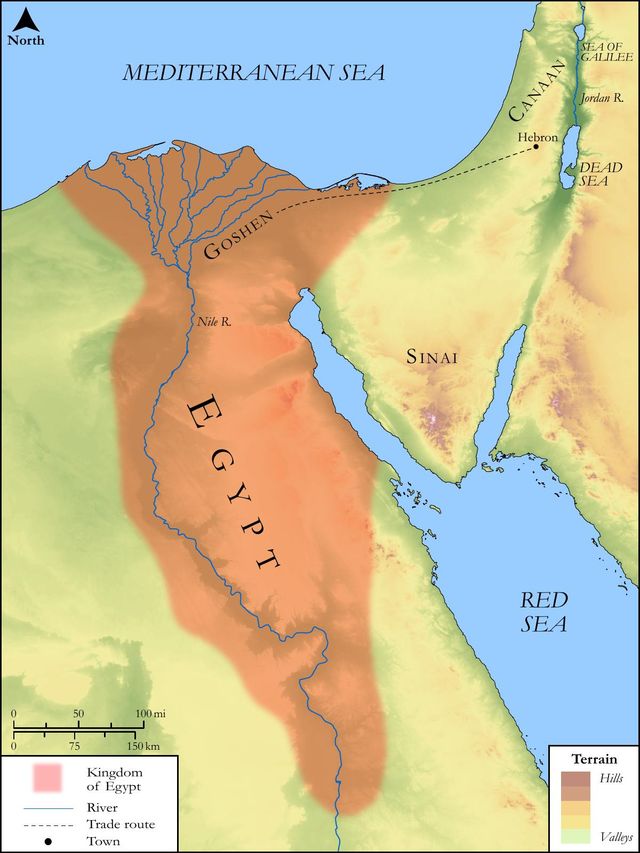
Ancient Egypt was a highly structured society where the Pharaoh was considered a divine king, and his dreams were often interpreted as omens or messages from the gods. The "captain of the guard" (Potiphar, in Joseph's case) was a high-ranking official responsible for the royal bodyguard and the state prison, making his house a common place for high-profile prisoners. The chief butler (cupbearer) and chief baker were significant court officials, entrusted with the king's food and drink, making their imprisonment a serious matter of royal displeasure. The practice of imprisoning servants for royal "wrath" was a common exercise of absolute power. The fact that the butler "forgot" Joseph for two years, despite his promise, reflects the self-preservation and self-interest often prevalent in royal courts, where one's own position and survival took precedence.
Key Themes
ShowHideGenesis 41:10 profoundly contributes to several overarching themes in the Joseph narrative and the book of Genesis. The most prominent is Divine Providence, demonstrating God's sovereign control over seemingly random events and human forgetfulness to accomplish His perfect will. The butler's sudden remembrance is not coincidental but a meticulously timed act of God, highlighting that God never forgets His purposes, even when humans do. It also underscores the theme of Exaltation Through Suffering, as Joseph's long and unjust imprisonment serves as a crucible, preparing him for his future role. Furthermore, the verse subtly introduces the theme of God's Faithfulness in Adversity, showing that even in the darkest moments of human injustice and abandonment, God is actively working to bring about His redemptive plan, ultimately leading to the preservation of the covenant people, as seen in Genesis 50:20.
Exposition and Analysis
ShowHideGenesis 41:10 states: "Pharaoh was wroth with his servants, and put me in ward in the captain of the guard's house, [both] me and the chief baker:"
Key Word Analysis
ShowHideMeaning "to crack off, i.e. (figuratively) burst out in rage; (be) anger(-ry), displease, fret self, (provoke to) wrath (come), be wroth." This word vividly conveys Pharaoh's intense displeasure and explosive anger towards his servants, indicating a severe royal indignation that led directly to their imprisonment. It highlights the absolute power of the king and the precarious position of his servants.
Meaning "a guard (the man, the post or the prison); a deposit (figuratively); also (as observed) a usage (abstractly), or an example (concretely); diligence, guard, office, prison, ward, watch." In this context, "ward" specifically refers to a place of custody or imprisonment. The chief butler's use of this term precisely defines the nature of his confinement, which was shared with Joseph, establishing the common ground for their fateful encounter.
Meaning "a head person (of any rank or class); captain (that had rule), chief (captain), general, governor, keeper, lord,(-task-)master, prince(-ipal), ruler, steward." This term denotes a high-ranking official, specifically the "chief" or "head" of the guard. The "captain of the guard's house" was the official state prison, under the authority of this powerful individual (Potiphar, in Joseph's case). The butler's specific mention of this location is crucial, as it directly links his past experience to Joseph's continued imprisonment there.
Verse Breakdown
ShowHide"Pharaoh was wroth with his servants"
This clause establishes the initial cause of the chief butler's (and chief baker's) predicament. Pharaoh's "wrath" signifies a powerful, kingly displeasure, indicating a serious offense that warranted severe punishment. This royal anger is the catalyst for the events that follow, setting the stage for the butler's imprisonment and subsequent encounter with Joseph.
"and put me in ward"
This phrase details the direct consequence of Pharaoh's anger. The chief butler, speaking in the first person ("me"), recounts his own incarceration. "In ward" means to be placed under custody or in prison, emphasizing the loss of freedom and the severity of the royal decree. This personal testimony lends authenticity and immediacy to his account.
"in the captain of the guard's house, [both] me and the chief baker"
This final clause provides the precise location of their imprisonment and confirms the shared experience with the chief baker. The "captain of the guard's house" is explicitly identified as the prison where Joseph was also held. By recalling this specific detail and mentioning his fellow prisoner, the chief baker, the butler sets the stage for his crucial remembrance of Joseph, who had accurately interpreted their dreams in that very place. This detail is the narrative key that unlocks Joseph's future.
Literary Devices
ShowHideGenesis 41:10 is rich in Irony and functions as a significant Dramatic Turning Point. The Irony lies in the chief butler's belated remembrance. Despite Joseph's accurate interpretation of his dream and his plea to be remembered (Genesis 40:14), the butler forgets him for two full years. His memory is only jogged when Pharaoh himself is in a crisis, demonstrating human fallibility and self-interest. This forgetfulness, however, is precisely what allows God's perfect timing to unfold, highlighting the deeper Irony of divine providence using human imperfection for its grand design. The verse also serves as a Dramatic Turning Point in the narrative. It marks the end of Joseph's long period of suffering, obscurity, and unjust imprisonment, transitioning him from the depths of a dungeon to the precipice of power. The butler's words are the key that opens the prison door, initiating the dramatic shift in Joseph's fortunes and setting the stage for the fulfillment of his prophetic dreams and God's plan for Israel.
Theological and Thematic Connections
ShowHideGenesis 41:10 is a profound testament to God's meticulous and sovereign providence. For two years, Joseph remained in prison, seemingly forgotten by man, yet never forgotten by God. The chief butler's sudden remembrance, precisely at the moment of Pharaoh's greatest need, is not a coincidence but a divinely orchestrated event. It underscores that God's timing is perfect, often working through the ordinary, the forgotten, and even human failures to bring about His extraordinary purposes. This verse reassures believers that even when circumstances seem bleak or forgotten, God is actively working behind the scenes, aligning events to fulfill His promises and perfect His plan.
Reflection and Application
ShowHideGenesis 41:10 offers profound encouragement for those enduring periods of waiting, suffering, or feeling forgotten. Joseph's two years of additional imprisonment, after the chief butler's promise, must have been incredibly disheartening. Yet, this verse reveals that even in the midst of human forgetfulness and perceived abandonment, God is meticulously at work, orchestrating events for His perfect timing and ultimate purpose. It challenges us to cultivate unwavering trust in God's sovereignty, even when His plan is hidden and human promises fail. Our present trials, delays, or periods of obscurity may well be the very preparation God is using to equip us for future callings and to demonstrate His faithfulness. This verse calls us to patience, perseverance, and a deep conviction that God's appointed time is always the best time, and His purposes will never be thwarted.
Questions for Reflection
ShowHideFAQ
ShowHideWhy did the chief butler wait two years to remember Joseph?
ShowHideThe biblical text does not explicitly state the chief butler's reasons for the two-year delay, but it implicitly points to human forgetfulness, self-absorption, and the natural course of life in a busy royal court. Once restored to his prestigious position, the butler likely became preoccupied with his duties and perhaps simply forgot his promise to a lowly prisoner. The delay, however, is not accidental from a divine perspective. It highlights God's perfect timing, as He allowed the two years to pass before prompting the butler's memory at the precise moment Pharaoh was in desperate need of a dream interpreter, ensuring Joseph's release was for a specific, higher purpose. This period also served to further prepare Joseph for his immense responsibilities, as seen in Genesis 41:39-40.
What does "wroth" mean in this context?
ShowHideIn the King James Version, "wroth" (from the Hebrew qâtsaph) signifies intense anger, rage, or extreme displeasure. It indicates Pharaoh's profound indignation with his servants, which led directly to their imprisonment. This highlights the absolute power of the Egyptian monarch and the severe consequences of incurring his wrath, underscoring the precariousness of life in the royal court and the gravity of the situation that led to the chief butler's confinement.
How does this verse demonstrate God's providence?
ShowHideGenesis 41:10 is a prime example of God's intricate providence. The chief butler's sudden and timely remembrance of Joseph, after two years of complete forgetfulness, occurs at the exact moment Pharaoh is troubled by dreams that none of his wise men can interpret. This "coincidence" is divinely orchestrated, demonstrating God's sovereign hand meticulously guiding events to fulfill His plan for Joseph and, ultimately, for the preservation of Jacob's family and the nascent nation of Israel. It illustrates that God works through human actions, even their failures and forgetfulness, to achieve His ultimate purposes, as affirmed in Proverbs 16:9.
Christ-Centered Fulfillment
ShowHideJoseph's journey, culminating in this pivotal moment of remembrance and impending elevation, serves as a profound type of Christ. Like Joseph, Christ was unjustly treated, rejected by His own people (John 1:11), and suffered immensely, even to the point of death, being "put in ward" in the tomb. Just as Joseph was seemingly forgotten in prison before being exalted to save a nation from famine, Christ, after His crucifixion and burial, was raised from the dead (Romans 6:9) and exalted to the right hand of God (Philippians 2:9-11), becoming the ultimate Savior who delivers humanity from spiritual death and eternal famine (John 6:35). The divine timing of Joseph's release, orchestrated by God to bring physical salvation, powerfully foreshadows God's perfect timing in sending Christ into the world to accomplish eternal redemption (Galatians 4:4-5), demonstrating that God uses suffering, apparent abandonment, and even death to bring about ultimate salvation, glory, and life for all who believe.