


Genesis 37:15
Bible text: King James Version (1769 Blayney text) · Public domain
Bible text: Berean Standard Bible · Public domain
Bible text: American Standard Version (1901) · Public domain
Bible text: World English Bible, Messianic edition · Public domain
Bible text: Geneva Bible (1599) · Public domain
Bible text: Young's Literal Translation · Public domain
- וַיִּמְצָאֵהוּvai·yim·tza·'E·huand he found himH4672Conj-w ¦ V-Qal-ConsecImperf-3ms ¦ 3msVerb Qal Consecutive Imperfect 3rd Singular Masculineוַandיִּמְצָאֵhe foundהוּhim
- אִישׁ'Isha manH376N-msNoun Singular Masculine Absolute
- וְהִנֵּהve·hi·Nehand there!H2009Conj-w ¦ PrtParticle Interjectionוְandהִנֵּהthere!
- תֹעֶהto·'Eh[he was] wanderingH8582V-Qal-Prtcpl-msVerb Qal Participle Singular Masculine Absolute
- בַּשָּׂדֶהba·sa·Dehin the open countryH7704Prep-b ¦ N-msNoun Singular Masculine Absoluteבַּin theשָּׂדֶהopen country
- וַיִּשְׁאָלֵהוּvai·yish·'a·Le·huand he asked himH7592Conj-w ¦ V-Qal-ConsecImperf-3ms ¦ 3msVerb Qal Consecutive Imperfect 3rd Singular Masculineוַandיִּשְׁאָלֵhe askedהוּhim
- הָאִישׁha·'Ishthe manH376Art ¦ N-msNoun Singular Masculine Absoluteהָtheאִישׁman
- לֵאמֹרle·Mor<to> sayingH559Prep-l ¦ V-Qal-InfVerb Qal Infinitive Constructלֵ<to>אמֹרsaying
- מַהmahwhat?H4100InterrogPronoun Interrogative
- תְּבַקֵּשׁte·va·Keshare you seekingH1245V-Piel-Imperf-2msVerb Piel Imperfect 2nd Singular Masculine
English is a literal word-by-word gloss of the Hebrew, not the KJV's wording. Why?
This is the original text the KJV's translators worked from — each Hebrew word with its own literal English meaning in this verse, prepared by scholars at Tyndale House, Cambridge. The KJV translates whole sentences, not word by word, so its wording differs: one Hebrew word can become several English words, and the KJV may choose “the LORD” where the gloss reads “Yahweh”. Both are faithful — they answer different questions. For the KJV's own rendering, switch to the KJV text.
Details
See on the biblical-era maps


Study this verse
Public-domain commentary
Matthew Henry
From his Commentary on the Whole Bible. Henry comments on passages, not single verses — this entry covers Genesis 37:12–22. His two-level outline is real structure in the source text, so it is rendered as structure.
Here is, I. The kind visit which Joseph, in obedience to his father's command, made to his brethren, who were feeding the flock at Shechem, many miles off. Some suggest that they went thither on purpose, expecting that Joseph would be sent to see them, and that then they should have an opportunity to do him a mischief. However, Joseph and his father had both of them more of the innocence of the dove than of the wisdom of the serpent, else he had never come thus into the hands of those that hated him: but God designed it all for good. See in Joseph an instance, 1. Of dutifulness to his father. Though he was his father's darling, yet he was made, and was willing to be, his father's servant. How readily does he wait his father's orders! Here I am, Gen 37:13. Note, Those children that are best beloved by their parents should be most obedient to their parents; and then their love is well-bestowed and well-returned. 2. Of kindness to his brethren. Though he knew they hated him and envied him, yet he made no objections against his father's commands, either from the distance of the place or the danger of the journey, but cheerfully embraced the opportunity of showing his respect to his brethren. Note, It is a very good lesson, though it is learnt with difficulty and rarely practised, to love those that hate us; if our relations do not their duty to us, yet we must not be wanting in our duty to them. This is thank-worthy. Joseph was sent by his father to Shechem, to see whether his brethren were well there, and whether the country had not risen upon them and destroyed them, in revenge of their barbarous murder of the Shechemites some years before. But Joseph, not finding them there, went to Dothan, which showed that he undertook this journey, not only in obedience to his father (for then he might have returned when he missed them at Shechem, having done what his father told him), but out of love to his brethren, and therefore he sought diligently till he found them. Thus, let brotherly love continue, and let us give proofs of it.
II.The bloody and malicious plot of his brethren against him, who rendered good for evil, and, for his love, were his adversaries. Observe,
1.How deliberate they were in the contrivance of this mischief: when they saw him afar off, they conspired against him, Gen 37:18. It was not in a heat, or upon a sudden provocation, that they thought to slay him, but from malice prepense, and in cold blood. Note, Whosoever hateth his brother is a murderer; for he will be one if he have an opportunity, Jo1 3:15. Malice is a most mischievous thing, and is in danger of making bloody work where it is harboured and indulged. The more there is of a project and contrivance in a sin the worse it is; it is bad to do evil, but worse to devise it.
2.How cruel they were in their design; nothing less than his blood would satisfy them: Come, and let us slay him, Gen 37:20. Note, The old enmity hunts for the precious life. It is the blood-thirsty that hate the upright (Pro 29:10), and it is the blood of the saints that the harlot is drunk with.
3.How scornfully they reproached him for his dreams (Gen 37:19): This dreamer cometh; and (Gen 37:20), We shall see what will become of his dreams. This shows what it was that fretted and enraged them. They could not endure to think of doing homage to him; this was what they were plotting to prevent by the murder of him. Note, Men that fret and rage at God's counsels are impiously aiming to defeat them; but they imagine a vain thing, Psa 2:1-3. God's counsels will stand.
4.How they agreed to keep one another's counsel, and to cover the murder with a lie: We will say, Some evil beast hath devoured him; whereas in thus consulting to devour him they proved themselves worse than the most evil beasts; for evil beasts prey not on those of their own kind, but they were tearing a piece of themselves.
III.Reuben's project to deliver him, Gen 37:21, Gen 37:22.
Note, God can raise up friends for his people, even among their enemies; for he has all hearts in his hands. Reuben, of all the brothers, had most reason to be jealous of Joseph, for he was the first-born, and so entitled to those distinguishing favours which Jacob was conferring on Joseph; yet he proves his best friend. Reuben's temper seems to have been soft and effeminate, which had betrayed him to the sin of uncleanness; while the temper of the next two brothers, Simeon and Levi, was fierce, which betrayed them to the sin of murder, a sin which Reuben startled at the thought of. Note, Our natural constitution should be guarded against those sins to which it is most inclinable, and improved (as Reuben's here) against those sins to which it is most averse. Reuben made a proposal which they thought would effectually answer their intention of destroying Joseph, and yet which he designed should answer his intention of rescuing Joseph out of their hands and restoring him to his father, probably hoping thereby to recover his father's favour, which he had lately lost; but God overruled all to serve his own purpose of making Joseph an instrument to save much people alive. Joseph was here a type of Christ. Though he was the beloved Son of his Father, and hated by a wicked world, yet the Father sent him out of his bosom to visit us in great humility and love. He came from heaven to earth, to seek and save us; yet then malicious plots were laid against him. He came to his own, and his own not only received him not, but consulted against him: This is the heir, come let us kill him; Crucify him, crucify him. This he submitted to, in pursuance of his design to redeem and save us.
Historical interpretation
Historical reception
2 surviving comments on this verse. Each one is dated, so this reads as a timeline rather than a list.
Select a marker to jump to its quote. Markers stagger vertically where authors wrote within a few decades of each other.
“And Joseph was wandering about,” because he could not find his brothers. And it was right that he wandered about, for he was seeking those that were going astray. Yes, “the Lord knows who are his.” Indeed, Jesus also, when he was wearied from his journey, sat at the well. He was wearied, for he was not finding the people of God whom he was seeking; they had gone out from the face of the Lord. The person who follows sin goes out from Christ. The sinner goes out; the just person enters in. Indeed, Adam hid himself as a sinner, but the just person says, “Let my prayer enter in before you.”
Jacob sent his son to manifest solicitude for his brothers, and God the Father sent his only-begotten Son to visit the human race, which was weak from sin and like lost sheep. When Joseph was looking for his brothers he wandered in the desert. Christ also sought the human race, which was wandering in the world; he too as it were, wandered in the world because he was seeking the erring. Joseph searched for his brothers in Shechem. Shechem is interpreted as a shoulder, for sinners always turn their backs in the face of the just, and shoulders are behind. Just as Joseph’s brothers, struck with envy, offered their back rather than their face to fraternal love, so also the unhappy Jews preferred to envy rather than to love the Author of salvation who came to them. Of such people it is said in the psalms: “Let their eyes grow dim so that they cannot see, and keep their backs always feeble.”
Continue studying Genesis 37:15 across the web’s major study libraries — every link below opens this exact verse, chapter, or book on the destination site.
Read & Compare
 BibleGatewayThis verse in more than 200 translations and 70 languages.
 Bible.comThe YouVersion reader — hundreds of translations, reading plans, and highlights.
 ESV.orgCrossway's official English Standard Version reader.
 NET BibleThe NET translation with 60,000+ translators' notes on every rendering decision.
 STEP BibleTyndale House's free study tool — original text, vocabulary, and scholarly resources.
 BibliaLogos Bible Software's free web reader.
 USCCBThe New American Bible (Revised Edition) with the U.S. bishops' study notes.
Commentaries
 BibleHub CommentariesDozens of classic commentaries on this verse, gathered on one page.
 StudyLightMore than 100 commentary sets — the largest collection on the web.
 BibleRefPlain-English commentary on what this verse means, verse by verse.
 Enduring WordDavid Guzik's free commentary on this chapter, widely used by Bible teachers.
 Bible Study ToolsVerse commentary alongside Greek and Hebrew study aids.
Original Language & Research
- BibleHub InterlinearThe verse word by word — original language, transliteration, and English.
- BibleHub LexiconEvery word's original-language definition and Strong's entry.
 Blue Letter BibleDeep-study tools — Strong's numbers, concordance, and word studies.
 SefariaThe Hebrew text with Rashi and centuries of Jewish commentary.
Sermons, Hymns & Audio


TrulyRandomVerse is not affiliated with these sites and doesn’t control their content. They’re linked because they’re genuinely useful.
Summary
Genesis 37:15 marks a pivotal, divinely orchestrated moment in Joseph's life, where a seemingly chance encounter with an unnamed man while Joseph is disoriented in the field serves as a crucial catalyst. This interaction redirects Joseph towards his brothers, setting in motion the series of events that will lead to his suffering, his elevation in Egypt, and ultimately, the preservation of the nascent nation of Israel, all according to God's sovereign plan.
Context
ShowHideLiterary Context
This verse is situated within the "Joseph narrative," which begins in Genesis 37 and extends through Genesis 50. Immediately preceding this verse, Joseph, a seventeen-year-old, has been sent by his father, Jacob, from the Valley of Hebron to Shechem to check on his brothers and their flocks (Genesis 37:12-14). His brothers, harboring deep resentment due to Jacob's favoritism and Joseph's prophetic dreams (Genesis 37:5-11), have already moved on from Shechem. Joseph's "wandering" in verse 15 highlights his disorientation and the immediate challenge he faces in fulfilling his father's command, setting the stage for the fateful encounter that will propel him towards Dothan and his brothers' treacherous plot.
Historical & Cultural Context
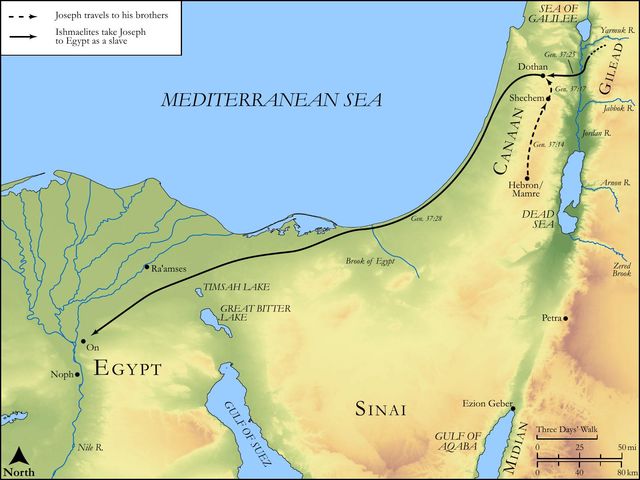
Pastoral life in ancient Canaan often involved shepherds leading their flocks across vast, open fields in search of pasture, making it easy to become disoriented, especially for someone unfamiliar with the specific grazing patterns or recent movements of a large family like Jacob's. Shechem and Dothan were significant locations in ancient Israel, known for their pastures. The journey from Hebron to Shechem was substantial, and then further to Dothan, indicating Joseph's diligence in seeking his brothers. The cultural emphasis on family honor and the potential for severe consequences for perceived slights (like Joseph's dreams) underscore the volatile environment Joseph was entering. The interaction with an unnamed stranger, while seemingly mundane, was a common occurrence in such settings, yet here it is imbued with divine significance, as such encounters could often provide critical information or assistance in a time before widespread communication.
Key Themes
ShowHideGenesis 37:15 significantly contributes to several overarching themes in the Joseph narrative and the book of Genesis. It highlights Divine Providence, demonstrating how God actively guides events through seemingly ordinary means to fulfill His purposes, even when human actors are unaware of their role. Joseph's "wandering" underscores the theme of Vulnerability and Dependence, as he is lost and reliant on external help, foreshadowing his later dependence on God's intervention in Egypt. The verse also subtly introduces the theme of Obedience Leading to Suffering, as Joseph's dutiful search for his brothers, an act of filial obedience, directly leads him into the path of betrayal and enslavement. This echoes broader biblical patterns where faithfulness can precede trials, ultimately serving a redemptive purpose, as seen later when Joseph declares, "You meant evil against me, but God meant it for good, to bring it about that many people should be kept alive."
Exposition and Analysis
ShowHideKey Word Analysis
ShowHideThis word (H376) refers to an individual male person. In this context, the use of "a certain man" emphasizes his anonymity, highlighting that his significance lies not in his identity but in his function as an instrument of divine providence. He is an ordinary person used in an extraordinary way.
This primitive root (H4672) means "to come forth to, i.e. appear or exist; transitively, to attain, i.e. find or acquire." Its use here suggests that Joseph was not merely discovered by chance, but that the man actively "found" him, implying a purposeful encounter. This verb often carries the nuance of something being brought to light or revealed, reinforcing the sense of a divinely orchestrated meeting rather than a random occurrence.
This primitive root (H8582) signifies "to vacillate, i.e. reel or stray (literally or figuratively); also causative of both; (cause to) go astray, deceive, dissemble, (cause to, make to) err, pant, seduce, (make to) stagger, (cause to) wander, be out of the way." Joseph's "wandering" accurately portrays his disorientation and lostness in the vast field, emphasizing his vulnerability and need for direction. It is not indicative of disobedience but of being genuinely lost and off the intended path.
This primitive root (H1245) means "to search out (by any method, specifically in worship or prayer); by implication, to strive after; ask, beg, beseech, desire, enquire, get, make inquisition, procure, (make) request, require, seek (for)." The man's question, "What seekest thou?", directly addresses Joseph's active pursuit, highlighting his purpose-driven but currently frustrated search for his brothers. This word choice underscores Joseph's diligence even in his lost state.
Verse Breakdown
ShowHide"And a certain man found him"
This phrase introduces the pivotal character, deliberately unnamed, whose appearance is presented as an active discovery rather than a passive observation. The emphasis is on the man's initiative in "finding" Joseph, suggesting a purposeful encounter rather than mere coincidence.
"and, behold, [he was] wandering in the field"
The interjection "behold" (Hebrew hinneh) draws attention to Joseph's vulnerable state. He is not merely walking, but "wandering" (tâʻâh), indicating disorientation and being lost in the vast, open country (sâdeh). This sets the scene of Joseph's predicament and highlights his need for guidance.
"and the man asked him, saying, What seekest thou?"
The man's direct question, "What seekest thou?" (mah-tevaqqesh), is a crucial inquiry that opens the door for Joseph to articulate his purpose and receive the necessary information. It is a simple question that serves as the catalyst for the next stage of Joseph's journey, directly leading him to his brothers and, subsequently, to his destiny.
Literary Devices
ShowHideGenesis 37:15 employs several significant literary devices. Foreshadowing is prominent, as Joseph's literal "wandering" in the field and being "found" by a guide subtly foreshadows his metaphorical lostness (to his family, in slavery and prison) and his eventual "finding" (his rise to power and reunion with his family). The Irony lies in Joseph's obedience to his father, which leads him directly into the path of betrayal and suffering, a common biblical motif where faithfulness can precede trials. The unnamed "certain man" functions as a device of Divine Providence, emphasizing that God uses ordinary, even anonymous, individuals and seemingly chance encounters to meticulously guide the unfolding of His redemptive plan. The brevity of the interaction, yet its profound impact, exemplifies Conciseness with Consequence, a narrative technique that highlights the pivotal nature of seemingly small events in the grand biblical narrative.
Theological and Thematic Connections
ShowHideThis seemingly simple encounter in Genesis 37:15 is deeply imbued with theological significance, primarily underscoring the theme of Divine Sovereignty and Providence. The "certain man" is not a random passerby but an instrument in God's hands, guiding Joseph precisely to where his brothers had relocated. This intervention ensures that the divine plan for Joseph's life, which includes his suffering, his rise to power in Egypt, and his ultimate role in preserving his family and the nascent nation of Israel, remains on course. It illustrates that even in moments of confusion and disorientation, God is actively at work, orchestrating circumstances and using unexpected individuals to fulfill His purposes, demonstrating His meticulous care over the lives of His chosen servants and the unfolding of His redemptive history.
Reflection and Application
ShowHideGenesis 37:15 offers profound encouragement for believers navigating life's uncertainties. Joseph's "wandering" in the field, a state of disorientation and lostness, resonates with our own experiences of feeling adrift, unsure of the next step, or even questioning our path. Yet, in that moment of vulnerability, God sends an unexpected guide. This reminds us that even when we feel lost or confused, God's providential hand is actively at work, often using ordinary people or seemingly random events to direct our steps. It encourages us to cultivate a posture of trust, recognizing that divine guidance may come through unexpected channels, and to remain open to the help that God provides, even if it leads us through difficult or unfamiliar territory. Our obedience to God's call, even when it seems to lead to hardship, is always part of His larger, good, and redemptive plan for our lives and for the advancement of His kingdom.
Questions for Reflection
ShowHideFAQ
ShowHideWhy is the man in Genesis 37:15 unnamed?
ShowHideThe Bible often leaves characters unnamed when their primary purpose is to serve as an instrument of God's will rather than to develop their own character. The anonymity of the "certain man" in Genesis 37:15 emphasizes that his appearance is not a random occurrence but a divinely orchestrated intervention, highlighting God's sovereignty in guiding Joseph's steps. His identity is secondary to his function in God's unfolding plan, which is to direct Joseph towards his destiny.
Was Joseph's "wandering" a sign of disobedience or carelessness?
ShowHideNo, Joseph's "wandering" (Hebrew tâʻâh, H8582) indicates disorientation and being lost, not disobedience or carelessness. He was actively seeking his brothers as instructed by his father, Jacob, having traveled a significant distance from Hebron to Shechem. The vastness of the fields and the brothers' relocation caused his predicament. His lostness, in fact, positioned him for the divine encounter that would redirect his path towards God's greater purpose, ultimately leading him to Dothan where his brothers were (Genesis 37:17).
How does this seemingly small interaction have such significant consequences?
ShowHideThis interaction is a classic example of how God uses seemingly minor events to trigger major developments in His redemptive plan. The man's guidance led Joseph directly to his brothers in Dothan, where they conspired against him and sold him into slavery (Genesis 37:28). This painful event was not an end but a means to God's ultimate purpose: to bring Joseph to Egypt, elevate him to power, and use him to preserve his family and the nascent nation of Israel during a severe famine (Genesis 50:20). It demonstrates God's meticulous orchestration of history, where every detail serves His overarching redemptive design.
Christ-Centered Fulfillment
ShowHideJoseph's journey, initiated by his "wandering" and the providential guidance of an unnamed man, serves as a profound type of Christ, revealing aspects of the Messiah's mission and suffering. Like Joseph, Jesus was sent by His Father into a world that largely rejected Him, leading to profound suffering and apparent abandonment. Joseph, though innocent, was sold by his brothers and descended into a foreign land, ultimately rising to a position of power to save his people from famine. Similarly, Christ, innocent and obedient to the Father's will (Philippians 2:8), was rejected by His own people (John 1:11), suffered, died, and descended into the grave, only to be exalted to the right hand of God (Acts 2:33). From this position of ultimate authority, He became the ultimate deliverer, providing spiritual sustenance and salvation for all who believe, saving humanity from the famine of sin and eternal death (John 6:35). The "certain man" who guided Joseph can be seen as an early, subtle illustration of God's active involvement in guiding events toward the ultimate fulfillment found in Christ's redemptive work, demonstrating that even seemingly insignificant encounters are part of God's grand design for salvation.