


Exodus 39:42
- כְּכֹלke·Kholaccording to allH3605Prep-k ¦ N-msNoun Singular Masculine Absoluteכְּaccording toכֹלall
- אֲשֶׁר'a·SherthatH834RelParticle Relative
- צִוָּהtzi·Vahhe had commandedH6680V-Piel-Perf-3msVerb Piel Perfect 3rd Singular Masculine
- יְהוָהYah·wehYahwehH3068N-properNoun Proper Title
- אֶת'et<obj.>H853DirObjMParticle Object Indicator
- מֹשֶׁהmo·ShehMosesH4872N-proper-mNoun Proper Masculine
- כֵּןkensoH3651AdvAdverb
- עָשׂוּ'a·Suthey didH6213V-Qal-Perf-3cpVerb Qal Perfect 3rd Plural common gender
- בְּנֵיbe·Nei[the] people ofH1121N-mpcNoun Plural Masculine Construct
- יִשְׂרָאֵלYis·ra·'ElIsraelH3478N-properNoun Proper Location
- אֵת'et<obj.>H853DirObjMParticle Object Indicator
- כָּלkolallH3605N-mscNoun Singular Masculine Construct
- הָעֲבֹדָהha·'a·vo·Dahthe laborH5656Art ¦ N-fsNoun Singular Feminine Absoluteהָtheעֲבֹדָהlabor
English is a literal word-by-word gloss of the Hebrew, not the KJV's wording. Why?
This is the original text the KJV's translators worked from — each Hebrew word with its own literal English meaning in this verse, prepared by scholars at Tyndale House, Cambridge. The KJV translates whole sentences, not word by word, so its wording differs: one Hebrew word can become several English words, and the KJV may choose “the LORD” where the gloss reads “Yahweh”. Both are faithful — they answer different questions. For the KJV's own rendering, switch to the KJV text.
Details
See on the biblical-era maps

Study this verse
Public-domain commentary
Matthew Henry
From his Commentary on the Whole Bible. Henry comments on passages, not single verses — this entry covers Exodus 39:32–43. His two-level outline is real structure in the source text, so it is rendered as structure.
Observe here, I. The builders of the tabernacle made very good despatch. It was not much more than five months from the beginning to the finishing of it. Though there was a great deal of fine work about it, such as is usually the work of time, embroidering and engraving, not only in gold, but in precious stones, yet they went through with it in a little time. Church-work is usually slow work, but they made quick work of this, and yet did it with the greatest exactness imaginable. For, 1. Many hands were employed, all unanimous, and not striving with each other. This expedited the business, and made it easy. 2. The workmen were taught of God, and so were kept from making blunders, which would have retarded them. 3. The people were hearty and zealous in the work, and impatient till it was finished. God had prepared their hearts, and then the thing was done suddenly, Ch2 29:36. Resolution and industry, and a cheerful application of mind, will, by the grace of God, bring a great deal of good work to pass in a little time, in less than one would expect.
II.They punctually observed their orders, and did not in the least vary from them.
They did it according to all that the Lord commanded Moses, Exo 39:32, Exo 39:42. Note, God's work must be done, in every thing, according to his own will. His institutions neither need nor admit men's inventions to make them either more beautiful or more likely to answer the intention of them. Add thou not unto his words. God is pleased with willing worship, but not with will-worship.
III.They brought all their work to Moses, and submitted it to his inspection and censure, Exo 39:33.
He knew what he had ordered them to make; and now the particulars were called over, and all produced, that Moses might see both that they had made all, omitting nothing, and that they had made all according to the instructions given them, and that, if they had made a mistake in any thing, it might be forthwith rectified. Thus they showed respect to Moses, who was set over them in the Lord; not objecting that Moses did not understand such work, and therefore that there was no reason for submitting it to his judgment. No, that God who gave them so much knowledge as to do the work gave them also so much humility as to be willing to have it examined and compared with the model. Moses was in authority, and they would pay a deference to his place. The spirit of the prophets is subject to the prophets. And besides, though they knew how to do the work better than Moses, Moses had a better and more exact idea of the model than they had, and therefore they could not be well pleased with their own work, unless they had his approbation. Thus in all the services of religion we should labour to be accepted of the Lord.
IV.Moses, upon search, found all done according to the rule, Exo 39:43.
Moses, both for their satisfaction and for his own, did look upon all the work, piece by piece, and behold they had done it according to the pattern shown him, for the same Being that showed him the pattern guided their hand in the work. All the copies of God's grace exactly agree with the original of his counsels: what God works in us, and by us, is the fulfilling of the good pleasure of his own goodness; and when the mystery of God shall be finished, and all his performances come to be compared with his purposes, it will appear that behold all is done according to the counsel of his own will, not one iota or tittle of which shall fall to the ground, or be varied from.
V.Moses blessed them.
1.He commended them, and signified his approbation of all they had done. He did not find fault where there was none, as some do, who think they disparage their own judgment if they do not find something amiss in the best and most accomplished performance. In all this work it is probable there might have been found here and there a stitch amiss, and a stroke awry, which would have served for an over-curious and censorious critic to animadvert upon; but Moses was too candid to notice small faults where there were no great ones. Note, All governors must be a praise to those that do well, as well as a terror to evil-doers. Why should any take a pride in being hard to be pleased?
2.He not only praised them, but prayed for them. He blessed them as one having authority, for the less is blessed of the better. We read not of any wages that Moses paid them for their work, but this blessing he gave them. For, though ordinarily the labourer be worthy of his hire, yet in this case, 1. They wrought for themselves. The honour and comfort of God's tabernacle among them would be recompence enough. If thou be wise, thou shalt be wise for thyself. 2. They had their meat from heaven on free-cost, for themselves and their families, and their raiment waxed not old upon them; so that they neither needed wages nor had reason to expect any. Freely you have received, freely give. The obligations we lie under, both in duty and interest, to serve God, should be sufficient to quicken us to our work, though we had not a reward in prospect. But, 3. This blessing, in the name of the Lord, was wages enough for all their work. Those whom God employs he will bless, and those whom he blesses are blessed indeed. The blessing he commands is life for evermore.
Continue studying Exodus 39:42 across the web’s major study libraries — every link below opens this exact verse, chapter, or book on the destination site.
Read & Compare
 BibleGatewayThis verse in more than 200 translations and 70 languages.
 Bible.comThe YouVersion reader — hundreds of translations, reading plans, and highlights.
 ESV.orgCrossway's official English Standard Version reader.
 NET BibleThe NET translation with 60,000+ translators' notes on every rendering decision.
 STEP BibleTyndale House's free study tool — original text, vocabulary, and scholarly resources.
 BibliaLogos Bible Software's free web reader.
 USCCBThe New American Bible (Revised Edition) with the U.S. bishops' study notes.
Commentaries
 BibleHub CommentariesDozens of classic commentaries on this verse, gathered on one page.
 StudyLightMore than 100 commentary sets — the largest collection on the web.
 BibleRefPlain-English commentary on what this verse means, verse by verse.
 Enduring WordDavid Guzik's free commentary on this chapter, widely used by Bible teachers.
 Bible Study ToolsVerse commentary alongside Greek and Hebrew study aids.
Original Language & Research
- BibleHub InterlinearThe verse word by word — original language, transliteration, and English.
- BibleHub LexiconEvery word's original-language definition and Strong's entry.
 Blue Letter BibleDeep-study tools — Strong's numbers, concordance, and word studies.
 SefariaThe Hebrew text with Rashi and centuries of Jewish commentary.
Sermons, Hymns & Audio


TrulyRandomVerse is not affiliated with these sites and doesn’t control their content. They’re linked because they’re genuinely useful.
Summary
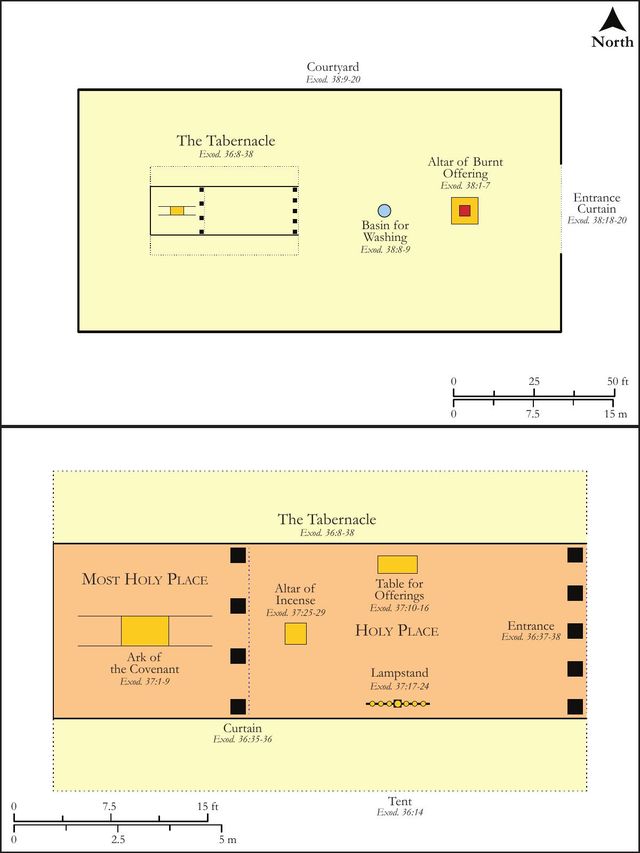
Exodus 39:42 serves as a pivotal summary statement, marking the triumphant conclusion of the Tabernacle's construction. This verse emphatically declares that the children of Israel meticulously and completely executed every single detail of the sacred work precisely "according to all that the LORD commanded Moses." It underscores their unwavering obedience and faithfulness in bringing God's divine blueprint to fruition, thereby preparing the dwelling place for His presence among His people.
Context
ShowHideLiterary Context
Exodus 39:42 stands as the culminating declaration within the lengthy narrative detailing the construction of the Tabernacle and its associated elements, spanning from Exodus 25 through Exodus 39. This verse specifically follows the detailed description of the crafting of the priestly garments and the final assembly of all the components of the sanctuary. It acts as a powerful capstone to the "doing" section (chapters 35-39), mirroring the "telling" section (chapters 25-31) where God's instructions were first given. The repeated phrase "as the LORD commanded Moses" (or similar variations) throughout these chapters builds anticipation for this final, comprehensive statement of completion, setting the immediate stage for the erection of the Tabernacle and the descent of God's glory in Exodus 40.
Historical & Cultural Context
The construction of the Tabernacle occurred in the harsh wilderness environment, shortly after Israel's exodus from Egypt and the giving of the Law at Mount Sinai. In the ancient Near East, temples and sacred spaces were often seen as earthly reflections of divine abodes, requiring precise adherence to divine specifications to ensure their efficacy and the deity's presence. For Israel, the Tabernacle was not merely a building but the tangible symbol of God's covenant presence among His people, a portable sanctuary for their journey. The meticulous obedience highlighted in this verse was critical, demonstrating Israel's commitment to the covenant and their reverence for Yahweh. The work involved the collective effort of the entire community, contributing materials and labor, guided by divinely gifted artisans like Bezalel and Oholiab, as detailed in Exodus 35:30-35. This communal, precise execution of God's commands was essential for the Tabernacle to be a holy and fit dwelling place for the Holy God.
Key Themes
ShowHideThis verse encapsulates several key themes central to the book of Exodus and the broader Pentateuch. Foremost is the theme of Divine Command and Human Obedience, emphasizing that God's will, once revealed, demands precise and complete adherence. The meticulous execution of the Tabernacle's design underscores the Holiness of God and the sacredness of His dwelling place, requiring a perfect response from His people. It also highlights the theme of God's Presence (Shekinah), as the Tabernacle was designed to be the physical manifestation of Yahweh's dwelling among Israel, contingent upon their faithfulness. Finally, the collective effort of "the children of Israel" points to the theme of Community and Corporate Responsibility in fulfilling God's purposes, where every individual's contribution, guided by divinely appointed leaders and artisans (e.g., Bezalel and Oholiab), contributes to the sacred whole. This verse serves as a powerful affirmation of Israel's journey from slavery to a covenant people dedicated to serving their Holy God.
Exposition and Analysis
ShowHideKey Word Analysis
ShowHideThis primitive root means "(intensively) to constitute, enjoin." It signifies a divine injunction, a direct and authoritative order from God. The use of tsâvâh throughout the Tabernacle narrative underscores the absolute authority of God's word and the expectation of precise, non-negotiable adherence from His people. It highlights the divine origin and sacred nature of the entire project, emphasizing that the Tabernacle's design was not a human invention but a revelation of God's specific will.
This primitive root means "to do or make, in the broadest sense and widest application." In this context, it signifies the tangible execution of the divine commands. It moves beyond mere hearing or intention to concrete action and successful completion. The Israelites didn't just understand or agree; they actively "made" or "did" everything required, transforming the divine blueprint into a physical reality.
This noun denotes "work of any kind." Here, it refers to the entire sacred enterprise of constructing the Tabernacle and its furnishings. The phrase "all the work" (KJV) emphasizes the comprehensive nature of the task, encompassing every detail, material, and construction method. This word powerfully conveys the thoroughness and exactitude of Israel's obedience, extending to every single component of the sanctuary.
Verse Breakdown
ShowHide"According to all that the LORD commanded Moses"
This opening clause establishes the ultimate authority and source of the Tabernacle's design and construction. It was not a human initiative but a divine mandate, communicated through God's chosen mediator, Moses. The phrase "all that the LORD commanded" stresses the comprehensive nature of the instructions, implying a detailed and exhaustive set of directives that left no room for human improvisation or interpretation. This highlights God's meticulous care for His dwelling place and the precise standards He sets for worship.
"so the children of Israel made all the work"
This second clause describes the obedient response of the people. "So" indicates a direct correlation and faithful execution of the preceding divine command. "The children of Israel" signifies the collective effort and responsibility of the entire community. "Made all the work" confirms that every single aspect of the Tabernacle, from the grand structure to the smallest loops and clasps, was brought into being exactly as specified. This demonstrates their faithfulness, diligence, and reverence for God's revealed will, culminating in the successful completion of the sacred project.
Literary Devices
ShowHideThe verse employs several powerful literary devices. Repetition of the phrase "according to all that the LORD commanded" (or similar variations) throughout the Tabernacle narrative, particularly in Exodus 39, builds a strong sense of Emphasis on divine authority and human obedience. This cumulative repetition culminates in verse 42, serving as a final, definitive statement of perfect adherence. The structure of the Tabernacle narrative itself, moving from detailed instructions ("telling" in Exodus 25-31) to detailed execution ("doing" in Exodus 35-39), forms a literary Inclusio or Chiasm, with Exodus 39:42 acting as the powerful concluding affirmation that the "doing" perfectly matched the "telling." This creates a sense of divine order and human faithfulness in fulfilling a sacred task. The verse also functions as a statement of Fulfillment, declaring that God's specific will has been perfectly accomplished by His people.
Theological and Thematic Connections
ShowHideExodus 39:42 profoundly illustrates the theological principle that true worship and service to God are predicated upon complete and precise obedience to His revealed will. The meticulous construction of the Tabernacle, down to the smallest detail, signifies that God's holiness demands an exact response, not a casual or approximate one. This obedience was not merely a legalistic adherence to rules but an act of profound faith and reverence, demonstrating Israel's commitment to their covenant relationship with Yahweh and their readiness for His indwelling presence. It underscores that God's dwelling among His people is contingent upon their faithful response to His commands, establishing a pattern for all future interactions between God and humanity.
Reflection and Application
ShowHideExodus 39:42 offers timeless lessons for believers today, challenging us to consider the depth and breadth of our own obedience to God. Just as the Israelites meticulously followed a divine blueprint for a physical dwelling, we are called to build our lives and our communities "according to all that the LORD commanded" in His Word. This means not only adhering to the major tenets of faith but also paying attention to the "small" details of integrity, love, justice, and humility in our daily walk. Our service, our worship, and our relationships should reflect a careful and diligent adherence to God's principles, rather than human wisdom or convenience. This verse reminds us that true spiritual fruitfulness and the experience of God's presence often follow a posture of humble, complete, and active obedience, trusting that God's plans for us are always perfect, even when we don't fully grasp their intricate design. It encourages a communal commitment to God's will, where every member contributes to building up the spiritual house of God.
Questions for Reflection
ShowHideFAQ
ShowHideWhy is the phrase "according to all that the LORD commanded Moses" repeated so often in Exodus?
ShowHideThe frequent repetition of this phrase throughout the Tabernacle narrative (e.g., Exodus 25:9, Exodus 35:10, Exodus 39:1) serves several crucial purposes. First, it powerfully emphasizes the divine origin and absolute authority of the instructions, underscoring that the Tabernacle was God's design, not human invention. Second, it highlights the faithfulness and obedience of the Israelites, validating that they meticulously followed every detail. Third, it reinforces the sacredness of the task, impressing upon the reader that the construction of God's dwelling place required perfect conformity to His will. This repetition ensures that the reader grasps the critical importance of exact adherence to God's blueprint for His holy presence.
What was the significance of "all the work" being completed precisely as commanded?
ShowHideThe precise completion of "all the work" as commanded was profoundly significant. It demonstrated Israel's covenant faithfulness and their readiness to host God's presence among them. This meticulous obedience was a prerequisite for God to fulfill His promise to dwell with His people. When the Tabernacle was finally erected and all its components were in place, exactly as God had specified, the glory of the LORD filled it (Exodus 40:34-35). This act of perfect obedience ensured the Tabernacle's purity, its fitness for divine indwelling, and its efficacy as the central place of worship, atonement, and communion between God and His chosen people. It set the stage for the entire Levitical system and Israel's ongoing relationship with God.
Christ-Centered Fulfillment
ShowHideExodus 39:42, with its resounding declaration of perfect obedience to God's commands in the construction of His dwelling place, finds its ultimate fulfillment in Jesus Christ. While the Israelites' obedience, though commendable, was still imperfect and temporary, Christ's obedience was absolute and eternal. Jesus Himself declared, "My food is to do the will of Him who sent Me, and to finish His work" (John 4:34). He perfectly accomplished "all the work" of God's redemptive plan, not through human hands building a physical sanctuary, but through His incarnate life, His sinless obedience, His atoning death, and His glorious resurrection. He is the true Tabernacle, the very dwelling place of God among humanity, for in Him "all the fullness of the Godhead dwells bodily" (Colossians 2:9). The meticulous care God commanded for the earthly Tabernacle foreshadowed the perfect, unblemished nature of Christ, who is the Lamb of God without spot or blemish (1 Peter 1:19). Through His perfect obedience, Jesus "made all the work" necessary for us to be reconciled to God, establishing a new covenant where God's Spirit now indwells believers, making them living temples of the Holy Spirit (1 Corinthians 6:19) and building the church into a holy temple in the Lord (Ephesians 2:19-22). His fulfillment of God's will is the foundation of our salvation and our ability to truly dwell with God.