


Exodus 38:3
Bible text: King James Version (1769 Blayney text) · Public domain
Bible text: King James Version with Strong's numbers · Public domain
Bible text: Berean Standard Bible · Public domain
Bible text: American Standard Version (1901) · Public domain
Bible text: World English Bible, Messianic edition · Public domain
Bible text: Geneva Bible (1599) · Public domain
Bible text: Young's Literal Translation · Public domain
- וַיַּעַשׂvai·Ya·'asand he madeH6213Conj-w ¦ V-Qal-ConsecImperf-3msVerb Qal Consecutive Imperfect 3rd Singular Masculineוַandיַּעַשׂhe made
- אֶת'et<obj.>H853DirObjMParticle Object Indicator
- כָּלkolallH3605N-mscNoun Singular Masculine Construct
- כְּלֵיke·Lei[the] articles ofH3627N-mpcNoun Plural Masculine Construct
- הַמִּזְבֵּחַha·miz·Be·achthe altarH4196Art ¦ N-msNoun Singular Masculine Absoluteהַtheמִּזְבֵּחַaltar
- אֶת'et<obj.>H853DirObjMParticle Object Indicator
- הַסִּירֹתha·si·Rotthe potsH5518Art ¦ N-fpNoun Plural Feminine Absoluteהַtheסִּירֹתpots
- וְאֶתve·'Etand <obj.>H853Conj-w ¦ DirObjMParticle Object Indicatorוְandאֶת<obj.>
- הַיָּעִיםhai·ya·'Imthe shovelsH3257Art ¦ N-mpNoun Plural Masculine Absoluteהַtheיָּעִיםshovels
- וְאֶתve·'Etand <obj.>H853Conj-w ¦ DirObjMParticle Object Indicatorוְandאֶת<obj.>
- הַמִּזְרָקֹתha·miz·ra·Kotthe bowlsH4219Art ¦ N-fpNoun Plural Feminine Absoluteהַtheמִּזְרָקֹתbowls
- אֶת'et<obj.>H853DirObjMParticle Object Indicator
- הַמִּזְלָגֹתha·miz·la·Gotthe forksH4207Art ¦ N-fpNoun Plural Feminine Absoluteהַtheמִּזְלָגֹתforks
- וְאֶתve·'Etand <obj.>H853Conj-w ¦ DirObjMParticle Object Indicatorוְandאֶת<obj.>
- הַמַּחְתֹּתha·mach·Totthe fire-pansH4289Art ¦ N-fpNoun Plural Feminine Absoluteהַtheמַּחְתֹּתfire-pans
- כָּלkolallH3605N-mscNoun Singular Masculine Construct
- כֵּלָיוke·Lavits articlesH3627N-mpc ¦ 3msNoun Plural Masculine Constructכֵּלָיarticlesוits
- עָשָׂה'a·Sahhe madeH6213V-Qal-Perf-3msVerb Qal Perfect 3rd Singular Masculine
- נְחֹשֶׁתne·Cho·shetbronzeH5178N-fsNoun Singular Feminine Absolute
English is a literal word-by-word gloss of the Hebrew, not the KJV's wording. Why?
This is the original text the KJV's translators worked from — each Hebrew word with its own literal English meaning in this verse, prepared by scholars at Tyndale House, Cambridge. The KJV translates whole sentences, not word by word, so its wording differs: one Hebrew word can become several English words, and the KJV may choose “the LORD” where the gloss reads “Yahweh”. Both are faithful — they answer different questions. For the KJV's own rendering, switch to the KJV text.
Details
See on the biblical-era maps

Study this verse
Public-domain commentary
Matthew Henry
From his Commentary on the Whole Bible. Henry comments on passages, not single verses — this entry covers Exodus 38:1–8. His three-level outline is real structure in the source text, so it is rendered as structure.
Bezaleel having finished the gold-work, which, though the richest, yet was ordered to lie most out of sight, in the tabernacle itself, here goes on to prepare the court, which lay open to the view of all. Two things the court was furnished with, and both made of brass: -
I.An altar of burnt-offering, Exo 38:1-7.
On this all their sacrifices were offered, and it was this which, being sanctified itself for this purpose by the divine appointment, sanctified the gift that was in faith offered on it. Christ was himself the altar to his own sacrifice of atonement, and so he is to all our sacrifices of acknowledgment. We must have an eye to him in offering them, as God has in accepting them.
II.A laver, to hold water for the priests to wash in when they went in to minister, Exo 38:8.
This signified the provision that is made in the gospel of Christ for the cleansing of our souls from the moral pollution of sin by the merit and grace of Christ, that we may be fit to serve the holy God in holy duties. This is here said to be made of the looking-glasses (or mirrors) of the women that assembled at the door of the tabernacle.
1.It should seem these women were eminent and exemplary for devotion, attending more frequently and seriously at the place of public worship than others did; and notice is here taken of it to their honour. Anna was such a one long afterwards, who departed not from the temple, but served God with fastings and prayers night and day, Luk 2:37. It seems in every age of the church there have been some who have thus distinguished themselves by their serious zealous piety, and they have thereby distinguished themselves; for devout women are really honourable women (Act 13:50), and not the less so for their being called, by the scoffers of the latter days, silly women. Probably these women were such as showed their zeal upon this occasion, by assisting in the work that was now going on for the service of the tabernacle. They assembled by troops, so the word is; a blessed sight, to see so many, and those so zealous and so unanimous, in this good work.
2.These women parted with their mirrors (which were of the finest brass, burnished for that purpose) for the use of the tabernacle. Those women that admire their own beauty, are in love with their own shadow, and make the putting on of apparel their chief adorning by which they value and recommend themselves, can but ill spare their looking-glasses; yet these women offered them to God, either,
(1.)In token of their repentance for the former abuse of them, to the support of their pride and vanity; now that they were convinced of their folly, and had devoted themselves to the service of God at the door of the tabernacle, they thus threw away that which, though lawful and useful in itself, yet had been an occasion of sin to them. Thus Mary Magdalene, who had been a sinner, when she became a penitent wiped Christ's feet with her hair. Or,
(2.)In token of their great zeal for the work of the tabernacle; rather than the workmen should want brass, or not have of the best, they would part with their mirrors, though they could not do well without them. God's service and glory must always be preferred by us before any satisfactions or accommodations of our own. Let us never complain of the want of that which we may honour God by parting with.
3.These mirrors were used for the making of the laver. Either they were artfully joined together, or else molten down and cast anew; but it is probable that the laver was so brightly burnished that the sides of it still served for mirrors, that the priests, when they came to wash, might there see their faces, and so discover the spots, to wash them clean. Note, In the washing of repentance, there is need of the looking-glass of self-examination. The word of God is a glass, in which we may see our own faces (see Jam 1:23); and with it we must compare our own hearts and lives, that, finding out our blemishes, we may wash with particular sorrow, and application of the blood of Christ to our souls. Usually the more particular we are in the confession of sin the more comfort we have in the sense of the pardon.
Continue studying Exodus 38:3 across the web’s major study libraries — every link below opens this exact verse, chapter, or book on the destination site.
Read & Compare
 BibleGatewayThis verse in more than 200 translations and 70 languages.
 Bible.comThe YouVersion reader — hundreds of translations, reading plans, and highlights.
 ESV.orgCrossway's official English Standard Version reader.
 NET BibleThe NET translation with 60,000+ translators' notes on every rendering decision.
 STEP BibleTyndale House's free study tool — original text, vocabulary, and scholarly resources.
 BibliaLogos Bible Software's free web reader.
 USCCBThe New American Bible (Revised Edition) with the U.S. bishops' study notes.
Commentaries
 BibleHub CommentariesDozens of classic commentaries on this verse, gathered on one page.
 StudyLightMore than 100 commentary sets — the largest collection on the web.
 BibleRefPlain-English commentary on what this verse means, verse by verse.
 Enduring WordDavid Guzik's free commentary on this chapter, widely used by Bible teachers.
 Bible Study ToolsVerse commentary alongside Greek and Hebrew study aids.
Original Language & Research
- BibleHub InterlinearThe verse word by word — original language, transliteration, and English.
- BibleHub LexiconEvery word's original-language definition and Strong's entry.
 Blue Letter BibleDeep-study tools — Strong's numbers, concordance, and word studies.
 SefariaThe Hebrew text with Rashi and centuries of Jewish commentary.
Sermons, Hymns & Audio


TrulyRandomVerse is not affiliated with these sites and doesn’t control their content. They’re linked because they’re genuinely useful.
Summary
Exodus 38:3 meticulously details the fabrication of the various implements associated with the brazen altar, central to the Tabernacle's sacrificial system. These essential vessels—including pots, shovels, basons, fleshhooks, and firepans—were all precisely crafted from brass, underscoring the divine demand for meticulous precision in Israel's worship and highlighting the functional necessity of each tool for the orderly and reverent execution of the sacrificial rituals prescribed by God.
Context
ShowHideLiterary Context
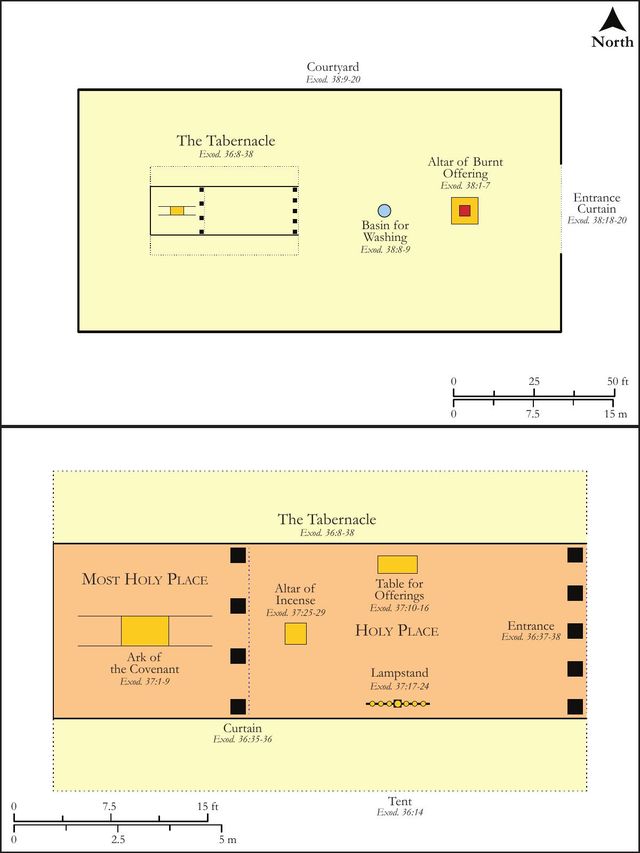
This verse is situated within the latter portion of the book of Exodus, specifically chapters 35-40, which meticulously describe the construction of the Tabernacle and its furnishings according to the divine blueprints given to Moses on Mount Sinai. The overarching theme throughout these chapters, frequently reiterated by phrases such as "as the Lord commanded Moses," is faithful obedience to God's precise instructions for worship. Exodus 38 specifically focuses on the court of the Tabernacle, beginning with the brazen altar in Exodus 38:1-2 and then detailing its associated vessels in verse 3, before moving on to the court's pillars and hangings. The preceding chapters, Exodus 25-31, provided the initial divine specifications, making these subsequent chapters a powerful testament to Israel's diligent execution of God's will.
Historical & Cultural Context
The construction of the Tabernacle occurred during Israel's wilderness wanderings, serving as God's portable dwelling place among His people and the focal point of their communal worship. While temples and cultic sites were common among the nations, the Tabernacle was unique in its divine origin, its portability, and its exclusive dedication to Yahweh, reflecting God's intimate presence with His nomadic people. The materials used, such as brass (more accurately, bronze), were obtained through the freewill offerings of the Israelites (Exodus 35:24), who likely possessed these metals from their time in Egypt or through spoils. The meticulous nature of the instructions and the construction reflects a common ancient practice of dedicating the finest materials and craftsmanship to the gods, but here, it is specifically for the one true God, Yahweh, who demands holiness, order, and precision in all aspects of worship, particularly in the handling of sacrifices which were central to atonement and communion with Him (Leviticus 17:11).
Key Themes
ShowHideThis verse significantly contributes to several key themes prevalent in Exodus and the broader Pentateuch. Firstly, it underscores the theme of Divine Sovereignty and Meticulous Instruction, demonstrating that God's will extends to every minute detail of worship, leaving no room for human improvisation. Secondly, it highlights the theme of Holiness and Separation, as the sacred space and its implements were set apart for God's exclusive use, demanding purity and precision in handling. Thirdly, the functionality of the vessels points to the theme of Atonement and Reconciliation, emphasizing the practical necessity of the sacrificial system for dealing with sin and re-establishing fellowship with a holy God. Finally, it reinforces the theme of Obedience and Faithfulness, as Bezalel and the artisans diligently followed every command, serving as a model for Israel's response to God's covenant.
Exposition and Analysis
ShowHideKey Word Analysis
ShowHideFrom a primitive root meaning to do or make, in the broadest sense and widest application. Here, it signifies the act of crafting and bringing into being, emphasizing the diligent execution of divine commands by Bezalel and his skilled artisans. The verb implies not just creation, but also the fulfillment and accomplishment of a specific task according to precise instructions, highlighting the obedience inherent in the Tabernacle's construction.
This term broadly refers to something prepared, encompassing any apparatus, implement, utensil, or vessel. In this context, it denotes the specific tools and articles essential for the operation of the altar. The comprehensive nature of this word, used twice in the verse ("all the vessels"), highlights that every single item, from the largest pot to the smallest firepan, was intentionally designed and crafted for its sacred purpose, underscoring the divine demand for thoroughness in worship.
Referring to copper or bronze (an alloy of copper and tin), this material was chosen for its durability, resistance to heat, and availability. Theologically, nᵉchôsheth often symbolizes strength, judgment, and endurance in biblical contexts, particularly in relation to sin and divine wrath. Its use for the altar and its implements is highly significant, pointing to the fiery nature of sacrifice, the severity of sin, and the steadfastness of God's justice.
Verse Breakdown
ShowHide"And he made all the vessels of the altar"
This opening clause establishes the comprehensive nature of the work undertaken. "He" refers to Bezalel, the chief craftsman, and his team, acting under divine inspiration and command. The "altar" here is specifically the brazen altar (also known as the altar of burnt offering), the primary locus of sacrifice in the Tabernacle court, signifying the place where communion with God was re-established through atonement for sin. The phrase "all the vessels" emphasizes that no tool or implement was omitted from the divine specifications or the meticulous craftsmanship.
"the pots, and the shovels, and the basons, [and] the fleshhooks, and the firepans"
This is an exhaustive and specific list of the implements required for the altar's function. Each item had a distinct and vital role in the sacrificial process, ensuring proper hygiene, order, and reverence: Pots (çîyr) were likely used for collecting ashes from the burnt offerings, ensuring cleanliness and proper disposal of the remnants. Shovels (yâʻ) were for scooping and removing the ashes from the altar, working in conjunction with the pots. Basons (mizrâq) were bowls used for catching, holding, or sprinkling the blood of the sacrifices, a critical element for atonement and purification rituals. Fleshhooks (mazlêg) were three-pronged forks used to handle, arrange, or remove the meat on the altar, ensuring the offerings were properly placed and managed during the burning process. Firepans (machtâh) were likely censers for carrying hot coals from the altar, perhaps for burning incense in the Holy Place, or for collecting embers for other ritualistic purposes.
"all the vessels thereof made he [of] brass"
This concluding phrase reiterates the material used for every single implement, reinforcing the unity of design and purpose. The consistent use of brass for these items speaks to their shared function in the rigorous and fiery work of sacrifice, and the symbolic weight of the material itself, connecting them to themes of judgment, strength, and endurance in the face of sin.
Literary Devices
ShowHideExodus 38:3 employs several literary devices to emphasize its message and the significance of the Tabernacle's construction. Enumeration is prominently featured, with the explicit listing of each type of vessel (pots, shovels, basons, fleshhooks, firepans). This detailed cataloging underscores the divine precision and the comprehensive nature of God's instructions, ensuring that every aspect of the sacrificial ritual was accounted for and nothing was left to chance. The repetition of the phrase "all the vessels" at the beginning and end of the verse serves as a literary inclusio, framing the list and highlighting the completeness and thoroughness of the work performed. Furthermore, the consistent use of symbolism is evident in the choice of brass as the material. As noted, brass often symbolizes judgment, strength, and endurance, which is fitting for the altar where sin was judged through sacrifice, pointing to the severity of sin and the steadfastness required in approaching a holy God.
Theological and Thematic Connections
ShowHideExodus 38:3, in its meticulous detail, powerfully conveys several profound theological and thematic truths. It highlights God's demand for order, precision, and holiness in worship, demonstrating that even the seemingly mundane tools used in sacred service are divinely ordained and carry immense significance. The functionality of each brass vessel underscores the practical reality of sin and the absolute necessity of sacrifice for atonement, pointing to a God who graciously provides the means for reconciliation while upholding His righteous and holy standards. The very material, brass, with its symbolic associations of judgment and strength, subtly prefigures the severity of sin and the fiery nature of divine justice, which the sacrificial system was designed to address. This passage, therefore, is not merely an architectural description but a profound theological statement about the nature of God, the gravity of sin, and the divinely provided pathway to fellowship with a holy Creator.
Reflection and Application
ShowHideThe detailed account of the Tabernacle's construction, down to the specific tools for the altar, serves as a powerful reminder that God is a God of order, intentionality, and purpose in every detail. While the New Covenant has fulfilled the need for animal sacrifices, the principle of intentionality and reverence in worship remains profoundly relevant for believers today. Our spiritual lives, our acts of service, and our communal gatherings should be marked by a similar diligence and consecration. Just as each vessel had a specific, divinely appointed function to facilitate the proper execution of worship, so too should every aspect of our lives be offered to God with purpose and according to His revealed will. This passage challenges us to consider whether our approach to God is casual or consecrated, reminding us that true worship involves our whole being, meticulously prepared and presented for His glory, reflecting the beauty of His order.
Questions for Reflection
ShowHideFAQ
ShowHideWhy were so many specific vessels needed for the altar, and what was their practical purpose?
ShowHideThe various vessels listed in Exodus 38:3 were essential for the practical, orderly, and hygienic execution of the sacrificial rituals at the brazen altar. Sacrifices involved the burning of animal parts, the collection and sprinkling of blood, and the handling of ashes and meat. The "pots" were likely for collecting ashes, the "shovels" for removing them, the "basons" for handling the blood (which was critical for atonement, as seen in Leviticus 17:11), the "fleshhooks" for arranging the sacrifice on the altar, and the "firepans" for carrying coals or embers. Each tool ensured that the sacred work was performed efficiently, reverently, and according to the precise divine instructions, maintaining the sanctity of the altar and the purity of the worship space. These implements facilitated the necessary steps in a ritual that was both sacred and, by its nature, involved handling physical remnants, requiring careful management to uphold the holiness of God's presence.
Christ-Centered Fulfillment
ShowHideExodus 38:3, with its focus on the functional vessels of the brazen altar, finds its ultimate and profound fulfillment in Jesus Christ. The altar itself prefigured the cross, where the ultimate sacrifice for sin was offered. The brass vessels, meticulously crafted for handling the elements of sacrifice—blood, flesh, and ashes—point to the comprehensive and perfect nature of Christ's redemptive work. He is not merely a sacrifice, but also the perfect High Priest who "entered once for all into the holy places, not by means of the blood of goats and calves but by means of his own blood, thus securing an eternal redemption" (Hebrews 9:12). The meticulous care in preparing these vessels for the Old Covenant sacrifices foreshadows the unblemished and perfect nature of Christ's offering, which required no "tools" or rituals beyond His own sinless life and obedient death (Hebrews 7:27). Furthermore, just as the vessels facilitated communion with God through atonement, Christ's sacrifice now enables direct and confident access to God's presence, making us "a kingdom, priests to his God and Father" (Revelation 1:6) and inviting us to "draw near with a true heart in full assurance of faith" (Hebrews 10:22). The earthly Tabernacle and its implements, though vital for their time, were but "a copy and shadow of the heavenly things" (Hebrews 8:5), all pointing to the superior and eternal reality found in Jesus, who perfectly fulfilled every aspect of the sacrificial system.