


Exodus 37:13
Bible text: King James Version (1769 Blayney text) · Public domain
Bible text: Berean Standard Bible · Public domain
Bible text: American Standard Version (1901) · Public domain
Bible text: World English Bible, Messianic edition · Public domain
Bible text: Geneva Bible (1599) · Public domain
Bible text: Young's Literal Translation · Public domain
- וַיִּצֹקvai·yi·Tzokand he castH3332Conj-w ¦ V-Qal-ConsecImperf-3msVerb Qal Consecutive Imperfect 3rd Singular Masculineוַandיִּצֹקhe cast
- לוֹlofor <the> itPrep-l ¦ 3msSuffix Personal 3rd Singular Masculineלfor <the>וֹit
- אַרְבַּע'ar·Ba'fourH702Adj-csAdjective Numerical Singular common gender Absolute
- טַבְּעֹתta·be·'Otrings ofH2885N-fpcNoun Plural Feminine Construct
- זָהָבza·HavgoldH2091N-msNoun Singular Masculine Absolute
- וַיִּתֵּןvai·yi·Tenand he putH5414Conj-w ¦ V-Qal-ConsecImperf-3msVerb Qal Consecutive Imperfect 3rd Singular Masculineוַandיִּתֵּןhe put
- אֶת'et<obj.>H853DirObjMParticle Object Indicator
- הַטַּבָּעֹתha·ta·ba·'Otthe ringsH2885Art ¦ N-fpNoun Plural Feminine Absoluteהַtheטַּבָּעֹתrings
- עַל'alonH5921PrepPreposition
- אַרְבַּע'ar·Ba'[the] fourH702Adj-cscAdjective Numerical Singular common gender Construct
- הַפֵּאֹתha·pe·'Otthe cornersH6285Art ¦ N-fpNoun Plural Feminine Absoluteהַtheפֵּאֹתcorners
- אֲשֶׁר'a·SherwhichH834RelParticle Relative
- לְאַרְבַּעle·'ar·Ba'[belonged] to [the] fourH702Prep-l ¦ Adj-cscAdjective Numerical Singular common gender Constructלְ[belonged] toאַרְבַּע[the] four
- רַגְלָיוrag·Lavits feetH7272N-fdc ¦ 3msNoun Dual Feminine Constructרַגְלָיfeetוits
English is a literal word-by-word gloss of the Hebrew, not the KJV's wording. Why?
This is the original text the KJV's translators worked from — each Hebrew word with its own literal English meaning in this verse, prepared by scholars at Tyndale House, Cambridge. The KJV translates whole sentences, not word by word, so its wording differs: one Hebrew word can become several English words, and the KJV may choose “the LORD” where the gloss reads “Yahweh”. Both are faithful — they answer different questions. For the KJV's own rendering, switch to the KJV text.
Details
See on the biblical-era maps

Study this verse
Public-domain commentary
Matthew Henry
From his Commentary on the Whole Bible. Henry comments on passages, not single verses — this entry covers Exodus 37:10–24.
Here is, 1. The making of the table on which the show-bread was to be continually placed. God is a good householder, that always keeps a plentiful table. Is the world his tabernacle? His providence in it spreads a table for all the creatures: he provides food for all flesh. Is the church his tabernacle? His grace in it spreads a table for all believers, furnished with the bread of life. But observe how much the dispensation of the gospel exceeds that of the law. Though here was a table furnished, it was only with show-bread, bread to be looked upon, not to be fed upon, while it was on this table, and afterwards only by the priests; but to the table which Christ has spread in the new covenant all real Christians are invited guests; and to them it is said, Eat, O friends, come eat of my bread. What the law gave but a sight of at a distance, the gospel gives the enjoyment of, and a hearty welcome to. 2. The making of the candlestick, which was not of wood overlaid with gold, but all beaten work of pure gold only, Exo 37:17, Exo 37:22. This signified that light of divine revelation with which God's church upon earth (which is his tabernacle among men) has always been enlightened, being always supplied with fresh oil from Christ the good Olive, Zac 4:2, Zac 4:3. God's manifestations of himself in this world are but candle-light compared with the daylight of the future state. The Bible is a golden candlestick; it is of pure gold, Psa 19:10. From it light is diffused to every part of God's tabernacle, that by it his spiritual priests may see to minister unto the Lord, and to do the service of his sanctuary. This candlestick has not only its bowls for necessary use, but its knops and flowers for ornament; there are many things which God saw fit to beautify his word with which we can no more give a reason for than for these knops and flowers, and yet we are sure that they were added for a good purpose. Let us bless God for this candlestick, have an eye to it continually, and dread the removal of it out of its place.
Continue studying Exodus 37:13 across the web’s major study libraries — every link below opens this exact verse, chapter, or book on the destination site.
Read & Compare
 BibleGatewayThis verse in more than 200 translations and 70 languages.
 Bible.comThe YouVersion reader — hundreds of translations, reading plans, and highlights.
 ESV.orgCrossway's official English Standard Version reader.
 NET BibleThe NET translation with 60,000+ translators' notes on every rendering decision.
 STEP BibleTyndale House's free study tool — original text, vocabulary, and scholarly resources.
 BibliaLogos Bible Software's free web reader.
 USCCBThe New American Bible (Revised Edition) with the U.S. bishops' study notes.
Commentaries
 BibleHub CommentariesDozens of classic commentaries on this verse, gathered on one page.
 StudyLightMore than 100 commentary sets — the largest collection on the web.
 BibleRefPlain-English commentary on what this verse means, verse by verse.
 Enduring WordDavid Guzik's free commentary on this chapter, widely used by Bible teachers.
 Bible Study ToolsVerse commentary alongside Greek and Hebrew study aids.
Original Language & Research
- BibleHub InterlinearThe verse word by word — original language, transliteration, and English.
- BibleHub LexiconEvery word's original-language definition and Strong's entry.
 Blue Letter BibleDeep-study tools — Strong's numbers, concordance, and word studies.
 SefariaThe Hebrew text with Rashi and centuries of Jewish commentary.
Sermons, Hymns & Audio


TrulyRandomVerse is not affiliated with these sites and doesn’t control their content. They’re linked because they’re genuinely useful.
Summary
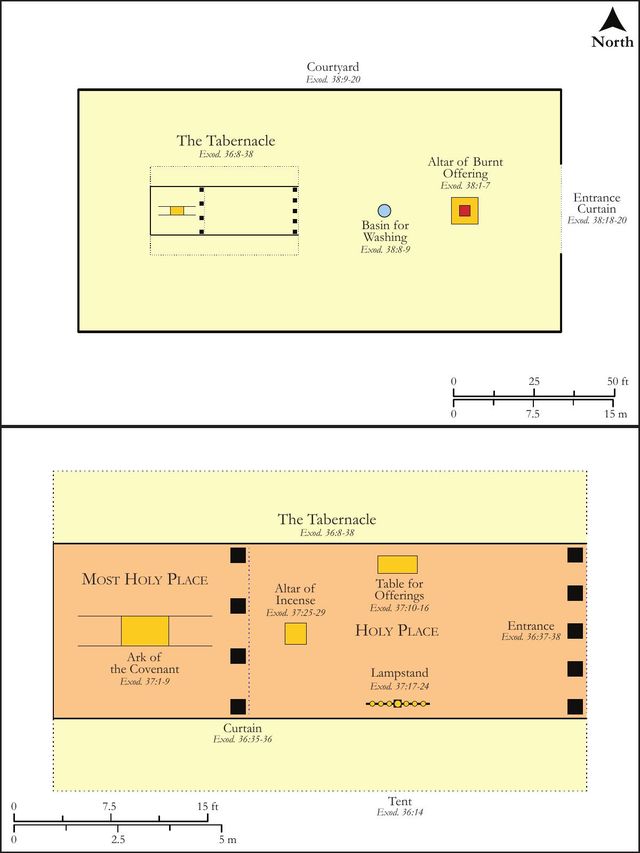
Exodus 37:13 offers a meticulous description of the crafting of four gold rings for the Table of Showbread, strategically positioned on its four corners near its feet. These rings were not merely ornamental but served a vital functional purpose, designed to facilitate the table's portability by accommodating carrying poles. This precise detail underscores the divine blueprint for the Tabernacle's construction, ensuring that every component contributed to the sacred structure's ability to accompany Israel on their wilderness journey, symbolizing God's dynamic and ever-present provision and fellowship among His people.
Context
ShowHideLiterary Context
Exodus 37:13 is situated within the detailed account of Bezalel's execution of God's commands for constructing the Tabernacle and its sacred furnishings, as initially outlined to Moses on Mount Sinai. Specifically, this verse follows the description of the Table of Showbread's dimensions, its crown of gold, and its border in Exodus 37:10-12. The rings described in verse 13 are directly related to the table's essential portability, a theme that continues into Exodus 37:14-15, which details the staves (poles) designed to be inserted into these very rings. This meticulous detailing throughout the Tabernacle narrative highlights the divine blueprint for every sacred item, emphasizing their specific function and their integral role in the overall Tabernacle system, which served as the tangible dwelling place of God's holy presence among His people.
Historical & Cultural Context
The construction of the Tabernacle unfolded during Israel's arduous nomadic journey through the wilderness after their miraculous exodus from Egypt. Their existence was characterized by constant movement, necessitating a sanctuary that could be efficiently dismantled, transported, and reassembled. The divine design of the Tabernacle and its furnishings, including the Table of Showbread with its precisely placed rings, directly addressed this nomadic lifestyle. The rings and their accompanying staves (first commanded in Exodus 25:27-28) ensured that the sacred items, representing God's presence, provision, and covenant, could travel seamlessly with the Israelites. This divinely ordained mobility was crucial for maintaining a tangible symbol of God's covenant faithfulness and guidance throughout their challenging journey to the Promised Land. The intricate craftsmanship was entrusted to divinely gifted individuals like Bezalel, who was specifically filled with the Spirit of God for this holy work, underscoring the sacredness and divine origin of the entire project.
Key Themes
ShowHideExodus 37:13 contributes significantly to several overarching themes within the book of Exodus and the broader Pentateuch. Firstly, it exemplifies Divine Precision and Holiness, showcasing God's meticulous attention to every detail of His dwelling place and the instruments of worship. This precision reflects His perfect order and the absolute holiness required in approaching Him. Secondly, the verse highlights the theme of God's Immanent Presence and Portability. The rings, facilitating the movement of the Table of Showbread, symbolize that God is not static or confined but actively accompanies His people on their journey, providing for them even in the wilderness, as seen in the provision of manna (Exodus 16). Thirdly, it reinforces the theme of Covenant Faithfulness and Provision, as the Table of Showbread itself represented God's ongoing sustenance for Israel (Leviticus 24:5-9). The ability to transport this symbol ensured that God's provision was perpetually accessible, regardless of Israel's location.
Exposition and Analysis
ShowHideKey Word Analysis
ShowHideThis verb signifies the act of pouring out or melting metal to form an object. In the context of the Tabernacle, it refers to the skilled craftsmanship involved in shaping the gold into the required rings. It implies a deliberate, precise, and permanent formation, indicating the solidity and enduring nature of the materials used in God's sanctuary.
Derived from a root meaning "to sink" (as a seal into wax), this word refers to a circular object, typically a signet or a ring of any kind. Here, it denotes the specific functional fasteners designed to hold the poles for carrying the Table of Showbread. Their purpose was to ensure the secure and stable transport of the sacred furniture, highlighting the practical yet holy design of the Tabernacle.
This term refers to the precious metal, known for its purity, incorruptibility, and high value. In the Tabernacle's construction, gold consistently symbolizes divine glory, holiness, purity, and enduring worth. Its use for even functional components like the rings elevates their significance, indicating that every part of God's dwelling and its furnishings must reflect His majestic and unblemished character.
Verse Breakdown
ShowHide"And he cast for it four rings of gold"
This clause describes the initial action of Bezalel, the divinely gifted craftsman, in forming the rings. The number "four" indicates a symmetrical placement, ensuring balance for portability. The material "gold" emphasizes the preciousness and sanctity of these functional elements, aligning with the overall theme of divine glory that permeated the Tabernacle's construction.
"and put the rings upon the four corners"
This specifies the precise and strategic placement of the rings. "Upon the four corners" indicates that the rings were affixed to the extreme points of the table, ensuring stability and ease of carrying. This detail reinforces the meticulous nature of the divine design, where every component had a deliberate and functional purpose in the sacred structure.
"that [were] in the four feet thereof"
This further clarifies the exact location of the rings, indicating their integration into or immediate proximity to the "feet" of the table. This placement would have provided a secure and sturdy point for inserting the carrying poles, allowing the table to be lifted and transported safely without compromising its structure or its sacred contents (the showbread).
Literary Devices
ShowHideThe verse primarily employs Precision, Symbolism, and Metonymy. The extreme Precision in detailing the number, material, and exact placement of the rings ("four rings of gold," "upon the four corners," "in the four feet thereof") is a hallmark of the Tabernacle instructions throughout Exodus. This meticulousness underscores the divine origin of the design and God's demand for absolute adherence to His holy standards in worship. The rings themselves function as Symbolism of God's dynamic presence. Their purpose—to facilitate portability—symbolizes that God is not static or confined to a single location but actively accompanies His people on their journey. The use of Gold for these functional rings further symbolizes the enduring value, purity, and glory of God's presence and provision, even in the practical aspects of His dwelling among His people. Additionally, "feet" can be seen as a form of Metonymy, where a part (the feet) represents the whole structure or base of the table, indicating the secure and foundational attachment point for the rings.
Theological and Thematic Connections
ShowHideExodus 37:13, though seemingly a minor architectural detail, profoundly illustrates God's meticulous nature and His unwavering commitment to dwelling with His people. The divine blueprint for the Tabernacle, extending even to the gold rings for portability, reveals a God who is not only transcendent in His majesty but also intimately immanent, actively accompanying His people through all circumstances. This divine attention to detail signifies that every aspect of worship and service to God matters, reflecting His perfect order and absolute holiness. The portability of the Table of Showbread, facilitated by these rings, highlights God's dynamic presence, ensuring that His provision and fellowship were always accessible to Israel, regardless of their location in the wilderness. This also foreshadows a God who is not bound by physical structures but desires a mobile, intimate relationship with His people.
Reflection and Application
ShowHideThe gold rings on the Table of Showbread serve as a powerful reminder that God's meticulous care extends to the smallest details of our lives and His kingdom work. Just as these rings ensured the sacred provision of the showbread could travel with Israel, God equips us for our journey through life, providing the necessary means for us to carry His presence and purpose into the world. This verse encourages us to embrace precision and excellence in our service to God, understanding that even seemingly minor tasks contribute to His grand design and reflect His holy character. Furthermore, the portability of the Tabernacle foreshadows the New Covenant reality that God's presence is no longer confined to a physical structure but dwells within believers, empowering us to be mobile carriers of His light and truth. We are called to be diligent stewards, recognizing that God's equipping is always sufficient for the journey He has set before us, enabling us to be His hands and feet in a world that desperately needs His presence.
Questions for Reflection
ShowHideFAQ
ShowHideWhy were gold rings used for the Table of Showbread, rather than a less precious metal?
ShowHideThe use of pure gold for the rings, as with most of the Tabernacle's furnishings, emphasized the extreme sanctity and preciousness of the items dedicated to God's worship. Gold, being a pure, incorruptible, and valuable metal, symbolized the divine glory, holiness, and enduring nature of God Himself. Even the functional elements, like the rings for portability, had to reflect this divine standard, signifying that everything associated with God's presence was set apart and of ultimate value. It reinforced the idea that God deserves the very best and that His dwelling place was a reflection of His majestic and unblemished character, setting a standard for worship and reverence.
What was the purpose of the Table of Showbread, and how do the rings relate to it?
ShowHideThe Table of Showbread (also known as the Table of Presence) held twelve loaves of unleavened bread, representing the twelve tribes of Israel, which were perpetually before the Lord as a sign of God's covenant faithfulness and ongoing provision for His people (Leviticus 24:5-9). The rings described in Exodus 37:13 were essential for the table's portability. They were designed to hold poles, allowing the priests or Levites to carry the table and its sacred contents as the Israelites journeyed through the wilderness. This ensured that the symbol of God's constant provision and intimate fellowship was always with His people, underscoring His dynamic and accompanying presence throughout their pilgrimage.
Christ-Centered Fulfillment
ShowHideThe seemingly simple detail of gold rings for the Table of Showbread finds profound Christ-centered fulfillment in the New Testament. The entire Tabernacle, with its portable furnishings, foreshadowed God's ultimate desire to dwell with humanity, not in a static, localized structure, but through a dynamic, personal presence. The Table of Showbread, symbolizing God's provision and fellowship, points directly to Jesus Christ, who declared Himself to be the "bread of life" and the one who gives "life to the world". Just as the showbread was always before the Lord, Jesus is the eternal, living provision for our spiritual hunger, satisfying our deepest needs in a way no physical bread ever could. The portability facilitated by the rings beautifully prefigures the incarnation of Christ, through whom God "tabernacled" or "dwelt among us" in human flesh. He was God's presence, mobile and accessible, walking among His people, bringing the divine into the mundane. Furthermore, through His Holy Spirit, Christ now indwells believers, making them "temples of the Holy Spirit" and "God's dwelling place by the Spirit". We, the Church, are now the "carriers" of God's presence, equipped by His Spirit to bear His light, truth, and provision into every corner of the world, fulfilling the ultimate purpose of God's desire to be with His people, not confined by physical structures, but manifested through His living body, the Church, until He comes again.